

Weather Guard Lightning Tech

CDC Investigates Offshore Wind in the US
The CDC is investigating offshore wind farms and Virginia Wind has paused blade installations, while the rest of the world installs and benefits from offshore wind.
Sign up now for Uptime Tech News, our weekly email update on all things wind technology. This episode is sponsored by Weather Guard Lightning Tech. Learn more about Weather Guard’s StrikeTape Wind Turbine LPS retrofit. Follow the show on Facebook, YouTube, Twitter, Linkedin and visit Weather Guard on the web. And subscribe to Rosemary Barnes’ YouTube channel here. Have a question we can answer on the show? Email us!
There’s trouble brewing off America’s Atlantic coast. But it’s not coming from beneath the waves.
A few weeks ago, HEALTH AND HUMAN SERVICES SECRETARY ROBERT F. KENNEDY JUNIOR issued unusual marching orders. He directed the CENTERS FOR DISEASE CONTROL to investigate offshore wind farms. The reason? Alleged threats to whales and fishing businesses.
The investigation would focus on electromagnetic frequencies from undersea cables. Wind proponents say these frequencies are harmless. But KENNEDY had his concerns.
KENNEDY met personally with National Institute for Occupational Safety and Health director JOHN HOWARD. He provided a list of specific experts to contact. The mission: complete the investigation within two months.
Now, you might wonder why a health secretary would suddenly become concerned about wind turbines.
KENNEDY, once a prominent environmental lawyer, fought for years against a wind project off the coast of MASSACHUSETTS. That project just happened to be near the Kenendy family’s compound. During the twenty twenty-four presidential campaign, he called offshore wind quote “a catastrophe.”
If you haven’t heard, the US administration has halted billions of dollars worth of offshore wind projects.
But here’s what the administration didn’t mention.
Wildlife veterinarian JENNIFER BLOODGOOD performs whale necropsies for NEW YORK STATE and CORNELL WILDLIFE HEALTH LAB. In her experience, about half the humpback whales in good enough condition to examine show signs of vessel strikes or human interaction. The minke whales? They’re dying from a common infection called brucella [brew-SELL-uh].
“There is currently no evidence that wind energy is influencing whale strandings,” BLOODGOOD reports.
Three active mortality events are happening for whales in the Atlantic. But these events involve clusters of deaths that experts consider unusual for reasons that have nothing to do with turbines. The scientific consensus is clear: no evidence links wind farms to whale deaths.
BLOODGOOD has even examined dolphin ear bones under microscopes and CT scans, looking for trauma from surveying sound waves. She found nothing.
“When a whale strands, there’s a huge effort that goes into responding and figuring out why it died,” she explains. “Many people’s job is to go out and figure out what’s happening.”
While AMERICA retreats from offshore wind, CHINA is doubling down. The nation aims to add at least one hundred twenty gigawatts of new wind power capacity annually from twenty twenty-six to twenty thirty. That’s more than twice AMERICA’s goal from twenty twenty.
CHINA’s total installed wind power capacity targets one point three terawatts by twenty thirty and at least two terawatts by twenty thirty-five.
At DOMINION ENERGY’s Virginia wind project, there’s a different kind of delay. The CHARYBDIS [kuh-RIB-dis], a massive twenty-three-thousand-ton ship that took five years and seven hundred million dollars to build, sits at the PORTSMOUTH MARINE TERMINAL. It can’t begin installing turbine blades yet. Quality assurance items need addressing.
The one hundred seventy-six turbine project off the coast of VIRGINIA BEACH would power six hundred sixty thousand homes. Its cost has risen to eleven point two billion dollars, up from nine point eight billion, partly due to tariffs.
So while AMERICA investigates phantom threats, the CHARYBDIS waits at the dock. CHINA races ahead with ambitious targets. And whales continue dying from boat strikes and fishing gear entanglement, just as they have for decades.
The US administration canceled funding for two programs that used aerial surveys and underwater listening devices to track whale populations. The very programs that could definitively show what’s really happening to these magnificent creatures.
https://weatherguardwind.com/cdc-investigates-offshore/

 What kind of people are the celebrities in music and digital media as a whole? Not an easy question to answer.
Obviously, they’re talented. Most are well educated and many have the good looks that come from good genetics.
And yes, most of these people have the intelligence to see that Donald Trump is a criminal sociopath on target to destroy the U.S. while enriching himself beyond measure.
For every Jon Voight (see left) that are perhaps 1000 Robert Deniros, Bruce Springteens, and Leonardo Dicaprios.
But why are there any Jon Voights at all? The answer is unclear.
I once met a Princeton grad to whom I explained that a guy from my prep school in Philadelphia went to Princeton, and now is all over social media shouting, “Close the Borders!” and “English Only!”
My new acquaintance laughed hysterically, and said with a smile, “Yes, we have grads like this, perhaps one in a few thousand. What a waste of hundreds of thousands of dollars. You can get that level of education by dropping out of high school and driving a truck.”
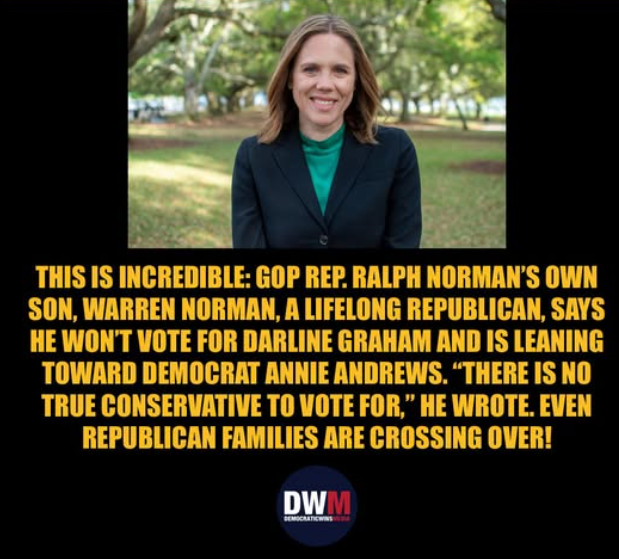 At left we see an example of a phenomenon that seems to be happening with increasing frequency: a life-long Republican saying “enough” and refusing vote for the current version of the GOP.
I applaud people who have both:
a) the intelligence to see where a party has crossed a moral line, and is now operating as a criminal enterprise.
b) the inner courage to do this, as it is hard for most people to admit they were wrong after a lifetime of kneejerk reactions, especially on a topic of such importance.
 Someone commented on the meme here: “Don’t forget your jihadi prayer group meeting.”



-
Climate Change1 year ago
Guest post: Why China is still building new coal – and when it might stop
-

 Greenhouse Gases2 years ago
嘉宾来稿:满足中国增长的用电需求 光伏加储能“比新建煤电更实惠”
-
Greenhouse Gases1 year ago
Guest post: Why China is still building new coal – and when it might stop
-

 Climate Change2 years ago
嘉宾来稿:满足中国增长的用电需求 光伏加储能“比新建煤电更实惠”
-

 Renewable Energy1 year ago
Sending Progressive Philanthropist George Soros to Prison?
-
Climate Change2 years ago
Bill Discounting Climate Change in Florida’s Energy Policy Awaits DeSantis’ Approval
-
Greenhouse Gases1 year ago
嘉宾来稿:探究火山喷发如何影响气候预测
-

 Climate Change2 years ago
Analysis: China’s CO2 falls 1% in Q2 2024 in first quarterly drop since Covid-19