

Weather Guard Lightning Tech

Australia’s Wind Manufacturing Push, Ming Yang in Scotland
Allen, Rosemary, and Yolanda discuss Ming Yang’s proposed $1.5 billion factory in Scotland and why the UK government is hesitating. Plus the challenges of reviving wind turbine manufacturing in Australia, how quickly a blade factory can be stood up, and whether advanced manufacturing methods could give Australia a competitive edge in the next generation of wind energy.
Sign up now for Uptime Tech News, our weekly newsletter on all things wind technology. This episode is sponsored by Weather Guard Lightning Tech. Learn more about Weather Guard’s StrikeTape Wind Turbine LPS retrofit. Follow the show on YouTube, Linkedin and visit Weather Guard on the web. And subscribe to Rosemary’s “Engineering with Rosie” YouTube channel here. Have a question we can answer on the show? Email us!
The Uptime Wind Energy Podcast brought to you by Strike Tape, protecting thousands of wind turbines from lightning damage worldwide. Visit strike tape.com And now your hosts.
Allen Hall: Welcome to the Uptime Wind Energy Podcast. I’m your host Allen Hall, and I’m here with Yolanda Padron and Rosemary Barnes, and we’re all in Australia at the same time.
We’re getting ready for Woma 2026, which is going to happen when this release is, will be through the first day. Uh, it’ll, it’s gonna be a big conference and right now. We’re so close to, to selling it out within a couple of people, so it’ll be a great event. So those of you listening to this podcast, hopefully you’re at Wilma 2026 and we’ll see, see you there.
Uh, the news for this week, there’s a number of, of big, uh, country versus country situations going on. Uh, the one at the moment is [00:01:00] ING Yang in Scotland, and as we know, uh, Scotland. It has been offered by Ming Yang, uh, to build a factory there. They’re put about one and a half billion pounds into Scotland, uh, that is not going so well.
So, so they’re talking about 3000 jobs, 1.5 billion in investment and then. Building, uh, offshore turbines for Britain and the larger Europe, but the UK government is hesitating and they have not approved it yet. And Scotland’s kind of caught in the middle. Ming Yang is supposedly looking elsewhere that they’re tired of waiting and figure they can probably get another factory somewhere in Europe.
I don’t think this is gonna end well. Everyone. I think Bing Yang is obviously being pushed by the Chinese, uh, government to, to explore Scotland and try to get into Scotland and the Scottish government and leaders in the Scottish government have been meeting with, uh, [00:02:00] Chinese officials for a year or two.
From what I can tell, if this doesn’t end with the factory in Scotland. Is China gonna take it out on the uk? And are they gonna build, is is me gonna be able to build a factory in Europe? Europe at the minute is looking into the Chinese investments into their wind turbine infrastructure in, in terms of basically tax support and, and funding and grants of that, uh, uh, aspect to, to see if China is undercutting prices artificially.
Uh, which I think the answer is gonna be. Yes. So where does this go? It seems like a real impasse. At a moment when the UK in particular, and Europe, uh, the greater Europe are talking about more than a hundred gigawatts of offshore wind,
Yolanda Padron: I mean, just with the, the business that you mentioned that’s coming into to the uk, right?
Will they have without Min Yang the ability to, to reach their goals?
Allen Hall: So you have the Siemens [00:03:00] factory in hall. They have a Vestus factory in Hollow White on the sort of the bottom of the country. Right. Then Vestus has had a facility there for a long time and the UK just threw about 20 million pounds into reopening the onshore blade portion of that factory ’cause it had been mothballed several months ago.
It does seem like maybe there’s an alternative plan within the UK to stand up its own blade manufacturing and turbine manufacturing facilities, uh, to do a lot of things in country. Who I don’t think we know. Is it Siemens? Is it ge? Is it Vestus or is it something completely British? Maybe all the above.
Rosemary. You know, being inside of a Blade factory for a long time with lm, it’s pretty hard to stand up a Blade factory quickly. How many years would it take you if you wanted to start today? Before you would actually produce a a hundred meter long offshore blade,
Rosemary Barnes: I reckon you could do it in a year if you had like real, real strong motivation [00:04:00]
Allen Hall: really.
Rosemary Barnes: I think so. I mean, it’s a big shed and like, it, it would be, most of the delays would be like regulatory and, you know, hiring, getting enough people hired and trained and that sort of thing. But, um, if you had good. Support from the, the government and not too much red tape to deal with. Then, uh, you know, if you’ve got lots of manufacturing capability elsewhere, then you can move people.
Like usually when, um, when I worked at LM there were a few new factories opened while I was working there, and I’m sure that they took longer than, than a year in terms of like when it was first thought of. But, um, you know, once the decision was made, I, I actually dunno how long, how long it took. So it is a guess, but it didn’t, it didn’t take.
As long as you would think it wasn’t. It wasn’t years and years, that’s for sure. Um, and what they would do is they don’t, you know, hire a whole new workforce and train them up right from the start. And then once they’re ready to go, then they start operating. What they’ll do to start with is they’ve got, you know, like a bunch [00:05:00] of really good people from the global factories, like all around, um, who will go, um, you know, from all roles.
And I’m not talking just management at all, like it will include technicians, um, you know, every, every role in the factory, they’ll get people from another factory to go over. And, um, you know, they do some of the work. They’re training up local people so you know, there’s more of a gradual handover. And also so that you know, the best practices, um, get spread from factory to factory and make a good global culture.
’cause obviously like you’ve got the same design everywhere. You want the same quality coming out everywhere. Um, there is, as much as you try and document everything should be documented in work instructions. That should make it, you know, impossible to do things wrong. However, you never quite get to that standard and, um.
There is a lot, a lot to be said for just the know-how and the culture of the people doing the um, yeah, doing the work.
Allen Hall: So the infrastructure would take about a year to build, but the people would have to come from the broader Europe then at [00:06:00] least temporarily.
Rosemary Barnes: That, that would be the fastest and safest way to do it.
Like if it’s a brand new company that has never made a wind turbine before and someone just got a few, you know, I don’t know, a billion dollars, and um, said, let’s start a wind turbine factory, then I think it’s gonna be a few years and there’s gonna be some learning curve before it starts making blades fast enough.
And. With the correct quality. Um, yeah. But if you’re just talking about one more factory from a company that already has half a dozen or a dozen wind turbine blade factories elsewhere in the world, then that’s where I think it can be done fast.
Allen Hall: This, uh, type of situation actually pops up a lot in aerospace, uh, power plants, engines.
The jet engines on a lot of aircraft are kind of a combined effort from. Big multinational companies. So if they want to build something in country, they’ll hook up with a GE or a, a Honeywell or somebody who makes Jet engines and they’ll create this division and they’ll [00:07:00] stand this, this, uh, plant up.
Maybe it’s gonna be something like that where GB energy is in the middle, uh, providing the funding and some of the resources, but they bring in another company, like a Siemens, like a Vestas, like a GE or a Nordex even to come in and to. Do the operational aspects and maybe some of the training pieces.
But, uh, there’s a, there’s a funding arm and a technical arm, and they create a standalone, uh, British company to go manufacture towers to go manufacture in the cells to manufacture blades. Is that where you think this goes?
Rosemary Barnes: It depends also what kind of, um, component you’re talking about. Like if you’re talking about, I, I was talking a specific example of wind turbine blades, which are a mediumly complex thing to make, I would say, um.
Yeah. And then if you go on the simpler side, when turbine towers, most countries would have the. Rough expertise needed, um, to, to do that. Nearly all towers at the moment come out of [00:08:00] China, um, or out of Asia. And with China being the, the vast bulk of those. Um, and it’s because they’ve got, aside from having very, very cheap steel, um, they also have just got huge factories that are set up with assembly lines so that, you know, there’s not very much moving of things back and forth.
So they have the exact right bit of equipment to do. The exact right kind of, you know, like rolling and welding and they’re not moving tower sections around a lot. That makes it really hard for, um, for other countries to compete. But it’s not because they couldn’t make towers, it’s because they would struggle to make them cheap enough.
Um, so yeah, if you set up a factory, you know, say you set up a wind turbine, um, factory in, uh, wind turbine tower factory in Australia, you, you could buy the equipment that you needed for, you know, a few hundred million dollars and, um. You could make it, but unless you have enough orders to keep that factory busy, you know, with the, the volume that you need to keep all of that [00:09:00] modern equipment, uh, operating just absolutely around the clock, your towers are gonna be expensive out of that facility.
So that’s kind of the, that it’s cost is the main barrier when it comes to towers
Allen Hall: with Vestus in Mitsubishi recently having a partnership and then ending that partnership. It would seem like Vestus has the most experience in putting large corporations together to work on a, an advanced wind turbine project is they would, it would make sense to me if, if, if Vestus was involved because Vestus also has facilities in the uk.
Are they the leading choice you think just because they have that experience with Mitsubishi and they have something in country or you think it’s somebody else? Is it a ge
Rosemary Barnes: My instinct is saying Vestas. Yes,
Allen Hall: me too. Okay.
Rosemary Barnes: Ge. It’s wind turbine Manufacturing seems to be in a bit of a, more of an ebb rather than a flow right now, so I [00:10:00] mean that’s, that’s probably as much as what it’s based on.
Um, and then yes, like the location of, of factories, there are already some vest, uh, factories, vest people in the uk so that would make it easier.
: Delamination and bottomline failures and blades are difficult problems to detect early. These hidden issues can cost you millions in repairs and lost energy production. C-I-C-N-D-T are specialists to detect these critical flaws before they become expensive burdens. Their non-destructive test technology penetrates deep into blade materials to find voids and cracks.
Traditional inspections completely miss. C-I-C-N-D-T Maps. Every critical defect delivers actionable reports and provides support to get your blades back in service. So visit cic ndt.com because catching blade problems early will save you millions.[00:11:00]
Allen Hall: Can you build a renewable energy future on someone else’s supply chain? Well, in Australia, the last domestic wind tower manufacturers are down. Last year, after losing a 15 year battle against cheaper imports from China, now the Albanese government wants to try again, launching a consultation to revive local manufacturing.
Meanwhile, giant turbines are rising in Western Australia’s. Largest wind farms soon to power 164,000 homes. Uh, the steel towers, blades and the cells, they all arrive on ships. And the question is whether that’s going to change anytime soon. Rosemary?
Rosemary Barnes: Yeah, it’s, uh, it’s a topic I’ve thought about a lot and done a fair bit of work on as well, local manufacturing and whether you should or shouldn’t, the Australian government does try to support local manufacturing in.
General, um, and in particular for renewables, but they focused much more on solar and [00:12:00] batteries. Um, with their manufacturing support, Australian government and agencies like a uh, arena, Australian Renewable Energy Agency have not traditionally supported wind like at all. It bothers me because actually Australia is a fantastic place to be developing some of these supporting technologies for wind energy and even the next generation of wind energy.
Um, technologies, we, not any manufacturing. There are heaps of, um, things that would make it more suitable Australia, like just actually a really natural place to develop that. The thing about Australian projects is that they are. Big. Right. That makes it really attractive to developers because like in Europe where they’re, you know, still building wind, but you know, an onshore wind farm in Europe is like a couple of turbines here or there, maybe five, like a big wind farm would be 10, 10 turbines over there.
Um, in Australia it’s like a hundred, 200 turbines at a time. Um, for onshore also choosing. Really big turbines. Australians, for some reason, Australian developers really like to [00:13:00] choose the latest technologies. And then if we think about some of the, um, you know, like new supporting technologies for existing wind turbines, like, you know, let’s, um, talk about.
O and m there’s a whole lot of, um, o and m technologies, and Australia’s a great place for that too because as Australia wind farms spend so much on o and m compared to other countries. So a technology provider that can improve some of those pain points can much quicker get like a positive, um, return on investment in Australia than they would be able to in somewhere like America or, or Europe.
So I think it makes sense to develop here
Allen Hall: with the number of wind farms. Rosie, I, I completely agree with you and. When we were talking about the war Dge wind Farm, which is the Western Australian wind farm that’s gonna expand, they’re adding 30 turbines to provide 283 megawatts. That’s like a nine and a half megawatt machine.
Those are big turbines. Those are new turbines, right? That’s not something that’s been around for a couple years. They’ve been around for a couple of months in, in terms of the lifespan of, of wind [00:14:00] turbines. So if Australia’s gonna go down the pathway of larger turbines, the, the most advanced turbines. It has to make sense that some of this has, has to be developed in country just because you need to have the knowledge to go repair, modify, improve, adjust, figure out what the next generation is, right?
I don’t know how you, this happens.
Rosemary Barnes: We see some examples of that. Right. And I think that Fortescue is the best example of, um, companies that are trying to think forward to what they’re going to need to make their, you know, they’ve got ambitious plans for putting in some big wind farms with. Big wind turbines in really remote locations.
So they’ve got a lot of, um, it’s a lot of obvious challenges there. Um, and I know that they’re thinking ahead and working through that. And so, you know, we saw their investment in, um, nbra wind, the Spanish company and in particular their nbra lift. The bit of the tower that attaches to the rotor. It looks [00:15:00] pretty normal.
Um, but then they make it taller by, um, slotting in like a lattice framework. Um, and then they jack it up and slot in another one underneath and jack it up and slot in another one underneath. So they don’t need a gigantic crane and they don’t need, um, I mean, it’s still a huge crane, but they don’t, they don’t, it doesn’t need to be as, as big because, you know, the rotor starts, starts off already on there by the time that the tower gets su to its full height.
So, um, yeah, it’s a lot. That’s an innovative solution, I think, and it would, I would be very surprised if they weren’t also looking at every other technology that they’re gonna need in these turbines.
Allen Hall: If Australia’s gonna go down the pathway of large turbines on shore, then the manufacturing needs to happen in country.
There’s no other way to do it. And you could have manufacturing facilities in Western Australia or Victoria and still get massive turbine blades shipped or trucked either way. To [00:16:00] wherever they needed it to go. In country, it would, it’s not that hard to get around Australia and unlike other countries like, like Germany was a lot of mountains and you had bridges and narrow roads and all that, and it, it’s, it’s much more expansive in Australia where you can move big projects around.
And obviously with all the, the mining that happens in Australia, it’s pretty much normal. So I, I just trying to get over the hurdle of where the Albanese government is having an issue of sort of pushing this forward. It seems like it’s a simple thing because the Australian infrastructure is already ready.
Someone need to flip the switch and say go.
Rosemary Barnes: I don’t know if I’d say that we’re we’re ready. ’cause Australia doesn’t have a whole lot of manufacturing of anything at the moment. It’s not true that we have no manufacturing. That’s what Australians like to say. We don’t manufacture anything and that’s not true.
We do manufacture. We have some pretty good advanced manufacturing. If you just look at the hard economics of wind turbine manufacturing in Australia of solar panel manufacturing, battery manufacturing. Any of that, it is cheaper to just get it from China, not least [00:17:00] because some of the, um, those components are subsidized by the, the Chinese government.
If you start saying, okay, we’re gonna have local manufacturing, like, you can either, you can achieve that either by supporting the local manufacturing industry, you know, like giving subsidies to our manufacturing. Or you could, um, make a local content requirement. Um, say things, you know, if you want project approval for this, then it has to have so much local content.
You have to do it really carefully because if you get the settings wrong, then you just end up with very, very expensive, um, renewable energy. And at the moment, especially wind is. Expensive, and I think it’s still getting more expensive in Australia. It has been since, basically since the pandemic. If you then said, we’ve gotta also make it in Australia, then you add a bunch more costs and we would just probably not have wind energy then, so, uh, or new, new wind energy.
So there needs to be that balance. But I think that like, even though you can say, okay, cheapest is best, it is also not good to rely on. [00:18:00] Exclusively on other countries, and especially not on just one other country to give you all of your energy infrastructure. If it was up to me, I would be much more supporting the next wave of, um, technologies.
I would really love to see, you know, a new Australian. Wind turbine blade manufacturing method. Like at some point in the next decade, we’re going to start getting, uh, advanced manufacturing is gonna make it into wind turbine blades. It’s already there in some of the other components.
Allen Hall: Wait, so you just said if we were gonna build a factory in Scotland, it would take about a year.
Why would it take 10 years to do it in Australia? Australia’s a nice place to live.
Rosemary Barnes: No, I didn’t say that. It would, it would take teens. I said in, sometime in the next decade around the world, wind turbine blades are basically handmade, right? They, you know, there are some, um, machines that are helping people, but you know, you have a look at a picture of a wind turbine blade factor and there’s, you know, there’s 20 people walking over, walking over a blade, smoothing down glass.
And at some point we’re gonna start using advanced manufacturing methods. I [00:19:00] mean, there are really advanced composite manufacturing methods. Um, you know, with, um, individual fiber placement and 3D printing with, um, continuous fibers. And that’s being used for like aerospace components a lot. It’s early days for that technology and there is no barrier to the technologies to being able to put them, you know, like say on a GaN gantry that just, you know, like ran down the length of a whole blade like that, that could be done.
If it was economic, that’s the kind of technology that Australia should be supporting before that’s the mainstream, and everybody else has already done it, right? You need to find the next thing, and ideally not just one next thing, but several next things because you’re not gonna, you don’t know ahead of time, um, which is gonna be the winner.
Allen Hall: That hasn’t been the tack that China has taken, that the latest technology in batteries is not something that China is producing today. They’re producing a generation prior, but they’re doing it at scale. At some point they, the Chinese just said, we’re stopping here and we’re gonna do this, this kind of [00:20:00] battery, and that’s it.
And away we go. If we keep waiting until the next generation of blade techniques come out, I think we’re gonna be waiting forever.
Rosemary Barnes: I don’t think why I think. Do, you know, make the next generation of, of blade bio technologies?
Yolanda Padron: I think it makes sense for someplace like Australia, right? Because we, we’ve talked about the fact that like here, you, you have to consider a lot of factors in operation that you don’t have to consider in other places, especially for blades, right?
So if you can eliminate all of those issues, for the most part that are happening in the factory at manufacturing, then that can really help boost. The next operational projects.
Allen Hall: So then what you’re saying is that. There are new technologies, but what stage are they at? Are they TRL two, TRL five, TRL seven.
How close is this technology because I’d hate for Australia to miss out on this big opportunity.
Rosemary Barnes: Frown Hoffer has actually just published an article recently, uh, [00:21:00] about some, I can’t remember if it was fiber, um, tape placement or if it was printed, small wind turbine blades. Small wind is a nice, like, it’s a, a nice bite-sized kind of thing that you can master a lot quicker than you can, you know, you can make a thousand small wind turbines and learn a lot more than making 100 meter long blade.
That would probably be bad because it’s your first one and you didn’t realize all of the downsides to the new technology yet. Um, so I, I think it is kind of promising, but. In terms of, yeah, like a major, like in terms of let’s say a hundred meter long blade that was made with 3D printing, that would be terra, L one.
Like it’s an idea now. Nobody has actually made one or, um, done, done too much. Um, as far as I know. I think you could get, could get to nine over the next year. Like I said, like I think sometime in the next decade will be when that, when that comes.
Allen Hall: Okay. If you, you didn’t get to a nine that quickly. No, it is possible.
Yeah. You gotta put some money into it.
Rosemary Barnes: If someone wants to give me, [00:22:00] you know, enough money, then I’ll make it. I’ll make it happen. I’ll, I would, I would absolutely be able to make that happen, but I don’t know when it’s gonna be cheap enough.
Allen Hall: I would just love to see it. If, if, if you’ve got a, if you’ve got a, a factory, you got squirreled away somewhere in the.
Inland of Australia that is making blades at quantity or has the technology to do that. I would love to see it because that would be amazing.
Rosemary Barnes: Technologies don’t just fall out of the sky, you know, like they, you, you, you force them into existence. That’s what you, that’s what you do. You know what this comes down to?
Have you ever done the, is it Myers-Briggs where you get the, like letters of your personality? You and I are in opposite corners inside some ways.
Allen Hall: That wraps up another episode of the Uptime Wind Energy Podcast. If today’s discussion sparked any questions or ideas, and it surely should, we’d love to hear from you.
Reach out to us on LinkedIn, particularly Rosie, so it’s Rosemary Barnes on LinkedIn. Don’t forget to subscribe to who you never miss an episode. And if you found value in today’s conversation, please leave us a review. It really helps other wind [00:23:00] energy professionals discover the show. For Rosie and Yolanda, I am Alan Hall, and we’ll see here next week on the Uptime Wind Energy Podcast.

 What kind of people are the celebrities in music and digital media as a whole? Not an easy question to answer.
Obviously, they’re talented. Most are well educated and many have the good looks that come from good genetics.
And yes, most of these people have the intelligence to see that Donald Trump is a criminal sociopath on target to destroy the U.S. while enriching himself beyond measure.
For every Jon Voight (see left) that are perhaps 1000 Robert Deniros, Bruce Springteens, and Leonardo Dicaprios.
But why are there any Jon Voights at all? The answer is unclear.
I once met a Princeton grad to whom I explained that a guy from my prep school in Philadelphia went to Princeton, and now is all over social media shouting, “Close the Borders!” and “English Only!”
My new acquaintance laughed hysterically, and said with a smile, “Yes, we have grads like this, perhaps one in a few thousand. What a waste of hundreds of thousands of dollars. You can get that level of education by dropping out of high school and driving a truck.”
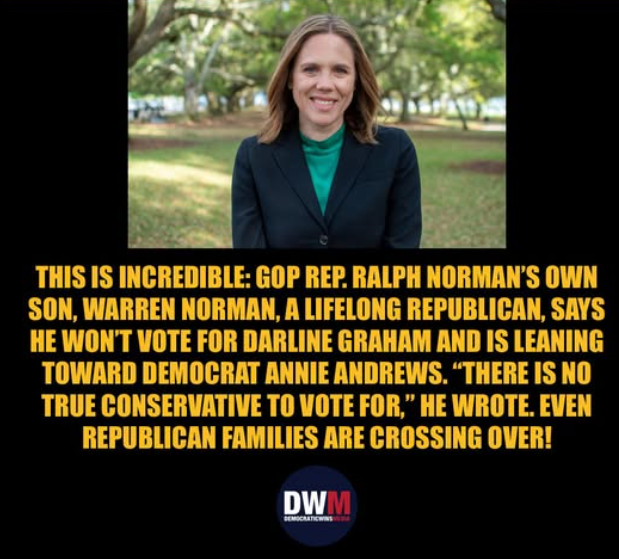 At left we see an example of a phenomenon that seems to be happening with increasing frequency: a life-long Republican saying “enough” and refusing vote for the current version of the GOP.
I applaud people who have both:
a) the intelligence to see where a party has crossed a moral line, and is now operating as a criminal enterprise.
b) the inner courage to do this, as it is hard for most people to admit they were wrong after a lifetime of kneejerk reactions, especially on a topic of such importance.
 Someone commented on the meme here: “Don’t forget your jihadi prayer group meeting.”



