

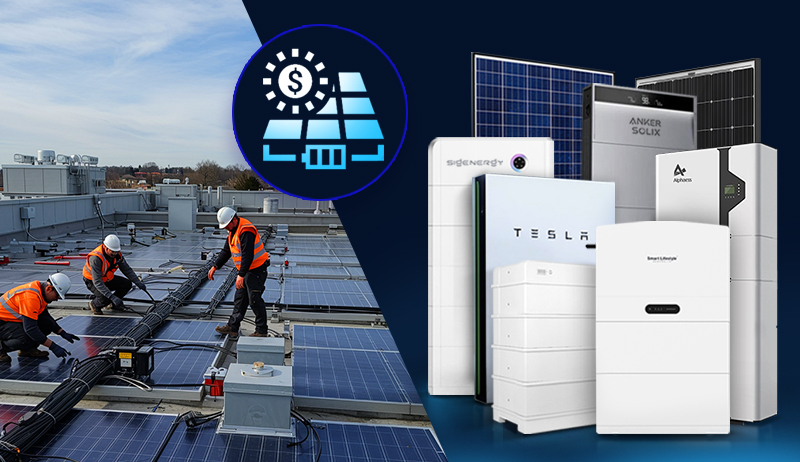
Before you go solar, it’s wise to know all the truth without any guesswork.
Why? This clear understanding of the most asked commercial solar FAQs can be the game-changer for your business that
needs to operate sustainably while reducing annual energy costs.
So, here are the 15 key answers every homeowner needs to know before investing in solar panel
technology:
1. Is commercial solar really worth it for my business?
Short answer: Absolutely yes, if you consume power.
Long answer: Undoubtedly, Commercial solar energy has become one of the smartest financial decisions
an Australian business owner can make.
At Cyanergy, we consistently see commercial clients slash their electricity bills by 40-80%, depending on system
size, energy usage patterns, and solar exposure. With power prices rising year after year, solar acts as a financial
shield.
Let’s see why it’s worth it:
- Lower operational expenses, so the power bills drop dramatically
- Offering fast ROI (many Cyanergy clients see payback in 2 to 4 years)
- Government
rebates reduce the upfront cost. - Protection against energy price volatility
- Increased property value and aesthetics
- Boosted sustainability credentials, grabbing the attention of eco-conscious buyers.
Remember! Solar isn’t just a cost; it’s an investment that pays you back in the long run.
2. How much does a commercial solar system cost?
The cost depends on the system, design, and equipment quality. At Cyanergy, systems are tailored based on estimates
from the site audit and other criteria. It’s not “one-size-fits-all”.
Typical price ranges in general we see are:
- 30 kW commercial system: $25,000 – $40,000
- 50 kW sized system: $45,000 – $70,000
- 100 kW system: $90,000 – $150,000
- 200–500 kW systems: highly customised, vary depending on installation complexity and many other
factors.
Cyanergy installs Tier-1 solar panels and
uses premium inverters or high-efficiency
alternatives. However, you can always customise them to suit your preferences and goals.
Cyanergy’s every solar quote includes:
 Full energy assessment
Custom ROI modelling
Design, engineering & installation
Government rebate calculation
Monitoring setup
Industry-leading warranties
3. What rebates or incentives are available for commercial solar?
Businesses and any C&I
properties in Australia can take advantage of generous solar financial incentives that began on October 1,
2025.
Besides that, at Cyanergy, we assist our customers with all major schemes, including:
STCs (Small-scale Technology Certificates)
This rebate applies to systems up to 100 kW. The discount often saves commercial clients $10,000 to $40,000 off the
solar installation price.
LGCs (Large-scale Generation Certificates)
LGCs apply only to systems above 100 kW. These provide ongoing financial returns for the clean electricity you
generate.
State Grants & Industry Programs
Depending on your industry and location, extra funding and
other incentives may be available. Cyanergy’s team stays updated to ensure you never miss a rebate you’re
eligible for.
We handle all the paperwork, from start to finish, so you get the maximum savings with zero hassle.
4. How long is the payback period?
The typical payback period for Cyanergy commercial clients is 2–5 years. However, it depends on:
- Energy consumption pattern
- Electricity rates
- System size
- Solar design & orientation
- Your operating hours
- Shading & roof structure
Businesses with high daytime usage, for example, manufacturing
facilities, warehouses, retail, aged care, schools, etc, often recover their investment even faster.
And the best part? After payback, your system produces free power for 20+ years, which is a substantial competitive
advantage.
5. Can my roof support commercial solar panels?
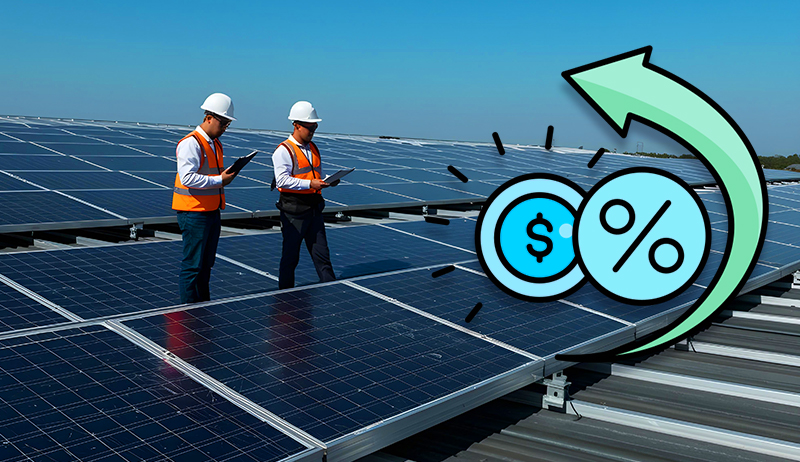
In Australia, rooftop solar is a very common sight. Most commercial and residential buildings already have solar systems installed, and the number continues to grow rapidly each year.
In many cases, roofs can support solar panels, but an assessment is always essential for commercial setups.
What to look for? Here’s your checklist:
- Roof age and condition
- Structural integrity
- Roofing material type
- Weight load capability
- Angle, orientation, and shading
- Complexity for installation and maintenance
However, if your roof isn’t suitable for mounting solar panels, there are alternatives, such as ground-mounted solar, solar carports, and tilt-frame designs for flat roofs.
You can also use solar paints or window facades to generate solar power.
6. What’s the lifespan of a commercial solar system?
A high-quality commercial solar panel system installed by accredited professionals can last for 25 to 30 years or more.
Cyanergy uses equipment from reputable manufacturers with bankable warranties. We design systems to last well beyond the payback period, ensuring strong long-term ROI
7. Do commercial solar panels require regular maintenance?
Even though solar is low-maintenance, it is not maintenance-free. To make your system function efficiently, you might need to
- Perform an Annual inspection.
- Cleaning every 6–12 months, depending on dust and debris.
- Monitoring system performance through the provided platform.
Remember, this routine maintenance helps prevent downtime, keeps panels efficient, protects your warranty, and lets you catch issues earlier.
8. Will solar affect my business operations during installation?
Based on our previous installation experience, disruptions are minimal or nonexistent in most cases. The reason is that Cyanergy schedules installations:
- Outside peak business hours whenever possible.
- For larger systems, we install the panels in stages.
- With safety barriers that allow your operations to continue safely and smoothly.
Most commercial clients continue business as usual. We always keep communication clear so you know what’s happening.
9. What brands does Cyanergy use? Are they reliable?
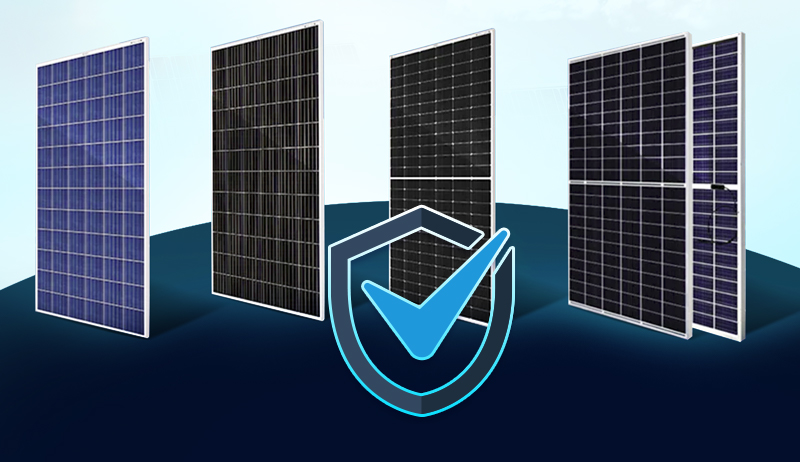
Cyanergy only works with Tier-1 solar panel manufacturers and top-performing inverter brands that are trusted globally.
We choose equipment based on performance, warranty, availability, and your budget. Reliability and lifespan are our top priorities.
Our most used solar panels and inverters are:
Solar Panels
Inverters
- Fronius
- SMA
- Sungrow
- Huawei
10. How much energy will my business actually save?
After installing a solar panel, actual savings can range from 40 to 80% on electricity bills. However, the exact amount depends on:
- When your business consumes power
- Solar system size
- Local weather conditions
- Electricity tariffs
- Whether battery storage is added for nighttime use
11. What if my energy usage increases in the future?
Expanding a system is not a problem for Cyanergy. The reason is that we always design systems with scalability in mind. We believe that as your businesses grow, your solar system should grow with you!
However, for the expansion, the options include extra roof space for the future, inverter oversizing, Upgradable circuit capacity, and an integrated battery-ready design.
12. Can I add batteries to a commercial solar system?
Yes, and it’s becoming increasingly popular not only in Australia but also worldwide.
Commercial batteries help to reduce peak demand charges, store excess solar for nighttime usage, improve power quality and provide backup protection during grid outages.
Cyanergy supplies commercial-grade battery solutions for business sizes ranging from small offices to large industrial facilities.
13. What if my business moves? Can I take the solar system with me?
Even though the answer is technically yes, practically, it depends!
Removing and reinstalling a large commercial solar system can be costly in most cases. Therefore, many businesses choose to leave the system and increase the property’s value or install a new, tailored system at the new site.
If you are still perplexed about what to do, Cyanergy helps you evaluate the ROI of both options before making a decision.
14. What warranties does Cyanergy offer?
At Cyanergy, we provide comprehensive warranty coverage on our solar panel system:
- 25–30 year panel performance warranty
- 10–25 year inverter warranty
- 10–15 year product warranty on panels
- 10+ year workmanship warranty
- Full after-sales support
However, we also offer attractive warranties on heat pumps, air conditioners and other energy-efficiency upgrades throughout Victoria, New South Wales and Queensland.
So you can contact us for reliable products and outstanding services!
15. Why choose Cyanergy for commercial solar?
Because we don’t just “install” solar, we build long-term renewable energy solutions.
What sets us apart? Let’s see:
Proven commercial expertise
Cyanergy has completed thousands of installations across small businesses, schools, warehouses, factories, councils, and national chains.
End-to-end service
We handle everything:
- Energy assessment
- System design
- Approvals and paperwork
- Engineering
- Installation
- Monitoring setup
- Maintenance
Premium equipment only
At Cyanergy, there is no cutting corners, no cheap or unreliable products.
Transparent ROI modelling
Our previous reports show actual savings, not inflated marketing numbers.
Exceptional after-sales support
From the first consultation to post-installation monitoring, we stay with you every step of the way.
Have A Project In Mind? Let’s Talk Solar!
Contact us for a solar quote today!
The post FAQs: Your Most Common Commercial Solar Questions Answered appeared first on Cyanergy.
https://cyanergy.com.au/blog/faqs-your-most-common-commercial-solar-questions-answered/

Weather Guard Lightning Tech
As Europe Shuns Chinese Turbines and Components, Who Will Fill the Gap?
While most of Europe has spent most of this year itemizing reasons it cannot, should not, and will not use Chinese wind turbines or components, accusations and arm-twisting tactics have garnered most of the attention.
But we invite you to consider a future – maybe just five, or ten years from now?- in which those same countries and companies are eagerly awaiting orders from wind turbine manufacturing facilities in… India.
What?!
You know that the country has a lot of installed wind.
You may think – and many in the industry would agree – that India’s blade manufacturers are a few revs behind blade-makers elsewhere in the world. But the country is newly committed to manufacturing and it’s busy installing more – provided that it’s made in India, with Indian technology, by Indian workers.
Of course, similar domestic-focused policy currents are running through European countries – where wind OEMs are almost inarguably a decade ahead of Indian manufacturers. But there’s an important reason why we say, “watch India” in wind turbine manufacturing.
It’s because you might learn something.
If you follow The Uptime Wind Energy Podcast, you probably heard this discussion a few weeks ago. It wasn’t the headline story – we try to highlight as many major news items and trends that we can, and follow up as credible information becomes available. India’s quiet moves to strengthen its own renewable energy industries didn’t grab the headlines. But it comprised a good bit of our panelists’ discussion.
With India’s expanding manufacturing capacity, and Suzlon’s strategic offerings for the European market (Blue Sky), there are reasons for European developers to take a closer look at Indian manufacturers.
If Europe continues to squelch deals with Chinese manufacturers due to data security issues, India is a relatively obvious candidate to fill the void, for several reasons:
- The country has depth and breadth in R&D: India (Suzlon, specifically) has a track record of involvement and relationships across the continent, as it operates research and development centers in Germany, the Netherlands, and Denmark.
- Indian service providers have reach: Inox and Adoni Wind operate multiple wind turbine manufacturing plants and wind farms throughout several Indian states, and Apraava Energy has been commissioning wind projects, working with multiple OEMs, for more than 16 years.
- The country’s energy sector has size: Tata Power is estimated to be worth about US$16 billion and employs 22,000 people.
And major manufacturers from other countries have had a strong presence in the country for years:
- GE Vernova has turbine blade and nacelle manufacturing operations and multiple tech/R&D centers in India;
- Vestas has a R&D technology center in Chennai; and
- China’s SANY Wind has had assembly facilities in India since 2017, and in 2024, it signed a licensing agreement with JSW allowing SANY to manufacture blades and generators for JSW – enabling JSW Neo Energy to produce wind turbine generators and major components in-country.
So while there is hard data suggesting that India is already a global hub for wind turbines, sometimes the real strength comes from soft skills. Like sharing information.
We’ve noticed that Indian manufactures aren’t stingy with information. They share what they learn in the field and on the shop floor, so that the whole industry can move faster to solve problems. That bodes well for the industry overall, and particularly well for companies who figure out how to solve problems that some manufacturers aren’t even ready to admit to having.
We’ll be watching India with a great deal of interest in the coming months. Subscribe to The Uptime Wind Energy Podcast and follow along with us.
We’re not financial analysts. We’re engineers who watch the wind industry very closely. This is what we’ve noticed, and we thought it was worth sharing.
Where do you think you’ll be looking for solutions, components, and service providers in the next few years or the next decade? Tell us what you think. We’d love to hear from you.
As Europe Shuns Chinese Turbines and Components, Who Will Fill the Gap?
 To the author of the meme here:
“Either” refers to two choices; “any” refers to three or more.
More importantly, it’s amazing how shamelessly the ultra-right wing exaggerates. The left side of the Democratic party would like to see the United States look like social democracies in places like Scandinavia. Having government programs that benefit the common person, e.g., Social Security, public schools, emergency relief, libraries, environmental responsibility, etc., does not equate to Stalinism.
 Some of my old prep school chums from the Class of 1973 convene via Zoom approximately every six weeks for a 90-minute discussion of current events, science, and anything else that sounds interesting.
Our professions range from medicine, law, finance, and business management. All from highly ranked colleges. Over 50% hold doctorate degrees.
Here’s something I find fascinating about the group: it includes one right-wing conservative. I don’t mean a Reaganite; I mean a Trump supporter. This guy is incapable of any thought that doesn’t come directly from Nexsmax.
It’s almost eerie how closely he toes the line of the far-right. Yesterday he echoed the Newsmax talking point and told the group that all Muslims holding public office are “very dangerous” and should be removed.
Now, the rest of us are sitting there, dumbfounded at this idea, unwilling waste our breath on this racist and utterly preposterous concept.
All this raises the question: How are our political viewpoints formed? How much of this is genetics? Epigenetics? Early childhood experiences? How do take a boy from among the best environments and turn him into someone who struggles to understand the most basic principles on which our country was founded?
https://www.2greenenergy.com/2026/11/09/principles-country-was-founded/


