

We handpick and explain the most important stories at the intersection of climate, land, food and nature over the past fortnight.
This is an online version of Carbon Brief’s fortnightly Cropped email newsletter. Subscribe for free here.
Key developments
COP30 build-up
FOREST FIX: In the run-up to COP30, Brazil announced that deforestation in the Brazilian Amazon dropped by 11% between August 2024 and July 2025, the Associated Press reported. Data showed that almost 5,800km2 of forest was cleared during this time, the outlet said – a “significant drop from the previous year and the lowest level in nearly a decade”. Mongabay noted that deforestation also fell by around 11% in the Cerrado ecosystem in the past year. The Times, meanwhile, assessed global progress on a pledge to halt and reverse deforestation by 2030.
AIMS AND AMBITION: Malaysia and Indonesia, two of the world’s most biodiverse countries, announced updated climate targets ahead of COP30, according to Eco-Business. Malaysia’s new pledge outlined that its greenhouse gas emissions will peak between 2029-34, the outlet reported, while Indonesia’s pledge detailed plans to hit peak emissions by 2030. Antara reported that Indonesia’s environment minister, Hanif Faisol Nurofiq, said “large-scale reforestation” in the land-use sector will be key to achieving these targets.
NATURE TALKS: Elsewhere, intersessional talks for UN biodiversity negotiations failed to agree on a “clear set of recommendations” for the next major round of discussions, to be held in October 2026, Down to Earth reported. Countries focused on a number of topics, including the first global report on progress towards meeting 2030 nature targets. Another Down to Earth article reported on the outcomes of the first meeting of the permanent body for Indigenous peoples, which “ended with recommendations for how this new body will function”, the outlet said. These will be put forward to countries at the COP17 summit in Armenia next year.
Deadly cyclones damage crops
‘HEAVY BLOW’: Hurricane Melissa – “one of the strongest landfalling Atlantic hurricanes ever recorded” – tore through several Caribbean nations and dealt a “heavy blow” to fisherfolk and farmers in Jamaica, the Associated Press reported. The island is still recovering from last year’s Hurricane Beryl, causing farmers to “warn of food shortages”, according to the Guardian. The Gleaner, a Jamaican newspaper, wrote that fisherfolk in the country’s largest parish, St. Ann, “credited early and proactive preparations” for averting the loss of “boats, equipment and livelihoods”.
AG SECTOR SUFFERS: The same week, Cyclone Montha “battered” the eastern coast of India, “bringing heavy rain and gusty winds that damaged crops”, Reuters said. It added that the storm killed 120 animals in the southern state of Andhra Pradesh and that the agricultural sector “suffered the highest losses”. According to the Press Trust of India, nearly 80,000 farmers in the state were affected by flooding and damaged crops. One farmer died by suicide “after his cotton and maize crops were damaged” by the storm, Telangana Today reported.
-
Sign up to Carbon Brief’s free “Cropped” email newsletter. A fortnightly digest of food, land and nature news and views. Sent to your inbox every other Wednesday.
‘RUN OF DISASTERS’: Earlier this week, Typhoon Kalmaegi killed 66 people in the Philippines, the Guardian reported. Al Jazeera said that the country is still “recovering from a run of disasters, including earthquakes and severe weather events, in recent months”. In the Philippine Daily Inquirer, retired scientist Prof Teodoro Mendoza wrote that the country is “at a crossroads of food fragility and food security”. He called for “rooting strategies in local knowledge, climate adaptation and food sovereignty”.
News and views
CARBON COMMITMENT: Nigeria approved a “new national carbon market framework”, with an aim to “unlock up to $3bn annually in carbon finance”, Carbon Pulse reported. The Premium Times noted that, in addition to the framework, the country approved the operationalisation of a national climate change fund and reinstated funding for the National Council on Climate Change. The newspaper added that Nigerian president Bola Tinubu had “reaffirmed his administration’s commitment to mainstreaming climate action into national development”.
DEGRADATION TRENDS: Around 1.7 billion people worldwide are living in places where human-driven land degradation is leading to falling crop yields, representing a “growing threat to agricultural productivity and food security”, according to a new report from the UN Food and Agriculture Organization. The annual “state of food and agriculture” report said the large-scale degradation was a “troubling pattern” that “may drive further agricultural expansion into fragile ecosystems” – with implications for climate change and biodiversity loss.
‘DECISIVE WIN’: Argentine president Javier Milei’s La Libertad Avanza party secured a “decisive win” in the country’s midterm elections, Reuters said. Before the vote, Reuters reported that farmers were “renewing their vote of confidence” in Milei for “lowering unpopular export taxes”. In September, Reuters reported that these lowered taxes were increasing soya bean exports to China, particularly in the face of “Washington’s trade war with Beijing”.
LICENCE TO KRILL: Russia “spark[ed a] diplomatic row” after illegally detaining a Ukrainian biologist, the Guardian reported. Russia has accused Dr Leonid Pshenichnov of “high treason” by encouraging restrictions to krill harvesting around Antarctica, which “would harm the economic interests of Russia”, according to arrest documents seen by the newspaper. It added: “This year, for the first time, the amount of krill fished in Antarctic waters reached what scientists believe is an unsustainable level.”
JUST CAUSE: American pop star Billie Eilish announced that she will be donating $11.5m of the proceeds from her upcoming tour to “causes dedicated to food equity, climate justice and reducing carbon pollution”, CBS News reported. Eilish also called for the world’s “ultra-wealthy” to donate more of their money to helping others, the outlet added. Meanwhile, Sir David Attenborough has “urged” people to support an effort to raise £30m to purchase the Rothbury Estate in north-east England, “with plans to boost wildlife, restore bogs and promote nature-friendly farming”, BBC News said.
EEL-EGAL TRADE: Eel trafficking is “Europe’s biggest wildlife crime” – an industry worth about €2.5bn annually – and, combined with “habitat loss, pollution and the climate crisis”, is driving the slippery fish towards extinction, the Guardian said. The newspaper noted that despite international policing efforts – including a European ban on eel exports 15 years ago – the “fish are still ending up on plates around the globe”. In a separate piece, the Guardian reported on “mounting pressure” in Britain to ban mercury dental fillings. The mercury in fillings can be released into the environment after death and subsequently builds up in wildlife, causing detrimental effects.
Spotlight
Betting on trees
This week, Cropped examines Brazil’s flagship new forest fund and what COP30 could mean for nature and climate finance.
The COP30 UN climate talks begin in the heart of the Amazon rainforest next week, but they are not taking place in a vacuum.
The talks in Belém, Brazil come after a year of aid cuts and the fallout from finance negotiations in Baku last year.
The Brazilian COP presidency’s most high-profile solution to address the funding gap has been a new funding mechanism: the Tropical Forest Forever Facility (TFFF).
Through the TFFF, Brazil hopes to raise $125bn from donor countries, philanthropists and private investors, reassuring them of returns, while “rewarding” up to 74 tropical forest countries that sufficiently protect their forests.
However, days before the summit, Bloomberg reported that the UK would not be investing in the TFFF and Brazil’s finance minister was quoted saying the fund “could raise $10bn by next year”, less than half the original target.
While 20% of funds raised are supposed to go to Indigenous peoples and local communities, critics warn that TFFF puts investor returns first, with uncertain rewards going to countries and those tasked with preserving forests.
Another concern is that the TFFF is not designed to serve as an official fund for any of the UN’s three treaties – climate, biodiversity and land degradation – forged in Brazil at the historic “Earth Summit” in 1992.
Forest ecologists, meanwhile, worry that the low threshold for defining intact forests is “not scientifically credible” and “would allow payments even where industrial logging is occurring in primary forests”. Others deem the proposed $4 per hectare in rewards as “ridiculous” and not enough to displace intensive agriculture in these forests.
However, TFFF argues that “including forest areas with lower canopy cover does provide an incentive for maintaining these areas”.
But that is not all.
Just as COP28 pushed to include a goal to “triple renewable capacity”, Brazil – the world’s second largest biofuels producer – could ask countries to “quadruple the global use of ‘sustainable fuels’, including controversial biofuels”, reported the Guardian
(For more on biofuels and their climate impacts, see Carbon Brief’s explainer.)
At the same time, biodiversity offsets and carbon credit markets are seeing an additional boost in time for COP30.
Carbon Pulse reported that nine states in the Brazilian Amazon are set to launch a unified biodiversity crediting scheme, while Nigeria has greenlighted its national carbon market framework.
So far, only a third of all countries have submitted new climate pledges for 2035, despite a deadline well in advance of COP30 (although more pledges may roll in at the summit).
Liane Schalatek, a climate finance expert at German policy thinktank Heinrich-Böll-Stiftung tells Carbon Brief that 10 years after the Paris Agreement, “all of the discourse” about finance from developed countries is now around private sector involvement, instead of their legal obligations. She says:
“Seen in this context, [the TFFF] is weakening [the official funds that] we already have. And we’re doing that right at COP30, when we know that not only are NDCs too weak, but even for what developing countries have [pledged so far], they are not going to see the funding. It’s just sad.”
To Frederic Hache, co-founder of the Green Finance Observatory thinktank, the “funding gap narrative is basically a lot of political choices” that avoid tackling the “root drivers” of tropical forest loss. Hache tells Carbon Brief:
“If you say the issue is a lack of funding and the government is powerless, you empower private finance to say they hold a solution, [that] we need to cajole them so that they very kindly agree to participate and help and save us.
“But change diets, shift harmful subsidies and – boom – [this results in] less deforestation for agriculture that is not used to feed humans. That would be a serious political commitment and unlock serious grant money for countries to have the right incentives.”
Watch, read, listen
GREENWASHING GLOSSARY: With agriculture high on the COP30 agenda, DeSmog published a list of “big agwashing” buzzwords to watch out for.
TALKING TRAFFICKING: The Hindu’s In Focus podcast spoke with Vivek Menon – the new chair of the IUCN species survival commission – about the rise of online wildlife trafficking.
SULAWESI POSTCARD: A New York Times interactive feature offered a glimpse into life in the rainforests and reefs of Sulawesi island, off the eastern coast of Borneo.
LOGGING OFF: A Veza News longread looked at logging activities threatening “Nigeria’s last rainforest”.
New science
- Expanding irrigation “substantially decreases” net flows of water from the atmosphere to the land, leading to “enlarged” rates of depletion of terrestrial water and “further aggravating the existing drying trends caused by climate change” | Nature Water
- A literature review found “substantial limitations” in current research surrounding the environmental impacts of farming insects for human or animal consumption | Biological Reviews
- Ammonia emissions – largely resulting from farming – can significantly increase the formation of aerosols in the upper atmosphere, “with potential implications for climate” | Proceedings of the National Academy of Sciences
In the diary
- 10-21 November: COP30 UN climate talks | Belém, Brazil
- 24-29 November: Eleventh session of plant treaty negotiations | Lima, Peru
- 24 November-5 December: COP20 UN talks on the international trade of endangered species | Samarkand, Uzbekistan
Cropped is researched and written by Dr Giuliana Viglione, Aruna Chandrasekhar, Daisy Dunne, Orla Dwyer and Yanine Quiroz. Please send tips and feedback to cropped@carbonbrief.org
The post Cropped 5 November 2025: Nature finance at COP30; Storms devastate crops; Brazilian deforestation decline appeared first on Carbon Brief.

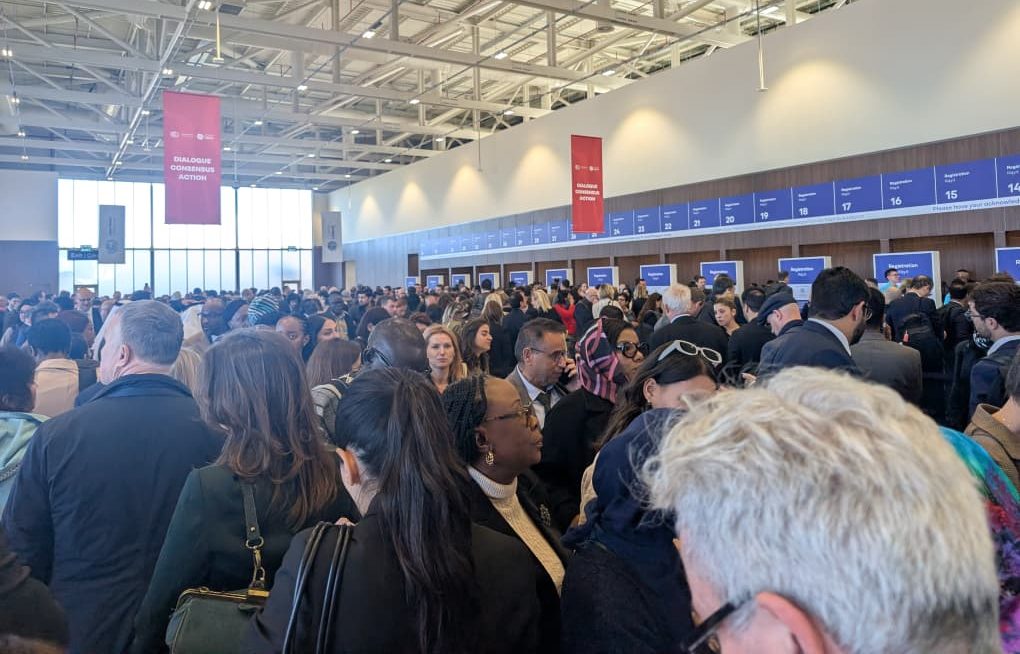
COP31 has finally kicked off in the sunny seaside resort of Antalya – at least for those lucky enough to have made it through the long queues snaking around the sprawling expo centre where the UN climate conference is taking place.
The joint COP presidents, Türkiye’s Murat Kurum and Australia’s Chris Bowen, have presented their priorities to fellow diplomats – including a new goal on electrification, the establishment of a just transition mechanism and better access to climate finance – before the negotiations begin in earnest.
Kurum announced that issues around the summit’s agenda had been resolved over the weekend. African countries had pushed for additional items on adaptation finance and trade, while Nepal wanted formal discussions on mountain issues in the wake of the devastating flooding disaster that struck the country.
Agreement was reached to drop the African request after late-night talks, with a view to continuing discussions on finance elsewhere such as in a dedicated work programme. Mountains and climate change will become a regular agenda item in the UN climate process with fresh dialogues planned on the topic.
COP31 Briefing: What to expect from the Antalya climate summit?
In his speech to the opening plenary, Australia’s environment minister Chris Bowen, who will preside over the negotiations in Antalya, outlined the COP co-presidents’ expectations for the cover decision that will offer a summary of the talks’ main achievements.
“There will be no surprises. This is not about duplicating negotiations. It will not be a lengthy political declaration, but a focused, practical, concrete response to the challenges and opportunities before us,” Bowen said.
It will be “a decision that reflects the urgency of the climate challenge and the enormous opportunities created by the global transition. One that gives confidence to governments, investors, businesses, communities that the world is moving faster and working together,” he added.
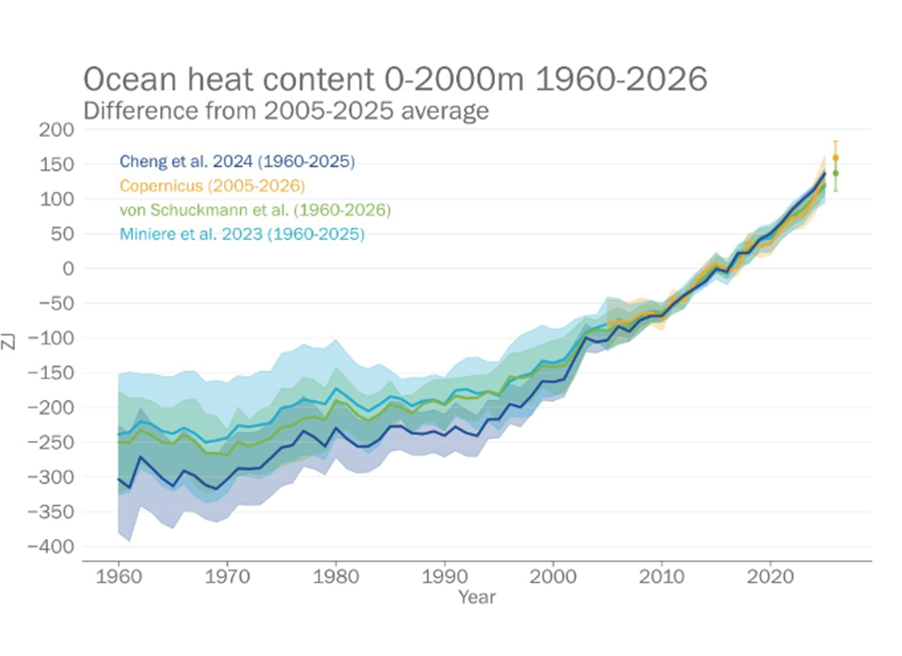
UN: El Niño unleashing heat from hottest oceans ever measured
As diplomats gather in Antalya, a new sobering update on the state of the Earth’s climate from the UN’s weather agency should focus minds.
The World Meteorological Organization (WMO) says the world’s oceans now hold more heat than ever measured. A rapidly strengthening El Niño is releasing some of that heat into the atmosphere, pushing temperatures higher on a planet already baked by human-caused climate change.
“El Niño and indeed the state of the global climate in 2026 gives new meaning to the phrase off the charts,” said the WMO’s Secretary General Celeste Saulo. “El Niño doesn’t add new heat to the planet. It releases heat from the ocean, which is the warmest ever measured. There is simply more heat available to release.”
The UN agency says 2026 is on track to be one of the four warmest years on record globally. That would make 2023 to 2026 the four hottest years in 177 years of observations. The global average temperature from January to September was 1.47°C above pre-industrial levels, just below 2024’s record of 1.55°C. The agency expects the final figure for the year to be higher as one of the strongest El Niños on record takes hold.
The current El Niño – a naturally occurring climate pattern – is expected to peak in December and continue until at least February 2027. As a result, the WMO expects global average temperatures to remain “exceptionally” high through late 2026 and into early 2027.
-
National climate plans now promise half the emission cuts expected by UN
The US exit from the Paris Agreement and weak new pledges leave 2035 emissions just 6% below 2019 levels, against 12% projected last year -
Tensions set to flare over trade at COP31 as China makes it a priority
After difficult talks in Belém last year, trade is likely to remain a sticking point at COP31 despite Brazil’s efforts to contain the issue to a series of dialogues
Bill Hare, CEO of the global science and policy institute Climate Analytics, said that while El Niño will command the headlines, “no one should be in any doubt that the bigger villain is man-made climate change”.
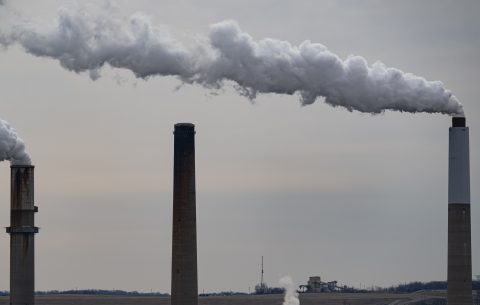
According to the WMO, El Niño typically adds around 0.1–0.2°C to annual global average temperatures. That is a fraction of the warming of more than 1.4°C recorded last year, which is primarily caused by greenhouse gas emissions mainly from burning fossil fuels.
UN boss António Guterres said a “supersized El Niño is colliding with a planet already superheated by manmade climate change”.
“Leaders must get serious by cutting emissions faster, accelerating a just transition from fossil fuels and delivering the finance and protection vulnerable countries need, “ he added.
At the COP31 opening ceremony, a Turkish promotional video struck a suitably apocalyptic note, implying that while nature and life on the planet will continue, humanity may not be a part of it unless countries choose to step up action to curb global warming.
IPCC chief urges governments to decide on report timeline
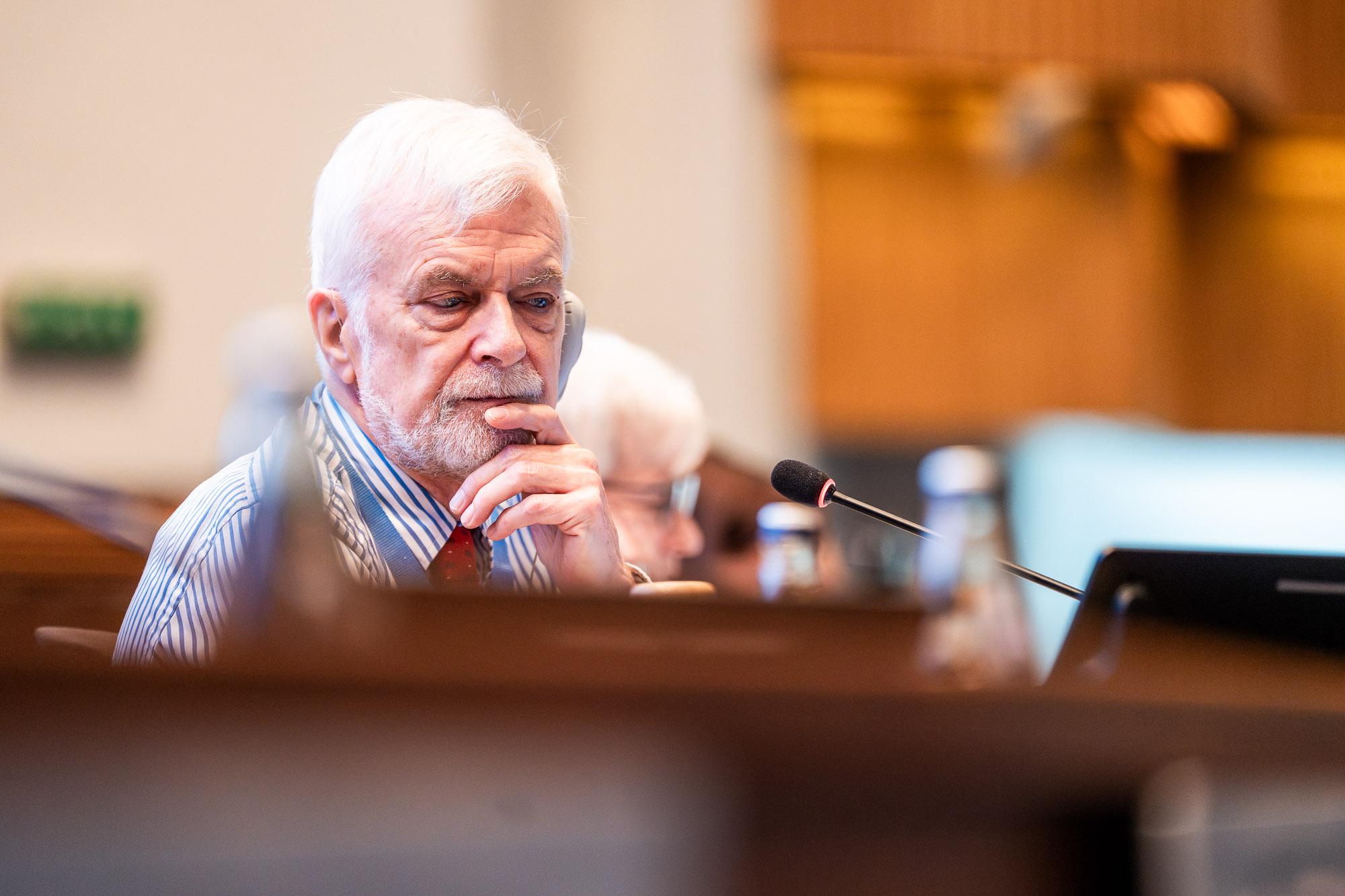
The chair of the world’s top climate science body has urged governments to take a long-delayed decision on when its next reports should be published so that they can steer climate action.
“Climate action without climate science is rather like a ship without a rudder,” said Jim Skea, the chair of the Intergovernmental Panel on Climate Change (IPCC).
He told the opening session of COP31 that the IPCC “faces operational challenges and reputational risks from the current impasse on the timeline for our three working group reports”.
Since 2024, governments have been unable to agree on whether the AR7 set of reports should be published before or after the next Global Stocktake (GST) of national climate plans in late 2028.
If the flagship reports are published before, they can feed into the agreed response to the second GST. At COP28, the first GST outcome included the landmark commitment to transition away from fossil fuels in energy systems.
Europe, small islands and the least developed countries, plus many Latin American and developed nations, want the IPCC to meet the deadline to inform the second GST.
But around a dozen developing countries plus Russia – led by India and Saudi Arabia – have argued that the reports should come later in order to allow for greater research input from the Global South.
After talks failed and were suspended last month, governments and IPCC scientists will try again to resolve the issue in virtual talks beginning on December 1.
Despite this disagreement among governments, Skea said the IPCC’s “scientific engine room is humming with activity” as scientists continue their work. But, as they are unpaid for their IPCC work, they are finding it increasingly difficult to find time for it alongside their “busy professional and personal lives”.
“In my early days in IPCC, we could plan our meetings literally years ahead. Now our authors don’t know what is expected of them in the early months of 2027,” he lamented.
The post COP31 Bulletin Day 1: Australia says cover decision won’t bring “surprises” appeared first on Climate Home News.
COP31 Bulletin Day 1: Australia says cover decision won’t bring “surprises”
Climate Change
FLIP OFF WOODSIDE TO SAVE SCOTT REEF: Greenpeace, Michael Caton, Thinkerbell mobilise Australia to challenge gas project at Scott Reef