

Weather Guard Lightning Tech
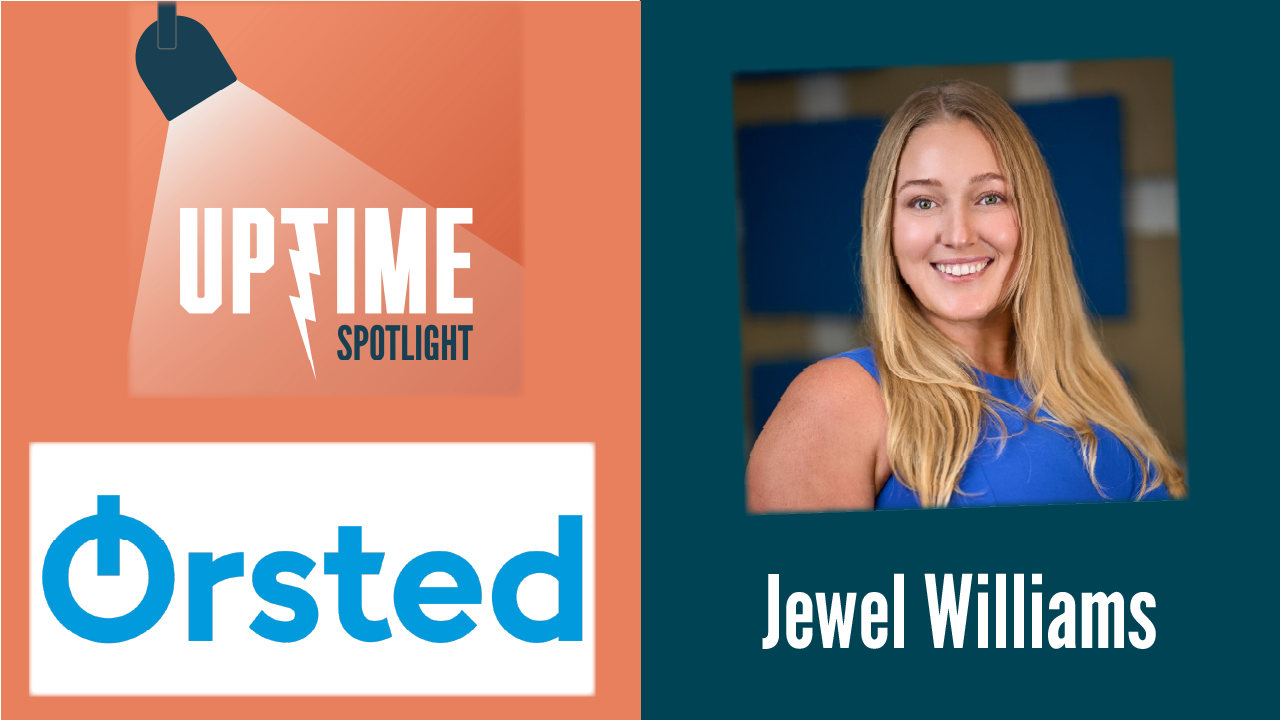
Managing Renewables at Ørsted with Jewel Williams
Jewel Williams, an engineering manager at Ørsted, shares insights about managing a diverse renewables portfolio and the distinct challenges of offshore and onshore wind. Leading operations of over 27 sites, containing wind, solar, and battery storage, Jewel showcases the skillset needed to successfully work in wind.
Sign up now for Uptime Tech News, our weekly email update on all things wind technology. This episode is sponsored by Weather Guard Lightning Tech. Learn more about Weather Guard’s StrikeTape Wind Turbine LPS retrofit. Follow the show on Facebook, YouTube, Twitter, Linkedin and visit Weather Guard on the web. And subscribe to Rosemary Barnes’ YouTube channel here. Have a question we can answer on the show? Email us!
Welcome to Uptime Spotlight, shining Light on Wind. Energy’s brightest innovators. This is the Progress Powering Tomorrow.
Allen Hall: Hey, Jewel, welcome to the program.
Jewel Williams: Hey, nice to be here.
Allen Hall: Well, we have a lot to talk to you about. You’re an engineering manager. In wind and uh, we know all the pressure that’s involved there just from the outside. Um, we’re not working in it day to day. Of course. I am really curious with all the recent changes of things that are happening on the ground, what is your day to day like right now?
Jewel Williams: Yeah. Uh, well, you know, it kind of depends on the day, of course. Uh, so, you know, in addition to wind, both in the onshore and offshore, we have, um, best solar and, uh, crane support on my team. So. Kind of depends on what’s, what today’s challenges are, what are the impending deadlines. [00:01:00] Um, so, you know, it could be compliance, it could be dealing with legal, it could be disputing an RCA or building an RCA it, it really just depends on the day.
Joel Saxum: I think we breezed over that one almost too quick when we were talking about wind engineering manager and we kind of said engineering manager, and then you went wind solar. Battery storage and then this wild card cranes, you know, when, when we speak with people in the industry, everybody’s busy. That’s, that’s the constant email you see back and forth.
Oh, sorry, I was a little bit late there. Thanks for your patience with this. We’re busy with this, we’re busy with that. I don’t think we’ve talked to anybody, Alan, that has like a complete renewables portfolio as an engineering manager. And then also cranes. We’re just gonna throw that in there. Um, so, so I have a net specialty.
I is, is it a lot of firefighting?
Jewel Williams: It, it can be. It can be. Ideally we are shifting towards the kind of reactive to the proactive, but you’re in operations and so a lot of times when work is hitting your desk, the first thing that [00:02:00] happens is a problem where failure and then the work comes to you. So in that case, like there’s certainly quite a bit of, uh, firefighting and you mentioned the cranes is a bit of a wild card.
I think that was one that. They weren’t quite sure where to put. And we had a good team and a decent people leader, and so they were said Jewel, hey, here’s a job description. We need you to hire a crane guy. And that was an interesting experience because I did not have the background to make the hire in the first place.
But it’s worked out really well. I’ve got an awesome guy to support.
Allen Hall: So how many people are on your staff At the minute?
Jewel Williams: Right now we have nine engineers.
Allen Hall: Okay. So you’re doing wind, best, solar, and cranes with nine people. How many wind farms, solar farms and best sites do you have altogether?
Jewel Williams: Altogether? 24.
Allen Hall: Wow.
Jewel Williams: So we have two onshore bests, uh, four solar, and the rest is winds. Uh, and then, uh, three of those are offshore wind sites.
Allen Hall: And how far scattered [00:03:00] about the country are they?
Jewel Williams: Well, they’re a little bit of everywhere, but I will say we have two regions. We have Texas and then we have central, and that means everything except for Texas.
So there’s a lot in Texas.
Joel Saxum: Well, then offshore as well. Right. That’s a, that’s a big, a big wild card to be, to be dealt with from an engineering side because. And I think in, in your organization, you guys are taking on the management of that yourselves as well, correct? There’s no, there’s no FSA here. This is self-perform.
Jewel Williams: Yeah, no, exactly. And for that reason, it’s um, pretty important to kind of know what skills you’re hiring for, I think in the offshore versus the onshore space, the offshore, like you mentioned, we are self performing and so. You need to, you’re gonna be handling all the data, you’re gonna be handling the drawings, you’re gonna be handling this really, uh, extremely technical, uh, level of information.
And the onshore, because you’re behind an ESA, um, you’re not gonna always, you know, you’re very rarely gonna have the [00:04:00] drawings. Uh, you’re gonna have oftentimes a little bit more limited data, and you’re gonna need to be a lot more commercially apt. To be able to kind of just handle the different day to day for that position.
So, but you just, we have everyone on the same team and it’s still working. Great.
Allen Hall: Talk about how old that offshore site is. It is what the oldest offshore site in America of, of any scale, right?
Jewel Williams: Yeah. Block Island Wind, um, is one of the, the oldest offshore sites. For the South Fork in Revolution, which I know revolutionists kind of transfer from construction to operation, but we still work with heavily.
Those are a little bit newer, but, um, walk Island Wind, what is it, 2017 COD.
Joel Saxum: Yeah, it’s been there for a little while, but it’s, it, it’s, it’s interesting concept too, because when you talk about offshore versus onshore wind, they’re two completely different animals and. Most companies around the world will have a dedicated offshore group.
This is, you guys do with this because the, the geotechnic, the cable lay stuff, the, the marine environment, [00:05:00] just working within that, like at, at the end of a day, like the, the ne inside the nelle is inside the nelle. It’s just larger scale, right. Uh, blades kind of the same thing, but there’s a lot of marine environment things that you don’t deal with.
And that’s a, that’s a specialty, right? I come from offshore oil and gas, like that is a special engineer. That usually is dedicated to that process because there’s little things there. That little, little problems turn into massive problems when you go offshore, commercially, economically. Right. And but also technically, so to that, you guys are covering that breadth of things.
It seems like, and we talked about this a little bit off air, to be on your team, to be on the Jewel team. Uh, you must be a kind of lots of, lots of pieces in your pie as a person to be able to ma maintain these things.
Jewel Williams: Yeah, no, absolutely. It, it is a wide scope and the two business cases are very different.
And even sometimes, you know, when we have our recap at the end of the year and we wanna talk about what was working well and what was not working well, we do need to break into the two [00:06:00] groups because these guys are, have a whole team, you know, the offshore team, they have a warranty team. They have. The global support functions that are working directly with them, because those guys are the offshore group where in the onshore you are your own warranty team and procurement and all these other things, and so your escalation path is different.
Your. Almost, you know, the technology is different as well, but I would say that that’s the easiest thing to translate back and forth. Uh, it gets more complicated when you start to bring in the, the moving parts, like you said, logistically.
Allen Hall: So how do you think about your team then? If you’re covering so many different areas at the same time, what approach are you taking?
Jewel Williams: Particularly I would say I took each role individually when I went to go and hire for that position. And you’re looking at this, what is this? Particular position needed in terms of skillset? Who’s the customer? What do they need to be? Uh, you know, what, how deep, what are the hard skills of the job? [00:07:00] Do they need to be able to be extremely nitty gritty, or do I need them to be somebody that can take that nitty gritty information to translate into a higher level content for sharing, you know, with the non-technical people, so.
Definitely had to take an individualized approach. And, um, for my team, I would say it makes it difficult for us to just always cover for each other. We can’t have the VTG engineer step in for the best engineer when they’re out because it’s just two completely different beasts.
Right.
Allen Hall: So the hard skill versus the soft skill. I know when we talk to people that are thinking about joining wind and are going to school to be in wind. I think they really focus on the hard skills, which is great. You, you need to have people understand how best works or solar works, or how a wind turbine operates.
But a lot of times the decision seems to be made up on the soft skills, right? The human relations skills and negotiating skills. It sounds like you’re, [00:08:00]because you have such a small group, you’re totally in negotiation mode almost all the time. How, how do you weigh that, you know, the hard skills, can they learn on the job versus the soft skills?
How do you think about that?
Jewel Williams: You know, the hard skills are always going to be a plus. Like you said, you need them. You can’t get away without them. Every engineer on my team is extremely sharp and and intelligent. The soft skills are gonna be necessary though to make that intelligence worthwhile and impactful across the business.
So to me, it is really important not to have engineers that are just intelligent, but also can’t communicate. And that doesn’t necessarily mean I want outgoing, you know, extroverted engineers. It just means that they have to be able to, you know, take ownership of a project. Drive initiatives on their own, work independently and work with technicians, work with stakeholders, you know, whoever it needs to be and be able to.
Convey their ideas and their recommendations, uh, with strength and confidence. [00:09:00]
Joel Saxum: I think that’s important too because the, the stakeholder map that you must fulfill is huge, right? You’re, you’re to get things done, as we were talking about the customer, right? The customer is the wind farm sites. You guys are there to support them, so you need to be able to synthesize ideas for site supervisors, technicians.
Then the next day you might, or that afternoon, you might need to turn around and synthesize the same idea and concept in a business case for a tax equity partner or an asset manager, right? So that, that ability to kind of be a chameleon in your communication styles, like that’s a, that’s a tough thing to do.
And some of that doesn’t come, like that’s a hard thing to train, right? Some people don’t, they just don’t take to it. And that’s fine. Like I said, the, the, the, the world needs all types of people and a team needs all types of people. But I think at, uh, like your level and where you’re at, um, the importance of being able to adjust the way you speak, um, take ideas and put ’em in different contexts and formats, that’s tough.
Uh, but it [00:10:00] needs, it needs, it’s a skill. It needs to happen.
Jewel Williams: Yeah, no, absolutely. I definitely prefer to hire, you know, a little bit of grit over academic. Success, I would say you want somebody that can get out there and get it done.
Allen Hall: So in terms of wind right now. You have a number of wind sites, are they all the same turbines?
Are there a variety of turbines? What have you been handed with in terms of a portfolio that you have to manage?
Jewel Williams: Our portfolio is mostly homogenous. We do have, uh, occasional site here or there that’s a little bit different, uh, breaking the mold. When it comes to wind. So, um, we have a lot of the GE two Xs, but we also have a Siemens CESA and a VESTUS site onshore offshore.
We have both, uh, GE and SGRE equipment. So,
Allen Hall: and what does that do to your staff then, when you have that variety, particularly onshore and offshore? Are you constantly training up your people like a Siemens cesa, offshore turbine, you’re it in the [00:11:00] us? How do you manage all, all of that? Are you, are you trying to.
Trying to spool up, uh, talent? Or are you trying to bring in talent? What does that even look like?
Jewel Williams: Yeah, no, I mean, I’ve gotten to a pretty good place right now where I feel like I’m somewhat coasting. I’m kind of surfing the wave, but I’ll say the last two years we had a lot of, a lot of training up, but you need experience, uh.
For the offshore space, you’re completely right, like you need an extremely strong engineer. You’re not gonna bring someone fresh out of school and try to teach them. We have that strength in our offshore, offshore talent pool. And so now anybody you bring in under them, they have the, the senior engineer there to just learn from them.
And it’s, you know, easy pipeline. After that, I’m training my people to train the next ones.
Joel Saxum: Well, how do you, so let’s think about that one. So just have that conversation because. Right now, again, we talk about the shortage of technicians regularly, but there is really a shortage of engineering talent engineers, asset managers, people that can really make these things.
And by these things, [00:12:00] I mean, winter rides make ’em sing. How do you, how do you, as a people leader, right, as as Jewel, that manages this team? How do you deal with, uh, attrition rates? I know you had said some, some great words. We heard it, but I actually, I know a lot of your team, right? So I’ve heard some great words about you from them.
That’s fantastic. But how do you handle attrition? What does it, what does it look like? What are some of your retainment strategies as a manager to keep these people engaged and happy in their job and moving forward?
Jewel Williams: I will say that I’ve been fortunate enough not to deal with a ton of attrition and the attrition that I do have.
I think they’re usually really sad to go and there’s some extenuating circumstance to, you know, personal life, whatever, for the reason that they’ve had to leave, which has made it easy for me to kind of be happy for them at, at the end of that transition, say, Hey, you know, you’re doing the best thing for you, and I’m absolutely happy for that.
It, it does put a strain on us. Short term, we run very lean, so if one of us is gone, it, it can be a little bit, uh, of a, a [00:13:00] stress points on the machine there. Um. We have a good talent acquisition team, and we’re usually pretty well supported for going, getting another role, uh, started if somebody does leave.
Um, but we also have just talent elsewhere in the business that you can rely on. So there’s experts that are in EPC, there’s experts that are in those global functions that if something comes up while they’re gone. You can usually get help. I think more of the time I feel the attrition and the like administrative or the day-to-day, like the, the small stuff where you’re like, oh, this would be so easy to delegate.
But now I’m doing that because there’s no one. In that space to, to help me kind of work through the small stuff.
Joel Saxum: So how do you, so, so give me, okay, so we talked to Tricia a little bit, but give me a, a, uh, let me, let me dive into the mind of Jewel here. As a manager, what are the kind of things you do? How do you like to manage your people?
To keep ’em, keep ’em engaged, to keep ’em happy?
Jewel Williams: Yeah. Uh, I think a lot [00:14:00] about what. You know, the different teammates on my team are motivated by, I think as a leader, it’s always been my primary strategy to just show up with mutual respect and lead by example. A lot of times when people see you working really hard and see how much effort you’re putting into their career or their team, it seems like you don’t have to ask many times for them to try to match that.
It just kind of builds the right community. I like to think of just the different ways. You know, my husband’s talking my ear off at tax season. I’m thinking, you know, I have a lot of young engineers. Why don’t I get a tax guru on here to give us a little refresher on tax stuff and we’ll do that. Or, you know, morale is a little low.
Like we will put together a summer series and we’ll kind of align our presentation, skill improvement with business agendas and try to get our names out there in the business. You know, it just. Kind of trying to keep things a little bit exciting. And then [00:15:00] another big one would just be making their problems.
My problems in terms of like escalation and advocacy. Like nothing is worse when you tell your manager then something’s bothering you again and again and you’re just not getting any reaction. So, you know, if, if something is an issue like that, that becomes my first priority.
Allen Hall: Well, I always see sort of Jewel’s layer of management as being on an island because there’s people below you.
Doing all the digging and doing the the thing and doing the work, right? And then there’s people above you who have the bigger project schedules and budgets and are able to move bigger, big chess pieces around in the company you. Have to translate all that both directions. Here’s what the frontline people are saying up to management, and then translate it back down.
Here’s what management’s up to, and this is why we’re going in this direction. And in neither case, does your opinion matter all that much in this, in the [00:16:00] sense you can say your piece, of course, but the direction of the company is the direction of the company and what your people think is what your people think.
And you have to just carry all of it. It. How does Jewel train Jewel to do that?
Jewel Williams: That is a good question, and I would just say maybe I’m winging it, but
Allen Hall: are you doing things on your own to say, I, I need to be able to disconnect? I mean, it could be simple as that. Like. At five o’clock on Friday, I’m unplugging.
That’s it. I need a little bit of sanity time. Or is it, Hey, I’m, I’m reading a book or I’m listening to a podcast like the Uptime Wind Energy podcast or something to like, give me a little more meat to what I do to be able to manage some of this, because I just see you as being in a really hard position today.
’cause you have a small team, they’re super talented, they’re really good people, but it doesn’t make it easier in a sense. You, you’re still. You’re still in a under a crunch. How do you just navigate that?
Jewel Williams: Yeah, yeah, absolutely. I mean, [00:17:00] I definitely listen to the podcast, but in my mind, you guys serve me more of the industry facts ’cause I’m laser focused in my area.
So you guys tell me what’s going on in the world, um, when it comes to. To leadership advice and like dealing with an issue. You know, one thing Worsted does have is a really strong talent pool and you say that I’m an island, but there’s islands next door. You know, my counterpart in high voltage or Tommy with the, the generation in central, like I call them when I have a thought and they’re close enough to the issue with, of course, like maintaining any sort of privacy that you can talk them through and say, Hey, this is what I’m struggling with.
What are your thoughts and get their perspective. And even if sometimes you just stay on the phone for an hour and just complain about how things are, a lot of times you get off the phone and you’re feeling a lot better. And then other than that, you know, I’m just, I, I, I would like to read and do a lot of like, leadership kind of trainings and, and listen to the audio books or [00:18:00]whatever.
Um. A lot of it, I think is just so situational, and when you have that aha moment, it’ll be on a dog walk or laying your head down to go to sleep tonight. But there will be something and you’re just gonna think, oh my gosh, that’s how I’m gonna get. This person to, to, to understand what I mean or how that’s how I’m gonna communicate this to, to this other person, you know?
And, and that’s, those are the lights where I’m like, I text my, my personal phone, my work phone. Like, we’re doing this tomorrow at work.
Joel Saxum: Well, that, but that’s what you said, like, I’m, I’m just, I’m just winging it. Right. But I think that there’s, and I’ll go back to that statement and kind of what you said after that.
One of the largest trends in leadership, uh, of the last 10 to 15 years is authenticity. Nobody wants to feel like they’re being led by someone who’s faking it or who’s like not, who’s like giving them a half truth or kind of like feels greasy or something like this, or is a salesman to them type thing.
Authenticity is, is how, in my [00:19:00] opinion, and that’s how you lead properly, right? So when we talk about, when you went back to say like, Hey, if I’m working hard, they see that. If I make their problems, my problems, they see that that’s authentic jewel. That’s who you are as a person. That’s not you going like, I should do this strategically.
That’s you going like, this is just how I am. This is who I am. That’s what makes you a good leader, right? So when you’re having these, like no matter, no matter what you listen to, what training you do, whatever, that person still needs that, that authentic aha moment to make that an action, right? So you can, you can go get a degree in leadership.
Right. But if, if you don’t have those aha moments or those things that pop up when you’re walking the dog or laying, laying down to sleep, you don’t, it’s not gonna, it’s not gonna come through as true and real. And I think that that’s a big thing. Like within your team, we’ve talked about this. Like, like I said, we’ve dealt with your team, we’ve, we’ve worked with them.
They all love you. Right. That’s why you’re, that’s why we’re here talking about this. We wanted to get some more of the opinions of like what makes a great, uh, people manager here in. In wind because we [00:20:00] see a, you know, this kind of big turmoil, this boiling water of engineers in wind, whether you’re at an OEM, whether you’re at a, uh, and, and people are, people are losing positions and not necessarily always because of them, right?
Sometimes it’s just a reorg and whack and all of a sudden all these good engineers hit the market. Um, and people look at like, why’d you lose your job? Or whatever. Like, that’s not the case. Um, but all of these people need landing spots. Right. So that’s when we say like, let’s, let’s talk with someone who’s got, dude, you know, who’s front lines on this engineering, managing, um, war.
And see what they have to say. So I, I would thank you Jewel, for lending us your ears.
Jewel Williams: Oh, absolutely. And you know, you say, they say great things about me. I would say the same. Same about all of them. It’s one of these, the rising, the rising tide raises all ships. Just today I’m getting messages from a different hiring manager that was like.
You hired all these people and they’re so incredible. Can you give me some tips about going into this interview process? Because you clearly are doing something right, and I was [00:21:00] like, you know, send ’em a little snip. And I was like, you guys are just making me look good just by showing up today. Like, so I, if I’m getting like 10% commission on their accomplishments, I’m like one of the best employees they’ve got.
Then
Allen Hall: well, let’s talk about that hiring role because I, I know there’s gonna be a, at least a decent bit of hiring for specific positions in wind and solar and besson. All the above. What does that look like? How are you managing that? I know we talked off air and the number of, uh, personal interviews you do was astoundingly high, like wow.
Uh, several weeks of your year or just devoted to that. How do you think about that? What approach are you taking to. Find these people.
Jewel Williams: Yeah. Well, uh, as I mentioned before, you know, we have a really good talent acquisition team that does a lot of the, you know, promoting roles and pushing these things to different areas so that you get good applicants and you have the good pool of people just to pick with originally.
And then, uh, you know, [00:22:00] from there, I think, like I said earlier, it is very specific on what role you’re hiring for, but for me, the, you know. I, I like to prefer to do my own phone interviews, um, when I can. Of course there’s sometimes time constraints where you’re just never gonna get to do that very initial interview.
But, uh, you know, I’m looking for somebody that has, uh. You know, a passion or ambition that seems to be aligned with my team and the company. I’m looking for somebody that is promising long term for the role that it’s not necess, you know, I’d rather give it to somebody that’s slightly underqualified than somebody who’s obviously overqualified because you’ve got an opportunity to give to somebody that’s gonna work really hard and and be very fulfilled in that position, versus maybe alternatively somebody that’s considering it as like a placeholder for now.
Allen Hall: Well, has there been a, a philosophical change over the last couple of years? Uh, at least I’ll give my thought on it for a long time. [00:23:00] In wind, you would hire the person with a PhD if you could find them, and then it was the masters and then there’s the bachelor’s. It’s sort of chain of what, what was happening.
It, it wasn’t necessarily for those ability to navigate people, it was more about their knowledge of, of particular subject. Is that changing just because of the, the way the industry is moving, that there’s a lot more thinking on your feet, those kind of skills than there are in a diploma?
Jewel Williams: Well, I can only answer for.
The ED perspective where, you know, we’re the owner and operator. So if I were designing these turbines, I might be looking for the PhD in bearings for my bearings. But you know, that’s, that’s not the job for us, for ed, you need to know the entire system and. You need to be able to be very resourceful in your, your fact finding.
And so while you do need those hard engineering skills, there’s a lot more soft skills that you need as an engineer from the owner and operator side, especially if you’re working behind an ESA. [00:24:00]
Joel Saxum: Yeah, the co the, just that knowledge. The knowledge of, like, you go to engineering school, you don’t necessarily learn contract knowledge and you, you don’t learn interpersonal relationships, so like you don’t have an oral interpersonal communication class, maybe as an engineer.
Um, but so I, I think those, those skills, and it’s compounded now because ORs, Ted’s been through a few reorgs in the last few years. You can, you can’t name me an operator in the United States that hasn’t been through a reorg in the last few years. And when you’re in those reorg situations, the, the stakeholders change.
The job may change. Today, you may have been looking just at drivetrain tomorrow, you may be looking at a complete system. As an engineer, you need to be able to think on your feet and, and, and move and groove and, and I think that, and I’ll, I’ll go to this one, Alan, with you. I think that that’s actually a, a class, and, and maybe I’m wrong, you’re more, you have dealt way more with engineers than I have that is more of a classical engineering thought is I’m a specialist in this, this is what I do.
That is something of. [00:25:00] 10, 20 years ago where you didn’t have, Nope, not everybody in the company was on Slack talking about all kinds of different things. It was just like you’re in your office doing your work. Someone may come by and visit you once a week to make sure that you got your problem solved.
But now it’s kind of like there’s this, it’s a, it’s a broader communication. It’s a broader skill set. It’s a ever changing dynamic workplace. At least in the wind industry, right? That that’s what I see. So I think that as and if I was to talk to a young engineers right now, or engineers that are switching jobs or that are forced into the job market, expand your horizons on communication skills.
That’s, that’s a big thing for me.
Jewel Williams: It’s a big thing for my team too. Like I mentioned, right now we have a whole summer initiative, uh, improving our presentation and communication skills, and everybody has to do at least one presentation in some manner to stretch themselves. Um, because I completely agree with you.
I think it’s understated how important that is in, you know, corporate America. Or really any [00:26:00] corporation, I suppose.
Allen Hall: Do you think of it more as a, I would use some loose terms here just so I can ask a proper question, but do you think of your, your group as an organism, a living, breathing, moving thing? Then just a structure.
I, I’ve worked for a number of companies over the years, and if there’s an empty slot in this organizational structure, I need to fill it because the whole thing will collapse. That was their thought. It was like putting brick on brick in terms of a structure. What you’re describing right now is more of, Hey, we’re, we are all this moving breathing group and we’re working together, and yes, we’re gonna cover each other.
It’s less hierarchical, it’s more interactive. That requires I, I think a, just a different mindset as a manager to be able to do that. How do you think about that? How do you see a move like that? It could be from the outside. That’s what it looks like to us. With your people.
Jewel Williams: Oh yeah. No, absolutely. And you know, this is.
Partly, I think, personal experience of [00:27:00] mine, but my thesis was actually taking like ecological metrics and assigning them to like operating systems and thinking of it as like, okay, you have this ecosystem and we, we all need to survive and we need things moving through and we need, you know, um, and so that’s kind of, I would say probably how I’m looking at it too.
So these are the types of things that are really important to be aware of. You can’t have everything streamlined because you’re gonna hit bumps in the road and then, and then what?
Allen Hall: So how do you look at the next couple of years then? Because right now, watching from the outside, we’re not as deep into the wind. Uh, I’ll say craziness as it exists today as you are. What are you doing over the next six months to a year as far as your team and how you’re thinking about your team and keeping them engaged and, uh, enthused, happy hour?
It could be as simple as that. Oh, seriously. That that gets a, that’s a very valid answer though, because there are people. [00:28:00]
Jewel Williams: Yeah, they are, although they’re also engineers and I will say in our corner of the office sometimes we’re complaining about the next happy hour. Okay, so maybe, maybe stick to the free food and the mini turbines.
That’s what makes our heart sore. And actually that’s, if you guys know, to where to get some mini turbines that might go on the six month plan, lego.com. I like to like understand people’s like personal passion as well. So you know, for example, one of my employees just. Is really passionate about the AI technology and we have him running different presentations across the entire organization.
I mean, we invited just 901 people to his next invite where he’s gonna teach people how to prompt AI and he’s going to, to walk them through how he could change their business.
Allen Hall: One of the things I wanted to ask about going forward was about ai, because I think as we, AI becomes more agentic and you’re bringing it into the company and they have their own special ai, everybody seems to be having their own special ai.
Are you being asked to implement that as part of your team? Like you, [00:29:00] you have all these great employees and you have this AI bot on the sideline. Are, are you, are you using that as in sort of the day-to-day or how are you thinking about AI and then, and sort of the pressure from corporate to implement it, to save money or.
Whatever they wanna do. Improve efficiency.
Jewel Williams: Yeah, absolutely. Uh, no one’s having to pressure us in particular for the ai. Um, so we have, uh, we do have our internal AI and Okay, so it depends on the capabilities. Every AI is gonna have different capabilities, but, um, you know, we have an AI that’s available to anyone that is gonna be great for brainstorming, going to be great for sending an email or cleaning up some text or checking for grammar.
Then we also have co-pilot, which actually is not available to the entire organization yet. I’m hoping that they’re expanding it. There’s only a certain amount of license, and those are highly coveted, which is why I say nobody’s forcing us.
Joel Saxum: I didn’t even know you needed a license for co-pilot.
Allen Hall: Yeah, or the engineers [00:30:00] engaged with that.
Like, I want to use AI because I’m an engineer. I wanna play with a toy. Is is that the feeling you’re getting from. Those tools.
Jewel Williams: Yes, there’s the aspect of just like that engineering curiosity and this being a new technology that everybody is very interested in. But I think more than that too. We’ve realized how to leverage it.
You can’t do it without an engineer. I would never let it become the engineer by itself. But like we’ve been able to use it to write gooeys, we’ve been using, able to use it for a quick data analytics. I’ve been able to just take pictures and throw it into there and say, can you do the math on this? And then the average and stuff, and it just takes that and does it in two seconds.
And so it’s not something that is doing the job, but it’s a tool that’s helping the job get done.
Joel Saxum: I think that’s the important thing, and maybe this is where you’re going with the conversation, Alan, is, is, you know, we keep seeing these, I saw a report today that was like, these are the jobs that are gonna get lost to ai.
And that’s why I, that’s why I focus on the communication ability, because there’s just certain things that, like [00:31:00] you, ca, AI’s not gonna replace certain things. Right? And the high level engineers and, and the te people that are on your team and the dynamic workplace, like they’re not gonna replace it, in my opinion, is embrace ai, embrace these technologies because this is what’s gonna make you more efficient at your job, get things done better, faster.
Uh, more cost effective. Uh, that’s my take that, I mean, I use AI stuff all day. I know Alan does, I know Claire does. We use things regularly here at, at Weather Guard and the Uptime podcast to make things kind of, uh, cruise. Everybody I talk to that’s in an advanced position is using it somehow. I’ve seen things come across companies, like we’re literally having a symposium on how can we use a AI faster.
One of our, uh, friends of the podcast is doing that right now in their company. So I, I think that it’s, IM, it’s important to embrace the tools and not be afraid of them. And, and I think that some people are getting that analysis paralysis where they’re kinda like, I don’t want to see this. I don’t wanna do this.
Like, it’s gonna leave you behind. That’s, that’s my take.
Jewel Williams: No, certainly. I think it’s not gonna [00:32:00] be AI that takes your job. It’s gonna be somebody that knows how to use AI that takes your job.
Allen Hall: Can I, I wanna ask you about the, the repair business and how you’re managing that a little bit, because you’re a small team and you have.
So many sites and you have a specific kinds of turbines that have certain issues and you have crews out, uh, doing work. One of the, one of the things we hear from all owners operators right now is like, managing all these people out in the field can be really a lot for engineers to do that. How are you trying to manage all that and keep your operational efficiency up at the same time?
Get the job done. ’cause you, you have to manage those people on some level, especially on the engineering side. How are you trying to navigate that and control that and manage that today?
Jewel Williams: Yeah, so actually, so the operations engineering group we’re. In operations, but that would be handled by the generation group.
So we, that’s kind of who we think of as our [00:33:00] customers. Those are the guys that are managing the day-to-day operations. And you’re absolutely right because, you know, especially in the middle of blade season, you might go out to a site that has 38 turbines and 60 technicians onto it that day. Like it’s just crawling with people.
Right. Um, and. Oh, I don’t know how they do it. You’re gonna have to ask them because it is impressive.
Allen Hall: It all, it all kind of goes downhill. If there’s an engineering problem and they need to get to the expert, there must be sort of a constant barrage of incoming from, Hey, we opened up this blade. It’s not what we thought it was.
What do we do? Or, Hey, we noticed that there’s this bearing issue, or whatever it is. Uh. In the summertime, it, it seems like you would just be constant bombardment of problems. Is, is that the way it is, or, or is it a little more organized than that? It’s.
Jewel Williams: A little more organized than that, but it is still like that in some way.
So, like you said, you know, especially you’ve got, you know, [00:34:00] 16 different sites with blade repairs going on and they’re gonna say, oh, we found this, we found that just to one blade engineer, they’re gonna be inundated with a lot of communication from site, um, for a lot of our other. So what we usually do is we have these kind of structured performance dialogues where at a week at a time we take, try to take the things on.
For the week, you know, um, because we do also have just a fleet that has a lot of the same turbines. Some of these things are con, you know, you already have this logged, and we have a case management tool that we keep updated. We just need to add, add one note, or, you know, it’s, it’s going into a ticketing system.
The site managers put in tickets for this. That will be then linked in to the case. We’ve assigned to it. So it is more organized. But I will say, you know, especially you mentioned blades in the blade space, I do think, um, that’s one of the ones where [00:35:00] you’re probably getting just the most. Inundation of requests during this time of year.
’cause people need an answer and they need it now. They’re not gonna wait for the ticket to get resolved or whatever. They’re like, Hey, you know, repair or replace or, hey, you know Exactly. It’s, it’s calls and so. Shout out to Yolanda for, for being the, the Great Wall of China in between me and those day-to-day messages.
Joel Saxum: So is that, so, okay, so say Yolanda’s getting in, in like just pounded with these requests, but is it like a Tommy and a Todd that have to go and make the things happen in the field so she’s dealing with those guys every day? Or is it their people?
Jewel Williams: So it’s their, Tommy and Todd are the people, leaders of the guys that are gonna do it every day.
Now, of course, like if they need to get out there, they absolutely will. Um, but that, you know, Tommy and Todd and I, we also meet very regularly and we have a monthly kind of scrum call where it’s like, Hey, here’s. Here’s the top problems. I know it’s, it’s not the Agile scrum, but that’s just what [00:36:00]I’ve named it, so.
So
Allen Hall: what’s the hardest part of the job right now?
Jewel Williams: I think in positions like ours, I would say that one of the most common challenges would just be like your time management and your prioritization of when everything is urgent to all of the people who are coming to you. How do you then decide what’s most urgent?
Um, and then there’s of course, just like the personal aspect, you know, what, what do you personally enjoy? Um, for me, not the biggest fan of compliance. I recognize and respect the need for it, but a day that’s, uh, all compliance might be like the worst part for me. But conversely, I have other teammates and they’re like, no, jewel, I live for this.
And they’re like, you don’t get why it’s important. And I’m like, no, I, I do, but that just doesn’t make it fun for me.
Joel Saxum: I’m with you. Administrative stuff drives me nuts.
Jewel Williams: Yeah. So that I think sometimes, you know, making sure everyone fully understands like the technical gravity before going [00:37:00]into a decision you can try as best you can, but then six months it seems like the message is lost.
So like another hard part I think is making sure that you have properly communicated your stance and that everyone. All the essential parties know where you stand about a certain issue and what your recommendation is so that when they go and have that commercial negotiation or whatnot, they have the feedback from you and they haven’t forgotten, and just making sure nothing falls through the cracks there.
That’s a big challenge as well.
Joel Saxum: What I see here from Jewel, from you as a people leader, people manager, team leader, is a decidedly millennial take on the workplace. It’s not so much like the Gen Z really young stuff where it’s like we need, you know, a foosball table and this and that. Like I don’t think that’s Gen Z, but Okay.
Yeah, maybe Gen Z’s not playing foosball. I don’t know what it is anymore. Sorry, I’m getting old. The TikTok booth, you have the leftover from your, your Texas. Upbringing, your a and m education, your [00:38:00] doer attitude, your, your watching your parents in small business of this, like, there’s things we need to get done.
We need to have doers, we need to be there. That’s kind of the old school mix, but into that millennial side of things where you’re, you are caring about your people individually. You’re looking at what drives them, what impacts them, what their personal passions are, those kind of things, and checking in with them regularly on these things.
But you, you have the ability to get things done. Respect and, and honor and support those parts of the individual on your team. Um, and, and you’ve found success in it. And I, that’s why I was saying like, I think it’s a decidedly millennial take or an older millennial take on what management looks like now versus what.
A Gen X management in engineering looked like before, and that, I guess that may be a hot take. I may piss some people off, but,
Jewel Williams: well, I am a millennial, so
Allen Hall: I come from a, I come from a time when people threw staplers at one another in, uh, conference rooms and like, there’s fist fights and that kind of nonsense.
And big [00:39:00] corporations of all things like, yeah. Did you know that Bob threw a stapler Joe over there? Like, uh, it’s, you know, it’s today’s Tuesday. What’s, what’s new? Right? But that doesn’t, that doesn’t happen like that anymore. At least not in, not at the level it once did. It’s a little less rough around the edges, but it is, you, you have to adapt to the times in terms of being a manager.
You, you don’t get to choose who comes outta school. What those. People have been through, like for example, I’ll give you the good example right now, there’s a lot of people coming through engineering school now that spent their high school in COVID. Maybe even part of their college education was in COVID.
Though they have a totally different world experience than someone who spent their summers abroad or spent their summers as an intern working on a cool project. They probably didn’t get any of that. So thinking about like who is coming out now and who, who is my available workforce and what, how do I adapt as a manager [00:40:00] to that, I think is really critical.
If you wanna be successful and. Uh, Joel, I, I know you, you have to deal with that every day. Are you, do you see that sort of same thing, just the, the different personalities, but it’s also somewhat scattered by, you know, what era they came out of?
Jewel Williams: Yeah, no, and I mean, now that you mention it, I’m thinking about it and the teams that are managed more closely to how I’m managing my team, it is more of that.
Millennial generation, and then you get maybe into some different sections and you’re like, okay, the more kind of rigid you gotta be, the tough boss. I’m not gonna tell you. Good job kind of mentality. Tends to be a little bit more of the older generation, I’d say. And you know, if it, if it wasn’t working for me, I would’ve gone to the other ring.
Like,
Joel Saxum: that’s a good default. It’s an easy default. Yeah.
Jewel Williams: Somehow it, it’s, it’s going great. I’m, I feel like I have to beg my guys to log off sometimes, you know? Somehow they’re still wanting to put in the time and you know it. Like I said, I think it’s just that, that [00:41:00]mutual respect that goes so far with so many people.
Allen Hall: Yeah, the respect piece bridges all eras from what I’ve seen. You can get the person sort of rough and tumble and is a hands-on person and tech technical and maybe a little rough around the edges, but if you build up that respect, it will do wonders and that, I think that’s the tricky part as a manager, knowing that.
Everybody in your organization is looking to do something positive and they’re trying to, you know, have a family, provide for their family, have a career, all of that. It doesn’t always feel like that at times, but just it’s hard to kind of suss that out because you manager have tasks to do. You’re so, you have to translate tasks into people.
The hardest part of engineering is that. Do you see it that way? Do you think of it that way?
Jewel Williams: No, absolutely. I mean, we’re, we’re all human. There’s gonna be days and weeks that we can’t give it the 100% because you’ve got something else going [00:42:00] on. And as a manager sometimes it can be frustrating. You’re like, I know this person can deliver more, but you gotta meet people where they’re at and you gotta invest in that long term, you know, talent and, and that’s the kind of thing that’s gonna pay your pay.
Back in dividends where you’ve, you’ve shown someone that you’re, you know, loyal in the way that you’re gonna commit and, you know, consistency with integrity and these other things, and they all of a sudden are like, okay, yeah, this is a team I really wanna be a part of, you know?
Allen Hall: Yeah. I think that’s it. I don’t discard that.
And listen to Jewel here, which she’s saying is very wise. And, and how you build a team. It’s, it’s how we’re gonna get through some of this, uh, rough and tumble changes that are happening at, at the moment in wind. And I know Joel, I know a lot of people are gonna wanna reach out to you, uh, via LinkedIn. Are you on LinkedIn?
How do people connect with you? Especially people are in your same position or, or interested coming to work for Ted?
Jewel Williams: Yeah. Yeah, you can find me on LinkedIn, uh, under [00:43:00] Jewel Williams. So just. Shoot me a message. You know, I, I’m, I’m pretty available. Looking forward to the, the fame and fortune.
Allen Hall: Uh, Joel, thank you for being on the podcast.
It’s really important that we highlight the people that are doing the work and you’re in a really difficult position and succeeding. So we wish we wanted to highlight that and. Thanks for coming on the podcast.
Jewel Williams: Yeah. Thank you so much for having me.
https://weatherguardwind.com/renewables-orsted-jewel-williams/
