

Offshore oil drilling is a dirty, risky endeavor.
The Deepwater Horizon disaster is perhaps the most dramatic example of how offshore drilling can go wrong. Fifteen years ago this month, the Deepwater Horizon oil rig exploded approximately 40 miles off the coast of Louisiana, taking the lives of 11 oil workers and causing the release of an estimated 210 million gallons of oil into the ocean.
Even when offshore oil operations go as planned, they harm our ocean by causing chronic water and air pollution, littering the seafloor with disused pipelines, and contributing to harmful emissions that worsen the impacts of climate change.
Never miss an update
Enter your email and never miss an update
Despite these well-known risks and dangers, the administration and pro-oil members of Congress are moving swiftly to open more areas of our ocean to offshore drilling and remove regulations and policies that protect marine life, promote safety and discourage harmful greenhouse gas emissions.
Between the speed and and volume of actions the administration has taken, it can be easy to miss the threats on offshore oil and gas drilling specifically. Let’s break it down:
On day one of his second term, President Trump moved to open vast areas of our ocean to offshore oil and gas leasing and drilling. President Trump signed two executive orders that purported to open huge swaths of our ocean to offshore oil and gas leasing, including waters off the Atlantic and Pacific coasts, in the Northern Bering Sea, and in the Beaufort and Chukchi seas of the Arctic Ocean. Previous presidents had placed these areas off-limits to oil and gas leasing, and it is not clear whether the administration has the legal authority to rescind those protections.
Following this executive action, the new Secretary of the Interior issued orders that set the stage for a series of pro-oil policy and regulatory changes. Shortly after assuming office, Secretary of the Interior Doug Burgum issued a Secretarial Order requiring agencies under his authority to develop plans to “suspend, revise, or rescind” key programs, regulations and policies. The Secretarial Order puts in jeopardy policies designed to reduce risk to marine life, decrease the government’s exposure to financial risk and increase the safety of offshore operations, including:
- Permits that require mitigation measures designed to protect threatened and endangered species in waters where most offshore oil and gas activity takes place.
- Regulations that help ensure the owners of offshore oil and gas leases have the financial resources necessary to clean up their equipment after they finish their oil and gas operations.
- Safety regulations designed to minimize the risk of dangerous blowouts and other “loss of well control” incidents.
- The current nationwide five-year offshore leasing program that limits potential new offshore oil and gas leasing to just three lease sales between 2024 and 2029—a record low number.
Pro-oil members of Congress are also taking or considering steps to encourage and expedite offshore drilling. Because of the filibuster, a 60-vote supermajority is required to pass most legislation in the U.S. Senate. However, certain types of legislation—including the budget reconciliation process and legislation passed under the Congressional Review Act—require only a bare majority for passage. Pro-oil members of Congress are taking advantage of these special legislative processes to attempt to push through legislation that favors offshore drilling.

- Members of Congress have discussed using the budget reconciliation process to pass legislation that would require the government to hold new offshore oil and gas lease sales in specific areas of the ocean. If existing executive-branch safeguards conflict with future legislatively mandated offshore oil and gas lease sales, the legislatively mandated lease sales would likely prevail.
- Under the Congressional Review Act, the House and Senate passed legislation to undo a regulation that imposed a fee on emission of methane—a powerful greenhouse gas—from oil and gas production facilities, including some offshore facilities. They also passed legislation to repeal Department of the Interior regulations designed to better protect archaeological resources from impacts caused by offshore oil and gas drilling. President Trump signed both bills into law in mid-March.
These actions represent real threats to our ocean, the people and marine life that depend on it and on our global climate.
At Ocean Conservancy, we actively oppose these short-sighted and dangerous attempts to expand offshore oil drilling, remove environmental protections and reduce safety standards. The United States and the world must move away from risky and dangerous offshore drilling and toward 100% clean-ocean energy. We will continue to work with our partners, members and supporters to accelerate the phase-out of offshore oil and gas, advance responsible offshore wind and other marine renewable energy, address the root causes of climate change, and protect our ocean and the people and marine life that depend on it. Take action with Ocean Conservancy and join the movement to protect our ocean, forever and for everyone.
The post The Latest Offshore Oil and Gas Policies that Threaten Our Ocean appeared first on Ocean Conservancy.
The Latest Offshore Oil and Gas Policies that Threaten Our Ocean

If you’ve ever joined a beach cleanup, you’ve almost certainly picked up a plastic bottle. During Ocean Conservancy’s 2025 International Coastal Cleanup® (ICC), plastic beverage bottles were the top item collected by volunteers around the world. Plastic bottles have been among the top 10 items collected throughout the ICC’s entire 41-year history.
But where do those bottles really come from? We know rivers carry plastics of all shapes and sizes from inland communities to coasts and the ocean. What we know far less about is what makes plastic bottles move within rivers, what speeds them up or slows them down and how likely they are to reach the coast and become ocean pollution. Research on river plastics is growing worldwide, but studies in North America lag behind other regions.
Ocean Conservancy scientists, alongside a team of collaborators from 10 research institutions around the United States and Canada, set out to help close some of these pressing knowledge gaps.
How do you track a plastic bottle?
… with a little help from GPS! We modeled our research after a 2021 project in the Toronto Harbor conducted by our University of Toronto colleagues. Like the Toronto project, our research team outfitted floating plastic bottles with GPS tags that reported each bottle’s location at regular intervals. That let us calculate how far and how fast every bottle traveled. Over a two-year period, we released about 300 GPS-tagged bottles into 30 stretches of river in Los Angeles, California; California’s San Francisco Bay Area; Chicago, Illinois; Washington, D.C.; Miami, Florida; Boston, Massachusetts; and Toronto, Canada.
We chose each of these places on purpose.
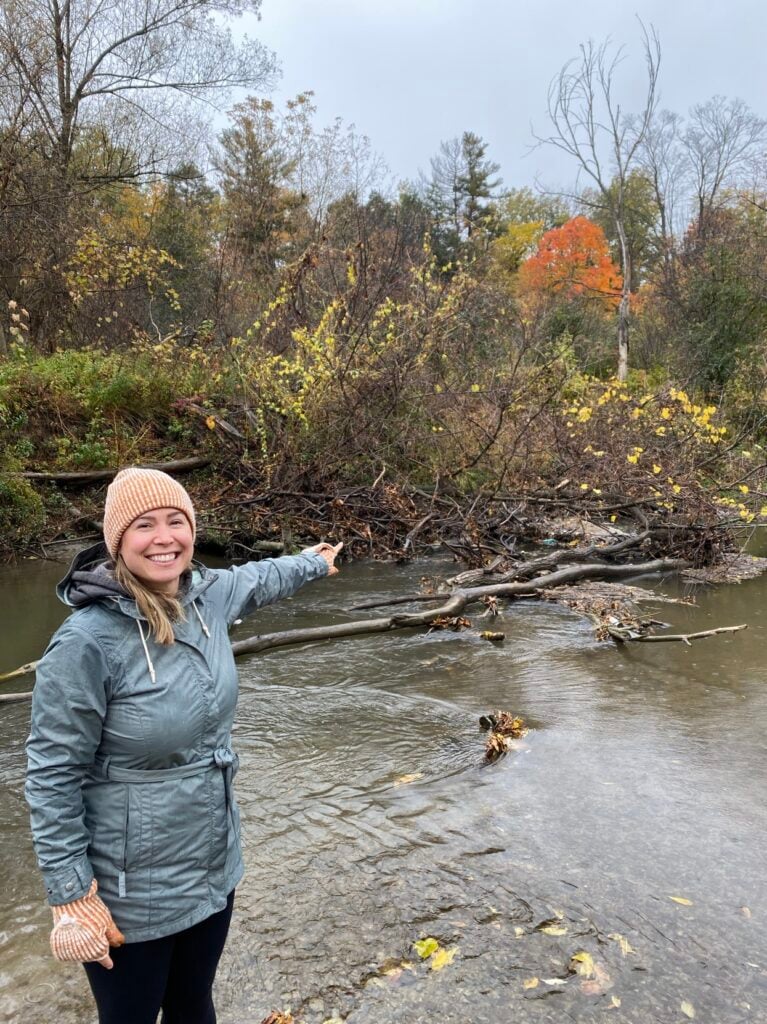
The locations were selected to represent varied watershed types (ranging from temperate to subtropical climates and mountainous to flat terrain) and development intensity (suburban to densely urban). We followed the bottles for about three months each, through changing seasons, storms and rainfall before locating and retrieving them. And while the plan was always to recover the bottles at the end of the experiment, we also conducted cleanups in each watershed beforehand to make sure we were leaving things a little cleaner than we started.
What did we find?
Our bottles went on quite a journey! On average, each bottle traveled 3.8 miles, but distance traveled actually spanned a huge range depending on the bottle and location. For example, one of our bottles barely budged, moving just 240 feet over the deployment period. Another made it further than the length of a marathon, clocking in at 33 miles traveled.
We found river flow was a major driver of how far bottles went, but it wasn’t the only factor—the landscape around each river mattered too. Patterns in bottle movement revealed:
- Forest and vegetation in rivers slowed bottles down. The more forest cover upstream, the less likely a bottle was to reach the coast, because it got snagged in brush, branches and other natural obstructions.
- More urbanized stretches sped them up. Bottles moved farther and faster in more urbanized stretches of river, where there was typically less vegetation to catch them.
Using thousands of GPS points, as well as data about the river systems and watersheds we studied, we built a model to estimate where bottles reaching the coast or the Great Lakes may be coming from. It showed that within a one-year period, about half originate quite close to shore (within seven miles). The other half come from much farther inland, up to 120 miles away!
Why does this matter for our ocean?
Plastic bottles aren’t just unsightly. Ocean Conservancy’s recent, award-winning research found they can be deadly to marine life—either as whole items or after they break up into sharp fragments. There have been documented instances of seabirds like albatross dying after swallowing a plastic bottle whole.
Plastic bottles are among the most prolific plastic pollutants we see out there, and now we understand that many of those we find on beaches or in the ocean may be coming from far upstream.
That has big implications for how we tackle the problem. If half of the bottles reaching the ocean around North America or Great Lakes can start their trip more than 100 miles inland, prevention must happen upstream. Pollution-prevention models, like laws that incentivize the collection and recycling of plastic bottles before they end up in the environment, should be implemented more broadly to prevent plastic from becoming pollution in the first place. Cleanups and other efforts in coastal communities also remain critical. If we want to capture floating plastics like bottles before they reach the coast and eventually our ocean, communities within 120 miles from the ocean or Great Lakes should plan to do those cleanups on an annual basis, or even more frequently.
How can I help keep plastic bottles out of rivers and the ocean?
No matter where you live, the choices you make can help keep plastic out of the ocean:
- Support policies, like those Ocean Conservancy advocates, to stop plastic pollution at the source.
- Join a cleanup along your local river, creek or lakeshore. Every bottle picked up inland is one less that can wash out to sea.
- Choose reusables instead of single-use plastic bottles whenever you can.
We want to extend a huge thank-you to our amazing collaborators on this project at the University of New Hampshire, University of Toronto, Loyola University of Chicago, Smithsonian Environmental Research Center, Florida International University, Moore Institute for Plastic Pollution Research, San Francisco Estuary Institute, University of Waterloo, University of Southern California and University of New Mexico.
Our study, “GPS-Tracked Bottles in North American Rivers Show Marine Plastic Pollution Can Originate from Far Upstream,” was published in the November 13 issue of the scientific journal Environmental Science & Technology-Water. Read the full paper here.
This blog was co-written with Hannah De Frond. Hannah works with Ocean Conservancy and the University of Toronto Trash Team to manage the International Trash Trap Network (ITTN), a global network of local groups using trash traps to increase cleanup efforts, engage communities and inform upstream solutions.
Get Ocean Updates in Your Inbox
Sign up with your email and never miss an update.
The post How Far Does a Plastic Bottle Really Travel in a Year? appeared first on Ocean Conservancy.
If you’ve ever joined a beach cleanup, you’ve almost certainly picked up a plastic bottle. During Ocean Conservancy’s 2025 International Coastal Cleanup® (ICC), plastic beverage bottles were the top item collected by volunteers around the world. Plastic bottles have been among the top 10 items collected throughout the ICC’s entire 41-year history.
But where do those bottles really come from? We know rivers carry plastics of all shapes and sizes from inland communities to coasts and the ocean. What we know far less about is what makes plastic bottles move within rivers, what speeds them up or slows them down and how likely they are to reach the coast and become ocean pollution. Research on river plastics is growing worldwide, but studies in North America lag behind other regions.
Ocean Conservancy scientists, alongside a team of collaborators from 10 research institutions around the United States and Canada, set out to help close some of these pressing knowledge gaps.
How do you track a plastic bottle?
… with a little help from GPS! We modeled our research after a 2021 project in the Toronto Harbor conducted by our University of Toronto colleagues. Like the Toronto project, our research team outfitted floating plastic bottles with GPS tags that reported each bottle’s location at regular intervals. That let us calculate how far and how fast every bottle traveled. Over a two-year period, we released about 300 GPS-tagged bottles into 30 stretches of river in Los Angeles, California; California’s San Francisco Bay Area; Chicago, Illinois; Washington, D.C.; Miami, Florida; Boston, Massachusetts; and Toronto, Canada.
We chose each of these places on purpose.
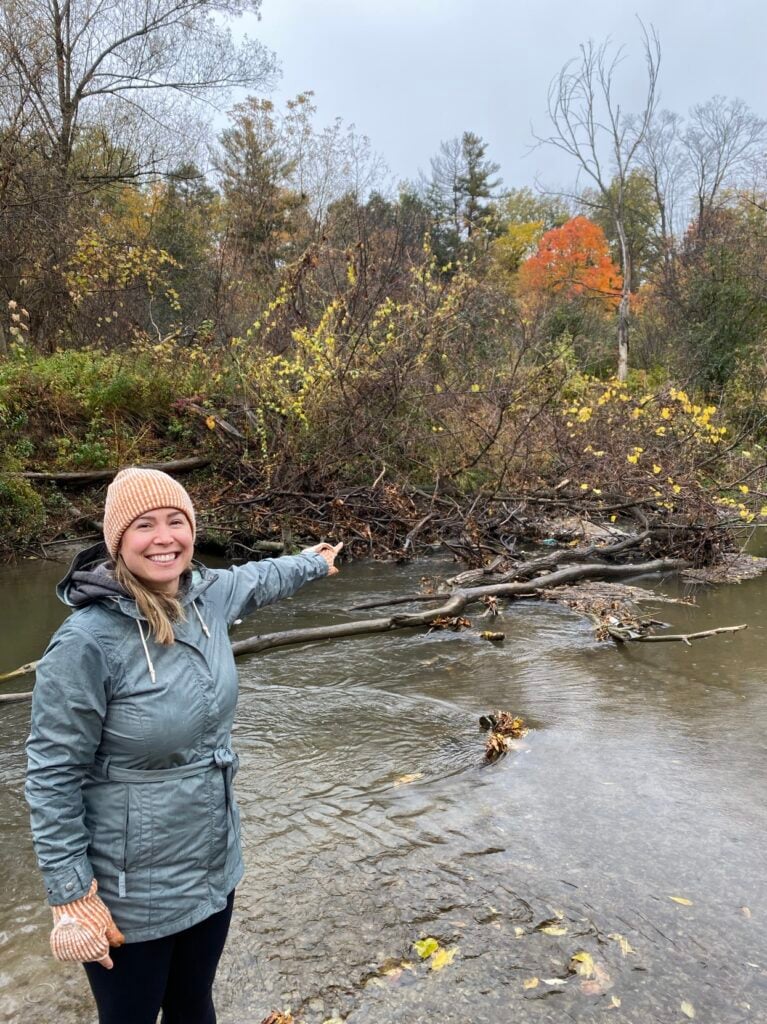
The locations were selected to represent varied watershed types (ranging from temperate to subtropical climates and mountainous to flat terrain) and development intensity (suburban to densely urban). We followed the bottles for about three months each, through changing seasons, storms and rainfall before locating and retrieving them. And while the plan was always to recover the bottles at the end of the experiment, we also conducted cleanups in each watershed beforehand to make sure we were leaving things a little cleaner than we started.
What did we find?
Our bottles went on quite a journey! On average, each bottle traveled 3.8 miles, but distance traveled actually spanned a huge range depending on the bottle and location. For example, one of our bottles barely budged, moving just 240 feet over the deployment period. Another made it further than the length of a marathon, clocking in at 33 miles traveled.
We found river flow was a major driver of how far bottles went, but it wasn’t the only factor—the landscape around each river mattered too. Patterns in bottle movement revealed:
- Forest and vegetation in rivers slowed bottles down. The more forest cover upstream, the less likely a bottle was to reach the coast, because it got snagged in brush, branches and other natural obstructions.
- More urbanized stretches sped them up. Bottles moved farther and faster in more urbanized stretches of river, where there was typically less vegetation to catch them.
Using thousands of GPS points, as well as data about the river systems and watersheds we studied, we built a model to estimate where bottles reaching the coast or the Great Lakes may be coming from. It showed that within a one-year period, about half originate quite close to shore (within seven miles). The other half come from much farther inland, up to 120 miles away!
Why does this matter for our ocean?
Plastic bottles aren’t just unsightly. Ocean Conservancy’s recent, award-winning research found they can be deadly to marine life—either as whole items or after they break up into sharp fragments. There have been documented instances of seabirds like albatross dying after swallowing a plastic bottle whole.
Plastic bottles are among the most prolific plastic pollutants we see out there, and now we understand that many of those we find on beaches or in the ocean may be coming from far upstream.
That has big implications for how we tackle the problem. If half of the bottles reaching the ocean around North America or Great Lakes can start their trip more than 100 miles inland, prevention must happen upstream. Pollution-prevention models, like laws that incentivize the collection and recycling of plastic bottles before they end up in the environment, should be implemented more broadly to prevent plastic from becoming pollution in the first place. Cleanups and other efforts in coastal communities also remain critical. If we want to capture floating plastics like bottles before they reach the coast and eventually our ocean, communities within 120 miles from the ocean or Great Lakes should plan to do those cleanups on an annual basis, or even more frequently.
How can I help keep plastic bottles out of rivers and the ocean?
No matter where you live, the choices you make can help keep plastic out of the ocean:
- Support policies, like those Ocean Conservancy advocates, to