

Ahoy there, landlubbers and salty sea dogs alike! Let me spin you a yarn about a peculiar treasure found aboard the vessels that brave the briny deep – the wondrous world of sailor’s pet pics!
Picture this: you’re on a ship, surrounded by nothing but the endless expanse of the ocean. It’s just you, your shipmates, and a bunch of sediment ready to be analyzed. But wait! What’s that on the wall? It’s not a map of buried treasure or a portrait of a fearsome pirate. No, it’s something far more precious – it’s a photograph of a sailor’s furry first mate!
You see, sailors and scientists alike have a soft spot for their four-legged friends back on land. And what better way to keep their spirits high during long voyages than by surrounding themselves with reminders of home? So, they plaster their cabins with pictures of their pets – from loyal Labradors to frisky felines– each one a precious piece of their heart left behind on shore. Instead of keeping these treasures locked up in individual rooms, we decided to dedicate a public wall for all to enjoy the uplifting benefits of “Critter Comfort Care”.
But these pet pics aren’t just for show – oh no! They’re an essential part of life at sea. Need a morale boost after a rough day battling the waves? Just take a gander at some cat’s cheeky grin, or the head tilt of a dog and all your troubles will melt away faster than ice cream on a hot deck.
Perhaps the best part of all is the camaraderie that pet pics inspire among sailors. Swap stories about your furry friends, share tips on pet training (hint: treats or belly rubs are always the answer), and bond over the universal truth that pets are the best thing since sliced bread – or, in the case of sailors, since rum. We’ve already shared many laughs over our wild pet stories!
In addition to wild pet stories, Tessa went around to some of the scientists and asked them what science they their pet would be interested in. Here is what she learned.
Dakota (The Queen) would follow a path in toxicology because she is mischievous and pays attention to the little things. Toxicology is the science that aims to understand the effects, and interactions harmful substances can have on the environment and living things.

Bruno: After getting tired of his kibble, he has gotten a taste for pairing foods with each other.Thus Bruno would go into the food sciences to determine the best food combinations for his newly refined palate. The food sciences are a mixture of different fields but it is the applied science of making different food products. For instance, it is involved with determining shelf life or safety of different food products.

Banjo: Though sometimes it seems he has no thoughts in his brain, it is understood that because of his love for snow he would study Glaciology.Glaciology is an earth science that is paired with other fields to understand the impact and development of ice/glaciers in our world.

Moxie: Judgmental of all things not true, it is believed that Moxie would be a mathematician. They would appreciate the absolute truths that come with numbers and theory of the universe, but nothing else. Mathematicians aim to solve real world problems and compare old principles to newer principles. They tend to concerned with numbers, data, structures, space and more.

All in all, the next time you find yourself aboard a ship, keep an eye out for those precious pet pics adorning the walls. They may just be scraps of paper to some, but to sailors, they’re a lifeline to the fur babies they left behind on dry land. So, let’s raise a toast to the furry, feathery, and scaly companions who keep our spirits afloat even in the roughest seas. Here’s to pet therapy- or should we say, “Tail Wagging Treatment”- because sometimes, all you need is a paw-sitive reminder of home to make even the stormiest voyage feel like smooth sailing!
Written by Larking Bohn and Tessa Peixoto


If you’ve ever joined a beach cleanup, you’ve almost certainly picked up a plastic bottle. During Ocean Conservancy’s 2025 International Coastal Cleanup® (ICC), plastic beverage bottles were the top item collected by volunteers around the world. Plastic bottles have been among the top 10 items collected throughout the ICC’s entire 41-year history.
But where do those bottles really come from? We know rivers carry plastics of all shapes and sizes from inland communities to coasts and the ocean. What we know far less about is what makes plastic bottles move within rivers, what speeds them up or slows them down and how likely they are to reach the coast and become ocean pollution. Research on river plastics is growing worldwide, but studies in North America lag behind other regions.
Ocean Conservancy scientists, alongside a team of collaborators from 10 research institutions around the United States and Canada, set out to help close some of these pressing knowledge gaps.
How do you track a plastic bottle?
… with a little help from GPS! We modeled our research after a 2021 project in the Toronto Harbor conducted by our University of Toronto colleagues. Like the Toronto project, our research team outfitted floating plastic bottles with GPS tags that reported each bottle’s location at regular intervals. That let us calculate how far and how fast every bottle traveled. Over a two-year period, we released about 300 GPS-tagged bottles into 30 stretches of river in Los Angeles, California; California’s San Francisco Bay Area; Chicago, Illinois; Washington, D.C.; Miami, Florida; Boston, Massachusetts; and Toronto, Canada.
We chose each of these places on purpose.
The locations were selected to represent varied watershed types (ranging from temperate to subtropical climates and mountainous to flat terrain) and development intensity (suburban to densely urban). We followed the bottles for about three months each, through changing seasons, storms and rainfall before locating and retrieving them. And while the plan was always to recover the bottles at the end of the experiment, we also conducted cleanups in each watershed beforehand to make sure we were leaving things a little cleaner than we started.
What did we find?
Our bottles went on quite a journey! On average, each bottle traveled 3.8 miles, but distance traveled actually spanned a huge range depending on the bottle and location. For example, one of our bottles barely budged, moving just 240 feet over the deployment period. Another made it further than the length of a marathon, clocking in at 33 miles traveled.
We found river flow was a major driver of how far bottles went, but it wasn’t the only factor—the landscape around each river mattered too. Patterns in bottle movement revealed:
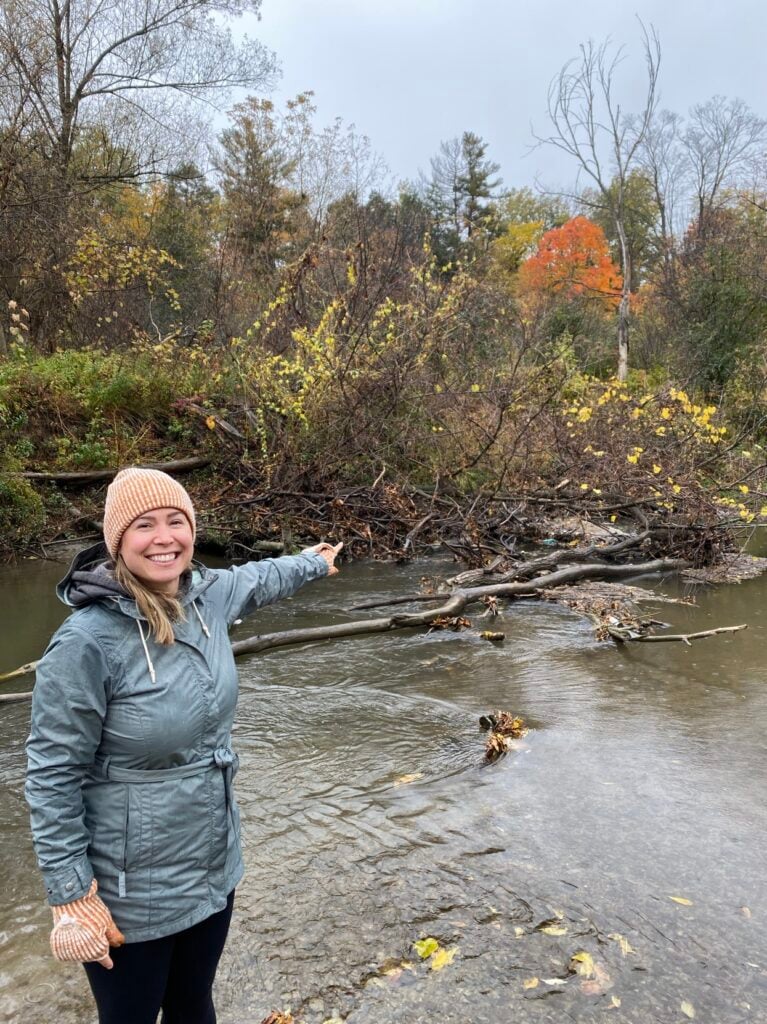
- Forest and vegetation in rivers slowed bottles down. The more forest cover upstream, the less likely a bottle was to reach the coast, because it got snagged in brush, branches and other natural obstructions.
- More urbanized stretches sped them up. Bottles moved farther and faster in more urbanized stretches of river, where there was typically less vegetation to catch them.
Using thousands of GPS points, as well as data about the river systems and watersheds we studied, we built a model to estimate where bottles reaching the coast or the Great Lakes may be coming from. It showed that within a one-year period, about half originate quite close to shore (within seven miles). The other half come from much farther inland, up to 120 miles away!
Why does this matter for our ocean?
Plastic bottles aren’t just unsightly. Ocean Conservancy’s recent, award-winning research found they can be deadly to marine life—either as whole items or after they break up into sharp fragments. There have been documented instances of seabirds like albatross dying after swallowing a plastic bottle whole.
Plastic bottles are among the most prolific plastic pollutants we see out there, and now we understand that many of those we find on beaches or in the ocean may be coming from far upstream.
That has big implications for how we tackle the problem. If half of the bottles reaching the ocean around North America or Great Lakes can start their trip more than 100 miles inland, prevention must happen upstream. Pollution-prevention models, like laws that incentivize the collection and recycling of plastic bottles before they end up in the environment, should be implemented more broadly to prevent plastic from becoming pollution in the first place. Cleanups and other efforts in coastal communities also remain critical. If we want to capture floating plastics like bottles before they reach the coast and eventually our ocean, communities within 120 miles from the ocean or Great Lakes should plan to do those cleanups on an annual basis, or even more frequently.
How can I help keep plastic bottles out of rivers and the ocean?
No matter where you live, the choices you make can help keep plastic out of the ocean:
- Support policies, like those Ocean Conservancy advocates, to stop plastic pollution at the source.
- Join a cleanup along your local river, creek or lakeshore. Every bottle picked up inland is one less that can wash out to sea.
- Choose reusables instead of single-use plastic bottles whenever you can.
We want to extend a huge thank-you to our amazing collaborators on this project at the University of New Hampshire, University of Toronto, Loyola University of Chicago, Smithsonian Environmental Research Center, Florida International University, Moore Institute for Plastic Pollution Research, San Francisco Estuary Institute, University of Waterloo, University of Southern California and University of New Mexico.
Our study, “GPS-Tracked Bottles in North American Rivers Show Marine Plastic Pollution Can Originate from Far Upstream,” was published in the November 13 issue of the scientific journal Environmental Science & Technology-Water. Read the full paper here.
This blog was co-written with Hannah De Frond. Hannah works with Ocean Conservancy and the University of Toronto Trash Team to manage the International Trash Trap Network (ITTN), a global network of local groups using trash traps to increase cleanup efforts, engage communities and inform upstream solutions.
Get Ocean Updates in Your Inbox
Sign up with your email and never miss an update.
The post How Far Does a Plastic Bottle Really Travel in a Year? appeared first on Ocean Conservancy.
If you’ve ever joined a beach cleanup, you’ve almost certainly picked up a plastic bottle. During Ocean Conservancy’s 2025 International Coastal Cleanup® (ICC), plastic beverage bottles were the top item collected by volunteers around the world. Plastic bottles have been among the top 10 items collected throughout the ICC’s entire 41-year history.
But where do those bottles really come from? We know rivers carry plastics of all shapes and sizes from inland communities to coasts and the ocean. What we know far less about is what makes plastic bottles move within rivers, what speeds them up or slows them down and how likely they are to reach the coast and become ocean pollution. Research on river plastics is growing worldwide, but studies in North America lag behind other regions.
Ocean Conservancy scientists, alongside a team of collaborators from 10 research institutions around the United States and Canada, set out to help close some of these pressing knowledge gaps.
How do you track a plastic bottle?
… with a little help from GPS! We modeled our research after a 2021 project in the Toronto Harbor conducted by our University of Toronto colleagues. Like the Toronto project, our research team outfitted floating plastic bottles with GPS tags that reported each bottle’s location at regular intervals. That let us calculate how far and how fast every bottle traveled. Over a two-year period, we released about 300 GPS-tagged bottles into 30 stretches of river in Los Angeles, California; California’s San Francisco Bay Area; Chicago, Illinois; Washington, D.C.; Miami, Florida; Boston, Massachusetts; and Toronto, Canada.
We chose each of these places on purpose.
The locations were selected to represent varied watershed types (ranging from temperate to subtropical climates and mountainous to flat terrain) and development intensity (suburban to densely urban). We followed the bottles for about three months each, through changing seasons, storms and rainfall before locating and retrieving them. And while the plan was always to recover the bottles at the end of the experiment, we also conducted cleanups in each watershed beforehand to make sure we were leaving things a little cleaner than we started.
What did we find?
Our bottles went on quite a journey! On average, each bottle traveled 3.8 miles, but distance traveled actually spanned a huge range depending on the bottle and location. For example, one of our bottles barely budged, moving just 240 feet over the deployment period. Another made it further than the length of a marathon, clocking in at 33 miles traveled.
We found river flow was a major driver of how far bottles went, but it wasn’t the only factor—the landscape around each river mattered too. Patterns in bottle movement revealed:
- Forest and vegetation in rivers slowed bottles down. The more forest cover upstream, the less likely a bottle was to reach the coast, because it got snagged in brush, branches and other natural obstructions.
- More urbanized stretches sped them up. Bottles moved farther and faster in more urbanized stretches of river, where there was typically less vegetation to catch them.
Using thousands of GPS points, as well as data about the river systems and watersheds we studied, we built a model to estimate where bottles reaching the coast or the Great Lakes may be coming from. It showed that within a one-year period, about half originate quite close to shore (within seven miles). The other half come from much farther inland, up to 120 miles away!