

October is National Seafood Month, a time to celebrate the incredible diversity of ocean life and the hardworking communities that rely on the ocean for food, livelihoods, recreation and other benefits. At Ocean Conservancy, we are dedicated to protecting these marine ecosystems and supporting the sustainable fisheries that rely on them. However, this year, we must also recognize the severe challenges facing one of Alaska’s most iconic and most valuable fisheries: Bering Sea snow crab. In 2022, for the first time in history, this fishery was closed due to a sudden, dramatic decline in the abundance of adult and juvenile crabs. While it was recently announced that the fishery will be reopened for the upcoming season—a welcome relief for the fishers and communities hit hard by the closures—this remains a climate-vulnerable stock. The reopening brings hope, but the collapse serves as a stark reminder of the ongoing threats climate change poses to marine ecosystems.
See more wonderful ocean animals!
Enter your email and never miss an update
What happened to the crabs?
The collapse of the Bering Sea snow crab population was swift and devastating. Following the 2018-2019 marine heatwave, nearly 47 billion crabs (yes, that’s 47 billion) disappeared from the region by 2021, representing population declines in excess of 90%. This event represents a catastrophic loss of marine life due to climate change, resulting in profound consequences for communities and marine systems in Alaska. Especially impacted is the island of St. Paul, home to the world’s largest crab processing plant. This mostly Indigenous community is highly dependent on the snow crab fishery and declared a cultural, economic and social emergency in the wake of the plant’s closure. In some cases, town officials turned to external fundraising to maintain critical municipal functions such as emergency medical services.

Understanding the mortality event
Research from NOAA Fisheries links the snow crab fishery collapse to a marine heatwave that struck the Bering Sea between 2018 and 2019. Temperature rise and associated ecological changes emerged as the key culprits. While snow crabs could tolerate the warmer waters caused by the heatwave, warmer temperatures meant higher metabolisms, requiring them to consume nearly twice as much food to meet the increased metabolic demands. At the same time, those warmer waters meant both less suitable habitats and reduced prey availability—this pushed the crabs into smaller, more densely populated areas. The combination of higher caloric demands and increased competition for limited resources led to mass starvation, which scientists have determined was the immediate cause of snow crab deaths. Bycatch and habitat impacts from the trawl fleet (which uses large trawl nets to fish on the bottom of the ocean for groundfish) are also contributing factors, and continued harvest of crab by the trawl fleet when the directed fishery is closed impedes recovery.
Borealization: an ongoing ecological shift
The changing environmental conditions and subsequent collapse of the snow crab fishery are indicative of a larger ecosystem trend known as borealization: an ecological shift poleward from Arctic to sub-Arctic—or boreal—conditions, in this case driven by anthropogenic climate change. The southeastern Bering Sea is what’s known as a marginal ice zone, meaning its ecology is deeply influenced by the presence or absence of winter sea ice. As sea ice continues to retreat due to rising temperatures from climate change, the region is shifting toward conditions more characteristic of boreal (sub-Arctic rather than Arctic) ocean ecosystems. A recent study showed that, compared to the pre-industrial era, this change to boreal conditions is more than 200 times more likely to occur now, highlighting the profound impact of climate change on these kinds of marine ecosystems.
The implications of borealization are significant for the future of marine life and resources, as evidenced by what’s happened to the snow crab fishery. With studies anticipating a future with more boreal-condition years in the Bering Sea region, the traditional grounds of this fishery may continue to shift northward. As other fish stocks move northward there is pressure from industrial fishing fleets to move north with the fish, bringing devastating impacts from bycatch, habitat destruction and disruption to predator/prey relationships. In Alaska this is particularly harmful to Alaska Native Tribes whose lives and cultures are deeply connected to a healthy ocean ecosystem.
The path forward: adaptation and resilience
A 2022 bottom-trawl survey revealed some encouraging signs for the short-term recovery in the abundance of snow crab, namely lower seafloor temperatures and a higher population of juvenile crabs. This optimism is further reinforced by the announcement that the fishery will reopen for the 2024/25 season. While this news is heartening for fishing communities, NOAA Fisheries anticipates that Arctic conditions in the southeastern Bering Sea will not persist, suggesting a double-edged sword of short-term recovery and long-term uncertainty. And to date, NOAA Fisheries and the North Pacific Fishery Management Council have not taken any steps to reduce impacts on snow crab from the trawl fleet. This reality emphasizes the need for adaptive management that can secure the future of snow crab—and other marine resources—for future generations of fishing communities, subsistence users and consumers.

Particularly, the snow crab collapse underscores the need for adaptive management strategies that account for rapid ecological changes. Traditional management models, which rely on the assumption that the future will roughly resemble the past, are increasingly unreliable in a world where climate change is driving major paradigmatic shifts across ecosystems. Instead, forward-looking scientists and managers are advocating for a more integrated and climate-ready approach that takes into account the interconnectedness of species and their habitats and for climate change. For example, the borealization index developed for the snow crab study combined several ecological indicators (including ice cover and temperature) to track the ecosystem’s transition from Arctic to boreal conditions. This kind of study could provide a template for determining the impacts of ecosystem changes on other commercially important species, a critical input for management considerations.
The collapse of the Bering Sea snow crab population is a stark reminder of the urgent need to adapt quickly and secure the future of our seafood. For fishing communities in Alaska, the closure of the snow crab fishery has been a devastating blow, but it is also a wake-up call for policymakers and managers. As we observe National Seafood Month, let us not only celebrate what the ocean provides but commit ourselves to protecting it. That means that NOAA Fisheries must continue to rebuild fisheries and provide better tools to help managers and fishers adapt to increasing climate impacts. At Ocean Conservancy, we are actively working with NOAA and other managers, scientists and communities to develop those adaptive strategies for sustainable management. By advocating for evidence-based policies and supporting conservation efforts, we are striving to protect marine biodiversity and the livelihoods of those who depend on a healthy ocean. Please consider donating to Ocean Conservancy to make a difference today.
The post The Bering Sea Snow Crab Collapse: A Climate-Driven Crisis appeared first on Ocean Conservancy.

Did you know some female sea turtles can travel hundreds—or even thousands—of miles through open ocean before returning to nest on or near the very beaches where they hatched? In fact, Leatherback sea turtles take this long-distance travel to an extraordinary level. Pacific leatherbacks nesting in Indonesia have been documented migrating more than 10,000 kilometers to the West Coast of the United States. That’s the longest migration of any air-breathing marine vertebrate. So how do they accomplish this without Google Maps?
Scientists have found that sea turtles can sense magnetic information and use it as a navigational cue. Because the strength and angle of Earth’s magnetic field vary across the planet, these subtle differences can provide turtles with information about where they are and help guide their movements across the ocean. For turtles that return to their birthplace to nest (a behavior known as natal homing), these magnetic cues may be especially important. It’s an extraordinary system, but even the best navigation can take a turtle only so far.
Despite their great sense of direction, sea turtles don’t always make it where they’re going.
A sea turtle may be capable of navigating thousands of miles, but reaching the right destination is that much more of a challenge when human-caused obstacles lie in the way.
Artificial light is one example. Artificial lighting not only discourages nesting females from coming ashore but also has a harmful impact on hatchlings, which historically emerge from their nests at night and orient toward the brightest horizon. On a natural, undeveloped beach, that is generally the open ocean. But artificial light from coastal development can overwhelm the natural cue, drawing hatchlings inland away from the water and causing them to get lost on day one.
Coastal development not only brings more artificial light and human activity to the shoreline, but it also changes turtle habitats themselves. Buildings, roads and other development can alter or reduce areas sea turtles need for nesting. Shoreline armoring, such as seawalls, can eliminate the dry sand turtles need to successfully nest, while beach driving and other activities can further disrupt nesting habitats. And these challenges extend beyond the beach.
The ocean is getting noisier, too. Sea turtles have internal ears and can hear underwater sounds. Vessel traffic, oil and gas surveys, underwater construction and sonar all add noise to the marine environment. Human-generated sound can cause stress, disrupt normal behaviors or even force marine animals to move from preferred habitats or divert from migratory paths.
Get Ocean Updates in Your Inbox
Sign up with your email and never miss an update.
Evolution never saw the plastic grocery bag coming.
Then there’s a threat sea turtles encounter almost everywhere they travel: plastic pollution. Sea turtles evolved over millions of years to spot drifting prey, like jellyfish. But plastic rapidly started to be used only around 60+ years ago.
Our plastic trash entered the ocean so quickly that animals haven’t had time to adapt. To a hungry sea turtle, a floating plastic bag still looks enough like dinner to trick even an experienced turtle. Plastic bags, balloons, soft plastic packaging and other plastics, once swallowed, can block a turtle’s digestive tract or puncture internal organs. And it doesn’t necessarily take much.
A recent Ocean Conservancy study of more than 10,000 marine animal autopsies found that nearly half of the sea turtles studied had ingested plastic. Even more alarming, researchers found that for adult loggerhead turtles, swallowing just one and a half times the plastic in a golf ball was enough to kill 50% of these creatures.
It’s a heartbreaking reminder that something we use for minutes can threaten an animal that’s been roaming Earth’s ocean for more than 100 million years.
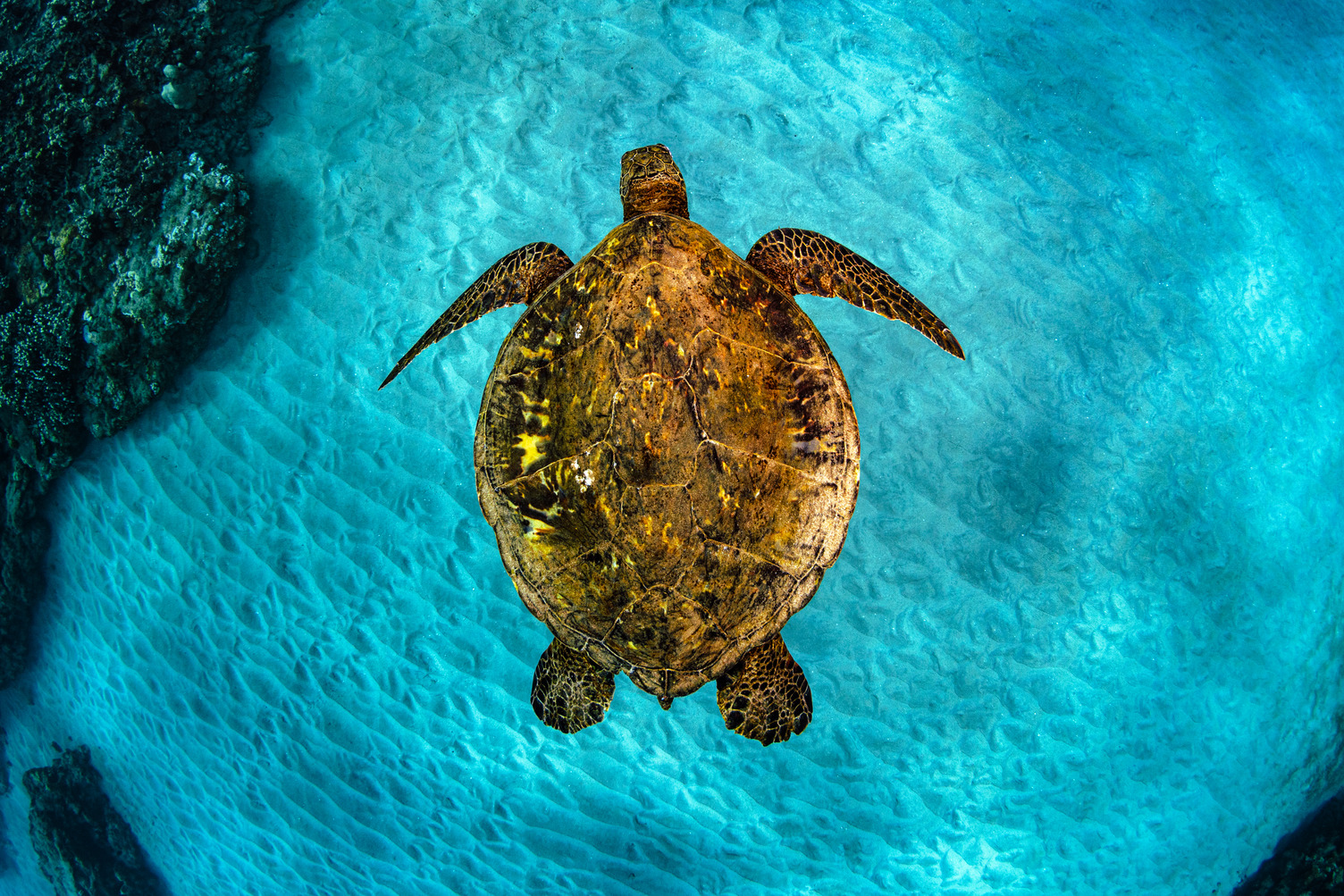
Ancient animals still face very modern threats.
Sea turtles survived the extinction event that wiped out dinosaurs. They’ve outlasted shifting continents and dramatic changes to our planet. But surviving millions of years doesn’t make them invincible. Today, they’re facing threats that appeared in the blink of an evolutionary eye: plastic pollution, habitat loss, vessel strikes, fishing gear entanglement and climate change. The remarkable thing is that many of these challenges aren’t inevitable. They’re problems we can all help solve.
Together, we can reduce the amount of plastic that reaches the ocean. We can protect and restore nesting beaches. And we can support policies that protect healthy ocean ecosystems. Every action helps make our waters a safer place for animals that depend on it.
So, do sea turtles get lost? When left to their own devices, not often. Sea turtles have an extraordinary ability to navigate across vast stretches of open oceans. But there’s a bigger question worth asking: Can we help make the ocean a safe place while they make these incredible journeys? Navigation is only part of the challenge for sea turtles trying to find their way home. Sea turtles may know where they’re going, but it’s our job to ensure the ocean and coastlines they depend on are safe when they get there. That’s why Ocean Conservancy is committed to protecting our entire ocean—and all the creatures that dwell there.
We’re fortunate to share the planet with these amazing creatures. Their journeys are a remarkable feat of science and survival. To all the turtles out there: Here’s to finding your way—wherever you’re going!
Visit Our Action Center
The post Do Sea Turtles Get Lost? appeared first on Ocean Conservancy.
https://oceanconservancy.org/blog/2026/08/27/do-sea-turtles-get-lost/
A remarkable strandline discovery deserves attention, but not exaggeration. The arrival of Velella velella on Sylt is probably Germany’s first documented record. It is not the first occurrence in the North Sea, nor is one stranding sufficient proof of a climate-driven invasion.
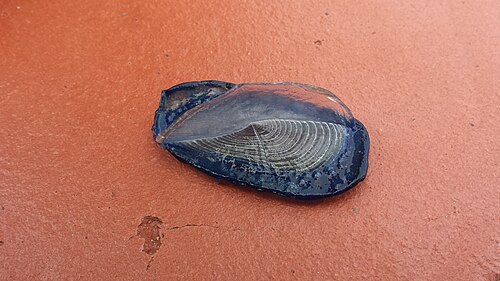
The discovery of Velella velella on Sylt on 23–24 August 2026 has been announced as the first German record of this oceanic hydrozoan (Listen to the News here). It is an exciting observation, but the word “first” needs careful interpretation. A first documented record is not necessarily the species’ first arrival. It may instead be the first time somebody recognized, photographed and reported it through the right channels. Fragile marine organisms such as Velella decompose rapidly, and their transparent floats are easily overlooked among material on the strandline.
A photographed Velella found on the west coast of Jutland in 2018 was considered the country’s first documented record. However, earlier reports exist (see here). Velella velella, known as the by-the-wind sailor or Segelqualle, is often described in the German media as a “Mediterranean jellyfish.” This is misleading. The species is a widely distributed oceanic hydrozoan found in tropical and warm-temperate waters, including the Mediterranean and the Northeast Atlantic. The familiar blue object is not a single conventional jellyfish but a floating colony of specialized polyps. Its diagonal sail allows wind to push the colony across the sea surface. Velella cannot swim effectively against this transport, so large strandings are principally the outcome of population size, surface currents and persistent onshore winds. The Sylt animals should therefore be understood as oceanic visitors transported into German waters, not automatically as an invasive species or an established North Sea population.
The North Sea has seen Velella before
In February 1988, thousands of colourless Velella floats washed ashore along the Belgian coast after strong westerly storms. The event was described as the first published North Sea record (See the article) Denmark also has a documented history. A photographed colony was found at Grønhøj on the west coast of Jutland on 26 July 2018. It was considered Denmark’s first documented record, although unverified reports exist from 1947, 1976 and 1997. Naturbasen
In Scotland, strandings have been recorded since at least the 1950s, with another mass event in the Clyde in 2002. Scottish Marine Atlas
The Sylt discovery is therefore regionally unusual, but it is part of a longer history of intermittent Velella transport into northern European waters.
Is this climate change?
Ocean warming may increase the probability that warm-water organisms survive and occur farther north, while winds and currents determine whether they reach Sylt in a particular year. Calling this one observation definitive proof of climate-driven range expansion would be premature. Equally, dismissing it as an irrelevant accident would ignore the wider pattern of warming seas and increasing biological movement into the North Sea.
This is exactly why systematic observations matter.
Historical absence from a database is not proof of ecological absence. It may reflect limited monitoring, failed identification or observations that were never preserved. The public can help close this gap. Photograph unusual strandline organisms, record the date and exact location, include a size reference, estimate their number and submit the observation to us (GoJelly/JellySpotter APP) or another biodiversity platform like the iNaturalist. Today’s carefully documented beach find may become tomorrow’s essential evidence of how marine distributions are changing.
Recommened for reading:
- Pires RFT, Cordeiro N, Dubert J, Marraccini A, Relvas P, dos Santos A (2018) Untangling Velella velella (Cnidaria: Anthoathecatae) transport: a citizen science and oceanographic approach. Mar Ecol Prog Ser 591:241-251 https://doi.org/10.3354/meps12266
- Betti, F., Bo, M., … Enrichetti, F. (2019). Massive strandings of Velella velella (Hydrozoa: Anthoathecata: Porpitidae) in the Ligurian Sea (North-western Mediterranean Sea). The European Zoological Journal, 86(1), 343–353. https://doi.org/10.1080/24750263.2019.1671506
Picture courtesy to https://commons.wikimedia.org/wiki/File:20160518_170717_Velella_velella_1.jpg
First Spotted, or Simply First Recorded? Velella and Our Ecological Blind Spots
Storytelling is one of our oldest human behaviors. Across every culture and continent, people have used stories to share values, pass down knowledge and make sense of the world around them. The tales that survive, retold across generations, kept alive through memory and ceremony, aren’t arbitrary. These coastal legends carry essential wisdom.
For countless coastal communities, that wisdom is related to the ocean.
Here are five coastal stories that are important parts of different oral traditions and teach us about our ocean.
Scotland: Selkie Stories
Early written records from the coast of Scotland describe seal-people who shed their aquatic skins to walk among humans on land.
These are the selkie. Their stories follow a familiar arc. One is discovered on shore, their sealskin is stolen and they are bound to a human life. They marry, raise children, but remain melancholy, always watching the water. When the skin is finally found, they return to the sea without hesitation.
It’s not difficult to see where the concept took root. Gray and harbor seals have strikingly humanesque features like expressive eyes, complex vocalizations, mothers who nurse their pups. Early coastal communities observed those qualities, and the selkie story began to spread. It produced a cultural taboo against the excessive hunting of seals.
Today, the selkie is one of Scotland’s most recognized figures. Conservation organizations have adopted the selkie as a bridge symbol of cultural identity and ocean protection. Gray seal populations in Scottish waters continue to face pressure from abandoned fishing gear and historical culling practices, behaviors the selkie taboo was designed to prevent.
Get Ocean Updates in Your Inbox
Sign up with your email and never miss an update.
Pasifika: Wayfinding
Pasifika is a collective term for the Indigenous Peoples of the Pacific Islands. For more than 3,000 years, they’ve managed to pass along extremely complex knowledge on how to navigate the vast expanse of the Pacific Ocean.
Their secret weapon? Storytelling.
They shared stories of the demigod Māui and his canoe, Waka-a-Māui, then navigated by their corresponding constellations in the sky. Tāwhirimātea was the god of wind and storms. When his eyes appeared in the sky (as the Pleiades cluster), it meant that it was a good time to start a long voyage. Stories like these gave navigators a framework for planning their journeys and navigating the distances.
Wayfinding is a science. The people of Pasifika developed their knowledge system through thousands of years of empirical observation, experimentation at sea and rigorous knowledge transmission. The names and stories were a medium of storing and sharing this knowledge, and an effective one at that.
Mexico: Chalchiuhtlicue
Chalchiuhtlicue is the Aztec goddess of rivers, lakes, seas and the ocean, as well as the protector of fishermen and navigators. In Aztec cosmology, she was one of the most actively worshiped deities.
In different stories, she is portrayed as both a creator and destroyer, as surges of water can result in abundant harvests or devastating floods. Today, Mexico’s Pacific and Gulf coasts are among the world’s most biologically rich but storm-exposed marine environments.
Chalchiuhtlicue’s tradition reflects an understanding of how water has the potential to be life-giving or destructive depending on amount and location. Mexico’s Indigenous cultures understood water as the foundational substance of existence, from the ocean to the hydrological routes that fed agricultural soil.
Vietnam: Grandfather Whales
The coastal communities of Vietnam have long shared stories of whales as divine protectors, often referring to them as Cá Ông or “Grandfather Whales.”
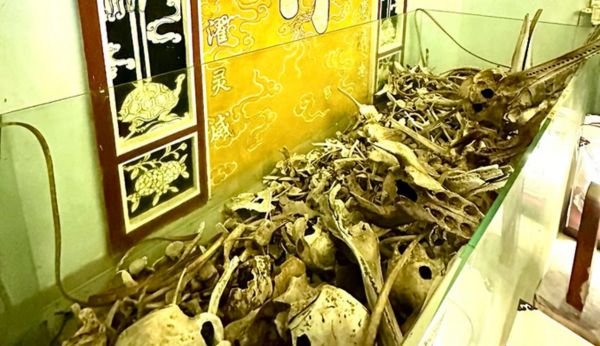
It is believed that when fishing boats are lost in a storm, whales physically rescue the crew by sending them toward shore. Several fishing villages in Vietnam still celebrate the Whale Prayer Festival twice a year. Because the whales are so revered, fishermen report whale encounters. Whales received sacred funerals whenever they are beached.
These coastal villages demonstrate a relationship with whale species marked by reciprocity. Sperm whales, humpbacks and gray whales, in fact, show behaviors that are consistent with the stories about rescue. They may approach distressed swimmers, encircle capsized vessels or even support injured kin. When a whale dies, gratitude and grief are expressed. The practice of providing a proper Confucian funeral to beached whales reflects the way that a whale carcass can still sustain hundreds of species after death.

Caribbean: Mami Wata
Many cultures in the Caribbean have carried a belief in Mami Wata. She is an ocean deity, often depicted as a mermaid, who goes by several names: La Siréne in Haiti, River Mumma in Jamaica, and Yemonja in Brazil. Her reinterpretation across several cultures maps how her oral tradition was carried across the Atlantic by enslaved Africans and adapted in different Caribbean settings. Mami Wata is depicted as a beautiful woman, skilled at music, who can be both generous and dangerous. This dual nature is parallel to the Caribbean. It is one of the world’s most biodiverse marine environments, supporting coral reef ecosystems of extraordinary productivity, but it is also a region of violent tropical storms, dangerous currents and unpredictable weather.
Sightings of Mami Wata are thought by some scholars to be related to sightings of manatees. The large, slow marine mammals with humanlike eyes and nursing behavior may match the characterizations of the deity. When the belief in Mami Wata began to decline, so did manatee populations. This reflects a phenomenon researchers call the “sacred species” effect. When a creature holds deep spiritual significance in a culture, harming it carries social and moral consequences that can be more powerful than legal ones. This provides an element of protection that is sometimes more effective than law.
Long before satellites tracked ocean temperatures, people who lived alongside the water were paying close attention. They noticed which creatures signaled safe weather and which behaviors led to abundant catches. They encoded those observations into the stories they told—deities, creatures, warnings and rituals that traveled across centuries intact.
These aren’t relics. Many are living traditions, still practiced and still relevant. And when held up alongside what marine science has since confirmed, the parallels are striking.
The stories contain lessons
What connects a fisherman’s reverence for seals in Scotland to a Vietnamese community’s funeral rites for a beached whale? Around the world, people understand that the ocean is not only a resource for extraction but also offers a relationship to be maintained.
Ocean Conservancy operates on the same understanding. This drives our work today, from protecting marine ecosystems and rebuilding fish populations to fighting the pollution and policy decisions that put our ocean at risk. Right now, aging offshore oil and gas infrastructure is corroding on the seafloor, threatening many of the species that cultures around the world hold dear. The companies that build this infrastructure exploit loopholes to avoid cleaning it up. But we can change that. The proposed Offshore Leasing Standards and Accountability Act before Congress now would require oil and gas companies to take responsibility for their operations before, during and after they drill.
The ocean has always been worth protecting. Add your name and help us pass the Offshore Leasing Standards and Accountability Act now.
The post Lessons from Coastal Legends appeared first on Ocean Conservancy.



-
Climate Change1 year ago
Guest post: Why China is still building new coal – and when it might stop
-
Greenhouse Gases1 year ago
Guest post: Why China is still building new coal – and when it might stop
-

 Greenhouse Gases2 years ago
嘉宾来稿:满足中国增长的用电需求 光伏加储能“比新建煤电更实惠”
-

 Climate Change2 years ago
嘉宾来稿:满足中国增长的用电需求 光伏加储能“比新建煤电更实惠”
-
Climate Change2 years ago
Bill Discounting Climate Change in Florida’s Energy Policy Awaits DeSantis’ Approval
-

 Renewable Energy10 months ago
Sending Progressive Philanthropist George Soros to Prison?
-
Greenhouse Gases1 year ago
嘉宾来稿:探究火山喷发如何影响气候预测
-

 Carbon Footprint2 years ago
US SEC’s Climate Disclosure Rules Spur Renewed Interest in Carbon Credits