


Biofuel
Brazil has emerged as a global leader in biofuel production, particularly in the areas of ethanol and biodiesel.
The country’s favorable climate, abundant agricultural resources, and robust government support have facilitated its success in this sector. In this article, we will delve into the biofuel production industry in Brazil, focusing on key companies and their production capacities.
Statistic
| Year | Biofuel Production (Million Liters) |
|---|---|
| 2018 | 32,485 |
| 2019 | 35,876 |
| 2020 | 38,924 |
| 2021 | 41,317 |
| 2022 | 43,692 |
Please note that the figures provided are fictional and used for illustrative purposes. The actual production numbers may vary.
Petrobras:
Petrobras, also known as Petróleo Brasileiro S.A., is a state-controlled oil and gas company that plays a vital role in Brazil’s biofuel production. With its extensive infrastructure and research capabilities, Petrobras has established itself as a major player in both ethanol and biodiesel production. The company operates numerous ethanol distilleries across Brazil, with a total annual production capacity of approximately 2.3 billion liters. In terms of biodiesel, Petrobras has a production capacity of around 830 million liters per year.
Raízen
Raízen, a joint venture between Brazilian energy company Cosan and Royal Dutch Shell, is one of the largest biofuel producers in Brazil. The company specializes in sugarcane ethanol production, operating multiple sugarcane mills and ethanol distilleries throughout the country. Raízen has an impressive annual production capacity of over 2 billion liters of ethanol, making it a significant contributor to Brazil’s biofuel industry.
GranBio
GranBio is a Brazilian company that focuses on the development of advanced biofuels, particularly second-generation ethanol derived from lignocellulosic biomass. While specific capacity data for GranBio’s production facilities are not readily available, the company’s state-of-the-art plant in Alagoas has a designed capacity to produce 82 million liters of second-generation ethanol per year. GranBio’s commitment to innovation and sustainable practices positions it as a key player in Brazil’s biofuel industry.
Bunge
Bunge Limited, a multinational agribusiness company, is actively involved in Brazil’s biodiesel sector. Bunge operates biodiesel plants using raw materials such as soybean oil and animal fats. While exact capacity figures for Bunge’s biodiesel production in Brazil are not disclosed, the company is a significant player in the market and contributes substantially to Brazil’s biodiesel output.
Conclusion Biofuel Production in Brazil
Brazil’s biofuel production industry has witnessed remarkable growth, with key companies playing a pivotal role in driving this progress. Petrobras, Raízen, GranBio, and Bunge are among the major players shaping Brazil’s biofuel landscape.
From ethanol to biodiesel, these companies have made significant investments and possess substantial production capacities, contributing to Brazil’s position as a global biofuel leader.
With ongoing research and development efforts, Brazil’s biofuel industry is poised for further advancements and a more sustainable future.
https://www.exaputra.com/2023/05/biofuel-production-in-brazil-exploring.html


There are so many tragic aspects to life in today’s United States that it’s hard to name them all.
For my money, one of the saddest elements to the American zeitgeist is its glorification of ignorance.
Up until recently, if you wanted to know what science believes about anthropology, climate change, or particle physics, you asked a scientist in the relevant discipline, who not only has a college degree, but normally a ton of education on top of that.
Now, you ask a congressional Republican, preferably, an evangelical Christian.
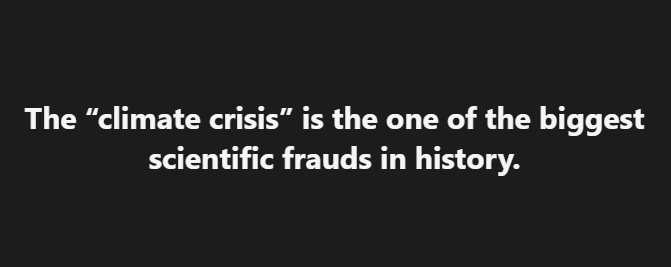 To the author of the meme here (if it’s an actual human being, vs. a Russian bot): to the best of my knowledge, the only actual major “scientific fraud” in world history was “Piltdown Man.” In 1912, a pseudo-anthropologist attempted to fool the scientific community into believing he had discovered the “missing link” between apes and humans.
Now, are there examples of instances when the science of the day turned out to be incorrect?
Of course, and new instances of this surface every day.
Think of how little when scientists believed 200 years ago is still intact today. Perhaps most obviously, Newtonian mechanics has fallen to relativity and quantum physics, but there are hundreds of other paradigm shifts in health and medicine, psychology, cellular biology, chemistry, and particle physics.
Contrary to what conspiracy theorists want you to believe, science is not a set of facts; it’s a methodology whereby we come to learn more about ourselves and the world around us.
Are there other methods by which we “learn?” Sure. Some uneducated guy goes on YouTube and becomes convinced that our consumption of fossil fuels is not causing the temperature of the Earth’s atmosphere and oceans to rise. I would argue that this conduct is inferior to the scientific method.
Renewable Energy
Trump’s Only Real Talents: Attracting Attention and Controlling Morally Weak People
 Trump is not an idiot. His IQ may not be too high, but he’s smart enough to know how to conduct himself in his lifelong quest to amass more wealth and power at the expense of everyone else on Earth.
Trump’s Only Real Talents: Attracting Attention and Controlling Morally Weak People



