

Welcome to Carbon Brief’s Cropped.
We handpick and explain the most important stories at the intersection of climate, land, food and nature over the past fortnight.
This is an online version of Carbon Brief’s fortnightly Cropped email newsletter. Subscribe for free here.
Key developments
Brazil agri investigations
BOATLOAD OF BEEF: Major shipping firms transported more than half a million tonnes of beef and leather from slaughterhouses “linked to tropical forest destruction in Brazil” over the course of two years, the Bureau of Investigative Journalism (TBIJ) reported. Data showed that 12 meat plants run by Brazil’s top three beef companies were linked to an area of forest loss “three times the size of London” from 2021-23. Shipping firms then moved “hundreds of consignments” of beef and leather from these meat plants to Europe, the US and China in 2022-23, TBIJ found. Alex Wijeratna from environmental campaign group Mighty Earth told the outlet: “Major shipping companies are the silent enablers in the billion-dollar global trade of deforestation-risk commodities.”
DEFORESTATION LINKS: Separately, a report found that around 80% of Brazil’s major beef and leather organisations, plus their financiers, “have made no commitments to stop deforestation”, the Associated Press said. The report from nonprofit Global Canopy ranked meat giant JBS as the “most likely to be buying cattle and cow leather from recently deforested land” – despite the company being one of the few that have made public pledges to halt supply chain deforestation in future. JBS told the newswire that the report’s methodology provided a simplistic and inaccurate assessment of deforestation risk and ignored other factors, such as corporate policies.
MULTIPLE CRISES: Elsewhere, a new report covered by Carbon Brief found that “siloed” approaches to tackling the interconnected issues of biodiversity, climate change, food, water and health are not “fully effective”. The report from the Intergovernmental Science-Policy Platform on Biodiversity and Ecosystem Services (IPBES) found that focusing on a single element of these issues at the expense of the others will have negative impacts for humans and the planet. A second IPBES report looked at the “urgent and necessary” need for “transformative change” to tackle biodiversity loss and nature decline. Inger Andersen, executive director of the UN Environment Programme, said it “offers a roadmap for addressing the drivers of the nature crisis with tools for action across sectors and society”, Down to Earth reported.
Desertification COP ends in disarray
NO DROUGHT DEAL: The COP16 desertification summit in Riyadh, Saudi Arabia, ended with no agreement on a “legally binding response to drought”, the Financial Times reported. Countries need more time to agree on the “best way” to deal with this “critical issue”, the head of the UN Convention to Combat Desertification (UNCCD), Ibrahim Thiaw, said. The FT noted: “African countries in particular pushed for the establishment of a legally binding drought protocol, while the US and EU bloc sought a framework that was less economically onerous, but was ready to be operational.” This outcome follows the recent “failure” to reach key agreements at biodiversity talks in Colombia and plastics talks in South Korea, the newspaper said.
ENDING: Countries signed off on some outcomes at the Riyadh COP, including to set up “official groupings for Indigenous peoples and local communities”, Climate Home News reported. Governments also agreed to extend the desertification convention’s remit “beyond drylands, to cover grasslands, shrublands, woodlands, savanna and tundra”, the outlet said. On the other hand, the summit left a “lot of loose ends”, including on finance, according to Think Landscape. In total, $12bn was pledged at COP16 to tackle desertification, drought and land degradation – but an estimated $355bn will be needed each year by 2030, the outlet noted.
DRY LAND: Almost 78% of land around the world “likely became permanently drier” between 1990 and 2020, according to a UN report covered by Down to Earth. The report, released during COP16, said that 4.3m square kilometres of “previously humid landscapes” have turned into drylands over those three decades. The outlet said: “This transition has dire implications for agriculture, ecosystems and the livelihoods of those dependent on these regions, as reduced rainfall affects crops, pastures, people and nature.”
Spotlight
The top five food, land and nature stories of 2024
For the final Cropped issue of the year, Carbon Brief rounds up our selection of the five food, land and nature stories that marked 2024. Cropped will return to your inbox on 15 January 2025.
SEVERE DROUGHT: In February, Carbon Brief covered research revealing that half of the Amazon will face “unprecedented” stress that could lead to a tipping point by 2050. Such stress – the result of a combination of factors, including climate change, deforestation, biodiversity loss and extreme weather – may convert vast rainforest areas into savannas. In October, Brazil’s Globo Rural reported that the drought in the southern Amazon – ongoing since 2023 – reached “critical levels”, hindering river navigation and isolating riverside communities.
SKYROCKETING FOOD COSTS: This year saw a global rise in food prices, from olive oil and oranges through to cocoa and coffee. Carbon Brief consulted a range of scientists and policy experts to best understand the factors behind the spiking prices, including extreme weather events, high input costs, geopolitical conflicts and increasing demand. The Financial Times reported that climate change is a major trigger for these prices, as it is “reducing crop yields, squeezing supplies and driving up prices”. Carbon Brief produced five charts that highlight climate impacts on food production and prices for various crops in the EU, UK, US and China.
DE- AND REFORESTATION: A report by the Forest Declaration Assessment noted that the world is “not on track to meet” its goals to halt and reverse deforestation and forest degradation by 2030. According to the report, the world has “barely made a dent in curbing deforestation”. In June this year, the EU Council gave the final sign-off to a nature law aiming to restore 30% of degraded habitats, including forests, rivers and wetlands by 2030, as Carbon Brief reported. EU countries will start implementing their restoration plans in July 2026, according to Earth.org.
MASS BLEACHING: This year also saw the “most extensive on record” event of coral bleaching, Reuters reported, citing the US National Oceanic Atmospheric Administration (NOAA). Satellite data revealed 77% of the world’s coral reef areas have undergone heat stress, leading to bleaching events, against a backdrop of “near-record ocean temperatures across the world”. Scientists dubbed this the “fourth global coral bleaching”.
THREE COPS: Three COPs in a row closed out the year. Carbon Brief covered the COP16 biodiversity summit in Cali, which will resume in Rome in February 2025 to address unresolved issues, such as creating a new fund under the COP and a monitoring framework for countries’ progress in tackling biodiversity loss. Carbon Brief also reported on the COP29 climate talks in Baku, where food and nature featured “pretty weakly” in the negotiations, according to observers. The year ended with the UN desertification conference in Riyadh, which ended last week and failed to agree on a legally binding drought protocol, Inter Press Service reported.
News and views
‘EPIC’ MIGRATION: Climate change may have led a humpback whale to undertake “one of the longest and most unusual migrations ever recorded”, BBC News reported. The whale traveled from the Pacific Ocean to the Indian Ocean, covering a distance of 13,000 kilometres. Scientists described it as an “epic” migration and said it could have been driven by a reduction of food availability due to climate change or the search for a mate.
PRICING BIODIVERSITY: Investors are “increasingly interested in addressing biodiversity risks in their portfolios” and putting a price on biodiversity through the creation of “green” funds, the Financial Times reported. The outlet cited experts in biodiversity investments who said the sector is becoming more aware of the impacts of biodiversity loss on inflation and GDP. It also said that the topic drew more attention at the COP16 biodiversity summit, held in Colombia this year, than at previous biodiversity summits. Separately, a recent study outlined a new framework for defining what a unit of nature is, as well as the risks of biodiversity credits.
FARMER FRUSTRATIONS: In Spain, tens of thousands of farmers took to the streets of Madrid to protest against a trade agreement between the EU and Mercosur countries in South America, Euractiv reported. The deal, which has been in the works for 25 years, would “create a free-trade zone spanning more than 700m people”, Politico said. It was given the final green light on 6 December, but has not yet taken effect, the outlet noted, adding that it is “furiously opposed by France, which fears that a glut of cheap poultry and beef imports would undercut its farmers”. Elsewhere, DeSmog and other outlets compiled a database of interests and “side jobs” of politicians on an EU agriculture committee. In the UK, farmers protested in London over tax changes, according to Reuters.
RISKY BUSINESS: Bloomberg reported on the risks of an “unusual insurance policy” to aid disaster recovery that is “gaining ground” in Asia, Africa and the Caribbean. The policy, known as parametric insurance, provides a payout only when a “specific metric is triggered”, such as low rainfall levels harming crop growth. The outlet spoke to people in a small Malawi village which has received “only a trickle” of a payout from this policy. Chilimani has been hit by floods, cyclones and now its “worst drought in decades”, which has “obliterated the harvest of corn, the main food”, Bloomberg said. One villager told the outlet: “It’s the worst time of our lives…Everything has become unpredictable.”
Watch, read, listen
LAND RIGHTS: The Africa Daily podcast from the BBC World Service explored whether a recent “major land policy shift” in Zimbabwe will “empower black farmers”.
‘SACRED’ CENOTES: An Associated Press video covered the Indigenous Mayans’ quest to obtain personhood status for their “sacred cenotes”, a group of subterranean lakes in Mexico.
RISKY SHIFT: Farmers and fishermen are starting to work at night in response to extreme heat. Grist navigated the “new dangers” these changes may lead to.
HOPEFUL NOTE: The Guardian detailed “five UK biodiversity success stories” – including butterfly comebacks and helping a river “start from scratch”.
New science
- A new study in the Proceedings of the National Academy of Sciences found that less than a quarter of tropical rainforests are of “high integrity”, meaning they are “intact and undisturbed”. The researchers analysed forest areas inhabited by 16,396 species of terrestrial vertebrates, finding that species threatened with extinction were especially affected by the loss of habitat.
- Species extinctions will “accelerate rapidly” if global temperatures go beyond 1.5C above pre-industrial levels, a Science meta-analysis study suggested. The research synthesised the findings of 485 studies and more than 5m projections of future extinctions.
- Deforestation-induced climate change has made soybean and maize crop shortages “more frequent and severe”, according to new research published in Nature Sustainability. The authors examined the effects of climate change on these crops in the Cerrado, a vast savanna in eastern Brazil.
In the diary
- 16-20 December: 68th meeting of the Global Environment Facility Council | Online
- 25-27 February: Resumed session of Convention on Biological Diversity COP16 | Rome, Italy
Cropped is researched and written by Dr Giuliana Viglione, Aruna Chandrasekhar, Daisy Dunne, Orla Dwyer and Yanine Quiroz. Please send tips and feedback to cropped@carbonbrief.org
The post Cropped 18 December 2024: No UN deal for drought; Brazil beef investigations; New IPBES reports appeared first on Carbon Brief.
Cropped 18 December 2024: No UN deal for drought; Brazil beef investigations; New IPBES reports

Governments at the COP17 nature summit in Armenia agreed on Saturday to scale up their policies to protect the planet’s shrinking biodiversity, and for the first time invited large emerging economies like China and Gulf states to take on donor responsibilities to help fund those efforts.
For the past two weeks, countries held talks in Yerevan under the UN Convention on Biological Diversity to outline a plan to ramp up currently “insufficient” policies to conserve land and marine ecosystems. A recent UN progress report found the world is off track to meet 22 out of 23 global targets aimed at reversing species loss and protecting 30% of land and seas by 2030.
While a response plan, called the “Global Review of Collective Progress”, was expected to be the main outcome of COP17, negotiations struggled to advance amid a deadlock over the controversial subject of how to finance the boost in conservation measures needed.
After an all-night session on Friday, delegates agreed to invite developing countries to voluntarily signal their interest in assuming donor funding obligations alongside developed nations. Negotiators repeatedly warned that any stronger provisions on expanding the donor base would collapse the deal.
COP president: Results beat expectations
An exhausted COP17 president Hambardzum Matevosyan, Armenia’s environment minister, told journalists in the early hours of Saturday that “we’ve achieved more than we could’ve expected” given the “importance” of the decisions being taken.
“It was 100% possible that those items did not made it through. 100% possible,” he said, adding that the conference had made progress on “all the most important items”.
Speaking at the closing plenary, the group of Pacific Islands said that, while the summit had achieved “great outcomes”, delegates are also departing Yerevan “with realities not reflected in the official text”, such as the low replenishment of the Global Environment Facility (GEF), a key funder of nature projects.
-
Lula’s election win in Brazil raises hopes for zero deforestation drive
Lula’s re-election makes it more likely Brazil can meet a key goal to end forest loss in the Amazon and builds confidence in a new fund to protect the world’s rainforests, experts say

Some observers also said the deal did not go far enough. Steven Guilbeault, a former Canadian environment minister who helped broker the Global Biodiversity Framework (GBF), said the Yerevan package of action is “an important step forward”, but still “falls short of what is needed to meet our 2030 commitments”.
An Lambrechts, biodiversity politics expert at Greenpeace International, said COP17 had kept things moving forward and set well-intentioned promises, but added that these “won’t remove major roadblocks to implementation” such as insufficient finance and debt constraints in developing countries.
WWF chief conservation officer Daudi Sumba noted that financial issues were not fully resolved. Despite the deal in Yerevan, “I fear finance will remain the key issue that continues to haunt the UN biodiversity summits,” he said in a statement.
‘Yerevan Pathway’ tackles nature plans and subsidies
In the lead-up to the summit, the UN assessment report showed countries are falling short on virtually all targets in the GBF, the 2022 global deal often referred to as the ‘Paris Agreement for nature’.
They include a landmark target to protect at least 30% of the planet’s land and sea by 2030. If countries all stick to their current national goals, about 26% of land would be protected and only about 12% of marine ecosystems would be under conservation measures.
The main COP17 decision – named the Yerevan Pathway by the presidency – calls for countries to revise their biodiversity plans, subject to available funding, with a particular focus on addressing the gap in coverage of “marine, coastal and inland water ecosystems”.
It also urges the over 60 countries who have not submitted a biodiversity plan yet to finalise them “as soon as possible” and taking into account the gaps identified by the UN progress report.
Countries also agreed to tackle the drivers of biodiversity loss by “accelerating” the reduction of subsidies for activities that damage nature. Subsidy reform, covered by Target 18 of the GBF, is where countries have made the least progress so far, according to the assessment report.
Jill Hepp, director of nature and marine policy and incentives at green group Conservation International, said singling out subsidies in the Yerevan Pathway “gives a strong signal” that closing the gap for biodiversity action requires “more urgent efforts to reform harmful incentives and scale up positive incentives”.
“Timid” steps to expand base of donors
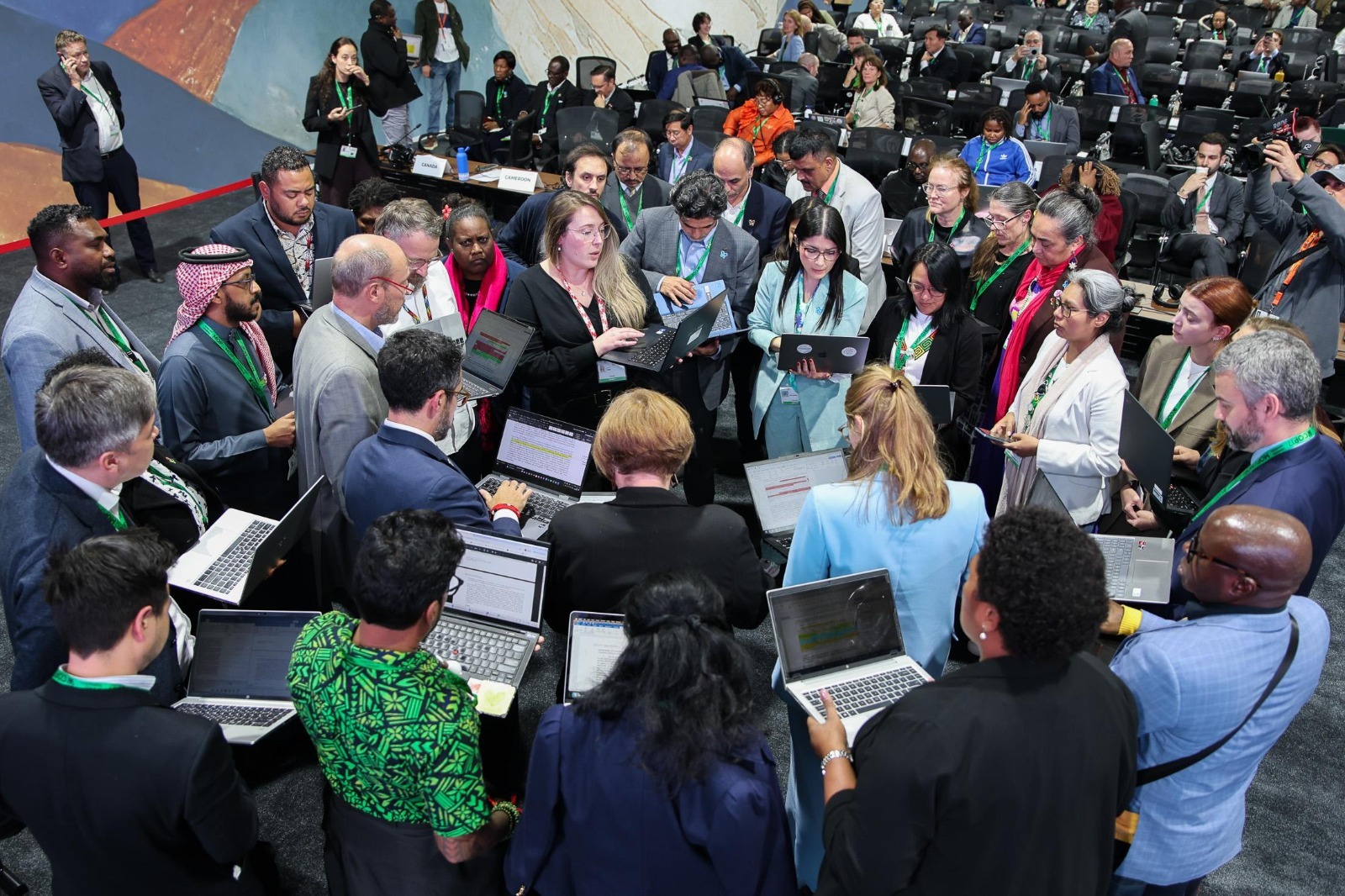
Having failed to meet a target to channel $20 billion for biodiversity conservation by 2025 and faced with shrinking aid budgets, the EU pushed a proposal to expand the list of which countries count as donors, so that wealthy emerging economies like China and Saudi Arabia could also voluntarily contribute. The group of Arab nations strongly opposed this.
During the talks, Irish minister of state for nature, Christopher O’Sullivan, whose country holds the EU presidency, said the bloc wanted the world’s “new realities” to be reflected in the donor list.
Negotiations remained gridlocked for most of the two-week talks, until a last-day compromise was struck to invite developing countries that may want donor status “to indicate to the [Convention on Biological Diversity] secretariat their interest in being included in the corresponding list”.
Countries also asked the secretariat to send an invitation to emerging economies wanting donor status at each subsequent COP, and requested a technical report on “the implications of inclusion in the list” for emerging economies.
Swiss lead negotiator Gabriela Blatter said during one of the sessions that her country had expected greater steps towards expanding the base of contributing countries, but added that “if we’re mutually unhappy, it’s probably the closest we can get on these very delicate political compromises”. Saudi Arabia, on the other hand, also noted their dissatisfaction but said it had expected “a lot less”.
The fragile deal was approved in a package of decisions together with the Global Review, after some delegations including Brazil and China appealed to the plenary not to make further changes to the text at the risk of collapsing the whole agreement.
In a statement delivered to the closing plenary, the EU said the finance outcome had delivered “timid” progress towards fully broadening the base of donors.
Cali Fund still not operational
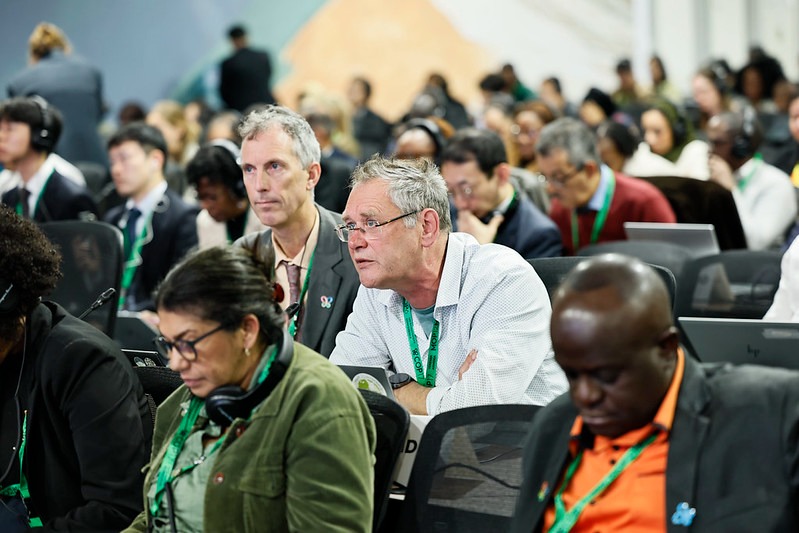
Adopted two years ago at COP16, the Cali Fund was seen by some observers as a way to channel private-sector finance into biodiversity conservation, as governments struggle to find public funds. But it is still struggling to get up on its feet.
The fund allows big corporations to access certificates for the use of genetic material found in biodiversity in return for a financial contribution, which experts estimate has the potential to raise up to $6.9bn for biodiversity. While voluntary, companies are encouraged to pay 1% of their profits or 0.1% of revenue into the fund.
But since its creation, the fund has received little more than $10,000, which Guilbeault argued is because the rules for disbursements to local communities and the operation of the fund had yet to be fleshed out. This was due to happen at COP17.
Yet, while the final decision on the fund laid out some of the rules – including how companies can earn “Cali Fund certificates” – some key technical details were left to the next COP in 2028 in Ecuador. This includes the issue of whether companies can pay a lower rate if they use genetic data for only a small portion of their products.
“By punting essential decisions to two years from now, parties have all but ensured the fund remains empty until then,” said Pakhi Das, a public policy advisor at NGO Plant-for-the-Planet.
The post COP17 delivers fragile deal to boost conservation and funding for nature appeared first on Climate Home News.
COP17 delivers fragile deal to boost conservation and funding for nature
SYDNEY, Thursday 30 October 2026 — In response to reports that the Albanese government is set to introduce draft legislation this year that would seek to ban data centres in Australia’s suburbs, Joe Rafalowicz, Head of Climate and Energy at Greenpeace Australia Pacific, said:
“These reports are a testament to the growing community opposition to these completely inappropriate AI factories that have sprung up across our suburbs, and Big Tech corporations should take heed — the data centre build-out must not happen without the endorsement of the Australian people.
“But the government can’t simply ship this problem out to regional Australia without addressing the fundamental issues with this extractive new industry.
“We’re already seeing a trend of AI data centre proposals moving to the regions, in areas that are more water-scarce, more environmentally sensitive, and next to sources of fracked and coal seam gas to support their massive BYO gas-fired power plans — a pattern we’ve seen play out in the United States.
“From the Beetaloo Basin in the NT to the Western Downs in Qld, we’re seeing a wave of AI data centre proposals that would see new gas fast-tracked to support their massive energy demand, and threaten to completely derail Australia’s energy transition.
“Just as suburban Australians are asking, “what for?”, regional communities like Berry Springs and Dalby do not want dirty data centres setting up shop with absolutely no benefit to their communities. Greenpeace is calling for a moratorium on AI data centre developments until strict and enforceable safeguards are in place to protect our climate and our communities.”
-ENDS-
Media contact
Kate O’Callaghan on +61 406 231 892 or kate.ocallaghan@greenpeace.org
AI data centre ban in suburbs would not address fundamental issues: Greenpeace
In the thick of the COP29 climate summit in Azerbaijan in 2024, the UN climate talks were rattled by what can only be described as a major PR disaster. The BBC, Reuters and The Guardian all carried headlines, attributed to leading climate policy experts, that the COPs were “no longer fit for purpose”.
The articles outlined a series of reforms called for in an open letter signed by 22 eminent scientists and politicians, including a former UN secretary-general and previous UN climate chief, with a further 150 lending their support. The headlines shook confidence in the COP process, just as governments were wrestling over a new climate finance goal.
The Club of Rome – which handled the media relations for the letter – hurried to say that its “constructive, supportive ideas” had been “misinterpreted”. Negotiators kept calm(ish) and carried on, in the end landing the finance goal after some high-stakes drama on the final day.