Testimony from the United States during the ongoing International Court of Justice (ICJ) hearing on Wednesday evoked anger from climate activists and vulnerable nations, as the planet’s second-largest greenhouse gas emitter argued against nations being legally obligated to take measures to fight the climate crisis.
The oral arguments were part of the historic climate hearing in The Hague, where climate-vulnerable countries like Vanuatu and other small island nations are calling for rich polluters that are most responsible for global heating to be held accountable.
“The International Court of Justice’s proceedings are a profound moment in global climate accountability. The hearings elevate science to the forefront, ensuring international law reflects the realities of climate impacts and the urgent need for global action,” said Dr. Delta Merner, lead scientist for the Union of Concerned Scientists’ (UCS) Science Hub for Climate Litigation, in a press release from UCS. “Yet in today’s oral arguments, the United States — the world’s largest historical polluter of heat trapping emissions — resisted calls for climate accountability. Instead of taking responsibility for its contributions to the climate crisis, the United States used its 30-minute slot to downplay the role of the courts for global climate action, emphasize non-binding national commitments under the Paris Agreement, and reject the notion of historical responsibility.”
“By framing climate change as a collective action challenge without clear legal obligations for individual states, the United States dismissed the potential for redress or binding accountability measures that advance justice for climate-vulnerable nations,” Merner added.
In its arguments, the U.S. emphasized sticking with the 2015 and Paris Agreement and the United Nations Framework Convention on Climate Change, as well as other treaties, reported The Guardian.
“Any other legal obligations relating to climate change mitigation identified by the court should be interpreted consistently with the obligations states have under this treaty regime,” Margaret Taylor, legal adviser for the U.S. Department of State, told the ICJ judges, as The Guardian reported.
The response from climate activists illustrated the need for wealthy nations to be held accountable for their disproportionate contributions to the climate crisis, as well as their outsized evasion of responsibility.
“Once again, we witness a disheartening attempt by the U.S. to evade its responsibilities as one of the world’s largest polluters,” said Vishal Prasad, campaign director for the Pacific Islands Students Fighting Climate Change, as reported by The Guardian. “The U.S. is content with its business-as-usual approach and has taken every possible measure to shirk its historical responsibility, disregard human rights and reject climate justice.”
Other of the world’s largest fossil fuel economies and biggest greenhouse gas emitters — China, Australia and Saudi Arabia — also argued against being held legally accountable for the pollution they produce.
“It is absurd for the Biden administration to argue before the ICJ that countries do not have clear legal obligations to reduce carbon pollution, especially as it prepares to turn over the executive office to a proven climate denier like president-elect Trump, whose policies are likely to deeply harm U.S. climate action,” said Ashfaq Khalfan, climate justice director at Oxfam.
Vulnerable nations fought for years for rich polluters to be held accountable, and the UN responded by asking the ICJ to give an advisory opinion on the obligations of states in combating climate change, along with what the legal consequences would be if they do not do their part.
“The ICJ’s advisory opinion has the potential to reshape international climate governance by providing clear, authoritative guidance on nation’s obligations under existing law. This process showcases how the best available science can illuminate pathways to protect human rights, advance equity, and compel ambitious climate action,” Merner said in the press release. “In the face of stonewalling from major polluters, we applaud the leadership of Vanuatu and others for advancing this process. These proceedings must continue to center the voices of frontline communities.”
More than 100 countries and organizations are providing testimony over the 12-day hearings.

View of the ICJ courtroom at the start of the hearing on Dec. 2, 2024. UN Photo / ICJ-CIJ / Frank van Beek
Advisory opinions by the ICJ are not binding, but nonetheless carry significant weight both legally and politically. The opinion of the court will be cited as an authoritative statement during future international climate negotiations and litigation.
Ralph Regenvanu, special climate change envoy for Vanuatu, on Wednesday expressed disappointment in the U.S. and other major polluters on behalf of his country.
“These nations, some of the world’s largest greenhouse gas emitters, have pointed to existing treaties and commitments that have regrettably failed to motivate substantial reductions in emissions… these treaties are essential, but they cannot be a veil for inaction or a substitute for legal accountability,” Regenvanu said, as The Guardian reported.
Vanuatu is leading the push for financial support and compensation for loss and damage for the countries that are most vulnerable to climate impacts — especially Pacific island nations — such as sea-level rise, flooding, drought and wildfires.
Taylor was dismissive of the ICJ weighing in on historic emitters being held responsible for their past pollution.
“An advisory proceeding is not the means to litigate whether individual states or groups of states have violated obligations pertaining to climate change in the past or bear responsibility for reparations… nor would it be appropriate to do so,” Taylor said, as reported by The Guardian.
There are three international courts of law responsible for providing advisory opinions concerning the climate crisis, including the ICJ, the Inter-American Court of Human Rights and the International Tribunal for the Law of the Sea (ITLOS).
Earlier this year, ITLOS found that nations have a legal obligation to control greenhouse gases as pollutants.
“By leveraging science and law together, the ICJ can help course-correct the international response to climate change, providing justice and hope for future generations as they endeavor to stave off some of the worst climate harms. No matter what the court decides, civil society must continue to push for decision-making guided by science and climate-vulnerable communities, as well as challenge the outsized political power wielded by fossil fuel interests seeking to obstruct and delay climate goals for the sake of their own bottom lines,” Merner said in the press release.
The post Activists and Vulnerable Nations Condemn U.S. Arguments Against Climate Obligations at ICJ Hearing appeared first on EcoWatch.
https://www.ecowatch.com/icj-climate-change-hearing-vulnerable-nations.html

Just like fashion has been overrun by fast fashion, home goods and furniture have similarly seen a rapid decline in quality. Rugs are no exception.
And similar to fashion, these cheap goods come at a high cost — namely, to the planet and to people. In fact carpet and rug production is rampant with exploitation.
On the other hand, fair trade rugs present the best of what a rug can bring to your home: artistry, craftsmanship, and heritage.
The brands featured in this guide are partnering with (and fairly paying!) skilled artisans who are using generations-old — and sometimes even centuries-old — techniques. These artisans are sustaining long lines of crafts, preserving their cultural diversity, and celebrating the richness of their time-honored crafts.
There’s simply no replacement for a timeless, quality artisan-made rug — they’re like pieces of art you can lay out on your floor or hang on your walls.
So, enjoy browsing through this guide to sustainable rug brands listed out below and best of luck on your search for the right fair trade rug!
Where to Find Ethical and Fair Trade Rugs
Note that this guide includes affiliates and partners. As always, brands must meet high standards for ethics and sustainability to be featured and all opinions are my own.
1. Obakki
Best for: warm-hued handwoven wool rugs
Categories: Area Rugs, Runners, Accent Rugs
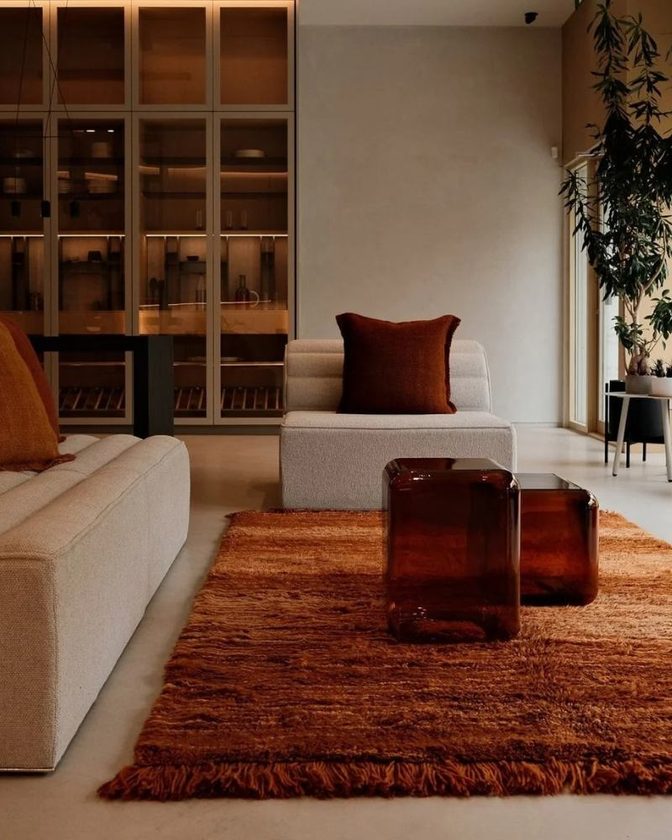
Obakki partners with artisan weavers primarily in Oaxaca, Mexico — including individual makers like José — who hand-dyes and weaves rugs on a traditional pedal loom using locally sourced sheep’s wool and natural dyes derived from native plants. The brand also works with Rrres Design Studio, a Latin American studio dedicated to preserving traditional Oaxacan weaving techniques, and sources handwoven textiles from artisan communities beyond Mexico as well, including Morocco.
Each rug is made from 100% wool with no synthetic dyes or backing. Most pieces are made-to-order with a 4-8 week production window, shipped directly from the artisan partners.
Price Range: $460 – $4,159
Conscious Qualities: Natural Fibers, Natural Dyes, Craft Preservation
2. Kiliim
Best for: modern wool kilim rugs
Categories: Area Rugs, Accent Rugs
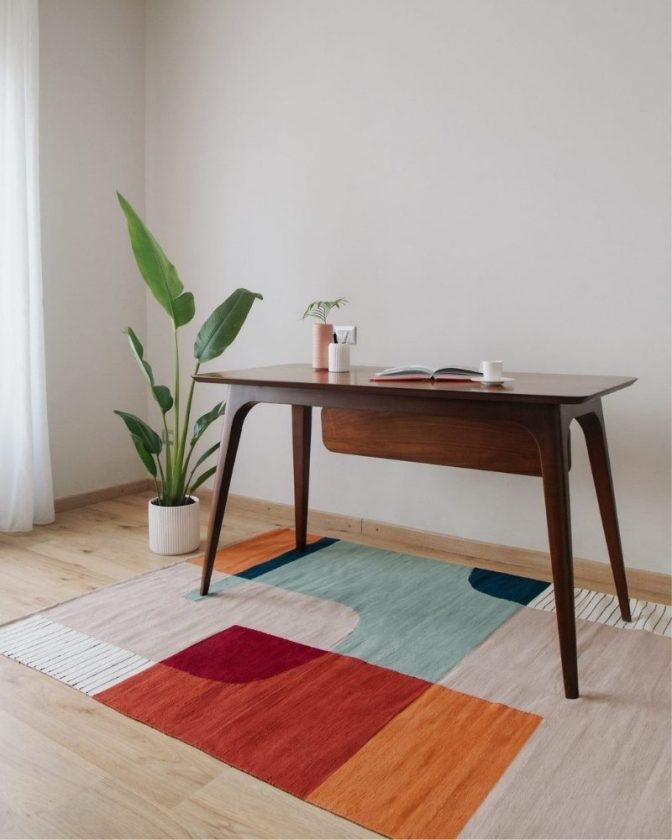
If you’re well-versed in rug terminology, you may recognize that this brand’s name looks similar to the word kilim.
Kiliim’s rug are made using authentic kilim rug craftsmanship by artisans in Egypt coming from generations of kilim artisans. To ensure ethical production and to support the preservation of this heritage craft, Kiliim pays living wages to all artisans.
Price Range: $95 – $4,812
Conscious Qualities: Ethical Production, Heritage Craft Preservation, Natural Fibers
3. Urban Natural
Best for: browsing fair trade rugs in lots of styles and sizes
Categories: Outdoor, Area Rugs, and Accent Rugs
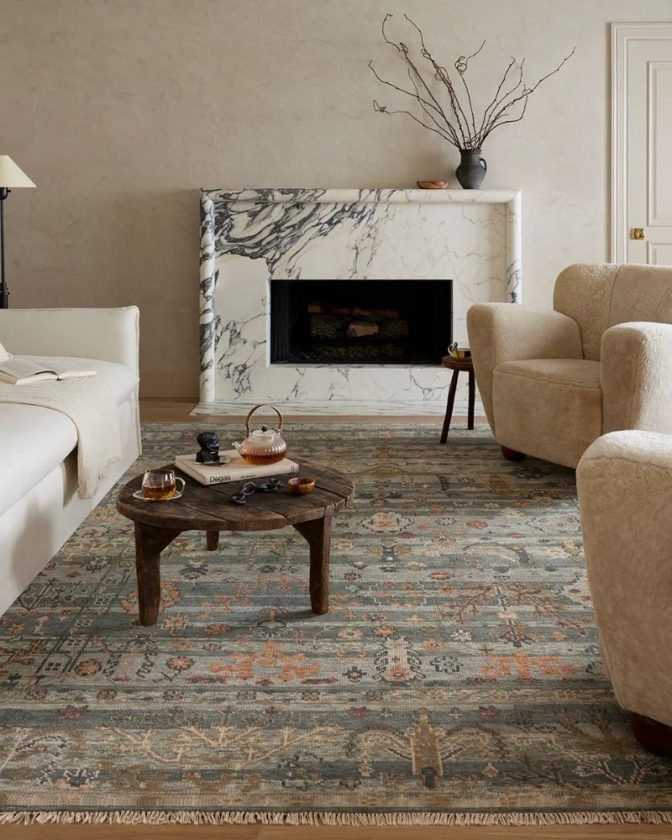
This natural home and lifestyle retailer has a beautifully curated selection of sustainably-made rugs crafted with materials like jute, sisal, wool, and cotton.
Several brands on Urban Natural are also ethically hand-loomed or hand-knotted, such as Loloi — a GoodWeave partner — and Jaipur Living — a brand that partners with thousands of local artisans to sustain heritage crafts.
Price Range: $259 – $9,755
Conscious Qualities: Eco-Conscious Materials
4. LOOMY
Best for: pet-friendly and performance rugs
Categories: Area Rugs, Accent Rugs, Runners, Outdoor Rugs
Founded by a weaver, LOOMY is dedicated to crafting beautiful artisan-made rugs that will last for decades to come.
LOOMY partners with highly-skilled artisan weavers who craft quality rugs made from eco-minded materials like banana silk, jute, and recycled cotton, plus performance options made from 100% recycled polyester built to withstand whatever life brings you.
Price Range: $298 – $8,298
Conscious Qualities: Natural Fibers, Craft Preservation, Vintage Options
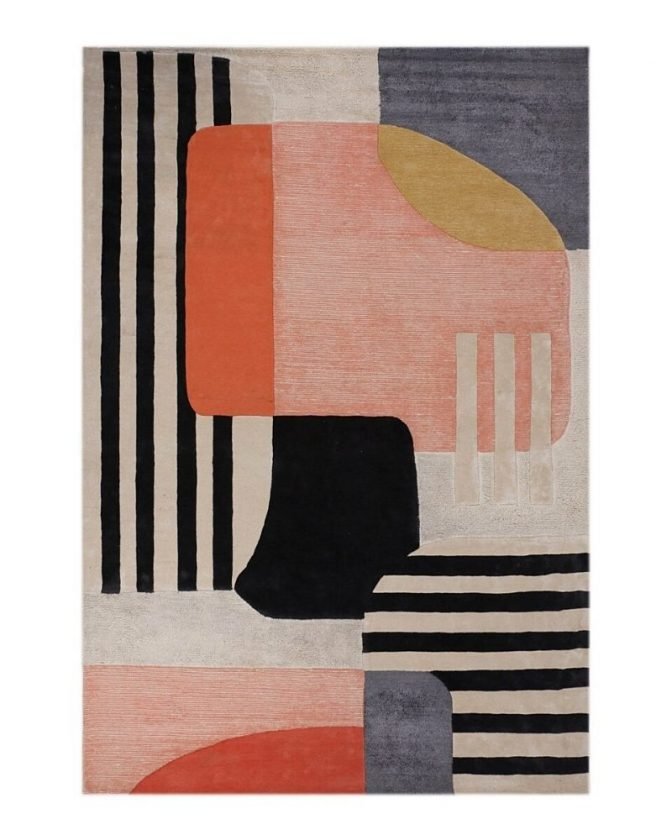
5. West Elm
Best for: fair trade rugs in on-trend mainstream styles
Categories: Area Rugs, Accent Rugs
West Elm is bringing ethical rugs to a broader market with their collection of Fair Trade Certified wool and cotton rugs. While I recommend browsing the smaller shops listed above first, West Elm is supporting the movement to responsibly-made, fair trade rugs.
Price Range: $$$
Conscious Qualities: Fair Trade production, Majority Natural Materials
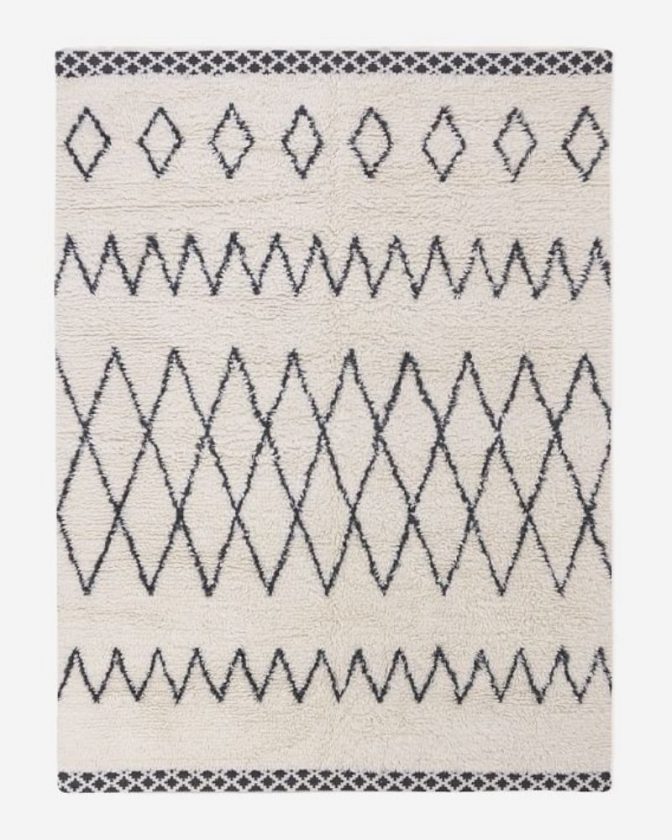
6. Jubi
Best for: Modern rugs in vibrant prints
Categories: Accent Rugs, Circle Rugs, Runners
Jubi is a Brooklyn studio founded by textile designer Cassie Dagostino. Every rug is handmade from New Zealand wool by fourth-generation weaving families in Bhadohi, India using traditional techniques. Each rug is made-to-order, meaning no excess stock. Since everything is made to order, expect between 3 and 7 weeks for your rug, depending on the technique used.
Conscious Qualities: Pays Above Market Rates, 100% Wool, Made-to-Order
Price Range: $228 – $668
Shipping: Free worldwide shipping

7. Rejuvenation
Best for: Classic rug styles made in Fair Trade factories
Categories: Accent Rugs, Runners, Area Rugs
Home retailer Rejuvenation has a selection of rugs made in Fair Trade Certified factories. Their collection includes undyed hand-loomed rugs to geometric flatwoven wool rugs. And while I’d typically avoid synthetics, it tends to be unavoidable for outdoor rugs — so Rejuvenation’s Fair Trade 100% recycled poly rug is a good option.
Conscious Qualities: Fair Trade Certified, Mostly Natural Materials
Price Range: $79 – $1,649
Shipping: Contiguous U.S. shipping for 10% of product price (add $20 for HI, AK, and US. territorries)
Liked this guide to ethical rugs? You might also enjoy:
Ethical Home Decor Brands to Curate a Beautiful, Conscious Space
Eco-Friendly Furniture to Furnish Your Home Sustainably
Fair Trade and Eco-Friendly Blankets to Cozy Up With
The post 5 Best Ethical Fair Trade Rugs to Elevate Your Space appeared first on Conscious Life & Style.
As a longtime book lover, I may be biased, but I think a full bookshelf is one of the most beautiful additions to a space. There’s nothing better than seeing a showcase of your favorite reads alongside a TBR list.
A bookcase, though, can of course be used for all sorts of purposes from placing your favorite photos of family and friends to showcasing treasured vintage finds.
Whatever the case, this guide will help you find the right sustainable bookshelf for your living room, office, or wherever you like to cozy up with a good read!
So what make a bookcase more sustainable? What makes a bookshelf non-toxic?
First of all: sustainable and non-toxic are two overlapping — but distinct — criteria. And both of those terms can come with a lot of opinions and varying definitions.
When it comes to sustainable bookcases, I look for:
- Responsibly Sourced Materials: most bookshelves are made primarily with wood. While natural, unsustainable wood sourcing can be a cause of deforestation, so we want to see that the wood was from responsibly managed forests or made from reclaimed or repurposed wood. Some bookshelves may feature metal, in which case recycled materials here are important.
- High Quality Construction: sustainability includes longevity — how long will you be able to use that furniture piece before it goes to the landfill and gets replaced? Look for transparency around craftsmanship and woodworking processes. Another sign of quality is the length of warranty a company has for its products.
- Ethically Made: this one is straightforward in theory — were the people making it paid fairly and working in safe conditions? — but is unfortunately not always easy to find information. In this category, I look for transparency in practices, what relationship the brand has with the manufacturer (some produce in-house which is the best case scenario for transparency!), where it was made, and how well the makers were paid.
Ideally a sustainable bookshelf would also be non-toxic — as toxic chemical fumes aren’t exactly sustainable! But this isn’t always the case. For example, if a company prioritizes upcycled materials, they don’t necessarily have control over what inputs were part of the original materials. And sometimes a company focuses more on ethical artisan partnerships and sustainable wood sourcing, more than, say, using non-toxic finishes.
But when it comes to non-toxic bookshelves, this is what I look for. (Note that non-toxic doesn’t necessarily mean safe for all chemical sensitivities. Nor does it mean zero potentially irritating chemicals.)
- Solid Wood (where possible): MDF or pressed wood contains glue to stick the various wood pieces together, which can contain added formaldehyde. I prefer solid wood, or if it is engineered wood, I’d make sure the company is transparent around the type of glue used and/or they at least have a product certification like GREENGUARD. (More on that in a second.)
- Low or Zero VOC Finishes: most wood furniture is completed with some sort of finish to provide a protection against scratches or moisture. Many of these finishes are synthetic, and some can contain high levels of toxic chemicals. Look for a natural finish like linseed oil or beeswax or a low VOC synthetic finish.
Relevant Certifications
You’ll see a few certifications referenced throughout this guide. Here’s what each one covers:
- FSC Certified = the wood sourcing was responsibly managed; this is not a finish, foam, or textile guarantee.
- GREENGUARD / GREENGUARD Gold Certified = the finished product was tested for low chemical emissions, including VOCs, with Gold representing the stricter tier.
- Fair Trade Certified
 = verifies that a factory meets standards for fair wages, safe working conditions, and ethical labor practices.
 - Cradle to Cradle Certified (Gold) = evaluates a product or material across material health, circularity, clean air/climate, water/soil stewardship, and social fairness.
Where to Find Sustainable Bookcases and Shelving
I’m always a secondhand first proponent, and that goes for furniture, too. While your local thrift store might not have used bookshelves, check for dedicated furniture resale shops near you or estate sales. (I use EstateSales.net to find ones near me.) You can also find gently used pieces on online marketplaces like Facebook Marketplace, OfferUp or AptDeco.
If you can’t find something you love secondhand, and you don’t want to DIY your own bookshelf, then the next best choice is to shop from one of the sustainable furniture companies below. (If you’re simply looking for a bookstand, I’d suggest browsing Etsy for a collection of solid wood, bamboo, and reclaimed wood book stands and cookbook stands!)
Note that this guide includes affiliate links, which means we may earn a small commission if you purchase through these links which helps us continue to run this website and create resources like these. As always all brands meet strict sustainability criteria and are brands we love — and that we think you’ll love too!
1. Medley
Best for: low VOC wood bookcases
Medley’s bookshelves are elegant and elevated, perfect for a living room. Each piece is made with 100% solid FSC-certified hardwood for the tops and sides, though low-VOC CARB 2 compliant plywood is used for the shelves.
Every eco-friendly bookcase is handcrafted in the US (California or North Carolina) and completed with a low-VOC wood finish.
Price: $2,395 – $2,995
Materials: White Maple, American Walnut Wood
Conscious Qualities: Made-to-Order, US-Made, FSC-Certified Wood, Natural Finish

2. Thuma
Best for: non-toxic modular bookshelf
Thuma’s eco-friendly bookshelf is made from upcycled wood sourced from rubberwood trees no longer being used to source rubber. The brand’s bookshelf is also GREENGUARD Gold certified.
What makes Thuma’s bookshelf stand out to me, though, is its modularity — their Pillar Bookshelf can be set in 10 different configurations. And if you start with just a few shelves but later decide you want a larger bookshelf, you can simply buy an additional shelf or two to add on to it!
Price Range: $550 – $3,300
Materials: Upcylced Rubber Wood
Conscious Qualities: GREENGUARD Gold Certified, Repurposed Materials, Adaptable

3. West Elm GREENGUARD Certified
Best for: low-tox bookcases and bookracks for kids
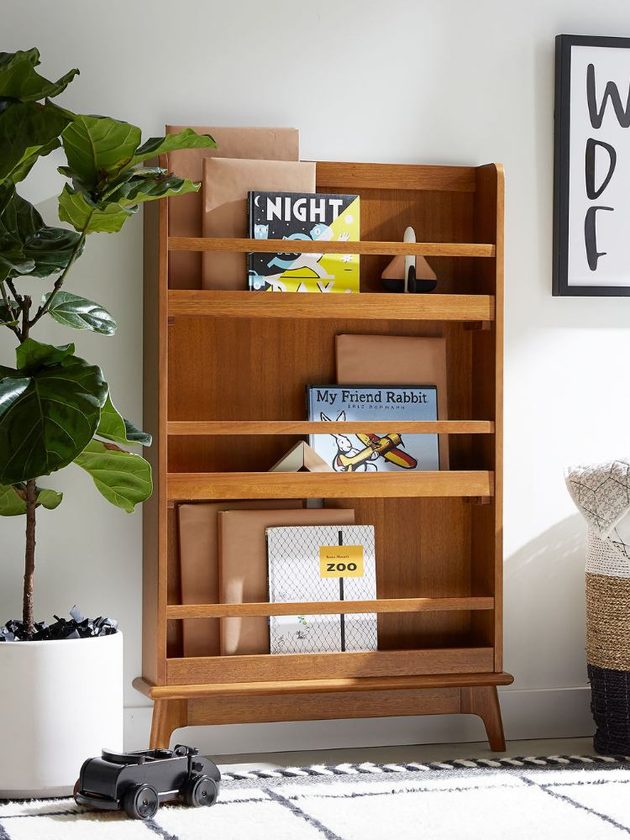
This furniture retailer has plenty of adorable, but functional, bookshelves for a playroom or kids’ bedroom. From cubby bookcases to mid-century bookracks, you’ll find plenty of options that are not only GREENGUARD certified, but made in Fair Trade Certifiedfactories, and/or with FSC-certified wood. Note that the company’s bookshelves are made with engineered wood, though.
West Elm also has GREENGUARD certified bookcases large enough for the adults too!
Price: $399 – $2,897
Materials: Solid Wood, Reclaimed Wood
Conscious Qualities: Fair Trade, FSC Certified, and GREENGUARD Certified Options