

Recently, I sat down with Derrick Whitfield Sr., the creator of the Electric Black Futures (EBF) logo, to discuss how his artistic journey inspired the creation of the iconic EBF light bulb—a powerful symbol calling on Black communities to imagine and implement their future in electric mobility and transportation.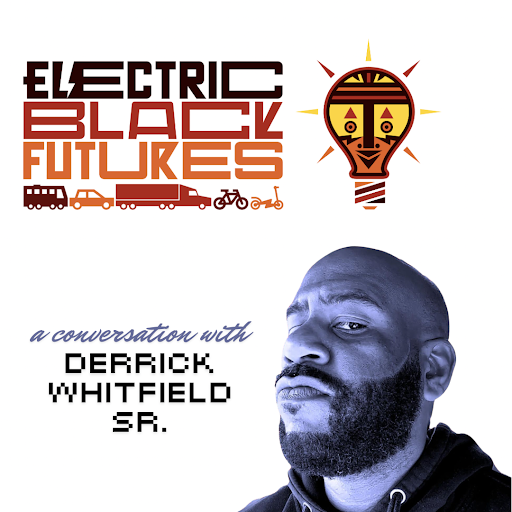
Imagine this scene…
Turbines spin, energy shapes, and electrical current generates.
Electricity!
It vaults, it shakes, it moves in conjunction to join a circuit of activity. The hype increases as it chaotically transmits out of the substation and into the grid. Steel towers and lines heave as it works to contain the excitement of its movement. For miles and miles it moves closer and closer, transforming at every step, switch, and jump. Finally, it arrives at its destination and drops into the meter box then side steps into a breaker box. It ends its performance by threading a wire that sweeps a beam of electrons over a screen.
Flash. The TV illuminates a small face and an African mask. He grins wide as he excitedly witnesses his favorite cartoon characters come to life underneath the wooden frame of a pair of tiny eyes and slanted mouth. A room designated for wonder, then 7-year-old Derrick Whitfield Sr., could not take his eyes off the screen as he watched the antics of Tom and Jerry playout. Little did he know that this electric dance would come again into his life years later as an idea.
Derrick Whitfield Sr. is the creator of the logo of Electric Black Futures (EBF). EBF is an exciting initiative that aims to empower Black communities to shape their electric mobility future from ideation to implementation. Whitfield is one of the many authors of a collective story developing in Georgia that envisions Black communities with a just and clean e-mobility future.
I connected with Whitfield to have a conversation on Electric Black Futures and to reveal how this energizing logo came to light.
(This interview has been edited and condensed.)
Tell me about your origin story. What led you to your career path?
I grew up an artist.
My hometown is in San Diego, California, and I probably started drawing around 7 years old. I was totally a 90s kid. I grew up watching all the Saturday morning cartoons… Looney Tunes, Tom and Jerry, Scooby Doo, all of that stuff. I would just sit and draw.
My family was really supportive of my artistic journey. They sent me to magnet school to specialize in drawing and STEM skills. Then when I got older and joined the military at 21, I had to stop drawing. While in service I traveled overseas and saw fountains in Rome, the Colosseum, and other ancient monuments that kind of stayed with me as an artist.
My wife was later the person who was instrumental in getting me to go to college as an artist to pursue graphic design. I was gonna do something safe like human resources, but she saw me draw, and said,
“No. You need to go to school for art.” And so that’s what I did.
At 31 years old, I went back to school and got my bachelor’s degree and began teaching middle school. I chose graphic design as I’ve always gravitated towards creating on computers. I never really liked coding, but I loved to sketch. Getting your ideas down quickly on a computer is fun. It’s what I decided to start my business in.
What led you to entrepreneurship? Why did you start your own business?
My wife again was instrumental in helping me recognize what I could sell as a graphic designer. Logos and t-shirts were a couple of those product ideas. But I also started my own business because I was never hired.
I applied for a bunch of jobs in graphic design, but I was told my work was “too ethnic” or stuff like that. Honestly, if you look at the demographics, even today in graphic design, African American graphic designers are not hired. It’s around 3% or less; there is little Black leadership in design.

Results from most recently published US Design Survey by AIGA, the professional association for design, and Google, AIGA Eye on Design, and Accurat
So that’s why I started my business. To get with other business owners where I spoke their language.
You proudly proclaim yourself as an Afrofuturist artist. Tell me how you identify and practice as an Afrofuturist?
So, half of my family is from Southern California, while my in-laws are from Thibodaux, Louisiana. We’re a close-knit family, celebrating both traditional and African holidays together. Whenever I visit my mom’s house or my aunts’ homes today, I always see African masks. My Julia made sure we learned about Kwanzaa, Afro-spiritual dances, and other Black traditions. My family taught me to not be ashamed of who you are and that you’re just as good as anybody else. So, I’ve always been proud of who I am and that led me to be an Afrofuturist artist.
My practice of Afrofuturism is intuitive. Growing up without a father around, I was what you’d call a ‘latchkey kid.’ At home, I absorbed myself in cartoons, and as I got older, it was comic books and Black culture as a whole. I remember watching Martin and seeing him wear clothes that promoted Black colleges. I also read a lot of Black Panther comics and the books my family kept around. It was all about Black positivity.
One of the authors in our home was Saki Mafundikwa, who wrote about African typography. Later, in college, I was reintroduced to his work through a TED Talk, where he shared a quote that encouraged Black creatives to ‘stop looking outside for inspiration when creating—look within.’ So that’s what I do, I look within everything, including how I grew up, and put it into my work.

Derrick Whitfield’s mind mapping of key observed themes in the Electric Black Futures project
Knowing now how you identify and practice as an Afrofuturist artist, how did this influence your creation of the Electric Black Futures logo?
The main inspiration was the idea itself. When you put a light bulb up, most people associate that with an idea or a thought. The vision you shared aligned with mine. The idea of transforming mobility and transportation within the African American community, it’s a really revolutionary idea. Many of our spaces do not have mobility, especially in urban areas and inner cities. A project like this speaks to me and how I grew up as a young Black kid with imaginative ideas. That is why the African mask is inside the bulb.

Derrick Whitfield’s breakdown of the color meaning in the Electric Black Futures logo
I had felt like the world was telling me through not being hired and not having certain opportunities, that I was not welcome. But I am welcome. I was proud of making this logo. And I felt like it was for a cause. When our people see this logo, I want them to feel like their imaginations and their creativity matter and to act on them.
“I would like the people in my community to be able to move safely. Whatever technology-based bus, car, or scooter, I want them to be safe. Our communities deserve the best just like anybody else. I have a son and I also have a daughter who’s getting ready to graduate high school. They have to live in this world. I’m not necessarily old, but I just turned 40.”
How does the mission of Electric Black Futures challenge your own future thinking of transportation and mobility systems?
That I would like the people in my community to be able to move safely. Whatever technology-based bus, car, or scooter, I want them to be safe. Our communities deserve the best just like anybody else. I have a son and I also have a daughter who’s getting ready to graduate high school. They have to live in this world. I’m not necessarily old, but I just turned 40. My kids have a lot more life than I do. I want them to come up in a world where climate and safety is taken care of.
We need each other and we have to respect each other as much as possible, whether that’s in business, in relationships, or friendships. In all of our dealings, we need to respect each other.

Derrick Whitfield’s grounding affirmations for logo concept
To learn more about Whitfield’s services and follow his projects, you can check him out at the following spaces:
Instagram @whitfielddesigns
Website https://whitfielddesignsco.com
Storefront https://whitfielddesignsstore.com
Electric Black Futures is a collaborative program between Southern Alliance for Clean Energy, EVNoire, and Clean Cities Georgia, committed to invigorating e-mobility leadership and job opportunities in Black communities in Atlanta, Savannah, and Albany, Georgia. By centering communities’ knowledge, vision, culture, and imagination, this project aims to put more Black hands at the helm of driving the direction and crafting the electric future. To learn more, visit the Electric Black Futures website, sign up for email updates, or email info@electricblackfutures.org.
The post Electric Black Futures: A Conversation with Derrick Whitfield appeared first on SACE | Southern Alliance for Clean Energy.
Electric Black Futures: A Conversation with Derrick Whitfield

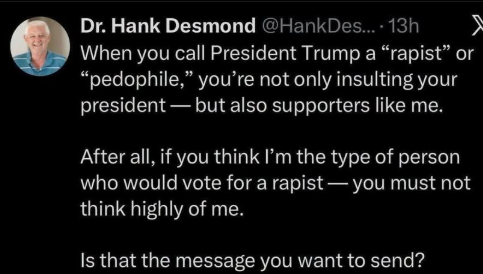 Apparently, this guy believes that the majority of Americans think poorly of Trump supporters, and wonders if this the message we want to send.
News flash: This is precisely the message we want to send.
I wonder what his doctorate is in. Filth? Debauchery? White collar felonies? War crimes?
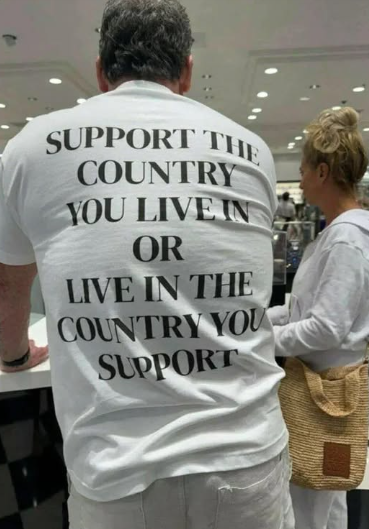 The idiot’s t-shirt shown here raises the question: How do you define the word “support?”
In a certain sense, I support all countries, insofar as the people living in each deserve to live freely.
As an American, I support the United States. I revere it for its strengths, while I advocate for remedying its considerable set of weaknesses: corruption, injustice, racism, indifference to human suffering, militarism, and greed.
 BREAKING: Texas Republicans are flailing after a party nominee posted vile racist commentary and refused to take it back.


-
Climate Change1 year ago
Guest post: Why China is still building new coal – and when it might stop
-

 Greenhouse Gases2 years ago
嘉宾来稿:满足中国增长的用电需求 光伏加储能“比新建煤电更实惠”
-
Greenhouse Gases1 year ago
Guest post: Why China is still building new coal – and when it might stop
-

 Climate Change2 years ago
嘉宾来稿:满足中国增长的用电需求 光伏加储能“比新建煤电更实惠”
-

 Renewable Energy11 months ago
Sending Progressive Philanthropist George Soros to Prison?
-
Climate Change2 years ago
Bill Discounting Climate Change in Florida’s Energy Policy Awaits DeSantis’ Approval
-
Greenhouse Gases1 year ago
嘉宾来稿:探究火山喷发如何影响气候预测
-

 Carbon Footprint2 years ago
US SEC’s Climate Disclosure Rules Spur Renewed Interest in Carbon Credits