

Visiting an international conference as a Master’s student
In July, the International Conference on Seafloor Landforms, Processes and Evolution (ICSLPE) was held for the second time. This year it took place on the beautiful island of Lipari.
My name is Luisa Rollwage and I am a Master’s student of geophysics at Kiel University. During my bachelor thesis, and as a student assistant in the working group Marine Geophysics and Hydroacoustics, I have been working on submarine geomorphology for the last few years. I was happy to hear about the aim and scope of this conference, as it covered exactly my interests and provided a great opportunity to present my work to experts in the field. The working group made it possible for me to attend this conference with the help of additional funding from the FYORD Travel Grant and the Verein der Freunde und Förderer der Geophysik.
-

Morning walk to the conference venue through the streets of Lipari.
With around 100 participants, the ICSLPE is a rather small conference, allowing young to senior scientists to discuss their work in a very personal and accessible environment. As most of the participants were at PhD or more senior career stages, at first it felt a bit like entering a community where most people already knew each other. But as everyone was very welcoming and friendly, likely supported by the shared research interest of all participants, the overwhelming feeling quickly disappeared. I was also lucky to know some familiar faces from research cruises and the BridgET summer school, which was very helpful in socializing. I enjoyed talking to many scientists during and after the conference and learning about their different career paths, interests and expertise.
The conference was held over three days, with daily poster sessions, and only one oral session at a time. I appreciated this format as it gave everyone the opportunity to hear all the talks. The short, 8-minute duration of talks helped to stay focused throughout the day. The small size of the conference made it easier to talk to other participants after a session, as you were constantly walking past them in the venue or in the small town of Lipari anyway. During the impressive conference field trip, we explored the geology of the islands of Lipari and Vulcano from a boat. A highlight was definitely walking on an active volcano and seeing a volcanic crater for the first time. These trips showed me once again how experiencing these landscapes in real life changes our perspective on the data. And as a nice and surprising treat, both Etna and Stromboli had major eruptions while we were there!
-

Yellow sulphur crusts and steaming fumaroles during the hike around the crater of Vulcano.
At the conference I gave a talk about the volcano-tectonic deformation along the potentially unstable flank of the Cumbre Vieja volcano (La Palma), focusing on a semi-automated GIS workflow I used to identify tectonic deformation. Presenting your own work in front of experts can be intimidating because you have to expose yourself and your work to feedback and, potentially, criticism. However, I found that conferences help you practice defending your work and become more confident in what you are doing. I am grateful to have received positive feedback on my work. As I am aiming to apply for a PhD position after finishing my Master’s degree, I am happy that I got an overview of different topics, institutions and experts in a scientific field that is interesting for my future. I would recommend this conference to any scientist (or student) working on submarine geomorphology, especially those who want to network more within this small community. All in all, this conference fulfilled my expectations and I therefore consider it a success.
Luisa Rollwage
Impressions from the Society of Experimental Biology (SEB) Annual Conference
My name is Smilla Tetzlaff and I am currently conducting my Master’s thesis in Dr. Meike Stumpp’s lab in the Kiel University Zoological Institute. I studied biology for my Bachelor’s degree in Kiel before enrolling in the Marine Biology Master’s program at the University of Bremen. My Master’s project focuses on the digestive processes of sea urchin larvae. More precisely, I want to investigate if sea urchin larvae are able to use laminarin (an abundant polysaccharide, or sugar, in the world’s oceans) as a source of nutrition and what impact it has on their fitness.
-

Smilla during her presentation at the SEB Annual Meeting.
Together with several members of our group and affiliated working groups, I attended the annual conference of the Society of Experimental Biology (SEB). This year, the conference year took place in Prague at the beginning of July. The conference itself was organized into three sessions (cell, plant, and animal) with interesting talks throughout the week, bringing together around 700 participants. I attended a lot of fascinating presentations and got the chance to give my first-ever talk at a conference. Here, I presented the main findings of my master’s project.
-

The city of Prague, divided by the river Moldau.
Going into this event, I was really nervous, especially about presenting my own work for the first time being in an early stage of my research career. I never attended such a big and diverse conference before and it surpassed all expectations I had. The five days we spent in Prague were not only filled with interesting presentations but with much more. I learned a lot about a diverse range of research topics and scientific communication. Even though it was quite a lot of input to take in from all the talks, it was a really inspiring experience. The evenings were always filled with time to relax, nice dinners and good talks over Czech beer. It was great to talk about the research I’ve been conducting for the last nine months and to receive both feedback and expertise on my topic from other scientists. It also was an incredible feeling to be part of the scientific community. Everyone that I got to meet and encounter at this conference was super friendly and interested, creating a really nice environment. Overall, it was an amazing experience. I hope that I can attend the conference again in the following years and would highly recommend it to everyone and especially ECRs.
Smilla Tetzlaff
FYORD Travel Grant Reports: Master’s students travelling to international conferences


If you’ve ever joined a beach cleanup, you’ve almost certainly picked up a plastic bottle. During Ocean Conservancy’s 2025 International Coastal Cleanup® (ICC), plastic beverage bottles were the top item collected by volunteers around the world. Plastic bottles have been among the top 10 items collected throughout the ICC’s entire 41-year history.
But where do those bottles really come from? We know rivers carry plastics of all shapes and sizes from inland communities to coasts and the ocean. What we know far less about is what makes plastic bottles move within rivers, what speeds them up or slows them down and how likely they are to reach the coast and become ocean pollution. Research on river plastics is growing worldwide, but studies in North America lag behind other regions.
Ocean Conservancy scientists, alongside a team of collaborators from 10 research institutions around the United States and Canada, set out to help close some of these pressing knowledge gaps.
How do you track a plastic bottle?
… with a little help from GPS! We modeled our research after a 2021 project in the Toronto Harbor conducted by our University of Toronto colleagues. Like the Toronto project, our research team outfitted floating plastic bottles with GPS tags that reported each bottle’s location at regular intervals. That let us calculate how far and how fast every bottle traveled. Over a two-year period, we released about 300 GPS-tagged bottles into 30 stretches of river in Los Angeles, California; California’s San Francisco Bay Area; Chicago, Illinois; Washington, D.C.; Miami, Florida; Boston, Massachusetts; and Toronto, Canada.
We chose each of these places on purpose.
The locations were selected to represent varied watershed types (ranging from temperate to subtropical climates and mountainous to flat terrain) and development intensity (suburban to densely urban). We followed the bottles for about three months each, through changing seasons, storms and rainfall before locating and retrieving them. And while the plan was always to recover the bottles at the end of the experiment, we also conducted cleanups in each watershed beforehand to make sure we were leaving things a little cleaner than we started.
What did we find?
Our bottles went on quite a journey! On average, each bottle traveled 3.8 miles, but distance traveled actually spanned a huge range depending on the bottle and location. For example, one of our bottles barely budged, moving just 240 feet over the deployment period. Another made it further than the length of a marathon, clocking in at 33 miles traveled.
We found river flow was a major driver of how far bottles went, but it wasn’t the only factor—the landscape around each river mattered too. Patterns in bottle movement revealed:
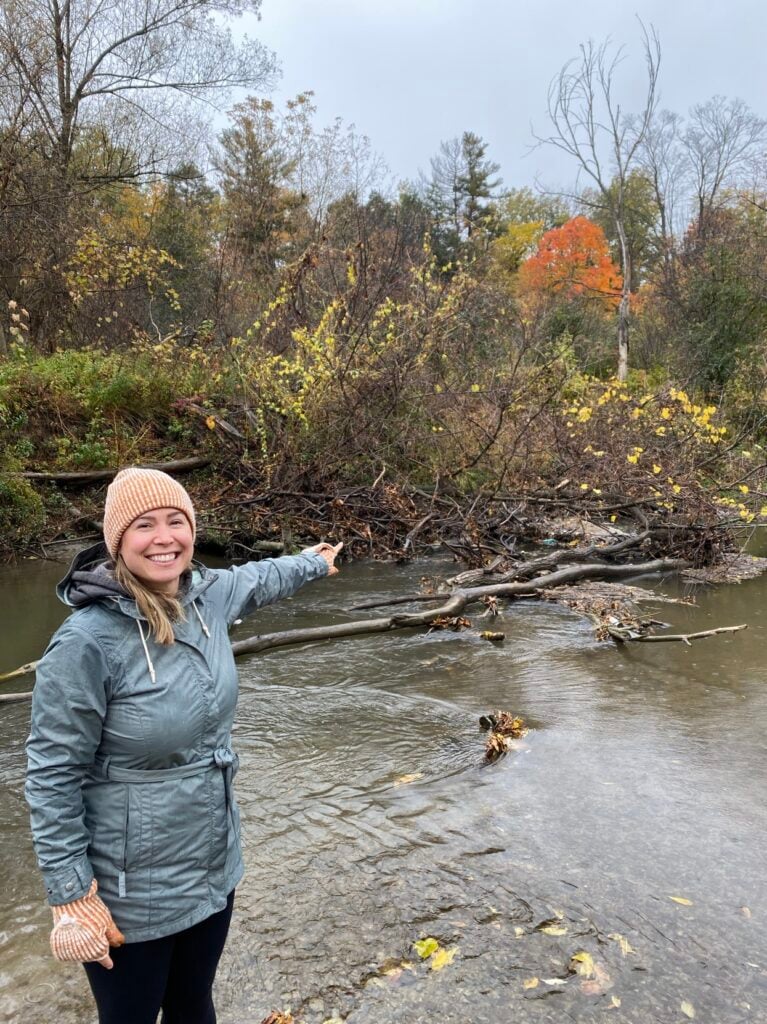
- Forest and vegetation in rivers slowed bottles down. The more forest cover upstream, the less likely a bottle was to reach the coast, because it got snagged in brush, branches and other natural obstructions.
- More urbanized stretches sped them up. Bottles moved farther and faster in more urbanized stretches of river, where there was typically less vegetation to catch them.
Using thousands of GPS points, as well as data about the river systems and watersheds we studied, we built a model to estimate where bottles reaching the coast or the Great Lakes may be coming from. It showed that within a one-year period, about half originate quite close to shore (within seven miles). The other half come from much farther inland, up to 120 miles away!
Why does this matter for our ocean?
Plastic bottles aren’t just unsightly. Ocean Conservancy’s recent, award-winning research found they can be deadly to marine life—either as whole items or after they break up into sharp fragments. There have been documented instances of seabirds like albatross dying after swallowing a plastic bottle whole.
Plastic bottles are among the most prolific plastic pollutants we see out there, and now we understand that many of those we find on beaches or in the ocean may be coming from far upstream.
That has big implications for how we tackle the problem. If half of the bottles reaching the ocean around North America or Great Lakes can start their trip more than 100 miles inland, prevention must happen upstream. Pollution-prevention models, like laws that incentivize the collection and recycling of plastic bottles before they end up in the environment, should be implemented more broadly to prevent plastic from becoming pollution in the first place. Cleanups and other efforts in coastal communities also remain critical. If we want to capture floating plastics like bottles before they reach the coast and eventually our ocean, communities within 120 miles from the ocean or Great Lakes should plan to do those cleanups on an annual basis, or even more frequently.
How can I help keep plastic bottles out of rivers and the ocean?
No matter where you live, the choices you make can help keep plastic out of the ocean:
- Support policies, like those Ocean Conservancy advocates, to stop plastic pollution at the source.
- Join a cleanup along your local river, creek or lakeshore. Every bottle picked up inland is one less that can wash out to sea.
- Choose reusables instead of single-use plastic bottles whenever you can.
We want to extend a huge thank-you to our amazing collaborators on this project at the University of New Hampshire, University of Toronto, Loyola University of Chicago, Smithsonian Environmental Research Center, Florida International University, Moore Institute for Plastic Pollution Research, San Francisco Estuary Institute, University of Waterloo, University of Southern California and University of New Mexico.
Our study, “GPS-Tracked Bottles in North American Rivers Show Marine Plastic Pollution Can Originate from Far Upstream,” was published in the November 13 issue of the scientific journal Environmental Science & Technology-Water. Read the full paper here.
This blog was co-written with Hannah De Frond. Hannah works with Ocean Conservancy and the University of Toronto Trash Team to manage the International Trash Trap Network (ITTN), a global network of local groups using trash traps to increase cleanup efforts, engage communities and inform upstream solutions.
Get Ocean Updates in Your Inbox
Sign up with your email and never miss an update.
The post How Far Does a Plastic Bottle Really Travel in a Year? appeared first on Ocean Conservancy.
If you’ve ever joined a beach cleanup, you’ve almost certainly picked up a plastic bottle. During Ocean Conservancy’s 2025 International Coastal Cleanup® (ICC), plastic beverage bottles were the top item collected by volunteers around the world. Plastic bottles have been among the top 10 items collected throughout the ICC’s entire 41-year history.
But where do those bottles really come from? We know rivers carry plastics of all shapes and sizes from inland communities to coasts and the ocean. What we know far less about is what makes plastic bottles move within rivers, what speeds them up or slows them down and how likely they are to reach the coast and become ocean pollution. Research on river plastics is growing worldwide, but studies in North America lag behind other regions.
Ocean Conservancy scientists, alongside a team of collaborators from 10 research institutions around the United States and Canada, set out to help close some of these pressing knowledge gaps.
How do you track a plastic bottle?
… with a little help from GPS! We modeled our research after a 2021 project in the Toronto Harbor conducted by our University of Toronto colleagues. Like the Toronto project, our research team outfitted floating plastic bottles with GPS tags that reported each bottle’s location at regular intervals. That let us calculate how far and how fast every bottle traveled. Over a two-year period, we released about 300 GPS-tagged bottles into 30 stretches of river in Los Angeles, California; California’s San Francisco Bay Area; Chicago, Illinois; Washington, D.C.; Miami, Florida; Boston, Massachusetts; and Toronto, Canada.
We chose each of these places on purpose.
The locations were selected to represent varied watershed types (ranging from temperate to subtropical climates and mountainous to flat terrain) and development intensity (suburban to densely urban). We followed the bottles for about three months each, through changing seasons, storms and rainfall before locating and retrieving them. And while the plan was always to recover the bottles at the end of the experiment, we also conducted cleanups in each watershed beforehand to make sure we were leaving things a little cleaner than we started.
What did we find?
Our bottles went on quite a journey! On average, each bottle traveled 3.8 miles, but distance traveled actually spanned a huge range depending on the bottle and location. For example, one of our bottles barely budged, moving just 240 feet over the deployment period. Another made it further than the length of a marathon, clocking in at 33 miles traveled.
We found river flow was a major driver of how far bottles went, but it wasn’t the only factor—the landscape around each river mattered too. Patterns in bottle movement revealed:
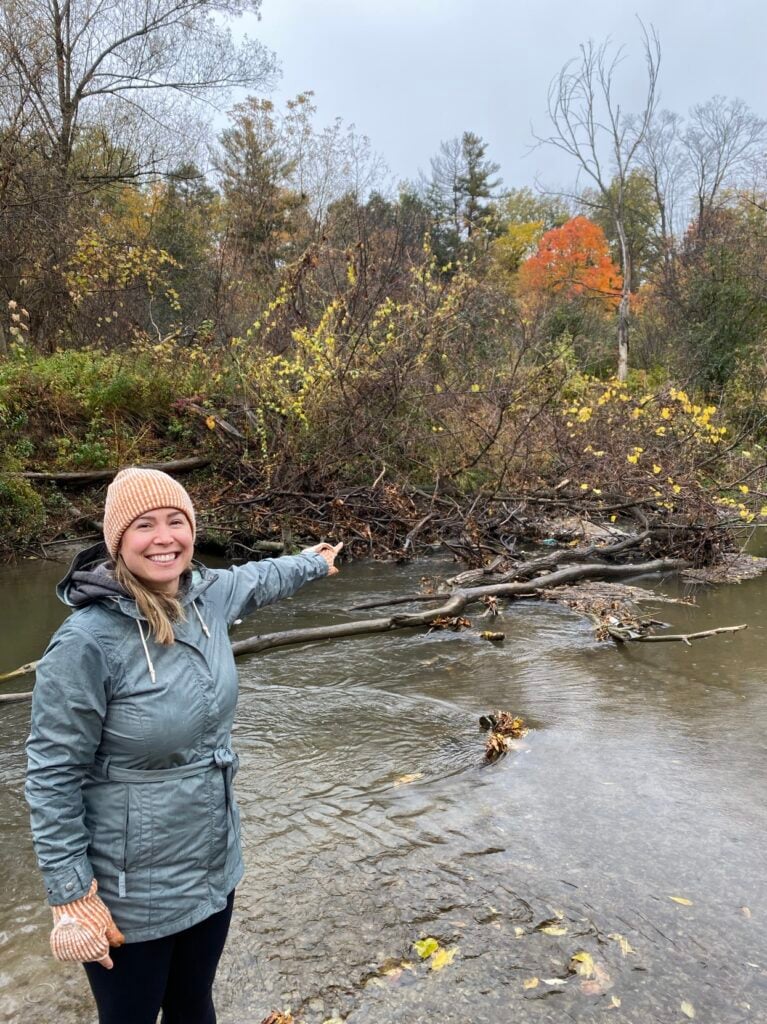
- Forest and vegetation in rivers slowed bottles down. The more forest cover upstream, the less likely a bottle was to reach the coast, because it got snagged in brush, branches and other natural obstructions.
- More urbanized stretches sped them up. Bottles moved farther and faster in more urbanized stretches of river, where there was typically less vegetation to catch them.
Using thousands of GPS points, as well as data about the river systems and watersheds we studied, we built a model to estimate where bottles reaching the coast or the Great Lakes may be coming from. It showed that within a one-year period, about half originate quite close to shore (within seven miles). The other half come from much farther inland, up to 120 miles away!
Why does this matter for our ocean?
Plastic bottles aren’t just unsightly. Ocean Conservancy’s recent, award-winning research found they can be deadly to marine life—either as whole items or after they break up into sharp fragments. There have been documented instances of seabirds like albatross dying after swallowing a plastic bottle whole.
Plastic bottles are among the most prolific plastic pollutants we see out there, and now we understand that many of those we find on beaches or in the ocean may be coming from far upstream.
That has big implicatio