

A lengthy drought that caused widespread disruption to commercial ships passing through the Panama Canal in 2023 would have been “unlikely” without the influence of El Niño, according to a rapid attribution study.
Last year was Panama’s third driest on record. The low rainfall caused water levels in Gatún Lake – a crucial part of the country’s internationally important canal and key fresh water supply for millions of people – to drop to record-low levels.
Authorities reduced shipping through the canal to conserve the lake’s fresh water, resulting in queues of ships waiting for weeks to cross the canal. As shipments of everything from fruit to gas were delayed and rerouted, knock-on effects rippled across the globe.
The new study, by the World Weather Attribution service, did not find a significant long-term drying trend in rainfall over Panama. However, it noted that since 1900, four of the five driest years in the region have occurred in El Niño years,
El Niño reduced last year’s rainfall by about 8%, the authors find.
With the canal’s water use expected to more than double by 2050, the study warns that authorities “may need to re-introduce shipping restrictions to safeguard drinking water supplies, particularly in El Niño years”.
Shipping backlog
Opened in 1914, the Panama Canal – an engineered waterway connecting the Pacific and Atlantic Oceans – is a cornerstone for global marine shipping. Around 14,000 ships pass through the canal every year, accounting for 5% of all global maritime trade.
Using the canal, rather than travelling around the southern tip of South America, ships can cut some 13,000km off their journey. Ships pay a toll for using the canal, which adds more than $2.5bn to Panama’s economy every year.
Gatún Lake is pivotal for the canal’s operation. This artificial, rain-fed lake sits near the centre of the canal, around 26 metres above sea level. Ships travelling into the canal pass through a series of locks, each of which fills with water to raise the ship up to the level of the lake. After travelling through the lake, another series of locks lower the ships back down to sea level.
For every ship that moves through the canal – a process which takes between eight and 10 hours – around 200m litres of fresh lake water is used, most of which is flushed out to sea.
Panama is the fifth wettest country in the world and sees most of its rainfall in its May-December rainy season.
However, total rainfall in 2023 was 30% lower than average. October was especially dry, recording 41% less rainfall than usual.
As a result, water levels in the rainfall-fed Gatún Lake reached a record low in the second half of 2023.
The map below shows water levels in Gatún Lake since 1965, where each line represents one year. The solid black line indicates 2023-24, while the dashed line shows projected lake water levels until mid-June 2024.

Under normal circumstances, the Panama Canal allows 36 “transits” every day. However, as lake levels dropped, the Panama Canal Authority (APC) began taking measures to conserve water. It reduced the number of daily crossings first to 32, then 31. And finally in November 2023 it announced that only 25 crossings would be allowed per day.
Ships began waiting in line for weeks to cross the canal, often paying millions of dollars to jump the queue if another ship with a booked reservation dropped out. By late August, around 135 ships were waiting to cross – 50% more than normal.
Around the world, shipments of everything from food to fuel were delayed.
Rainfall trends
The Panama Canal watershed is a series of natural and artificial rivers, sub-basins and lakes covering some 3,000 square kilometres on either side of Gatún Lake. According to the WWA study, all of the water used by the Panama Canal comes from this area.
The study authors say a network of around 65 weather stations operate in and around the watershed, providing some of the best rainfall records across the entirety of central America and the Caribbean.
To put Panama’s drought into its historical context and determine how unlikely it was, the authors analysed a timeseries of rainfall around the catchment of Gatún Lake in the 2023 rainy season, between May and December.
The map below shows the 2023 rainy season compared to the 1990-2020 average. Brown indicates that 2023 was drier than average and green that it was wetter. Gatún Lake is shaded grey and the study area is outlined in red.

Dr Clair Barnes – a researcher at Imperial College London’s Grantham Institute and author on the study – told a press briefing that there was some evidence of an overall drying trend in some of the stations, while others saw a wetting trend.
Overall, she said the study finds a slight drying trend, but notes the high uncertainty in this finding. She adds:
“We’re not sure exactly what is causing that drying trend or if it is an anomaly. Future trends in a warming climate are also uncertain.”
The authors investigated the impact of El Niño – a global weather phenomenon that originates in the Pacific Ocean – on rainfall in Panama.
During El Niño years, a weakening in the trade winds across the equatorial Pacific brings warm ocean temperatures to the eastern Pacific, off the coast of South America. In Panama, El Niño years are linked with below-average rainfall.
During La Niña years, the opposite effects are seen. Both phases together are known as the El Niño-Southern Oscillation (ENSO).
Steven Paton is the director of the physical monitoring programme at the Smithsonian Tropical Research Institute and an author on the study.
He told a press briefing that 2023 was “the third driest year ever recorded [in Panama] in the 143 years that we have data”. He noted that all of the three driest years on record were recorded during an El Niño event.
The researchers find that in today’s climate, during an El Niño year, Panama has a 5% chance of seeing rainfall levels as low as those in 2023. Given the current frequency of El Niño events, this means that similar events would be expected to occur around once every 40 years in the present climate, they say.
The authors find that El Niño reduced the volume of rainfall that fell in 2023 by about 8%, compared to an ENSO-neutral year, adding that it “is unlikely that Panama could experience such a low rainy season without the influence of El Niño”.
The researchers also assess whether human-caused climate change played a role in Panama’s very low rainfall levels.
To conduct attribution studies, scientists use models to compare the world as it is today to a “counterfactual” world without climate change. This study aimed to identify any potential “signal” of climate change in Panama’s rainfall pattern.
However, only one of the climate models used in this study was able to capture rainfall patterns over the study region accurately, and the authors were unable to determine whether any trend in rainfall over the region was due to climate change.
(These findings are yet to be published in a peer-reviewed journal. However, the methods used in the analysis have been published in previous attribution studies.)
Compounding impacts
The Panama drought shows how changes in weather conditions, such as rainfall patterns, can interact with other hazards.
Maja Vahlberg is a risk consultant at the Red Cross Red Crescent Climate Centre and author on the study. She told the press briefing that disruptions to the Panama Canal interacted with those in the Suez Canal – caused by Yemen’s Houthi group attacking commercial ships in the Red Sea – to drive “compounding and cascading impacts” on global shipping patterns.
This also exacerbated the existing disruptions caused by Russia’s invasion of Ukraine and the Covid pandemic.
As a backlog of ships in the Panama Canal grew, delays lengthened from days to weeks. Al Jazeera described the affected shipments:
“Bananas from Ecuador to Florida. Poultry from Chile to northern Europe. Liquid Natural Gas from the US to Asia. And virtually anything under the sun out of China.”
Around December, newspapers began to warn that shipments of Christmas goods may fail to reach retailers in time for the festive season.
Europe typically imports fresh produce from South and Central America during the winter months, with food and drink making up 77% of container shipments between the west coast of South America and Europe in 2022.
For example, Peru supplies the UK with £2bn worth of goods every year, including more than £350m of “fresh produce”. However, many ships carrying fruits, vegetables and meat from South America to Europe were stuck in the backlog, resulting in “excessive delays”.
The drought also impacted shipments of oil and gas. The US uses the canal as a major trade route for carrying liquefied natural gas (LNG) from the Gulf coast to Asia. However, average waiting times for tankers carrying LNG north through the canal rose from eight days in July to 18 days in August.
Meanwhile, Gatún Lake also supplies drinking water for more than half of Panama’s 4.3 million people. As a result, the government was required to balance the demands of international shipping with the water usage needs of the locals.
Vahlberg told the press briefing that “Indigenous, Afro-Panamanian and some rural communities have very water-dependent livelihoods”. She explained that these communities often have “higher rates of poverty and limited access to basic services”, meaning that “even small changes in precipitation can bring disproportionate impacts on their livelihoods”.
She added that urban expansion and population growth, combined with ageing infrastructure that loses water through leaks, are putting increasing pressure on the country’s water supplies.
The study notes that by 2050, the canal’s water use is expected to be more than double 2015 levels. It warns that, in future, authorities “may need to re-introduce shipping restrictions to safeguard drinking water supplies, particularly in El Niño years”.


The post Drought behind Panama Canal’s 2023 shipping disruption ‘unlikely’ without El Niño appeared first on Carbon Brief.
Drought behind Panama Canal’s 2023 shipping disruption ‘unlikely’ without El Niño

Climate Change
“Sink or swim”: WA Gov hugely underestimating decline in regional gas demand while sleeping on green exports, new report finds
PERTH, Tuesday 13 October 2026 — A new report from Greenpeace Australia Pacific and Springmount Advisory reveals green commodity exports are an untapped economic opportunity for Western Australia in a declining Asian gas market, while offering a genuine solution for decarbonising Asia.
From Gas to Green: Building Western Australia’s Future State is a comprehensive analysis of the declining gas market in Asia, and the untapped economic opportunity for WA to become a global leader in green commodity exports while driving the regional shift away from fossil fuels.
The report offers key recommendations for the WA Government to support regional decarbonisation through an orderly phase out of gas exports in favour of green iron and other green exports. It comes as global climate leaders from across business, politics and advocacy prepare to meet for the Global Citizen Now: Perth event focused on decarbonising WA.
Key findings:
- Gas demand is falling across WA’s core markets in Asia: Gas demand fell in 2025 and is projected to continue to decline, driven by a combination of global geopolitical factors and domestic concerns.
- Policy shifts in key markets since the war on Iran now prioritise renewables and nuclear over gas: Japan, South Korea and China have legislated energy plans that prioritise renewables and nuclear over gas.
- New WA gas would arrive in a saturated, uncertain Asian market filled with cheaper gas: The US is now the world’s largest liquefied gas producer and plans to double its capacity as it also targets Asian markets.
- Green commodities offer a real solution to sustain WA’s economy: WA can lead Australia’s green commodity exports, which by 2060 could be worth almost a trillion dollars.
- Exporting more WA gas is likely to delay or impede Asia decarbonisation: Despite claims by the gas industry, there is no evidence that WA gas is displacing coal in Asia, and in fact diverts resources from genuine decarbonisation options.
Geoff Bice, WA Campaign Lead at Greenpeace Australia Pacific said: “As our export partners in Asia shift away from expensive and polluting gas, the WA Government has a golden opportunity to pivot our economy to green exports, like green iron, which is the most effective way to help our region to decarbonise.
“The writing is on the wall: gas is in decline, renewables are our future. In this context, it makes zero sense for the government to encourage high risk projects like Woodside’s reckless Browse gas proposal at Scott Reef.
“This report clearly shows that the WA Government faces a choice: sink or swim. They can either allow the gas industry to keep ripping off West Australians and continue propping up its decline, or choose the path that will deliver enormous benefits to the state and the world by becoming a leader in the rapidly expanding green economy.”
Tom Quinn, Managing Director of Springmount Advisory: “Western Australia prospers when it looks to the future and builds for future demand. Twenty years from now, what the world needs is green commodities made using WAs abundant renewable resources. Just like it did with iron ore in the 1950s and gas in the 1970s, WA should look to the future and build what the world will need, not sunsetting industries like gas that are already past their peak.”
-ENDS-
Media contact
Kate O’Callaghan on 0406 231 892 or kate.ocallaghan@greenpeace.org
Lucy Keller on 0491 135 308 or lucy.keller@greenpeace.org
A report from Greenpeace Australia Pacific and Springmount Advisory reveals the untapped green economic opportunity for Western Australia in a declining Asian gas market, which also offers a genuine solution for decarbonisation in Asia.
Is Western Australia clinging to a fading gas industry while a thriving green future passes it by? As major Asian trading partners rapidly pivot away from volatile gas imports toward cheap solar and battery storage, this report exposes a high-stakes choice: risk becoming stranded in an oversupplied fossil fuel market, or harness WA’s unmatched sun and wind to lead the global clean energy transition.
Summary
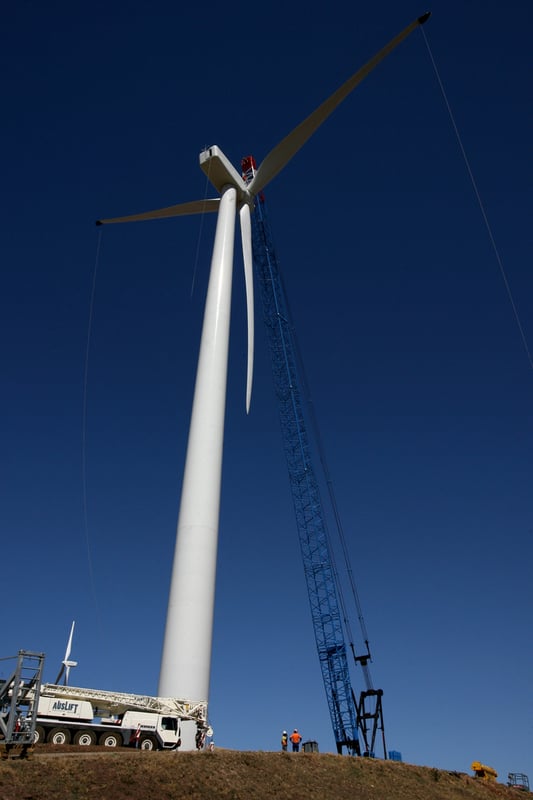
From Gas to Green: Building Western Australia’s Future State reveals that Western Australia (WA) faces a critical juncture as falling Asian gas demand, geopolitical gas supply volatility and accelerating renewable energy deployment undermine the long-term economic viability of gas exports. By harnessing its world-class wind and solar resources, the report demonstrates that WA can execute an orderly phase-out of gas and pioneer a green commodity export economy that could generate $987 billion in economic value by 2060, create 24,000 ongoing jobs, and drive a 9.6% reduction in global greenhouse gas emissions.
Key Findings
- Gas demand is falling in Asia – WA can no longer rely on gas exports: Gas demand in core Asian markets fell in 2025 and is projected to continue to decline in 2026. Legislated energy plans in Japan, South Korea, and China now prioritise renewables and nuclear over gas.
- Asia is increasing renewables, importing gas just gets in the way: Evidence from markets like Thailand suggests that gas imports are increasingly crowding out cheaper renewable energy investments and battery storage rather than displacing coal, locking in more emissions over time.
- Green commodities offer a real solution to decarbonise Asia – this is a major win for WA: With world-class renewables, WA can lead Australia’s green commodity exports, which by 2060 could be worth almost a trillion dollars ($987 billion) and support a genuine 9.6% reduction in global emissions.
Recommendations to WA government
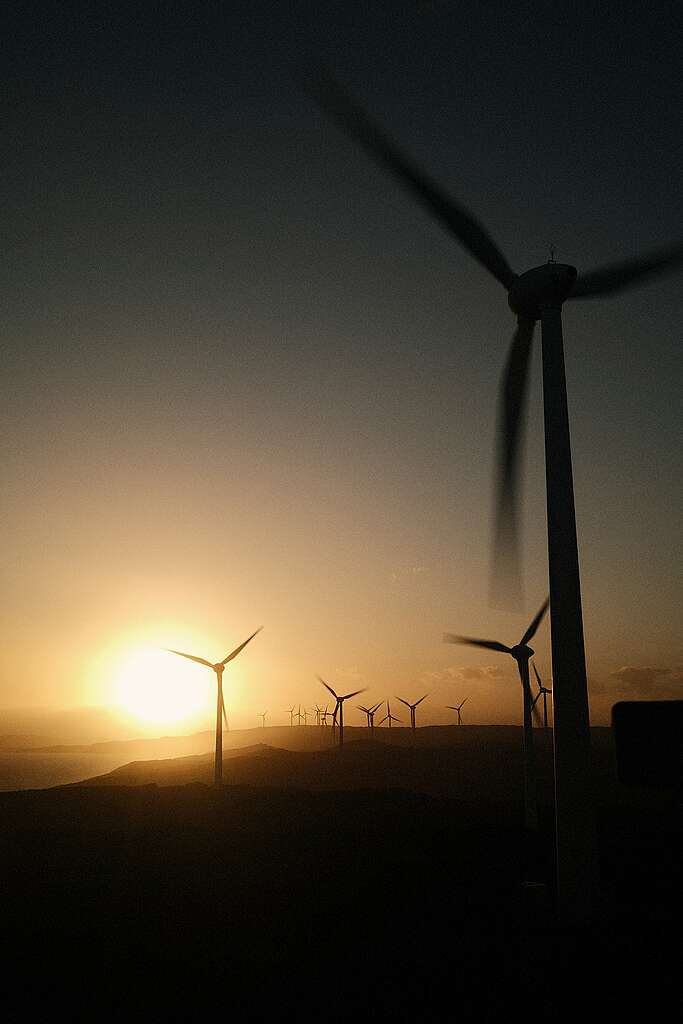
Recommendation 1: Plan an orderly gas phase-out aligned with a trading partner pivot plan
Implement a managed, orderly phase-out of gas exports aligned with trading partners’ decarbonisation pathways, rather than waiting for demand to collapse, by:
- Developing and implementing a staged phase-out of gas facilities aligned with feedstock supply expiry or typical end of facility lifespans.
- Committing to no new gas development for gas expansion, including Browse and Kimberley fields.
- Developing new, reciprocal trade relationships with existing gas trade partners, structured to progressively replace gas exports with green commodities – integrated with recommendation 2.
Recommendation 2: Develop an integrated green commodity export strategy, positioning WA as a global green iron manufacturing hub
Establish an integrated green commodity export strategy that immediately prioritises green iron development, positioning WA as a global green iron manufacturing hub, by:
- Committing to green commodity export targets to give industry and investors a clear demand signal.
- Prioritising green iron as the lead sector within the broader green commodity strategy, given WA’s iron ore endowment and first-mover potential.
Recommendation 3: Reject false solutions such as carbon dumping (CCS) and blue hydrogen
Reject carbon dumping (also described as carbon capture and storage, or CCS) and blue hydrogen as viable decarbonisation technologies, and prioritise green hydrogen and proven renewables for clean energy and fuel production by:
- Excluding blue hydrogen projects (and CCS-dependent projects) from all government support programs.
- Requiring existing hydrogen-based production (including ammonia, methanol, synthetic fuels) to have clear, near-term transition timelines to switch to green hydrogen production.

What you can do
Together, we can push for a prosperous green future.
You can help by:
- Sending an email to Environment Minister Murray Watt and Prime Minister Anthony Albanese, calling on them to reject Browse.
- Sharing this story to help more Australians understand what’s at stake.
- Encouraging your friends and family to take action.
REPORT: “From Gas to Green” Building Western Australia’s Future State
Cleaner cooking projects in the UN carbon market will have to set aside a share of their credits to insure against the risk that the trees they save are lost to fire, drought or logging, after the market’s regulator rejected calls to exempt the sector.
The requirement is part of a new rulebook that the Paris Agreement carbon market regulator – the Article 6.4 Supervisory Body –