

Adam Welz’s The End of Eden is an extraordinary document of a planet under stress. Taking a deep dive into the scientific history of our planet, Welz brings the research into the moment by exploring how species around the world are being forever altered or eliminated, in ways that few people are aware.
“Humans have been performing an uncontrolled experiment on this fragile, life-giving cocoon,” Welz writes in the book’s introduction, referring to Earth as a “tarnished Eden.”
Welz writes about places he’s traveled to, as well as ones he extensively researched, including the Mojave Desert, Puerto Rico, Hawaii, the Galapagos Islands, New Jersey’s Pine Barrens, and areas close to his home in Cape Town, South Africa.
Welz looks mostly at microclimates and how “these intimate ecological breakups and breakdowns are of no less consequence than the so-called natural disasters.” It’s an exploration of the science of phenomena like thermal heat and CO2, and a painfully real one, considering how plagues, extreme weather, migration, fire and other events have affected the delicate ecological balance of Earth and mammals like the white-throated woodrat, honeycreepers in Hawaii, and land tortoises, among others.
But Welz sees hopeful adaptations as well. “Some species will colonize habitats, areas, and communities that they have never lived in before,” he says. “Climate change is scrambling natural communities and creating new combinations of species — new ecosystems — almost everywhere we look.”
EcoWatch spoke with Welz from his home in South Africa, where he’s busy working on a book about the history and future of nature conservation.
The level of research in the book is stunning. What was the challenge in putting that all together?
I’m constantly picking up stories and bits of information, just kind of filing them away. The book could have been way longer, but I picked the stories that I liked the most, that I thought best described or best illustrated the phenomena that I’m trying to get at.
Which is what? What might be the overall theme of The End of Eden?
What the problem that this book is trying to solve is that when you read about climate breakdown in general in the media, nearly all of it is focused on humans — what does it mean for us. Very little is focused on millions of other species that happen to share the planet with us. I picked particular species, I’ve told their stories, and I’ve sort of almost built them as characters. And once you understand the why a little more, I’m hoping you’ll be able to take the story I’ve just told you and realize as a reader that this is the same kind of thing that’s happening to species in lots of other places.
Would you say the eight chapters describe the eight major stressors on the climate?
No, it’s very hard to say that. I would just say that these are themes that made sense to me. Each chapter looks at this particular kind of phenomenon, and it tries to explore it and explain it through these examples of these different species. For example, I have a chapter on fertile air, which is how the increase in concentration of carbon dioxide in the atmosphere is driving the woodification of savannas around the world. They’re turning into essentially low-grade forests in large parts of the world. And that’s, I think, something very few people have thought about, you know, CO2 fertilization.
You write about the Key deer in Key West. How is that an example of the kind of research you did?
They’ve evolved to become these very cute mini-deer, but they’re absolutely dependent on freshwater resources on these small coral islands that make up the Keys. And these freshwater resources are, as sea level rises, becoming saltier and saltier. And with the hurricanes getting more intense and storm surges now washing right up over these islands, we’re looking at the end of the Key deer. Some of the projections are that within decades, well before 2100, the Florida Keys will not have any suitable habitat for the Key deer anymore. And again, it’s an example of how close to the edge a lot of species actually are.
I try and illustrate in some of these stories that these tiny little incremental shifts in maximum and minimum temperatures, or the length of a season just by a couple of days here and there, can actually have these massive effects on species, and then in turn have massive effects on ecosystems and affect large, large areas. I think that the key thing is to be aware of the impact.
You visited the Kosciuszko National Park after the massive Dunns Road fire there in 2020. You wrote, “I was stunned by what I saw. A dense mass of thousands, millions, of dead trees filled the landscape from horizon to horizon. The forest was the brown of dead wood and the black of charcoal. It smelled of ash and burned oil. I had never seen a place so thoroughly and extensively burned.” What impression did that make on you?
I’ve seen a lot of fires in my life. I’m used to fires, and like I say in the book, fires don’t scare me. They’re totally normal in loads of ecosystems. I was absolutely shocked by what I saw in the sense that I had never seen an area that large that had been so thoroughly burned. The forest floor in most places was completely bare. The fire had been so hot that it burned right through all the organic matter, it had been burned out of the soil. Everything was just like dead sand underneath these dead trees.
A single fire, instead of being just a sort of a phase in that forest’s life, just deletes the forest, and it’s then replaced by a scrubland or a grassland or something. You have this massive shift in the nature of that ecosystem essentially overnight. And to see it on the scale that I saw in Australia — I really felt, like I say in the book, I felt like I was seeing the future. It’s like, all right, this is where we’re going, folks. This is a whole different thing. This is something brand new.
On a more personal level, you have a fish tank with some endangered catfish from Peru. It’s a very small thing, but how does that help?
Both of these species have had nearly all their riverine habitat in Peru destroyed by illegal gold mining, and there’s a tiny handful of people around the world that keep these fish. Conservation’s not all about these multi-million dollar projects to save huge animals like rhinos and what have you from extinction.

Author Adam Welz points to his fish tank with endangered catfish from Peru.
Some of the book’s research really points to some unalterable changes in species. How does one avoid that kind of psychological climate change dread?
I get people saying to me, I’m scared to read your book because I might get depressed or something. It’s like, well, yeah, that happens to me. And I think, you know, well, this is what’s going on, folks. And you can either pretend it isn’t there or you can deal with it. And if it changes you, if it marks you, well, that’s what it’s going to do, because this is what’s happening. And that’s actually okay, even though it is difficult.
There’s all sorts of things that are just truly bleak and there are solutions, but the political opposition to those solutions at the moment is ferocious. And if we are really going to do something substantial about climate breakdown and the extinction crisis, it’s going to be a fight. There are very strong entrenched interests who want to carry on with fossil fuels and want to carry on with rampant destruction of ecosystems, because they’re making a lot of money out of it. It’s got to be a fight. It’s not going to solve itself. It’s not going to be because people have the right ideas. You know, if any change is going to come, it will be through action.
The post ‘It’s Got to Be a Fight’: Author Adam Welz on Surviving Climate Breakdown and Saving Species of a ‘Tarnished Eden’ appeared first on EcoWatch.
https://www.ecowatch.com/adam-welz-the-end-of-eden-interview-ecowatch.html

Doorframes decorated with fresh pine garlands are downright magical. But they sure cost a pretty penny.
Why spend all that money when you can make your own for free (or at a discount)? Not to mention, you’ll have way more fun getting creative and making it your own.

I’m all about slowing down and getting crafty during the holidays. After all, is it really the gifts we remember every year, or the memories we make with people we love?
Speaking of, it’s even better if you invite friends or family to help make a DIY garland! Put on some Christmas tunes, grab some hot cocoa, and it’s a Christmas memory you’ll be talking about for years.
Pine is also zero waste decor because it’s all compostable at the end of the season. Here’s how to make a DIY garland you’ll never forget.
materials you’ll need:
- Evergreens (you can get these while foraging, at a local nursery, or some from your own tree)
- 22-gauge floral wire (or dyed green twine)
- Heavy duty scissors
- Gloves (to protect your hands)
step 1 – measure your space
Where do you want your garland to hang? Above a doorway? A window? A fireplace? Measure the space so you know how long the garland will need to be. This will give you a better idea of how much pine you’ll need to bring your vision to life.
step 2 – find your pine
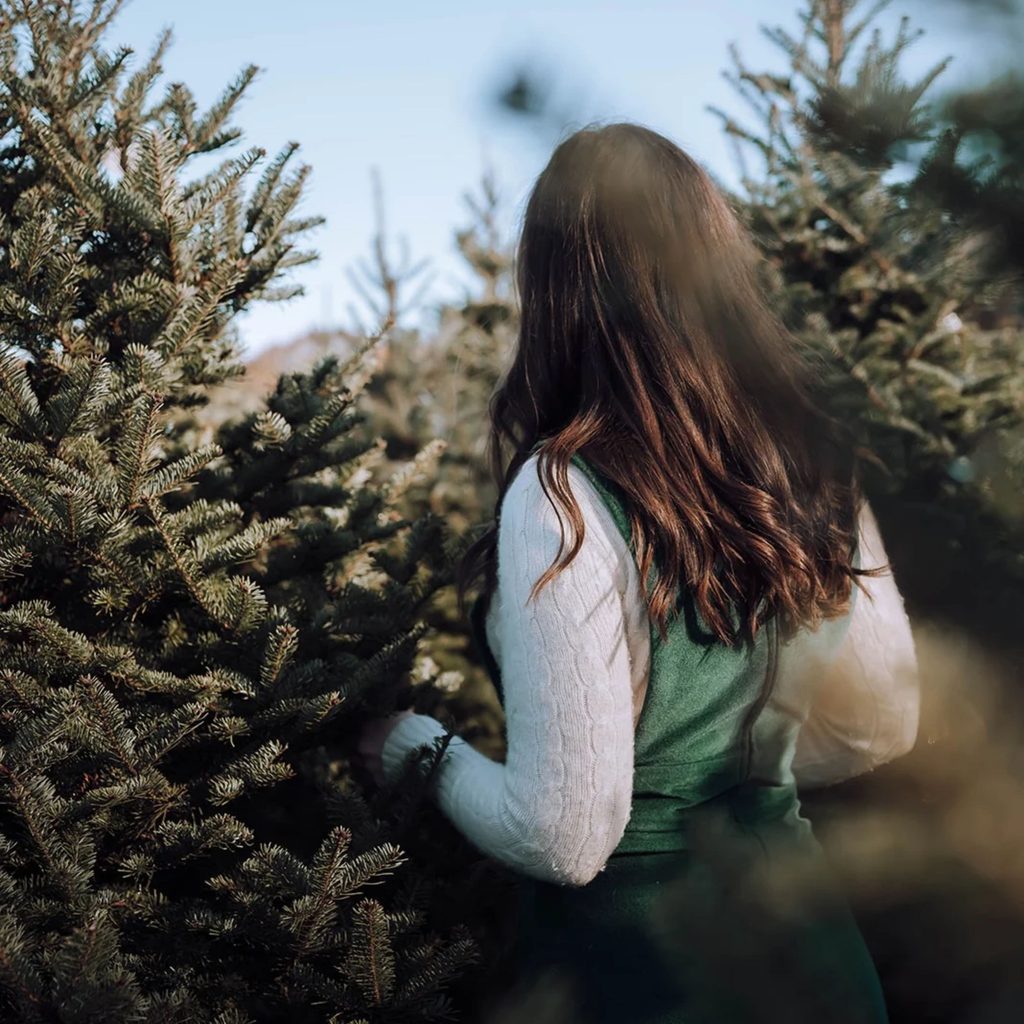
Now’s the time to decide if you want to forage or buy your pine. Faser Fir is a great option when it comes to garlands because of how sturdy the pine is, but any Fir will hold up great.
If you’re planning on foraging, try renting a book from the library that identifies the different types of native pine near you. This will help familiarize you on what to look for and what kind of effect different pines will have for your garland.
Generally, pines, firs, boxwoods and cedars make for good indoor decoration because they dry out more slowly.
Fraser fir, red pine, eastern white pine, and western red cedar are some great choices. You can use a mix of them to achieve a whimsical effect.
It’s a good idea to know how to identify different pine if foraging outdoors. Bring a reusable bag, gloves and heavy duty scissors with you while foraging. Be aware some pine trees are spikey and their needles can hurt! And never take too much off one plant.
If foraging isn’t for you, try hitting up a local nursery. They will likely have excess pine they’ll be happy to sell you for your garland. Christmas tree lots will often have a bunch of leftover greens they’ll likely part with for free too.
When in doubt, trimming some off your own tree works too (just be careful not to leave any bald spots).
step 3 – organize
Now’s the fun part – once you have all the evergreens you want, you’ll want to lay it out before you in the style of your choosing. The beauty of foraging for pine is that everything won’t be uniform – so embrace the imperfection.
You’ll want to make sure the sturdiest pieces are in the center. And make sure to pick which pine goes on the end – something with the right drip is always good. And don’t be afraid to prune them as needed.
When you have a structure you like, start layering and lining up your pieces properly. Then use the floral wire to secure them in place. You can also use dyed green twine if you’d like to compost the whole thing without hassle of removing the wire. But note that twine may be less subtle compared to wire.
Also, you’ll want to secure each end with a knot so nothing unravels. To make it easier to mount your garland, create loops with your wire or twine. Do this by simply making a loop and twisting the base until the loop is securely closed.
You can also add decorative elements if you wish, like upcycled ribbons, dried citrus, pinecone, and winter berries. It’s good to add these to any gaps you discover to help fill it in.
step 4 – hanging and display
Now you’ll want to mount your garland. You should set your hooks first (try two for single doorways, three for double, and four for triple width doorways).
Once your hooks are set in place, mount your garland using the loops you created earlier. Or, just by the wire you find – letting things shape naturally.
Don’t be afraid to add to it as needed. If you notice any gaps, this is a good time to fill them with more pine or decorative elements. And if you’d like, you can even entwine some battery operated string lights into the garland for added wow.
Have you ever made a DIY garland before? Drop your tips in the comments!
The post Easy DIY Garland: Step-By-Step Instructions appeared first on Going Zero Waste.
For 15 years, Toronto showed North America what a green roof mandate could build. Its 2009 bylaw, the first on the continent to both require green roofs and set a construction standard for them, produced more than 1,200 green roofs across the city. On November 3, 2025, the Ontario government revoked the provision of the City of Toronto Act that allowed the bylaw, with no advance notice or phase-out period.
That reversal represents the state of green roof policy in 2026. It’s a time of backlash against environment-minded construction practices. Housing-cost pressure is pushing some governments to loosen or drop requirements, while other cities keep adding them, and most of the newer laws let owners choose solar panels, vegetation, or both.
For building owners, advocates, and homeowners, the practical question now is which roof, under which local rule, delivers the most value for a specific building.
What Are Green Roofs?
A green roof, also called a living roof or ecoroof, is a roofing system that supports living plants. Sod roofs have existed since at least the Middle Ages. The modern version is engineered: Toronto’s definition calls for, at minimum, a root repellent layer, a drainage system, a filtering layer, a growing medium, and plants, all installed over a waterproof membrane.
Today’s ecoroof systems fall into two broad families. Extensive roofs use a few inches of lightweight media and hardy, drought-tolerant plants such as sedums. Intensive roofs, on the other hand, use deeper soil that can hold grasses, shrubs, and even trees. The difference is the price: the Environmental Protection Agency noted in January 2025 on a page now removed that a simple extensive roof without public access can cost one-tenth to one-third as much as an intensive roof built for public access.
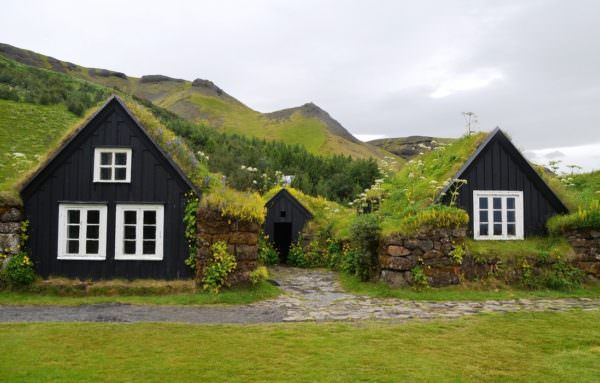
A modern green roof involves more than just plants. It needs high-quality waterproofing and protection against root damage, a drainage system, filter cloth, and a lightweight growing medium. The plants may be small, drought-tolerant ones like sedums, or larger grasses. The system can be modular or site-built, and depending on the planting medium depth, may even resemble a natural meadow or a garden with shrubs and trees.
Project Drawdown ranks green roofs and cool roofs as #73 in their list of solutions to global warming, with an anticipated 0.77 gigaton reduction in carbon dioxide by 2050. If green roofs cover 30% of roof space by 2050 and cool roofs cover 60%, approximately 407 billion square feet of efficient roofing would be in place globally.
A 2024 study published in Nature Cities reports that Seoul’s city-wide green roof implementation could reduce building energy use intensity by up to 7.7%. Another comprehensive 2024 study in Nature Urban Sustainability projected that by 2100, green and cool roofs could reduce HVAC use by up to 71.72% in six cities studied. A 2023 meta-analysis found that green roofs reduce rooftop surface temperatures by an average of 30°C during summer months.
A U.S. General Services Administration study that was removed from its website following the Trump Administration’s anti-green guidance estimated that the heating and cooling savings from green roofs on commercial and public buildings paid back the cost of installation in about 6.2 years.
Residential and Commercial Applications
Green roofs on private residences are very efficient. Despite the high cost of design and installation, which has slowed their adoption as a standard roofing option, they can provide lifetime savings.
Single-family homes accounted for less than 2 percent of green roofs in the U.S. in 2015. Multifamily homes, on the other hand, provide economies of scale that can justify the expense (and sometimes have the square footage to trigger green roof requirements), accounting for 22 percent of green roof projects. That still leaves the vast majority of green roofs to industrial and commercial buildings.
But private homeowners need not despair. Many of the incentives for green roof construction are also available for single-family residences.
Several impressive green roof installations have been completed in recent years:
Will’s Garden at Carle Foundation Hospital is a 2023 Award of Excellence winner that features a therapeutic garden in Urbana, Illinois. The immersive, wheelchair-accessible rooftop included significant technical achievements that allow the plants to grow in only six inches of media.
Construction began on the LXK Office and Residential Campus in Berlin. A designed development, it includes green rooftops and terraces.
Kö-Bogen II, in Düsseldorf, Germany, is a commercial complex features one of Europe’s largest green façades with over 30,000 hornbeam plants that provide a “green heart” and “urban mountain” in the city.
The Vancouver Convention Centre’s six-acre living roof remains the largest in Canada.
The California Academy of Sciences in San Francisco features 1.7 million plants in its living roof.
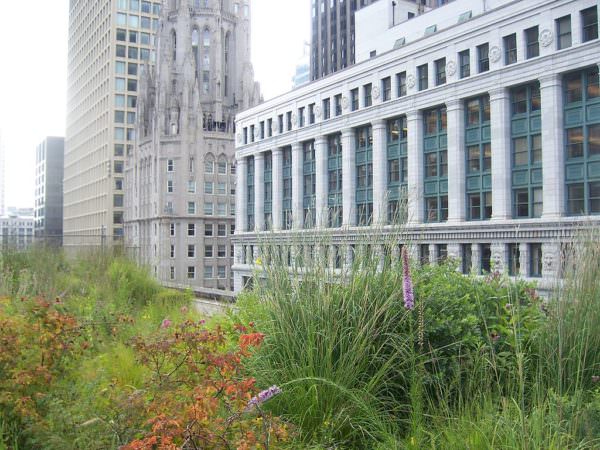
Chicago City Hall’s green roof remains one of the most studied examples, with more than 20,000 plants from 150 species.
Toronto’s Mandate Ends, Its Lessons Remain
Toronto’s bylaw applied to new commercial, institutional, and multi-unit residential developments with more than 2,000 square meters of floor area. Developers who could not fit the required coverage into a floor plan could pay $200 CAD per square meter in fees for the missing ecoroof. The city now advises building applicants that the bylaw is no longer applicable law under the Ontario Building Code.
The repeal followed Bill 17, the Protect Ontario by Building Faster and Smarter Act, which passed on June 3, 2025, after a rapid review process.
The province argued the law bars municipal requirements that go beyond the building code, including Tier 1 of the Toronto Green Standard; city staff disputed that reading, and a builders’ group was already suing the city over the standard. Green Roofs for Healthy Cities founder Steven Peck cited an analysis by local green roof companies that put the added cost at between $1 and $2.50 CAD per square foot of condominium living space, against units selling for $800 to $1,200 CAD per square foot.
Green roofs remain legal and voluntary in Toronto. The city published updated Eco-Roof Incentive Program terms in November 2025, so owners of existing buildings should check whether funding is available.
Where the Rules Stand in 2026
The most aggressive North American ecoroof requirements are concentrated in a handful of U.S. cities, and nearly all of them now treat solar as a qualifying or companion option. The summary below draws on city sources and a 2026 Roofing Brief roundup of mandates by city.
| Jurisdiction | What it requires | Applies to | Status, Nov. 2026 |
|---|---|---|---|
| New York City | Local Laws 92 and 94 (2019): a “sustainable roofing zone” of green roof, solar, or both | New buildings and full roof replacements | In effect |
| San Francisco | Better Roofs Ordinance (2017): 15% of roof as solar or 30% as living roof; SoMa needs 15% solar plus 50% living roof | Most new construction of 10 or fewer occupied floors | In effect |
| Denver | Green Buildings Ordinance (2019): cool roof plus one green option; the green-roof path means 60% vegetation (new) or 18% (existing) | New buildings, additions, and roof permits at 25,000 sq. ft. or more | In effect |
| Portland, Ore. | Central City 2035 ecoroof standard (effective July 2018) | Buildings of 20,000 net sq. ft. or more in the Central City | In effectSolar allowed as an alternative for residential projects since March 2024 |
| Cambridge, Mass. | Article 22 (2021): green roof and/or solar on 80% of available roof, or a per-square-foot payment | Most new buildings over 25,000 sq. ft. | In effect2026 payment is $64.29/sq. ft. of vegetated roof not built |
| Somerville, Mass. | Late 2023 ordinance: vegetation on 80% of available roof area | New mid-rise and high-rise buildings and major renovations, outside the Affordable Housing overlay | In effect |
| Toronto | Green Roof Bylaw (2009): 20% to 60% of available roof, scaled by building size | New buildings over 2,000 square meters | RepealedNo longer in effect since Nov. 3, 2025; Eco-Roof grants for existing buildings remain open |
| France | Climate and Resilience and APER laws: solar or vegetation on a share of the roof | Covered nonresidential new builds, extensions, and heavy renovations | 40% since July 1, 202650% from July 1, 2027; a bill that passed the Senate in Feb. 2026 and awaits National Assembly action would drop the green option |
San Francisco’s 2017 ordinance gives owners a choice between solar and a living roof rather than requiring living roofs outright. Denver’s current ordinance, adopted in 2019, replaced the voter-approved 2017 measure and pairs a cool roof requirement with a menu of compliance options. Portland’s ecoroof standard took effect in July 2018, and the plan was re-adopted in July 2020 after a court challenge.
Portland loosen