

- Formal negotiations
- Finance
- Global review
- Global report
- Digital sequence information
- Harmful subsidies
- Marine biodiversity
- Planning, monitoring, reporting and review
- Article 8(j) implementation
- Biodiversity and climate change
- Links with other bodies
- Around the COP
- Armenian presidency
- Protests
- Lobbying and influence
- Carbon and biodiversity markets

Governments at the COP17 nature summit in Armenia agreed on Saturday to scale up their policies to protect the planet’s shrinking biodiversity, and for the first time invited large emerging economies like China and Gulf states to take on donor responsibilities to help fund those efforts.
For the past two weeks, countries held talks in Yerevan under the UN Convention on Biological Diversity to outline a plan to ramp up currently “insufficient” policies to conserve land and marine ecosystems. A recent UN progress report found the world is off track to meet 22 out of 23 global targets aimed at reversing species loss and protecting 30% of land and seas by 2030.
While a response plan, called the “Global Review of Collective Progress”, was expected to be the main outcome of COP17, negotiations struggled to advance amid a deadlock over the controversial subject of how to finance the boost in conservation measures needed.
After an all-night session on Friday, delegates agreed to invite developing countries to voluntarily signal their interest in assuming donor funding obligations alongside developed nations. Negotiators repeatedly warned that any stronger provisions on expanding the donor base would collapse the deal.
COP president: Results beat expectations
An exhausted COP17 president Hambardzum Matevosyan, Armenia’s environment minister, told journalists in the early hours of Saturday that “we’ve achieved more than we could’ve expected” given the “importance” of the decisions being taken.
“It was 100% possible that those items did not made it through. 100% possible,” he said, adding that the conference had made progress on “all the most important items”.
Speaking at the closing plenary, the group of Pacific Islands said that, while the summit had achieved “great outcomes”, delegates are also departing Yerevan “with realities not reflected in the official text”, such as the low replenishment of the Global Environment Facility (GEF), a key funder of nature projects.
-
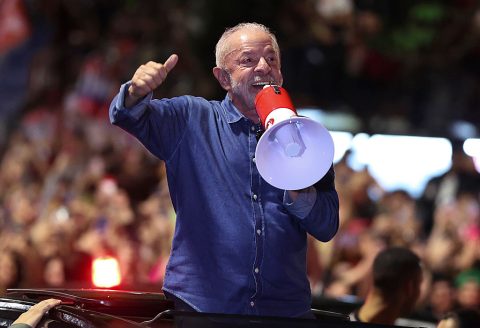
Lula’s election win in Brazil raises hopes for zero deforestation drive
Lula’s re-election makes it more likely Brazil can meet a key goal to end forest loss in the Amazon and builds confidence in a new fund to protect the world’s rainforests, experts say
Some observers also said the deal did not go far enough. Steven Guilbeault, a former Canadian environment minister who helped broker the Global Biodiversity Framework (GBF), said the Yerevan package of action is “an important step forward”, but still “falls short of what is needed to meet our 2030 commitments”.
An Lambrechts, biodiversity politics expert at Greenpeace International, said COP17 had kept things moving forward and set well-intentioned promises, but added that these “won’t remove major roadblocks to implementation” such as insufficient finance and debt constraints in developing countries.
WWF chief conservation officer Daudi Sumba noted that financial issues were not fully resolved. Despite the deal in Yerevan, “I fear finance will remain the key issue that continues to haunt the UN biodiversity summits,” he said in a statement.
‘Yerevan Pathway’ tackles nature plans and subsidies
In the lead-up to the summit, the UN assessment report showed countries are falling short on virtually all targets in the GBF, the 2022 global deal often referred to as the ‘Paris Agreement for nature’.
They include a landmark target to protect at least 30% of the planet’s land and sea by 2030. If countries all stick to their current national goals, about 26% of land would be protected and only about 12% of marine ecosystems would be under conservation measures.
The main COP17 decision – named the Yerevan Pathway by the presidency – calls for countries to revise their biodiversity plans, subject to available funding, with a particular focus on addressing the gap in coverage of “marine, coastal and inland water ecosystems”.
It also urges the over 60 countries who have not submitted a biodiversity plan yet to finalise them “as soon as possible” and taking into account the gaps identified by the UN progress report.
Countries also agreed to tackle the drivers of biodiversity loss by “accelerating” the reduction of subsidies for activities that damage nature. Subsidy reform, covered by Target 18 of the GBF, is where countries have made the least progress so far, according to the assessment report.
Jill Hepp, director of nature and marine policy and incentives at green group Conservation International, said singling out subsidies in the Yerevan Pathway “gives a strong signal” that closing the gap for biodiversity action requires “more urgent efforts to reform harmful incentives and scale up positive incentives”.
“Timid” steps to expand base of donors
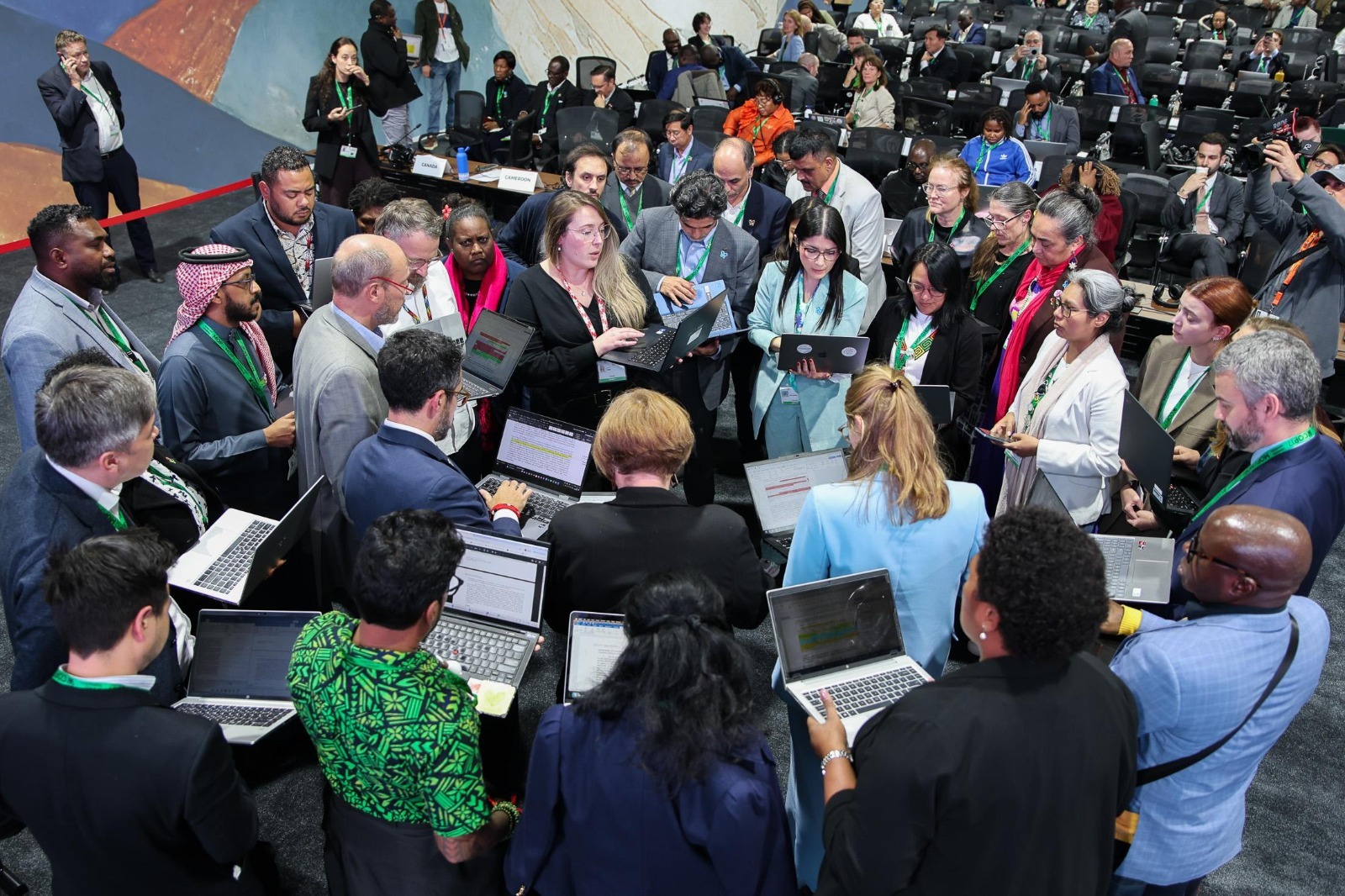
Having failed to meet a target to channel $20 billion for biodiversity conservation by 2025 and faced with shrinking aid budgets, the EU pushed a proposal to expand the list of which countries count as donors, so that wealthy emerging economies like China and Saudi Arabia could also voluntarily contribute. The group of Arab nations strongly opposed this.
During the talks, Irish minister of state for nature, Christopher O’Sullivan, whose country holds the EU presidency, said the bloc wanted the world’s “new realities” to be reflected in the donor list.
Negotiations remained gridlocked for most of the two-week talks, until a last-day compromise was struck to invite developing countries that may want donor status “to indicate to the [Convention on Biological Diversity] secretariat their interest in being included in the corresponding list”.
Countries also asked the secretariat to send an invitation to emerging economies wanting donor status at each subsequent COP, and requested a technical report on “the implications of inclusion in the list” for emerging economies.
Swiss lead negotiator Gabriela Blatter said during one of the sessions that her country had expected greater steps towards expanding the base of contributing countries, but added that “if we’re mutually unhappy, it’s probably the closest we can get on these very delicate political compromises”. Saudi Arabia, on the other hand, also noted their dissatisfaction but said it had expected “a lot less”.
The fragile deal was approved in a package of decisions together with the Global Review, after some delegations including Brazil and China appealed to the plenary not to make further changes to the text at the risk of collapsing the whole agreement.
In a statement delivered to the closing plenary, the EU said the finance outcome had delivered “timid” progress towards fully broadening the base of donors.
Cali Fund still not operational
Adopted two years ago at COP16, the Cali Fund was seen by some observers as a way to channel private-sector finance into biodiversity conservation, as governments struggle to find public funds. But it is still struggling to get up on its feet.
The fund allows big corporations to access certificates for the use of genetic material found in biodiversity in return for a financial contribution, which experts estimate has the potential to raise up to $6.9bn for biodiversity. While voluntary, companies are encouraged to pay 1% of their profits or 0.1% of revenue into the fund.
But since its creation, the fund has received little more than $10,000, which Guilbeault argued is because the rules for disbursements to local communities and the operation of the fund had yet to be fleshed out. This was due to happen at COP17.
Yet, while the final decision on the fund laid out some of the rules – including how companies can earn “Cali Fund certificates” – some key technical details were left to the next COP in 2028 in Ecuador. This includes the issue of whether companies can pay a lower rate if they use genetic data for only a small portion of their products.
“By punting essential decisions to two years from now, parties have all but ensured the fund remains empty until then,” said Pakhi Das, a public policy advisor at NGO Plant-for-the-Planet.
The post COP17 delivers fragile deal to boost conservation and funding for nature appeared first on Climate Home News.
COP17 delivers fragile deal to boost conservation and funding for nature
Continue Reading
Countries have completed the first “global review” of their progress towards reversing nature loss by 2030 at the COP17 biodiversity talks in Yerevan, Armenia.
The review “notes with deep concern” that, unless action is “rapidly accelerated”, the goal to reverse nature loss and meet a set of 23 targets by 2030 “will not be achieved”.
It “urges” countries to accelerate action, including by “increased ambition in addressing the gaps”.
Much of the discussions in Yerevan focused on how to raise the necessary funds to help developing countries protect nature.
Some major economies pushed to expand the range of nations that are expected to provide finance, with countries agreeing at the end of the two weeks of talks that non-donors that want to contribute can “signal interest” before COP18.
This came after developed countries failed to meet a target to significantly ramp up nature finance over the last few years.
It also came as a landmark fund agreed at COP16 in Colombia to pay communities for the genetic resources derived from nature stands nearly empty two years on.
The Yerevan talks marked the halfway point of the “Kunming-Montreal Global Biodiversity Framework” (GBF), the “Paris Agreement for nature” first made in 2022 and due to be achieved by 2030.
During the nearly 12-hour-long final plenary, countries voted for Quito, Ecuador, to host the COP18 nature talks, which will be held in 2028.
Countries managed to sign off on all the major negotiation texts, marking a stark contrast to COP16, which ran so far over time that the Colombian presidency lost “quorum”, forcing talks to resume in Rome months later.
Below, Carbon Brief has detailed analysis of all of the key outcomes from COP17.
Formal negotiations
Finance
Finance, predictably, was at the heart of the discord and deadlock at the Yerevan talks.
At COP17, discussions on finance had to achieve several outcomes.
The first part – to take stock of biodiversity finance mobilised so far to meet the nature deal’s goals – fell under the global review.
As the global report noted, developed countries failed to meet their commitments to raise “at least $20bn a year by 2025” for nature. Delegates pointed to falling aid levels and a sharp 27% decline in environmental funding for the 2026-30 period.
The second part was to agree on how to mobilise resources for the next four years, to meet the GBF’s goals and targets.
Calls to “broaden the contributor base” of who pays to protect nature – and whether that should include emerging economies – became the most fraught element of the talks.
Eventually, countries agreed on what Switzerland described as a “super, mega-delicate” text. It hinged on major “political compromises”, with “no major winner or loser”, according to Kenya.
Per the decision, countries that want to be included on a list of developed country donors can “signal interest” through bilateral, confidential consultations before COP18 and every alternate COP after.
Finally, countries also agreed on criteria to shape and resource a new, permanent financial mechanism to protect nature after 2030.
However, this did not immediately take the form of a new fund under the COP that biodiverse countries have demanded since 2022, deferring the mechanism’s institutional structure to COP18.
Resource mobilisation discussions at the GBF’s halfway mark were supposed to agree on how to close the “biodiversity finance gap” and to “increase resources from all sources” to “at least” $200bn per year by 2030, as set out in target 19 of the GBF.
The talks were largely dominated by a push, led by the JUSCANZ bloc of developed countries, to “broaden the contributor base”. This could see emerging economies, such as Qatar, China, Saudi Arabia and India, being added to the list of countries that pay to protect nature.
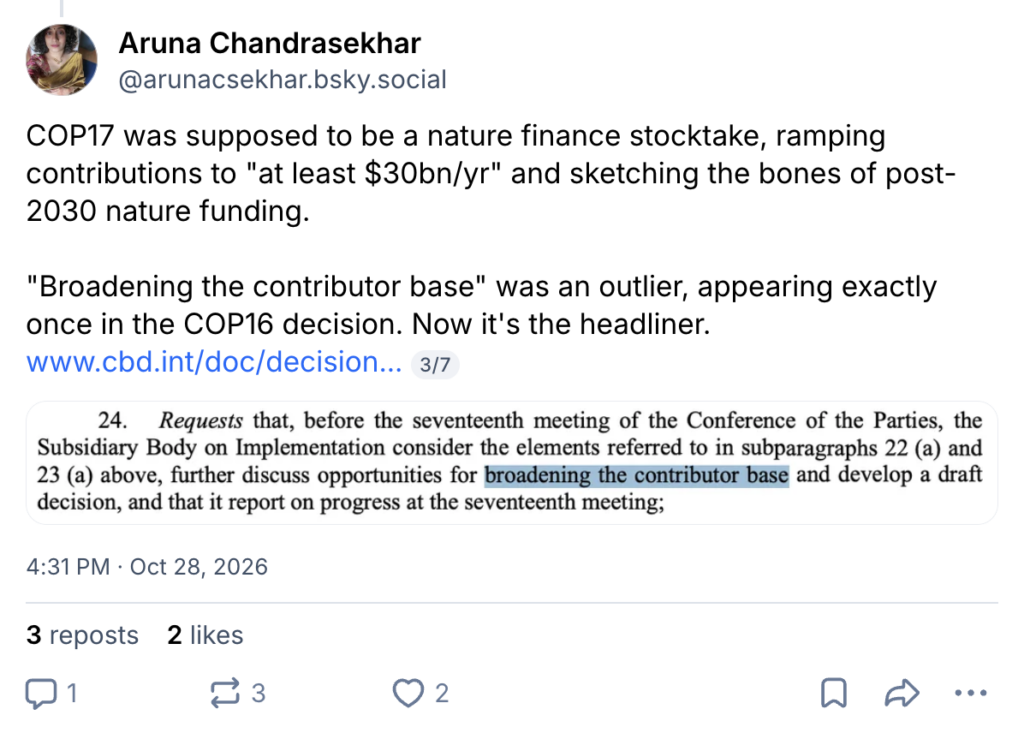
Article 20 of the UN Convention on Biological Diversity (CBD) states that developed countries “shall provide new and additional financial resources” to developing countries to meet the costs of implementing measures to protect nature.
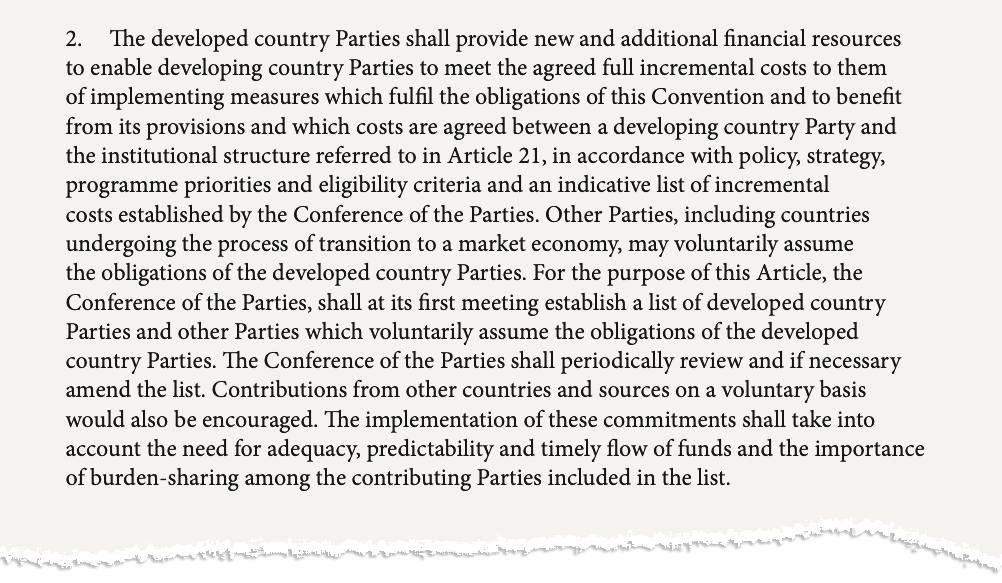
The text states that other countries – including emerging economies – may “voluntarily assume” these obligations to pay. However, it adds that this list of developed countries “shall” be reviewed periodically and amended “if necessary”.
The list was last amended in 2006.
(See this “jargon buster” which explains the specific meaning and legal weight of various terms and verbs used in UN formal documents.)
Discussions around this fraught subject had reached a dead end at intersessional talks this year, but resurfaced in Yerevan.
The first “non-paper” had four different options for expanding the contributor base. These ranged from using the World Bank’s country income groups “as a proxy” to identify high-income countries, to commissioning a study on the impacts of being included on the list.
By 21 October, the number of options swelled to eight, including two from Saudi Arabia and one from Peru.
Some countries “expressed concern” that certain options were based on a CBD secretariat study on “what constitutes a developed country”, Earth Negotiations Bulletin reported.
By the end of the first week, it was clear that the finance deadlock would have to go into informal ministerial consultations for any consensus to emerge.
At a press conference on 28 October, Christopher O’Sullivan, Ireland’s nature minister and representing the EU delegation, told Carbon Brief:
“Our position isn’t that we want to pull back in terms of contributing…but it’s been 20 years since that list was added to, times have changed and there are new realities. We just simply want those new realities reflected. I don’t fully understand why there’s so much opposition to that.”
The EU chose not to comment on which countries it would like to see on that list.
Lim Li Ching from the Third World Network, meanwhile, called the push for others to “assume the obligations” of developed countries “sheer hypocrisy”, adding that any country could make a voluntary contribution. She told Carbon Brief:
“At a forum like the CBD, this linking of income status with finance does not take into account where historical and current responsibilities lie. If you want to generate more funding for biodiversity, let’s look at sovereign debt burdens and rules, which are inequitable for developing countries. But if you can fund wars, and provide resources for your defence industry, then you know where the priorities are.”
On 29 October – at a plenary meant to adopt final texts for the most contentious subjects – Norway’s Gaute Hanssen announced that resource-mobilisation discussions would go into a smaller “friends of the chair” meeting.
Facilitated by Carolina Caceres from Canada and Imèn Meliane from Tunisia, the meeting would discuss the most contentious elements of a draft decision that had swelled to 112 brackets, denoting areas of disagreement on specific details in the text.
While the meeting was open to all, countries that were called to be present included Brazil, Canada, Chile, China, the EU, Fiji, Norway, Russia, Switzerland, Saudi Arabia, South Africa and the UK.
At the same time, a “non-paper” text by finance and environment ministers laid out countries’ red lines and compromises.