

If you’re planning a bathroom renovation and are trying to make more eco-minded decisions, there are several considerations to make. This guide aims to help you save time on researching one of those elements: sourcing a sustainable bathroom vanity.
The furniture companies featured here offer single sink and double sink vanities, and several also let you customize the size of your vanity too.
What is an Eco-Friendly Bathroom Vanity?
Repurposed
Many of the same concepts from sustainable fashion apply to sustainable furniture! The most sustainable furniture is the one already in your home and what’s already been produced. So, can you repurpose something you already have or found at an estate sale with some non-toxic paint?
You could repurpose a sideboard / credenza or lower height dresser into a bathroom vanity, for example, by cutting a sink hole and piping holes and finishing the top with a counter or waterproof finish. There are also contractors who can do that customization for you if you find that perfect dresser you want to transform into a vanity.
Another option is to search for demolition sales near you. Search “demolition sales near me” or check out EstateSales.net and check “demolition sales” in the filters. You can find everything from appliances and cabinets to bathtubs and vanities at these demolition sales. They’re not always the most modern vanities, but if you love a DIY project, and access to a vehicle that can transport these kinds of heavy duty furniture pieces, this could have some potential.
By the way, if you are doing a renovation that requires demolition, see if you can partner with a demolition sales company to help you sell those hard-to-sell items like cabinets before you start your renovation to reduce waste.
Eco-Conscious Materials
If you’re buying a new bathroom vanity, one of the key considerations is the materials that vanity is made from. Look for sustainably-sourced (and ideally locally sourced!) hardwood that is finished with zero or low VOC finishes.
The shelves are typically going to be engineered wood, even if the outside is hardwood, otherwise the vanity would be extremely heavy.
Even better if you can find a bathroom vanity made from reclaimed wood, since that means no trees had to be cut down for producing the furniture!
There are also several eco countertop materials out there, including Richlite, made from post-consumer recycled paper, Grenite has recycled quartz, glass, and acrylic countertops. Most of the brands featured below focus their sustainability sourcing on the main vanity, but you could purchase one of those vanities without a countertop and get a separate eco countertop potentially.
You can also find countertops at demolition sales! (See above for more on those.)
Responsible Production
Given the weight and size of furniture, it’s especially great to see local production for furniture. The carbon footprint of shipping such heavy and large pieces around the world is nothing to overlook!
Another great practice is made-to-order, which reduces waste — and also often enables you to customize your vanity to your specifications.
Finally, transparency, fair wages, and safe working conditions are key to responsible production. This is another reason to choose non-toxic materials. You’re not only protecting yourself, but also supporting companies that protect their workers and the environment, too.
Certifications
You’ll see a few certifications and standards referenced throughout this guide. Here’s what each one actually covers:
- FSC Certified = the wood sourcing was responsibly managed; not a finish, countertop, or hardware guarantee.
- GREENGUARD Certified = the finished product was tested for low chemical emissions, including VOCs; product-level certifications mean that just because one product from a brand is certified, it doesn’t mean the others are!
- Fair Trade Certified = verifies that a factory meets standards for fair wages, safe working conditions, and ethical labor practices; not a company-wide certification
- B Corporation = a company-level certification (not product-specific) verifying that a business meets standards for social and environmental performance, transparency, and legal accountability, assessed by the nonprofit B Lab
Where to Find Sustainable Bathroom Vanities
Check out the curation of brands below that carry eco-friendly bathroom vanities. Details on each brand are included, as well as key points like price and shipping details. Each brand has different sustainability highlights.
Note that this guide includes affiliate links, which means we earn a commission if you buy through these links at no additional cost to you. This helps us continue to create more free guides for you!
1. What WE Make
Best for: made-to-order reclaimed wood vanities with character
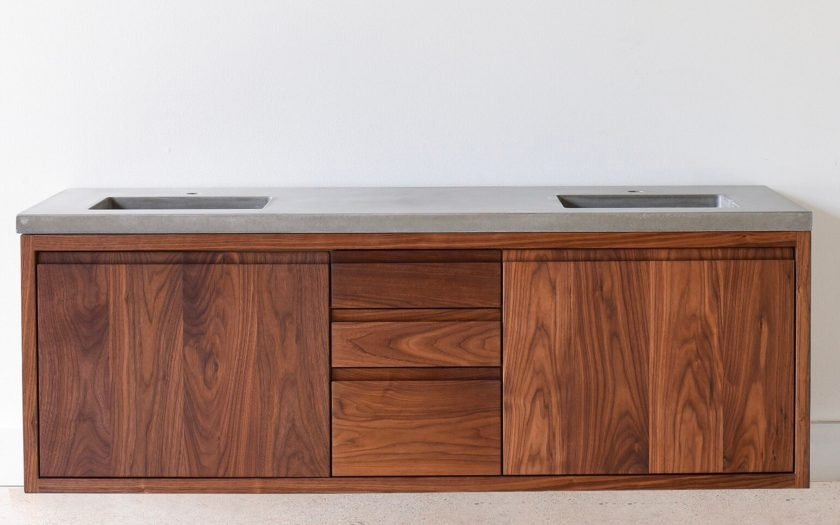
Based near Chicago, What WE Make handcrafts reclaimed wood furniture — including bathroom vanities — made from salvaged wood sourced from torn down midwestern barns. That means the wood is century- or centuries-old wood, with incredible durability and character. Just don’t expect every piece from the brand to look the same! Slight variations are part of the nature of using repurposed materials.
Their recycled bathroom vanities are available in a range of styles from mid-century modern to rustic farmhouse, with legs or as floating vanities, and are available in several low VOC finishes. Each vanity is made-to-order so you can also request custom sizes.
Materials: Reclaimed Wood, Concrete
Price: $1,995 – $5,485
Shipping: Ships free within U.S.
2. Native Trails @ Wayfair
Best for: solid wood vanities with lower impact countertops
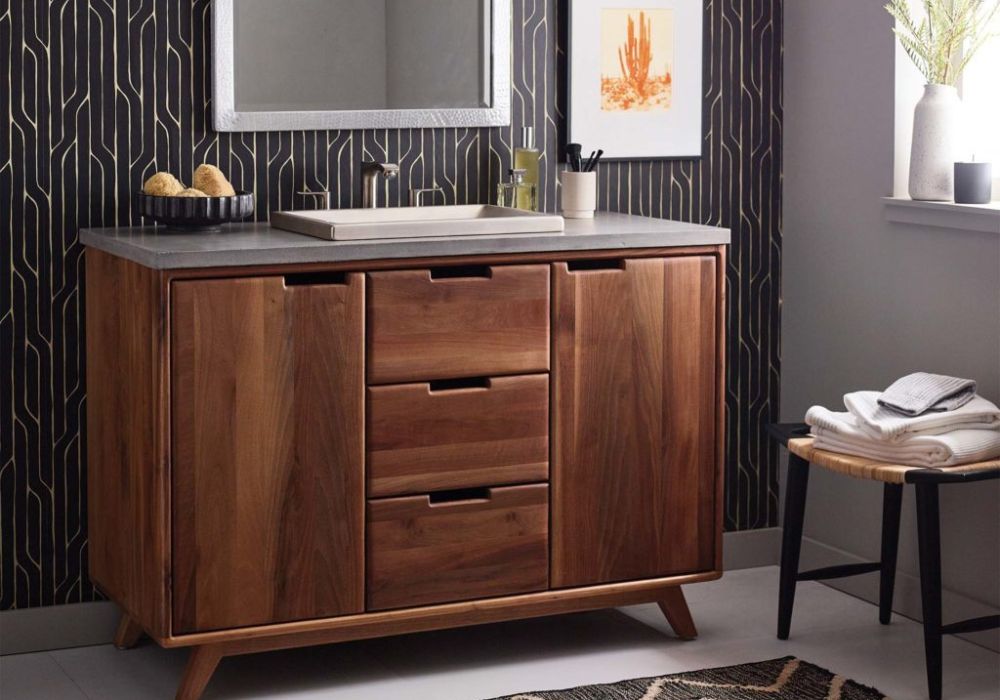
Native Trails is a woman-owned Certified B Corporation that prioritizes social and environmental responsibility. The company’s eco-friendly bathroom vanities are made with FSC-certified solid European hardwood or reclaimed wood from oak barrels of California vineyards. But my favorite part of Native Trails is that their vanities use more eco-friendly countertops made from their own material called NativeStone® — it’s a blend of cement and jute fiber handcrafted by artisans in Vietnam.
The sustainable furniture company also sells recycled copper sinks, NativeStone® basins, concrete vanity tops, mirrors, and even drains to complete your bathroom vanity. While Native Trails does not sell direct on their site, you can find their bathroom vanities at several in-person and online retailers, including Bed Bath & Beyond and Wayfair.
Materials: Reclaimed Wood, FSC-Certified Walnut, Solid Oak, Concrete & Jute (NativeStone®)
Price Range: $1,413 – $4,428
Shipping: Free shipping through Bed Bath & Beyond and Wayfair
3. West Elm Sustainably Sourced Collection
Best for: wide variety of aesthetic choices for more sustainable vanities
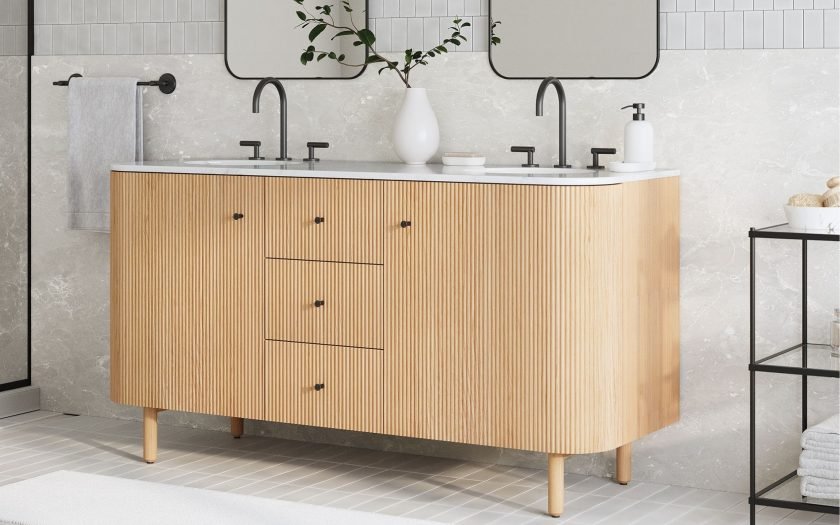
West Elm has been making strides in their sustainability efforts and has several sustainable bathroom vanities available. You can sort through their options with filters like Greenguard Certified (tested for toxic chemicals), Sustainably-Sourced (typically FSC-certified wood), and Fair Trade. They also have a Contract Grade tag signifying products that are durable and built to last. You can find eco-friendly mid-century modern, contemporary, and japandi style bathroom vanities on their site.
While West Elm doesn’t have the level of sustainability credentials of some of the other options on this list, I appreciate that the retailer is large enough to have stores where you can see the vanities in-person before making your decision.
Materials: Hardwood & Engineered Wood (check for GREENGUARD certified products on engineered wood)
Price: $1,055 – $3,399
Shipping: Within U.S.; White Glove Delivery available in select locations
4. Limitless Woodworking
Best for: solid wood vanities with a farmhouse feel
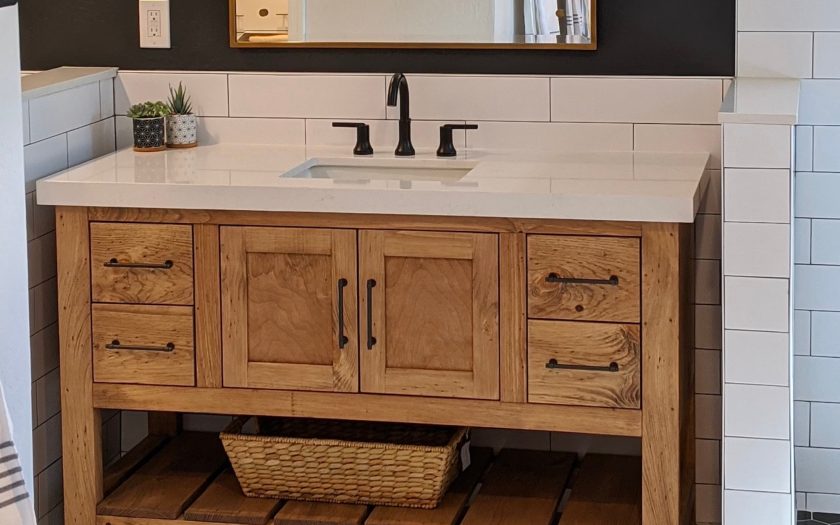
Specializing in custom wood furniture, you can find a USA-made bathroom vanity that you can design to your specifications, from size to stain color to hardware at Limitless Woodworking. The Indiana-based furniture company’s natural bathroom vanities are made-to-order just for you, and many reviewers compliment the products’ craftsmanship and quality.
The wood is new — not reclaimed like What WE Make or Native Trails — but I appreciate the transparency around the production of these vanities along with the commitment to using solid wood and building with quality craftsmanship.
Materials: Northeastern White Pine
Price: $1,433 – $8,189
Shipping: Ships free within U.S.
How about more affordable sustainable bathroom vanities?
You may have noticed that the price of a more sustainable bathroom vanity is on the higher end from your typical vanity — that’s to be expected when the sourcing is done responsibly, a company uses hardwood instead of composite wood, or when furniture is handcrafted domestically.
But if these vanities are outside of your budget, I’d suggest furniture outlets as a secondhand option (since it can be pretty tough to find vanities secondhand from someone’s home). I’m not talking about the kind of outlets where they just make cheaper products, but genuine outlets where they sell returned products they can’t resell as new. Such as:
West Elm Open Box Outlet Deals: this is where you can find deals on vanities and other bathroom furniture and accessories that have been opened and returned. A true outlet like this is a form of secondhand furniture, as these pieces usually cannot be sold as new. Some retailers toss out returned products, so it’s nice to see companies resell these types of items.
Wayfair Open Box: similarly, Wayfair offers open box deals up to 40% off on all kinds of furniture, including bathroom vanities. As an outlet, just keep in mind that you can’t return the items, so make sure to double check the measurements! If you’re thinking: but what if there’s an undisclosed issue or significant damage from shipping? Thankfully, those usually those have exceptions. I received a broken chandelier in the mail from Wayfair’s Open Box Outlet, and they did refund me after I sent photos. So while the product might have some wear on it from back and forth shipping, you shouldn’t have to deal with a dysfunctional product.
Ikea As Is: I’ve used the As Is program from Ikea several times. You simply browse your nearest store’s selection online, reserve the piece(s) you want then pick up and pay within 48 hours. It’s not as convenient as West Elm or Wayfair since you have to drive and pick up — versus just wait for the delivery — but the benefit is you can actually see the furniture before you purchase.
I hope one of these options will meet your needs for an eco-friendly bathroom vanity! Feel free to reach out if you have any further recommendations. And good luck on your bathroom remodel!
You May Also Like:
Gorgeous Sustainable Tables to Gather Around
The Best Sustainable Furniture Companies
Organic Towels to Transform Your Bathroom Into a Sustainable Sanctuary
The post 4 Eco-Friendly Bathroom Vanities For A More Sustainable Remodel appeared first on Conscious Life & Style.
4 Eco-Friendly Bathroom Vanities For A More Sustainable Remodel

When it comes to shopping responsibly for furniture, one of the key decision factors to consider is locally-made — so if you’re in the United States, you might be looking for American made furniture companies.
Why Does Locally-Made Furniture Matter?
The first element that comes to mind is reducing shipping emissions. International shipping alone accounted for 2% of global energy-related CO2 emissions in 2022. So it’s crucial that we start to buy more locally and regionally made in general, and furniture is likely among the most bulky items we are going to buy so it feels like a particularly impactful area to focus on.
Additionally, when a product is locally made there is often more transparency. This is not always the case, but several of the US-made furniture companies here even have their own furniture workshops or partner with hyper-local manufacturers that they can regularly visit.
And with audit deception commonplace, it’s vital that a company visits their factories or has close relationships with their manufacturers to ensure social responsibility.
Another benefit is that you’ll contribute to supporting your local economy, especially if you’re purchasing from an American-made furniture brand that is based in your own state or region.
It goes without saying that American-made furniture is likely going to be more expensive than your standard mass-market furniture retailer.
However, there are several direct-to-consumer brands in this guide that avoid retailer markups to deliver more accessibly-priced furniture than some of the mid-tier to higher end furniture companies you might be familiar with that produce abroad.
A Quick Note on Certifications
You’ll see a few certifications referenced throughout this guide. Here’s what each one actually covers! You’ll notice many of them are quite specific to certain areas of the furniture. That’s why many sustainably-minded American-made furniture companies have products with several certifications.
- FSC Certified = the wood sourcing was responsibly managed; not a finish, foam, or textile guarantee. Some brands (like Avocado) hold their own facility-level FSC certification, which is a stronger signal than sourcing FSC-certified wood from a third party.
- GOLS Certified = verifies that latex foam is made from certified organic latex, grown and processed to strict environmental and safety standards; this is a latex-specific certification, not a wood, fabric, or product-level guarantee
- GOTS Certified = the fabric meets strict organic and safety standards, with labor protections built into the entire supply chain; this is a textile-specific certification, not a wood or foam guarantee
- OEKO-TEX® STANDARD 100 = tests the finished textile for harmful substances; a fabric-specific certification, not a claim about the wood or foam underneath it.
- Cradle to Cradle Certified (Gold/Silver/Bronze) = evaluates a product across material health, circularity, clean air/climate, water/soil stewardship, and social fairness; this is one of the few certifications that can assess a whole product rather than a single material and it’s the one sustainability managers at brands tell me is the toughest to get
Now that this is all cleared up, let’s dive into the guide!
My Top Picks for American Made Furniture Brands
Note that the following includes affiliate links, which means we may earn a small commission if you make a purchase, at no additional cost to you. As always we only feature brands that meet strict criteria that we love!
1. Medley
Best for: full range of American-made, non-toxic furniture
Categories: Living, Bedroom, and Dining Furniture
Made in: California and North Carolina
Price Range: $595 (poufs) – $10,290 (sectionals)
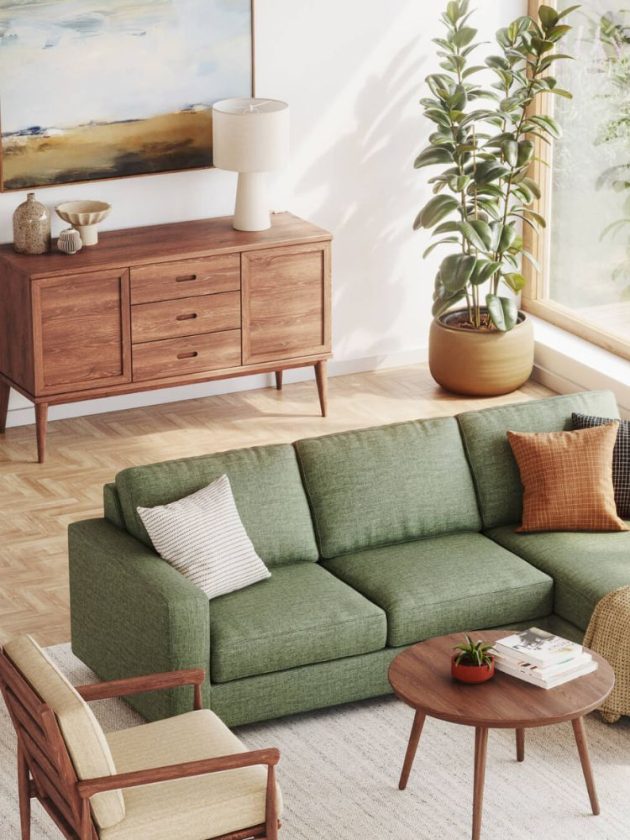
Medley is consistently at the top of my mind when I think of American-made furniture — their commitment to safe materials, sustainability, and craftsmanship is hard to match.
The brand combines traditional craftsmanship with modern ecological sensibility. Each sustainable furniture piece is meticulously made-to-order in California ensuring quality, supporting local manufacturing, and reducing their carbon footprint. Medley uses some of the best eco-certified materials in furniture too, like GOLS + GOTS-certified organic latex foam and OEKO-TEX® Standard 100-certified wool.
2. Avocado
Best for: FSC-certified and reclaimed wood furniture, made in their own LA woodshop
Categories: Bedroom and Living Room Furniture
Made in: California
Price Range: $349 (side table) – $3,999 (full bed frame)
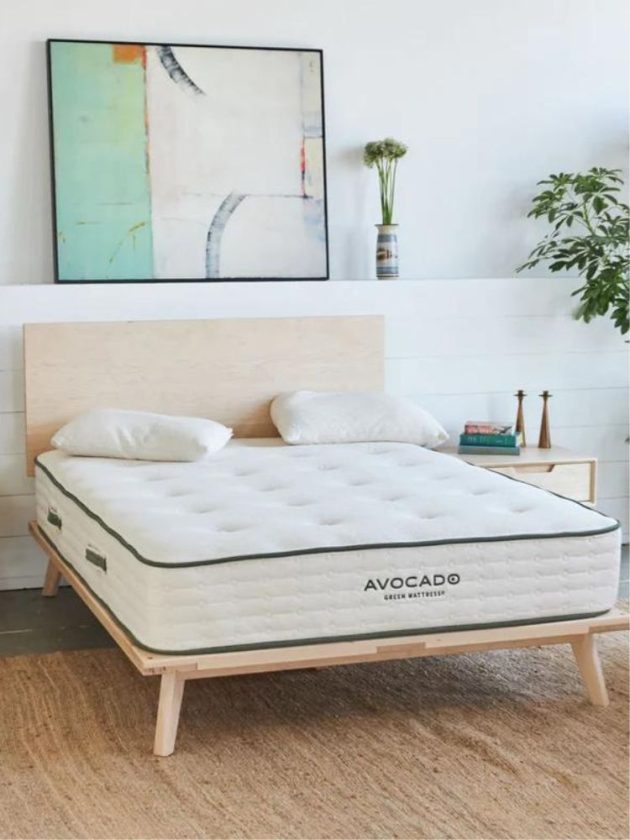
Rooted in a commitment to sustainability, Avocado has their own FSC®-certified (C156318) woodshop in Los Angeles! Among their offerings, you’ll find living room and bedroom furniture crafted from reclaimed wood or FSC-certified wood. Whether your aesthetic is minimal, Scandi, boho or MCM, you’ll find a beautiful piece to add to your home on this California-made furniture company’s site.
What really makes Avocado stand out to me though is their ethical labor standards. They produce in their own woodshop, pay living wages, and offer solid benefits to their factory team.
3. Cisco Home @ Urban Natural
Best for: design-forward furniture with three decades of LA craftsmanship
Categories: Living and Bedroom Furniture
Made in: California
Price Range: $975 (ottoman) – $9,000+ (large sectional)
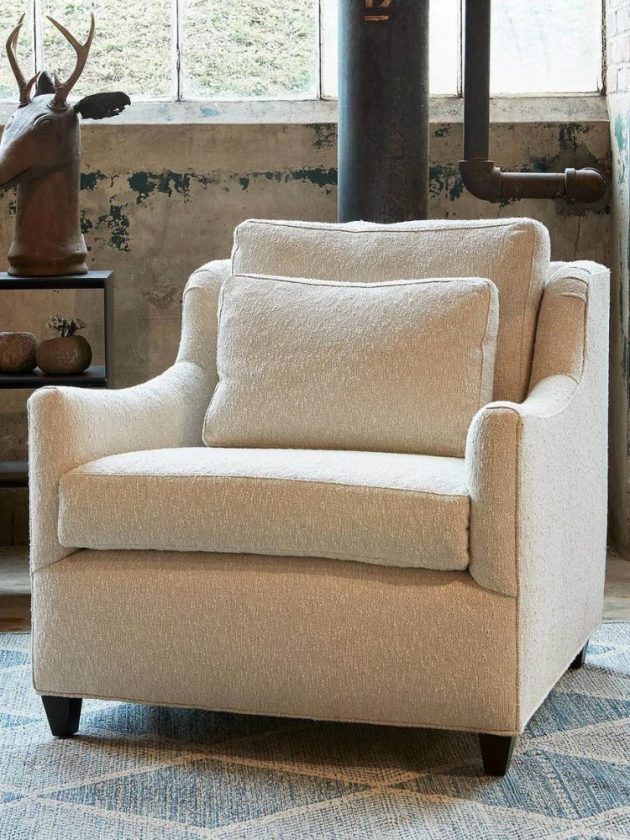
Founded in Los Angeles by Cisco Pinedo, Cisco Home focuses on environmentally responsible practices and local craftsmanship. Each piece, made in their Los Angeles workshop, combines modern elegance with rustic charm using materials like FSC-certified hardwoods and natural fabrics like hemp and organic cotton. Cisco Home’s three decades of experience in making quality sustainable furniture, makes them a top choice for American-made furniture.
Cisco Home’s default furniture options don’t automatically include their best eco materials though. So for the most eco-minded option, check “Organic Upgrade” on the product page.
4. Copeland @ Urban Natural
Best for: heirloom hardwood furniture
Categories: Living, Bedroom, and Office Furniture
Made in: Vermont
Price Range: $256 (shelf nightstand) – $6,865 (storage bed)
Copeland Furniture, based in Bradford, Vermont has been making heirloom-quality pieces since 1976. The USA-made furniture company sources their hardwoods like cherry, maple, and walnut from sustainably managed forests in the Northeast. Their collections blend traditional craftsmanship with elegant, contemporary design and functionality. You’ll find pieces like extendable tables and sit-stand desks from Copeland.
Copeland’s pieces are priced on the higher end, but they are truly stunning pieces that may be worth the investment if they’re within your budget.

5. Savvy Rest
Best for: fully organic, non-toxic bedroom and living room furniture
Categories: Bedroom and Living Room Furniture
Made in: Virginia
Price Range: $400 (bedside table) – $3,999 (sofa)
Savvy Rest’s commitment to organic materials and sustainable production practices is unmatched. I haven’t found another brand yet that matches their level of integrity!
The Northeast US-made furniture company crafts each piece of furniture with only the best non-toxic materials like GOTS-certified organic fabrics, Cradle-to-Cradle Natural Talalay latex foam, and zero-VOC finishes. Made in their Central Virginia wood shop, Savvy Rest exemplifies a dedication to creating non-toxic and sustainably-minded American-made furniture that is built to last.

6. What WE Make
Best for: reclaimed wood furniture
Categories: Dining, Living, Office, and Bathroom Furniture
Made in: Illinois
Price Range: $425 (bar stools) – $6,425 (bathroom vanities)
I loved learning that What WE Make produces their furniture right in Chicagoland, local to me!
What WE Make crafts tables, vanities, and more from old-growth salvaged wood sourced from torn down Midwestern barns. And ensuring the furniture brings in minimal to no toxins, the pieces are finished with zero-VOC finishes. Each piece is made-to-order and you can even get a vanity, table, or other furniture piece fully customized to your liking!
7. Sabai
Best for: affordable, repairable American-made seating
Categories: Living Room Furniture
Made in: North Carolina and Tennessee (go behind the scenes)
Price Range: $495 (side table) – $6,295 (sectional)
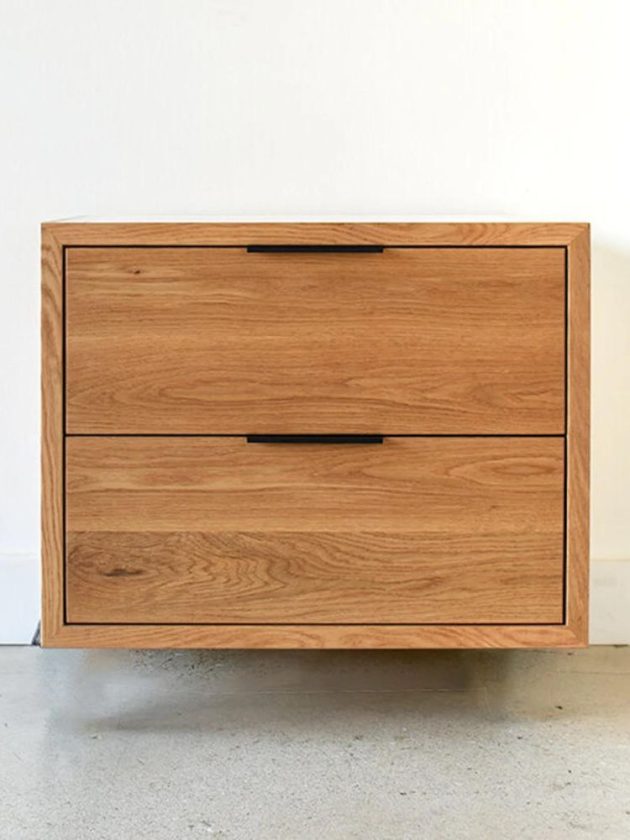
Sabai’s American-made furniture collection focuses on environmental consciousness and accessible pricing. Sabai’s sofas and chairs are made crafted from 100% recycled fabrics or natural upholstery (they have a cotton + hemp option) and FSC-certified wood while being free of PFAS and flame retardants. The best part about Sabai in my opinion, though, might be their Repair Don’t Replace program so you can ensure your sofa makes it for the long haul.
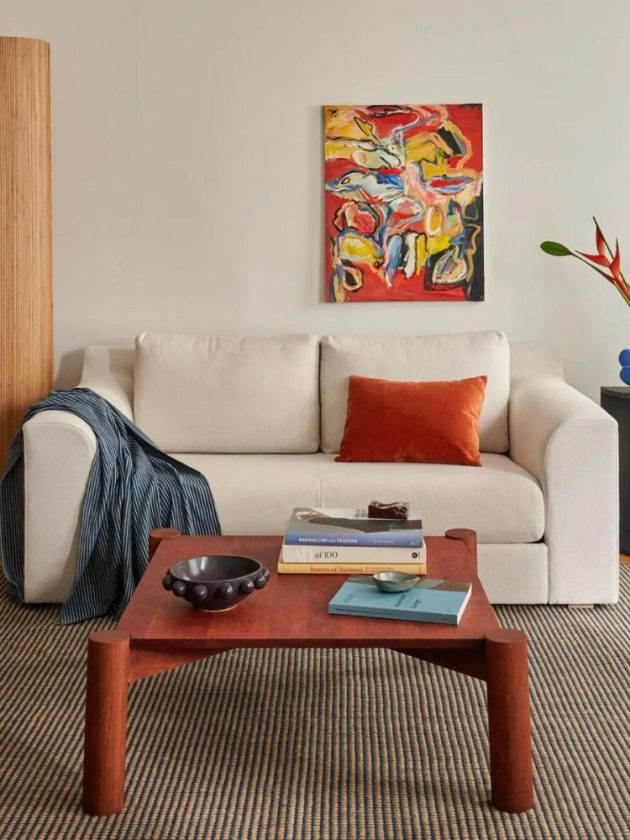
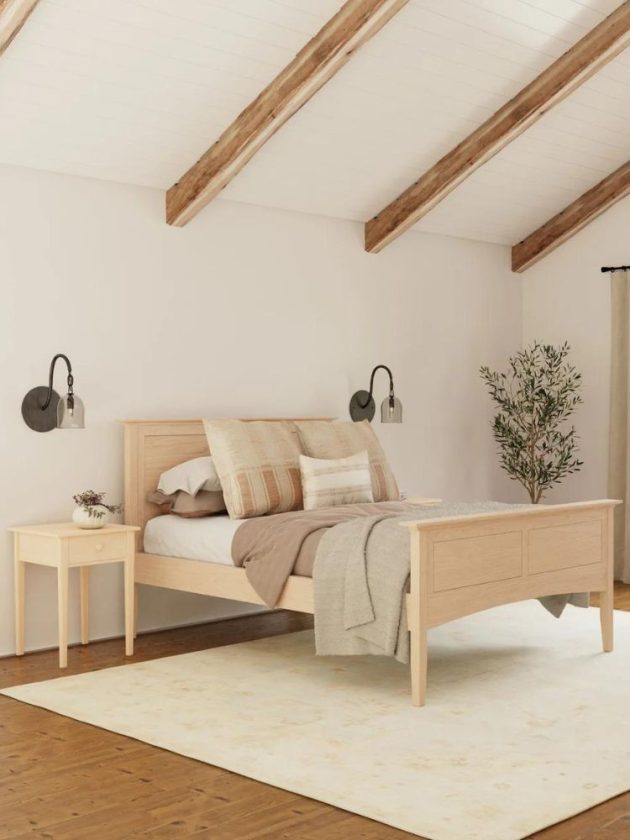
8. Maple Corner Woodworks @ Urban Natural
Best for: traditional Shaker-style Vermont craftsmanship
Categories: Bedroom, Living Room, Office, and Dining Room Furniture
Made in: Vermont
Price Range: $815 (end table) – $9,650 (armoire)
Maple Corner Woodworks is dedicated to crafting heirloom-quality, timeless furniture in Vermont, which is well-known for its quality woodworking.
With their most popular styles inspired elements by the best of furniture design from the mid to late 1800s, it’s safe to say that MCW prioritizes the longevity of their solid hardwood furniture. If you’re looking for classic designs, this is the direction I’d point you.
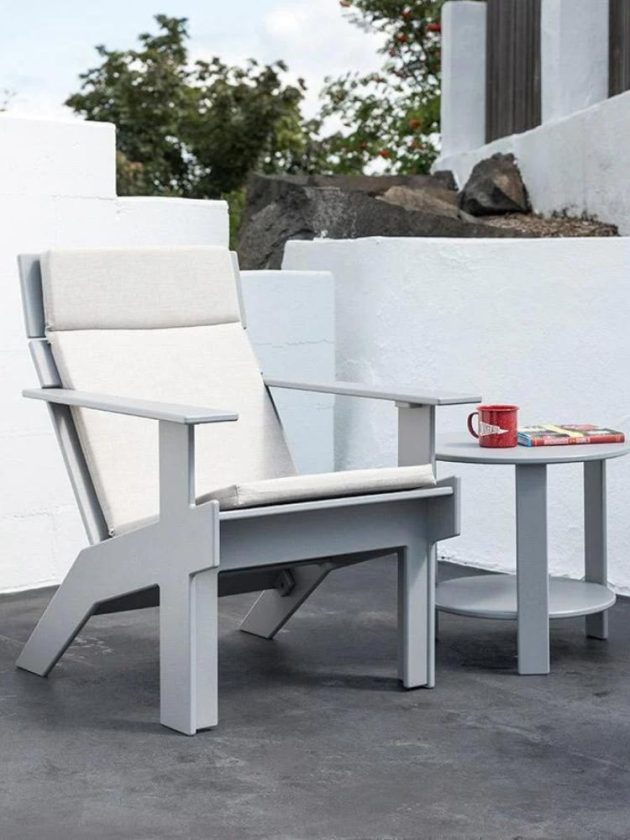
9. Loll Designs
Best for: American-made outdoor furniture
Categories: Outdoor Furniture
Made in: Minnesota
Price Range: $345 (stool) – $4,995 (sofa)
Loll Designs has everything you need for your patio redesign, from coffee tables and cabinets to benches and lounge chairs.
Made using recycled high-density polyethylene (HDPE), Loll Designs creates USA-made furniture build to last. The furniture is designed to not rot, splinter, or require any re-staining. In fact the brand was awarded the Cradle to Cradle Certified BRONZE certification, which as I mentioned is one of the toughest certifications for a company to get.
That wraps it up for our guide to American made furniture companies! I hope you find a quality piece or two that will last you a lifetime in this guide.
You Might Also Want to Check Out:
The Top Non-Toxic Furniture Companies
The Best Sustainable Tables to Gather Around
Comfy and Cozy Eco-Friendly Chairs
The post 9 American Made Furniture Companies Prioritizing Quality Over Quantity appeared first on Conscious Life & Style.
9 American Made Furniture Companies Prioritizing Quality Over Quantity
A durable set of eco-friendly dinnerware is a solid ingredient for a sustainably set table. But what exactly is sustainable dinnerware? Let’s talk about it.
What is Sustainable Dinnerware?
Well looking for secondhand and vintage dinnerware is always a good start, whether that’s your grandmother’s porcelain dining sets or a pre-loved set of colorful plates and bowls at your local thrift store.
Another great place to look is estate sales. You can likely find full sets of dinnerware! If none of those options are available to you (or your just not finding something you love) you can check out a site like Etsy Used or Chairish.
*A note on secondhand dinnerware: the FDA started regulating the use of lead in dinnerware in 1971. So you might want to avoid any dinnerware produced before 1971, unless it’s just for display!
Here are some qualities to look for when shopping for new sustainable dinnerware:
Sustainably sourced materials: such as responsibly-harvested bamboo and recycled glass.
Quality: when it comes to products you’re going to potentially use and wash daily, durability is an important factor to keep in mind. Also consider your lifestyle! Perhaps glass and porcelain aren’t the best choices if you have little ones, or you tend to drop things often. (Guilty!!)
Usefulness: You might also want to consider if you will be hand-washing or dishwashing your dinnerware. Some materials are too fragile for the dishwasher, so consider if you’ll have the time (and willingness) to hand wash them all the time. Because part of sustainability is that you’ll actually use the products and they won’t just sit and collect dust! 
Ethical production: this could look like transparent local manufacturing or artisan-made and fair trade. In any case, an ethical dinnerware brand would prioritize fair living wages for the workers, ensure safe healthy conditions (this includes no toxic chemicals used in production!) and go above and beyond to consider the wellbeing of the people who work for them and/or produce their products.
Ownership and Equity: this means looking at who owns and profits from the brands we’re supporting; if a brand is owned by a person of color, it will be indicated in their description below (BIPOC-owned stands for Black, Indigenous, Person of Color-owned and WOC-owned stands for Woman of Color-owned).
Your Values: you may have other elements you look for in a brand, such as traditional craft preservation. Or perhaps it’s really important to you that a brand is giving back to their local community.
Relevant Certifications & Regulations
You’ll see a few certifications and standards referenced throughout this guide. Here’s what each one actually covers:
- EU Heavy Metal Compliance = verifies that food-contact items meet strict European Union limits on lead and cadmium; this is a regulatory standard, not a voluntary certification, so any company selling to the EU will have to follow this
- USDA Biobased Product = certifies that a product is made from a verified percentage of renewable, biologically-sourced material (like corn starch or bamboo fiber) rather than petroleum-based plastic; this is a voluntary official third-party certification speaks to material sourcing, though not chemical safety on its own.
- FDA CFR21 Compliance = this confirms a product meets FDA standards for food-contact materials, covering things like migration of harmful substances into food; again this is legally required so all brands selling into the US should have this but it does still show an extra step if a company has this tested by a third-party, because the FDA is not pre-testing products on the market
- California Prop 65 Testing = verifies a product has been tested against California’s specific list of regulated chemicals (including lead, cadmium, and phthalates)
Where to Find Eco-Friendly Dinnerware
The eco-friendly tableware and sustainable dinnerware brands featured below meet at least one (though most of them meet several) of the above criteria.
In this roundup, you’ll find sustainable pottery (including ceramic plates, sustainable mugs, and more), recycled glassware, artisan-made ethical dinnerware, and everything in between to suit your needs. I hope that this variety of brands will help you set the table, whether that’s for fancy dinner parties, Friday night pizza, or the meals in between.
This article features affiliates and partners. As always, we only feature brands that meet strict standards for sustainability that we love — and that we think you’ll love too!
1. East Fork
Categories: Plates, Bowls, Cups, Glassware, Flatware
East Fork’s ethically-made dinnerware and tableware are among my favorite picks on this list. Their beautiful sustainable ceramics, glassware, mugs, and other goods are elegantly designed and built for durability.
Committed to creating local manufacturing jobs, all of East Fork’s eco-friendly pottery is made in Asheville, North Carolina. Plus, the company partners with local grassroots organizations to give back 1% of all revenue to community-led initiatives.
Conscious Qualities: Locally-Made, Transparent Production
Price Range: $14 (small bowl) -$250 (serving platter)

2. Our Place
Categories: Glassware, Bowls, Plates
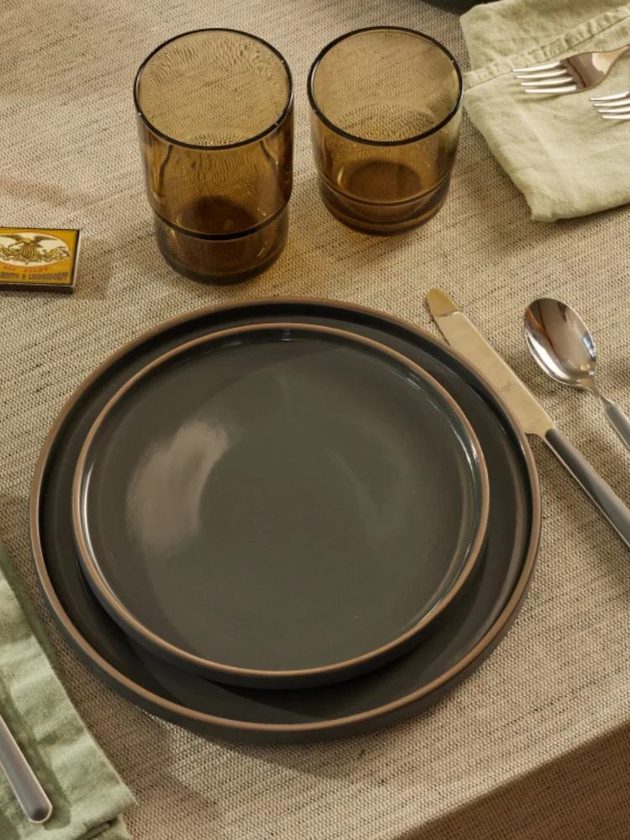
Handcrafted from natural stoneware, Our Place has tablescape-ready chip-resistant plates and bowls in neutral and warm hues. I purchased a full set of their dinner plates, salad plates, small plates, and soup bowls in “Char” (their charcoal gray).
The set is beautiful and we got so many compliments from our guests that we decided to get a set of plates and bowls for my parents in the Steam color — and they’ve loved their set just as much. Our Place also carries glassware made of partially recycled glass.
Conscious Qualities: Natural Materials, Durable
Price Range: $45 (tiny plates set) – $85 (dinner plates set)
3. Healthier Homes
Categories: Plates, Bowls, Mugs, Servingware
Healthier Homes’ kitchen collection spans a wide range of styles while holding every piece to the same standard: lead- and cadmium-free stoneware, crafted in compliance with strict EU regulations on heavy metals in food contact materials.
The Edge collection designed in Germany offers clean, modern lines in muted colorways, while Simply Ceramic brings a softer, rounded aesthetic for serving pieces. From Portugal, the Friso collection offers a more traditional, farmhouse-leaning look, while the Arenito collection is made from Ecogres, stoneware crafted from reclaimed scraps (I always love a recycled option!) — both single-fired for a lower-emissions process. For something brighter, the Blue Sky collection is made from natural Brazilian clay.
Conscious Qualities: Lead & Cadmium-Free, EU Compliant, Recycled Clay Options
Price Range: $68 – $171

4. MADE IN
Categories: Bowls, Mugs, Plates, Servingware, Flatware
With a 10-year “no-chip guarantee” and lifetime warranty MADE IN’s restaurant quality dinnerware is built to last.
The brand’s stoneware is all made in Stoke-On-Trend England, a city that has been known for clay craftsmanship since the 1600s and has been delivering dinnerware to the hospitality industry for decades. The options are limited aesthetically, but if classic ceramics are what you’re looking for, MADE IN delivers.
Conscious Qualities: Made in England, Durable
Price Range: $59 (side bowls set) – $149 (soup bowls set)
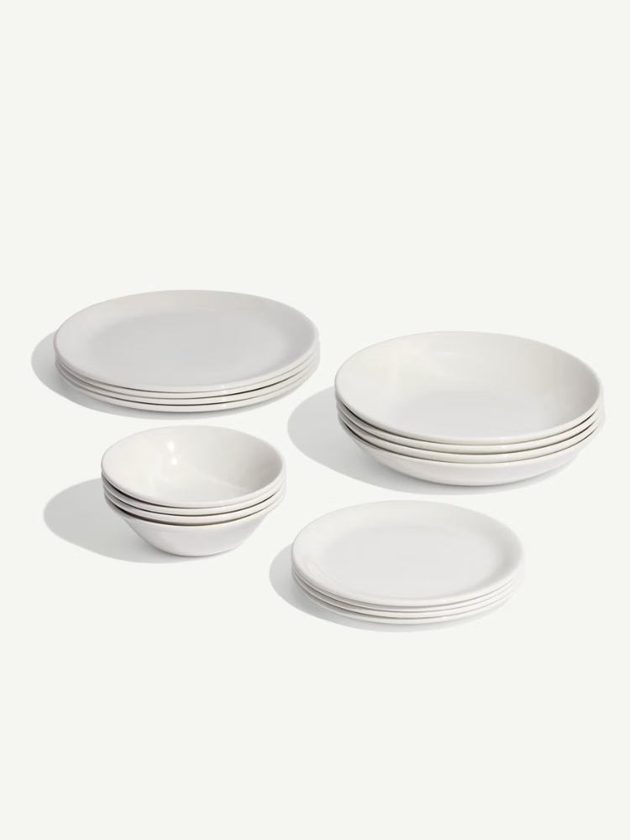
5. Fable
Categories: Dinnerware, Drinkware, Cutlery, and Servingware
I love the muted colorways of Fable’s dinnerware! Prioritizing timelessness and sustainability, Fable sources quality materials and simple designs that last the test of time.
The eco-minded dinnerware company partners with makers in Portugal, Germany, Italy, Japan, and the US that use conscious practices, like ethical employment, craftsmanship, and low-waste practices (like using locally-sourced recycled clay).
Conscious Qualities: Quality Craftsmanship, Recycled Clay, Made Responsibly
Price Range: $54 (little plates set) – $99 (dinner plates set)
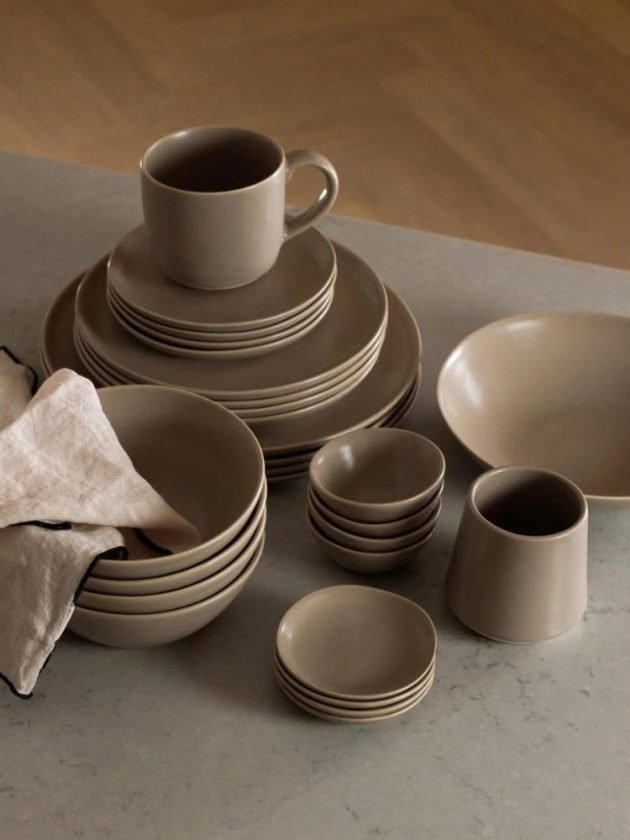
6. Farmhouse Pottery
Categories: Plates, Bowls, Serving Dishes, Mugs, Flatware
Based in in Woodstock, Vermont, Farmhouse Pottery is committed to honoring the slow craft of pottery. Their team of skilled artisans crafts quality dinnerware entirely from domestically mined and blended clay in the brand’s own studio, building livelihoods for young artists in rural Vermont. And you can rest easy knowing the pottery is all lead-free.
The brand’s stainless steel cutlery is made in New York, as part of efforts to revive an American cutlery factory. This shows me just how mission-driven this company is, beyond just checking off boxes.
Conscious Qualities: Locally Sourced Clay, US-Made, Craft Preservation
Price Range: $55 (silo bowl) – $125 (flatware set)

7. GOODEE
Categories: Plates, Glassware, Cups & Mugs, Serving, Flatware
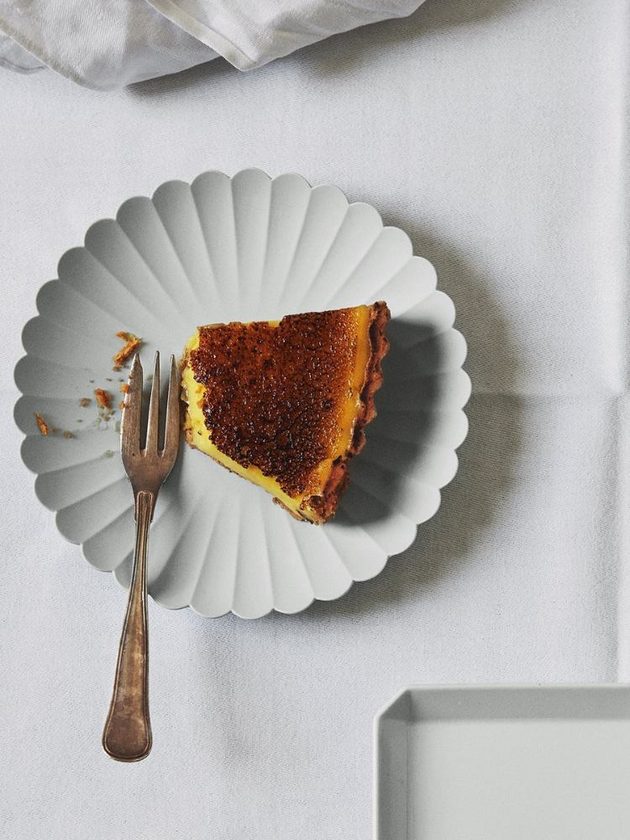
For artisanal plates that can elevate your tablescape, GOODEE is the answer.
From 100% porcelain stone ceramic plates hand-crafted in the ancient Japanese town of Arita and hand-painted plates made from Egyptian clay to marble patterned ecothylene® upcycled BPA-free plastic plates ideal for family-friendly daily wares (though this option might not be ideal if choosing natural materials is your priority), GOODEE has options for everyone.
Conscious Qualities: Ethical Production, Craft Preservation
Price Range: $19 (small plate) – $135 (dinner plate set)
8. Zungleboo
Categories: Bowls, Plates
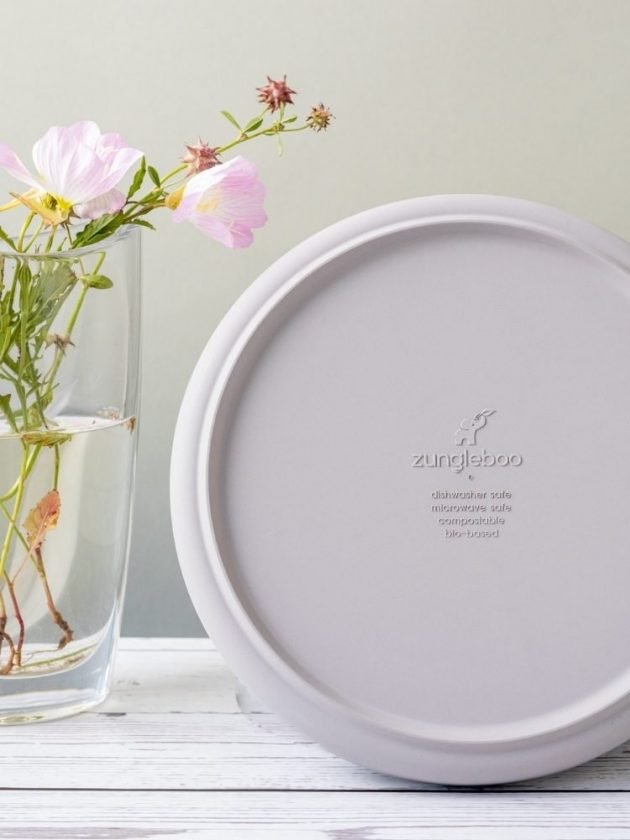
Lightweight, shatterproof, and made from corn starch and bamboo fiber, Zungleboo creates family-friendly and eco-friendly dinnerware.
Their versatile plant-based bowls and plates are also dishwasher and microwave safe, making them easy to care for no matter how busy mealtime is. As Zungleboo writes on their website, their sustainable dinnerware is “from real plants, for real life”. The dinnerware is made in China, though they work with just one close partner to ensure transparency throughout manufacturing. And have been tested by a third-party lab to comply with FDA CFR21 food contact materials standards and California Prop 65 standards for lead and cadmium.
Conscious Qualities: Eco Materials, USDA Biobased Product
Price Range: $50 – $60 (Use code CONSCIOUS15 for 15% off!)
More Guides For An Eco-Friendly Kitchen:
Best Fair Trade and Eco-Friendly Tablecloths
Your Sustainable and Zero Waste Kitchen Guide
The Best Zero Waste Food Storage Options
The post 8 Eco-Friendly Dinnerware Brands To Set Your Sustainable Table appeared first on Conscious Life & Style.
8 Eco-Friendly Dinnerware Brands To Set Your Sustainable Table
The right sustainable rug can completely transform a space. A plant-based fiber rug like jute or sisal can create a grounding warmth, while a thick responsibly-sourced wool rug adds a sense of luxury. An artisan handcrafted rug infuses character and authentic culture where a vintage one can add layers of history and soul.
Furniture is functional and can be beautiful, but adding an exceptional rug is what brings it all together. A rug is at the center — at the heart — of your living room or bedroom or dining room. In other words: a rug is how you start to turn those four walls into a home.
That said, unfortunately most rugs today are mass-produced from synthetic fibers like polyester (read: plastic), finished with toxic chemicals, and made in unethical labor conditions.
Thankfully, there is a better way. Let’s talk sustainable rugs.
What is a “Sustainable Rug”, Exactly?
I like to include an in-depth explanation on “sustainable” in our guides because there’s no standard definition of the term when it comes to fashion or home goods. So here’s how we define “sustainable rugs” at Conscious Life & Style.
Natural Materials:
We’re looking for natural fibers like jute, seagrass, sisal, hemp, cotton (less common) or ethically-sourced wool. Recycled natural fibers are a great bonus, as is organic. The most reputable organic certification for fibers currently on the market is Global Organic Textile Standard (GOTS).
We’re steering clear of synthetic rugs, including recycled polyester in this guide, because they risk releasing microplastics into our homes and environment.
Also natural fibers that aren’t treated with or blended with synthetics are generally biodegradable at the end of their life.
“Recyclability” when it comes to textiles is largely a misnomer. We have far more textile waste than we do textile recycling infrastructure capacity. Plus many types of fabrics still can’t be recycled properly — if at all — today.
Dyes & Chemical Usage
Another source of impact is the dyes and other finishes used on the rugs. Many of these dyes and finishes are synthetic.
One better option is a “low impact dye” — this generally refers to a synthetic dye that doesn’t contain common toxic chemicals (like heavy metals) and has a higher absorption rate, which requires less water. Natural dyes on the other hand are non-synthetic colorants derived from plants, minerals, or sometimes even insects.
There are also additional chemicals these companies may add to rugs like PFAS (forever chemicals) for stain or water resistance or flame retardants. So if you see claims like “stain resistant” or “easy care” you probably want to do some additional digging to ensure those textiles weren’t treated with toxic chemicals.
One certification to look for is OEKO-TEX® STANDARD 100, which is a label for textiles that have been tested against common harmful substances.
Ethical Production Practices:
Unfortunately forced and child labor is still happening in the carpet and rug industries. So transparency is key. Two certifications to look for are GoodWeave (assurance against child, forced, and bonded labor) and Fair Trade Certified . Certifications are certainly not an end all be all, so I’m also looking for transparency from the brand — who makes their products? How are they made? What is their relationship to those makers, artisan cooperatives, or facilities? Are they working in safe conditions? Are they paid fairly? A living wage?
Another element here is craftsmanship. Many of these rug-making techniques have been around centuries, but are at risk of dying out with the rise of mass-produced rug makers. Is the brand showing a commitment to sustaining heritage techniques and generations-old craftsmanship?
You might also like to look for local production, though local doesn’t automatically mean ethical. I still like to look for transparency here, as exposés have found there are still sweatshops in the US, too.
Durability & Longevity:
This one is the most challenging. Not only is it difficult to assess the durability of a rug before you’ve purchased it (even most reviewers only comment on their initial experience), but durability is also significantly impacted by how we care for that rug. Do you wash it often? Do you have pets? Kids? Are you putting the rug in a high-traffic area? Is it getting wet often (like in a kitchen or bathroom)?
That said, I’m looking for attention to craftsmanship from a brand, and attention to detail. There are also certain elements to look out for. For example:
- Thicker and denser rugs generally hold up better than looser or low-density tufted rugs.
- Reinforced edges prevent fraying and strong backings prevent the rug curling at the edges.
- Hand-knotted rugs are labor intensive (and may be pricier) but can last decades or even centuries.
Top Picks for Sustainable Rugs
Ok so that was a lot! But no stress — I’ve done the hours of heavy lifting and digging for you to curate this guide to brands with sustainable rugs. So let’s dive in.
Note that Conscious Life & Style is reader supported and this guide includes affiliate links, which means if you make a purchase via some of these links, I may earn a commission. As always all brands meet are rigorous sustainability criteria.
Secondhand First!
Part of our philosophy at Conscious Life & Style is to look secondhand first. So before we dive into the brands, here are some places to find vintage and pre-loved rugs first:
1. Urban Natural

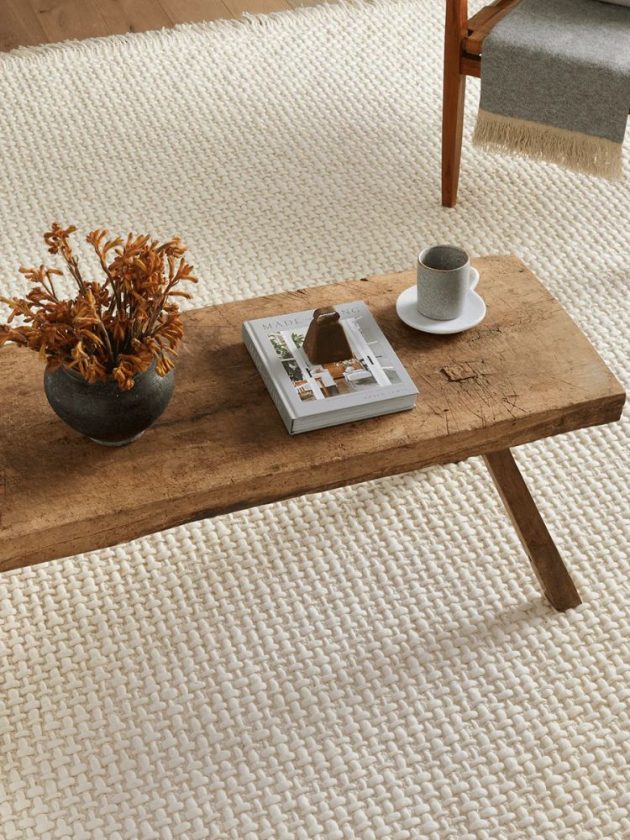
Best for: Living rooms, dining rooms and bedrooms
Urban Natural is your online destination for finding responsibly-made, exceptionally crafted home goods from sustainably-minded makers. Brands on Urban Natural include Loloi, a well-respected GoodWeave certified rug brand with rugs ethically hand-woven in Varanasi, India; and Jaipur Living, a company dedicated to preserving time-honored handcrafted art and rug weaving traditions, partnering with 40,000 artisans across hundreds of rural communities throughout India.
Other sustainable rug options on Urban Natural include 100% linen rugs from Libeco, which holds the Masters of Linen® quality label; and 100% wool rugs made in the USA from Earth Weave, the first US carpet manufacturer with a completely natural product line.
Materials: Wool, Jute, Sisal, Cotton, Silk, and Linen (Note: there are a couple of “performance” rugs made with polyester)
Price Range: Starts at $179
Shipping: Ships within the US
2. Lorena Canals
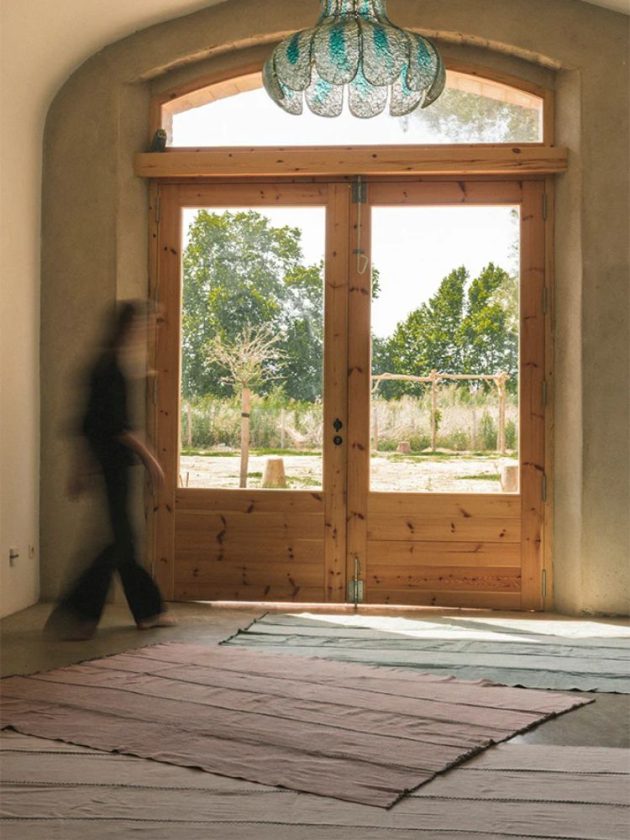
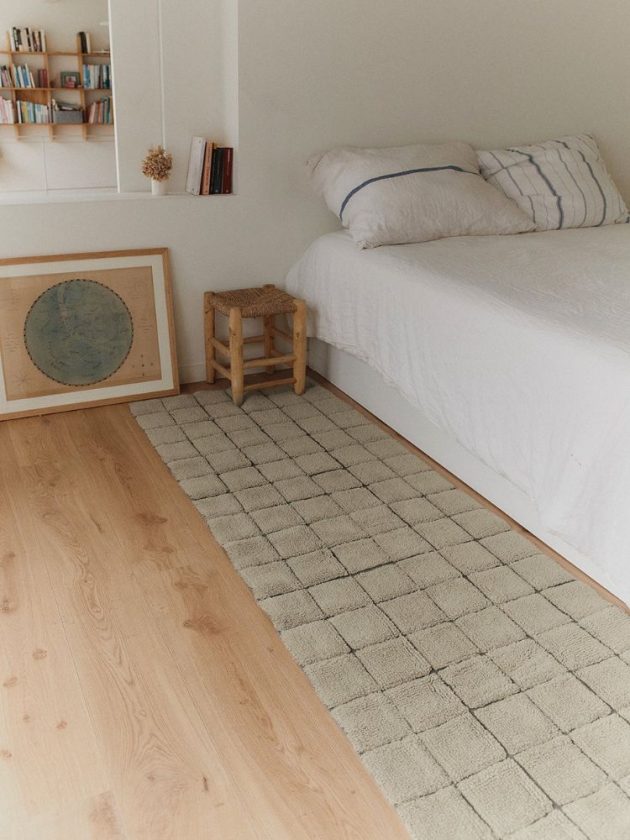
Best for: Living rooms, entryways and bedrooms
Lorena Canals revolutionized the rug industry with machine-washable cotton and wool rugs that don’t compromise on beauty or sustainability. Handcrafted in the brand’s own factory in India since 1998, each piece uses natural or recycled fibers, non-toxic azo-free dyes certified by GOTS and OEKO-TEX standards, and a water-efficient cone-dyeing method that conserves 75% of water compared to traditional processes. The aesthetic ranges from playful geometric patterns and kitchen tile motifs to minimalist neutral textures in their Woolable collection. With customizable options and designs that celebrate the natural colors of undyed wool, these rugs pair practical washability with artisan craftsmanship, all while supporting the brand’s Sakûla Project school for children in northern India.
Materials: Cotton, Wool
Price Range: From $145
Shipping: Global | Outside of US and Canada? Use this website to order instead.
3. CICIL
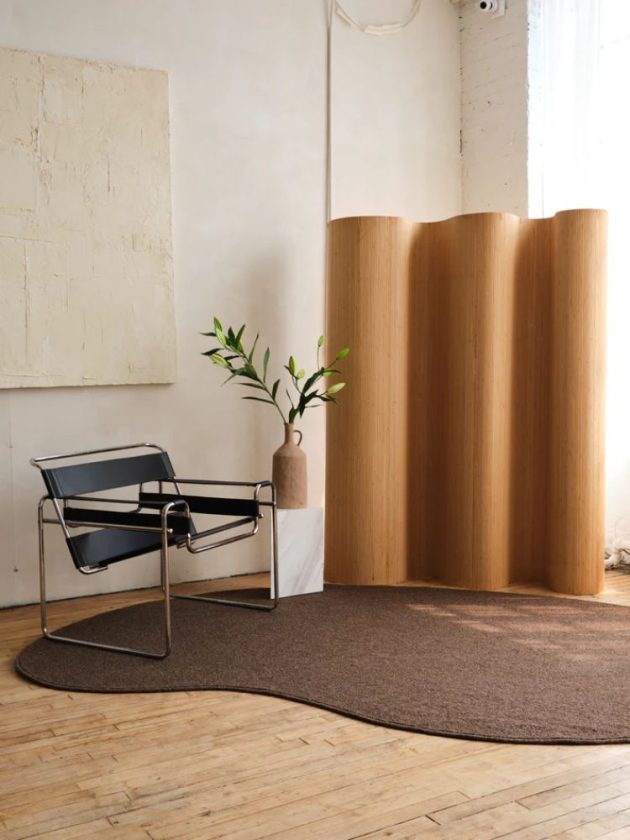
Best for: Living rooms, bedrooms, hallways, and dining rooms
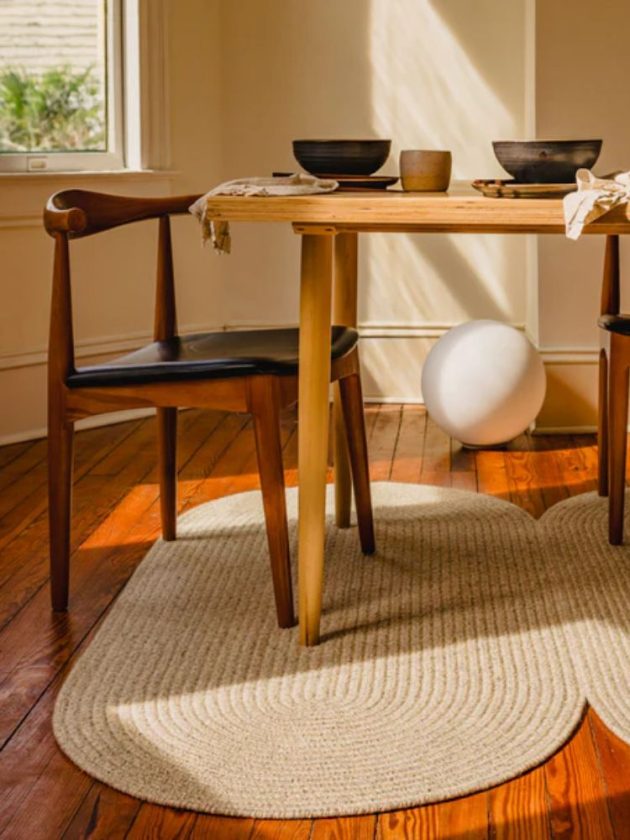
Founded by two former Patagonia textile experts in North Carolina, Cicil brings radical transparency to rug-making with a supply chain that travels less than 1,000 miles from wool to floor. Their braided and shuttle weave rugs use 70% undyed wool sourced directly from small family farms across upstate New York, Pennsylvania, and Vermont, combined with 30% jute for durability. With shapes ranging from linear and oval to curvy and arch designs, each piece celebrates natural wool tones—from deep grays to warm beiges—without any synthetic dyes or finishes. Made in the Carolinas using traditional techniques on vintage looms, Cicil’s approach is intentionally “anti-innovation,” focusing instead on time-tested methods that create rugs built to biodegrade gracefully after a lifetime of use.
Materials: Wool, Jute
Price Point: From $459
Shipping: Ships within the US (all orders ship free)
4. West Elm Fair Trade Certified
Best for: Living rooms, dining rooms, offices, or bedrooms
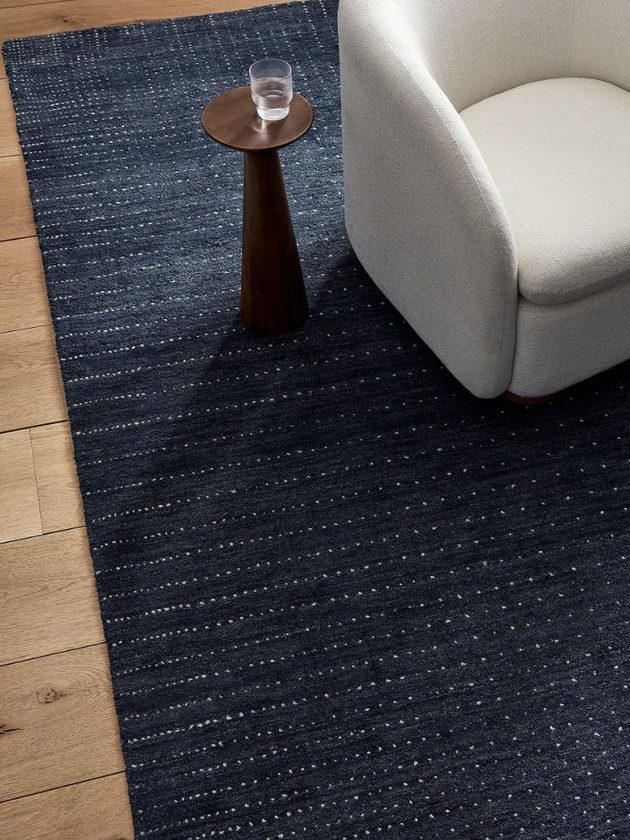
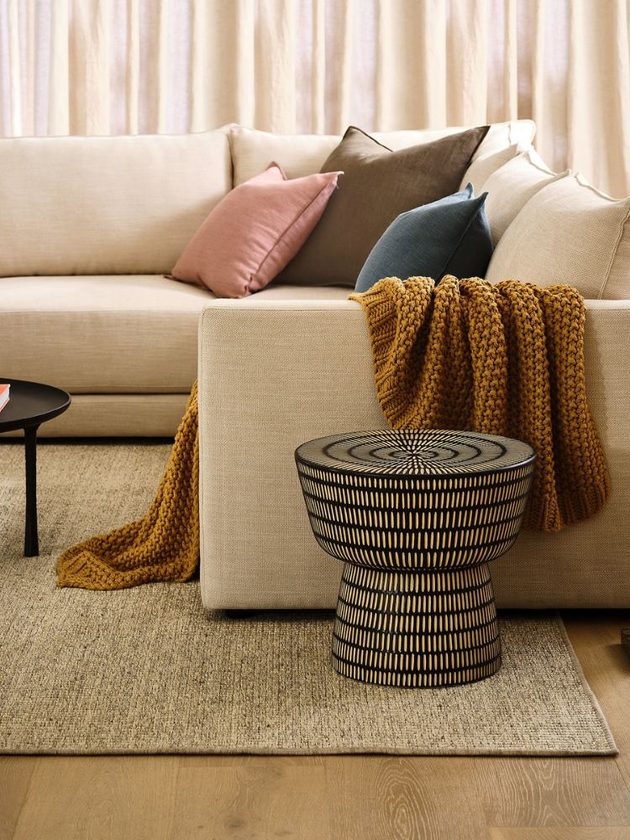
I tend to put large retailers, like West Elm, through much stricter scrutiny in my vetting process because they have larger supply chains which makes transparency much more difficult. It’s easy to know your factory without a certification if you work with one or two facilities. It’s much harder when you work with 20 — or 200. That’s why I appreciate that West Elm has such an extensive selection of rugs made in verified Fair Trade Certified factories.
Most of West Elm’s rugs are also made from 100% natural materials like sisal, jute, wool, and cotton. Though like most companies, their “Performance Rugs” are made with polyester. West Elm does use 90-100% recycled polyester for these rugs which makes it a lower impact choice from a carbon emissions point of view. It may still shed microplastics, but if you have pets that could be worth the trade-off for you to have a durable rug.
Note that West Elm does not have non-toxic related certifications for most of their rugs, so this can be a great choice if you value aesthetic variety, ethical production, and natural materials, but if your top priority or concern is that the rug was tested for potentially harmful chemicals, West Elm might not be the right fit for you.
Materials: Wool, Jute, Sisal, Cotton (Performance rugs use recycled polyester)
Price Point: From $459
Shipping: Ships within the US and select other countries
5. Schoolhouse
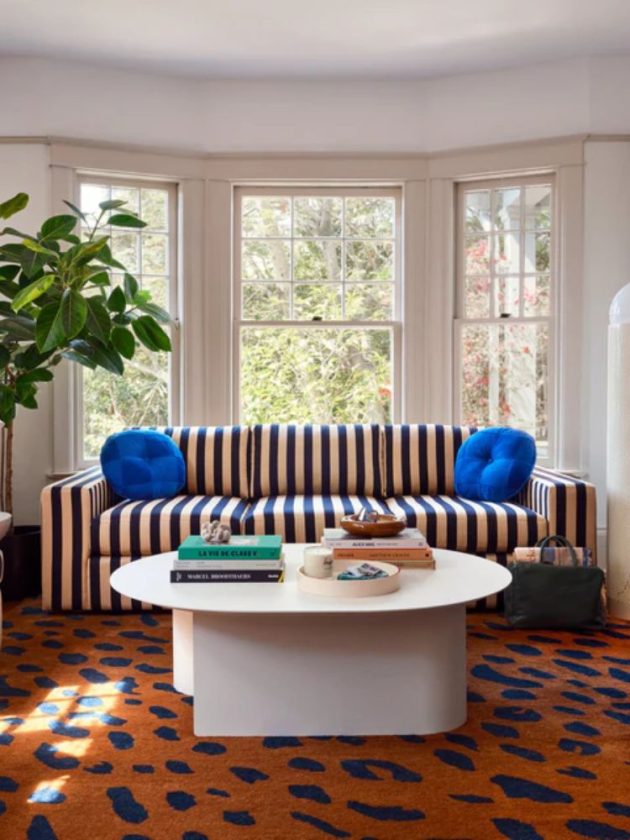
Best for: Bedrooms, living rooms, and dining rooms
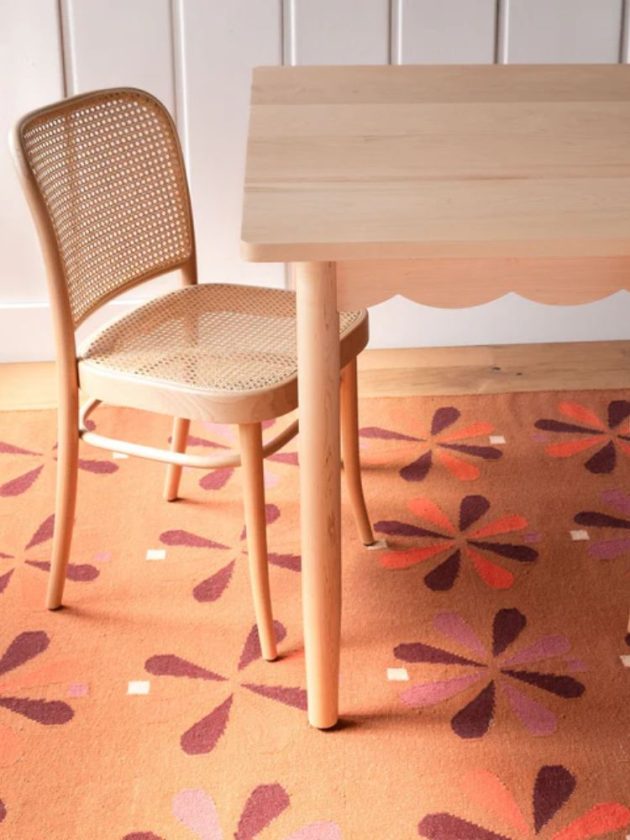
Schoolhouse brings American design sensibility to handcrafted rugs woven in India using natural materials. Their collection spans hand-knotted wool pieces with vivid, whimsical patterns like the Sundrop design to reversible flatweave plaid styles perfect for layering. Natural-dyed wool yarn creates rich, enduring colors—from burnt orange and chartreuse to soft neutrals—while jute-chenille blends offer versatility underfoot without the typical scratchiness. With 80% of their assortment domestic and FSC-certified materials across their product lines, Schoolhouse prioritizes reducing carbon emissions through consolidated shipping and minimal plastic packaging.
Materials: Wool, Jute, Cotton, Recycled PET (note: PET is plastic, so this isn’t our top recommendation)
Price Range: From $79
Shipping: Ships to all US States and Canada
6. Nestig
Best for: Nurseries and playrooms
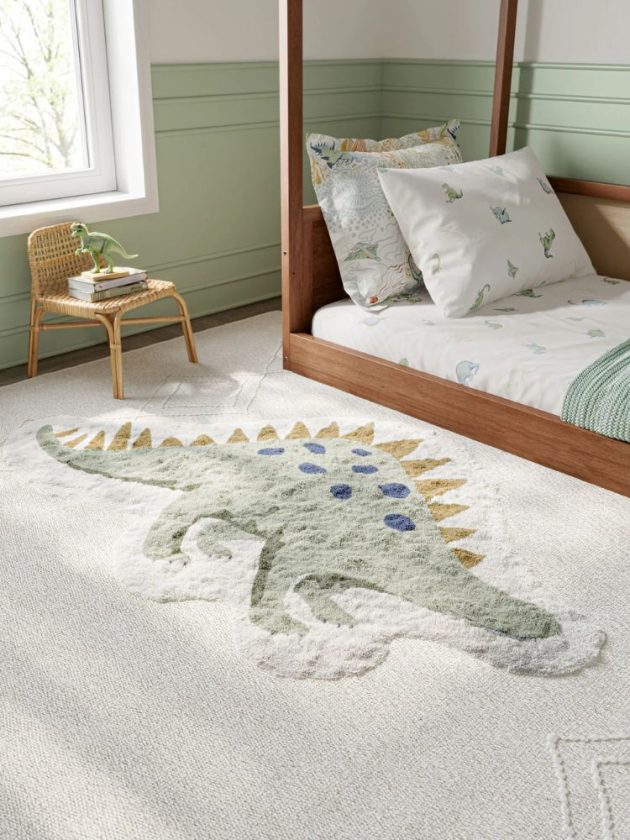
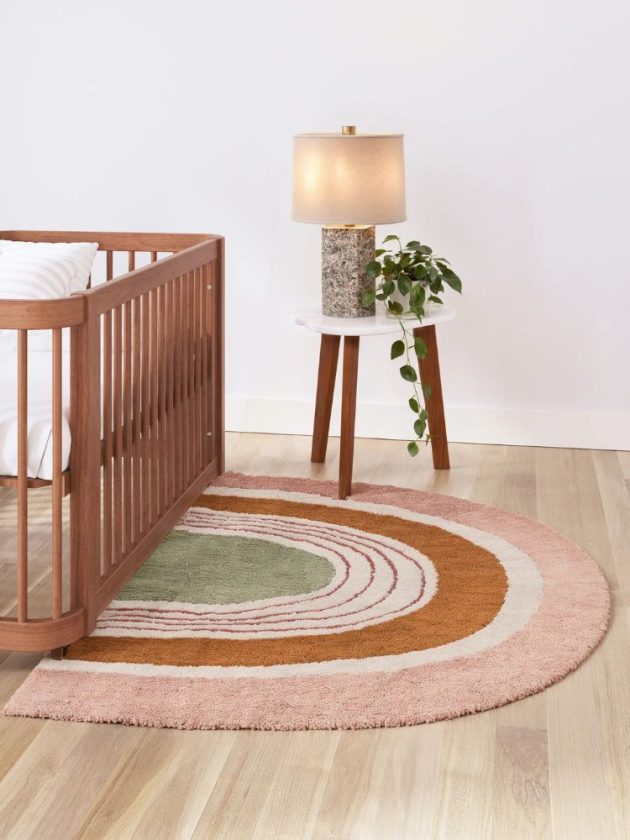
Nestig transforms nursery floors with whimsical, machine-washable rugs that parents actually want to clean. Hand-loomed in Brazil by local artisans with over 20 years of experience, each piece uses 100% GOTS-certified organic cotton grown locally and dyed with non-toxic pigments. The designs range from playful vehicles (dump trucks, airplanes, sailboats) and animals (dinosaurs, bears) to sophisticated geometric patterns and world maps. Nestig operates on a “just enough” business model that minimizes warehouse inventory and carbon footprint, partnering exclusively with sustainable, family-owned businesses. Every rug arrives as a truly one-of-a-kind piece with natural variations that come from artisan craftsmanship.
Materials: Organic Cotton
Price Range: From $399
Shipping: Ships to US, Canada, and the UK
7. Salem Hello
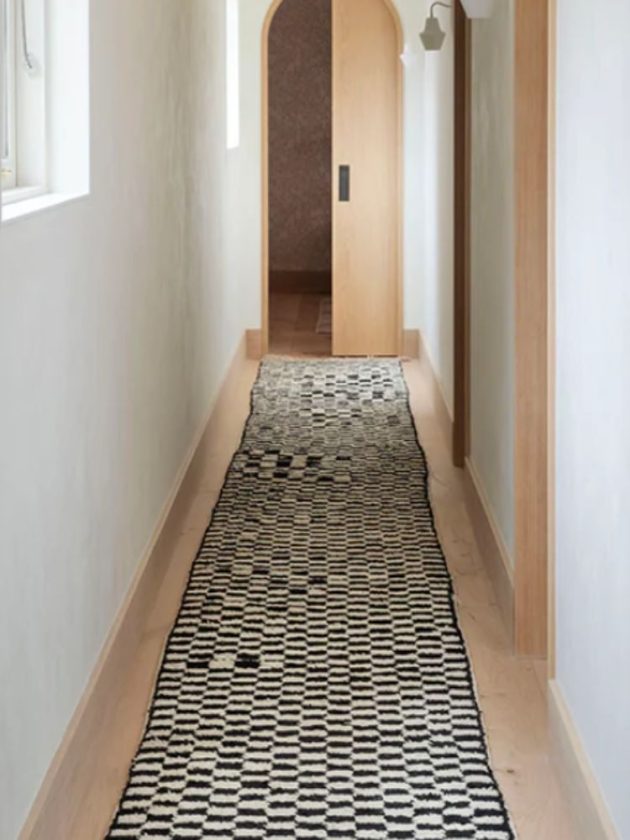
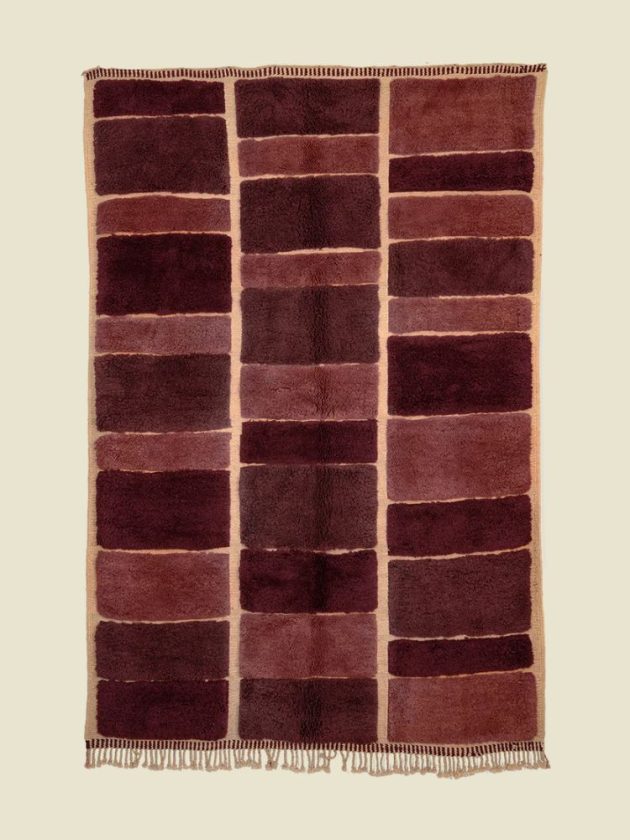
Best for: Living rooms, bedrooms, hallways and statement spaces
Salam Hello bridges the gap between Moroccan artisan tradition and contemporary homes with transparency at its core. Each handwoven rug is crafted by Amazigh women in Morocco’s Atlas Mountains, preserving techniques passed through generations while ensuring fair wages and artisan recognition. The collection includes ready-to-ship vintage and new pieces alongside made-to-order designs where you choose size, color, and pattern. From neutral flatweaves and textured hand-knots to bold geometric designs rich in traditional symbolism, every rug carries protective meaning woven into its fibers. With collaborations like their Izra collection with General Assembly and the Atlas Form line, Salam Hello offers refined modern interpretations alongside authentic traditional styles.
Materials: Wool
Price: From $625
Shipping: Ships Worldwide
8. Organic Weave
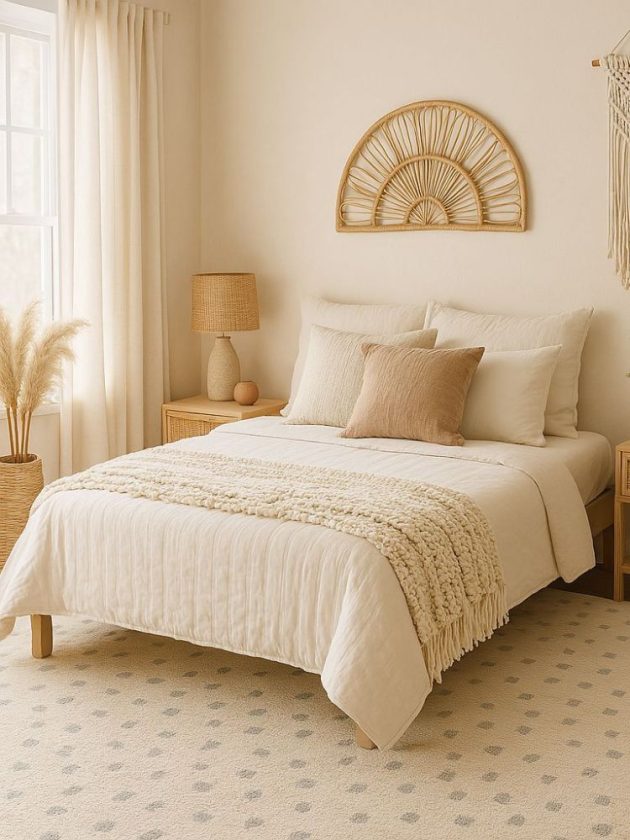
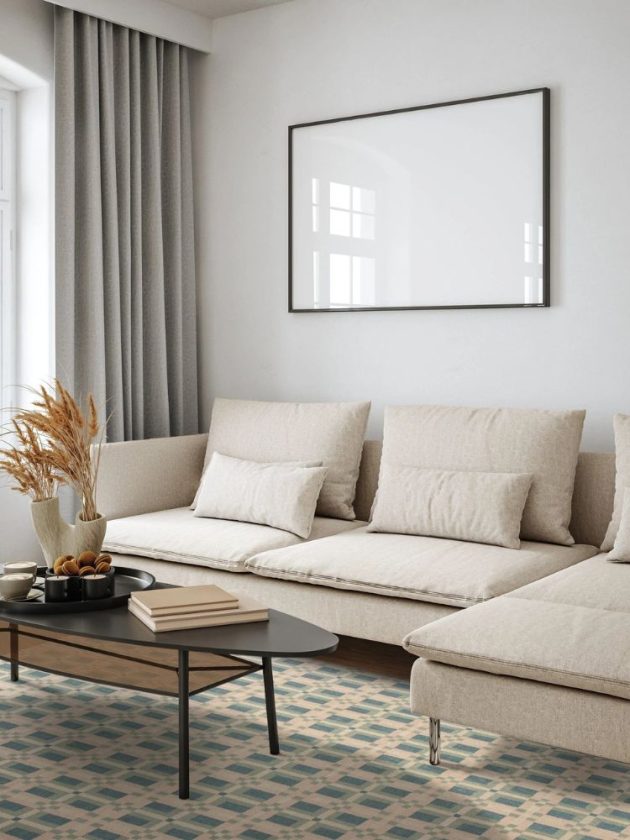
Best for: Living rooms, bedrooms, and kids’ rooms
Organic Weave was born after founder Linda witnessed child labor at the rug manufacturers in India her family’s rug business was sourcing from. When Linda became the buyer at her family’s company, she started sourcing exclusively from the only supplier that was committed to not employing children.
Today, Organic Weave is GoodWeave certified — a certification providing additional assurance there isn’t child labor in the supply chain. And as the name suggests, the sustainable rug company also uses organic materials: 100% organic wool for high-traffic areas like living rooms and 100% organic cotton for lower traffic areas like bedrooms. Their handmade, artisan crafted rugs are Global Organic Textile Standard Certified too.
Materials: Organic Cotton, Organic Wool
Price Range: From $1,789
Shipping: Ships Worldwide
9. LOOMY
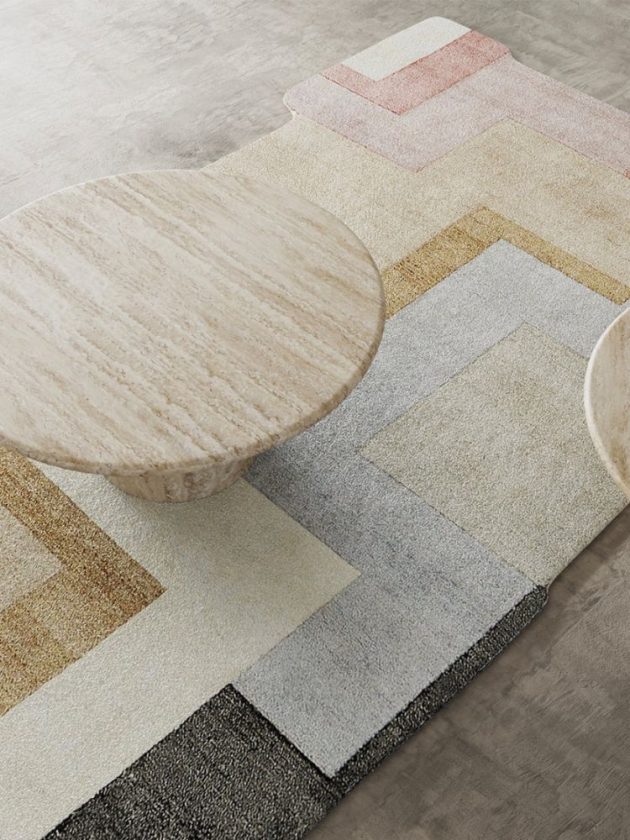
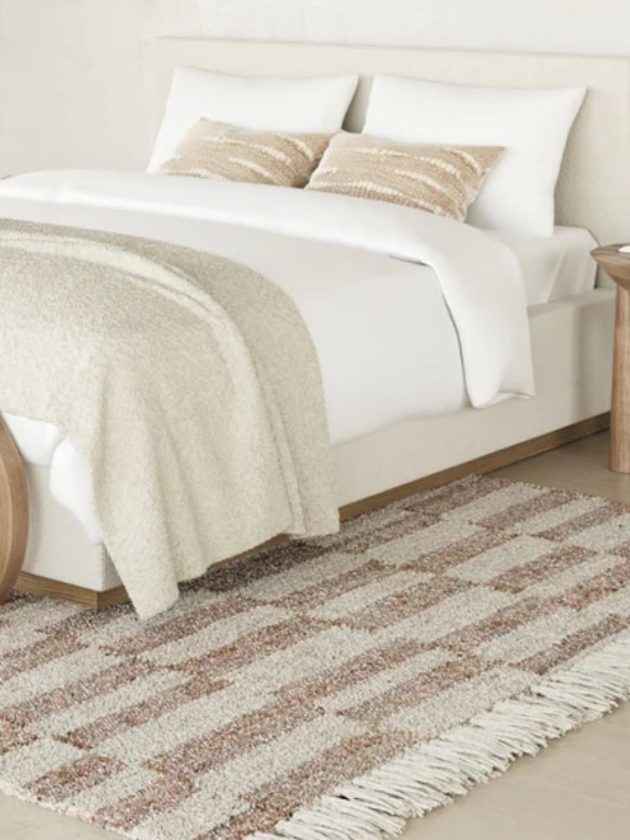
Best for: Living rooms, bedrooms, and dining rooms
LOOMY proves that sustainable doesn’t mean sacrificing style with a curated collection of contemporary rugs made entirely by hand from indigenous artisan weaving communities worldwide. Their natural fiber collection includes wool, jute, cotton, hemp, and sisal rugs alongside performance options crafted from recycled P.E.T. plastic diverted from oceans and landfills. From shaggy textures and bold geometric patterns to minimalist flatweaves, every design is exclusively created in-house and made without mechanical assistance, using traditional spinning, natural dye baths under the sun, and generations-old loom techniques. The brand’s transparency extends to sharing exactly who made each rug, how many hours it took, and the sustainable materials used.
Materials: Wool, Jute, Cotton, Hemp, Sisal, Recycled P.E.T.
Price Range: From $278
Shipping: Ships to all US States and Canada
10. Revival
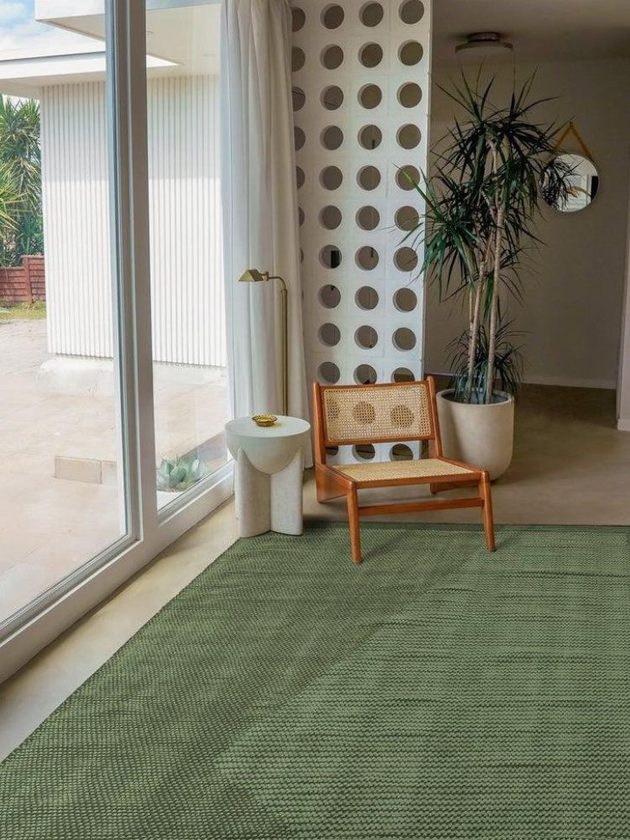

Best for: Living rooms, bedrooms, and dining rooms
Originally founded as a vintage rug curator, Revival now makes a wide range of affordable, beautiful rugs for all needs, whether you have kids, pets, or just want an easy-care washable rug.
Not all options from Revival are sustainable, and some are made from virgin polyester, so for natural fibers I’d direct you to their Wool Rugs collection and Jute Rugs collection, including their naturally dyed jute rugs. Revival also carries one-of-a-kind rugs, which include vintage options.
Materials: Wool, Jute, Recycled Polyester (also has some rugs made with new polyester, which I’d avoid)
Price Range: From $169
Shipping: Ships to contiguous US and selected other international destinations
Honorable Mentions: More Sustainable Rug Options
Here are some additional companies with sustainable rugs to check out! These didn’t make the “top 10” list based on our criteria, but you might have different priorities. So if you’re not finding what you’re looking for above, I recommend taking a look at this list too.
Hook and Loom: if you’re looking for a non-toxic organic rug, Hook and Loom has undyed organic cotton and natural wool rugs made without added chemicals. Their website doesn’t have the most modern user experience, which can make shopping a bit more cumbersome, but the brand has thousands of positive reviews.
Sabai: Sabai’s all-natural textured rugs are crafted from jute and wool in North Carolina by skilled rug makers. They are one of the few companies to manufacture their rugs in the US. That said, the rug does appear to be on the thinner side considering the price point.
The Citizenry: Hand-knotted and hand-loomed by artisan partners across the globe from Morocco to Peru each piece blends modern minimalist design with time-tested techniques passed down through generations. The Citizenry’s collection features everything from plush, textured wool designs to natural jute pieces, and the retailer guarantees 100% fair trade standards on every product, partnering directly with artisan communities. However, many customers complain online about slow shipping and poor customer service, so that’s something to keep in mind before purchasing.
Yaya & Co: this brand has some high sustainability standards like 100% organic certified materials and production in a Fair Trade Certified family-owned factory! Their designs are quite colorful and fun too, which isn’t always easy to find with organic materials. Their selection is more limited compared to the other brands and retailers, which is the only reason they didn’t make it onto the top 10 list.
The post 10 Best Sustainable Rugs For a Healthier Home and Planet appeared first on Conscious Life & Style.



-

 Greenhouse Gases2 years ago
嘉宾来稿:满足中国增长的用电需求 光伏加储能“比新建煤电更实惠”
-
Climate Change1 year ago
Guest post: Why China is still building new coal – and when it might stop
-
Greenhouse Gases1 year ago
Guest post: Why China is still building new coal – and when it might stop
-

 Climate Change2 years ago
嘉宾来稿:满足中国增长的用电需求 光伏加储能“比新建煤电更实惠”
-

 Renewable Energy11 months ago
Sending Progressive Philanthropist George Soros to Prison?
-
Climate Change2 years ago
Bill Discounting Climate Change in Florida’s Energy Policy Awaits DeSantis’ Approval
-
Greenhouse Gases1 year ago
嘉宾来稿:探究火山喷发如何影响气候预测
-

 Climate Change2 years ago
Analysis: China’s CO2 falls 1% in Q2 2024 in first quarterly drop since Covid-19