A major ocean conference has ended in Mombasa, Kenya, with just a handful of countries committing to high-level political declarations on banning deep-sea mining, protecting climate-resilient coral reefs and combatting illegal fishing.
The Our Ocean Conference (OOC) brought together more than 5,000 delegates to discuss marine issues and make voluntary commitments to advance ocean sustainability.
It was the first time in the conference’s 11 editions that it had been held on African soil.
African countries played an “important leadership role” at the talks, observers told Carbon Brief, helping to drive ambition on fisheries transparency, a precautionary pause on deep-sea mining and developing proposals for marine protected areas on the high seas.
Across the three-day conference, attendees also made 320 separate commitments, including new funding for scientific research, improving waste-management programmes to reduce marine pollution and mapping Indigenous groups’ customary waters.
Some of these commitments were accompanied by announcements of new funding, with a total of $6.4bn “mobilised” across all pledges.
Several non-governmental organisations also released new reports during the conference, on topics ranging from the implementation of marine protected areas to “climate-resilient” coral reefs.
Observers told Carbon Brief that the commitments and discussions at the conference were “positive steps”, but added that these pledges must now be backed up by action.
During the opening ceremony, former US secretary of state John Kerry urged delegates to move “from commitments to implementation”.
Here, Carbon Brief outlines the key takeaways from the OOC across five major climate-related topics.
Background
The OOC was first held in Washington DC in 2014, where it was championed by Kerry.
The conference aims to “identify action-based solutions and make tangible commitments” towards addressing key issues facing the ocean, such as climate change and overfishing. It does so through voluntary commitments made by governments, non-governmental organisations, civil society groups and others.
These commitments align with the six “pillars” of the conference:
- The ocean-climate nexus
- Marine pollution
- Marine protected areas
- Maritime security
- Sustainable blue economy
- Sustainable fisheries
Since then, the conference has been held annually (with the exceptions of 2020 and 2021 during the Covid pandemic), with the host city changing every year.
Each edition of the conference is very different, attendees told Carbon Brief, and the host country plays a large role in setting the conference’s priorities.
For example, at the 2024 conference, held in Athens, Greece, shipping and sustainable tourism were discussed at length alongside the six existing pillars.
At this year’s summit, extra attention was paid to the roles of local communities in achieving a “healthy” ocean.
Since 2025, the conference has had its own dedicated secretariat, hosted at the research organisation, the World Resources Institute (WRI). (Prior to that, the US Department of State acted as the de-facto secretariat.)
Conference participants told Carbon Brief that the OOC has been “highly successful” in achieving its aims over the past decade.
An analysis of the first 10 years of the conference, published by WRI in 2025, found that of a total 2,618 commitments made at the OOC, around 1,130 had been completed and a further 1,005 were in progress.
In Mombasa this year, 104 countries and organisations made a total of 320 voluntary commitments. More than one-quarter of these commitments were made in the “sustainable blue economy” action area.
According to the preliminary report released by the secretariat at the conclusion of the OOC, the commitments made at the conference represent $6.4bn in “mobilised” finance. However, it is unclear from the report how much of this figure is new committed funding.
Marine protected areas
Marine protected areas (MPAs) are one of the six key action areas of the Our Ocean Conference.
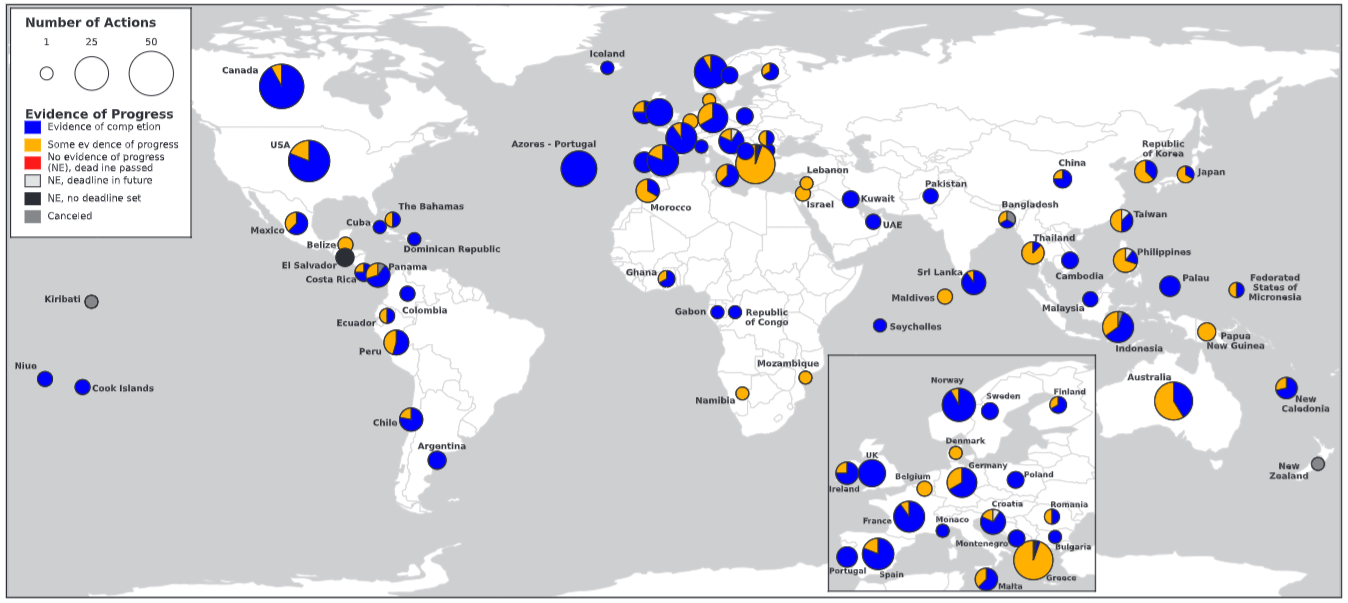
A June 2026 independent assessment of the MPA-related commitments at previous editions of the OOC found that the conference has “made an outsized contribution to global marine conservation efforts”.
According to the analysis, more than one-third of the Earth’s MPAs stemmed from announcements made at the OOC – a total area of more than 10m square kilometres (km2).
This progress is the result of nearly two-thirds of MPA-related OOC commitments already fully implemented, the assessment says, while most of the remaining commitments “show evidence of progress”.
If all pledged MPAs were to be implemented, it would represent protection for around 14.4m km2 or 4% of the ocean.
The chart below shows the number of pledged actions related to MPAs and other area-based conservation methods that were pledged at the OOC between 2014 and 2025, coloured by the progress made on each commitment.
Several groups announced new MPAs – or the completion of previously announced MPA designations – at the OOC.
These included the establishment this year of two new MPAs in the Juan Fernández region of Chile, protecting a total of around 337,000km2 of ocean, and the approval of the Azores Marine Park, which will span 287,000km2 – making it the largest network of protected areas in the north Atlantic Ocean.
However, despite the progress made in designating MPAs, further work is needed to ensure that these areas are truly protected, experts told Carbon Brief in Mombasa.
A report released by the Smithsonian Tropical Research Institute (STRI) at the summit detailed the “implementation gap” facing MPAs. It noted that “at least half of existing MPAs remain unimplemented or operationally ineffective”, while just 3.5% of the global ocean is “fully and highly” protected.
Closing this gap will require “inclusive, sustained and context-sensitive design, management and funding approaches”, continued the report.
Dr Ana Spalding, the director of STRI’s Adrienne Arsht community-based resilience solutions initiative, told Carbon Brief that, while MPAs are typically evaluated based on their biodiversity outcomes, the communities that rely on ocean ecosystems are also very important to consider. Focusing on just one aspect or the other will result in an MPA that is not effective, she added:
“There’s going to be a sweet spot between the two.”
High Seas Treaty
The Agreement on the Conservation and Sustainable Use of Marine Biological Diversity of Areas Beyond National Jurisdiction – also known as the BBNJ Agreement or the High Seas Treaty – entered into force on 17 January 2026.
This followed the treaty, achieving the necessary 60 state ratifications on 19 September 2025. The week before the OOC, the east African nation of Comoros became the 90th party to ratify the agreement.
The first Conference of the Parties for the High Seas Treaty will be held in January 2027 in New York City. At that meeting, parties will be tasked with creating the rules of procedure, establishing the subsidiary bodies and carrying out other foundational work.
Because so many key decisions will be made at this COP1, it is “imperative” to have as many ratifications as possible before the conference begins, said Rebecca Hubbard, director of the High Seas Alliance, a coalition of non-governmental organisations that advocates for protection of the high seas. She added:
“We hope that well over 100 countries will be party to the agreement by COP1, so that they can be at the decision-making table.”
One of the key provisions of the High Seas Treaty is that it creates a mechanism for countries to establish MPAs in international waters. This will be key to achieving the “30 by 30” target of protecting 30% of the world’s land and oceans by 2030, Hubbard told Carbon Brief.
However, establishing a high-seas MPA under the agreement requires a thorough process, including a review by a scientific and technical subsidiary body, a consultation with parties and a vote by the COP. Thus, in order to achieve the “30 by 30” target, parties will need to act swiftly to begin the process of establishing high-seas MPAs, according to Hubbard. She said:
“It will be very, very tight. It’s definitely possible, but it requires really strong government leadership and prioritisation.”
She added that it is “essential” that governments begin forming proposals for high-seas MPAs before the COP meets in January, noting that some countries are already doing so.
At a side event on 16 June, representatives from South Africa and the EU detailed plans to propose a high-seas MPA that would link two existing protected areas in the sub-Antarctic – one South African and one French. Hubbard told Carbon Brief:
“That’s a really great example of what we can do with the High Seas Treaty – having developed and developing countries working together, sharing knowledge [and] developing scientific approaches together. I think that’s the hopeful future, collaboration [and] cooperation, that the High Seas Treaty really provides.”
Also at the summit, Senegal, Mauritania, the Gambia and Guinea-Bissau committed to creating “at least two” transboundary west African MPAs.
Deep-sea mining
Although deep-sea mining was not a major focus of the Mombasa talks, it did feature at several side events.
At a reception held by the Deep Sea Conservation Coalition (DSCC), Prof Rashid Sumaila of the University of British Columbia said the “wrong question is being asked” about deep-sea mining. He continued:
“It’s not whether they have the minerals, it’s whether extracting them gives a net-positive impact.”
Sumaila added that evaluating the risk of deep-sea mining will require a cost-benefit analysis that is as “broad and inclusive as possible”.
At the same reception, the foreign-affairs minister of Malawi, Dr George Chaponda, announced the country’s support of a “precautionary pause” on seabed mining in international waters. This would prohibit mineral exploration in such areas until there is robust scientific evidence showing limited environmental harm.
In doing so, Malawi became the first African country to support such a pause – and the 41st country overall to support a precautionary pause or moratorium on the activity.
Chaponda told the assembled guests that Malawi’s existence as a landlocked country did not preclude its involvement in the deep-sea debates, urging:
“To my fellow landlocked states: geography does not diminish our stake in the ocean.”
Later in the week, Kenya and Madagascar also announced their support for such a pause.
In a statement, David Willima, the Africa lead at DSCC, said:
“The leadership shown by Malawi, Kenya and Madagascar sends a vital signal that African nations are stepping forward to defend the deep ocean and are unwilling to accept the risks of deep-sea mining.”
Coral reefs
At the third UN Ocean Conference (UNOC), held in Nice, France, in June 2025, 11 countries and several partner organisations launched the high-level commitment to protect “climate-resilient” coral reefs.
These are reefs that, according to scientists, have the “best chance of long-term survival in the face of climate change”.
(UNOC occurs every three years and is specifically focused on achieving the UN Sustainable Development Goal on sustainable ocean use. Unlike the OOC, UNOC results in a negotiated political declaration.)
A further four countries signed the commitment in Mombasa: Comoros, the Dominican Republic, Kenya and the UK. According to a representative at the launch event, the goal is to reach 31 signatories – representing 80% of the world’s coral cover – by COP31 in Turkey in November this year.
Signatory governments pledged their commitment to:
- Identifying climate-resilient reefs and prioritising their protection.
- Integrating coral-reef protection into national strategies and plans.
- Enacting policies to reduce the local pressures facing coral reefs, such as overfishing, pollution and overdevelopment.
- Implementing national reef monitoring programmes and action plans.
- Ensuring equity and working with local communities in protecting reefs.
The Mombasa conference also coincided with the presentation of a new study on climate-resilient reefs, covered in the 17 June edition of Carbon Brief’s Cropped newsletter. (The study is currently in the final stages of peer review.)
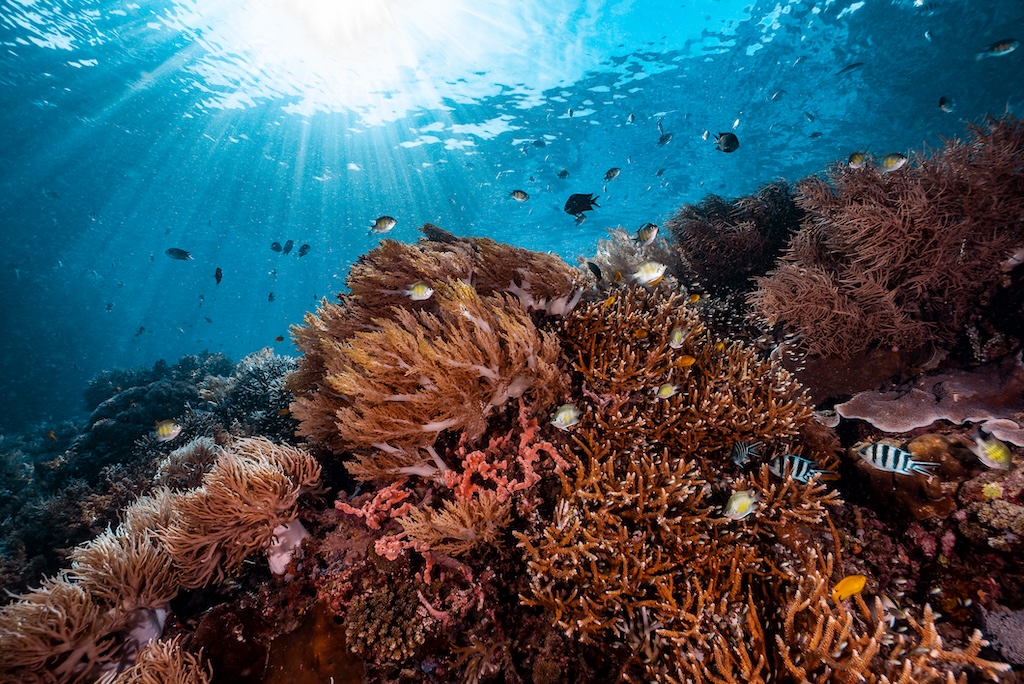
Building on a 2018 project that identified the 50 coral reefs that “form an optimal portfolio of reefs that are most likely to survive climate change”, the new work mapped more than 165,000km2 of coral reefs across 70 countries. These were found to have the best chances of persisting in the face of climate change and a warming, acidifying ocean.
Dr Emily Darling, director of coral-reef conservation at the Wildlife Conservation Society and a co-author of the study, told Carbon Brief that “one of the key things countries can do that have these important reefs is elevate them into national policy” across multiple government sectors.
She added that learning from these reefs will become vital over the coming months as El Niño warms the world’s oceans even further.
Darling told Carbon Brief:
“Climate change is not a single blanket on the world’s oceans. There are a lot of pockets of resilience, there are pockets of revolution for corals, and it’s all about finding those places, and how do we support them through the other local pressures that they experience that we know we can manage.”
Although few monetary coral-related commitments were made at the summit, Norway pledged to allocate NOK 20m ($2m) to the Global Fund for Coral Reefs.
Fisheries
One of the major achievements of the summit was the adoption of the Mombasa Declaration to advance fisheries transparency and combat illegal fishing.
The declaration “recognise[s]” that illegal, unreported and unregulated (IUU) fishing is a major factor driving the unsustainable use of ocean resources and the degradation of marine ecosystems.
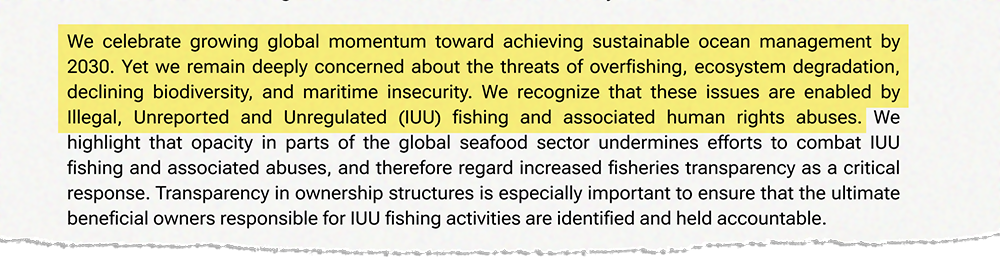
The declaration, which was signed by 16 national governments – eight of them from Africa – commits parties to follow a set of principles laid out in the Global Charter for Fisheries Transparency. This was developed and promoted by a group of civil society organisations known as the Coalition for Fisheries Transparency.
The commitments in the Mombasa Declaration fall within four broad categories:
- Supporting transparency and accountability in the fishing industry.
- Strengthening monitoring of fishing activities and cooperating with enforcement actions.
- Building capacity and supporting implementation of transparency reforms.
- Strengthening ocean-observing systems and promoting the use of open-access data.
The declaration notes that these principles should “apply to and benefit both small-scale and industrial fisheries” and support “broader ocean-management efforts”.
At a press conference announcing the launch of the declaration, Ghanaian fisheries and aquaculture minister Emelia Arthur called it a “global testament of our collective commitment to transparent fisheries”. She emphasised the importance of the sector to all aspects of life, saying:
“Fisheries is nutrition. Fisheries is food security. Fisheries is livelihoods. Fisheries is national security.”
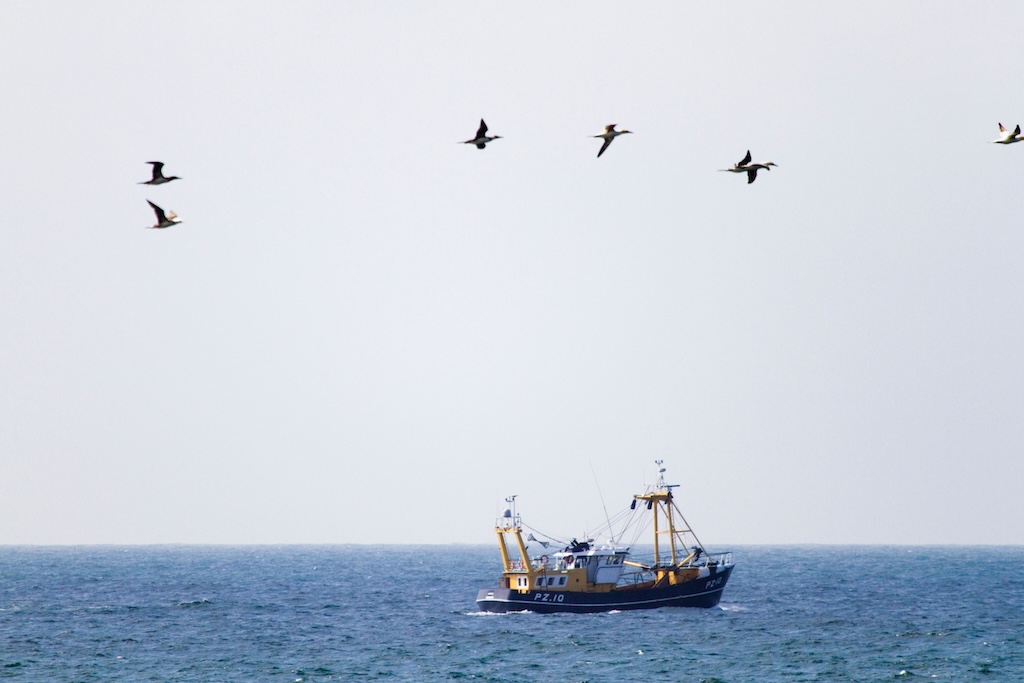
Several civil society organisations, philanthropies, community groups and governments also made separate fisheries-related commitments at the summit.
The EU committed €46m ($52m) through its Horizon Europe research programme to fisheries work, including €32m ($36m) for “adaptive co-management strategies” and €14m ($16m) for research on conservation and sustainable management of migratory fishes.
The EU and Italy both also announced contributions to the European Maritime, Fisheries and Aquaculture Fund.
The government of Kenya made nine fisheries-related pledges at the summit, including committing to train compliance officers dedicated to combatting IUU fishing, developing management plans for all of its commercial fisheries and establishing bycatch mitigation measures.
At the summit, the UN Food and Agriculture Organization launched its biannual “state of world fisheries and aquaculture” report.
According to the report, the world set a new record for fisheries and aquaculture in 2024 – producing a total of 235m tonnes of fish and algae. This total consisted of nearly 92m tonnes of fish from capture fisheries, 103m tonnes of farmed fish and 40m tonnes of algae production.
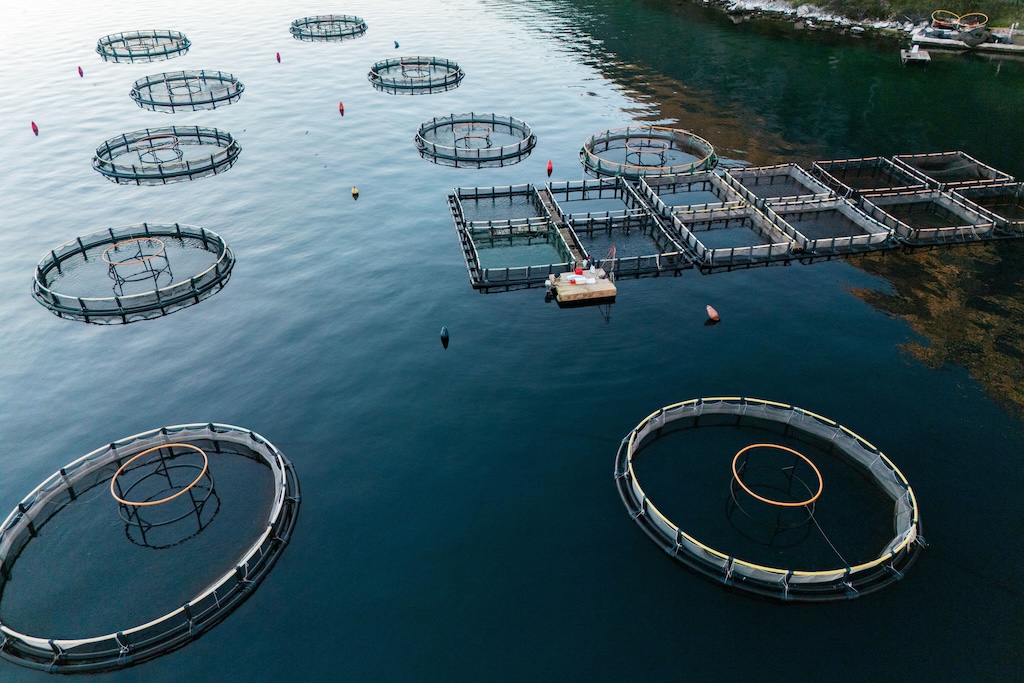
The amount of fish produced by capture fisheries has remained largely stable since 2000, while aquaculture production has increased by an average annual percentage rate of just under 5%, according to the report.
While the largest growth has occurred in Africa, Latin America and the Caribbean, the vast majority of aquaculture production – 89% – occurs in Asia.
The report also says that more than one-third of the world’s marine fish stocks are overfished, with significant variation based on region and species. It adds that climate change may play an increasing role in driving the unsustainability of fisheries in the future:
“Despite the uncertainty of climate risks in the short, medium and long term, studies on the impacts of climate change on aquatic food systems around the world increasingly document the relevance and potential success of adaptation measures, urging decision-makers to integrate climate change considerations into fisheries and aquaculture planning and management.”
The post Mombasa: Key outcomes from the Our Ocean Conference in Kenya appeared first on Carbon Brief.
Mombasa: Key outcomes from the Our Ocean Conference in Kenya

Next week, diplomats from around the world will descend on Yerevan, Armenia, to negotiate a series of decisions under the UN Convention on Biological Diversity (CBD).
Between 19 and 30 October, 196 parties will gather to hammer out the precise wording of the dozens of legal texts that make up the decisions under the Conference of the Parties (COP) to the CBD.
This year’s summit is particularly significant, as it marks the halfway point between the agreement of the Kunming-Montreal Global Biodiversity Framework and the deadline for achieving its targets.
The CBD has found that countries are currently not on track to meet 22 out of the framework’s 23 targets.
During the fortnight, delegates will also be negotiating decisions relating to the two supplemental protocols to the CBD: the Cartagena Protocol, which covers biosafety; and the Nagoya Protocol, which covers access and benefit-sharing for the use of genetic resources.
(The Cartagena and Nagoya Protocols, which are each governed by a “meeting of the parties”, or “MOP”, have fewer parties than the CBD as a whole, with 173 and 141, respectively.)
Carbon Brief is tracking the progress of countries towards consensus on dozens of negotiating texts using the interactive table below.
The tracker includes texts from the COP, as well as the MOPs for the Cartagena and Nagoya protocols. It also includes draft decisions from the most recent subsidiary body meetings, as these form the starting point for the negotiations in Yerevan.
The CBD has three subsidiary bodies: the subsidiary body on scientific, technical and technological advice (SBSTTA), the subsidiary body on implementation (SBI) and the subsidiary body on article 8(j) and other provisions (SB8J).
SB8J focuses on issues related to the Indigenous peoples and local communities. It was established at COP16 in Cali, Colombia, in 2024.
The first two columns of the interactive tracker list the topic of each agenda item and the relevant body, with subsequent columns including dates, page counts and links to the original documents.
The table is searchable and can be sorted using the arrows in the header.
Areas of disagreement in UN draft texts are denoted by square brackets. Counting the brackets in a particular iteration of a text therefore gives a sense of how far parties are from reaching consensus.
The bracket column is colour-coded, with dark green indicating a low number of brackets and red indicating a high number of brackets remaining.
Texts can also present parties with choices using “options” or alternatives (“alt”), which are counted together in the sixth column of the table.
The key discussions in Yerevan will centre around two agenda items in particular. The first is the global review, which will assess progress towards the GBF and make recommendations for accelerating action.
The second is finance, which can be separated into two parts: resource mobilisation and the financial mechanism. On resource mobilisation, biodiverse global south countries are likely to push for an increased amount of international finance for conservation.
Disagreement over the creation of the financial mechanism led to the suspension of COP16 in Cali in October 2024, as parties failed to find agreement on the mobilisation of finance before the end of the summit.
Global south countries want the establishment of a separate financial mechanism under the control of the CBD; global north countries largely prefer to maintain the existing mechanism, which sits under the Global Environment Facility.
At the resumed session of COP16 in Rome in early 2025, countries agreed on a roadmap that would lead to the establishment of a permanent mechanism.