

Between all the scientific work, we celebrated Easter on board, although the weather had other plans for us. Due to rough conditions, we weren’t able to carry out any CTD casts.
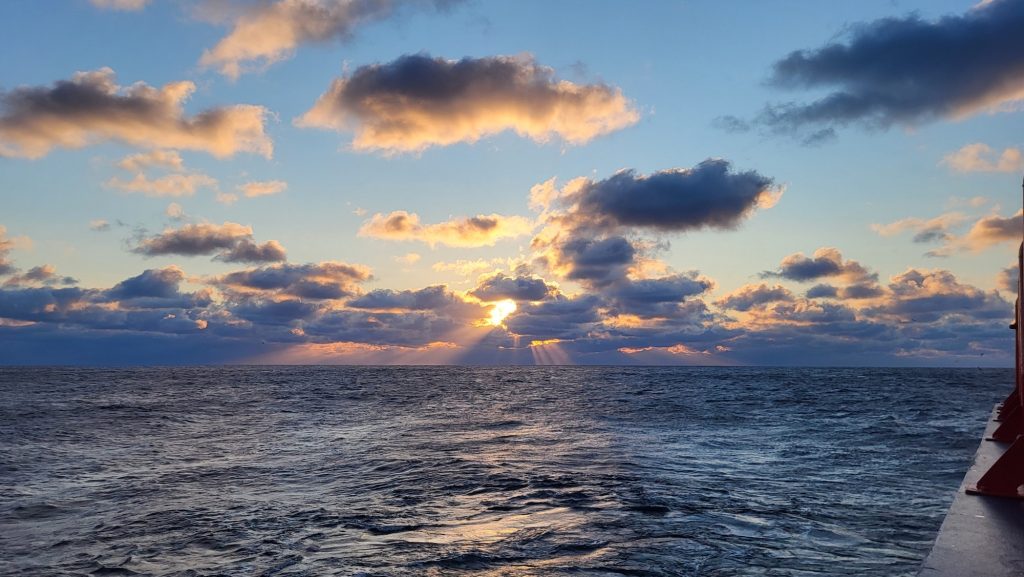
Easter itself was spent in a mix of rest and small celebrations. Some of us enjoyed a long Easter breakfast with traditional Easter bread, while others took the opportunity to sleep in. In the evening, we gathered with both crew and scientists for a small celebration. The ship’s cook even organized a quiz, and those who answered correctly were rewarded with Easter chocolate.
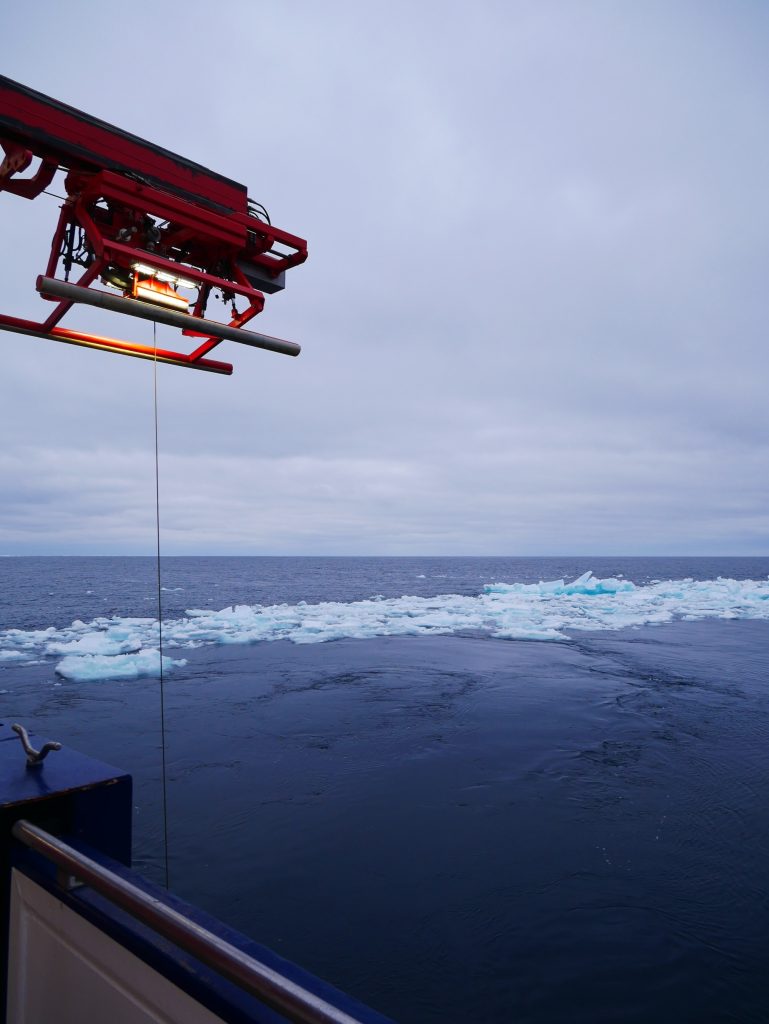
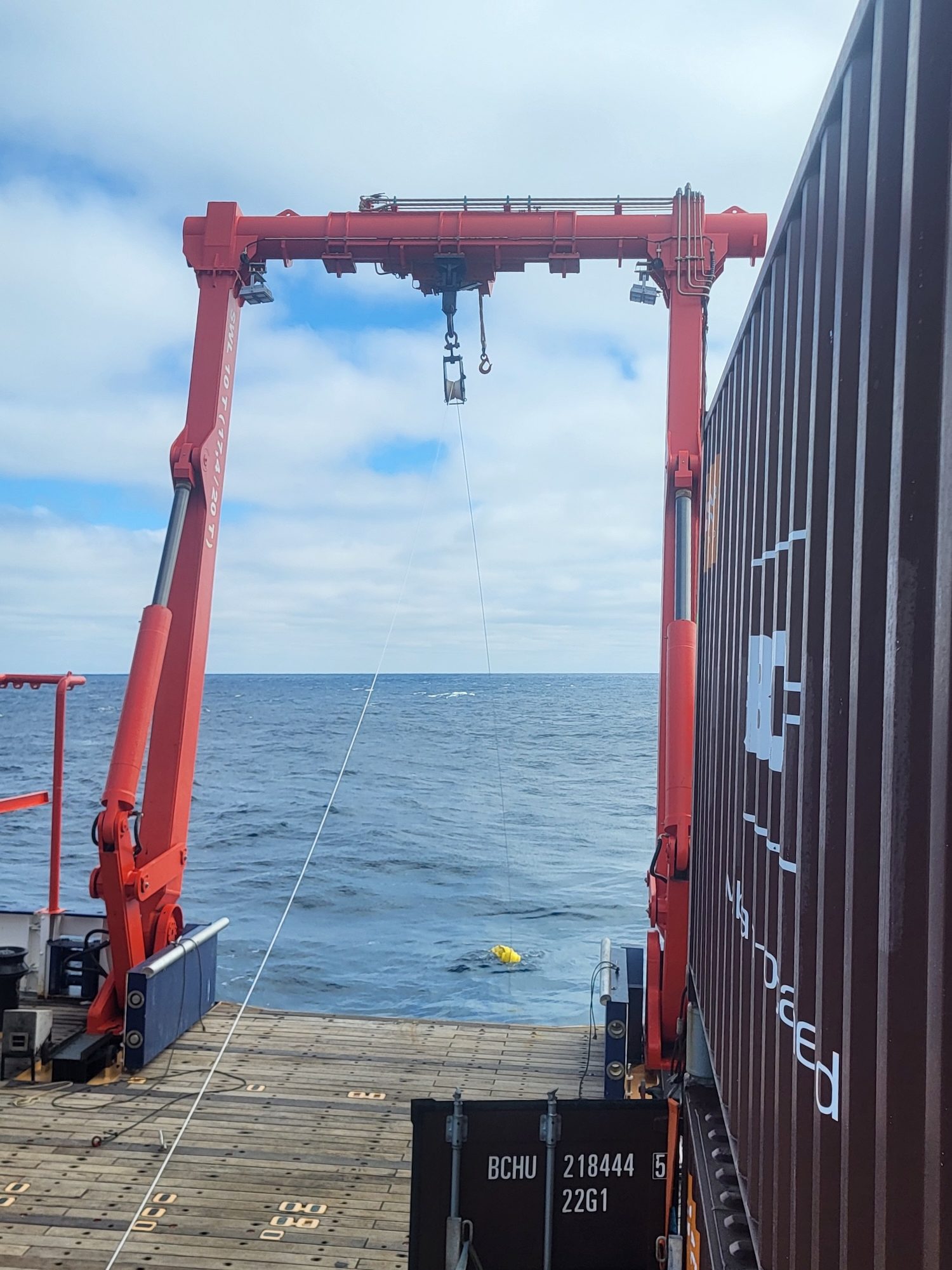
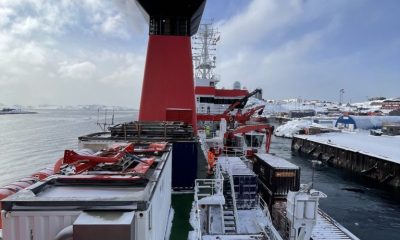
The next day, the weather improved, and we began early with the recovery of K1, a 3,495-meter-long mooring in the middle of the Labrador Sea.
We joined the nautical officers on the bridge before sunrise to search for it. Fortunately, K1 has a floating buoy with a light, so we were able to spot it even in the dark. The actual recovery started at first light, and it began to snow while we were working.
Amid all the CTDs and mooring operations, there was also a personal highlight: my (Sarah’s) birthday. Although I’ve spent birthdays away from home before, this one felt especially unique, being so far out at sea, with only limited internet contact.
Normally, I work the 4-8 shift, but my incredibly kind shift team gave me the morning off. That meant I could sleep in and even find time to call family and friends back home. In the afternoon, I was surprised with my favourite cake, baked by Julia.
Our work continued with the mooring array at 53°N, which consists of seven moorings. So far, we have recovered five (K7, K8, K9, DSOW1 and DSOW2), and three of them have already been redeployed (K7, K8 and DSOW1,).
Deploying K7 turned out to be particularly tricky. On our first attempt, sea ice drifted toward us faster than expected, forcing us to recover nearly half of the mooring again. While the ship itself can handle drifting ice, deploying a mooring is much more delicate: a long cable with instruments and floats is released behind the ship before the anchor is dropped, allowing the system to sink into place.
Two days later, we tried again and this time, the deployment was successful.
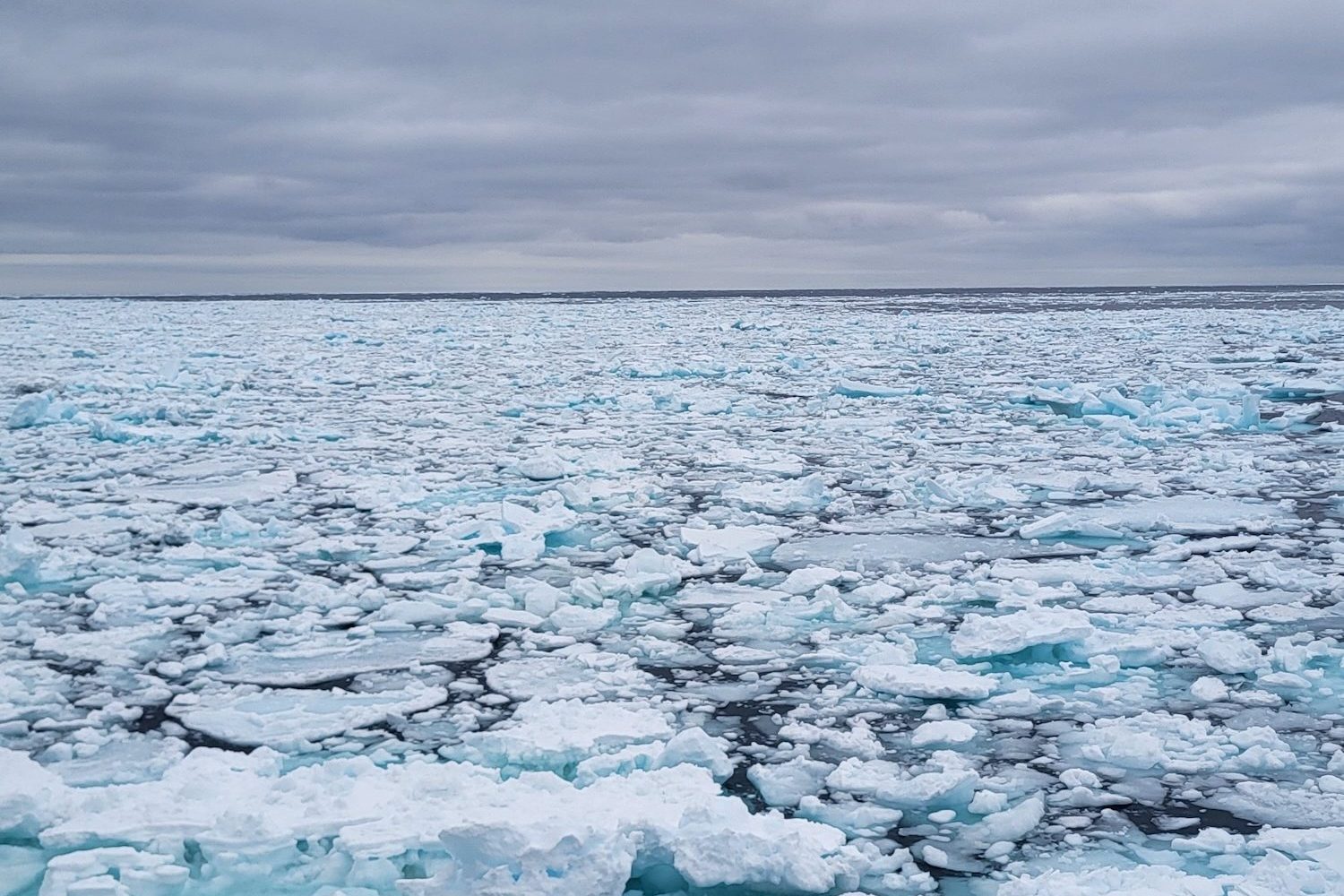
Afterwards, we moved closer to the sea ice, which was a highlight for many of us. Seeing the ice up close and even spotting a seal swimming nearby, made the experience unforgettable.
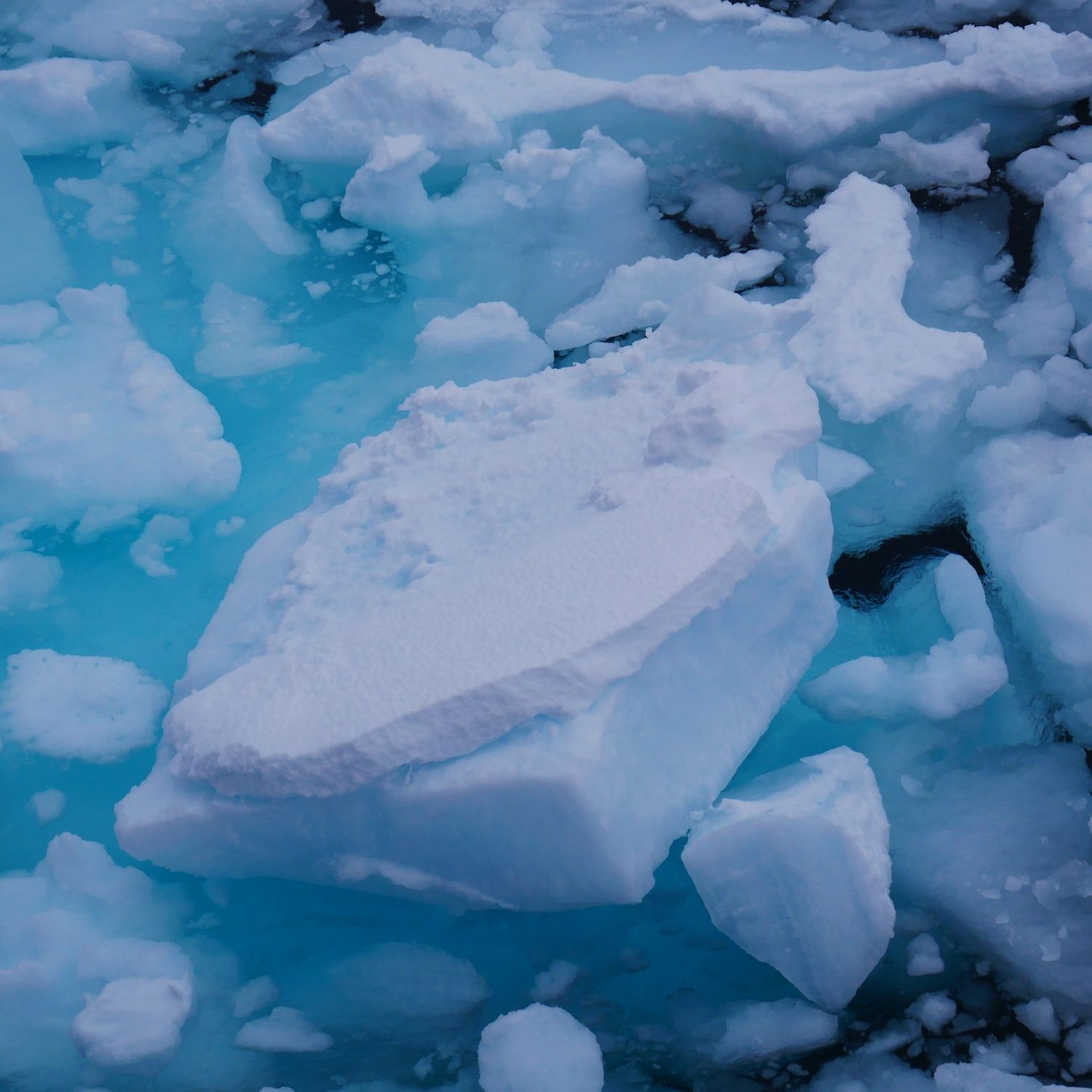
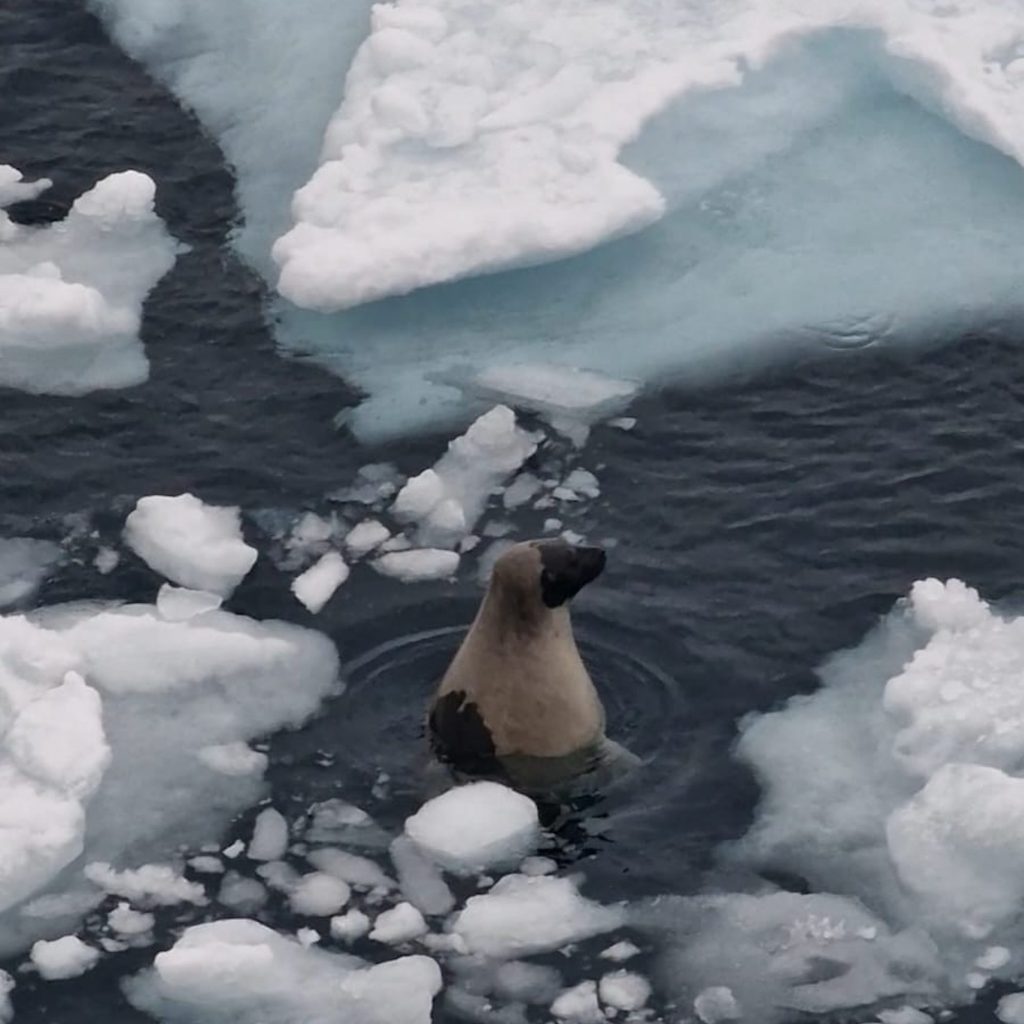
Due to the continuing harsh weather, the decision was made to return to K1 and make use of an upcoming weather window for deployment the following day.
German:
Zwischen Stürmen und Wissenschaft: Ostern in der Labradorsee (04.04.26 – 13.04.26)
Zwischen all der wissenschaftlichen Arbeit haben wir Ostern an Bord gefeiert, auch wenn das Wetter andere Pläne für uns hatte. Aufgrund der rauen Bedingungen konnten wir keine CTD-Messungen durchführen (Messungen von Leitfähigkeit, Temperatur und Tiefe im Ozean).
Ostern selbst war eine Mischung aus Erholung und kleinen Feierlichkeiten. Einige von uns genossen ein ausgedehntes Osterfrühstück mit traditionellem Osterbrot, während andere die Gelegenheit nutzten, etwas länger zu schlafen. Am Abend kamen Crew und Wissenschaftler*innen zu einer kleinen Feier zusammen. Der Koch organisierte sogar ein Quiz, und wer die Fragen richtig beantwortete, wurde mit Oster-Schokolade belohnt.
Am nächsten Tag besserte sich das Wetter, und wir begannen früh mit der Bergung von K1, einer 3.495 Meter langen Verankerung mitten in der Labradorsee. (Eine Verankerung ist eine lange, am Meeresboden befestigter Draht, der mit Instrumenten ausgestattet ist, um über längere Zeit Ozeandaten zu messen.)
Noch vor Sonnenaufgang gingen wir mit den nautischen Offizieren auf die Brücke, um nach ihr Ausschau zu halten. Glücklicherweise verfügt K1 über eine schwimmende Boje mit Licht, sodass wir sie bereits im Dunkeln entdecken konnten. Die eigentliche Bergung begann bei Tagesanbruch und es begann sogar zu schneien.
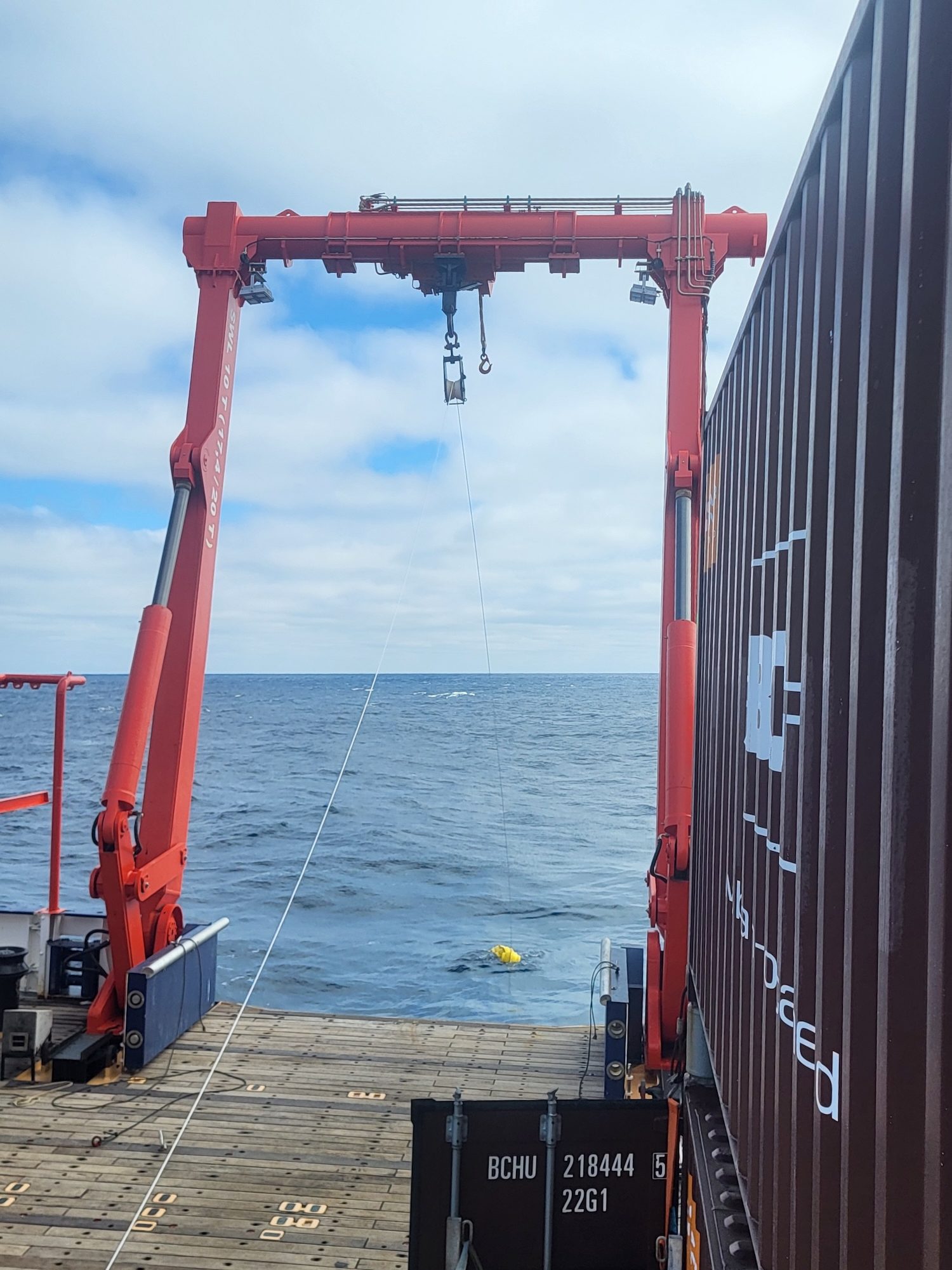
Zwischen all den CTD-Einsätzen und Verankerungsarbeiten gab es auch ein persönliches Highlight: meinen (Sarahs) Geburtstag. Obwohl ich schon öfter Geburtstage fernab von zu Hause verbracht habe, war dieser besonders, so weit draußen auf dem Meer und mit nur eingeschränktem Internetkontakt.
Normalerweise arbeite ich in der 4-8 Uhr Schicht, aber mein unglaublich nettes Schichtteam hat mir den Morgendienst freigegeben. So konnte ich etwas länger schlafen und hatte sogar Zeit, mit Familie und Freunden zu Hause zu telefonieren. Am Nachmittag wurde ich dann noch mit meinem Lieblingskuchen überrascht, den Julia für mich gebacken hat.
Unsere Arbeit ging weiter mit dem Verankerungs-Array bei 53°, das aus sieben Verankerungen besteht. Bisher haben wir fünf geborgen (DSOW1, DSOW2, K7, K8 und K9), von denen drei bereits wieder ausgebracht wurden (DSOW1, K7 und K8).
Das Ausbringen von K7 erwies sich als besonders schwierig. Beim ersten Versuch trieb das Meereis schneller auf uns zu als erwartet, sodass wir fast die Hälfte der Verankerung wieder einholen mussten. Obwohl das Schiff selbst gut durch treibendes Eis navigieren kann, ist das Ausbringen einer Verankerung deutlich anspruchsvoller: Dabei wird ein langer Draht mit Messinstrumenten und Auftriebskörpern hinter dem Schiff ausgesetzt, bevor am Ende der Anker gelöst wird und das gesamte System absinkt.
Zwei Tage später versuchten wir es erneut, diesmal mit Erfolg.
Anschließend fuhren wir näher an das Meereis heran, was für viele von uns ein besonderes Highlight war. Das Eis aus nächster Nähe zu sehen und sogar eine Robbe in der Nähe schwimmen zu beobachten, machte das Erlebnis unvergesslich.
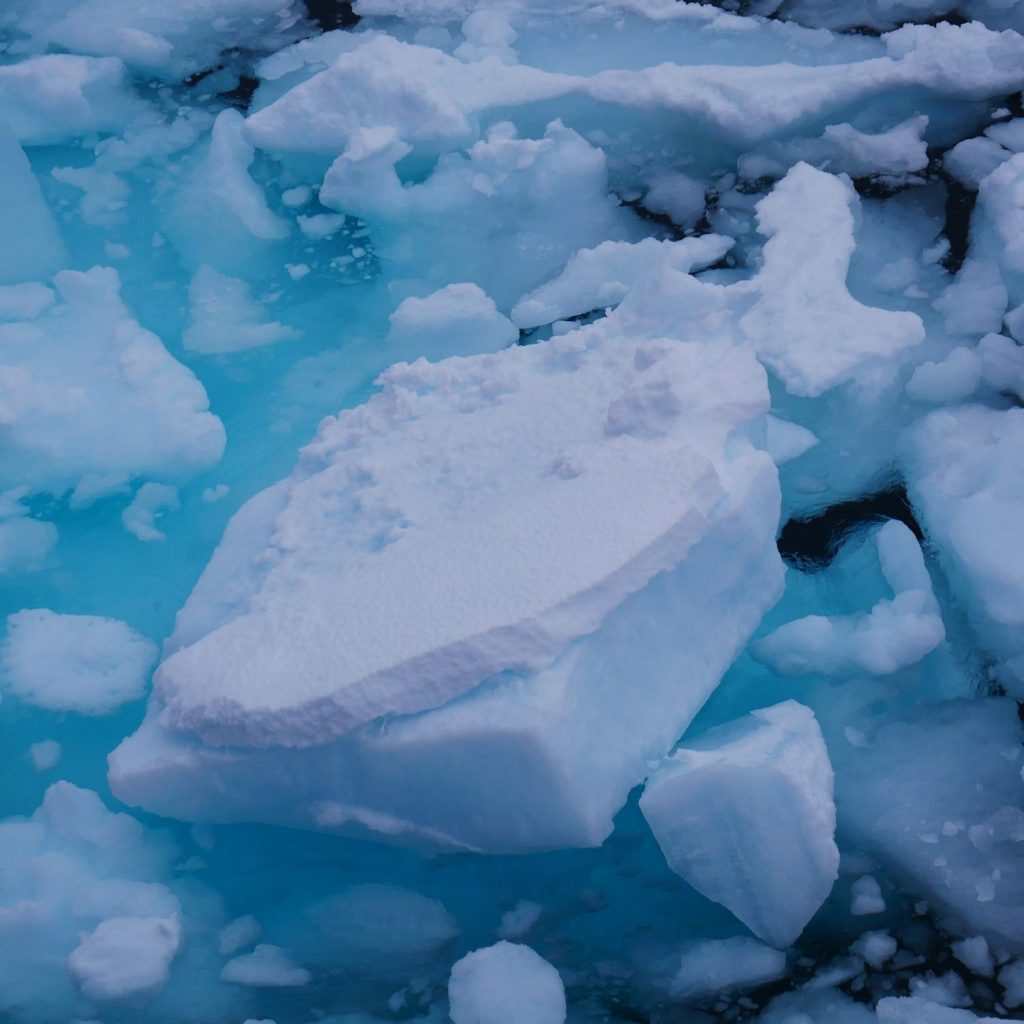
Aufgrund der weiterhin rauen Wetterbedingungen wurde schließlich entschieden, zu K1 zurückzukehren, um ein bevorstehendes Wetterfenster für die Ausbringung am nächsten Tag zu nutzen.
Between Storms and Science: Easter in the Labrador Sea (04.04.26–13.04.26)



Ocean Acidification
Dr Heidarzadeh’s TV interview with SkyNews on the massive M7.7 Panama earthquake on 9 October 2026
Dr Heidarzadeh’s TV interview with SkyNews on the massive M7.7 Panama earthquake on 9 October 2026. Click here for the full story.
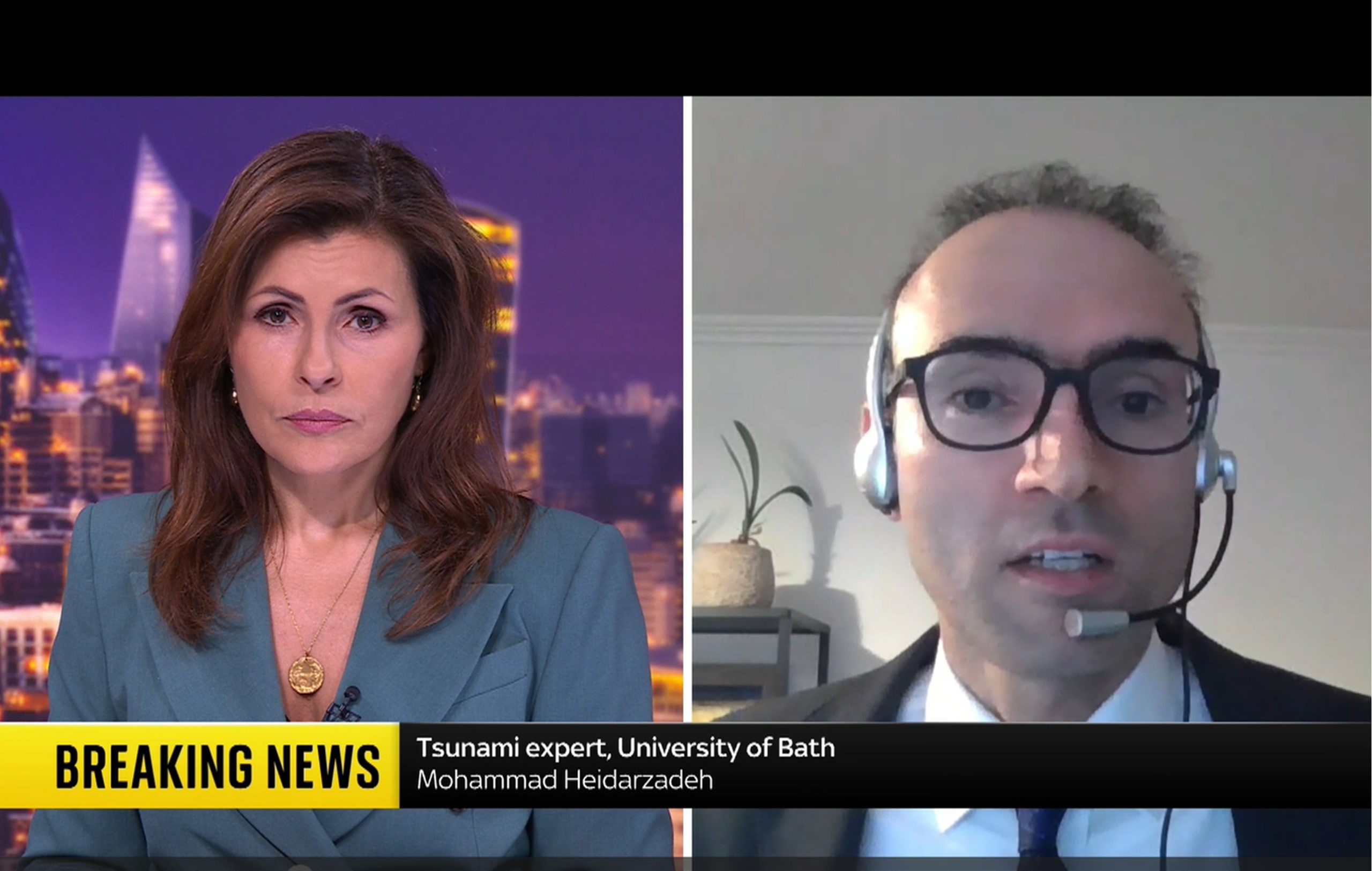
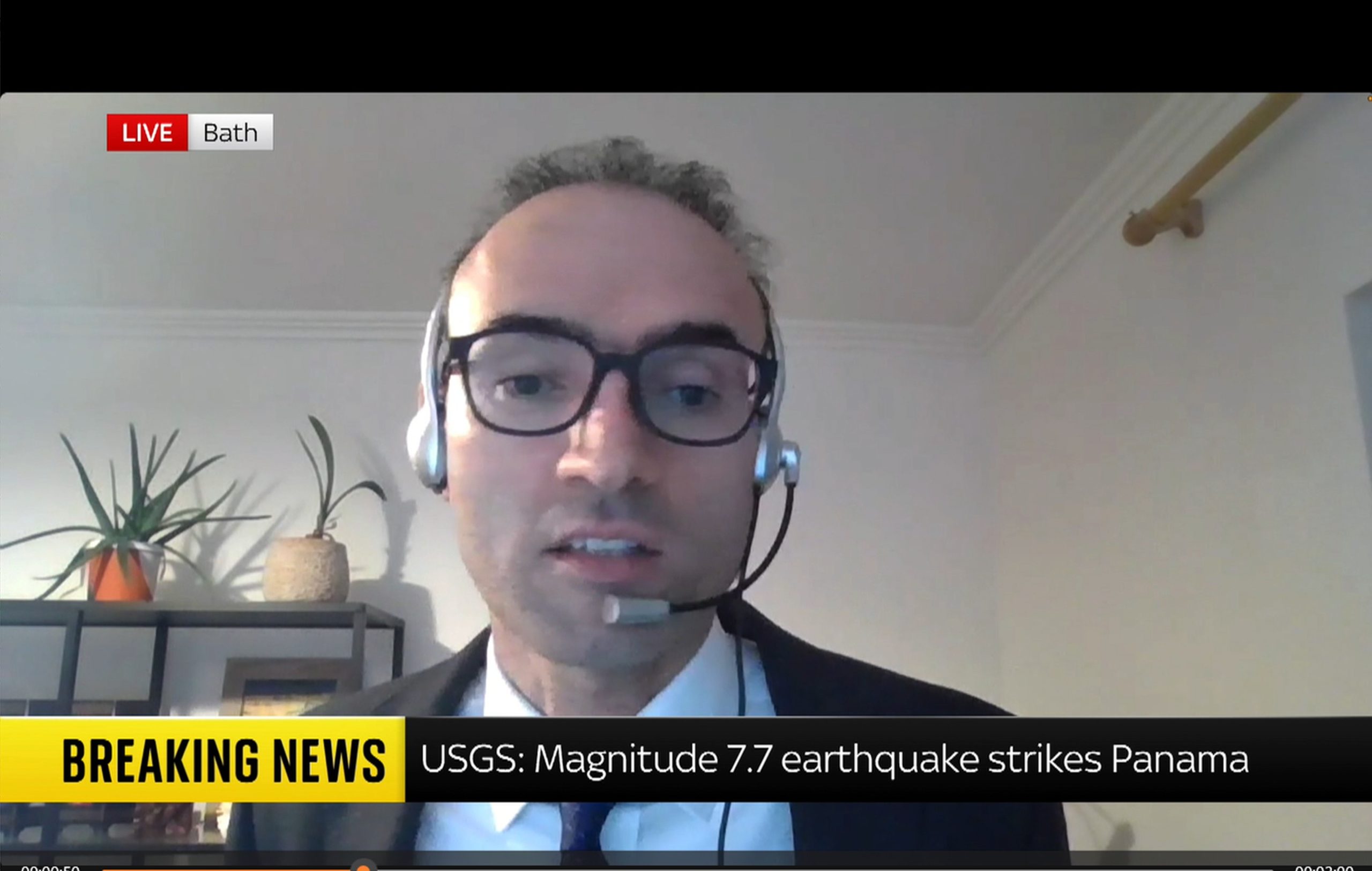
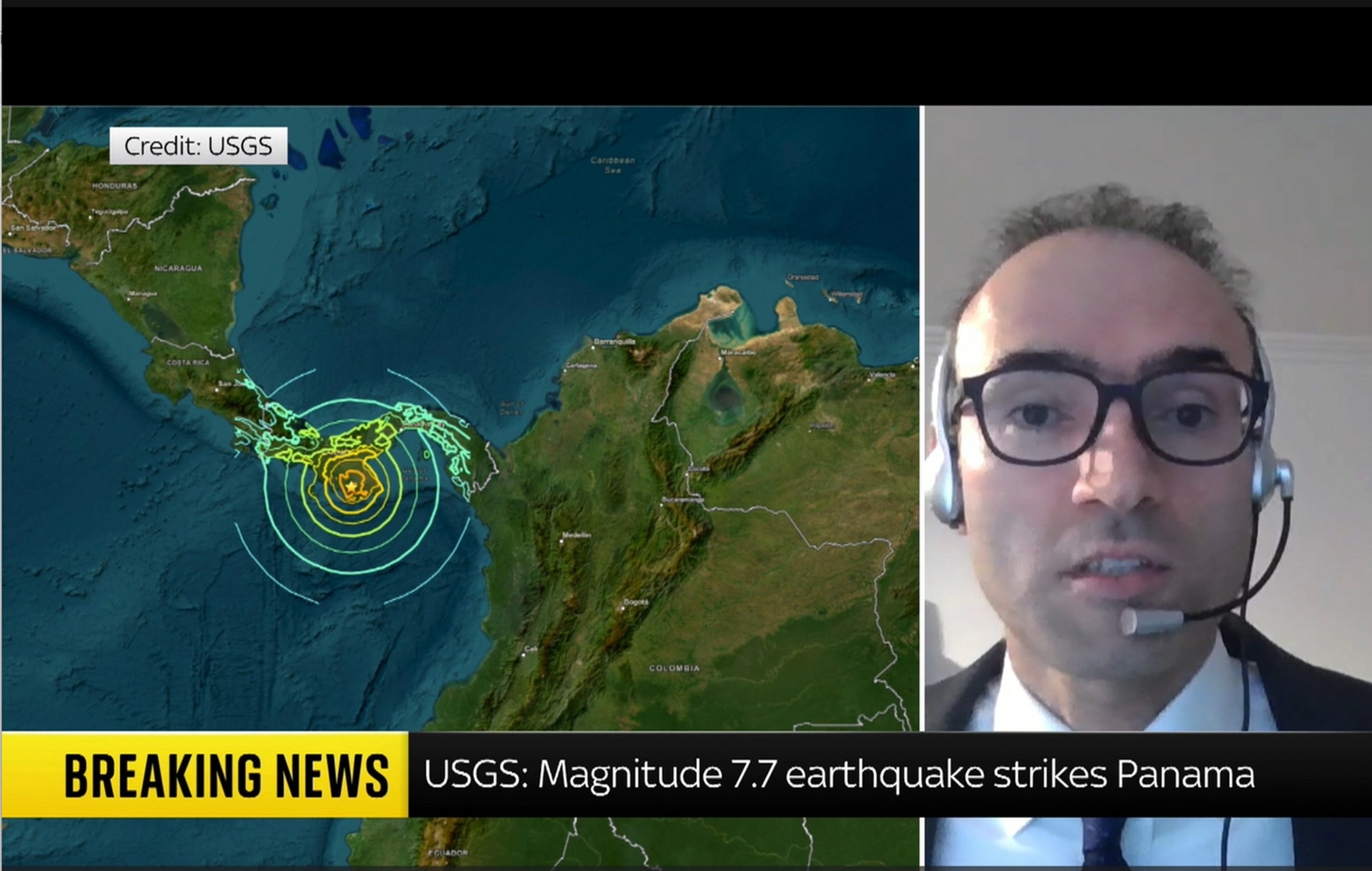
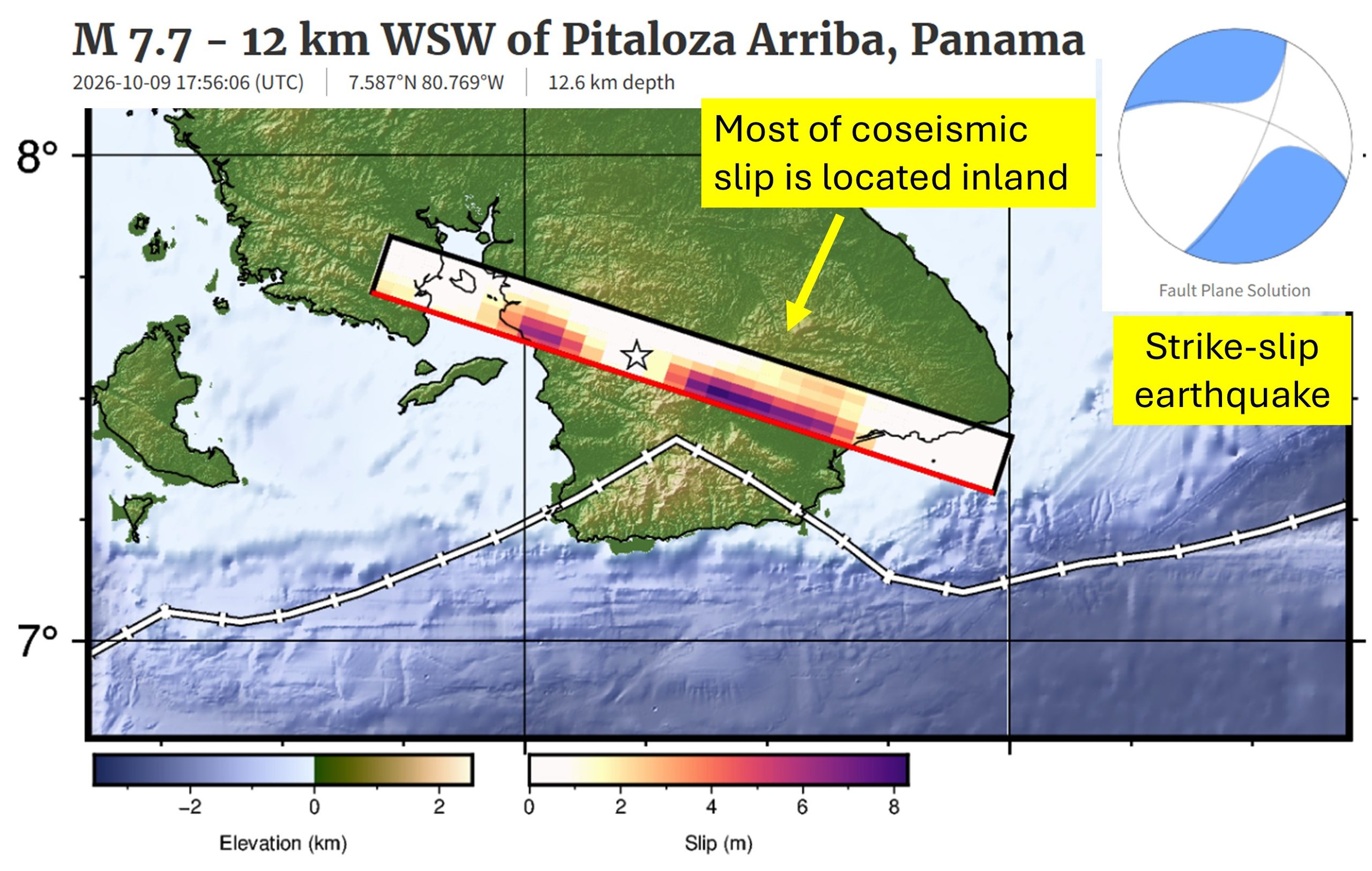
Dr Heidarzadeh’s TV interview with SkyNews on the massive M7.7 Panama earthquake on 9 October 2026
Our ocean is an incredibly vast and mysterious place. And there is no place where that is more evident than the deepest ocean area in the world: the legendary Mariana Trench. Located east of the Philippines, the Mariana Trench lies in the Mariana Archipelago in the western portion of the North Pacific. The greater area of the Mariana Trench Marine National Monument is made up of more than 95,000 square miles of ocean. Beneath these waters lie incredibly complex aggregations of submerged islands and volcanoes … and of course, an astoundingly massive trench.
Dive in with us to have your biggest questions answered about the famed Mariana Trench.
How deep is the Mariana Trench?
The deepest part of the Mariana Trench, known as Challenger Deep, is almost 36,000 feet below the ocean’s surface. For context, Mount Everest is about 29,000 feet above sea level, so the Mariana Trench is about 7,000 feet deeper than Mount Everest is tall. For one more comparison, the RMS Titanic lies at a depth of about 12,500 feet below sea level. The Challenger Deep is in waters nearly three times deeper than this ship’s final resting place.
Due to its enormous size, the Mariana Trench has at times been affectionately nicknamed the Grand Canyon of the ocean. This is certainly a picturesque image, but don’t let the mammoth size of this U.S. national terrestrial park fool you into thinking the Mariana Trench matches its size. The trench’s footprint is estimated to be 120 times larger than the Grand Canyon’s, and to reach the bottom of Challenger Deep, you’d need to descend through almost six Grand Canyons stacked on top of each other before you’d reach the seafloor.
Oh … and did we mention it’s five times wider than it is deep? It’s about 43 miles wide!
What is Challenger Deep, and how long would it take to reach it?
Challenger Deep is the deepest point of the Mariana Trench. Fewer than 30 people have ever journeyed to this area. The trek below the surface is long, dark and time-consuming, and it’s not an expedition considered lightly by scientists and explorers.
The first people to descend into the depths of this area in 1960 were oceanographers Jacques Piccard and Don Walsh, and it took them close to five hours to reach Challenger Deep. Since then, more advanced submersibles have been created, but it still takes two to four hours for modern vessels to reach such depths. For example, explorer and filmmaker James Cameron reached the seafloor in a little more than 2.5 hours in the first documented solo submarine dive to the area, and it took oceanographer Dr. Dawn Wright about four hours in 2022. It is crucial that these submersibles descend slowly and steadily beneath the surface, as the immense water pressure compounds with every mile a submersible descends. Speaking of pressure …
Get Ocean Updates in Your Inbox
Sign up with your email and never miss an update.
What is the water pressure at the bottom of the Mariana Trench?
If you thought the depth of the Mariana Trench was its only jaw-dropping feature, think again. Water pressure is one of the most important factors affecting deep-sea life. In the ocean, pressure increases by one atmosphere for every 33 feet (10 meters) of depth. One atmosphere (a unit of measurement for pressure equivalent to average air pressure at sea level) is equal to about 14.7 pounds per square inch (PSI), which is the approximate standard atmospheric pressure at sea level. If you were to convert atmospheric pressure into weight, one atmosphere is about the weight of a bowling ball. Stay with me, friends.
If a vessel were to dive 2,000 feet below the surface, the pressure would equal that of 60 bowling balls stacked atop every square inch of that submersible. But 60 bowling balls is simply nothing compared to the pressure in the Mariana Trench. The atmospheric pressure at the depths of Challenger Deep is equal to about 16,000 PSI. That pressure is about the same as the weight of an entire full-grown elephant on every square inch of a submersible!
Need a more extreme comparison? If a human were to be placed at the bottom of the Mariana Trench, the pressure would be equal to that of 50 jumbo jets piled on top of a person!
Do any animals live in the Mariana Trench?
The depths of the Mariana Trench come with immense pressure and extreme darkness, but somehow, life finds a way to survive. Organisms that live at an extreme depth, like that of Challenger Deep, have to be highly adapted to low temperatures (typically just above freezing), high pressure and virtually no light at all.
Species found in the depths of the Mariana Trench might look vastly different from animals from other ocean depths because their anatomy has been refined to thrive in harsh conditions. At such great depths, these animals typically depend on chemosynthesis (using nutrient-rich waters being pumped out of hydrothermal vents) or descending detritus (dead matter that has fallen from higher parts of the ocean) for food, such as whale falls. Just a handful of these animals include species of octopuses and squids, sea cucumbers, amphipods, sea jellies, shrimp, sea worms and some wild-looking fish!
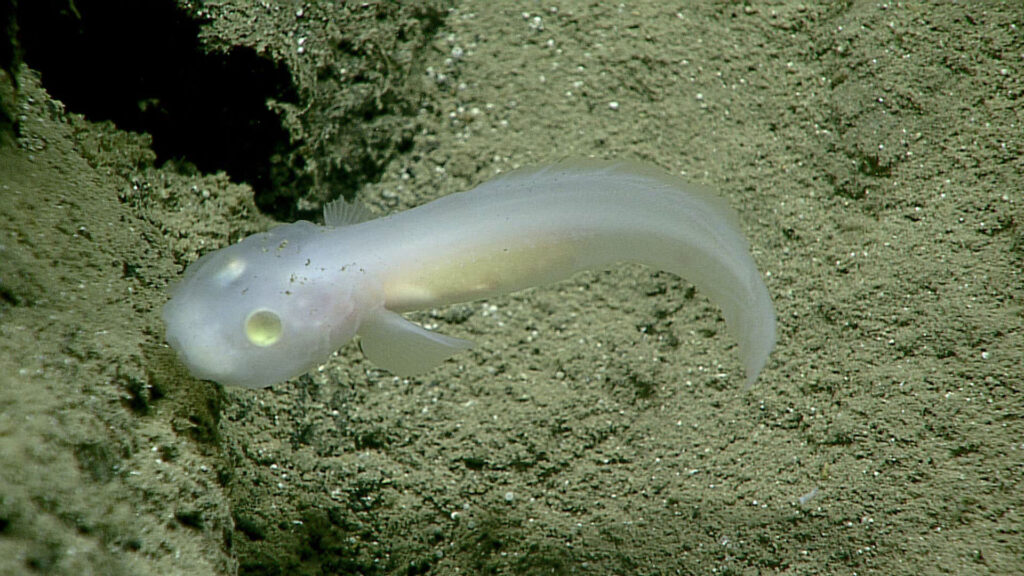
In 2025, more than 7,000 new species were discovered in the Mariana Trench, including the hadal snailfish (Pseudoliparis swirei). This is the deepest-dwelling fish currently known to science. Now, the fish has been dubbed “the Mariana snailfish.”
How was the Mariana Trench formed?
The process by which the Mariana Trench was created is a geologically fascinating one known as