
Google has signed a major deal to buy carbon removal credits from an affiliate of AMP Robotics. The agreement targets the removal of 200,000 metric tons of carbon dioxide equivalent (CO₂e) by 2030. It is one of Google’s largest carbon removal purchases to date.
The project uses artificial intelligence (AI) to sort municipal solid waste. Organic waste is separated before it reaches landfills. Instead of decomposing and releasing methane, the waste is turned into biochar. Biochar is a stable material that can store carbon for hundreds of years.
The deal shows how large companies are moving beyond simple offsets. They are now funding durable carbon removal solutions that can scale over time.
AI + Biochar: Turning Trash into Carbon Storage
The project’s approach tackles two problems at once. It reduces methane emissions in the short term. It also removes carbon dioxide for the long term. Methane is a powerful greenhouse gas. In the United States, landfilled waste is the third-largest source of human-caused methane emissions, according to the U.S. Environmental Protection Agency.
Reilly O’Hara, Program Manager, Carbon Removal at Google, remarked:
“Beyond the carbon removal itself, we are excited to explore the dual-action impact of AMP’s approach on methane – a superpollutant 80x more potent than CO2. By diverting organic matter before it decomposes and utilizing biochar in landfill soil covers to neutralize existing gases, this partnership could serve as a blueprint for eliminating emissions at the source, leveraging existing industry, and creating a scalable model for the circular economy.”
The AMP system uses AI to identify and sort materials from mixed waste streams. The company says its platform has already identified more than 200 billion items and processed 2.9 million tons of recyclables globally.
In this project, the system will process up to 540,000 tons of waste per year in Virginia. At least 50% of this waste will be diverted from landfills. Each ton of waste diverted can reduce or remove more than 0.7 tons of CO₂e. That adds up to over 378,000 tons of CO₂ avoided or removed each year. This is equal to taking about 88,000 cars off the road annually.
The project is backed by a 20-year contract with a regional waste authority serving 1.2 million people. Over time, AMP aims to convert 5 million tons of organic waste into biochar over 20 years.
image here….
Biochar also has added uses. It can be used in landfills to reduce odors and control pollution. It may also be used in construction and cement. This creates new value streams while storing carbon.
Carbon Removal Market Gains Momentum
The deal reflects a wider shift in the carbon market. Companies are now focusing on carbon dioxide removal (CDR) instead of traditional offsets. Carbon removal captures CO₂ from the atmosphere and stores it for long periods.
The market is still small but growing fast. A coalition backed by major companies, including Google, has committed to spending $1 billion on carbon removal credits by 2030.
Recent deals show rising demand:
- Google agreed to buy 100,000 tons of carbon removal credits from an agricultural biochar project in India.
- It also signed a deal for 50,000 tons of removal credits using underground waste storage technology.
Prices for high-quality removal credits remain high. Some deals have reached around $362 per ton, reflecting early-stage technology and limited supply.

At the same time, developers are working to scale production and lower costs. Biochar is seen as one of the more practical options today because it uses existing waste streams and proven processes.
Methane Matters: Quick Wins for the Climate
One reason this deal matters is its focus on methane. Methane causes much faster warming than CO₂ in the short term. Reducing methane can deliver quick climate benefits.
Waste is a major methane source. When organic waste breaks down in landfills, it releases methane gas. By diverting this waste early, AMP’s system prevents methane from forming at all.
This makes waste-based carbon removal different from many other methods. It combines emissions avoidance and carbon removal in one process.
This dual benefit is attracting attention from companies and policymakers. Many climate strategies now include methane reduction as a priority. Technologies that can do both removal and avoidance may scale faster than single-purpose solutions.
Beyond market impact, the deal highlights how Google is managing its rising emissions.
How This Fits Google’s Climate Strategy
The deal is part of Google’s wider plan to reduce its climate impact. The company has set a goal to reach net-zero emissions across its operations and value chain by 2030. It also aims to run on 24/7 carbon-free energy by 2030, meaning every hour of electricity use is matched with clean energy.

However, Google’s emissions have risen in recent years. In its 2024 environmental report, the company noted around 11.5 million tonnes of ambition-based CO₂e emissions. This marks an 11% rise from 2023 and is about 51% higher than in 2019. The increase shows ongoing growth in energy use, mainly from AI-powered data centers and expanded infrastructure.
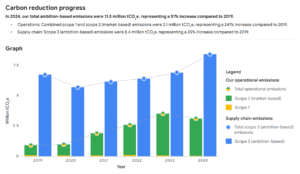
Because of this, Google is using carbon removal to address emissions it cannot fully eliminate. The company has said it will rely on high-quality carbon removal credits instead of traditional offsets. These credits must remove carbon from the atmosphere and store it for long periods.
The tech giant is also a founding member of Frontier, a coalition of companies committed to spending $1 billion on carbon removal by 2030. The group helps fund early-stage technologies and scale supply.
This strategy reflects a broader shift among tech companies. As energy use grows, especially from AI and cloud computing, firms are investing more in carbon removal to meet climate targets.
Carbon Removal Demand Surges, But Supply Falls Short
The Google–AMP deal shows how fast the carbon removal market is growing. But the market is still far from the scale needed to meet climate goals. Today, global emissions remain high at about 38 gigatonnes of CO₂ in 2024, according to the International Energy Agency.
To balance these emissions, demand for carbon removal is rising quickly. Estimates show the market could reach 40 to 200 million tonnes of CO₂ removal per year by 2030, and as much as 80 to 900 million tonnes by 2040. This could create a $10 billion to $40 billion market by 2030, growing to as much as $135 billion by 2040.
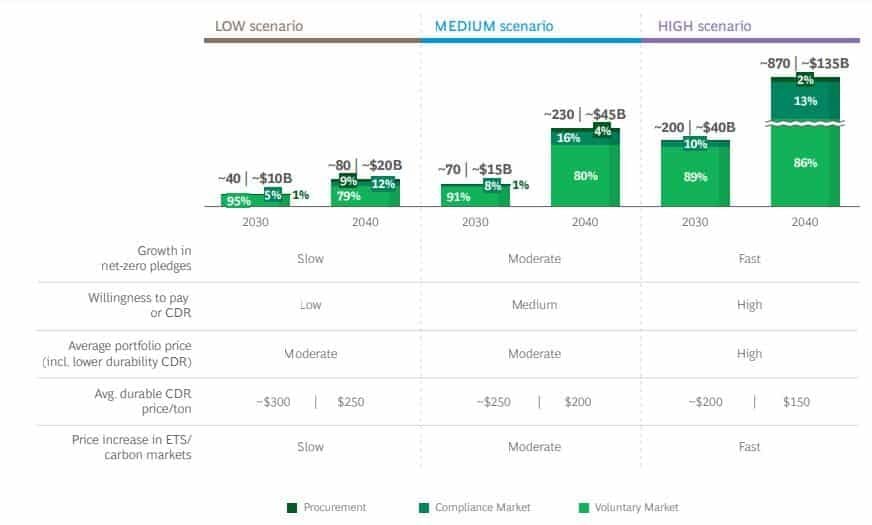
At the same time, supply is still limited. Current announced projects may only deliver around 33 million tonnes by 2030, far below expected demand. This gap is one reason large buyers like Google are signing long-term deals early. These agreements help scale new technologies and secure future supply.
Long-term, carbon removal will play a major role in climate strategy. Some projections show that removal capacity must reach around 1.7 gigatonnes per year by 2050 to meet global climate targets. Carbon capture alone could deliver about 12% of total emissions reductions between 2030 and 2050, especially in heavy industries like cement and steel.

Investment is also rising fast. In the past five years, the number of carbon removal startups has grown fivefold, and venture funding has increased sevenfold. This shows strong interest from both private investors and large companies.
Closing the Carbon Gap
Still, challenges remain. Costs are high, and standards are still evolving. Some forecasts suggest the market could reach up to $100 billion per year by the early 2030s, but only if policy support and financing improve.
In this context, the Google–AMP deal reflects a clear shift. Companies are moving early to secure high-quality carbon removal. They are also helping build the market from the ground up. Waste-based solutions like biochar may scale faster because they use existing systems and deliver both methane reduction and carbon storage.
Overall, carbon removal is moving from a niche idea to a core part of climate strategy. But the gap between current supply and future demand remains large. Closing that gap will require strong investment, clear rules, and continued innovation across the sector.
The post Google Inks Waste-to-Carbon Deal to Remove 200K Tons of CO₂ With AI and Biochar appeared first on Carbon Credits.
Carbon Footprint
The Environmental Impact of Industry: Causes, Effects & Solutions
Since the Industrial Revolution, human activities have left a significant and growing mark on the natural world. Pollution, carbon emissions, and altered land use have degraded ecosystems, contaminated water supplies, and pushed global temperatures to record highs. These are not distant consequences. They affect the air people breathe, the food they eat, and the stability of the climate every community depends on.
Understanding the environmental effects of industry is the first step toward meaningful change. When we grasp the full picture of how industrial practices damage the planet, we can make better decisions at every level, from individual choices to corporate policy to government regulation.
This guide covers the origins of industrial pollution, its specific environmental impacts, which industries carry the heaviest footprint, and the solutions that are already making a difference. We also highlight companies leading by example and explain how businesses of all sizes can take action today.
How Did the Industrial Revolution Cause Environmental Pollution?
The Industrial Revolution began in England in the 18th century before spreading through Europe and across the world. Nations shifted from agrarian economies to industrial ones, and fossil fuels were burned on a massive scale to power that transition. The environmental deterioration that followed has been compounding ever since.
Land use changed dramatically alongside industrial growth. As factories and urban centers expanded, farmland shrank and agriculture itself became industrialized. Industrial farming introduced fossil-fuel-powered machinery, synthetic fertilizers, pesticides, and concentrated livestock operations. The result was soil deterioration, widespread air and water pollution, and a significant rise in greenhouse gas emissions from the agricultural sector alone.
Deforestation and urbanization compounded the damage by eliminating natural carbon sinks. Forests and wetlands that once absorbed carbon dioxide from the atmosphere were cleared for development, removing the land’s natural ability to absorb carbon and leaving more greenhouse gases concentrated in the air.
The numbers tell the story clearly. Atmospheric CO2 was consistently around 280 parts per million before industrialization began. According to the IEA, CO2 concentrations reached approximately 427 parts per million in 2025, more than 50% above pre-industrial levels, with total energy-related emissions hitting a record high of nearly 38.4 billion tonnes. That figure has risen every decade since the Industrial Revolution began.
Industrialization continues today in developing nations, many of which lack the financial infrastructure to adopt clean energy and rely instead on coal, oil, and petroleum to power their growing economies. Even many developed nations remain heavily dependent on polluting industries, continuing to add to global greenhouse gas concentrations.
What Are the Environmental Impacts of Industry?
Industrial pollution creates environmental damage at every scale, from local waterways to the global atmosphere. The consequences affect ecosystems, human health, and the long-term stability of the climate. Below are the three primary categories of environmental impact driven by industry.
Pollution
Industry causes pollution across water, air, and soil, the three foundations of life on Earth. Each type of pollution carries its own chain of consequences.
Water pollution occurs in both freshwater systems and oceans. Water used in industrial processes becomes contaminated when it contacts metals, chemicals, or radioactive waste, and that water is often discharged into rivers and waterways. The result is contaminated drinking water, damaged aquatic ecosystems, and crops irrigated with polluted water that can become harmful to consume. Globally, 80% of wastewater is still released untreated into the environment.
Air pollution is any physical, biological, or chemical change to the atmosphere that reduces air quality. Gas, smoke, and fine particulate matter from burning coal or natural gas cause respiratory and cardiovascular disease in humans and threaten ecosystems globally. Air pollution now contributes to approximately 7.9 million premature deaths per year worldwide, making it one of the leading environmental causes of mortality. Airborne contaminants also cause acid rain, which ruins crops and acidifies freshwater bodies.
Soil pollution occurs when chemical levels in the ground exceed safe thresholds and present a threat to human health or ecosystems. Soil becomes polluted through industrial waste, chemical pesticides and fertilizers, oil spills, and landfills. Heavy metal contamination from industrial waste currently affects an estimated 20% of global agricultural land. Contaminated soil reduces crop yields, harms wildlife, and can lead to serious health problems in humans and animals living in affected areas.
Ecological Consequences
Pollution and altered land use place severe strain on ecosystems in ways that ripple outward for generations. Three interconnected effects stand out.
Habitat destruction results from deforestation, urban expansion, and industrial development. When natural habitats are destroyed or fragmented, plants and animals lose the environments they need to survive. Species are pushed into shrinking territories, forcing greater competition for resources and raising extinction risks. According to current data, 33% of global soils are degraded due to pollution and erosion, compressing the productive land available to both agriculture and wildlife.
Slower environmental recovery is another consequence of the cumulative strain on ecosystems. Natural disasters like wildfires and hurricanes are growing more frequent and severe as the climate shifts, and ecosystems already weakened by pollution and habitat loss take longer to recover from each new event. Industrial accidents, such as oil spills or chemical leaks, add further damage that can persist in an environment for decades.
Biodiversity loss continues to accelerate as species go extinct at rates far above natural baselines. The combination of habitat destruction, pollution, climate change, and resource depletion creates overlapping pressures that many species cannot adapt to quickly enough.
Atmospheric Changes
Industrial practices release large quantities of greenhouse gases into the atmosphere, driving global warming and climate change. These two phenomena are distinct but deeply linked.
Global warming occurs when greenhouse gases like CO2 and methane accumulate in the atmosphere and trap heat that would otherwise radiate into space. Burning fossil fuels is the primary driver of CO2 buildup. Agricultural practices and landfills release significant quantities of methane, a greenhouse gas with more than 80 times the short-term warming power of CO2.
Climate change is the broader set of consequences that follows from global warming. Rising temperatures shift rainfall patterns, intensify storms, accelerate glacial melting, raise sea levels, and make agricultural conditions less predictable. Every fraction of a degree of additional warming increases these risks. The remaining carbon budget for limiting warming to 1.5 degrees Celsius is now projected to be exhausted by 2029 at current emission rates.
What Industries Have the Largest Environmental Impact?

Some industries carry a disproportionately large environmental footprint. Researchers evaluate environmental impact across six key components: greenhouse gas emissions, water use, waste generation, land and water pollutants, air pollutants, and natural resource use. The industries that dominate these categories are as follows.
Energy and electric utilities are the most polluting sector on Earth, generating approximately 15.83 billion tonnes of greenhouse gas emissions annually. The energy sector ranks highest in four of the six environmental impact categories: greenhouse gas emissions, waste, air pollutants, and natural resource use. As long as coal and natural gas remain central to electricity generation, this sector will continue to lead all others in environmental damage.
Transport is the second most polluting industry globally, responsible for around 8.43 billion tonnes of greenhouse gas emissions each year. Road transport accounts for the majority of that figure, while aviation and shipping contribute significantly. The sector is under growing pressure to electrify and adopt cleaner fuels.
Manufacturing and construction generate approximately 6.3 billion tonnes of emissions annually and consume vast quantities of raw materials including metals, sand, and timber. This sector appears across all six environmental impact categories, reflecting its broad footprint across pollution, resource use, and land disruption.
Food production ranks as the highest non-utility industry in water use and land and water pollutants. Industrial agriculture is responsible for the majority of freshwater withdrawals globally and is a leading driver of deforestation, soil degradation, and chemical runoff into waterways.
How Can the Environmental Impact of Industry Be Reduced?
Meaningful solutions to industrial pollution already exist. The challenge is implementing them at speed and scale. Below are the most impactful approaches available to businesses and industries today.
Better Waste Management
Improperly handled industrial waste is one of the most direct and preventable causes of environmental pollution. When waste is not treated and disposed of correctly, it contaminates waterways, soil, and groundwater. Industries that invest in proper waste treatment and disposal systems can eliminate a significant portion of their local environmental impact. This is also an area where regulation has historically produced measurable results.
Improved Recycling and Water Reuse
Unnecessary pollution occurs when recyclable materials and reusable water are instead discarded. Industrial water recycling, for example, keeps contaminated water within closed systems rather than releasing it into rivers and oceans. Expanding recycling programs across manufacturing sectors reduces both raw material extraction and waste generation, addressing two environmental problems at once.
Greenhouse Gas Mitigation and Carbon Offsetting
Reducing greenhouse gas emissions from industrial processes is the single most important lever for slowing climate change. Switching to renewable or clean energy cuts emissions at the source. Gas capture programs reduce methane and other potent greenhouse gases that would otherwise escape from operations like landfills and agricultural sites. For emissions that cannot yet be eliminated, verified carbon offset programs allow businesses to fund reforestation, methane capture, and renewable energy projects that compensate for their remaining footprint. Understanding the social cost of carbon helps businesses make the case internally for these investments.
Smarter Land Use
Industrial site selection and land management have lasting ecological consequences. Businesses should choose locations that minimize habitat disruption and avoid high-risk areas where accidents like fires or spills could cause catastrophic environmental damage. Reducing resource extraction on sensitive lands and funding environmental restoration projects, including reforestation and wetland rehabilitation, helps offset the land-use impact of ongoing operations. Carbon removal credits are one mechanism businesses can use to support these restoration efforts directly.
Advancing Technology
Older industrial technologies are often energy-inefficient and generate disproportionately high levels of pollution. Upgrading to newer equipment and processes allows industries to reduce emissions and resource consumption simultaneously. Switching to renewable energy, adopting AI-driven energy management, and investing in cleaner production technologies are all practical steps that industries can take now. The companies seeing the most progress are those that have embedded sustainability goals into their technology roadmaps rather than treating them as separate initiatives.
Environmental Awareness and Impact Assessment
Education and measurement underpin all other solutions. Industries that conduct regular environmental impact assessments, track their resource consumption and emissions, and train employees on sustainability practices are better positioned to identify problems early and respond effectively. Measuring and managing your carbon footprint is as essential for businesses as financial reporting, and increasingly, regulators and investors are requiring exactly that.
What Companies Are Reducing Their Environmental Impact?
Several major companies have made substantial commitments to reducing their environmental footprint and serve as benchmarks for the rest of the corporate world. Their progress, and in some cases their setbacks, offer useful lessons for any business navigating the transition to more sustainable operations.
Microsoft has been carbon neutral since 2012 and has set more ambitious targets since then. The company’s 2025 Environmental Sustainability Report outlines its goals to become carbon negative, water positive, and zero waste by 2030. Microsoft charges an internal carbon fee to business units and reinvests those funds into carbon reduction and removal initiatives. The company achieved its goal to protect more land than it uses by 2025 and has invested in renewable energy across 16 countries, including its first large-scale nuclear energy agreement.
Intel aims to be net positive on water use and achieve 100% renewable energy for its global operations by 2030. Intel links a percentage of employee compensation to corporate sustainability metrics, recognizing that achieving environmental goals requires company-wide participation rather than top-down mandates alone.
Alphabet (Google) has made significant progress on data center efficiency, reducing data center energy emissions by 12% in 2024 despite a 27% increase in overall electricity consumption, driven largely by AI workloads. Google’s data centers now provide six times more computing capacity per unit of electricity compared to five years ago. In 2024, Google signed agreements for more than 8 gigawatts of clean energy, the highest annual volume in the company’s history. The company has also pioneered AI-driven cooling systems for its data centers that dramatically reduce energy waste. It is worth noting that all three of these companies face the growing challenge of rising energy demand from AI infrastructure, a reminder that sustainability commitments require continuous adaptation as business models evolve.
Changing the Environmental Impact of Industry
More than two centuries of large-scale industrial activity have given us a clear view of the consequences. Pollution, ecological damage, and atmospheric change are not side effects we can manage around. They are the defining environmental challenge of our time, and the window for meaningful action is narrowing.
The good news is that solutions are no longer theoretical. Renewable energy is now cost-competitive with fossil fuels in most markets. Carbon capture and offset programs are funding real-world emissions reductions. Companies across every sector are finding that sustainable practices often improve efficiency and reduce long-term costs alongside their environmental benefits.
Whether you run a business or simply want to understand your own role in this picture, the path forward starts with knowing where you stand. Visit Terrapass to learn how you can measure your carbon footprint, reduce your emissions, and support verified projects that make a difference.
Brought to you by terrapass.com
The post The Environmental Impact of Industry: Causes, Effects & Solutions appeared first on Terrapass.
Carbon Footprint
Overconsumption of Natural Resources: Causes, Effects & Solutions (2026)
Humanity is consuming natural resources faster than the planet can replenish them, and the gap is growing. The result is environmental degradation, economic risk, and a shrinking inheritance for future generations. With the global population still rising and consumption habits in wealthy nations showing little sign of slowing, addressing overconsumption has never been more urgent.
This guide explains what overconsumption of natural resources means, which resources are most at risk, how it harms the environment, and what individuals and industries can do about it.
Key Takeaways
- Earth Overshoot Day 2026 falls on July 30, the point at which humanity exhausts the planet’s entire annual ecological budget with five months still remaining in the year.
- Humanity is currently using nature 73% faster than Earth’s ecosystems can regenerate, the equivalent of consuming 1.73 planets simultaneously. This is the highest level of ecological overshoot ever recorded.
- The two most consumed natural resources on Earth are water and sand.
- North Americans consume an average of 90 kilograms of natural resources per person per day, nine times more than the average African.
- Transitioning to renewable energy, sustainable agriculture, and circular economy practices are the most effective paths forward.
What Is Overconsumption of Natural Resources?
Overconsumption occurs when humans extract or use natural resources faster than the planet can replenish them. When this happens, ecosystems cannot recover from excessive resource extraction, leading to biodiversity loss and long-term deterioration of the natural world. Once a resource is fully depleted from a region, it is often gone permanently.
The logging industry is a clear example. Timber is used for construction, paper manufacturing, and fuel. Billions of people depend on it for shelter, heat, and cooking. But overconsumption of timber leads to deforestation. Since 1990, the world has lost 420 million hectares of forest land, and between 2001 and 2025, total global tree cover loss reached 540 million hectares driven primarily by agricultural expansion, logging, and infrastructure development.
The stakes are not abstract. When essential resources like clean water, fertile land, and building materials disappear, the consequences fall hardest on the most vulnerable communities around the world.
How Does Overconsumption Affect Natural Resources?
Natural resources need time to replenish. Forests must regrow after logging. Fish populations must recover after commercial fishing. Aquifers refill slowly after extraction. When human demand exceeds these regeneration rates, the consequences compound over time.
A useful benchmark is Earth Overshoot Day, the calendar date each year when humanity’s demand for ecological resources exceeds what Earth can regenerate in that same year. In 1972, overshoot day fell on December 31, meaning humanity was living within the planet’s means. By 2026, it falls on July 30, the highest level of ecological overshoot in human history. From that point on, we operate on ecological credit for the rest of the year, drawing down natural capital in forests, fisheries, freshwater systems, and the atmosphere’s capacity to absorb CO₂.
Understanding this dynamic is central to understanding how climate change and resource depletion are connected and why action on both fronts is urgent.
What is an ecological footprint?
An ecological footprint measures the land and water area a human population requires to produce the resources it consumes and absorb the waste it generates. When a nation’s footprint exceeds its biocapacity, it runs an ecological deficit. More than 80% of the global population lives in countries currently running such a deficit.
What Natural Resources Are We Consuming?
Natural resources fall into two broad categories: non-renewable and renewable. Both are under pressure from overconsumption, though for different reasons.
Non-Renewable Resources
Non-renewable resources form over millions of years and cannot be meaningfully replenished on human timescales. They include fossil fuels like oil, coal, and natural gas, as well as mined materials such as metals, ores, diamonds, sand, and other raw materials.
Relying heavily on non-renewables carries serious economic risk. More than 80% of the world’s energy still comes from oil, coal, and natural gas. The consequences of burning fossil fuels extend well beyond supply risk. They include greenhouse gas emissions, air pollution, and accelerating climate change. If fossil fuels became too scarce or expensive to extract, the disruption to the global economy would be severe, with no ready substitute available at the same scale.
Demand for critical minerals like lithium, cobalt, and copper is also expected to surge dramatically in coming decades, driven by the transition to electric vehicles and renewable energy infrastructure. Even the green energy transition has its own resource demands to manage carefully.
Renewable Resources

Renewable resources replenish naturally in a much shorter timeframe. They include solar and wind energy, food crops, fish, animals, and lumber.
Wind and sunlight are effectively limitless as energy sources. We can use them without depleting them, which is why transitioning to sustainable energy sources is such a critical lever for reducing overall resource pressure. Biological renewables like fish populations and forests, however, must be carefully managed to avoid overexploitation.
Fish stocks are a pressing concern. The FAO reported that 35.5% of global fish stocks were overfished in 2025, continuing an upward trend from previous years. Overfishing doesn’t just reduce the catch available today. It disrupts marine food webs, causes biodiversity loss, and threatens the livelihoods of coastal communities worldwide.
Overconsumption also degrades fertile agricultural land. As soil quality deteriorates and water becomes scarcer, the capacity to feed a growing global population comes under increasing strain.
How Does Consumption of Natural Resources Vary by Country?
Resource consumption is closely correlated with national wealth. Wealthier nations consume 10 times more natural resources than developing countries.
North America leads global per-capita consumption. The average North American uses 90 kilograms of resources per day, compared to 45 kilograms for the average European and just 10 kilograms for the average African resident. According to Scientific American, over a single lifetime, one American will consume 53 times as many goods and services as a person from China and as many natural resources as 35 residents of India.
This disparity matters because it shapes where solutions need to be concentrated. High-consumption nations bear disproportionate responsibility for driving global resource depletion and have the greatest capacity to change. Understanding your own carbon footprint is a meaningful first step toward making that change personal.
How Does Overconsumption of Natural Resources Affect the Environment?
The environmental impacts of resource-intensive industries are wide-ranging and interconnected. Some are direct. Deforestation removes habitat and releases stored carbon. Others work through a longer chain, as industries that harvest natural resources generate greenhouse gas emissions that accelerate climate change, which in turn threatens the very resource systems we depend on.
Consider the construction industry. It requires metals mined from the Earth, sand and lumber as building materials, and fossil fuels to power its machinery. Each of these inputs carries its own environmental cost including habitat disruption, water use, and carbon emissions, and they compound across the full supply chain.
Atmospheric greenhouse gas concentrations have risen from 367 parts per million CO₂ equivalent in 1972 to an estimated 547 parts per million in 2026, according to NOAA estimates. The accumulated ecological debt from overshoot since the early 1970s now equals approximately 20.6 years of the planet’s full biological productivity.
Protecting land and ocean ecosystems and transitioning to sustainable energy sources represents humanity’s best opportunity to reverse this trend. For businesses already thinking about their role in this, carbon offsets can support reforestation and emissions reduction projects that directly address the damage overconsumption has caused.
What Are the Most Consumed Natural Resources?
The two natural resources consumed in the greatest quantities globally are water and sand.
Sand
Sand is the world’s second most consumed natural resource, used primarily in concrete for construction. Global urbanization drives an enormous appetite for it, and humanity extracts approximately 50 billion tons of sand each year. The consequences include the deterioration of river systems and ocean habitats as sand is removed in vast quantities.
Water
Water is the most consumed natural resource on Earth. It is essential for drinking, agriculture, cooking, industrial processes, and electricity generation. Despite water covering 70% of the planet’s surface, 97.5% of that water is ocean water. Accessible freshwater is a genuinely finite resource.
The numbers reveal the scale of the problem. About 4 billion people, nearly two-thirds of the global population, experience severe water scarcity for at least one month each year. Agriculture accounts for roughly 70% of all global freshwater withdrawals. According to the BBC, 21 of Earth’s 35 major aquifers are already receding. Climate change is deepening the crisis by intensifying droughts and altering rainfall patterns precisely where demand is growing fastest.
The global carbon cycle is tightly linked to freshwater availability. Warming temperatures and disrupted precipitation patterns are a direct consequence of the same fossil fuel overconsumption that drives resource depletion more broadly.
How Can We Slow the Overconsumption of Natural Resources?

Slowing overconsumption requires action at multiple levels: policy, industry, and individual behavior. The most impactful changes involve moving away from non-renewable resources, improving efficiency across industries, and embracing the principles of a circular economy, in which materials are reused and regenerated rather than consumed and discarded.
Transition to renewable energy. New technologies continue to lower the cost and improve the efficiency of renewable energy sources like wind and solar. Accelerating this transition reduces fossil fuel burning and the extraction pressures that come with it. Renewable Energy Credits (RECs) are one accessible way for households and businesses to support clean power today.
Sustainable agriculture and fisheries management. More efficient food production, better fisheries regulation, and reduced food waste can protect natural lands and fish populations while feeding a growing global population. Reducing meat consumption is one of the highest-impact dietary changes an individual can make.
Water desalination and conservation. Desalination technology can convert ocean water into freshwater suitable for drinking and agriculture, reducing pressure on strained freshwater systems. Conservation measures in agriculture, which is by far the dominant user of freshwater, can make an outsized difference.
Circular economy practices. Designing products for longevity, repairability, and recyclability reduces the total volume of resources extracted and the waste generated. This model is gaining traction across manufacturing, construction, and packaging industries and is increasingly recognized as one of the most commercially viable paths to sustainability.
Carbon offsetting. For emissions and resource use that cannot yet be eliminated, verified carbon offsets fund projects that reduce deforestation, capture methane, and support renewable energy development. Terrapass carbon offset projects include reforestation, REDD+, landfill gas capture, and residential solar installation.
Individual action. Each person can meaningfully reduce their ecological footprint by being conscious of consumption habits. Buying less, choosing durable goods, reducing food waste, and reusing materials wherever possible all add up. Use the Terrapass carbon calculator to understand exactly where your personal footprint comes from and take targeted action.
Frequently Asked Questions
What are the main natural resources being overconsumed?
The most overconsumed resources include freshwater, sand, fossil fuels (oil, coal, and natural gas), timber from forests, and fish stocks. Fertile agricultural land and minerals like lithium and cobalt are also under increasing pressure.
Which country consumes the most natural resources per person?
North Americans, and Americans in particular, consume the most natural resources per capita. The average North American uses 90 kilograms of resources per day, compared to 45 kilograms in Europe and 10 kilograms in Africa.
What is Earth Overshoot Day and why does it matter?
Earth Overshoot Day marks the point in the calendar year when humanity has used up all the ecological resources the planet can regenerate that year. In 2026, it falls on July 30, the highest level of ecological overshoot ever recorded. Everything consumed after that date draws down ecological reserves, accelerating long-term depletion.
How does overconsumption drive climate change?
Overconsumption drives climate change primarily through the extraction and burning of fossil fuels, deforestation (which releases stored carbon), and industrial processes that generate greenhouse gas emissions. Understanding how the carbon cycle works helps explain why reducing consumption and offsetting emissions are two sides of the same solution.
How can individuals reduce their impact?
The most effective individual actions include reducing home energy use, minimizing food waste, consuming less meat, and buying durable goods over disposable ones. Calculating your carbon footprint is a good starting point, and offsetting unavoidable emissions through Terrapass helps fund real-world emissions reductions.
What is a circular economy?
A circular economy is an economic model designed to eliminate waste by keeping materials in use for as long as possible through reuse, repair, remanufacturing, and recycling. It contrasts with the dominant take-make-dispose model that drives overconsumption and is increasingly seen as one of the most practical large-scale responses to ecological overshoot.
Taking Action to Protect Natural Resources
Overconsumption is depleting the natural systems that all human life depends on. The data is stark. In 2026, humanity hit the highest level of ecological overshoot ever recorded, and the real human footprint is still growing.
The solutions exist. Renewable energy, sustainable resource management, and a shift toward circular economic models can collectively move us back toward a world that operates within planetary limits. Technology continues to improve our capacity to do more with less, from precision agriculture to advanced water treatment to verified carbon markets.
Systemic change is essential, but individual choices also matter. A world of responsibly consumed resources is a world of greater health, stability, and opportunity for everyone including future generations.
Learn how Terrapass can help you reduce your carbon footprint and offset your consumption.
Brought to you by terrapass.com
The post Overconsumption of Natural Resources: Causes, Effects & Solutions (2026) appeared first on Terrapass.
Carbon Footprint
Waymo and B2U Unlock a Second Life for EV Batteries with Grid-Scale Storage
As electricity demand rises and renewable energy grows in the U.S., battery storage is key. Waymo has launched a battery repurposing program to give retired electric vehicle (EV) batteries a new purpose in the power sector.
Waymo is working with B2U Storage Solutions to turn used batteries from its all-electric fleet into large-scale energy storage systems. Instead of recycling these batteries after use, Waymo will repurpose them to store electricity and support local power grids.
This program reflects a commitment to the circular economy, keeping products useful before recycling.
Adam Lenz, Head of Sustainability & Environment at Waymo, said:
“Our shared fleet of EVs provide a massive opportunity to support the growth of clean energy on the electricity grid while expanding the circular economy. Through this partnership, we can repurpose our batteries for local grid storage and ensure our batteries continue to provide economic and environmental value to the community long after they’ve retired from the road.”
Turning Old EV Batteries Into Energy Assets
EV batteries often retain significant storage capacity after their driving days. While their performance may drop for vehicles, many can still serve well in energy storage projects.
The press release says that retired Waymo batteries will join grid-connected energy storage systems through this partnership. These systems will store electricity from renewable sources like solar and wind.
During peak renewable generation, especially when solar production is high, the batteries will absorb excess electricity. Later, when demand increases in the evening, this stored energy can flow back into the grid.
This process helps balance electricity supply and demand, making renewable energy more reliable.
B2U specializes in second-life battery storage technology. They will manage the batteries during their second use and ensure proper recycling when they reach the end of their life.
Here’s a picture to show how B2U’s storage works.

This collaboration creates a complete lifecycle pathway for EV batteries—from vehicle use to energy storage and finally recycling.
Supporting Growing Demand for Battery Storage
This initiative comes at a time of rapid growth in renewable energy and battery storage in the U.S.
- According to the U.S. Energy Information Administration (EIA), developers plan to add 86 gigawatts (GW) of new utility-scale electricity generation capacity by 2026. If completed, it would be a record increase.
Solar energy will account for over half of these additions, with battery storage the second-largest category. Wind energy also plays a significant role in this growth.
In 2025, the U.S. power sector added 53 GW of new capacity, the highest since 2002. Meanwhile, battery storage installations keep increasing.
- They also expect to add about 24 GW of utility-scale battery storage in 2026, surpassing the previous record of 15 GW installed in 2025. Over the last five years, more than 40 GW of battery storage capacity has been added to the grid.
Texas, California, and Arizona are expected to account for around 80% of the planned battery storage in 2026.

The Grid Advantage of Reusing EV Batteries
Repurposing EV batteries offers crucial benefits for power systems and communities.
First, it extends the useful life of battery materials. Making lithium-ion batteries requires a lot of critical minerals and energy. Second-use batteries maximize the value of those materials.
Second, second-life batteries can lower energy storage costs. Since the batteries have already served in transportation, utilities can access storage capacity at lower costs than buying new systems.
Third, repurposing helps reduce electronic waste. Companies can keep batteries in use for several more years, easing pressure on waste management.
- Most importantly, battery storage boosts grid reliability. Renewable sources like solar and wind don’t produce electricity constantly. Energy storage systems fill this gap by storing power when production is high and delivering it when demand rises.
As renewable energy grows, these storage systems will be vital for stable electricity networks.
Freeman Hall, CEO of B2U Storage Solutions, said:
“This agreement marks a significant milestone in B2U’s mission to provide integrated repurposing services to the automotive industry. By extending the use of these batteries as grid storage, we are monetizing the full potential of EV batteries, now providing crucial stability to the power grid as energy demand continues to grow.”
First Deployments Planned for Texas and California
The first battery storage projects in the Waymo-B2U partnership will focus on Texas and California. Waymo already provides public autonomous ride-hailing services in these states.
Both states lead in renewable energy deployment. California increasingly relies on clean electricity and often has periods where renewable generation exceeds demand. Texas continues to lead the nation in new solar installations.
Waymo plans to repurpose old EV batteries into stationary storage systems. This will help manage renewable energy growth and improve local electricity infrastructure.
The company believes this initiative could deploy hundreds of megawatts of storage capacity in these regions. As autonomous EVs retire, their batteries could continue to provide value long after leaving the road.
This partnership shows how transportation electrification and clean energy can work together. Instead of viewing used EV batteries as waste, Waymo and B2U are transforming them into valuable energy assets. These assets support grid reliability, renewable energy integration, and a sustainable circular economy.
Waymo’s Broader Sustainability Efforts
The battery repurposing program is part of Waymo’s larger sustainability strategy. The company operates one of the largest fleets of fully autonomous electric vehicles, providing over 500,000 paid EV trips each week. These trips help cut emissions by replacing conventional vehicles with electric ones.
- Waymo estimates that every 500,000 weekly trips prevent about 530 tons of carbon dioxide emissions.
It also measures emissions avoided through its autonomous electric service. This framework evaluates the environmental benefits of electric, autonomous, and shared mobility solutions.
Additionally, the company reports its greenhouse gas emissions through parent company Alphabet as part of broader environmental efforts.
The post Waymo and B2U Unlock a Second Life for EV Batteries with Grid-Scale Storage appeared first on Carbon Credits.
-
Greenhouse Gases10 months ago
Guest post: Why China is still building new coal – and when it might stop
-
Climate Change10 months ago
Guest post: Why China is still building new coal – and when it might stop
-
Greenhouse Gases2 years ago嘉宾来稿:满足中国增长的用电需求 光伏加储能“比新建煤电更实惠”
-

Climate Change2 years ago嘉宾来稿:满足中国增长的用电需求 光伏加储能“比新建煤电更实惠”
-
Climate Change2 years ago
Bill Discounting Climate Change in Florida’s Energy Policy Awaits DeSantis’ Approval
-
Renewable Energy8 months agoSending Progressive Philanthropist George Soros to Prison?
-
Carbon Footprint2 years agoUS SEC’s Climate Disclosure Rules Spur Renewed Interest in Carbon Credits
-
Greenhouse Gases11 months ago
嘉宾来稿:探究火山喷发如何影响气候预测


