


- Subscribe to Sustainability In Your Ear on iTunes
- Follow Sustainability In Your Ear on Spreaker, iHeartRadio, or YouTube
Interview Transcript
Mitch Ratcliffe 0:00
Hello, good morning, good afternoon or good evening, wherever you are on this beautiful planet of ours. Welcome to Sustainability In Your Ear. This is the podcast conversation about accelerating the transition to a sustainable, carbon-neutral society, and I’m your host, Mitch Ratcliffe. Thank you for joining the conversation.
Today, we’re going to take another dive into the circular economy, this time about how we manage our waste collection and processing systems. The U.S. waste management industry moves more than 290 million tons of municipal solid waste a year. It’s a potential trillion-dollar market, yet much of it still runs on paper, tickets, clipboards, and spreadsheets. Roughly 10,000 independent haulers handle a significant share of American collection and materials transfer, and they work in a business where a single truck costs $300,000 and profitability depends on route efficiency. Yet most of these haulers lack access to the digital infrastructure that other logistics-centric industries adopted a decade ago.
Now that society recognizes the immense value in waste—that it’s not just something to dispose of as quickly and quietly as possible, to manage for profitable reuse in a growing circular economy—the waste management industry is in the midst of a vast upgrade.
And our guest today is Mike Marmo, the CEO and founder of CurbWaste, an end-to-end operating system built for independent waste haulers. Mike is a fourth-generation waste industry professional. His great-grandfather started in the business, and Mike started his career working at a family transfer station in New York. Then he built his own collection and disposal hauling company called Curbside, and when COVID shutdowns wiped out three months of construction-dependent revenue, he pivoted to focus on the software platform his hauling company had built. He sold that hauling business in 2021 and has spent the years since building CurbWaste into a platform that now serves more than 150 haulers across 40 states, from five-truck family operations to 200-vehicle regional fleets.
CurbWaste brings order management, real-time dispatch, route optimization, automated invoicing, driver apps, and e-commerce into a single cloud-based platform. Its CurbPOS point-of-sale system for transfer stations tracks inbound and outbound materials with scale integration, and uses weighted averages by material type to generate automated LEED diversion reports and Recycling Certification Institute certified documentation. In other words, it helps a hauler qualify for environmental incentives that gives contractors and developers defensible, third-party verifiable proof that their construction waste was actually diverted from a landfill. And that, too, creates another economic opportunity.
The per-load, per-material chain-of-custody data is what the emerging extended producer responsibility programs that we’ve discussed many times need, as seven states now require producers to fund and document the collection, sorting, and recycling of their packaging. So if you put this operating system under the circular economy, you start to track the value flow, and that means more value can be recognized and rewarded.
In October, CurbWaste closed a $28 million Series B round led by Socium Ventures—that’s the venture capital arm of Cox Enterprises—bringing its total funding to $50 million. The investment is fueling AI-powered business intelligence tools designed to give independent haulers the kind of data-driven decision making that larger competitors like Waste Management and Republic Services have built in their own proprietary systems.
We’ll talk with Mike about what it takes to digitize an industry that’s resisted technology adoption for decades, how CurbPOS’s materials tracking could extend from LEED compliance into EPR reporting and regional materials flow planning, and whether a network of independent haulers on a shared platform can become a connective tissue for an emerging circular economy supply chain. And finally, what is AI actually delivering for waste operations today compared to the hype we’re hearing?
You can learn more about CurbWaste at curbwaste.com—CurbWaste is all one word, no space, no dash.
So, can a software platform that modernizes independent hauling also help build the data infrastructure for the circular economy? Let’s find out right after this quick commercial break.
[COMMERCIAL BREAK]
Welcome to the show, Mike. How you doing today?
Mike Marmo 4:42
I’m doing well. How are you doing?
Mitch Ratcliffe 4:44
Doing well. It’s a beautiful day here in Southern Oregon, and I know in New York City you’re getting through the snow.
Mike Marmo 4:51
Yes, it’s really cold.
Mitch Ratcliffe 4:53
I want to start off with this question, and it goes back to the fact that your great-grandfather started this business, or started in this business. Walk us through the paper and digital processes that recycling operations have been using, and how CurbPOS changes their day-to-day work.
Mike Marmo 5:07
Yeah. So my family had grown up in this, you know, been in this business. I had grown up in this business. Actually, my first job, I was a scale operator starting at a transfer station. And when I was working there, everything was pen to paper. You know, we used a traditional scale ticket. We would put it through this, you know, the EXP printer.
And, you know, within that first year of really working there, I started to realize how difficult it was and how much manual work was happening. You know, a lot of the requests that we were getting at that facility—it was a C&D facility—a lot of the requests we were getting were for LEED, or for something that was related to a regulatory compliance effort, and to get all that information was fairly difficult. So we, you know, at that point, I really understood kind of where the waste industry was relative to the technology around me and my regular day-to-day life, and when I started a waste company, and then ultimately ended up starting a software company, I really saw it at scale, working with a lot of companies around the country that are starting pen to paper or operating off kind of archaic systems.
And so when we originally built CurbWaste and then the CurbPOS product, which is for the transfer stations and recycling centers, we really hyper-focused on automating tasks and making sure that everything was as digital as possible for aggregation of data. So I think we’re starting to see adoption along the way, and I think the waste industry is progressing, but ultimately, I think a digital experience is necessary. And I think it’s for the future of the industry and for the future of the way that we operate in our waste streams. I think it’s critical.
Mitch Ratcliffe 6:45
When you pivoted from moving trash to selling software, how did that change your view of the system that you’d been working in?
Mike Marmo 6:52
Yeah, so New York, obviously, is fairly unique. We were operating the five boroughs, and there are many limitations, regulatory compliance. It’s very difficult to navigate logistically—you know, so many people, and limited parking, limited space, very tight. So you know, when you’re operating in that bubble, you don’t have a lot of options on how you have to operate. You have to be really, really good and really, really pointed.
But then once we moved into the software space, and we started to see, you know, around the country, how people operate, the term I like to use always is “local,” because it really is. You know, we’re all fundamentally doing the same thing. We’re all picking up garbage. We’re all bringing it to facilities. They’re processing materials. But the way they do it, or the nuances around that workflow, are very different, depending on where you are.
And the example I’ll use is like, you know, you have New York City—again, that’s like a very tight space, limited space, lot of people. And then you’ll operate with a company down in Alabama or Mississippi that has a big urban sprawl, and they have different types of issues, different types of problems. And so everybody’s trying to do the best they can from a service perspective. But ultimately, it really is dependent on where you are regionally. And I think that’s where dynamic software and the ability to be dynamic really provides a lot of value overall.
Mitch Ratcliffe 8:04
The old approach to this business was you had a landfill and you had a certain number of years to fill it, and so you were managing filling a hole rather than extracting value from the waste stream. How have you seen that transition change the focus of the business that you’re trying to support with software?
Mike Marmo 8:21
So I think, I mean, maybe I can take a step back into the history a little bit. To your point, I think waste used to be volume-based. It was very much like, I charge a price per yard, I dump for price per yard. And there was a simplicity in that. But I think it also led to—kind of, the way that pricing was done was, again, very volume, and it was very simple.
When the industry moved into weight and it started to weigh materials—and obviously within that, the kind of correlation of commodities being pulled out and the value in the global supply chain—there was a shift in the industry where some of the waste haulers still were pricing or stuck in a volume-based framework, but the facilities were pricing off of tonnage.
And there was an evolution that happened over time. So what you end up seeing is like, if you order a dumpster, for example, and a dumpster has a certain amount of price and allowable tonnage, and then you’re pricing off a matrix format for additional tonnage—the industry shifted. There was a shift in the way that the industry actually started to work.
So now what ends up happening in that framework is, some landfills, you know, big facilities, certain markets have a lot of land and a lot of sprawl, and they have big holes with long lifespans. Whereas other markets don’t have any landfills, or have many landfills closing because they’re running out of space, and they’re moving to intermodal, or they’re moving to, again, like MRFs. There’s been more focus on bringing materials back into the supply chain. So I think we’re still seeing that shift happen. It’s still moving in that direction.
And I think, again, like I always say, waste is a utility that’s not measurable, and I think that’s the main problem. And in order to do this well, you need to have a unit of measurement, a single point of truth. And so that’s why I think software comes into play. It’s able to aggregate a bunch of data—operational data, but also data that’s related to the material and waste streams—and be able to measure what’s going on, and then be able to make better business decisions and better regulatory decisions on the long term.
Mitch Ratcliffe 10:23
CurbPOS tracks inbound and outbound materials at these transfer stations. When a truck dumps a load, what’s the data capture process, and how granular does it get in terms of the materials that you can classify and identify? And then what does that enable in terms of value extraction?
Mike Marmo 10:38
It all depends. It really depends on the market. Some, it hits the floor and then it just gets, you know, taken out to the next place. Other markets will obviously run it across a belt, pull out commodities. So there’s something measurable that’s happening.
I think, you know, the age of technology now, you can do things like material recognition—AI being able to do material recognition and get components of that. Obviously, the certification bodies like RCI and LEED that are helping to kind of audit and make sure that there’s an evaluation period of whatever they’re saying they did, or whatever they’re pulling out of the stream.
But the inbound-outbound correlation is really what matters. Because when you’re coming onto the scale and you’re getting weighed and you’re putting it on the floor, once it hits the belt, we can then take the outbounds and create that mapping of, okay, this material, amount of material came in that day, this load hit the floor, and then this is what was distributed out. And then we can show you what a recycling rate was. I still think there’s more to be done there. I do think that cameras and AI can measure that when it hits the ground, but I think the industry is moving in the right direction overall.
Mitch Ratcliffe 11:52
Let’s step back a little bit from the industry to, let’s say, a five-truck family operation that’s never used anything except maybe QuickBooks to do some invoicing. What is the actual on-ramp to CurbPOS look like for them? How does it change their business?
Mike Marmo 12:09
Yeah, so I think if you’re a hauler, you’re going to be on the CurbWaste product. If you’re transitioning to be on the CurbPOS product—but really, around implementation, I think that’s actually a natural point where people start thinking about software as a hauler. You know, you really want to be cost-efficient in the early days, and so sometimes software might be out of the price range. But I think as you start to grow, and you’re seeing that incremental growth, what most haulers are looking for at that point is efficiency and visibility.
So what software is able to do—operationally, it’s allowing you the ability to be efficient and to be able to see what’s working and what isn’t, and then it’s also giving you insights into what’s measurable, so that you can keep investing in the things that are working. That’s hard in the waste business overall, but it’s a good way to start.
When you go through change management, change is hard all the time. Like, if you have a process that’s working, and it’s, you know, the kind of old adage, “If it ain’t broke, don’t fix it.” You hit a certain point where you have to make a decision about what you want—what is the motivating factor of the business? So are you trying to grow, or are you just trying to maintain where you are? Most people that are entering business and entrepreneurship are trying to grow. So then it becomes about scale. It becomes about, I need to maximize and focus on the most important thing, and I can’t do everything. And eliminating manual tasks allows you to scale more efficiently.
So you go through the buying process and you find the right fit for the software that you need in the moment of which you need it. But you also need to consider what you can scale into as you grow. And then you go through a process of entering orders, getting training, training the drivers, training the staff, making sure everybody understands how the system works. But then there’s a transition period. We stick with them, we make sure that everything is going the way that we hoped it would go, what the project plan said, and you’re supporting them along the way. But at a certain point, the system is running for you, and then they’re off to the races and they continue to scale.
Mitch Ratcliffe 13:53
One of the major changes in the industry that’s driving this transition is the introduction of extended producer responsibility laws, which require, for instance, you’re measuring material type, the weight, its recyclability, and whether it’s recycled, and getting verification of that diversion from landfill. Was that in your head when you started thinking about developing CurbWaste, or is this an opportunity that’s just sort of emerged conveniently at the same time?
Mike Marmo 14:20
100%. When we got into this, the grander vision was the interconnectivity of the supply chain from a data perspective. So the way I kind of like to normalize it is, you have a generator, you have a collector—a hauler—you have a disposal site, and then ultimately end use, right? But it’s end of life. So does it go back into the supply chain through the circular economy? Does it end up in the hole? Whatever that is. There’s usually that period of time where the life cycle has ended.
So the way we thought about it was, well, where can we focus energy from a software perspective? I view the haulers and the transfer stations and the disposal centers as the core of the data set. So we really want to be hyper-focused on aggregating data and providing value in those areas. But ultimately, the idea was to interconnect the generation piece to the rest of it. So when we started, we really stayed focused on that part—the collector and the disposal. But now we’re starting to migrate into the generator piece, to really connect the data sets. And to your point, show where material is being generated, how it’s being generated, where it’s going, and ultimately where it ends up. That’s the measurement of the utility. That’s the waste meter. And that’s what we’re trying to achieve.
Mitch Ratcliffe 15:31
We’ve had a number of sorting and hauling folks on the show, as well as a lot of other thinkers on this topic of the circular economy. So building on this reality in which you’ve got verification that materials have been moved to a particular place and at a particular pace, do you imagine it’s possible to actually plan regional material flows, to really turn the circular economy on in its full flower?
Mike Marmo 15:55
Yes, I do. It’s a lofty goal. A lot has to happen. But I do believe that that’s possible. And the analogy I like to use is something like Amazon. Amazon was able to understand from a retail component, like, what buyer behavior was. They were able to leverage data around buyer behavior, and then they were able to integrate themselves into the supply chain—the freight forwarding, the warehousing, the ultimately last-mile delivery.
And they do it so well. The reason why you’re able to get something in the same day is because they were able to connect all those pieces and understand the output. I believe that the waste industry can achieve that. And so that was a core part of what we are trying to do. You have to walk before you run. You can’t do everything all at once. And again, this is a business, right? Like, if I sign up a hauler and I can’t run their business, then the workflows—you have to build a foundation before you build the house. But I think the long-term vision is the ability to do exactly what you just said.
Mitch Ratcliffe 17:03
Millions of people come to Earth911’s database to find out what to do with specific materials, and one of the things they’re interested in is getting the right material to the right place, so that it is actually recycled. And what you just described in the context of Amazon, for instance—should we not be thinking about putting everything in a single bin? But could we, in an economically viable way, actually have specialized collection that would produce a cleaner load?
Mike Marmo 17:33
Yeah. I mean, one of the things that I saw as a waste hauler that I struggled with was, we’re making decisions—whether regulatory or whether it’s, you know, just in general—like, if you’re trying to be a good actor and try to do the right things, but it’s not rooted in much data. And so what I tried to say was, well, if we can’t measure it, then how do you action it?
And I think the first step, the first thing that everybody should be paying attention to is, how do we measure this? Like, what are we actually looking at? What is the scope of the effort? I don’t think anybody could tell you that, but I think there are ways to do it. And I think, as you have—we like to refer to ourselves as a system of action. You have to have a single point of truth. And when you have a single point of truth, you can then make action against it. So data is the most important thing right now. Data aggregation is the most important thing.
To your point, you did say something that’s really important that I think gets missed as well, which is, it has to be economically viable. There has to be ROI associated. And so a lot of times, what ends up happening is you get a compliance or regulatory effort that doesn’t really take into account the business criteria, and then people are resistant to it, because the business still has to run—it’s a for-profit entity. We want to take the opposite approach. We want to provide value and find ROI in the haulers’ work. Work alongside them, work alongside the transfer stations, work alongside the landfills. Understand how they’re thinking about their business, and really get down into the KPIs of their ROI, and then funnel that back up to the generators and say, here’s how they make money, here’s what’s valuable to them. How can we work together to make that make sense?
I think there’s a way to do that, and it’s just about visibility. It’s transparency, it’s visibility, it’s getting people on the same page. And working together is really what we need to do.
Mitch Ratcliffe 19:05
So here’s a hypothetical. Let’s say you look to the one organization in the world right now that has the greatest visibility into what’s flowing into homes, and that’s Amazon, like we were just talking about. Could you partner with Amazon to say, we know you’re delivering this much cardboard, this much plastic waste, and so forth into this region, and then plan a hauling solution in response to that?
Mike Marmo 19:29
That’s right. That’s the end goal. That’s probably the last step, the last piece of the puzzle. But that’s exactly what you want to do. You know, waste is being created when it’s being manufactured, right? Like, ultimately, when it starts, at that point is when we know what the waste stream is going to look like. But again, if you have nowhere for it to funnel in, and you have nowhere to measure it, it’s disjointed. You have to have an integratable solution to be able to even do that. So yes, that is the goal. But ultimately, we have to start at the foundational level.
Mitch Ratcliffe 19:58
Yeah. We’re moving to a more planful economy, and there’s a lot to unpack in that idea. Let’s take a quick commercial break. We’re gonna come back to this fascinating conversation. Folks, stay tuned.
[COMMERCIAL BREAK]
Welcome back to Sustainability In Your Ear. Let’s return to my discussion with CurbWaste CEO Mike Marmo. He’s a fourth-generation waste industry veteran whose AI-augmented CurbPOS system automates recycling operations. So, Mike, until recently, the waste management industry has been resistant to digitization. Let’s just put it that way. And there’s a massive change ahead. What do you see in terms of a new generation of leadership and the way they think emerging as this industry grows?
Mike Marmo 20:43
Yeah, I think tech adoption in general runs through cycles, right? You have your early adopters, people that see the value. Usually, that’s someone that understands that they have to differentiate. That’s helping at the market. I was at that at one point—when you’re competing with 200 haulers in New York, you have to figure out a way, right? So tech, for me, was the way that I differentiated myself.
So you start with those, and what you’re really doing is you’re proving the ROI, you’re proving the case. You’re building case studies around, okay, this is providing value in this particular area, but you’re also identifying the meaningful pain points of what they’re experiencing. I think a lot of times, if you talk to a waste hauler, maybe generally they’ll say, like, things are working. But if you really get down into it, pull back the layers, there’s always a pain point. There’s always something they’re trying to solve for.
But when you see margin shrinking, you have to either try to drive net new revenue, or you have to be able to save in a certain area. So then what ends up happening naturally is that people start paying attention and they say, okay, this person is growing. They’re growing 30% year over year. What’s driving that growth? And eventually you get adoption. In that way, you get that mass adoption. But some people don’t want to take the risk. They want the other people to take it first and have that proof point. But then it kind of accelerates, and that’s when you start to get into that hyper-growth, hyper-adoption phase.
I think we are very, very close to that. I think what’s happening is people are paying attention to what’s going on. From a tech perspective, it is moving at hyper speed at this point, and so the world is evolving at such an incredibly fast rate that anybody that doesn’t adopt will ultimately fall behind at some point. So I think the waste industry historically has been a little behind, but I don’t anticipate that being the case for the long term.
Mitch Ratcliffe 22:23
When you raised your Series B, you said that you wanted patient capital that understands that this industry won’t transform overnight. And in the context of what you just said about everything changing at hyper speed, why patient? And how does that transformation happen in practice? And what do you see as the timeline?
Mike Marmo 22:41
It’s pretty simple. I think I alluded to this earlier. You have to build the foundation before you build the house. You can’t build the roof first, right? You have to build the foundation. And a lot of waste haulers—you have a varying degree of waste haulers around the country that are like two-to-three-truck operations all the way up to 30,000-truck fleets, right? So you have to meet them where they are. If you cannot run the business for them in a meaningful and impactful way, then you’ve already failed. There’s nothing that you can do that will really help them unless you pick a niche part of their business. And we have a lofty goal of being an operational management system. We want to be able to run the entire business on the platform.
So you have to start there. And when I say patient capital, there’s a lot of effort that goes into building those workflows, not just surface level, but adding depth, adding nuance and depth, to make sure the system is dynamic but rigid. You don’t want data to be wrong, and you don’t want it to get convoluted, but you want it to be dynamic enough to meet the need in the market. So that takes time. You have to learn. You have to listen. You have to pay attention to what’s going on. You have to be a really, really good partner to the waste hauler. They have to trust you and believe in you.
So that part of it is like the first step into the rest. But in conjunction with that, you have to be forward looking. You have to be looking at the things that they’re not paying attention to, the things that they don’t know, because they’re in the weeds dealing with the day-to-day. They’re dealing with servicing their customers, they’re dealing with the community, they’re dealing with building the business that they’re focused on. So it’s our job as a tech partner to be able to say, this is where the industry is moving, here’s what this is going to lead to, here’s the vision, and hopefully get people to sign up to that and believe in that.
So when we brought in a partner, we articulated that. I think a lot of times, when you bring on venture capital or any funding, they’re expecting this major hyper growth. But if you want to achieve what we’ve been speaking about thus far, you need to get things right, and you need to make sure that you’re building the foundation correctly.
Mitch Ratcliffe 24:40
You’re leaning into AI. Does that mean that you’re training models to become an expert in managing waste or hauler processes? Where’s the focus of your training?
Mike Marmo 24:51
It’s really in a couple different areas. I think what we really preach out there in the market is, AI for the sake of AI means nothing. Like, AI is cool. It’s great. It can provide you really meaningful value in certain areas of your life. And I think it’s going to be transformative, without a doubt. But in our industry, waste haulers don’t really care about necessarily putting something in because it’s flashy and nice and cool. They want it to provide value.
And so when we think about AI, we think about manual tasks. We think about repeatable tasks. We think about infinite-scale areas of their business that we’re solving an immediate pain point, or that they can scale with for the remainder of time, because that thing is going to happen all the time. So an example of that would be, how are we ingesting orders from multiple channels to create efficiencies? How are we setting up call centers? How are we transcribing phone calls for customer support and customer success?
And then I think what you’re referring to on the learning side is the gluing of traditional machine learning and algorithmic types of optimizations—for example, like route optimization—gluing it to historical behavior and being able to say, here’s the nuances, here’s when the person never puts their garbage out on time, here’s where this street is closed, but it doesn’t show you that in the map. Just certain things that dispatchers know, that tribal knowledge, that they understand their market, that an algorithm is not going to understand. And that’s where AI can layer in and learn behavior and then make better recommendations.
So it’s not an overnight thing. You have to have the data. It’s only as good as the data. So we’re really focused on the infrastructure architecture, making sure that we’re aggregating that data appropriately, and then learning on that data in order to make sure that we’re giving them the best option for success, or the best decision-making process, or the most optimal insight that we can provide.
Mitch Ratcliffe 26:42
So what’s an example of an AI-driven recommendation that one of your haulers has used to make a decision that they wouldn’t have otherwise?
Mike Marmo 26:50
Yeah, I think, like, operationally, or just anything that we can do that’s kind of AI-powered—
Mitch Ratcliffe 26:56
One that was a material difference for the hauler. What do you point to as an example when you’re talking to other haulers?
Mike Marmo 27:04
Yeah, let’s—I’ll probably say two. I think first, let’s just talk about—we’ve talked about change management. I think right now, internally, we’re really hyper-focused on making sure that we can create a really nice change management experience of adopting software. So we do a ton around AI data migrations, so that when we’re taking data out of a system, we’re able to map it in a quick and easy way that they can understand it, but also do structured cleanups of that data to make sure that they’re getting what they want into the new system. It seems like a small thing, but it’s a very challenging thing when you’re going through a long change management process. So that’s an immediate impact to the hauler, that they feel more comfortable in that change.
The second thing is, anything agentic that we build is going to provide value to the pain point that they’re trying to solve for. So whether that’s migrating data from one place into another—being able to take data out of a CRM or being able to put it into an ERP—meaningful value. You’ve just eliminated a manual task that they would have to do over and over and over again. That’s repetitive, that’s manual, and it applies. So it’s a really good method in providing ROI, because you can just say, that work is never going to be done again. That agent will work in that and do that for you with conviction.
But I think longer term, things like we talked about—service verification, material recognition, route optimization—those are efforts that we have to make meaningful investments in, that’ll be coming down the pike.
Mitch Ratcliffe 28:29
You know, as I listen to your description of this, and I think about the U.S. recycling system, which is, as you’ve pointed out, filled with small, private recyclers and haulers looking for ways to plug into, for instance, the growing extended producer responsibility infrastructure that’s emerging around us—I’m reminded of eBay. Is CurbWaste aiming to become a marketplace layer where those independent operators can begin to identify and plug into broader materials flows?
Mike Marmo 29:00
It’s on our radar. Like I said, I think a marketplace, to me, again, is really indicative of the behavior and the learning and understanding what’s going on. So right now, core focus is just visibility. I think we have to create the transparency layer first before anything else.
But yes, I would say, a marketplace, the ability to understand who’s best—like, RCI is a great example. I mean, RCI, when you’re partnering with LEED and you’re trying to find RCI facilities to establish those LEED points, that’s an area where we can help and say, this facility is in this area. Partner. We’re driving revenue for our customer base. We’re saying this RCI facility is on our platform. We can measure it. We can automate that process. We can get that LEED report to the right person in the right moment and give that level of visibility through dashboards or anything that we’re building at a customer-facing level.
Again, that’s work that doesn’t have to be done manually. That’s something that can happen in automation. That’s probably the first natural step. And we are doing some meaningful work with RCI and LEED. But long term, I think, yes, to your point, we want to get to a visibility layer, a waste meter layer, for anybody that wants it.
Mitch Ratcliffe 30:10
That transparency that you’re describing is going to be particularly important to producer responsibility organizations, the entities that are standing up to fulfill EPR requirements. Are you talking with them about how you can facilitate the management of their specific materials?
Mike Marmo 30:28
Yes, we are very much in discovery and in conversation with people that are obviously interested and incentivized to want to work with us and try to achieve this vision. So we do talk to people, and we do try to understand, what visibility do they want? What would they love to see? What is a utopian point of view? I mean, product is always something that we’re always forward looking on, right? What’s being built today is actionable. It’s already been validated. Now it’s about, what are we going to build in the future? We’re probably talking a few years down the road. I think we still have a lot to do on the workflow side. But yes, we are always keeping these teams informed and making sure that they’re aligned with where we’re going.
Mitch Ratcliffe 31:06
You’ve raised $50 million to date. Do you see a substantial amount of capital sitting out there waiting for this efflorescence of data visibility to take hold, so that they can begin to mine the material value in the economy?
Mike Marmo 31:21
Yes. I mean, our Series B was led by the venture arm of Cox Enterprises, and it was a very big part of their thesis. They saw the vision. They aligned with it. We were able to move quickly. But it really was rooted in the fact that they’ve been seeking this type of solution internally. They’ve been trying to figure out how to get more visibility into their own efforts as it relates to sustainability. So yes, I think we will continue to build. We have to fund the business in order to build the products and achieve the dream that we want to. We do believe that this can be a very big business, but ultimately, we are still aligning on that mission statement and that vision of giving the true visibility and measurement of the waste industry.
Mitch Ratcliffe 32:00
We’ve been looking kind of over the horizon without a clear timeframe. But let me ask you this: in 10 years, will we have an AI-enabled circular economy running, or will it still be in the process of being constructed?
Mike Marmo 32:12
I think it will be there. Yeah, in 10 years, I think it will be there. I think, you know what I know internally of where we are—we are not that far off. We have spent the last four years on the workflows. We are starting to see the data benefit of that. I think in the next 10 years we will 100% have it.
Mitch Ratcliffe 32:33
So how does that change the economy of the United States?
Mike Marmo 32:37
You know, that’s the part that I’m not 100% sure. I’ve been operating under the mission statement of this dream and this vision. I do think that it’s going to ultimately make us rethink how we think about waste.
You know, you have electricity, right? You can measure it. You can go onto your portal and see how much you’re consuming. You can measure water. You can measure all the things that you’re using on a day-to-day basis. The waste industry is a part, a core part, of our infrastructure. It’s a core part of our society. You can even look historically and say, when waste stops getting picked up, it can crumble a society. It can crumble a city. I mean, New York City went through that in the strike, and recently in Boston they went through it.
So there’s meaningful implications to the societal impact that waste has. And sometimes I think that gets taken for granted. And I think what we really want to focus on is showing that—getting all the waste haulers in our community, which I really think we’re building, is a really great community of waste haulers that are forward thinking, that want to be a part of that mission, and try to show people how critical this industry is, and also all the things and all the information and insights that can come out of it.
So yeah, it’s very mission-driven. It’s a very personal journey. It’s a very mission-driven journey. But ultimately, I think we have to break it down into its parts, phase out what the goals are, and then get to a point where we can show people how important it actually is.
Mitch Ratcliffe 34:05
This is a huge vision. How can our listeners keep track of your part of the story?
Mike Marmo 34:10
Well, I mean, obviously we post whatever we have to post on our website, so that’s a good place—at curbwaste.com—but also, anybody can reach out to us. I mean, we are very much trying to be an advocate of the industry, and we’re very much trying to be people that can be thought leaders and really speak about what we’re trying to achieve here. We’re very transparent, we’re very honest, we’re very true to who we are. So we love interacting with people in the space. We have people come to our office often. We have people talk to our team often. So for me, it’s reach out. Reach out on LinkedIn, reach out on the website. You can reach out by any means necessary.
Mitch Ratcliffe 34:48
Mike, thanks very much. It’s been a really interesting conversation.
Mike Marmo 34:52
Thank you. I really appreciate you having me.
[COMMERCIAL BREAK]
Mitch Ratcliffe 35:08
Welcome back to Sustainability In Your Ear. You’ve been listening to my conversation with Mike Marmo. He’s CEO and founder of CurbWaste, and a fourth-generation waste industry professional who’s building the CurbPOS system, an end-to-end operating system for independent waste haulers. You can learn more about the company and its work at curbwaste.com—CurbWaste is all one word, no space, no dash.
Mike said something during the conversation that I encourage you to sit with: waste is being created when it is being manufactured. Now, that’s a deceptively simple observation, and it reframes everything with regard to how we think about the leftovers of the take-make-waste economy. The moment a product rolls off the line, its waste stream is determined—its packaging, what you need to do with it, the end-of-use disposition of the product itself, and the materials that will need to be collected, sorted, and either returned to the supply chain or, unfortunately, sometimes buried in a hole. If you can accept that premise, then the waste management industry isn’t simply a downstream result of the current economy. It’s a mirror that we need to look into to see the potential value to be recovered next week, next month, next year, or decades from now, when materials can no longer serve their current purpose.
Mike also pointed to what happens when waste stops moving. In 1968, New York’s sanitation workers walked off the job for nine days—just nine days—and 100,000 tons of garbage piled up chest-high on sidewalks. Rats swarmed into the city’s best neighborhoods, and New York declared its first public health emergency since the 1931 polio epidemic. And just last summer, when Teamsters struck against Republic Services in the greater Boston area, trash went uncollected for more than two months across 14 communities. Dumpsters overflowed behind restaurants. The rodent population exploded, and schools faced the start of their school year buried by rotting waste. As Mike put it, when waste stops getting picked up, a society can crumble.
And that fragility reveals something profound about society’s relationship with the materials from which it is constructed. We’ve built a civilization on the assumption that waste must disappear—that it’s someone else’s problem, and that it is best put out of sight and kept out of mind. We’ve treated waste as dirty, shameful, and beneath notice. That cultural contempt has real economic consequences, because it means we’ve systematically underinvested in the infrastructure that manages the material afterlife of everything that we produce and consume.
Now just imagine what happens when waste is no longer something to dispose of, but something that it’s important to recover. When the 290 million tons of municipal solid waste moving through U.S. systems each year is finally understood not as a cost center, but as part of the supply chain—a feedstock stream worth tracking, optimizing, and monetizing with the same sophistication we bring to any other logistics challenge. That’s when the world CurbWaste wants to enable and its staggering economics will come into being.
Accenture research projected that the circular economy could generate $4.5 trillion in additional economic output by 2030 and as much as $25 trillion by 2050. The United Nations Development Program has endorsed that same $4.5 trillion figure, noting that the transition would simultaneously cut emissions, create stable jobs, and open new green markets all over the world. Market analysts are converging on figures that describe an enormous circular economy. King’s Research projects it will reach nearly $2.9 trillion by 2031, while a more conservative estimate from Next Move Strategy Consulting pinpoints $1.3 trillion in projected value by 2030—so that even the lowest projections represent a doubling or tripling of the current waste market’s value in just five years.
The point is that we’re dramatically underinvesting relative to the opportunity. CurbWaste’s CurbPOS is just getting started on the path to connecting waste generators to local haulers, closing the loop that Mike described, from the point a product is manufactured to the end of its life and, ideally, back into the supply chain.
Mike’s Amazon analogy is the right way to frame this. Amazon took the time to understand buyer behavior first, when they were just selling books, and then they connected warehousing, freight forwarding, and last-mile logistics based on the knowledge of the consumer’s needs. The waste industry can follow the same logic: identify what’s being generated, where it flows, and where it ends up, ready for collection. Then the challenge is plugging the myriad gaps in our collection infrastructure by connecting independent operators—new startups—to materials that they can monetize, using a shared digital infrastructure. Right there you can see the necessary transparency layer, the marketplace layer, that turns a fragmented collection system into the connective tissue for a circular supply chain.
And that’s the signal that can transform waste into value, and that will drive new revenue for state and local collection and processing companies under extended producer responsibility programs, and ultimately lead to planned regional materials flows that citizens don’t pay for, that companies exploit because it’s profitable.
So when waste stops being considered the dirty result of our consumption and starts being recognized as valuable—when society looks at what it throws away with the same interest it brings to what it buys—we will have a fundamentally different relationship with the material world. One that recognizes that the people who move and manage our waste are operating a utility as essential as electricity or water. And that’s the story that will help unfold and explore here on Sustainability In Your Ear.
So stay tuned. And folks, would you take a moment to check out our archive of more than 540 episodes of Sustainability In Your Ear? We’re in our sixth season, and I guarantee you there’s an interview that you’ll want to share with one of your friends. Writing a review on your favorite podcast platform will help your neighbors find us. Folks, you’re the amplifiers that can spread more ideas to create less waste. So please tell your friends, your family, and co-workers. They can find Sustainability In Your Ear on Apple Podcasts, Spotify, iHeartRadio, Audible, or whatever purveyor of podcast goodness they prefer.
Thank you for your support. I’m Mitch Ratcliffe. This is Sustainability In Your Ear, and we will be back with another innovator interview soon. In the meantime, folks, take care of yourself, take care of one another, and let’s all take care of this beautiful planet of ours. Have a green day.
The post Sustainability In Your Ear: CurbWaste’s Mike Marmo Is Building the Waste Logistics Layer of the Circular Economy appeared first on Earth911.
https://earth911.com/podcast/sustainability-in-your-ear-curbwastes-mike-marmo-is-building-the-waste-logistics-layer-of-the-circular-economy/

When the temperatures drop, boots are a non-negotiable for staying warm, but finding a stylish set of boots doesn’t need to come at such a high cost to the planet. Check out our curation to sustainable and ethical boots doing things better in footwear.
What Are Sustainable and Ethical Boots?
Any time the word “sustainable” or “ethical” is thrown around, you probably want some context. There aren’t standardized definitions for those terms in fashion and different people or media companies interpret them differently. Here’s what it means for us.
Note that this guide includes links that may earn us a commission at no additional cost to you.
Secondhand First
Pre-loved comes in right behind “wearing what you have” on the sustainability priority list. When you make the most of what already exists, you not only keep used footwear out of the landfill (virtually no shoe is truly recyclable) but can also contribute to slowing down fashion production.
Not every secondhand site has footwear, though, so here are our favorite options for finding sustainable boots:
The RealReal
If you’re looking for a quality pair of premium or even designer boots, The RealReal has plenty of options in a range of price points, styles, and quality conditions.
REI Used
For hiking and work boots, take a look at REI’s vast selection of used footwear. The retailer has gently to moderately used shoes from popular hiking brands at a fraction of original retail price.
It is a challenge to find functional footwear built to withstand tough environments that is also sustainable. So shopping used is a great option.
Responsible Production
For this guide, we looked for brands with more ecologically and socially responsible production practices. Does the brand take efforts to ensure workers are treated fairly? How does the brand reduce wastage during production? Do the manufacturing facilities use clean energy? Do they minimize or eliminate air and water pollution? Is the facility local or are the products getting shipped back and forth all over the world?
Not every brand will meet every standard, but we prioritize brands that can check several boxes.
More Sustainable Materials
When it comes to materials, there is quite a controversy in the sustainable footwear space.
Do we choose “vegan leather” that is often partially or fully plastic, and may degrade within a year? Or do we choose long-lasting durable leather that could be contributing to deforestation?
There aren’t easy answers because our options are not great. Alternative leathers have a long way to go when it comes to eliminating plastic and increasing durability. Yet we also cannot ignore leather’s heavy impact and connection to animal exploitation.
For this guide what that means is that we only selected brands with vegan boots that are made with little to no virgin plastic or brands with leather boots that use lower impact leather (recycled or vegetable-tanned) and/or take efforts to ensure the durability of their boots.
One certification you’ll see mentioned throughout the guide is Leather Working Group (LWG) which certifies that a tannery meets standards for environmental performance. This involves things like water and energy use, chemical management, and waste handling in the leather-tanning process. It’s a facility-level environmental certification for tanneries specifically, so it doesn’t certify labor conditions or make a claim about animal welfare.
Where to Find More Sustainable Boots
1. Thesus
Best for: everyday vegan boots that hold up to snow and hiking
Price: $190 – $250
Conscious Qualities: Vegan, Recycled & Natural Materials
I love my pair of Thesus’ Weekend Boots, and they are by far my most-worn shoes during cooler weather. You rarely find me wearing anything else.
The WOC-owned brand is committed to sustainability, making their vegan boots out of over 95% natural and recycled materials.
Tip: size up if you’re planning to wear thick socks! I was glad I did so that I could wear these shoes hiking even during the snowy winter.
2. NAE
Best for: all-vegan boots in innovative plant-based materials
Price: €135 – €215
Conscious Qualities: Vegan, Plant-Based Material Options
Standing for No Animal Exploitation, NAE has all-vegan footwear and accessories made slowly and ethically in Portugal.
NAE’s fall and winter boot collection features a variety of options made from unique footwear fabrics like organic cotton, Piñatex, and rPET.

3. Christy Dawn
Best for: handmade artisan riding and paddock boots
Price Range: $328 – $498
Conscious Qualities: Slow Made, Deadstock Leather Option
Christy Dawn’s vintage-inspired Victorian lace-up paddock boots and timeless riding boots are the ultimate sustainable boots for fall. The Dawn Boot and Yoko Boot are handmade by artisans in Guatemala, with each pair requiring up to 14 hours to construct. Talk about slow fashion!
For a non-new leather option, check out the Chelsea Boot, which is made from deadstock leather in Los Angeles.

4. Bohema
Best for: statement vegan boots in biomaterial leathers
Price Range: €189 – €319
Conscious Qualities: Vegan, Plant-Based Materials, Renewable Energy-Powered Facility
Bohema is a Polish brand creating sustainable boots from impressive biomaterials like Piñatex® pineapple leaf leather, Desserto® cactus leather, and VEGEA® leather that comes from grape leftovers used in winemaking. From rugged combat styles to chic cowboy boots, these vegan boots are every bit as stylish as their leather counterparts.
With a passion for craftsmanship that has been passed down through generations in the brand’s family, Bohema’s collections are handcrafted by local solar-powered family manufacturers.

5. ALOHAS
Best for: made-to-order boots that cut overproduction
Price: $206 – $445
Conscious Qualities: Local Production, On-Demand Model
Crafted in Spain, ALOHAS’ boots will add a dash of glamour to your fall closet. Square-tipped or pointed, platform or high-heeled, ankle-length or mid-calf — you’ll be sure to find a striking pair.
Their range of vegan leather boots are made using biomaterials derived from cactus and corn, while the others are crafted out of Leather Working Group Certified Leather. Most of their boots are available on an “on-demand model” which allows them to produce only the amount that has been pre-ordered in order to cut waste.

6. Coclico
Best for: small-batch artisan leather booties
Price: $225 – $695
Conscious Qualities: Artisan-Made, Small Batch Production
Coclico’s timeless shoes, including their elegant ethical boots, are ethically handcrafted by artisans. To ensure the utmost attention to quality craftsmanship and transparency, the independent footwear brand sources their shoes from a small family-run factory in Spain.
Embodying a slow fashion ethos Coclico’s boots are made in mindfully small quantities to avoid overproduction.

7. Brother Vellies
Best for: handcrafted boots rooted in heritage
Price: $795 – $2,250
Conscious Qualities: Black-Owned, Artisan-Made
Brother Vellies is a Black woman-owned brand that was founded by Aurora James in 2013 to celebrate cultural history and keep African practices and techniques alive.
All of Brother Vellies’ shoes are crafted globally by artisans using timeless artisanal crafts.
Don’t miss the brand’s one-of-a-kind cowboy boots that are hand-painted and true works of art.

8. Fortress of Inca
Best for: Peruvian artisan-made leather boots
Price: $350 – $395
Conscious Qualities: Artisan-Made, Fair Trade Production
Fortress of Inca works with expert shoemaker partners based in Peru with deep experience in leather shoemaking.
The talented shoemakers at each of these workshops are committed to ensuring high-quality, ethically-made boots. Fortress of Inca’s most popular styles are made by Pedro and Marta, an inspiring husband-wife duo who launched their business after Pedro lost a job as a shoemaker.

9. Poppy Barley
Best for: everyday leather boots
Price Range: $375 – $565
Conscious Qualities: Artisan-Made, Fair Trade Production
Poppy Barley is a B-Corp Certified ethical luxury brand based in Canada partnering with family-owned factories in Mexico and Brazil that provide sustainable employment opportunities, paying living wages and providing health care and pension benefits, and ensuring fair hours.
The brand is also taking significant steps to continually improve their social and environmental impact, reporting on their progress with annual reports.
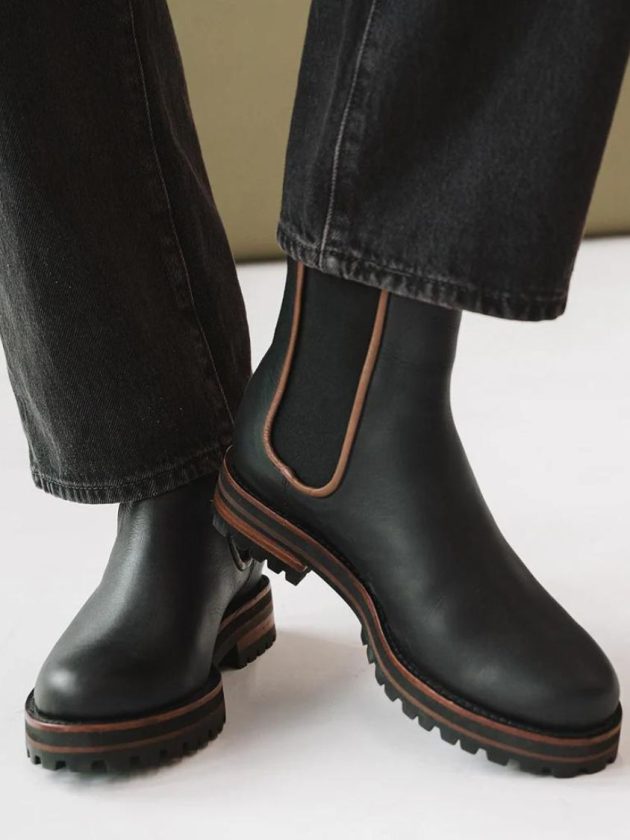
 For More Slow Fashion Content:
More Conscious Fashion Guides for Cool Weather
Consciously-Made Sweaters to Keep You Cozy
The Best Eco-Friendly and Vegan Shoe Brands
The Best Ethical & Sustainable Coats to Stay Toasty Warm this Winter
The post 9 Best Sustainable & Ethical Boots For Stylish Warmth appeared first on Conscious Life & Style.
When it comes to shopping responsibly for furniture, one of the key decision factors to consider is locally-made — so if you’re in the United States, you might be looking for American made furniture companies.
Why Does Locally-Made Furniture Matter?
The first element that comes to mind is reducing shipping emissions. International shipping alone accounted for 2% of global energy-related CO2 emissions in 2022. So it’s crucial that we start to buy more locally and regionally made in general, and furniture is likely among the most bulky items we are going to buy so it feels like a particularly impactful area to focus on.
Additionally, when a product is locally made there is often more transparency. This is not always the case, but several of the US-made furniture companies here even have their own furniture workshops or partner with hyper-local manufacturers that they can regularly visit.
And with audit deception commonplace, it’s vital that a company visits their factories or has close relationships with their manufacturers to ensure social responsibility.
Another benefit is that you’ll contribute to supporting your local economy, especially if you’re purchasing from an American-made furniture brand that is based in your own state or region.
It goes without saying that American-made furniture is likely going to be more expensive than your standard mass-market furniture retailer.
However, there are several direct-to-consumer brands in this guide that avoid retailer markups to deliver more accessibly-priced furniture than some of the mid-tier to higher end furniture companies you might be familiar with that produce abroad.
A Quick Note on Certifications
You’ll see a few certifications referenced throughout this guide. Here’s what each one actually covers! You’ll notice many of them are quite specific to certain areas of the furniture. That’s why many sustainably-minded American-made furniture companies have products with several certifications.
- FSC Certified = the wood sourcing was responsibly managed; not a finish, foam, or textile guarantee. Some brands (like Avocado) hold their own facility-level FSC certification, which is a stronger signal than sourcing FSC-certified wood from a third party.
- GOLS Certified = verifies that latex foam is made from certified organic latex, grown and processed to strict environmental and safety standards; this is a latex-specific certification, not a wood, fabric, or product-level guarantee
- GOTS Certified = the fabric meets strict organic and safety standards, with labor protections built into the entire supply chain; this is a textile-specific certification, not a wood or foam guarantee
- OEKO-TEX® STANDARD 100 = tests the finished textile for harmful substances; a fabric-specific certification, not a claim about the wood or foam underneath it.
- Cradle to Cradle Certified (Gold/Silver/Bronze) = evaluates a product across material health, circularity, clean air/climate, water/soil stewardship, and social fairness; this is one of the few certifications that can assess a whole product rather than a single material and it’s the one sustainability managers at brands tell me is the toughest to get
Now that this is all cleared up, let’s dive into the guide!
My Top Picks for American Made Furniture Brands
Note that the following includes affiliate links, which means we may earn a small commission if you make a purchase, at no additional cost to you. As always we only feature brands that meet strict criteria that we love!
1. Medley
Best for: full range of American-made, non-toxic furniture
Categories: Living, Bedroom, and Dining Furniture
Made in: California and North Carolina
Price Range: $595 (poufs) – $10,290 (sectionals)
Medley is consistently at the top of my mind when I think of American-made furniture — their commitment to safe materials, sustainability, and craftsmanship is hard to match.
The brand combines traditional craftsmanship with modern ecological sensibility. Each sustainable furniture piece is meticulously made-to-order in California ensuring quality, supporting local manufacturing, and reducing their carbon footprint. Medley uses some of the best eco-certified materials in furniture too, like GOLS + GOTS-certified organic latex foam and OEKO-TEX® Standard 100-certified wool.

2. Avocado
Best for: FSC-certified and reclaimed wood furniture, made in their own LA woodshop
Categories: Bedroom and Living Room Furniture
Made in: California
Price Range: $349 (side table) – $3,999 (full bed frame)
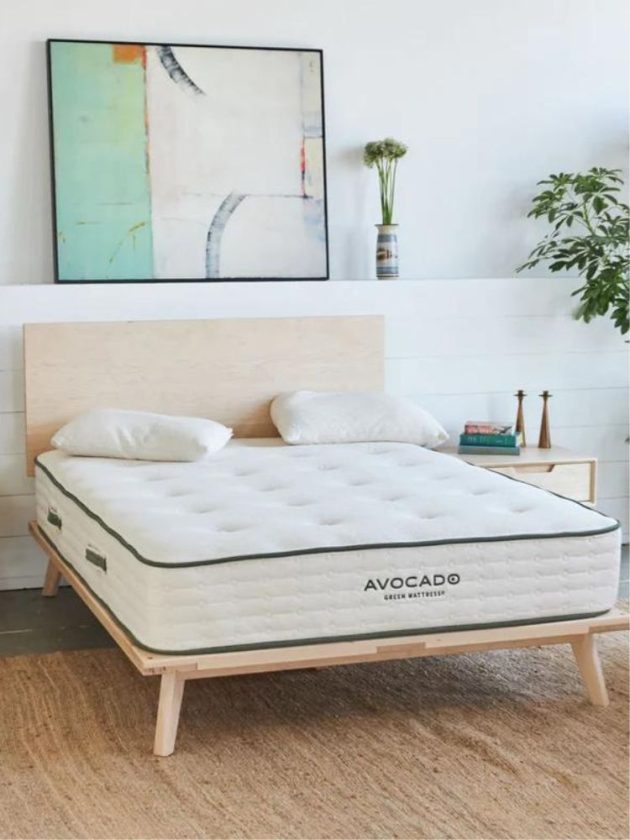
Rooted in a commitment to sustainability, Avocado has their own FSC®-certified (C156318) woodshop in Los Angeles! Among their offerings, you’ll find living room and bedroom furniture crafted from reclaimed wood or FSC-certified wood. Whether your aesthetic is minimal, Scandi, boho or MCM, you’ll find a beautiful piece to add to your home on this California-made furniture company’s site.
What really makes Avocado stand out to me though is their ethical labor standards. They produce in their own woodshop, pay living wages, and offer solid benefits to their factory team.
3. Cisco Home @ Urban Natural
Best for: design-forward furniture with three decades of LA craftsmanship
Categories: Living and Bedroom Furniture
Made in: California
Price Range: $975 (ottoman) – $9,000+ (large sectional)
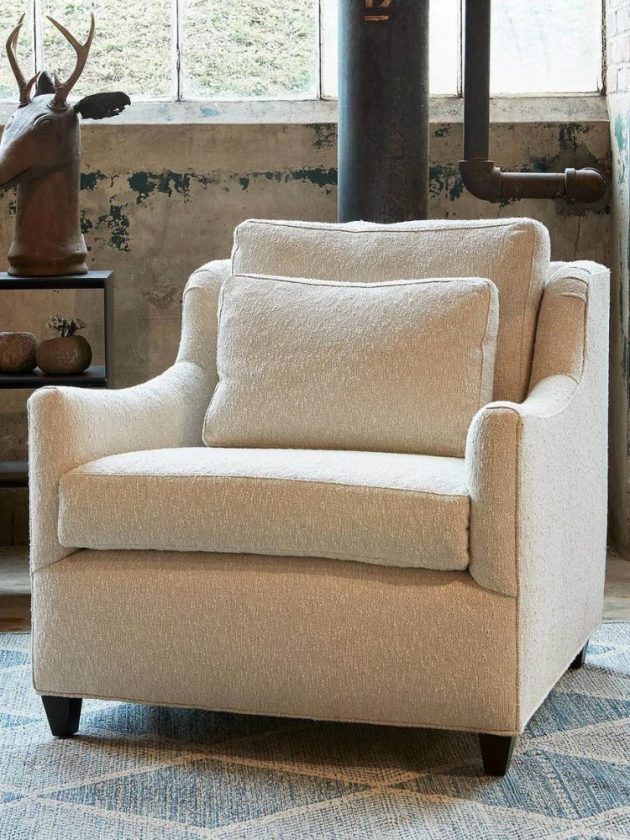
Founded in Los Angeles by Cisco Pinedo, Cisco Home focuses on environmentally responsible practices and local craftsmanship. Each piece, made in their Los Angeles workshop, combines modern elegance with rustic charm using materials like FSC-certified hardwoods and natural fabrics like hemp and organic cotton. Cisco Home’s three decades of experience in making quality sustainable furniture, makes them a top choice for American-made furniture.
Cisco Home’s default furniture options don’t automatically include their best eco materials though. So for the most eco-minded option, check “Organic Upgrade” on the product page.
4. Copeland @ Urban Natural
Best for: heirloom hardwood furniture
Categories: Living, Bedroom, and Office Furniture
Made in: Vermont
Price Range: $256 (shelf nightstand) – $6,865 (storage bed)
Copeland Furniture, based in Bradford, Vermont has been making heirloom-quality pieces since 1976. The USA-made furniture company sources their hardwoods like cherry, maple, and walnut from sustainably managed forests in the Northeast. Their collections blend traditional craftsmanship with elegant, contemporary design and functionality. You’ll find pieces like extendable tables and sit-stand desks from Copeland.
Copeland’s pieces are priced on the higher end, but they are truly stunning pieces that may be worth the investment if they’re within your budget.

5. Savvy Rest
Best for: fully organic, non-toxic bedroom and living room furniture
Categories: Bedroom and Living Room Furniture
Made in: Virginia
Price Range: $400 (bedside table) – $3,999 (sofa)
Savvy Rest’s commitment to organic materials and sustainable production practices is unmatched. I haven’t found another brand yet that matches their level of integrity!
The Northeast US-made furniture company crafts each piece of furniture with only the best non-toxic materials like GOTS-certified organic fabrics, Cradle-to-Cradle Natural Talalay latex foam, and zero-VOC finishes. Made in their Central Virginia wood shop, Savvy Rest exemplifies a dedication to creating non-toxic and sustainably-minded American-made furniture that is built to last.

6. What WE Make
Best for: reclaimed wood furniture
Categories: Dining, Living, Office, and Bathroom Furniture
Made in: Illinois
Price Range: $425 (bar stools) – $6,425 (bathroom vanities)
I loved learning that What WE Make produces their furniture right in Chicagoland, local to me!
What WE Make crafts tables, vanities, and more from old-growth salvaged wood sourced from torn down Midwestern barns. And ensuring the furniture brings in minimal to no toxins, the pieces are finished with zero-VOC finishes. Each piece is made-to-order and you can even get a vanity, table, or other furniture piece fully customized to your liking!
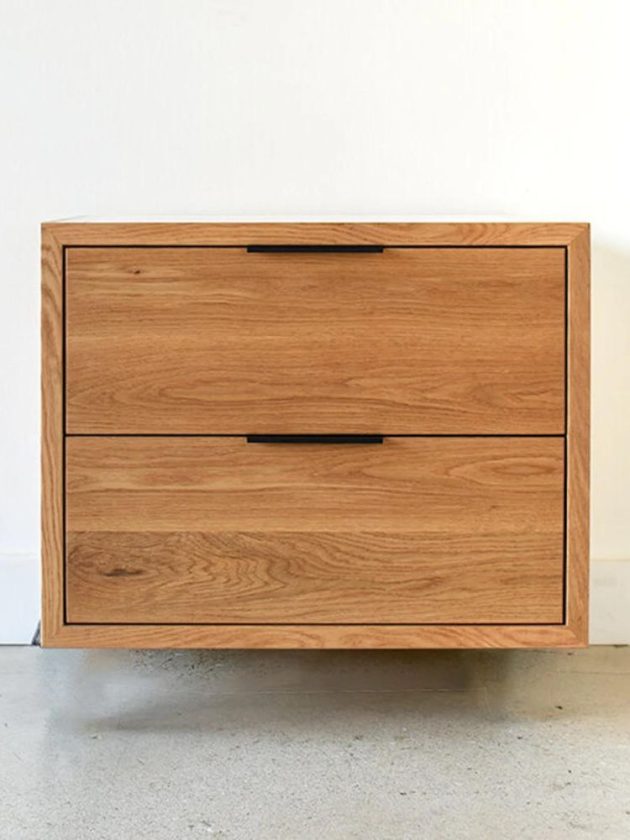
7. Sabai
Best for: affordable, repairable American-made seating
Categories: Living Room Furniture
Made in: North Carolina and Tennessee (go behind the scenes)
Price Range: $495 (side table) – $6,295 (sectional)
Sabai’s American-made furniture collection focuses on environmental consciousness and accessible pricing. Sabai’s sofas and chairs are made crafted from 100% recycled fabrics or natural upholstery (they have a cotton + hemp option) and FSC-certified wood while being free of PFAS and flame retardants. The best part about Sabai in my opinion, though, might be their Repair Don’t Replace program so you can ensure your sofa makes it for the long haul.

8. Maple Corner Woodworks @ Urban Natural
Best for: traditional Shaker-style Vermont craftsmanship
Categories: Bedroom, Living Room, Office, and Dining Room Furniture
Made in: Vermont
Price Range: $815 (end table) – $9,650 (armoire)
Maple Corner Woodworks is dedicated to crafting heirloom-quality, timeless furniture in Vermont, which is well-known for its quality woodworking.
With their most popular styles inspired elements by the best of furniture design from the mid to late 1800s, it’s safe to say that MCW prioritizes the longevity of their solid hardwood furniture. If you’re looking for classic designs, this is the direction I’d point you.

9. Loll Designs
Best for: American-made outdoor furniture
Categories: Outdoor Furniture
Made in: Minnesota
Price Range: $345 (stool) – $4,995 (sofa)
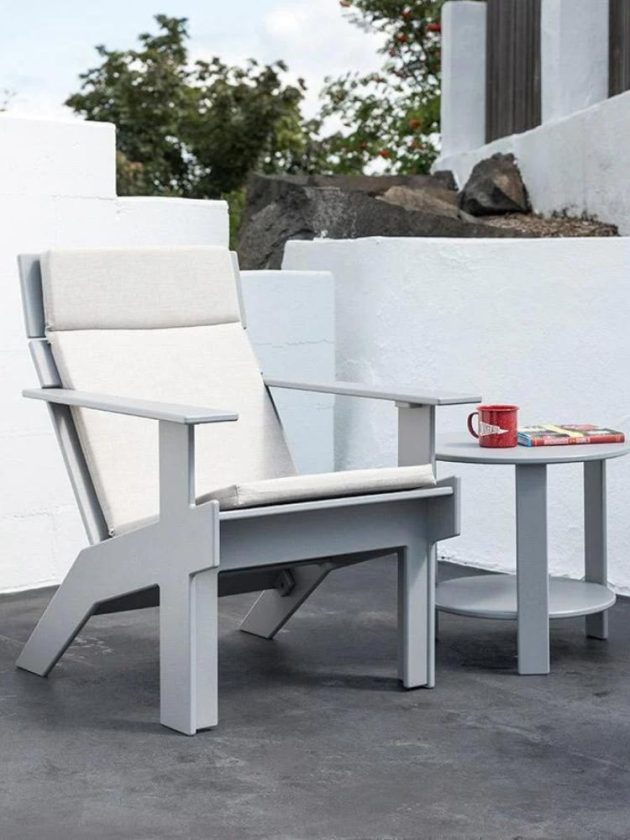
Loll Designs has everything you need for your patio redesign, from coffee tables and cabinets to benches and lounge chairs.
Made using recycled high-density polyethylene (HDPE), Loll Designs creates USA-made furniture build to last. The furniture is designed to not rot, splinter, or require any re-staining. In fact the brand was awarded the Cradle to Cradle Certified BRONZE certification, which as I mentioned is one of the toughest certifications for a company to get.
That wraps it up for our guide to American made furniture companies! I hope you find a quality piece or two that will last you a lifetime in this guide.
You Might Also Want to Check Out:
The Top Non-Toxic Furniture Companies
The Best Sustainable Tables to Gather Around
Comfy and Cozy Eco-Friendly Chairs
The post 9 American Made Furniture Companies Prioritizing Quality Over Quantity appeared first on Conscious Life & Style.
9 American Made Furniture Companies Prioritizing Quality Over Quantity
If you’re planning a bathroom renovation and are trying to make more eco-minded decisions, there are several considerations to make. This guide aims to help you save time on researching one of those elements: sourcing a sustainable bathroom vanity.
The furniture companies featured here offer single sink and double sink vanities, and several also let you customize the size of your vanity too.
What is an Eco-Friendly Bathroom Vanity?
Repurposed
Many of the same concepts from sustainable fashion apply to sustainable furniture! The most sustainable furniture is the one already in your home and what’s already been produced. So, can you repurpose something you already have or found at an estate sale with some non-toxic paint?
You could repurpose a sideboard / credenza or lower height dresser into a bathroom vanity, for example, by cutting a sink hole and piping holes and finishing the top with a counter or waterproof finish. There are also contractors who can do that customization for you if you find that perfect dresser you want to transform into a vanity.
Another option is to search for demolition sales near you. Search “demolition sales near me” or check out EstateSales.net and check “demolition sales” in the filters. You can find everything from appliances and cabinets to bathtubs and vanities at these demolition sales. They’re not always the most modern vanities, but if you love a DIY project, and access to a vehicle that can transport these kinds of heavy duty furniture pieces, this could have some potential.
By the way, if you are doing a renovation that requires demolition, see if you can partner with a demolition sales company to help you sell those hard-to-sell items like cabinets before you start your renovation to reduce waste.
Eco-Conscious Materials
If you’re buying a new bathroom vanity, one of the key considerations is the materials that vanity is made from. Look for sustainably-sourced (and ideally locally sourced!) hardwood that is finished with zero or low VOC finishes.
The shelves are typically going to be engineered wood, even if the outside is hardwood, otherwise the vanity would be extremely heavy.
Even better if you can find a bathroom vanity made from reclaimed wood, since that means no trees had to be cut down for producing the furniture!
There are also several eco countertop materials out there, including Richlite, made from post-consumer recycled paper, Grenite has recycled quartz, glass, and acrylic countertops. Most of the brands featured below focus their sustainability sourcing on the main vanity, but you could purchase one of those vanities without a countertop and get a separate eco countertop potentially.
You can also find countertops at demolition sales! (See above for more on those.)
Responsible Production
Given the weight and size of furniture, it’s especially great to see local production for furniture. The carbon footprint of shipping such heavy and large pieces around the world is nothing to overlook!
Another great practice is made-to-order, which reduces waste — and also often enables you to customize your vanity to your specifications.
Finally, transparency, fair wages, and safe working conditions are key to responsible production. This is another reason to choose non-toxic materials. You’re not only protecting yourself, but also supporting companies that protect their workers and the environment, too.
Certifications
You’ll see a few certifications and standards referenced throughout this guide. Here’s what each one actually covers:
- FSC Certified = the wood sourcing was responsibly managed; not a finish, countertop, or hardware guarantee.
- GREENGUARD Certified = the finished product was tested for low chemical emissions, including VOCs; product-level certifications mean that just because one product from a brand is certified, it doesn’t mean the others are!
- Fair Trade Certified = verifies that a factory meets standards for fair wages, safe working conditions, and ethical labor practices; not a company-wide certification
- B Corporation = a company-level certification (not product-specific) verifying that a business meets standards for social and environmental performance, transparency, and legal accountability, assessed by the nonprofit B Lab
Where to Find Sustainable Bathroom Vanities
Check out the curation of brands below that carry eco-friendly bathroom vanities. Details on each brand are included, as well as key points like price and shipping details. Each brand has different sustainability highlights.
Note that this guide includes affiliate links, which means we earn a commission if you buy through these links at no additional cost to you. This helps us continue to create more free guides for you!
1. What WE Make
Best for: made-to-order reclaimed wood vanities with character
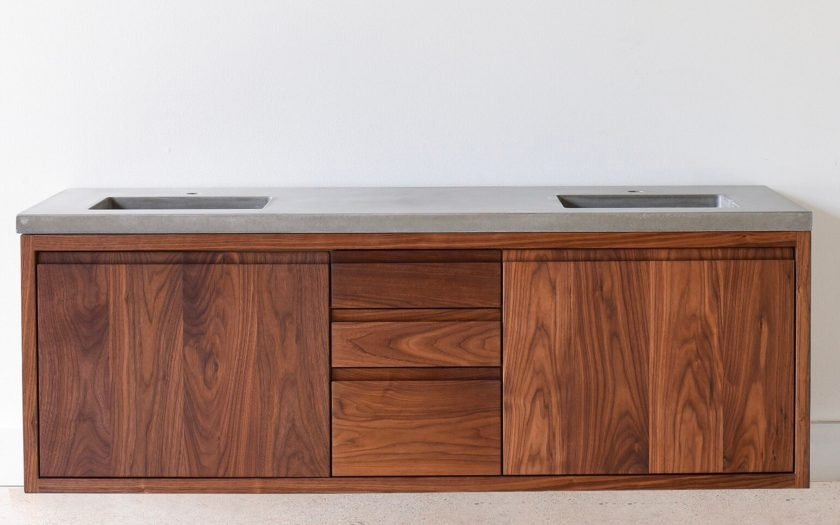
Based near Chicago, What WE Make handcrafts reclaimed wood furniture — including bathroom vanities — made from salvaged wood sourced from torn down midwestern barns. That means the wood is century- or centuries-old wood, with incredible durability and character. Just don’t expect every piece from the brand to look the same! Slight variations are part of the nature of using repurposed materials.
Their recycled bathroom vanities are available in a range of styles from mid-century modern to rustic farmhouse, with legs or as floating vanities, and are available in several low VOC finishes. Each vanity is made-to-order so you can also request custom sizes.
Materials: Reclaimed Wood, Concrete
Price: $1,995 – $5,485
Shipping: Ships free within U.S.
2. Native Trails @ Wayfair
Best for: solid wood vanities with lower impact countertops

Native Trails is a woman-owned Certified B Corporation that prioritizes social and environmental responsibility. The company’s eco-friendly bathroom vanities are made with FSC-certified solid European hardwood or reclaimed wood from oak barrels of California vineyards. But my favorite part of Native Trails is that their vanities use more eco-friendly countertops made from their own material called NativeStone® — it’s a blend of cement and jute fiber handcrafted by artisans in Vietnam.
The sustainable furniture company also sells recycled copper sinks, NativeStone® basins, concrete vanity tops, mirrors, and even drains to complete your bathroom vanity. While Native Trails does not sell direct on their site, you can find their bathroom vanities at several in-person and online retailers, including Bed Bath & Beyond and Wayfair.
Materials: Reclaimed Wood, FSC-Certified Walnut, Solid Oak, Concrete & Jute (NativeStone®)
Price Range: $1,413 – $4,428
Shipping: Free shipping through Bed Bath & Beyond and Wayfair
3. West Elm Sustainably Sourced Collection
Best for: wide variety of aesthetic choices for more sustainable vanities

West Elm has been making strides in their sustainability efforts and has several sustainable bathroom vanities available. You can sort through their options with filters like Greenguard Certified (tested for toxic chemicals), Sustainably-Sourced (typically FSC-certified wood), and Fair Trade. They also have a Contract Grade tag signifying products that are durable and built to last. You can find eco-friendly mid-century modern, contemporary, and japandi style bathroom vanities on their site.
While West Elm doesn’t have the level of sustainability credentials of some of the other options on this list, I appreciate that the retailer is large enough to have stores where you can see the vanities in-person before making your decision.
Materials: Hardwood & Engineered Wood (check for GREENGUARD certified products on engineered wood)
Price: $1,055 – $3,399
Shipping: Within U.S.; White Glove Delivery available in select locations
4. Limitless Woodworking
Best for: solid wood vanities with a farmhouse feel
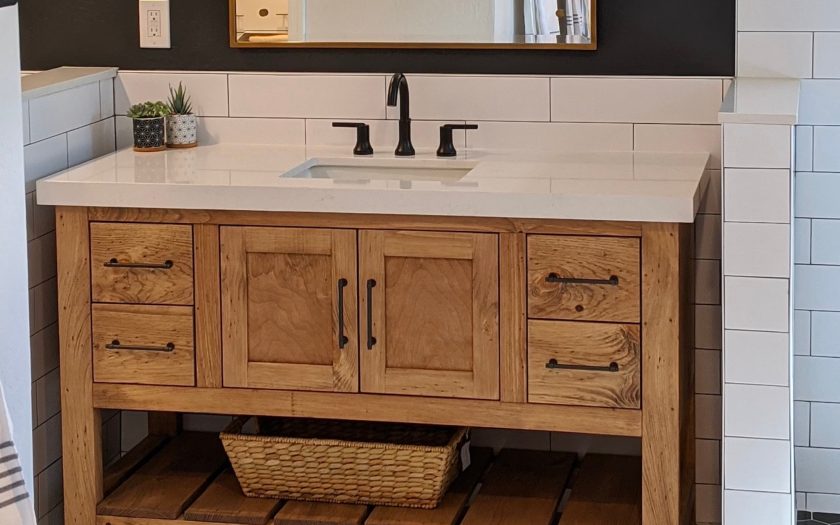
Specializing in custom wood furniture, you can find a USA-made bathroom vanity that you can design to your specifications, from size to stain color to hardware at Limitless Woodworking. The Indiana-based furniture company’s natural bathroom vanities are made-to-order just for you, and many reviewers compliment the products’ craftsmanship and quality.
The wood is new — not reclaimed like What WE Make or Native Trails — but I appreciate the transparency around the production of these vanities along with the commitment to using solid wood and building with quality craftsmanship.
Materials: Northeastern White Pine
Price: $1,433 – $8,189
Shipping: Ships free within U.S.
How about more affordable sustainable bathroom vanities?
You may have noticed that the price of a more sustainable bathroom vanity is on the higher end from your typical vanity — that’s to be expected when the sourcing is done responsibly, a company uses hardwood instead of composite wood, or when furniture is handcrafted domestically.
But if these vanities are outside of your budget, I’d suggest furniture outlets as a secondhand option (since it can be pretty tough to find vanities secondhand from someone’s home). I’m not talking about the kind of outlets where they just make cheaper products, but genuine outlets where they sell returned products they can’t resell as new. Such as:
West Elm Open Box Outlet Deals: this is where you can find deals on vanities and other bathroom furniture and accessories that have been opened and returned. A true outlet like this is a form of secondhand furniture, as these pieces usually cannot be sold as new. Some retailers toss out returned products, so it’s nice to see companies resell these types of items.
Wayfair Open Box: similarly, Wayfair offers open box deals up to 40% off on all kinds of furniture, including bathroom vanities. As an outlet, just keep in mind that you can’t return the items, so make sure to double check the measurements! If you’re thinking: but what if there’s an undisclosed issue or significant damage from shipping? Thankfully, those usually those have exceptions. I received a broken chandelier in the mail from Wayfair’s Open Box Outlet, and they did refund me after I sent photos. So while the product might have some wear on it from back and forth shipping, you shouldn’t have to deal with a dysfunctional product.
Ikea As Is: I’ve used the As Is program from Ikea several times. You simply browse your nearest store’s selection online, reserve the piece(s) you want then pick up and pay within 48 hours. It’s not as convenient as West Elm or Wayfair since you have to drive and pick up — versus just wait for the delivery — but the benefit is you can actually see the furniture before you purchase.
I hope one of these options will meet your needs for an eco-friendly bathroom vanity! Feel free to reach out if you have any further recommendations. And good luck on your bathroom remodel!
You May Also Like:
Gorgeous Sustainable Tables to Gather Around
The Best Sustainable Furniture Companies
Organic Towels to Transform Your Bathroom Into a Sustainable Sanctuary
The post 4 Eco-Friendly Bathroom Vanities For A More Sustainable Remodel appeared first on Conscious Life & Style.
4 Eco-Friendly Bathroom Vanities For A More Sustainable Remodel



-

 Greenhouse Gases2 years ago
嘉宾来稿:满足中国增长的用电需求 光伏加储能“比新建煤电更实惠”
-
Climate Change1 year ago
Guest post: Why China is still building new coal – and when it might stop
-
Greenhouse Gases1 year ago
Guest post: Why China is still building new coal – and when it might stop
-

 Climate Change2 years ago
嘉宾来稿:满足中国增长的用电需求 光伏加储能“比新建煤电更实惠”
-

 Renewable Energy11 months ago
Sending Progressive Philanthropist George Soros to Prison?
-
Climate Change2 years ago
Bill Discounting Climate Change in Florida’s Energy Policy Awaits DeSantis’ Approval
-
Greenhouse Gases1 year ago
嘉宾来稿:探究火山喷发如何影响气候预测
-

 Climate Change2 years ago
Analysis: China’s CO2 falls 1% in Q2 2024 in first quarterly drop since Covid-19