Britain’s new prime minister announced in his first week that he will cut the cost of public transport and electricity, making lower-emission technologies like bus travel, electric vehicles and heat pumps more affordable for voters. But some of the funding for those policies will come from the budget for international climate finance, the government has said, raising concerns about fairness.
Former Manchester Mayor Andy Burnham took over from Keir Starmer as Labour Party leader and prime minister on Monday, appointing climate advocates Ed Miliband as foreign and development minister and Miatta Fahnbulleh as climate and energy minister.
On Tuesday, Burnham said his government would cut the value added tax (VAT) households and some small businesses pay on their electricity bills from 5% to zero from October 1, saving households £45 ($60) a year.
On Wednesday, he said the maximum fare bus companies in England can charge for a single journey will be reduced from £3 ($4) to £2 ($2.67) from January 1, 2027. The government said the subsidies to achieve this would be mostly funded by switching money set aside for overseas climate finance projects from grants to loans. It did not give further information in its announcement, while the UK’s transport minister told Sky News the plan is still being worked out.
-
Tropical forest protection fund at risk after UK stalls on pledge
The Brazil-led TFFF was launched at COP30 as an innovative financial model to keep rainforests standing, but is still short on startup cash -
UK halves Green Climate Fund contribution, as it spends more on security
After promising £1.6 billion to the UN’s flagship climate fund in 2023, the UK government has now said it will only hand over half as much -
EU, UK lead push for electrification as “powerful weapon” against fossil fuels
A group of dozens of countries seeks to build momentum for a COP31 pledge to electrify 35% of global energy use by 2035 as an alternative to fossil fuels


The floated changes to the climate finance budget were immediately criticised by groups working on climate justice for developing countries, including Bond, the UK network for NGOs, which described the decision as “disappointing”.
“Robbing Peter to pay Paul is not the answer and pitches marginalised communities in the UK against marginalised communities in lower-income and climate-vulnerable countries,” BOND CEO Romilly Greenhill said in a statement. “Climate finance must not worsen the debt burden of countries that are already suffering the worst – and most costly – impacts of a climate crisis they did not cause.”
Hunt for money
Burnham promoted both policies as measures to combat the rising cost of living and “give people breathing space”, with climate campaigners and industry groups noting they are also likely to reduce the UK’s climate-heating emissions by encouraging bus travel and the use of electric vehicles and heating.
But thorny questions remain over how the policies will be paid for. The government said Tuesday’s VAT cut for electricity would be funded by scrapping the previous government’s digital ID programme, but Darren Jones, a former minister involved with that policy, said it had been “unfunded” – a statement that dominated media coverage.
A day later, the government said the new bus fare cap would cost £454 million ($606m). Transport minister Heidi Alexander told Sky News that £54 million would be taken from an under-spend in the budget of the Department for Energy Security and Net Zero (DESNZ) and £400 million would come from changing unspecified international climate finance from grants to loans. The details “still need to be worked through”, she said, adding that the government “had wanted to make an announcement today”.
Mohamed Adow, director of Nairobi-based think-tank Power Shift Africa, said “climate finance was never meant to be a pot of money that governments raid when they need to pay for domestic spending”.
DESNZ had not responded to a request for comment at the time of publication. “We’re not wanting to fleece anyone here, and we actually want to maximise the development potential of this money that is available,” minister Alexander said in her TV interview.

Aside from the controversy over their funding, the policies themselves were widely welcomed by climate campaigners. Jess Ralston, energy lead at the Energy and Climate Intelligence Unit (ECIU), said the tax cut on electricity bills “could help households to switch to electric heat pumps, protecting UK homes from becoming ever more exposed to the whims of Putin and Trump when turning on their gas boiler”.
The last few months have seen global momentum build behind electrification, spurred by the US-Iran war disrupting oil and gas supplies and driving up prices. The Turkish and Australian COP31 presidencies have announced a global target to boost electrification, backed by the European Union, Canada, Philippines, UK and others.
Campaigners call for lower power prices
While reaction to the VAT cut was supportive, some questioned whether £45 a year of savings per household is enough and called for more measures to cut electricity bills.
Friends of the Earth’s energy lead Imogen Dow said those on the lowest incomes should be given cheaper electricity through a “social tariff” and the Institute for Public Policy Research (IPPR) think-tank – which is close to the Labour Party – said levies on energy bills should be shifted to general taxation.
Matthew Paterson, a politics professor at Manchester University, told Climate Home News that the most effective way to reduce electricity bills is to take on the UK’s private electricity companies, while consumer-oriented measures like the VAT cut are “tinkering around the edges”.
Jarrod Birch, head of policy and public affairs for the EV charging industry association Charge UK, said that while the policy would make home-charging cheaper, people who charge their vehicles at public points will still have to pay 20% VAT. The UK’s tax authority is fighting a court ruling that ordered it to reduce the tax motorists pay on public chargers to the current household rate of 5%.
Further measures will be the responsibility of Secretary of State for Energy Security and Net Zero Miatta Fahnbulleh, who is relatively new to politics after a career at left-wing, pro-climate think tanks the IPPR and the New Economics Foundation.
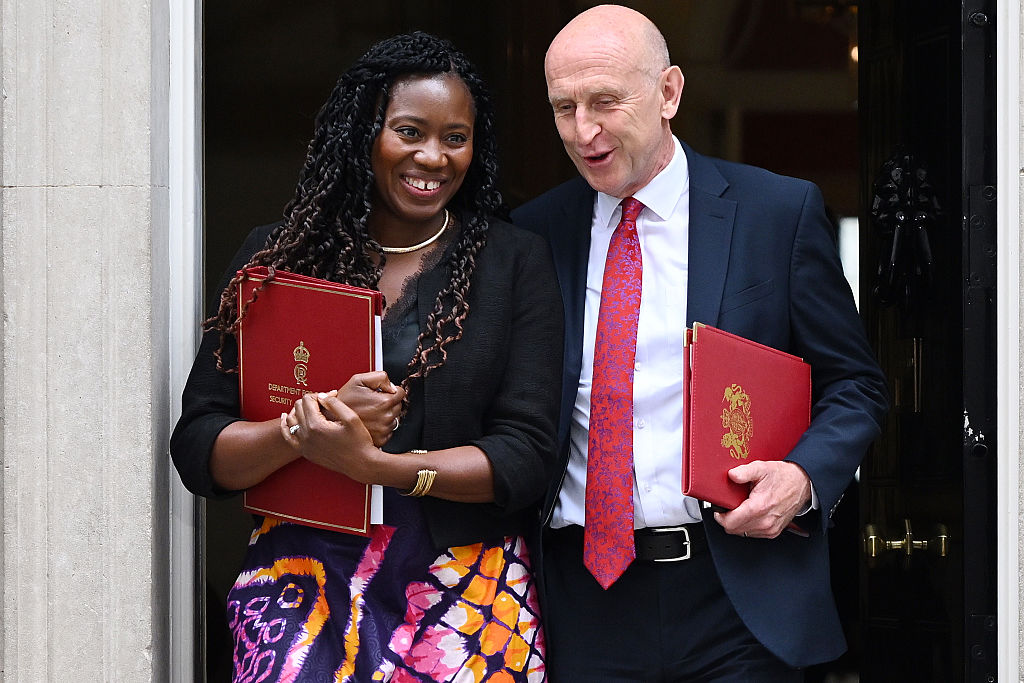
Michael Jacobs, political economy professor at Sheffield University and former adviser to UK Labour prime minister Gordon Brown, said Fahnbulleh would be a “climate advocate” who would continue the “progressive climate agenda” of her predecessor Ed Miliband.
“She’s a very creative policy wonk so I expect there to be lots of policy innovation under her,” he said, “I think she will be looking at new ways to encourage take-up of heat pumps and domestic batteries.”
Aid budget in Miliband’s hands
Despite reports he could be made finance minister, Miliband has been appointed Secretary of State for Foreign and Commonwealth Affairs. Miliband has attended many climate COP meetings over several decades, most recently representing the UK at COP29 and COP30, and has been targeted by the right-wing media for his support for climate action and opposition to new oil and gas drilling in the UK’s part of the North Sea.
In his new role, Miliband will be responsible for the UK’s overseas aid budget including its international climate finance, which the Starmer government had slashed to fund increases in defence spending.
UK cuts support for climate action abroad to fund military instead
Jacobs said he expected Miliband to prioritise climate and development in the UK’s foreign policy and to push Burnham and new finance minister John Healey to reverse Starmer’s aid cuts.
But there are fears Healey could try to cut the aid budget further to fund the military. Healey was a surprise pick for Chancellor of the Exchequer and grabbed headlines when he resigned as Starmer’s defence minister in June over what he saw as insufficient defence spending.
The post Will new UK PM’s green measures at home cause climate finance pain overseas? appeared first on Climate Home News.
Will new UK PM’s green measures at home cause climate finance pain overseas?

In the shadow of Ankara’s new international football stadium, a group of visiting journalists – including Climate Home News – perched on tiny chairs watched over by mannequins dressed in old mobile phones, newspapers and bottle tops.
As they sipped Turkish tea in a room meant to educate visitors – mostly schoolchildren – about recycling, they were addressed by Ekrem Yıldırım, lead on zero waste at Türkiye’s environment ministry.
After Yıldırım spoke of Türkiye’s plans to pursue “zero waste”, one journalist asked why the sugar cubes for the tea were individually wrapped in plastic and why water had been served in single-use plastic pots.
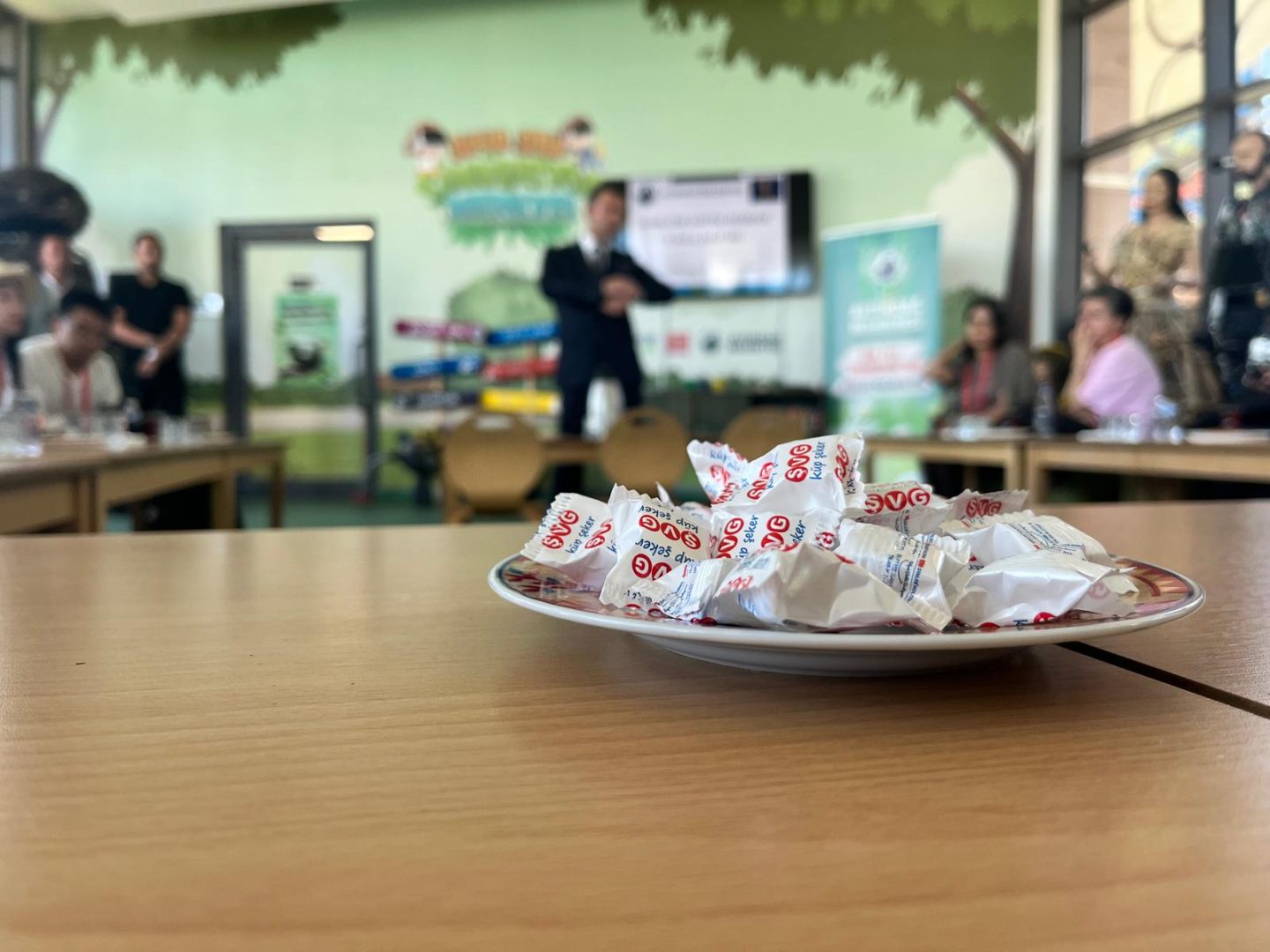
Yıldırım accepted that this kind of packaging is a problem and glass or porcelain is preferable. He added that legislation to ban single-use packaging has been introduced to parliament, but is not yet finalised.
The situation symbolised what Turkish experts and environmental campaigners flag as a contradiction between the “zero waste” image that the government – represented by First Lady Emine Erdoğan – presents to the world and the reality of rising Turkish waste generation, significant climate-wrecking methane emissions from landfills and a politically influential industry producing plastics from oil and gas.
International campaign lacks domestic punch
Türkiye’s Zero Waste initiative – which is a vague plan to reduce waste generation and increase recycling, rather than a specific goal to reach zero waste by any specific date – was launched in 2017.
It came at a time when the Turkish government was under fire for its coal mines, its refusal to ratify the Paris Agreement and its brutal response to protests against plans to turn Gezi Park in Istanbul into a barracks and shopping mall.
Ümit Şahin, climate lead at Sabancı University’s Istanbul Policy Center, said the Turkish government saw then, and still sees, the initiative as “a way to build its international reputation on environmental issues”.
“Recycling gives the government something visible to point to,” he said. “It can promote the campaign without taking on powerful fossil fuel interests or changing its development priorities in mining and energy.”
The campaign has been led by Emine Erdoğan, the wife of Türkiye’s long-time president, Recep Tayyip Erdoğan. In 2022, she convinced countries at the UN General Assembly to create an annual International Day of Zero Waste on March 30.

COP31 President Murat Kurum has picked up on the theme, saying that zero waste is “one of the main pillars” of Türkiye’s COP31 presidency. In September, he reminisced at a press briefing in the northern city of Trabzon about old-fashioned Turkish rural life where food waste would be given to animals, ripped clothes would be mended, and new attire was only for religious festivals.
President Erdoğan told leaders at September’s UN General Assembly in New York that an “incredible desire for consumption” was fuelling a “culture of waste”. “We cannot speak of justice in a world where tonnes of food are thrown into the garbage on one side while hundreds of millions of people collect food from garbage containers on the other,” he railed.
Sedat Gündoğdu, a marine biologist and environmental researcher at Türkiye’s Çukurova University, told Climate Home News that zero waste is a worthy concept. But when it comes to putting words into action at home, he said, the government has failed. Official statistics show the amount of waste each person in Türkiye generates has remained broadly unchanged since 2010 and the total annual amount has increased by 15%.
Single-use plastics ban
To help fix this, an European Union-style ban on single-use plastics – like plastic cutlery, cups and stirrers – was reported by state media in March to be working its way through parliament and expected to come into effect on September 1.
But PAGEV, a Turkish plastics industry trade association, argued that such “restrictive” policies had failed in the EU and would damage the Turkish economy and take away jobs.
Despite COP31 shining an international spotlight on the Turkish waste sector, the ban has yet to be approved by President Erdoğan. Gündoğdu and Greenpeace Türkiye campaigner Berk Butan fear that, if it is approved, it will be watered down so that Turkish companies can make single-use plastics in Türkiye even if they can no longer sell them in the country.
The latter restriction, Gündoğdu argued, would be “meaningless” because it cannot be enforced. Similar measures in Germany and Italy have failed, he said, because manufacturers just relabelled single-use products like plastic straws as multiple-use straws.
To close these loopholes, he said, strict definitions and design criteria are needed, which the Turkish legislation does not have. Butan added that single-use plastics could still be made in Türkiye, and then exported, used and dumped abroad, causing the same environmental damage somewhere else.
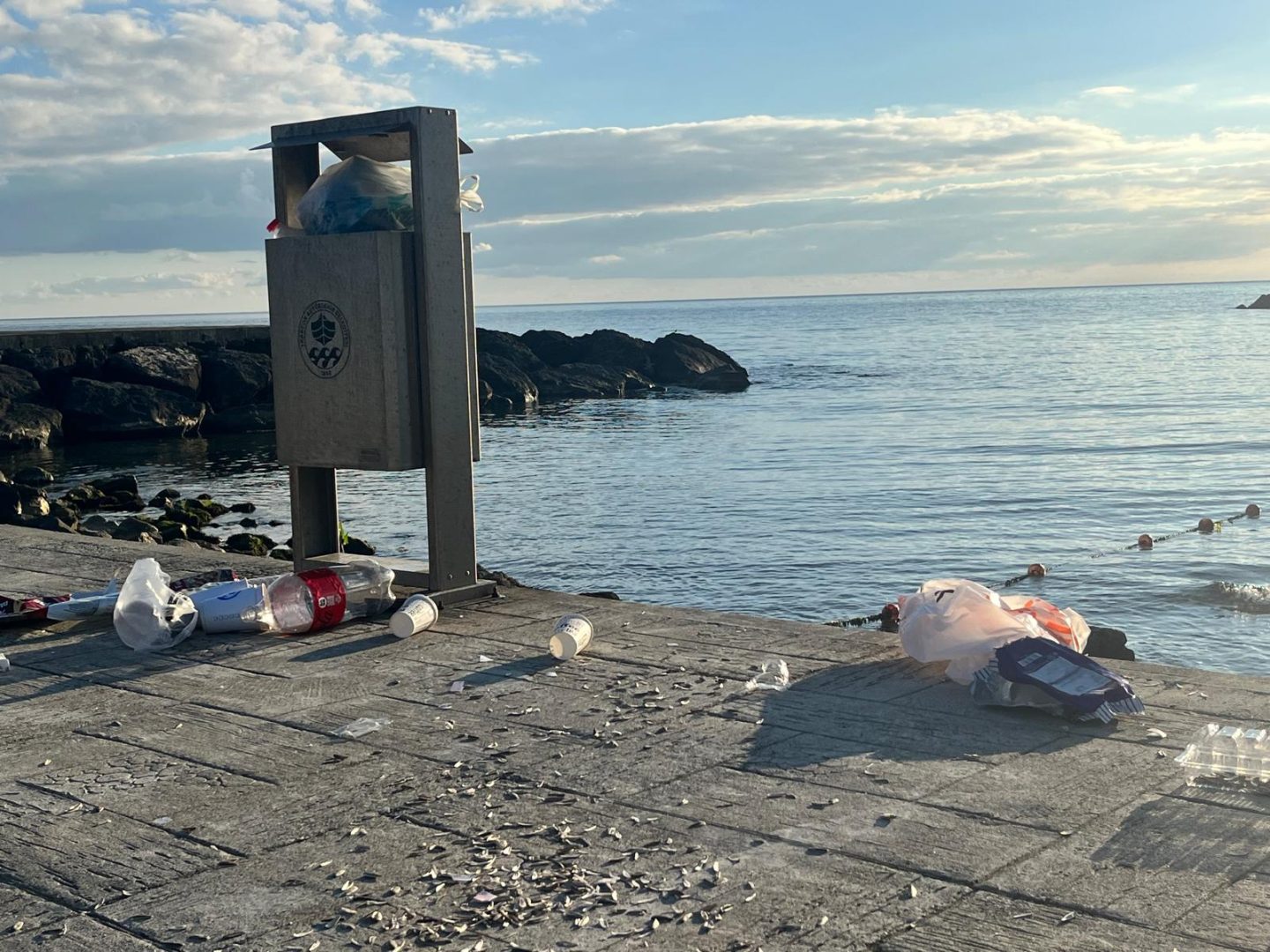
Türkiye’s other flagship waste prevention measure is a tax on plastic bags, which led to an immediate drop in usage when introduced in 2019. But, despite rampant inflation, the tax has risen from 0.25TL in 2019 to just 1TL ($0.02), meaning it’s several times less in real terms than in 2019.
“You can’t even buy chewing gum with one lira,” said Gündoğdu. “If you see one lira on the ground, you will not take it. So that’s why it’s meaningless.” Butan added that the government did not invest in creating behavioural changes among the public, such as encouraging them to shop with reusable textile tote bags. “They just put in the tax and they didn’t do the rest,” he said.
Landfills tidied up but still leaking methane
While the amount of waste generated keeps rising, there has been progress in dealing with the waste so that it is at least out of sight. Official statistics suggest more and more of it is being collected and, while the vast majority is still sent to landfill rather than recycled, those landfills are now covered and more advanced than they used to be.
On the outskirts of Ankara, waste management company ITC gave Climate Home News a presentation showing one such transformation. A before image shows what the nearby Mamak landfill looked like in 2006 – a huge open pile of garbage known in Türkiye as a “wild landfill”.
Another image shows what the site looks like now with the rubbish covered up with soil. ITC says that Ankara’s garbage is brought to them on trucks, and sorted into recyclables and biodegradable waste, which is then turned into compost or burned for energy. Waste heat is used to grow blueberries, tomatoes and lavender or to warm shoppers in a nearby branch of the Swedish furniture giant Ikea.
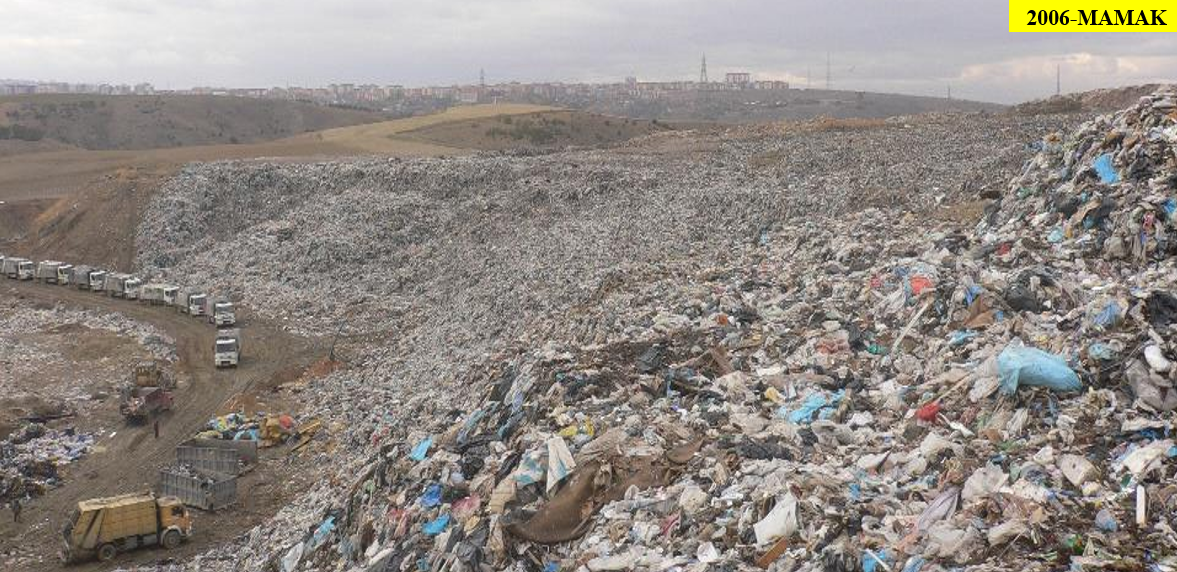
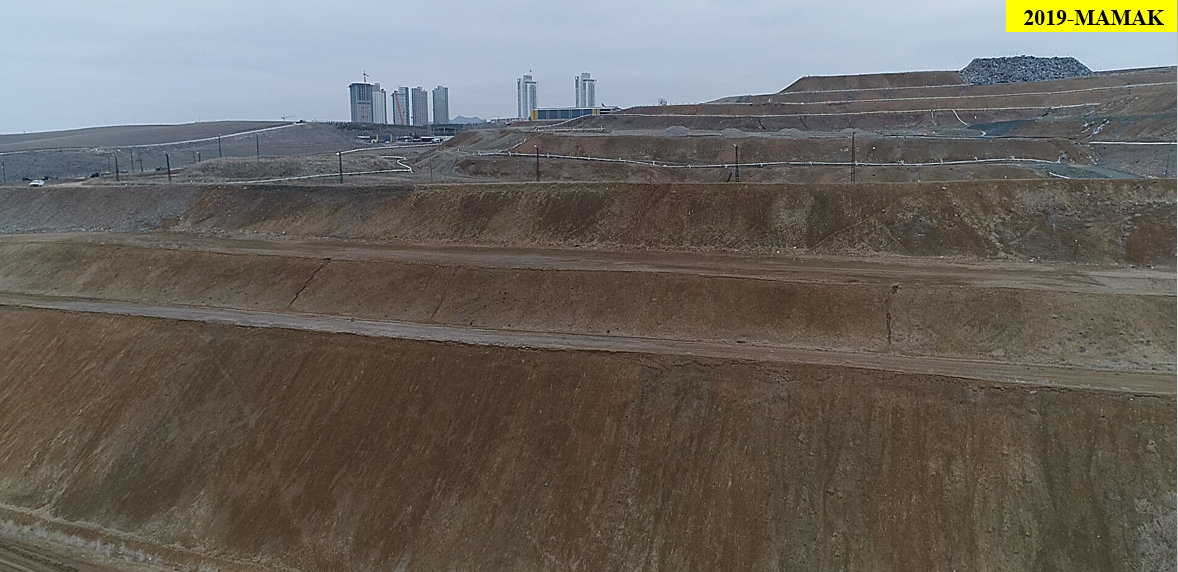
But despite this progress, satellite observations from Carbon Mapper shows the site is still leaking methane – a particularly potent greenhouse gas – into the atmosphere. Exactly how much is unclear from Carbon Mapper’s limited observations but the nearby Sincan landfill leaks about 1,200 kilogrammes of methane an hour into the atmosphere. Climate Home News analysis suggests this does similar damage to the climate as 73,000 petrol cars. ITC did not respond to a request for comment.
In October, a Guardian investigation showed these methane leaks were happening at landfills across Türkiye and are some of the worst in the world. Researchers from the University of California (UCLA) said they were “mind-boggingly large”. Aside from the climate damage, local residents near one Istanbul landfill report a smell so bad they told the Guardian they have to sleep with their windows closed even on hot summer nights.
Waste imports from Europe
Dealing with its own growing waste is difficult enough, but Türkiye also imports mountains of plastic from its European neighbours too. Ever since China restricted waste imports, the European Union has exported more plastic waste to Türkiye than to any other nation by far.
Despite European Commission concerns about how well Türkiye deals with the waste, the trade is expected to grow as an EU ban on exports to non-OECD countries – a category that does not include Türkiye – comes into force on November 21.
The export of waste to Türkiye has seen European countries accused of waste imperialism. Butan and Gündoğdu said Türkiye should ban waste imports. But COP31 President and Turkish environment minister Kurum pushed back on this during a press conference in Trabzon in September.

“You called it waste imperialism,” he said through a translator, but “nobody is forcing anyone” to import waste. He added that handling the waste creates jobs in Türkiye and that it doesn’t matter to the environment where the waste is recycled as long as it is.
But most of Türkiye’s municipal waste is currently not recycled. Turkish official Yıldırım said that the country’s recovery rate is currently around 30%. The most recent statistics available from the EU suggest Türkiye in 2020 had a recycling rate of 12%. The EU country average in 2024 was about 50%.
At the zero waste centre in Ankara, Yıldırım said Türkiye is improving its recycling rate and wants to do even more. The aim, he said, is to reach a rate of 70% by an unspecified date, up there with global frontrunners like Germany.
To achieve that, he said Türkiye is raising awareness of the importance of recycling including through cartoons for children and initiatives for football supporters to collect and redistribute unwanted toys.

As he spoke to journalists, a portrait of the ‘Girl with a Pearl Earring’ made from buttons, a sultan made from old plastic straws and a horse and wolf made from metal cogs and screws looked on. “The world is something that has been entrusted to us, and waste is something you steal from the future,” said Yıldırım.
Climate Home News’ travel and accommodation for the trip on which much of this article was reported was funded by the Turkish government.
The post Türkiye pushes “zero waste” at COP31, but is it delivering at home? appeared first on Climate Home News.
https://www.climatechangenews.com/2026/11/11/turkiye-pushes-zero-waste-at-cop31-but-is-it-delivering-at-home/
More than 92,000 people have registered to attend the COP31 climate summit in Antalya, Turkey, potentially making it the largest COP in history.
Carbon Brief analysis of the provisional lists of delegates, published by the United Nations Framework Convention on Climate Change (UNFCCC), reveals that more than 14,000 delegates have been registered as “host country guests”.
For comparison, the provisional list for COP30 in Belém, Brazil, last year included only around 1,000 delegates in this category.
As with COP30, Donald Trump’s US government has not sent a delegation. Other no-shows include Israel and Myanmar.
It was reported ahead of the summit that Taliban officials from Afghanistan had been registered for the event as observers; however, there are no delegates from observer states in the provisional lists.
With more than 3,000 “virtual” delegates signed up to attend the summit online, the total number of people registered for the event surpasses 95,000.
Further analysis of the participant lists will be added to this article in due course.
Party delegates
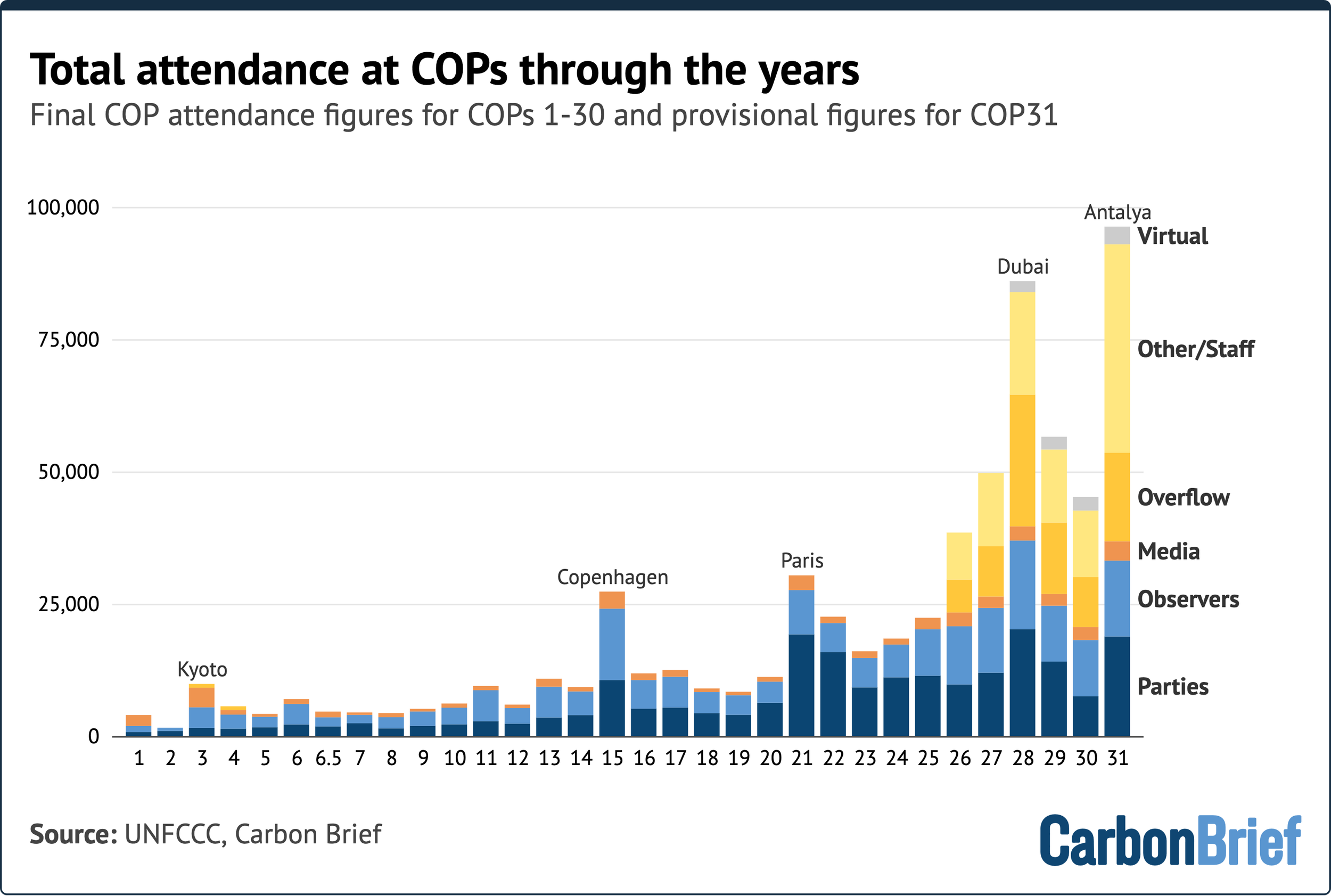
With 92,934 participants registered, COP31 is provisionally the largest COP in history – topping COP28 in Dubai, which was attended by more than 80,000 people.
This total is based on the delegates that have registered to be at the summit in person. The UNFCCC releases the final figures – based on participants collecting a physical badge at the venue – after the summit has ended.
The chart below shows how the provisional figures for COP31 compare to the final totals in previous COPs – going back to COP1 in Berlin in 1995.