

In 1979, when President Jimmy Carter famously unveiled 32 solar panels on the White House roof, he remarked, “A generation from now, this solar heater can either be a curiosity, a museum piece, an example of a road not taken or it can be just a small part of one of the greatest and most exciting adventures ever undertaken by the American people.”
Despite his reputation as an often ineffective president, he had an enormous effect on the environment as an advocate for clean energy, protecting lands and regulating toxic chemicals.
Jimmy Carter was an early adopter of clean energy in an effort to reduce U.S. reliance on foreign oil following the oil crisis that preceded his presidency. Four years before Carter took office, the member nations of the Organization of Arab Petroleum Exporting Countries placed an oil embargo on the U.S. and several other western nations in response to their support of Israel during the Yom Kippur War. As a result, the price of oil rose by more than 300%, while American dependence on foreign oil was simultaneously rising.
After Carter took office, he responded by creating the U.S. Department of Energy. One of Carter’s major goals for the agency was to reduce the country’s dependence on fossil fuels by pushing for the domestic production of energy. While this push wasn’t perfect — part of his solution for the complex crisis included propping up domestic coal power — it was also a first-of-its-kind endorsement for clean energy, championing sustainable sources like solar and nuclear. “No one can embargo the sun,” Carter once said. “No cartel controls the sun. Its energy will not run out. It will not pollute our air or poison our waters. The sun’s power needs only to be collected, stored and used.”
In 1979, a second oil crisis hit, this time spurred by the decline in oil trade in the wake of the Iranian Revolution. Carter responded by laying out plans to expand renewable energy sources and made a pledge that 20% of American energy would be produced by renewable sources by 2000, but was voted out of office before many of these plans could come to fruition.
Carter also protected far more land than any U.S. president in history. In 1978, he advocated for the National Interest Lands Conservation Act (ANILCA,) which aimed to protect vast amounts of Alaskan wilderness from commercial use and destruction. After the bill failed due to a last-minute filibuster, Carter used executive authority to protect more than 56 million acres of Alaskan wilderness, designating those lands as National Monuments. This action alone would more than double the size of the National Park system.

Snowcapped mountains in Wrangell-St. Elias National Park and Preserve. In 1978, President Carter signed the Alaska National Interest Lands Conservation Act into law, creating 10 new national parks and preserves including this one, the largest U.S. national park. National Park Service
In December of 1980, roughly six weeks before Carter left office, ANILCA was debated again in Congress, and passed. Upon Carter’s signature, the law became the most expansive federal protection of American lands in history, granting protection to more than 157 million acres of Alaskan wilderness, which included further protections for much of the land Carter had protected two years prior. Of those 157 million acres, it also designated nearly ten million acres to the National Wildlife Refuge System, more than nine million acres to the Wilderness Preservation System, and more than three million acres to the National Forest System.
He was the first president to take notable action against federal water projects, arguing that building dams in the American West would harm river health. This stance was an extension of his conservation efforts as governor of Georgia, when, according to Stuart E. Eizenstat, his own domestic affairs advisor, he became “the first governor to block a Corps of Engineers dam,” and during his presidency was “the most consistently pro-environmental president since Theodore Roosevelt.”
Today, many rivers throughout the American West suffer from major droughts.
While it’s difficult to directly measure the impact his stance on these federal water projects had, these rivers would have surely been even worse off if it weren’t for Carter.
After Rachel Carson’s Silent Spring brought pesticides to the forefront of the public eye a little more than a decade earlier, Carter took broad steps to regulate pesticides. He passed major amendments to the Federal Insecticide Fungicide and Rodenticide Act (FIRFA) in 1978, requiring stricter registration of pesticides, and in 1976, he passed the Toxic Substances Control Act, giving the U.S. Environmental Protection Agency the authority to require reporting, testing and record-keeping of toxic chemicals.
Of course, Jimmy Carter is nearly as famous for his exceptional post-presidency as his actual presidency. Likewise, his impact on the world outlives his time in the Oval Office. He and his wife, Rosalynn, famously worked with Habitat for Humanity, personally helping to build, repair or renovate about 4,400 homes, according to the organization’s website, for instance.

The Carter Center, his own nonprofit, has also had a significant impact globally. When the organization assumed leadership in the global fight against Guinea Worm in 1986, there were 3.5 million cases in Africa and Asia, according to the Carter Center. By 2022, that number had dropped to thirteen. It is currently on track to become the second human disease to be eradicated in history, following only smallpox.
Some of the Carter Center’s other achievements include:
- Rallying against other diseases, like trachoma, river blindness, lymphatic filariasis, schistosomiasis and malaria;
- Increasing healthcare access in thousands of impoverished global communities;
- Pioneering “new public health approaches to preventing or controlling devastating neglected diseases in Africa and Latin America;”
- Observing elections in dozens of countries in an effort to strengthen democracies; and
- “Furthering avenues to peace in Ethiopia, Eritrea, Liberia, Sudan, South Sudan, Uganda, the Korean Peninsula, Haiti, Bosnia and Herzegovina, and the Middle East.”
Jimmy Carter has had a profound impact back in his hometown too. In 2017, nearly four decades after he had solar panels installed on the White House roof, Carter leased ten acres on the land he used to farm peanuts to build a 1.3-megawatt solar farm that’s been powering half of his hometown of Plains, Georgia ever since. Rather than a road not taken, it represents the life of a man who has perhaps paved too many roads to count.
The post What Is Jimmy Carter’s Environmental Legacy? appeared first on EcoWatch.
https://www.ecowatch.com/jimmy-carter-environmental-legacy.html

Take a look at why hemp is heralded as a hero material and discover 14 hemp clothing brands that have tapped into its sustainable potential.
The exploration of fabrics has always been a starting point for sustainable innovation in fashion. After all, fabrics provide tangible proof that change is possible while having a direct impact on the environment in one way or another. Plus fabrics are responsible for an outsized proportion of a fashion brand’s carbon footprint and overall environmental impact, including biodiversity loss and pollution.
So, What is Hemp Fabric?
Hemp is a bast fiber produced from the cannabis sativa plant, where every part of the plant can be utilized for over 25,000 industrial uses including clothing, biofuel, bricks, paper, and textiles.
Contrary to its popular association, hemp is actually the sober sister to marijuana. Unlike its recreational sibling that’s grown for its psychoactive THC (tetrahydrocannabinol) properties, hemp contains less than 0.3% THC, a value that was the driving force behind the legalization of hemp production in the 2018 Farm Bill. So while you can’t really get high from hemp, you can definitely enjoy its material benefits — which are plenty!
What is Hemp Clothing?
The simple answer is that hemp clothes are garments made from hemp fabric! But the important caveat here is that most hemp clothes on the market today are not made from 100% hemp fabric. They are usually blended with other fibers, like cotton.
At this point, hemp fabric manufacturing is not at the scale or technological level that the manufacturing of cotton (the most popular natural material) is, making 100% hemp clothing more expensive to produce. Also, pure hemp fabric is also known to be quite stiff until a couple dozen washes later, so blending it with a fiber like cotton can make it softer and easier to wear on the offset.
100% hemp fiber content clothing does exist, it’s just rare at this point. Though we do think this will change with more sustainable material investment happening in the textiles industry.
Is Hemp Clothing Comfortable?
It depends! The softness of hemp clothing will vary based on how the fabric was produced and if it is blended with other fibers like cotton or lyocell. Pure hemp clothing can be rougher than cotton, but hemp is known to get softer with every wash.
Also, since hemp is a natural bast fiber that comes from the softer parts of the plant’s stalk or stem, it is softer than the coarser leaf fibers.
Can Hemp Clothing Protect From The Sun?
A lesser known benefit of hemp clothing is that it can reportedly even help shield you from harmful UV rays. According to skin cancer research, a fabric’s UPF (Ultraviolet Protection Factor) value is a number that coincides with the fraction of UV rays it allows to pass through and hit your skin — the higher the UPF number, the better the protection.
Research claims that hemp has a UPF of >50 (according to European standards) due to natural pigments and lignin within the fibers, which act as UV absorbers.
Is Hemp Clothing Sustainable?
There are a lot of benefits to hemp clothing. But don’t just take our word for it, we’ve listed some of hemp’s most impressive sustainable qualities below:
1. Hemp is not resource-intensive
Hemp can be grown under a variety of agricultural and ecological conditions and has a capacity to grow rapidly.
Hemp clothing vs. cotton: With a high yield of 250% more fiber than cotton, hemp requires less land to grow, has no need for harmful pesticides or chemicals, and needs as little as 1/3rd of the water compared to conventional cotton. (Though individual use cases may vary based on the region that each of the crops are grown.)
2. Hemp is a restorative plant
Growing hemp can also help contribute to the maintenance of soil quality, courtesy of its anchored roots which prevent soil erosion and nutrient loss.
In fact, research shows that hemp can be used to restore contaminated soils through ‘phytoremediation’ — a process that has proven successful in the early 90s when industrial hemp was planted in some of the polluted Ukrainian regions near the Chernobyl disaster where much of the land was rendered useless. The experiments showed that hemp helped remove radioactive elements from the soil.
3. Hemp can absorb carbon more than other plants
Hem can act as a carbon sink. According to a Cambridge University researcher, a hectare of hemp can absorb between 8-15 tonnes of CO2, giving hemp plants a vital role in reversing carbon emissions.
Impressed yet? Ahead, discover 14 brands that have some of the best takes on this sustainably versatile fiber.
Note that this guide includes affiliates. As always, all brands meet very high standards for sustainability and are brands we love that we think you’ll love too.
Where to Find Sustainable Hemp Clothing
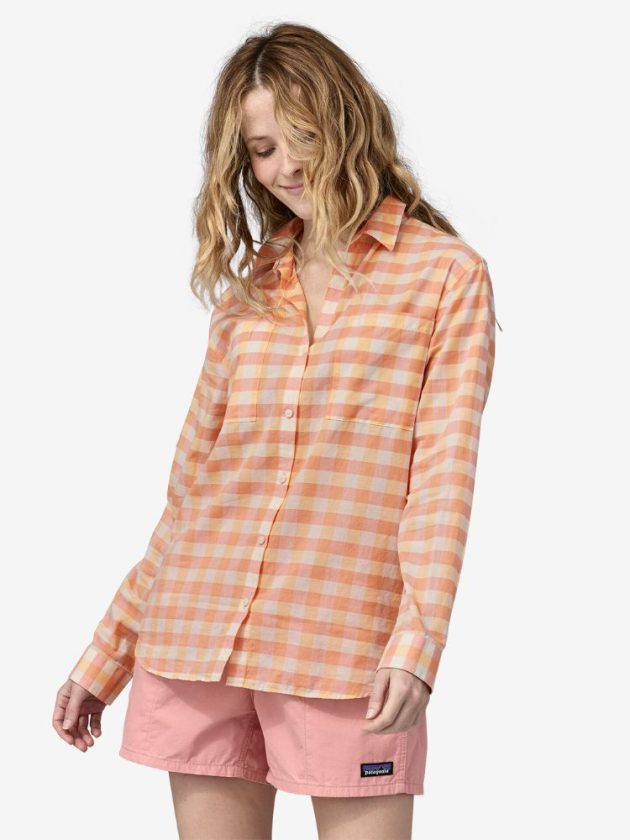
1. Patagonia
Have an outdoor adventure coming up? Run for the hills in some of Patagonia’s functional hemp styles that’ll have you covered no matter what path you set foot on. Whether it’s a jacket, sweatshirt, pair of overalls, or technical pants, these styles are hard-wearing and made to last.
Patagonia stands by hemp as one of its hero fabrics and claims to consciously partner with suppliers that use unique processing techniques to minimize waste. The brand has also created unique performance materials by blending hemp with organic cotton, recycled polyester, and TENCEL lyocell.
Many of Patagonia’s clothes and gear are sewn at Fair Trade Certified factories that ensure all workers earn a living wage.
Size range: US 0–18
Price: $$-$$$
2. tentree
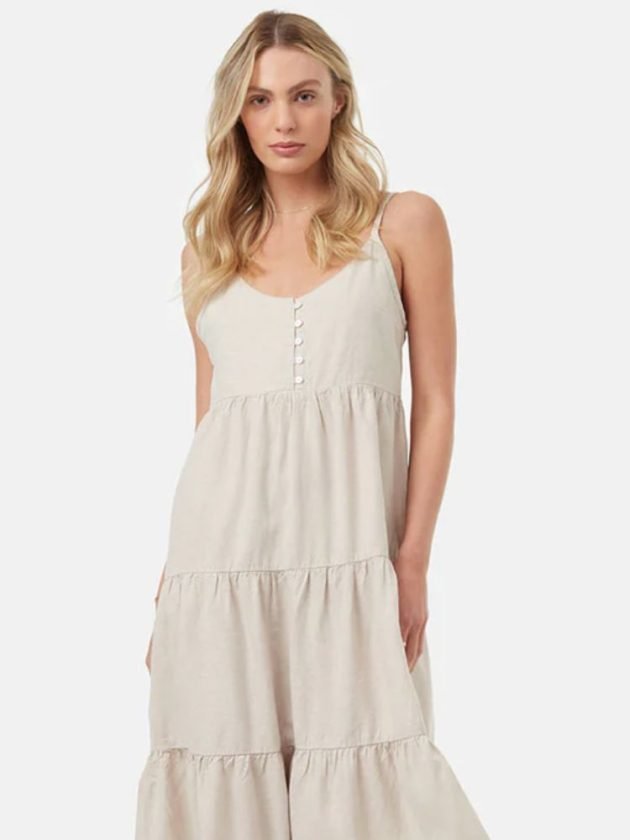
If you’re on the lookout for easy hemp styles that make you want to lounge around in them all day long but still look cool enough for a coffee run, tentree has you covered. Taking an earth-first approach with everything they do, this Canadian brand has been sowing the seeds of sustainability throughout its operations and supply chain. Their clothes are ethically manufactured and workers are provided with living wages.
P.S. Did you know that the brand derives its name from its carbon offsetting initiative that plants ten trees (ten-tree) for each item purchased?
Size range: XS–XL
Price: $$-$$$
3. ALIYA WANEK
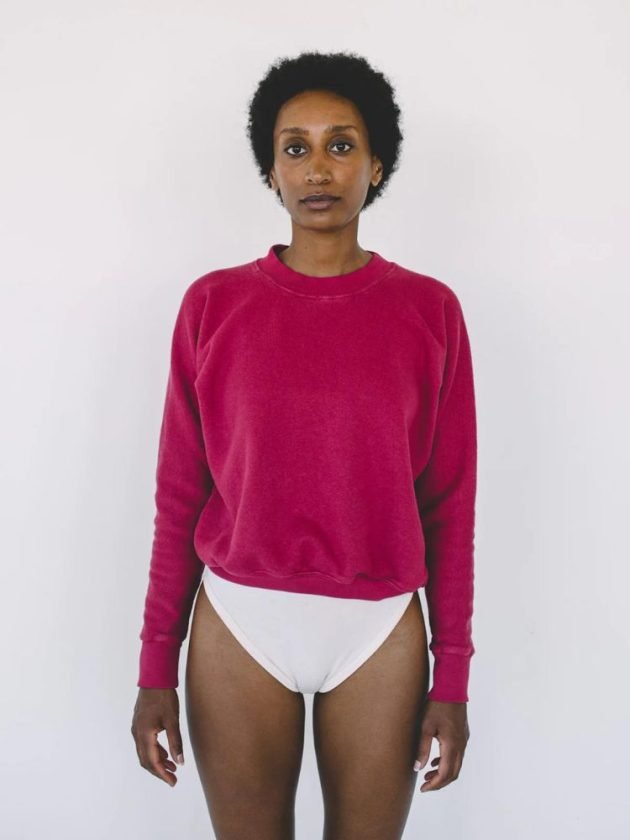
ALIYA WANEK is a Black-owned eponymous label offering styles in extended sizes made from hemp and organic cotton blends. With relaxed styles that have nailed the pared-down look to perfection through its clean lines and streamlined silhouettes, these hemp-blended looks will be a solid addition to any wardrobe.
In order to lower its environmental impact, the brand works with two small factories and local contractors in the Bay Area to produce and dye its garments.
Size range: XS–3X
Price: $$$
4. Rawganique
If you have sensitive skin that has been prone to reactions from synthetic fabrics or the chemicals they are treated with, then Rawganique is the answer to your clothing woes.
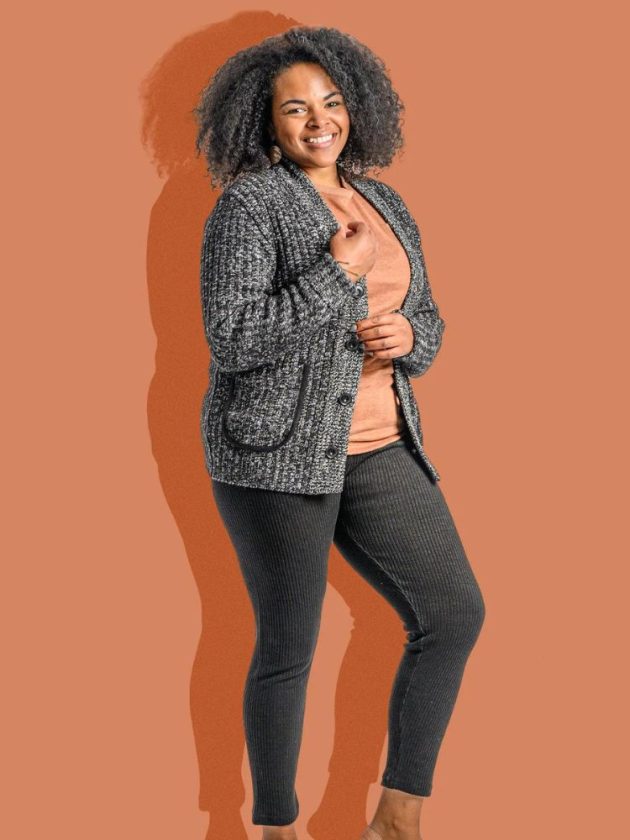
From seed to seam, this brand oversees everything that goes into their organic hemp products and eliminates the use of harmful chemicals at every stage. From long tunics and t-shirts to pullovers and cardigans, you’ll be sure to find a cozy hemp item for all your loungewear needs.
Size range: XS–XL
Price: $$-$$$
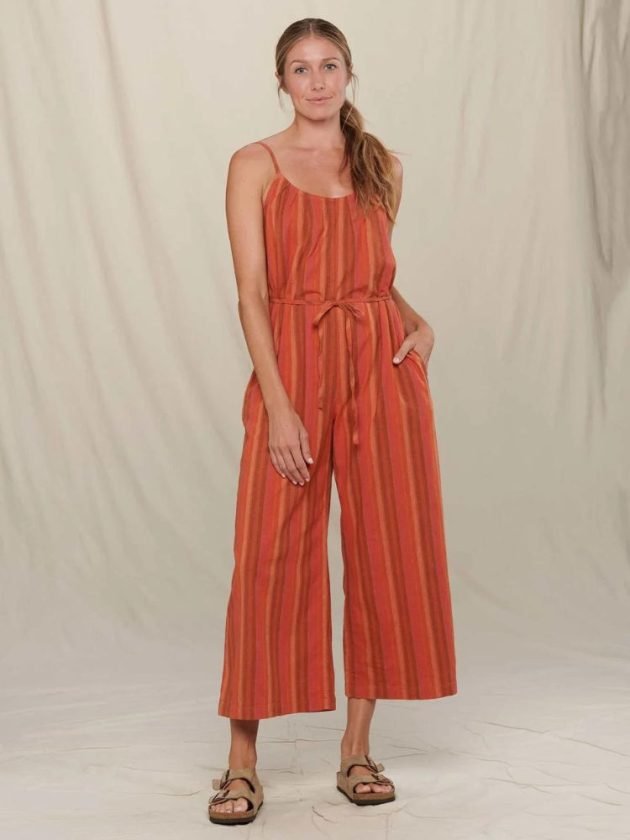
5. Toad&Co
In search of everyday hemp clothing that’ll work with just about anything in your existing wardrobe? Then look no further. Toad&Co’s hemp styles are nothing short of stylish. From relaxed dresses to jumpsuits, t-shirts, shorts, and a lot more, these styles are made using hemp that has been blended with TENCEL Lyocell or organic cotton for added comfort.
The brand has partnered with Hemp Fortex (a member of the Fair Wear Foundation) to produce its hemp clothing. According to Toad & Co, their facilities run on 100% solar power, and the company actively helps those with physical disabilities be able to afford their medical bills and day-to-day living expenses.
Size range: XS–XL
Price: $$-$$$
6. Eileen Fisher
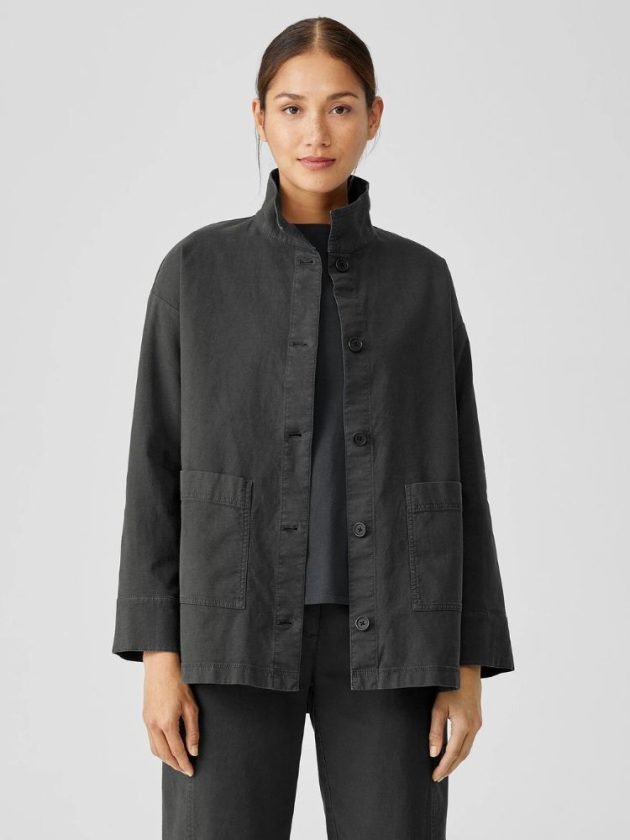
For the minimalist aesthete who appreciates some simple and refined clothing in her closet, Eileen Fisher is the brand for you. Whether you’re seeking a monochrome palette of smart separates or something chic for casual Fridays at work, these hemp-cotton blends will have you looking your best.
The brand works with organic growers who use farming methods that help support clean water and healthy soil, all while using fewer chemicals.
Size range: XXS–3X
Price: $$$
7. Vege Threads
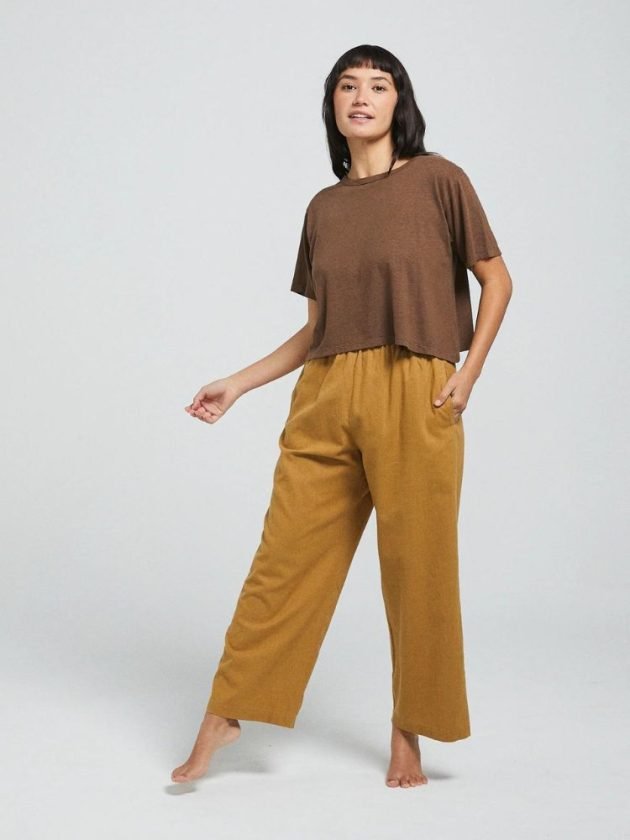
Vege Threads is an Australian fashion label creating ethically made everyday basics using hemp and organic cotton blends. All of their clothes are treated using low-impact, non-toxic dyes and are available in an extended size range with relaxed fits that are perfect for lazying around in style.
Expect to find a range of colorful hemp shorts that can be paired with matching t-shirts, tops, t-shirt dresses, and wide-leg pants.
Size range: US 0–14
Price: $$-$$$
8. AFENDS
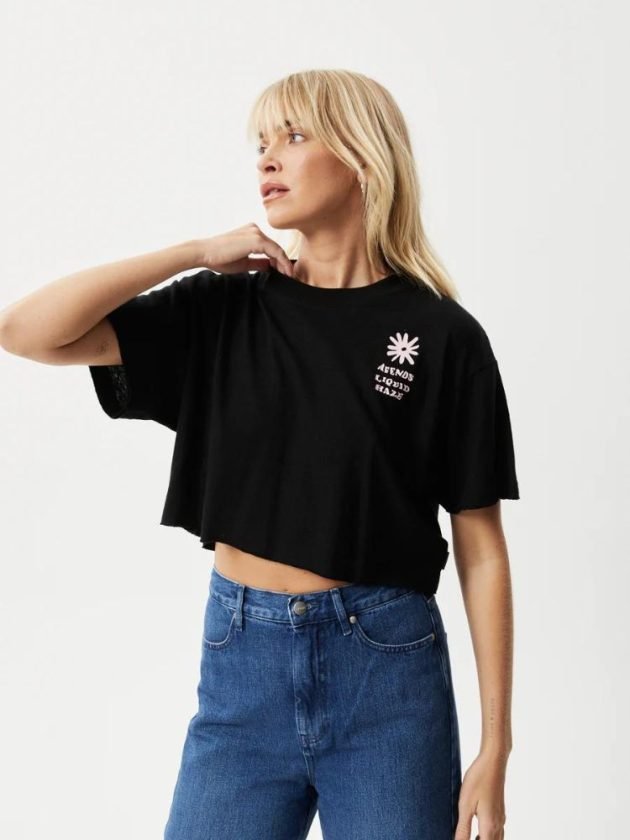
With hemp styles that have a distinctive Y2K vibe, AFENDS is the place the find your next pair of overalls or bucket hats. Based out of Australia, the co-founders of AFENDS share a huge passion for hemp and have even purchased 100 acres of farmland called Sleepy Hollow to grow, harvest, and build a hemp processing facility for research and development.
We love the fact that they use hemp fleece in their range of cozy knitwear, making it the sustainable alternative to conventionally available polyester fleece.
Size range: US 2–10
Price: $$-$$$
9. Opera Campi
Channel some La Dolce Vita vibes with a little help from Opera Campi’s fine Italian hemp pieces. With knitted hemp styles that have been blended with the most sumptuous cashmere among a range of other hemp performance materials, all of their pieces are crafted on a made-to-order basis.
The brand was born out of a passion for hemp and exploring its many compositions and blends through innovative yarn-twisting technology. Some of their pieces even include undyed hemp styles that haven’t been treated with chemicals of any kind.
Size range: XXS–3XL
Price: $$-$$$
10. LANIUS
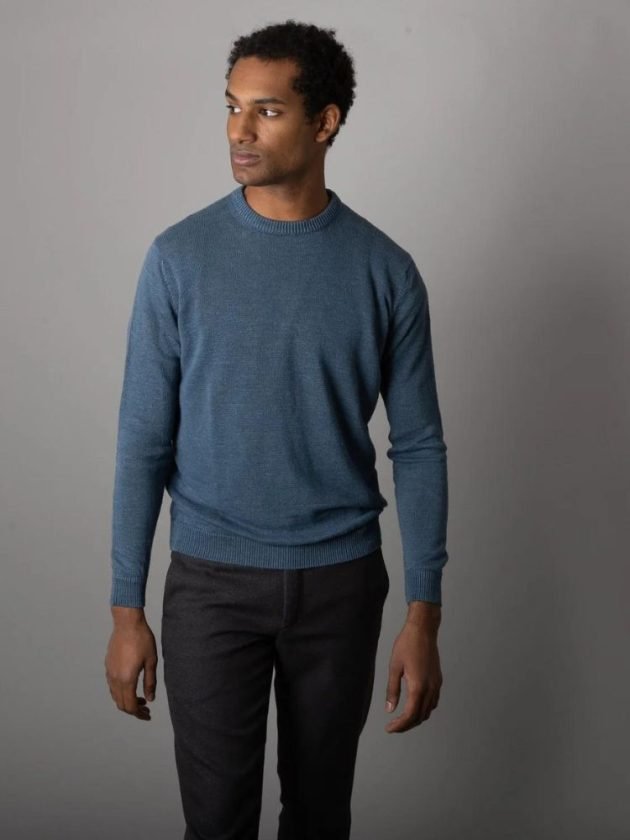
LANIUS is a woman-owned German slow fashion brand creating well-made everyday pieces from hemp that are bound to last a long time. Most of these styles are made from a hemp and organic cotton blend, featuring a range of comfortable t-shirts, sweaters, and dresses in varying sleeve lengths and a myriad of hues.
The brand believes in circularity and empowers its local customers to repair, rent, and resell their old LANIUS pieces to keep them in use for longer.
Size range: 34–44 (German sizing)
Price: $$-$$$

About The Author:
Jharna Pariani is a fashion writer and creative strategist whose work is rooted in honesty and deep observation of the world around her.
When she isn’t busy penning down her thoughts, she moonlights as a video editor creating fashion and food reels on Instagram for several brands and influencers.
More Guides Like This:
Organic Cotton Clothing Brands For A Natural Wardrobe
What is Tencel? Plus Tencel Clothing Brands to Know
Organic Underwear Brands That Are Comfortable and Confidence-Boosting
The post 10 Hemp Clothing Brands That Are Fashionable and Eco-Friendly appeared first on Conscious Life & Style.
10 Hemp Clothing Brands That Are Fashionable and Eco-Friendly
Most sustainable lingerie is actually just basic undies and bralettes, but we’ve researched high and low to find you a curation of genuinely beautiful, sexy lingerie that’s made from lower impact materials with more responsible practices from small brands.