

Deep sea mining is the practice of removing metals and minerals from the ocean’s seabed. Thousands of metres below the surface, deposits of these metals and minerals like manganese, nickel and cobalt have built up on the seafloor into potato-sized nodules over millions of years.
To mine these metals, gigantic machines weighing more than a blue whale would scoop deposits from the deep ocean floor. They’d then pump the mined material up to a ship through up to several kilometres of tubing. Sand, seawater and other mineral waste would then be pumped back into the water.
Deep sea mining is a very new industry. Apart from a few small tests, no commercial mining has happened yet. But the companies involved are preparing to start full-scale production.
Why do companies want to mine the seabed?
Companies want to extract metals from the seabed to sell them to industries that need increasing amounts of manganese, cobalt, nickel and copper for one simple reason: to make a profit. To them, the sea is just another frontier to exploit for money.

Mining companies are saying they need to mine the seabed for the metals needed to make batteries for the energy transition away from fossil fuels. But mining one of the last untouched ecosystems on Earth will never be “green”.
And deep sea mined metals could be used in any industry. The US government, for example, has now decided that mining the seabed will help secure metals to use in weaponry. Destroying the seabed and precious ocean life for materials to wage war is a new low.
Where is deep sea mining happening?
Although test mining is underway, commercial deep sea mining is not yet allowed by international law. The International Seabed Authority has granted 31 contracts for exploration. These cover over 1.5 million km² – an area four times the size of Germany.
Most of these contracts cover exploration for deposits in the Clarion-Clipperton Zone (CCZ), an area in the Pacific Ocean across the equator, between Hawaii and México. The area is rich in potato-sized mineral deposits loaded with copper, nickel, manganese and other metals. They lie on the deep sea bed in huge fields.
We need to stop deep sea mining
This is a crucial moment. We need to stop profit-seeking companies from destroying the oceans and a crucial defence against climate change. We scored a huge win at the ISA in 2024, but we’re not out of the woods yet. It’s still possible that an application to exploit the ocean gets approved, although it would be difficult. And we haven’t yet secured a ban.
Imagine if we could go back in time and stop dangerous oil drilling. Stopping an industry before it has a chance to start will prevent further environmental and climate catastrophes.
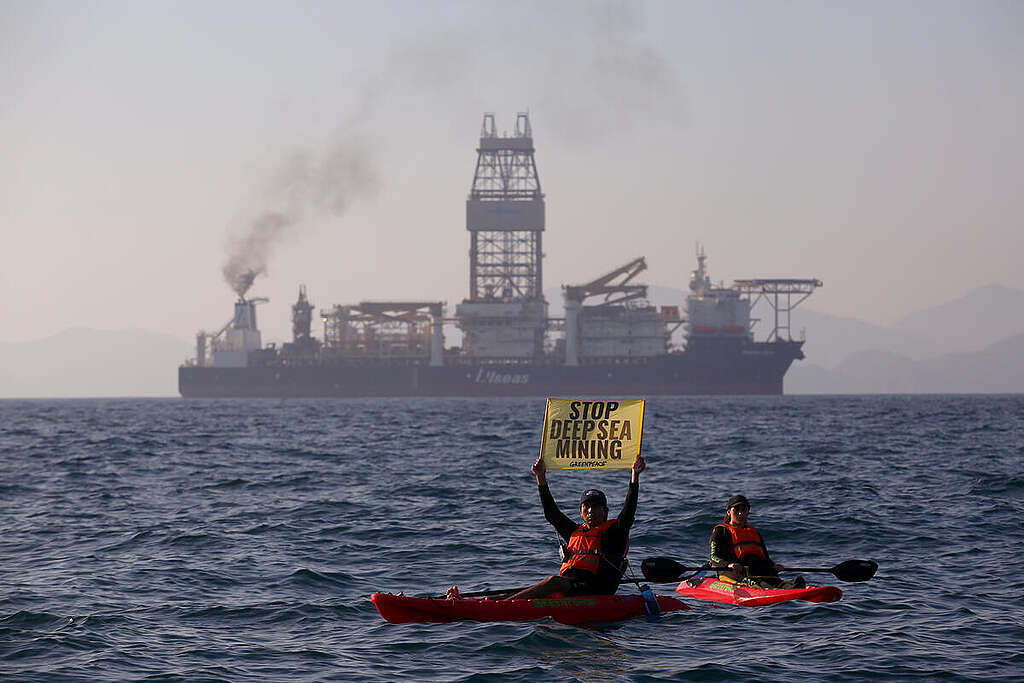
Stop Deep Sea Mining before it starts
Greedy companies want to mine the seafloor for profit. 2 million people worldwide say no to deep sea mining – will you join them?



“This idea that you can invoke a national security exemption when there is no threat to national security is not only brand new, it’s ridiculous.”
From our collaborating partner Living on Earth, public radio’s environmental news magazine, an interview by Jenni Doering with Pat Parenteau, an emeritus professor and senior fellow for climate policy at Vermont Law and Graduate School.
Why Trump’s ‘God Squad’ Is Not Like the God Squads Before It
Climate Change
Virginia Republicans Want Tax Relief to Ease Gas Costs. There’s Also Electric Vehicles.
Years of debate on electric vehicles in Virginia have slowed the transition, now under full Democratic control.
Republican state lawmakers want a temporary pause on Virginia’s 32 cent per gallon gas tax to help offset rising prices at the pump resulting from President Donald Trump’s ill-defined and unpopular war in Iran.
Virginia Republicans Want Tax Relief to Ease Gas Costs. There’s Also Electric Vehicles.
Climate Change
EPA Flags Microplastics as ‘Priority’ Water Contaminants, but the Move Doesn’t Guarantee Regulation
Inclusion on the agency’s draft Contaminant Candidate List doesn’t require the EPA to monitor or set limits on microplastics in drinking water.
Citing the Trump administration’s promise to “Make America Healthy Again,” the U.S. Environmental Protection Agency placed microplastics and pharmaceuticals on a draft list of contaminants maintained by the agency.
EPA Flags Microplastics as ‘Priority’ Water Contaminants, but the Move Doesn’t Guarantee Regulation



-
Greenhouse Gases8 months ago
Guest post: Why China is still building new coal – and when it might stop
-
Climate Change8 months ago
Guest post: Why China is still building new coal – and when it might stop
-

 Greenhouse Gases2 years ago
嘉宾来稿:满足中国增长的用电需求 光伏加储能“比新建煤电更实惠”
-
Climate Change2 years ago
Bill Discounting Climate Change in Florida’s Energy Policy Awaits DeSantis’ Approval
-

 Climate Change2 years ago
嘉宾来稿:满足中国增长的用电需求 光伏加储能“比新建煤电更实惠”
-
Climate Change Videos2 years ago
The toxic gas flares fuelling Nigeria’s climate change – BBC News
-

 Renewable Energy5 months ago
Sending Progressive Philanthropist George Soros to Prison?
-

 Carbon Footprint2 years ago
US SEC’s Climate Disclosure Rules Spur Renewed Interest in Carbon Credits