

The US, Saudi Arabia, Russia and their allies have spearheaded a push to alter the approval process for a hard-fought green shipping deal, which experts say could jeopardise the landmark pact at the International Maritime Organisation (IMO) talks in London this week.
If approved, the procedural changes would make it harder for the IMO’s Net-Zero Framework (NZF) to come into effect, as it would require support from countries representing half of the world’s shipping fleet.
After years of discussions, governments provisionally agreed the NZF in April, in which they pledged to penalise polluting ships and uses the money to fund the transition to cleaner fuel. The policy is the world’s first global emissions pricing on any sector. At talks in London this week, countries are meeting to discuss how to carry the NZF forward.
Procedural roadblock to shipping deal
The US and its allies want to shift away from a system of tacit approval where, after the NZF is approved at the IMO talks, its rules automatically come into force unless a certain number of countries object. They prefer explicit approval instead, meaning it would not come into force unless enough governments – representing a certain percentage of the world’s shipping fleet – actively indicate support for it.
Emma Fenton, senior director of climate diplomacy at nonprofit policy group Opportunity Green, told Climate Home News that the US’s proposed change “risks undermining the NZF’s ambitions, delays the maritime transition and does not meet the scale or the pace of action that the climate crisis demands”.
Bryan Comer, maritime director at the International Council on Clean Transportation called it “an unnecessary procedural roadblock”.
The US has been pressuring governments not to support the NZF, which they provisionally agreed at the last set of talks in April. Last week, the US threatened supportive government officials and their shipowners with sanctions, visa restrictions, tariffs and port fees.
These measures that would hit small nations with big shipping registries, particularly those whose ships sail frequently to the USA or who have office offices there, the hardest. Two such governments, Bahamas and Liberia – have reversed their support for the NZF and have been actively opposing it this week.

Green shipping deal at risk
While in April some climate campaigners said the NZF lacked ambition and Pacific Island nations abstained from supporting it, others celebrated it a “groundbreaking moment which should signal a turning of the tide on greenhouse gases from global shipping”.
The deal was set to be officially approved by governments at talks at the International Maritime Organisation (IMO) this week, with discussions limited to minor changes to the text. The head of the IMO – Panamanian Arsenio Dominguez – told governments on Tuesday that the text was “balanced” and that not agreeing to it would cause uncertainty and lead to a patchwork of regional and national green shipping regulations which would “increase the costs of this transition in the long run”.
Despite the US threats, government statements at an opening plenary on Tuesday suggested that support for the measure had grown since April – with Pacific and other nations who had previously abstained backing the proposal.
A US, Saudi and Russia-led attempt to oppose the adoption of the agenda failed and the talks’ chair – Liberian Harry Conway – introduced a three-minute time limit and urged governments to stop repetitive interventions in an attempt to prevent delays, joking that offenders would have to donate money to the IMO if they kept repeating themselves.
How high-risk biofuels could sink a flagship climate law for global shipping
Tacit or explicit approval
But on Wednesday morning, the US proposed not to use the tacit approval, a system which stipulates that, after agreements, amendments have a ten-month cooling off period.
During this period, the deal can be cancelled if a third of the nations signed up to the relevant IMO treaty – in this case the countries signed up to the Marpol Annex 6 treaty – object. It can also be cancelled if nations whose ship registries make up half of the world’s fleet by weight actively oppose it.
The US negotiator – who IMO rules say cannot be named – proposed explicit acceptance, which puts the onus on the governments supporting the NZF. Under this system, it would come into force until six months after two-thirds of nations, representing more than half the world’s shipping fleet, actively “communicated” to the IMO that they accept the deal.
“The usual tacit acceptance method is not appropriate for the potential entry into force of such significant measures”, the US negotiator said. They were supported by just over 20 governments, mainly from oil-reliant states like Saudi Arabia, Russia, Iran and Nigeria as well as Turkiye, Morocco, Argentina and Paraguay.
Their proposal was opposed by a larger group of nations, including Western and Pacific countries, South Africa, Brazil, Indonesia, Namibia and Kenya. The Danish negotiator protested that switching to the “time consuming and inefficient” explicit acceptance procedure would throw off the NZF’s timeline and reopening the text would mean “starting all over again”.
“The regulatory framework is ready. It is mature. The decision to move forward was already made in April with the approval of the amendments and, in reality, accepting an explicit acceptance procedure would, in reality, mean no to realising the NZF”, she said.
-
How high-risk biofuels could sink a flagship climate law for global shipping
New rules on shipping fuel emissions must account for their indirect impacts on forests and food production, otherwise owners may rush to use soy and palm oil to power their vessels -
Oil states accused of using scare tactics in bid to sink green shipping deal
Saudi Arabia, Iran and other oil-reliant countries are campaigning to stop the adoption of the IMO’s Net-zero Framework in October -
Governments agree green shipping targets and fees for missing them
Ship owners who fail to reduce emissions intensity 30% by 2035 will have to pay into a “net zero fund” to clean up shipping through green fuels


The Brazilian negotiator said tacit approval has been the default since 1973 because explicit acceptance “simply does not work”. The internal procedures for national governments to ratify amendments are “complicated”, he said, and “may take longer than action requires”, particularly as the shipping industry needs “predictability” on what the rules will be.
The negotiator from the Pacific island nation of Tuvalu said he was “surprised” that the US had not made its proposal before the talks. “We are of the view that the requested change at this stage is not conducive of a transparent and predictable process”, he said.
Talks’ chair U-turns under pressure
After nearly two hours of government statements, Conway said that from what he had heard it was “the will of the committee to proceed with the tacit approval”.
But that conclusion drew further complaints from the US and allies, who repeated their arguments. The US accused Conway and the IMO secretariat of not being “neutral” – which they later firmly denied. Russia’s negotiator accepted that “perhaps those who spoke in the majority were indeed for tacit acceptance” but argued that because the NZF is so “significant” it needs explicit approval.
Countries like Spain and Denmark spoke in defence of Conway’s ruling that the room was for tacit approval. Conway repeated that “there’s a clear majority that have decided to maintain the tacit acceptance procedure” and said he did not want to hear arguments repeated.

But after 30 more minutes of statements from the US, Saudi Arabia and allies, he changed his mind. In the interest of consensus and compromise, he said that the US proposal should be discussed by technical negotiators in a working group. “This will be my final ruling on the matter, he said.
The other side then complained. The Cook Islands negotiator suggested Conway had folded under the “pressure of events” and his decision risked “driving a VLCC [a type of big ship] through the processes and procedures that have stood the test of time”.
But they relented and Wednesday morning’s plenary meeting ended with negotiators being given a mandate to discuss tacit and explicit acceptance procedures in behind closed door sessions, which continued until nearly 11pm that night.
The full plenary met again on Thursday afternoon, but Conway proposed that discussions continue on Friday morning. The US called for time to consult and gathered with its Saudi Arabian and other allies. As negotiations continued behind closed doors, Conway urged governments to come back in the morning – the last day of talks – with solutions “so we will have a smooth discussion and a happy ending”.
Governments are also likely to vote tomorrow on the NZF itself. To pass, the deal need two-thirds of the MARPOL VI signatory countries which are present and voting to vote in favour of the deal – a threshold that was achieved easily in April.
The post US, Saudi-led alliance plunges green shipping deal into doubt appeared first on Climate Home News.
US, Saudi-led alliance plunges green shipping deal into doubt

With rich governments and development banks delivering more climate finance as loans, developing countries could be paying back more each year than they receive in new lending by the mid-2030s, new research has found.
CARE Denmark and the CARE Climate Justice Center worked out the repayment schedules of around 17,500 climate loan records reported by developed countries and multilateral lenders between 2011 and 2024, in what the researchers say is the first analysis of its kind.
It estimates that repayments on these public climate loans, including interest and fees, nearly tripled from $6.9 billion in 2020 to $20.1 billion in 2024. That is equivalent to around a fifth of the public climate finance that developed countries reported providing that year.
If climate lending stays at its 2024 level each year and on the same terms, annual repayments on old and new loans would overtake fresh lending in 2036, the researchers found.
“By not making the backflows of climate finance visible, Global North countries cheat their public,” John Nordbo, senior climate adviser at CARE Denmark, told Climate Home News. “They give an impression that they are actually more supportive than they are.”
Finance takes centre stage at COP31
The World Bank is by far the biggest lender in the portfolio, followed by Japan and France. Overall, loans worth $489 billion will cost borrowers an estimated $663 billion over their lifetimes.
Climate finance looks certain to become a central issue at COP31 after developing nations scored an early win by getting a new work programme on climate finance added to the summit’s official agenda.
A key question looming over the talks in Türkiye is how rich countries will make good on their promise to deliver at least $300 billion a year in climate finance by 2035, amid shrinking aid budgets and spending redirected to other priorities, including defence.
-
When the oil companies leave, who pays?
Across the world, communities facing the decline of fossil fuel industries are demanding a Just Transition that gives them a say in what comes next. Establishing a strong mechanism at COP31 could help them secure it -
Governments must embrace Fossil Free Zones as they head to COP31
Colombia and Vanuatu share their experiences of creating new fossil fuel-free zones as a tool to transition away from coal, oil and gas

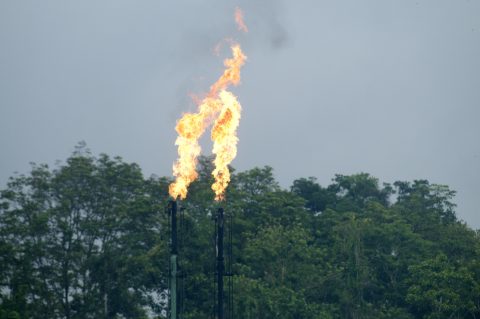
Nordbo said the delivery of the climate finance goal agreed two years ago in Baku depends heavily on multilateral development banks and the private sector, ushering in the risk of an even larger share of loans.
Loans already make up most public climate finance. Developed countries provided $101.6 billion in public climate finance in 2024, two-thirds of it as loans, according to the OECD.
“That’s the preferred solution to the climate finance issue right now,” he said. “It doesn’t really seem sustainable.”
Debt trap
The repayments add to a wider debt squeeze on the Global South. Developing countries paid a record $1.4 trillion in principal and interest in 2025, a fifth consecutive annual increase, according to the World Bank’s International Debt Report, published last week.
Countries at the frontline of the climate crisis are among the hardest hit. Almost 94% of the most climate-vulnerable countries are in, or at significant risk of, debt distress, and they spend nearly 25 times more on debt repayments than on climate action, according to a September report by ActionAid.
CARE accepts that concessional loans can make sense for climate projects that generate revenue. But it argues they are the wrong tool to fund adaptation measures that protect lives rather than produce income, as well as for countries recovering from climate disasters or already in debt distress.
The post Developing countries face climate finance deficit as loan repayments soar appeared first on Climate Home News.
https://www.climatechangenews.com/2026/11/10/developing-countries-face-climate-finance-deficit-as-loan-repayments-soar/
Stientje van Veldhoven is Minister of Climate and Green Growth for the Netherlands.
When we co-hosted the first-ever conference on transitioning away from fossil fuels (TAFF) this April, the world was reeling from the volatility in oil and gas prices due to the Hormuz blockade. Fossil fuels moved to the centre of the debate as country leaders scrambled to secure supplies for their people.
We saw the very opposite in Santa Marta. Nearly 60 nations came together with 2,600-plus participants from civil society and community organisations, businesses and scientists to discuss concrete solutions on how governments can shift away from fossil fuels. Together, we defined the ‘Santa Marta process’ to serve as an extra engine for the broader process of the UNFCCC.
The Santa Marta process will see expert groups and committed countries develop national roadmaps, chart pathways to overcome financial constraints, and drive economic transformation. We made a multi-year commitment to take this process forward. With Tuvalu and Ireland taking over as co-chairs for 2027, transitioning away from fossil fuels is now moving from words to action.
European nations signal support for fossil fuel roadmap, says COP30 president
Work gets underway
At the opening of the Santa Marta conference, my co-chair Colombia’s then energy minister Irene Veléz Torres and I repeatedly stressed one thing: that the forum was not a space for negotiations, but a forum for countries and other partners to discuss practical steps to move away from fossil fuels.
Since then, we have seen three roadmaps already submitted: by France, Germany and our own. Pacific Island ministers also recently announced their intention to develop a regional roadmap to transition away from fossil fuels. And I called on the European Commission to do the same for the European Union.
On top of this, numerous countries are already working on parts of the transition, such as phasing out coal or ending fossil fuel subsidies. More countries are expected to follow soon.
Workstreams were launched in early August, followed by sign-ups from countries willing to take a larger role and lead on organising different activities. Each workstream has an assigned lead organisation (or madrina). Each has its own working structure.
When the oil companies leave, who pays?
Across the world, communities facing the decline of fossil fuel industries are demanding a Just Transition that gives them a say in what comes next. Establishing a strong mechanism at COP31 could help them secure itCOP31 Bulletin Day 1: Agenda settled as COP urged to “supercharge solutions”
An agenda row is averted at the opening session, where the UN climate chief said strong results are needed from the talks to boost “real-world outcomes”

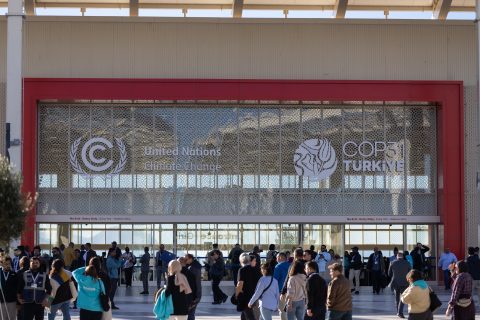
Workstream 1 focuses on supporting countries in developing and implementing flexible, country-owned national roadmaps. It operates as an open, collaborative hub that coordinates partner institutions to provide tailored technical, financial and policy support directly aligned with each country’s specific needs and existing frameworks. The consortium, which functions as a hub, currently consists of the NDC Partnership, the Powering Past Coal Alliance, the World Resources Institute and the newly established Science Panel on the Global Energy Transition.
Workstream 2 focuses on mobilising collective coalition power to tackle national and international financial constraints, debt-related barriers and macroeconomic dependencies that hinder the transition away from fossil fuels. Starting with a scoping phase, it will deliver transparent, actionable recommendations and reform solutions to support countries’ structural fiscal needs at global fora. Its madrinas are the International Institute for Sustainable Development and Transforma, a Latin American think-and-do-tank.
Workstream 3 focuses on driving economic transformation by mapping green partnership potential, decarbonising trade balances and building competitive, mutually beneficial clean markets. It aims to help countries, especially producers, diversify their economies, scale domestic value creation, and unlock collective trade opportunities. The madrina is the Organisation for Economic Co-Operation and Development working together with the South Centre.
Incorporating Santa Marta into COP
What was abundantly clear in Santa Marta is that our coalition’s efforts are a strong support to, rather than a replacement for, the COP process. Over the past decade or so, the focus at COPs was on setting goals. Now we must focus on implementation. The COP31 presidencies have previously indicated their willingness to incorporate elements of the Santa Marta process into COP31 outcomes. We look forward to seeing how we can achieve this together.
The Brazilian COP30 Presidency delivered its global roadmap on the transition away from fossil fuels – a voluntary toolkit for countries that want to move ahead – just before the COP started in Antalya on Monday. During the coming two weeks, it’s critical that we see more concrete, actionable roadmaps for the fossil fuel phase-out. These documents can be crucial for a strong second Global Stocktake of national climate plans in two years’ time.
Brazil’s fossil fuel roadmap sketches out first global timetable
At COP31, a variety of TAFF-related events will be hosted, focusing on next steps within the Santa Marta workstreams. We welcome any leader and expert from around the world to take part as they work to develop their roadmaps, identify the fossil fuel subsidies they need to phase out, or establish green/clean markets at home.
Only by reducing fossil fuel demand and replacing it with clean electricity to run our economies can we all become more economically resilient and sharply cut the pace of climate change.
The post COP31 outcome needs to prioritise transition away from fossil fuels appeared first on Climate Home News.
COP31 outcome needs to prioritise transition away from fossil fuels
An older teaching about land acknowledgement
As I have come to understand the spirit and intention of land acknowledgement, I often return to fond memories of my grandmother and her words of wisdom. She taught that the health of the places we call home comes first, because the wellbeing of the people depends on it.
In her teaching, land acknowledgement began with the land. Long before it became a paragraph read at the start of a meeting, it was a way of recognizing a homeland: its waters, its species, its seasons, and the spirit that revealed whether the place was well.
Her teaching echoes a practice found across many Indigenous Nations. Haudenosaunee gatherings, for example, have long opened with the Ohén:ton Karihwatéhkwen, the Thanksgiving Address, often translated as “the words that come before all else.” The speaker greets and gives thanks to the people, the earth, the waters, the plants, the animals, the winds, the sun, the moon and the stars. Only after everything that sustains life has been acknowledged does the gathering turn to its own business.
That order changes what an acknowledgement is for. Its purpose was to share the story of a place with neighbours and to draw them into the work of tending it. People entered the story second, as the ones responsible for what had just been named.
Understood this way, an acknowledgement does more than open a meeting. It asks us to reconsider where we stand, and what we owe the ground beneath us.