


- What happened at COP31?
- What has the reaction to the presidency been?
- How has the role of oil-rich nations been portrayed?
- How has the role of developed nations been portrayed?
- How has the role of developing nations been portrayed?
- How has the role of China been portrayed?
- What does this mean for the consensus process and reform?
- Could COP31 send a ‘positive signal’?

The head of the United Nations climate body, Simon Stiell, said on Wednesday a “quantum leap” in climate finance is needed for many countries to be able to submit strong new climate action plans next year.
“It’s hard for any government to invest in renewables or climate resilience when the treasury coffers are bare, debt servicing costs have overtaken health spending, new borrowing is impossible and the wolves of poverty are at the door,” he said in a major speech at the Chatham House think-tank in London.
Climate finance has traditionally consisted mainly of wealthy governments and multilateral development banks giving loans and grants to developing countries to help them reduce planet-heating emissions and adapt to climate change.
But Stiell’s speech focused heavily on other sources of finance, which would not burden taxpayers in rich nations but are unlikely to be agreed in time for next year’s round of climate plans under the Paris Agreement.
Stiell said governments must agree at the Cop29 UN climate summit this year “a new target for climate finance that meets developing country needs”. But, he added, “it’s not enough to agree a target. We need a new deal on climate finance between developed and developing countries.”
Billionaires and boats
That would include “new sources of international climate finance, as the G20, International Maritime Organization (IMO) and others are working on”, he noted.
The Brazilian government, as chair of the G20, wants the group’s 20 major economies to agree a minimum tax on billionaires, and has hinted that some of this levy could be spent on climate finance.
Spring Meetings can jump-start financial reform for food and climate
But this has not been agreed – and is likely to prove controversial. E3G analyst Sima Kammourieh said geopolitical splits over the wars in Ukraine and Gaza had held back G20 negotiations, as had the recent death of the Brazilian diplomat leading the discussions, Daniel Machado da Fonseca.
Governments at the IMO, meanwhile, have agreed to put a price on shipping emissions. But the IMO and government shipping negotiators have suggested they want most of this money to be used to clean up the shipping industry, not for broader climate finance such as the new UN loss and damage fund.
Spring meetings
Ahead of next week’s spring meetings of the World Bank and International Monetary Fund (IMF), Stiell reiterated his support for the Bridgetown Agenda, a set of international financial reforms that would shift more multilateral funding into tackling climate change.
“The Spring Meetings are not a dress rehearsal. Averting a climate-driven economic catastrophe is core business,” Stiell said. “It can’t slip between the cracks of different mandates.”
So far, the biggest reform agreed is a change to the World Bank’s debt-to-equity ratio of 1%. That will free up $4 billion a year – but while reformers are calling for more, opponents fear credit rating agencies will downgrade the bank, making it more expensive to borrow money.
European court rules climate inaction by states breaches human rights
The newest proposal in Stiell’s speech was his call for the IMF to make “more use” of an obscure pot of money called the Catastrophe Containment Relief Trust (CCRT).
The CCRT provides grants for debt relief to the world’s poorest countries when they are hit by disasters that meet a preset threshold of destruction.
But the IMF’s latest annual report described the trust as “critically underfunded” with “insufficient resources to provide significant relief” when another disaster strikes.
Old-fashioned finance?
French President Emmanuel Macron has been a vocal supporter of a new global pact on finance that would push more money into climate action into debt-strapped developing nations, hosting many world leaders at a summit in Paris last year to discuss the reforms.
But last month, France cut its aid budget by 12.5%. The UK has also reduced its aid spending in recent years, and shuffled the numbers to count more as climate finance – while a potential Donald Trump victory threatens the US’s already relatively low level of international climate funding.
Former French diplomat, Laurence Tubiana, who is now chair of the European Climate Foundation, told journalists yesterday that in Europe the “fiscal space is just non-existent”, adding “the agenda of the day is to cut public spending”.
But Sara Jane Ahmed, finance adviser to the V20 group of climate-vulnerable countries, told Climate Home that rich nations can create more fiscal space by printing money, borrowing, taxing or cutting spending elsewhere.
In London, Stiell said a “quantum leap in climate finance is both essential and entirely achievable”, and argued that providing more is in the interests of powerful developed countries.
Without climate finance, he said, poorer nations would not submit bold new climate plans and then “all economies, the G7’s included, will soon be in serious and permanent strife”.
The post UN climate chief calls for “quantum leap in climate finance” appeared first on Climate Home News.
UN climate chief calls for “quantum leap in climate finance”
Continue Reading
Climate Change
“Absurd” environmental green light for Australia’s most polluting AI data centre proposal shows urgent need for moratorium
SYDNEY, Friday 27 November 2026 — In response to an Anthropic-backed $32 billion AI data centre proposal in Queensland being given the environmental green light by the National EPA, Greenpeace Australia Pacific has renewed calls for an urgent moratorium on AI data centre approvals and construction.
The Zerra-DC Western Downs Digital Park proposal in Queensland has been ranked as the most polluting data centre proposal in the country by the Climate Council. The AI data centre would have a maximum power demand of 3.24 gigawatts (GW) and Zerra-DC has not ruled out building dedicated on-site gas generation for power.
Joe Rafalowicz, Head of Climate and Energy at Greenpeace Australia Pacific said: “For the most polluting AI data centre proposal in the country to be given the environmental green light shows the desperate need for a moratorium on the construction of these monstrosities until appropriate safeguards are put in place.
“It is frankly absurd that this proposal has been waved through when this data centre alone would use more energy than six million homes. That energy has to come from somewhere, and because the Federal Government has given a free pass to Queensland to use coal and gas to power data centres, it will increase the cost of electricity for everyone else and the pollution it creates will turbocharge climate disasters like floods and extreme heat.
“Australia desperately needs national legislation to manage the frenzied build-out of AI data centres, and until then we need a moratorium on new approvals. Right now it is a free-for-all with these resource-hungry mega data centres locking in access to water, power and land with minimal safeguards and input from local communities.
“As the Federal Government prepares to introduce new legislation for the regulation of AI data centres in the new year, they need to remember they serve the Australian people, not Big Tech. They must introduce a strong national framework that at a minimum forces AI data centres to build their own renewable energy, excludes projects which impact water resources, and makes operators genuinely consult with local communities.
“Australians should not be forced to absorb the economic, environmental and social costs of data centre expansion.”
-ENDS-
Media contact
Lucy Keller on +61 491 135 308 or lucy.keller@greenpeace.org
Dan Ioschpe is the Climate High-Level Champion for COP30.
A year ago at COP30 in Belém, we said this would be the decade of implementation for climate action. Simply put, implementation is the fastest way to promote sustainable socio-economic development. But implementation is not about words. It is about action, on the ground, at speed and scale.
COP31 in Antalya demonstrated why the implementation of the Paris Agreement must extend well beyond the two weeks of a climate conference. Despite political divisions, businesses, investors, governments, cities and communities came with results and remained committed to scaling climate action, showing that the real economy does not wait.
That is why continuity matters. In Belém, the Global Climate Action Agenda was given a new structure, with six thematic axes, and Plans to Accelerate Solutions (PAS). Because that structure carries work from one COP to the next, progress can compound. And progress is now something we can measure.
This year’s Yearbook of Global Climate Action shows that 87% of PAS reported progress, while 38% of the 40 with quantitative targets are on track or ahead of their goals. It highlights where the gaps remain.
Grids stretching halfway around the world
The strongest signal from Antalya came from electrification. The Electrification Delivery Package brings together more than 200 actions from over 180 organisations, involving over 150 countries plus the European Union – together over two-thirds of global GDP – and more than 260 businesses with over $4 trillion in annual revenue.
The results are already visible on the ground. Members of the Utilities for Net Zero Alliance built more than 21,000 kilometres of grid in 2025, up from 14,000 km the year before – enough to stretch halfway around the world. From grids, storage and renewable power to energy access, the foundations of a modern, interconnected system are coming together at speed and scale.
-
Australia and South Korea’s clean energy deal could boost low-carbon trade
The deal aims to connect Australia’s renewable resources with Korean industries’ clean energy demand, potentially transforming a relationship built on coal and gas -
After COP31, our chance to save climate diplomacy lies in global shipping
If COP31’s high ambition countries can show the same resolve at London shipping talks, a climate breakthrough is possible next week
The Global Climate Action Agenda is helping connect these investments and shift from individual solutions to economy-wide transformation. Electrification is simply the fastest way to foster sustainable socioeconomic development – efficiently, affordably, and securely.
On transport, 13 zero-emission freight corridors are now in development across six continents, covering more than 29,000 km of roads. That is already ahead of the Global Green Road Corridors Initiative’s goal of ten corridors by 2026.
Sustainable aviation fuel starts to take off
Progress is also visible on sustainable aviation fuel (SAF), a solution approaching a positive tipping point. One in three new sustainable industry investment decisions this year was for SAF, a sign of how quickly the market is developing, including through an Action Agenda plan to decarbonise aviation.
Projects that have reached final investment decision represent around 7 million tonnes of SAF a year, or 3% of today’s jet fuel use. But the wider pipeline stands at 31 million tonnes – around 11% of the existing market. Once sustainable solutions capture 5-10% of an established market, growth can become self-reinforcing as costs fall, supply chains mature and investors gain confidence. Across heavy industry more broadly, 36 deep decarbonisation projects reached final investment decision this year – a record.

On nature, the Tropical Forest Forever Facility has reached $8.3 billion in commitments towards its $10-billion initial target, and the Global Fund for Coral Reefs announced $30 million in new reef financing across 22 developing countries.
With the launch of the Rio Synergies Group for Action, implementation will be at the centre of the three Rio Conventions on climate, biodiversity and land, and 17 governments are now backing the Intergovernmental Land Tenure Commitment to strengthen the rights of Indigenous Peoples and local communities.
On food and agriculture, solutions range from methane-reducing practices reaching more than 5,000 smallholders to food recovery initiatives now reaching 40.5 million people, cutting food waste and emissions at the same time. Some 66 million hectares are now under regenerative landscape projects.
Accelerator to support two solutions per year
Antalya also laid the groundwork for progress. Mandated by the Mutirão Decision in Belém, the Global Implementation Accelerator established its governance and operational framework at COP31. Each year, two solutions – one on mitigation and one on adaptation – will be selected for coordinated support, informed by independent expert assessment and mobilising the capabilities of a dedicated partner network.
The Accelerator builds on the Action Agenda, bringing governments, businesses, finance and technical expertise together to accelerate solutions with the potential to reach positive tipping points.
None of this happened by accident. It was possible because a structure is in place that allows progress to compound – connecting political guidelines with investments, infrastructure and sustainable socio-economic development.
This is the Global Climate Action Agenda at work: a multi-year engine for the implementation of the Paris Agreement, guided by a shared vision towards 2030. And I am optimistic about what comes next.
In Belém, we collectively revamped its structure and strengthened its foundations. In Antalya, we demonstrated the value of continuity. The opportunity now is to deepen its reach across regions, strengthening implementation on the ground with speed and scale.
From Antalya to Addis Ababa and beyond, the work continues 365 days a year, 24 hours a day.
The post Despite political divisions, COP31 showed the real economy does not wait appeared first on Climate Home News.
https://www.climatechangenews.com/2026/11/26/despite-political-divisions-cop31-showed-the-real-economy-does-not-wait/
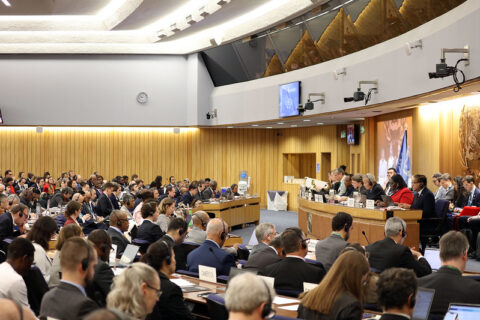
COP31 came to a dramatic close last weekend when a coalition of nations rejected the proposed “Antalya pact”, citing its failure to mention fossil fuels.
The tense final moments and lack of a much-anticipated “pact” have sparked extensive media coverage around the world.
Many commentators have rushed to label the COP31 outcome a “failure”, questioning what it means for the future of the UN climate process and a “divided world”.
There has been much finger-pointing, with some outlets attributing COP31’s “collapse” to “oil-rich nations”, while others blame Europe’s “reluctance” to provide more climate finance.
While it is not accurate to say there was “no agreement” at COP31, the media response demonstrates the complexity of the divergent views on display at the Antalya conference.
In this article, Carbon Brief draws together media reactions from around the world to show the diversity of responses to the COP31 outcome.
- What happened at COP31?
- What has the reaction to the presidency been?
- How has the role of oil-rich nations been portrayed?
- How has the role of developed nations been portrayed?
- How has the role of developing nations been portrayed?
- How has the role of China been portrayed?
- What does this mean for the consensus process and reform?
- Could COP31 send a ‘positive signal’?
What happened at COP31?
COP31 ended without agreement on a proposed “Antalya pact”, which had been pushed by the Turkey-Australia presidency.
The final text was rejected by at least 32 countries, including the EU, the UK and some climate-vulnerable countries, in chaotic scenes as the talks overran by two days.
An Irish Times editorial said the outcome was an “unprecedented ending of a COP without any agreement or roadmap forward”.
This view, while commonly expressed in the media, is incorrect.
As veteran “COP-watchers” explained for an article on CB Connect, the summit reached agreement on many decisions, even though the presidency’s “cover decision” failed.
Referring to the rejection of the cover decision, Melbourne University climate researchers Prof Jacqueline Peel and Prof Kathryn Bowen wrote in the Conversation that “these texts have always been add-ons to the formal negotiation process”.