

Weather Guard Lightning Tech

The 2025 Uptime Thanksgiving Special
Allen, Joel, and Yolanda share their annual Thanksgiving reflections on a year of major changes in wind energy. They discuss industry collaboration, the offshore wind reset, and upcoming changes in 2026. Thanks to all of our listeners from the Uptime team!
Sign up now for Uptime Tech News, our weekly email update on all things wind technology. This episode is sponsored by Weather Guard Lightning Tech. Learn more about Weather Guard’s StrikeTape Wind Turbine LPS retrofit. Follow the show on Facebook, YouTube, Twitter, Linkedin and visit Weather Guard on the web. And subscribe to Rosemary Barnes’ YouTube channel here. Have a question we can answer on the show? Email us!
Welcome to Uptime Spotlight, shining Light on Wind Energy’s brightest innovators. This is the Progress Powering Tomorrow.
Allen Hall: Welcome to the Uptime Wind Energy Podcast. I’m your host, Alan Hall in the Queen city of Charlotte, North Carolina. Joel Saxon’s up in Wisconsin, and Yolanda Padron is down in Texas, and this is our yearly Thanksgiving edition. Thanks for joining us and, and on this episode we always like to look back at the year and, uh, say all we’re thankful for.
We’ve had a number of podcast guests on more than 50, I think total by the time we get to conferences and, uh, all the different places we’ve been over the past year. Joel, it does seem like it’s been a really interesting year. We’ve been able to watch. The changes in the wind industry this year via the eyes of [00:01:00]others.
Joel Saxum: Yeah. One of the things that’s really interesting to me when we have guests on is that we have them from a variety of parts of the wind industry sector. So we have ISPs, you know, people running things out in the field, making stuff happen. We’ve got high level, you know, like we have this, some CEOs on from different, uh, people that are really innovative and trying to get floating winged out there.
They have like on, we had choreo generation on, so we, so we have all different spectrums of left, right center, Europe, well us, you name it. Uh, new innovative technology. PhD smart people, uh, doing things. Um, also, it’s just a, it’s just a gamut, right? So we get to learn from everybody who has a different kind of view on what’s
Allen Hall: happening.
Yolanda, you’ve been in the midst of all this and have gone through a big transition joining us at Weather Guard, lightning Tech, and we’re very thankful for that, for sure. But over the last year, you’ve seen a lot of changes too, ’cause you’ve been in the seat of a blade engineer and a [00:02:00] large operator.
What do you think?
Yolanda Padron: Uh, something I am really thankful for this year is, and I think a lot of owner operators are, is just knowing what’s coming up. So there was a lot of chaos in the beginning before the big beautiful bill where everyone theorized on a lot of items. Um, and, and you were just kind of stuck in the middle of the court not really knowing which direction to go in, but.
Now we’re all thankful for, for what? It’s brought for the fact that everyone seems to be contributing a lot more, and at least we all know what direction we’re heading in or what the, what the rules are, the of the game are, so we can move accordingly.
Joel Saxum: Yeah. I got some clarity. Right. I think that, but that happened as well, like when we had the IRA bill come in.
Three, four years ago, it was the same thing. It was like, well, this bill’s here, and then you read through it. I mean, this was a little bit opposite, right? ’cause it was like, oh, these are all [00:03:00] great things. Right? Um, but there wasn’t clarity on it for like, what, six months until they finalized some of the.
Longer on some of the, some of the tax bills and what it would actually mean for the industry and those kind of things. So yeah, sorting this stuff out and what you’ve seen, you’re a hundred percent correct, Yolanda, like all the people we talked to around the industry. Again, specifically in the US because this affects the us but I guess, let me ca caveat that it does affect the global supply chain, not, you know what I mean?
Because it’s, it’s not just the, the US that it affects because of the consumption here. So, but what we have heard and seen from people is clarity, right? And we’re seeing a lot of people starting to shift strategy a little bit. Right now, especially we’re in budgeting season for next year, shifting strategy a little bit to actually get in front of, uh, I know like specifically blades, some people are boosting their blades, budgets, um, to get in front of the damages because now we have a, a new reality of how we need to operate our wind farms.
The offshore
Allen Hall: shift in the United States has really had a [00:04:00] dramatic impact. On the rest of the world. That was, uh, a little unexpected in the sense that the ramifications of it were broader, uh, just because of so much money going into offshore projects. As soon as they get pulled or canceled, you’ve have billions of dollars on the table at that point.
It really affects or seen it. Ecuador seen it. Anybody involved in offshore wind has been deeply affected. Siemens has seen it. GE has clearly seen it. Uh, that has. In my opinion, probably been the, the biggest impact. Not so much the big beautiful bill thing, but the, uh, ongoing effort to pull permits or to put stoppages on, on offshore wind has really done the industry some harm.
And honestly, Joel, I’m not sure that’s over. I think there’s still probably another year of the chaos there. Uh, whether that will get settled in the courts or where it’s gonna get settled at. I, I still don’t know. [00:05:00] But you’ve seen a big shift in the industry over in Europe too. You see some changes in offshore wind.
It’s not just the US that’s looking at it differently. Yeah. Globally. I think offshore wind
Joel Saxum: right now is in a reset mode where we, we went, go, go, go, go, go get as much in the water as we can for a while. And this is, I’m, I’m talking globally. Um. And then, and now we’re learning some lessons, right? So there’s some commercial lessons.
There’s a lot of technical lessons that we’re learning about how this industry works, right? The interesting part of that, the, the on or the offshore wind play here in the States. Here’s some numbers for it, right? So. It onshore wind. In the states, there’s about 160 gigawatts, plus or minus of, uh, deployed production out running, running, gunning, working, spinning all day long.
Um, and if you look at the offshore wind play in planned or under development, there’s 66 gigawatts of offshore wind, like it’s sitting there, right? And of that 66, about 12 of them are permitted. Like [00:06:00] are ready to go, but we’re still only at a couple hundred megawatts in the water actually producing.
Right. And, and I do want, say, this is what I wanna say. This is, I, I think that we’re taking a reset, we’re learning some things, but from, from my network, I’m seeing, I got a, a whole stack of pictures yesterday from, um, coastal offshore, Virginia Wind. They’ve, and they looked promising. They looked great. It was like a, it was a marshaling facility.
There was nelle stacked up, there was transition pieces ready to go. Like, so the industry is still moving forward. It’s just we’re we need to reset our feet, um, and, and then take a couple steps forward instead of those, the couple steps back,
Allen Hall: uh, and the industry itself, and then the employees have been dramatically reduced.
So there’s been a lot of people who we’ve known over the past year, they’ve been impacted by this. That are working in different positions, look or in different industries right now, uh, waiting for the wind industry to kind of settle itself [00:07:00] out to, to figure out what the next steps are That has been.
Horrible, in my opinion. Uh, uh because you’re losing so much talent, obviously. And when you, when you talk to the people in the wind industry, there’s like, oh, there’s a little bit of fat and we can always cut the fat. Yeah, yeah, yeah. But we’re, we’re down to the bone. We’re cutting muscle right now. We’re into some bones, some structure.
That is not what I anticipated to happen. But you do see the management of these companies being. Uh, very aggressive at the minute. Siemens is very aggressive. Vestas is very aggressive about their product line and, and getting availability way up. GE has made huge changes, pretty much closing LM wind power, uh, and uh, some things happening in South Carolina that we probably people don’t know about yet, but there’s so much happening behind these scenes that’s negative and we have to acknowledge it.
It’s not great. I worry about everybody that has been [00:08:00] laid off or is, is knows their job is gonna go away at the end of the year. I struggle with it all the time and I, I think a lot in the wind industry do. But there’s not a lot to do about it besides say, Hey, uh, we’ve gone through this a couple of times.
Wind has never been bountiful for 50 years. It’s bountiful for about 10, then it’s down for about five and it comes back for 10. It’s that ebb and flow, but you just hate to be involved with that. It’s particularly engineering ’cause this industry needs engineering right
Joel Saxum: now. All of us on this podcast here have been affected by ups and downs in the industry at some point in time in our life, in in major ways.
I guess one of the positive things I have seen that from an operator standpoint, and not as much at the latter half of this year, but at the beginning half of this year is when some of these OEMs were making cuts. There was a lot of people that landed at operators and asset owners that were huge assets to them.
They walked in the door with. Reams of knowledge about how, [00:09:00] you know, how a ge turbine works or how the back office process of this works and they’re able to help these operators. So some of that is good. Um, you get some people spread around in the industry and some knowledge bases spread around. But man, it’s really hard to watch.
Um, your friends, your colleagues, even people that you, that you don’t know personally just pop up on LinkedIn, um, or wherever. And. That they’ve, they’re, they’re looking for work again.
Allen Hall: Yolanda, how do you look at 2026 then, knowing what’s just happened in 2025? Is there some hope coming? Is there a rainbow in the future?
Yolanda Padron: I think there’s a rainbow in the future. You know, I, I think a lot of the decisions were made months ago before a lot of people realized that the invaluable, how invaluable some of that information in people’s heads is. Uh, particularly, I mean, I know we’ve all talked about the fact that we’re all engineers and so we, we have a bit of bias that way.
Right. But, uh, [00:10:00] just all of the knowledge that comes in from the field, from looking at those assets, from talking to other engineers now, which is what, what we’re seeing more and more of, uh, I think, I mean. So there’s going to have to be innovation, right? Because of how, how lean everybody is and, and there’s going to have to be a lot more collaboration.
So hopefully there, there should be some, some good news coming to people. I think we, we need it a little
Joel Saxum: bit. You know, to, to, to pair on with what you’re saying there, Yolanda, like, this is a time right now for innovation and collaboration. Collaboration, right. I want to touch on that word because that is something that we, we talk about all the time on the podcast, but you also see the broader industry talking about it since I’ve been in it, right.
Since I think I came in the wind industry, like 2019. Um, you hear a lot of, uh, collaboration, collaboration, collaboration. But those were like, they were [00:11:00] fun, like hot air words, like oh yeah, but then nobody’s really doing anything. Um, but I think that we will start to see more of that. Alan, you and I say this a lot, like at the end of the day, once, once the turbines are in the ground as an asset owner, you guys are not competing anymore.
There’s no competition. You’re competing for, for green space when you’re trying to get the best wind resource. I get that. Um, but I mean, in the central part of the United States, you’re not really competing. There’s a lot of hills out there to stick a turbine on. Uh, but once they’re, once they are spinning.
Everybody’s in the same boat. We just wanna keep these things up. We wanna keep the grid energized, we wanna do well for renewable energy and, um, that collaboration piece, I, I, I would like to see more and more of that in 2026. And I know from, from our chairs here, we will continue to push on that as well.
Yolanda Padron: Yeah. And just so many different operators, I mean sure they can see themselves as, as being one against the other. Right. But. When you talk [00:12:00] to these people and it, I think people in the past, they’ve made the, the mistake of just being a little bit siloed. And so if you’re just looking at your assets and you’re just looking at what your OEM is telling you of, oh, these problems are new and unique to you, which I’m sure a lot of people hearing us have heard that.
You can stay just kind of in that zone of, oh no, I, I have this big problem that there’s no other way to solve it except for what some people are telling me or not telling me, and I’m just going to have to pay so much money to get it done and take the losses from generation. Uh, but there’s so many people in the industry that have a hundred percent seen the issues you’ve seen.
Right. So it’s, it’s really, really important to just talk to these people, you know? I mean, just. Just have a, a simple conversation. And I think some of the issue might be that some people don’t know [00:13:00] how to get that conversation started, right? And so just, just reach out to people, someone in the same position as you go to Wilma, you know, just talk to the person next to you.
Joel Saxum: I mean, like I said about visibility, like we’re here too. Like the, the three of us are sitting here. We’ve got our. We’re always monitoring LinkedIn and our emails like if you, if you have a problem, we, we had one this morning where I, Alan, you got a message from someone, I got a message from someone that was like, Hey, we’ve got this root bolt issue.
Can you help us with it? We’re like, Hey, we know two companies that can, let’s just connect them up and, and make that conversation happen. So we’re happy to do the same thing. Um, if, if you have an issue, we have a, a
Allen Hall: broad reach and use us as Joel has mentioned a thousand times on the podcast. If you don’t know where a technology lies or where a person is that you need to reach out to, you need to go to the Uptime podcast.
You can search it on YouTube and probably get an answer, or just reach us on LinkedIn. We’re all willing [00:14:00] to give you advice or help or get you in the right direction. We’ve done it all year and we’ve done it for years. Not everybody takes us up on that opportunity. It’s free. We’re just trying to make this world just a tiny bit better.
Yolanda Padron: No one has the time or the money right now to reinvent the wheel, right? So I mean, it just doesn’t make sense to not collaborate.
Allen Hall: I think we should discuss what will happen to all the people that have left wind this past year willingly or unwillingly. And what that means for the industry, in my opinion.
Now there is more knowledge than ever walking on the streets and probably doesn’t have an NDA to tie them up. ’cause it’s been long enough that the industry hasn’t tapped into, the operators have not grabbed hold of the people who designed the blade that, uh, manufactured the blade that looked at. The LEP solutions that looked at all the bearings and all the different gear boxes that they evaluated and were involved in the testing of those [00:15:00] things.
Those people are available right now and a little bit of LinkedIn shopping would give you access to, uh, really invaluable wealth of information that will make your operations work better, and you may have to be willing to pay for it a little bit. But to tap into it would save you months and months and months of time and effort and, uh, limit having to add to your engineering staff because they will work as consultants.
It does seem like there’s an opportunity that maybe the operators haven’t really thought about all that much because they haven’t seen too much of it happening yet. Occasionally see the, the wise old operators being smart about this, they’ve been through these loops before and are taking advantage of it.
Don’t you see? That’s like 2026 is is is the year of the consultant. I a hundred percent
Joel Saxum: agree with you, Alan. Um, I saw a TEDx talk oh, years ago actually now. Uh, but it was about the, what the future of worker looks like, the future of [00:16:00] work and the future of work at that time for those people giving that TEDx talk was workers on tap.
Basically consultants, right? Because you have subject matter experts that are really good at this one thing, and instead of just being that one thing good for just this one company, they’re pulling back and going, I can do this, this, this, and this for all these companies. So we have, um, we have a lot of those in the network and we’re starting to see more and more of them pop up.
Um, at the same time, I think I’ve seen a couple of groups of them pop up where, uh, you didn’t have. When I look at ISPs, um, I’m always kind of like, oh man, they could do this a little bit better. They could do this a little bit better. And I, I recently heard of an ISP popping up that was a bunch of these like consultant types that got together and we’re like, you know what?
We have all this knowledge of all these things. Why not make this a, a company that we can all benefit from? Um, and we can change the way some things are done in the wind industry and do it a little bit better, uh, a little bit more efficiently.
Allen Hall: Does that change the way we think about technicians also. [00:17:00] We had the Danish Wind Power Academy on the podcast a couple of months ago talking about training and specific training for technicians and engineers for that matter on the turbines that are at their sites and how much productivity gain they’re getting from that.
And we’ve recently talked about how do I get a 10% improvement? Where does that 10% lie? Where is that? And a lot of times we get offered the 1%, the half a percent improvement, the 10% lies in the people. If you know who to ask and you get your people spooled upright, you can make multiple percentage point changes in your operation, which improves your revenue.
But I think that’s been left on the table for a long time because we’ve been in build, build, build. And now that we’re into operate, operate, operate. Do you see that shift happening? Do you see O operators starting to think about that a little bit that maybe I should train up my technicians on this?
Intercon turbine
Joel Saxum: that they’re not familiar with. In my [00:18:00] opinion, I think that’s gonna be a 2027 reality. Because we’re seeing this, your, your right now what? You know we have this cliff coming where we’re gonna see in, in the face of the current regulations in the US where you’re gonna see the. Development kind of slow, big time.
And when that happens, then you can see the focus start to switch onto the operating assets. So I don’t think that’s a 26 thing, I think that’s a 27 thing. But the smart operators, I believe would be trying to take some of that, take control of some of that stuff. Right. Well we see this with the people that we know that do things well.
Uh, the CRS team at EDF with their third party services and sala, Ken Lee, Yale, Matta, and those guys over there. They’re doing a, I don’t wanna lose any other names here, Trevor Engel. Like, I wanna make sure I get a Tyler. They’re all superstars, they’re fantastic. But what they’re doing is, is is they’re taking, they’re seeing what the future looks like and they’re taking control.
I think you’ll see, you’ll, you’ll see an optimization. Um, companies that are investing in their technicians to train [00:19:00] them are going to start getting a lion’s share of the work, because this time of, oh, warm bodies, I think is, is they’re still gonna be there, right? But I think that that’s gonna hopefully become less and less.
Allen Hall: Yolanda, I want to focus on the OEM in 2025, late 2025, and moving into 2026 and how they deal with the developers. Are you thinking that they’re going to basically keep the same model where a lot of developers are, uh, picking up the full service agreements or not being offered a turbine without a full service agreement?
Will that continue or do you see operators realize that they probably don’t need the OEM and the historical model has been OEMs manufacture products and provide manuals in the operations people and developers read the manuals and run the turbine and only call over to the OEM when they need really severe help.
Which way are we gonna go?
Yolanda Padron: I think on the short term, it’ll still be very FSA focused, in my opinion, [00:20:00] mainly because a lot of these operators didn’t necessarily build out their teams, or didn’t have the, the business case wasn’t there, the business model wasn’t there. Right. To build out their internal teams to be able to, to do the maintenance on these wind turbines as much as an OEM does.
Uh. However, I do think that now, as opposed to 10 years ago when some of these contracts started, they have noticed that there’s, there’s so many big things that the OEN missed or, or just, you know, worked around, uh, that really has affected the lifetime of some of these blades, some of these turbines. So I think the shift is definitely happening.
Uh, you mentioned it with EDF NextEra, how, how they’re at a perfect spot to already be there. Uh, but I think at least in the US for some of these operators that are a lot [00:21:00] more FSA focused, the shift might take a couple of years, but it’s, it surely seems to be moving in that direction.
Joel Saxum: So here’s a question for you, Ilana, on that, on that same line of thinking.
If we, regulation wise, are looking to see a slow down in development, that would mean to me that the OEMs are gonna be clamoring for sales over the next few years. Does that give more power to the operators that are actually gonna be buying turbines in their TSA negotiations?
Yolanda Padron: I think it should, right. I mean, the.
If they, if they still want to continue developing some of these, it and everyone is fighting, you know, all of these big OEMs are fighting for the same contracts. There’s, there’s a lot more kind of purchase power there from, from the operators to be able [00:22:00] to, to, you know, negotiate some of these deals better.
Stay away from the cookie cutter. TSA. That the OEMs might supply that are very, very shifted towards the OEM mindset.
Joel Saxum: You, you’re, you’re spot on there. And if I was a developer right now, I’d be watching quarterly reports and 10 k filings and stuff at these operators to make sure, or to see when to pounce on a, on a, a turbine order, because I would wait to see when in, in the past it’s been like, Hey, if we’re, it doesn’t matter who you are, OEM, it has been like we’re at capacity and we have.
Demand coming in. So we can pick and choose. Like if you don’t buy these turbines on our contract, we’ll just go to the next guy in line. They’ll buy ’em. But now if the freeboard between manufacturing and demand starts to keep having a larger delta, well then the operators will be able to go, well, if you don’t sell it to me, you’re not, there isn’t another guy behind me.
So now you have to bend to what I want. And all the [00:23:00] lessons that I’ve learned in my TSA negotiations over the last 20 years.
Yolanda Padron: Something relating to Alan’s point earlier, something that I think would be really, really interesting to see would be some of these developers and EPC teams looking towards some of those contract external contractor consultants that have been in the field that know exactly where the issues lie.
To be able to turn that information into something valuable for an operating project that. Now we know has to operate as long as possible,
Allen Hall: right? Without repower, I think two things need to happen simultaneously, and we will see if they’ll play out this way. OEMs need to focus on the quality of the product being delivered, and that will sustain a 20 year lifetime with minimal maintenance.
Operators need to be more informed about how a turbine actually operates and the details of that technology so they can manage it themselves. Those two things. Are [00:24:00] almost inevitable in every industry. You see the same thing play out. There’s only two airplane companies, right? There’s Boeing and Airbus.
They’re in the automobile world. There’s, it gets fewer and fewer every year until there’s a new technology leap. Wind is not gonna be any different, and I hope that happens. OEMs can make a really quality product. The question is, they’ve been so busy developing. The next turbine, the next turbine, the next turbine.
That have they lost the magic of making a very, very reliable turbine? They’ll tell you, no, we know how to do it. Uh, but as Rosemary has pointed out numerous times, when you lose all your engineering talent, it gets hard to make that turbine very robust and resilient. That’s gonna be the challenge. And if the OEMs are focused on.
TSAs it should be, but the full service agreements and taking care of that and managing all the people that are involved with that, it just sucks the life out of the OEMs, I think, in terms of offering the next great product. [00:25:00]Someone showed me the next GE
Joel Saxum: one five. Oh, I would love to see it. Do you believe that?
Okay, so I, we’ll shift gears from oe, uh, wind turbine OEMs to blade manufacturers. LM closing down shops, losing jobs, uh, TPI bankruptcy, uh, 99% of their market cap eroding in a year is there and, and, and the want for higher quality, better blades that are gonna last. Is there space, do you think there’s space for a, a blade manufacturer to come out of nowhere, or is there just someone’s gonna have to scoop some of these factories up and and optimize them, or what do you think the future looks like for blade
Allen Hall: manufacturers?
The future is gonna be vertically integrated, and you see it in different industries at the moment where they’re bringing in technology or manufacturing that would have typically been outsourced in the two thousands. They’re bringing it back underneath their roofs. They’re buying those companies that were vendors to them for years.
The reason they’re doing that is they [00:26:00] can remove all the operational overhead. And minimize their cost to manufacture that product. But at the same time, they can have really direct oversight of the quality. And as we have seen in other industries, when you outsource a critical component, be it gear, boxes, bearings, blades, fall into that category, those are the critical items for any wind turbine.
When you outsource those items and rely upon, uh, uh, companies that you don’t have direct control over, or not watching day to day, it can go awry. Management knows it, and at some point they’re willing to accept that risk. They know that the cost is right. I gotta build this, uh, turbine. I know I’m working three generations ahead, so it’s okay, I’ll, I’ll live with this for the time being, but at some point, all the staff in the OEMs needs to know what the quality component is.
Is it being delivered on time? Do I have issues out in the field with it? Do I keep this supply chain? Do I, and do I build this in house blades? [00:27:00] I think eventually. Like they were years ago, were built in-house. Uh, but as they grew too quickly, I think everybody will agree to that
Joel Saxum: capacity. Yeah,
Allen Hall: right. They started grabbing other factories that they didn’t know a lot about, but it gave them capacity and ability able to make sales.
Now they’re living with the repercussions of that. I think Siemens is the obvious one, but they’re not the only one. GE has lived through something very similar, so, uh, vertical integration is going to be the future. Before we wrap the episode, we should talk about what we’re thankful for for this year, 2025.
So much has happened. We were in Australia in February, weather guard moved in April to North Carolina. We moved houses and people, and the whole organization moved from Massachusetts and North Carolina. Joel got married. Yolanda got married. We’ve been all over the world, honestly. Uh, we’ve traveled a great deal and we’re thankful for everybody that we’ve met this year, and that’s one of the pleasures of doing this podcast is I just [00:28:00] get to meet new people that are very interesting, uh, and, uh.
Talk, like, what’s going on? What are you thinking? What’s happening? It just feels like we’re all connected in this weird way via this podcast, and I, I, I’m really thankful for that and my always were saying Thanks. I will go through my list. I’m thankful for my mom. I’m thankful for my wife Valerie, who pretty much runs Weather Guard, lightning Tech, and Claire, who is my daughter who does the podcast and has been the producer, she graduated this year from Boston College.
With honors that happened this year. So I’m very thankful that she was able to do that. And my son Adam, who’s earning his doctorate degree out in San Diego, always thankful for him ’cause he’s a tremendous help to us. And on the engineering side, I’m thankful to everybody we have with us this year. We brought Yolanda on, so we’re obviously thankful that, uh, she was able to join us.
Of course, Joel Joel’s been here a couple of years now and helping us on sales and talking to everybody [00:29:00] in the world. We’re super thankful for Joel and one of the people we don’t tell behind the who’s behind the scenes on our side is our, our, uh, manufacturing person, Tammy, um, and Leslie. They have done a tremendous job for us over the years.
They don’t get a lot of accolades on the podcast, but people who receive our strike tape product, they have touched. Tammy and Leslie have touched, uh, Tammy moved down with us to North Carolina and we’re extremely grateful that she was able to do that. Another person behind the scenes for us is Diane stressing.
She does her uptime tech news newsletter. So the high quality content doesn’t come from me, it comes from Diane ’cause she can write and she’s an excellent newsletter writer. She helps with a ton of our content. She’s behind the scenes and there’s a lot of people at, at, uh, weather, car Lightning Tech that are kind of behind the scenes.
You don’t get to see all the time, but when you do get an email about uptime, tech news is coming from Diane. So we’re super grateful for her. We’ve been blessed this year. We [00:30:00] really have. We’ve brought on a lot of new friends and, uh, podcast has grown. Everything has done well this year, so we’re super happy.
Joel, what are you thankful for?
Joel Saxum: I would start it the same way. Uh, my, my new. Sorry, my new wife as of last May, Kayla, she is the, the glue that holds me together, uh, in our household together, in this kind of crazy world that we’re in, of the ups and downs and the travels and the moving and grooving. Um, she keeps, she keeps me grounded.
She keeps our family grounded. So, um, uh, I, I don’t think I can thank her enough. Uh, and you know, with that being said, we are always traveling, right? We’re, we’re here, we’re there. We’re. All around the world, and I am thankful for that. Um, I’m thankful for the people that we meet while we get to travel, the cultures and the, the experiences and the people that want to share with us and the knowledge gained from, uh, the conversations, whether it be in a conference room or over a beer.[00:31:00]
Um, uh, the, the people that we have, uh, grown into this uptime network and, um, I know like my personal network from the past and of course everybody that will come in the future. I think that’s where, you know, the, the, if you know me, you know that I’m very much an extrovert, uh, talking with people and, and getting those conversations gives me energy.
Um, and I like to give that back as much as I can. So the, all of the people that I’ve run into over the, over the past year that have allowed me to monologue at them. Thank you. Sorry. Apologies. Um, but, uh, yeah, I mean, it’s, it’s hard to. I think this, this is a, this is always why Thanksgiving is like a six hour long thing in the United States, eight hour long thing.
You have dinner at three and you hang out with your friends and family until 10, 11:00 PM because it gives you time to reflect on, um, the things that are awesome in life. Right? And we get bogged down sometimes in our, you know, in the United States. We are [00:32:00] work, work, work, work works. First kind of society.
It’s the culture here. So we get bogged down sometimes in the, you know, we’re in the wind industry right now and it’s not always. Um, you know, roses and sunshine, uh, but ha having those other people around that are kind of like in the trenches with you, that’s really one thing I’m thankful for. ’cause it, it’s, it’s bright spots, right?
I love getting the random phone calls throughout the day of someone sharing a piece of information or just asking how you’re doing or connecting like that. So, um, that, that would be the, the thing I’m most thankful for, and it puts it into perspective here, to a me up home in Wisconsin, or my, my not home.
Home is Austin, but my original hometown of northern Wisconsin, and I’ve got to see. Quite a few of my, my high school buddies are, yeah, elementary school buddies even for that matter over the last couple weeks. And, um, that really always brings me back to, to a bit of grounding and puts, puts life in perspective.
So, uh, I’m really appreciative for that as well. Yolanda, newly married as well, and welcome to the club.
Yolanda Padron: Thank [00:33:00] you. Yeah, I’m really, really thankful for, for Manuel, my husband, uh, really. Really happy for our new little family. Uh, really thankful for my sisters, Yvonne and Carla and my parents. Um, my friends who I like to think of as my chosen family, especially, you know, here in Austin and then, and in El Paso.
Uh, really, really thankful for, for the extended family and for, for weather card for, for this lovely opportunity to just. Learned so much. I know it’s only been almost two months, but I’ve, I’ve just learned so much of just talking to everybody in the industry and learning so much about what’s going on everywhere and just getting this, this whole new outlook on, on what the future holds and, and what exactly has happened and technology wise, and I’m thankful for [00:34:00] this year and how.
How exciting everything’s going to be. So, yeah, thankful for you guys.
Allen Hall: And we don’t wanna forget Rosemary and Phil, uh, they’ve been a big part of 2025. They’ve worked really hard behind the scenes and, uh, I appreciate everything they’ve done for the podcast and everything they’re doing for. Us as a company and us as people.
So big shout out to Rosemary and Phil. So that’s our Thanksgiving episode. Appreciate everybody that’s joined us and has enjoyed the podcast in 2025 and will continue to in 2026. The years coming to an end. I know the Christmas holidays are upon us. I hope everybody enjoys themselves. Spend a little bit of time with your family.
And with your coworkers and take a little bit of time. It’s been a pretty rough year. You’re gonna need it. And that wraps up another episode of the Uptime Winner Energy podcast, and we appreciate you joining us here today. If anything has triggered an idea or a question. As we’ve mentioned, reach out to us on LinkedIn.
That’s the easiest way to get ahold of [00:35:00] us and don’t ever forget to subscribe. So click that little subscribe button so you don’t miss any of the Future Uptime podcast episodes, and we’ll catch you here next week on the Uptime Wind Energy Podcast.
https://weatherguardwind.com/2026-thanksgiving/

Renewable Energy
Is a Team of Is a Bunch of MAGA Thugs Beating the Snot Out of a Woman a New Low, or Is it What We Now Need to Expect?
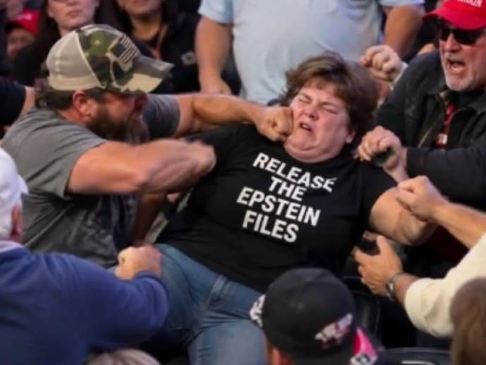 Just when we think there is a bottom, the United States sinks just a bit lower. It’s our brand nowadays.
That’s quite a left cross this thug delivered to this helpless female protestor.
It wasn’t too long ago that beating up women was taboo in America. My 11-year-old, sixth-grade son saw a male classmate of his badly bruise a girl by pushing her hard down to the ground–and proceeded to punch him in the mouth. A fellow father witnessed the scene and told me, “Your son’s fist was in that kid’s teeth within a fraction of a second.”
I had brought him up to avoid violence and achieve peaceful resolutions to conflicts, but I couldn’t fault him here.
What a disgusting bunch of turds we’ve become.
We’re starting to see intimations that stupidity like this is generated and posted by Russian data centers so as to appeal to MAGA idiots and favor the Republicans in the upcoming midterms.
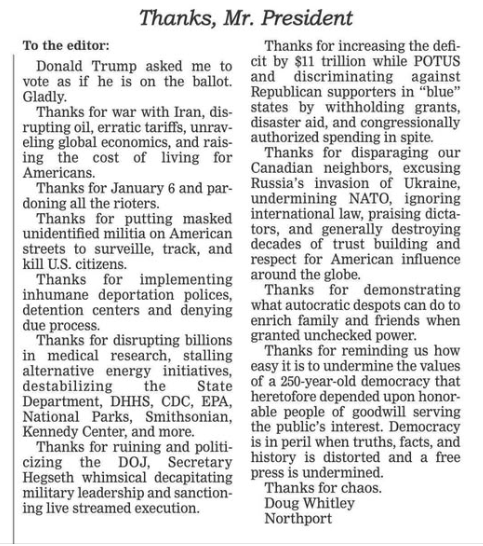 Every day, we come across articles that summarize Trump’s “accomplishments.”
I thought I’d publish this masterpiece.
