

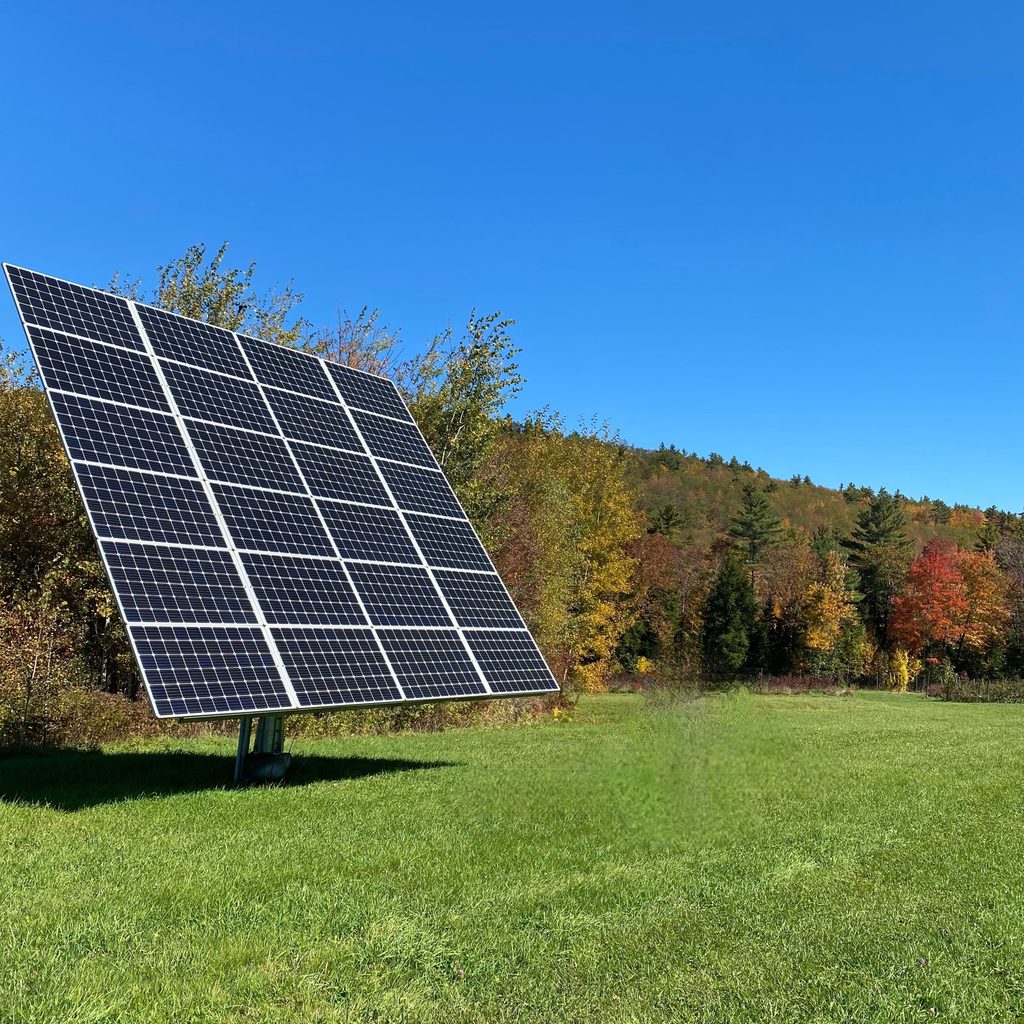
A new solar power project that will break ground in the Mojave Desert, near two Kern County towns in California, will require thousands of Joshua trees (Yucca brevifolia) to be removed. The project is also expected to destroy a habitat for desert tortoises (Gopherus agassizii), California’s state reptile and a threatened species.

The Aratina Solar Center project, developed by Avantus, is slated to span 2,300 acres in Boron, California and has already been revised once due to local complaints. According to the project website, the solar power site was redesigned to be better disguised from local residents.
But locals are still concerned about how this project can affect Boron and another nearby town, Desert Lake, in addition to the environmental impacts.
A study on the project highlighted that the area’s soil contains fungal pathogens that can cause valley fever, and now, residents are concerned about how construction could spread these pathogens and other particulate matter by stirring up dust into the air.
“How are kids going to be able to play outside?” Melanie Richardson, a local resident and nurse who has children that attend nearby schools, told the Los Angeles Times. “So many people from our community were begging them not to approve this project, and they passed it regardless.”
The clean energy project, which is expected to power 180,000 homes — with that power estimated to be for wealthy residents along the coast, the Los Angeles Times reported — could also have lasting impacts on the desert ecosystem.
Landscape clearing is expected to begin today, June 3, according to an anonymous source that shared information with the Los Angeles Times. There are 4,722 Joshua trees on the planned project site that could be removed.
According to the project website, Avantus said the new solar project will “offset about 860,000 metric tons of carbon emissions every year, the annual equivalent to planting 14 million trees.” Kern County officials also told the Los Angeles Times that Avantus provided $1.4 million in funding for Joshua tree protections in areas outside of their development site.
Although petitions to protect Joshua trees under the Endangered Species Act in recent years have failed, the plants do have some protections under the Western Joshua Tree Conservation Act, which took effect in July 2023. As the Los Angeles Times reported, the solar project was approved before the act took effect.
The desert tortoises, which are the California state reptile, have declined in population in the state by about 50% over the past 20 years, are considered threatened both by the state and under the federal Endangered Species Act. The species is listed as critically endangered under the International Union for Conservation of Nature’s Red List. The project is also expected to impact Mojave ground squirrels (Xerospermophilus mohavensis), a threatened species under the California Endangered Species Act.
However, Kern County officials unanimously approved the new Aratina Solar Center, citing modifications, such as halting construction in the presence of desert tortoises and constructing temporary tortoise-proof fencing around the construction site, that would make any environmental impacts “less than significant,” according to the county’s Final Environmental Impact Report, which also addressed public comments concerned about the project.
The post Solar Project Planned for Mojave Desert Will Destroy Thousands of Joshua Trees and Endangered Tortoise Habitat appeared first on EcoWatch.
https://www.ecowatch.com/solar-project-mojave-desert-joshua-trees-tortoises.html

Last winter, we kept our house at 60 degrees and our electric bill was STILL $280. I’ve been interested in solar for a long time, but on the long list of house projects (especially when you’re restoring a 200 year old house on the historic registry) some are more pressing than others.
But with a few of those major projects wrapping up, and a daunting bill before me, I figured now was the time for a quick google search on solar panels, and let me tell you….. It can be very overwhelming.
Figuring out the rules (cough, cough, historic society), incentives or rebates if applicable, how much it would cost, how much we could save, etc. felt a little like a part-time job. But, one website made it really easy to compare things, and I am happy to be partnering with Aurora Solar to share that site with you.
Because I think you should be able to easily run the numbers on your house without a lot of hassle!

This post is sponsored by Aurora Solar, but all thoughts and opinions are my own.
If you’ve ever gotten a solar quote, there’s a good chance that Aurora Solar was involved. Aurora was founded in 2013 after its co-founders spent seven months trying to design a solar energy system using a patchwork of different tools.
Afterall, designing a solar system shouldn’t be harder than actually installing one. So they built software specifically for solar professionals. Today, more than 7,000 solar organizations use Aurora, and more than 20 million solar projects have been designed using the platform. They are also the largest solar software provider in the world. Their software is used by roughly 80% of the top 75 residential solar companies in the U.S.
All of this tech has been primarily used by professional installers to map your roof and then create a proposal, but now Aurora is offering this tech to us to help compare quotes.
So instead of having to call a bunch of different installers, I could use the Aurora Solar Marketplace to understand my solar potential, compare estimates, understand my possible savings, look into battery storage and other home electrification incentives, and map out different financing options.
1. know how much electricity the system will actually produce
Before you even get into the price, make sure you understand what you’re actually being quoted.
Two solar systems can have very different prices because they may not be the same size or produce the same amount of electricity. A cheaper system might simply have fewer panels and offset less of your electric bill.
With Aurora, you can compare solar estimates and see the system size, energy production, and how much electricity the system should offset.
You can also upload your utility bill to get a solar estimate based more closely on your actual energy usage, to make the quote accurate for you instead of a ‘generic household’.
2. understand the solar payback period
Aurora calculates things like payback period and lifetime savings, which makes it much easier to understand the long-term finances.
The solar payback period is basically how long it takes for your estimated savings to make up for what you spent on the system, and this is the number that surprised me most!
One estimate had a payback period of around 7 years, and another was closer to 11 years! Over 25 years, two of the estimates I looked at had almost a $13,000 difference in projected savings.
Of course, these are still projections as electricity rates can change (HELLO 2026) but when you’re trying to compare two options for the same house, knowing that one is projected to pay for itself four years sooner is pretty useful information.
3. look beyond the monthly payment
Depending on the installer, you may be looking at a cash purchase, solar loan, lease, or power purchase agreement.
But thankfully with Aurora you can compare the different financing options side-by-side which makes it a lot easier to see the trade-offs. One option may have a lower upfront cost, another may have a lower monthly payment, and another may give you better long-term savings.
4. find out which solar incentives actually apply to you
The minute you start Googling solar, you can find federal incentives, state incentives, utility programs, rebates, net metering, and a whole bunch of information that may or may not even apply to where you live.
And some of the articles ranking at the top of Google are several years old! (RIP to the federal incentives canceled at the end of 2025.) But, Aurora can account for solar incentives when calculating the cost and savings of a system, including state, local, and utility-specific programs.
I would still double check any incentive or tax benefit you’re planning to use before signing a contract, especially because programs and eligibility can change, but having all the relevant information in the same place makes the research process much less overwhelming.
5. research the installer, equipment, and warranties
Aurora lets you compare solar installers based on things like reviews, reputation, pricing, and financing options, which I think is just as important as the actual quote.
I’d also look closely at what equipment is included. What panels are they using? What kind of inverter? How long are the equipment warranties? Is there also a workmanship warranty from the installer? Who handles repairs if something goes wrong five or ten years from now?
And, I know I’ve said it a million times, but it’s nice to see it side-by-side without having to fill out a bunch of forms and be hounded on the phone just to get an idea of what solar may look like.
The post How to Compare Solar Quotes: What to Look For Before You Choose appeared first on Going Zero Waste.
How to Compare Solar Quotes: What to Look For Before You Choose
Green Living
Sustainability In Your Ear: XPRIZE’s David Babson on Why Climate Grand Challenges Need Buyers, Too
Buyers contracted nearly 30 million tons of durable carbon removal in 2025, more than triple the 2024 total, according to CDR.fyi data reported by Heatmap. About 90% of those purchases came from a single company, Microsoft, and suppliers delivered only about 450,000 tons during the year. That is a sliver of the six to 10 billion tons of removal a year that climate scenarios suggest the world will need by 2050. The technology to pull carbon out of the air works, but the customers needed to scale it remain scarce.
Our guest today, David Babson, is executive vice president of the Energy, Climate, and Nature domain at the XPRIZE Foundation. He calls the slow progress a market failure, because the technology is progressing faster than it is being adopted. Babson previously led MIT’s Climate Grand Challenges initiative and was a program director at the U.S. Department of Energy’s ARPA-E. His portfolio includes XPRIZE Carbon Removal, which drew 1,334 teams and whose participants have raised more than $3.3 billion. In April 2025, Mati Carbon won its $50 million grand prize for spreading crushed basalt on smallholder farms in India, where the rock locks away carbon dioxide. “If people could make money taking carbon out of the air and putting it underground, as opposed to only being able to make money taking it from underground and putting it in the air, we would be in a better place,” Babson says. Mati is weathering the slump in part because its rock dust also improves soil health and crop yields, giving farmers a reason to participate that doesn’t depend on carbon credit prices.

XPRIZE’s answer is to change what winners receive. Babson describes “mixed purses” that pair a cash award with a guaranteed buyer through an advance market commitment, a power purchase agreement, or an offtake contract. In one thought experiment, a carbon removal prize would come with a separate $1 billion fund raised from credit buyers, which qualified teams could draw on as they deliver verified tons. XPRIZE is applying the same thinking to a planned series of fusion energy prizes, pairing technical milestones with market mechanisms to build the supply chain that commercial fusion will require. The same gap between invention and adoption shows up in other XPRIZE competitions. On September 23, XPRIZE Wildfire awarded about $4.55 million from its $11 million purse, with defense contractor Anduril Industries taking first place in autonomous fire response along with a $1 million Lockheed Martin bonus. Babson expects costs to fall as fire agencies adopt the tools and as startups license individual components into cheaper platforms, though underfunded agencies will need a way to buy the first systems. He also notes that the competition left fuel management and ground-based autonomy for future prizes. Earlier this year, program director Andrea Santy told us that field testing had moved ahead of drone regulations. In biodiversity, Limelight Rainforest won $5 million for surveying 100 hectares of tropical forest in under 24 hours and identifying more than 250 species. Biodiversity still lacks a price, but Babson argues that once ecosystems can be measured, slow-walking policy becomes “a dereliction of what they should be doing.”
We also discuss the tension inside XPRIZE’s vision of “equitable abundance,” including a $101 million Healthspan prize that could add years of consumption to longer lives. Babson argues that abundant, cheap clean energy would let society move beyond efficiency as its organizing principle, powering uses such as indoor vertical farms that could return millions of acres of farmland to nature. You can follow XPRIZE’s new competitions and get involved in its prize ideation workshops at xprize.org.
- Subscribe to Sustainability In Your Ear on iTunes
- Follow Sustainability In Your Ear on Spreaker, iHeartRadio, or YouTube
Interview Transcript
Mitch Ratcliffe 00:36
Hello. Good morning, good afternoon, or good evening, wherever you are on this beautiful planet of ours. Welcome to Sustainability In Your Ear. This is the podcast conversation about accelerating the transition to a sustainable, carbon-neutral society, and I’m your host, Mitch Ratcliffe. Thanks for joining the conversation today.
Let’s talk about the power and the uses of grand challenge programs to kickstart low-carbon industries and respond to the changing environment. Over the past several years, we’ve talked on the show with leaders of grand challenge programs designed to accelerate progress on humanity’s most difficult challenges, from pulling carbon out of the atmosphere to fighting rapidly growing wildfire threats in cities and rural communities. Many of these competitions have been launched by XPRIZE, whose leaders have shared on the show the stories of these competitions as they launched and unfolded.
Today is a chance to take stock, to look back and think about how climate markets, technology, and politics are changing fast, and how that makes this a good moment to ask the question: Are these programs designed to accelerate progress actually delivering that progress?
Our guest today designs XPRIZE’s climate bets. David Babson is executive vice president of the Energy, Climate, and Nature domain at the XPRIZE Foundation. Before XPRIZE, he was the executive director of MIT’s Climate Grand Challenges initiative and a program director at the U.S. Energy Department’s ARPA-E energy technology research agency.
His portfolio includes the largest incentive in prize history. In 2025, Mati Carbon received a $50 million grand prize for their enhanced rock weathering solution for capturing and drawing down carbon, and XPRIZE now reports that companies participating in its programs have raised $3.3 billion. That carbon removal win arrived just as the removal market hit serious turbulence, and as XPRIZE’s wildfire competition wrapped up with its top prize still unclaimed.
So we’re going to discuss what grand challenges can really accomplish, which winners continue to build and which stall, and what the reasons are, as well as the tensions inside a portfolio that funds both climate solutions and longer human lifespans. We’ll get to the conversation right after this brief commercial break. Stay tuned.
[COMMERCIAL BREAK]
Welcome back to Sustainability In Your Ear, and welcome, David Babson, to Sustainability In Your Ear. How are you doing today?
David Babson 03:10
I’m doing well.
Mitch Ratcliffe 03:11
I’m glad to have you here. You’ve run research portfolios at ARPA-E and MIT. What can a prize purse accomplish that a well-funded grant program can’t, or are they complementary?
David Babson 03:22
They’re absolutely complementary. The way that I think about it is that the value of these different mechanisms for promoting innovation is at different parts of the innovation supply chain, if you will. A prize is not a substitute for the very necessary investments that places like governments make into basic, applied, and advanced research. In fact, those types of investments are really valuable for establishing the innovation ecosystems and the technical capacities to eventually win prizes.
Where the prize is very valuable is somewhat downstream: translating technologies, ideas, and innovations that are coming out of academia and labs to market for scale. It challenges the innovators to imagine those technical capacities as solutions to global challenges, and then the visibility that the prize brings to those translations of technologies de-risks funding to flow to those innovators so they can imagine their uses in practice.
So I actually see them as very complementary, particularly when it comes to solutions in the energy and climate space that require rapid adoption of technologies in markets to have impact. Just having an energy solution or a climate solution is not valuable unless it can be de-risked and connected to markets to scale for impact. And that’s what the prize is actually very good at doing.
Mitch Ratcliffe 05:22
That comes through in the impact report that you all published recently. About 1,300 different organizations were catalyzed. The groups came together, apparently, because of their desire to compete in the competition.
What I’ve found in my work with public-private partnerships, in particular, is that impact investors are looking for that initial traction, and to a degree, the prize and the distribution of money within the prize group is that catalyst that says there’s a real opportunity for an impact profit, something that both does good and is profitable. How does the organization consult with the financial communities that are going to back these companies once your prize has been awarded? Is there a backroom conversation about that, for lack of a better way of putting it?
David Babson 06:10
Not an explicit backroom conversation about it, but the prize itself brings attention to the innovations that are coming out to win the competition. Oftentimes, as you’re noting, these impact investing communities exist, and they are looking for technologies to invest in to have impact.
What the prize is effective at doing is casting a wider net and surfacing the best solutions across the board, where there may have been silos in the past, or there may not have been transparency to individual investors about where to put their money. The prize is capable of elevating all of them, creating better visibility, and therefore, just by its inherent operation, creates better opportunities for investment capital to flow to the right types of teams to have greater impact more quickly.
So we don’t have explicit discussions with those types of investor communities to have them directly connected to individual prizes. But we often consult with investors and experts in industry to inform the metrics that we would want to have demonstrated, so that we know that when teams are winning our competitions, the demonstrations that they do are de-risking capital to flow to those innovators so that they can be translated to market.
Mitch Ratcliffe 07:47
We’re talking about growing industries, which of course means diversifying into a lot of specializations. Once you’ve got this kind of anchor winning team or teams, how does XPRIZE think about propagating the information that’s necessary for the rest of the industry to grow and fill in around them, in order to provide the kind of comprehensive geographic coverage and range of functions that are necessary for the industry to thrive? Is that something that you think about cultivating, like you would in agriculture?
David Babson 08:22
It is something that we think a lot about. With a few of the more recent prize competitions that we’ve run, we have also paired those competitions with a subsequent impact phase, which is designed to further build the community that has been established through the operation of the prize and connect the technologies that came out of the competition to the right types of markets and investors so that they can scale.
So that is one of the things that we’re thinking about in future competitions as well: not just running an innovation competition to surface new innovations, but how do we augment the community building that the prize provides as a way to also promote the back-end business models and industries that can scale those solutions for impact?
Mitch Ratcliffe 09:19
How would you describe the patterns you’re looking for that indicate that an organization can become that durable enterprise? What separates them from the rest? Have you got thoughts about that?
David Babson 09:29
I do have thoughts about it. In a lot of ways, the rigorous metrics that we set up when we’re designing the competition are informed by what experts believe would be the necessary demonstrations to actually generate a solution that is market viable. So a lot of it is very quantitative in terms of how we architect the competition.
But what we’ve also seen is that there are elements of winning teams that can’t always be controlled by just the scientific metrics. A lot of times, it’s the composition of the team, how diverse they are, and the unique mentality that the leaders of the team have in terms of their vision and their ambition. Those are parts that you can’t control for, but the prize model is very effective at also attracting the type of entrepreneurial, big-thinking individuals that actually tend to be behind some of the most successful companies.
Mitch Ratcliffe 10:40
Those big-thinking individuals often struggle with the transition from inventor. And to your point about the academic community often being the source of many of the teams that are competing, that’s not something that academics are necessarily good at. As part of the prize process, do you also begin to coach them on how to staff for the operators who are going to be able to translate the invention into a market success?
David Babson 11:04
Absolutely. On the front end, the prize itself sets a target that is typically beyond what researchers in an academic setting are imagining for what they’re doing. It gives them a way to imagine their technical innovations as scalable solutions to big problems, so that gets them excited to be in the competition. But you’re right: they’re not necessarily all business-minded or have the types of experience that would allow even very, very good solutions to become very strong companies and business models.
So one of the things that we have tried out recently, and it’s a model that we could replicate in future competitions as well, is an accelerator cohort in the carbon removal prize. It was optional for teams to opt into the cohort to get additional guidance and consulting from experts in startups and technology translation. That would help them think about the unique elements of their proposed carbon removal strategy, how they would connect it to markets, and how they would drive greater value for their solutions.
That is something that we can do as part of the competition, because we’re building a community of innovators that are striving toward a shared aim. Therefore, we can better define what an accelerator cohort looks like, so that the guidance that is provided is more effective at actually generating the right type of thinking for scaling the solutions that we’re interested in.
Mitch Ratcliffe 12:52
That kind of accelerator approach gets you ready for market competition, but it doesn’t always get you ready for the market in which you’re going to have to exist as an organization. It’s templated, and the specifics of any individual company’s success are very unique.
Let’s take Mati Carbon as an example. They won the $50 million prize. They are doing carbon drawdown using basalt ground up and mixed into farmers’ fields, but their success is really anchored in the carbon credit market’s growth. How does the prize work with those sources of carbon credit purchases, for instance, Meta or Microsoft, to connect them to these opportunities to make prize winners thriving organizations?
David Babson 13:38
There are some limitations to what we can do in that space. I think the uncertainty and the pullback in commitments to carbon credits and carbon markets is a challenge to the cohort of teams that competed in the carbon removal prize.
Ironically, I think one of the things that is allowing Mati to continue growing on the business plan that they have is that a lot of the value that they’re able to assign to their solution actually goes toward the agricultural implications: the ability for their treated lands to not just remove and store carbon, but to improve soil quality and soil health to improve agricultural yields. So there’s a different value stream that they can draw from. Broadly, it would be much better if there were a great deal more certainty in the market for carbon removal attributes.
Mitch Ratcliffe 14:47
This is a systems thinking problem, and your domain includes nature alongside energy and climate. How do you think differently about designing a prize for an ecosystem as compared to designing one for a technology that has a clear cost curve and an adoption challenge?
David Babson 15:02
I think that it’s a really interesting question, and one that we’ve been thinking about a lot in my domain in particular. As I was saying earlier, it’s not sufficient to just surface new innovations that could be a solution. In order for them to have impact, you have to figure out how you connect those to markets and get them into use, so that they can scale to drive that impact.
So there are two parts of the incentive model that we need to push on. We need to continue the incentive that the traditional non-dilutive purse offers in attracting innovators to demonstrate their potential solutions. But we also need to consider the market mechanisms that would help accelerate the transition of those technologies from the lab into the market.
So we’ve been thinking a lot about how we might develop mixed purses: a purse that includes some of those traditional non-dilutive types of incentives, as well as, potentially in the energy space, an advance market commitment, a power purchase agreement, or an offtake. The prize competition actually sets the metrics that need to be demonstrated and pressure-tests technologies and their capacity to scale, and what teams could win is access to a large power purchase agreement or advance market commitment. In many cases, the competitors in these competitions would value that certain offtake to scale their solutions over a traditional non-dilutive purse. So we’re thinking a lot about that in the energy space.
For nature, as you note, one of the challenges is that some of the markets that exist for potentially financing natural ecosystem restoration or nature-based climate solutions are soft. They’re voluntary markets. The certainty is not there. The other thing that we could do is create a contrived fund that is unique to the competition, but it would require teams that are competing to demonstrate some sort of verified outcome to unlock dollars from that fund. So we can create a market mechanism that would help a lot more teams scale their solutions.
Let’s do a thought experiment. If we ran the carbon removal prize in a similar way, the teams that won awards for their innovations in that competition could have still won those dollar amounts in the non-dilutive fashion. But separately, we could have raised, let’s say, a billion-dollar fund from entities that are buying attributes in that space, and then once teams were qualified, they would be competing to draw down from that fund based on verified output. So we would have actually created a certain market for them to scale in.
Mitch Ratcliffe 18:16
You mentioned a moment ago the shifting willingness to invest in this. Do you see a decline in big tech’s willingness to fund carbon capture and energy challenges as capital is directed toward the AI buildout, or is that actually underlining and making these investments more important?
David Babson 18:33
There are a number of factors that appear to have affected some of the commitments that large corporations have been making in terms of purchasing, or voluntarily committing to purchase, carbon attributes right now. That is a challenge that is creating uncertainty, and it is complicating the market.
But on the other hand, I do see a lot of interest in potentially investing in the clean energy transition, because of their need for enormous amounts of energy and the realization that growing energy demand must be paired with clean energy approaches that can scale quickly. Otherwise, we’re going to be tying in and locking in the growth of our data transition and our AI buildout with growing emissions that are unsustainable.
Mitch Ratcliffe 19:34
You had great increases in carbon capture between 2024 and 2025: 800,000 tons in 2024, and 4.9 million in 2025, so about 600% growth. But we’re a long way from the six to 10 gigatons of annual removal estimated to be needed by 2050. How do you feel we’re doing in terms of the race to start drawdown as we continue to generate more carbon?
David Babson 20:01
It’s a market failure at this point. One of the things that the carbon removal prize did is it really did surface a number of different pathways to durable carbon removal. Some of the approaches that were surfaced are more near-term, large-scale types of things that can be deployed quickly, like Mati is doing. And there are some of the more frontier approaches, like direct air capture and direct ocean capture, that are more energy-intensive and more costly now, but that could scale more modularly and contribute to a large carbon removal industry over time.
The challenge now is creating the market demand signals to scale all of those technologies up to what they need to be. The voluntary markets, particularly given the uncertainty in those markets now, are insufficient to really unlock the types of capital necessary to scale some of these solutions.
So the most valuable type of intervention now would be greater, more certain commitments about the market for carbon removal and the trajectory for demand over time, so that companies and entities that are playing in this carbon removal supply chain can plan, they can invest, and then they can work to meet that demand. Without the market side driving the buildout of the pathways, it’s going to be very difficult to get to where we need to be to help bend the warming curve and stabilize the climate long term.
Mitch Ratcliffe 21:47
So we are not on pace, or we are making progress toward the traction we need to achieve the pace that’s necessary?
David Babson 21:55
We’re not on pace.
Mitch Ratcliffe 21:56
Okay.
David Babson 21:57
We’re not on pace, but what I was saying is we’re not on pace with respect to the market side. The technology side is there. Yeah, the technology is there. Absolutely. And the technology can be improved, and it would be. I have great confidence in our human ingenuity and the capacity to make money if the markets support it, right?
If people could make money taking carbon out of the air and putting it underground, as opposed to only being able to make money taking it from underground and putting it in the air, we would be in a better place. It’s the inability of concerted coalitions of governments and entities to make the commitments to create certainty in those future markets that is preventing the scaling.
Mitch Ratcliffe 22:53
That’s a big problem, and also a great place to take a quick commercial break, folks. We’re going to be right back to continue the conversation. Stay tuned.
[COMMERCIAL BREAK]
Welcome back to Sustainability In Your Ear. Let’s return to my conversation with David Babson. He’s executive vice president of the Energy, Climate, and Nature domain at the XPRIZE Foundation, and we’re going to talk about some of the winners of the foundation’s grand challenge competitions.
But David, I want to start off by asking about the role of sponsors in how you design these programs. PG&E is one of the sponsors of the wildfire prevention and reduction programs, and of course, they paid $27 billion in claims after their lines contributed to some wildfires. What is their motivation for being involved? I think it’s pretty clear, but can you confirm that they want to reduce their liability, and how does that shape the way you design a prize?
David Babson 23:44
PG&E has been an outstanding sponsor, and yes, I believe that their interest in getting involved in wildfire was that they want to find technologies that can help reduce their liability, particularly in the industry they’re in. But from our interactions with them, they’re also just very philosophically aligned. They do believe in sustainability. They recognize that there are growing risks associated with wildfire, and they want to help support the types of innovations that are going to fundamentally change our ability to tackle the growing wildfire risk that is tied to climate change.
Mitch Ratcliffe 24:31
We all believe in technology. I mean, that’s why I’m doing this show and talking with you about it, and obviously PG&E does as well. But there are also cultural practices, planned burns, different forms of fuel management, and land use that could be integrated into these. Do we need to design some prizes that bring traditional practices into contact with technology in order to amplify the impact we want?
David Babson 24:58
Absolutely. The w