

Shell has abandoned a key climate target for 2035 and weakened another goal for 2030, according to its latest “energy transition strategy”.
The oil major has “updated” its target to cut the total “net carbon intensity” of all the energy products it sells to customers – the emissions per unit of energy – by 20% between 2016 and 2030. The reduction is now set at between 15-20%.
Within Shell’s strategy, chief executive, Wael Sawan, writes that this change reflects “a strategic shift” to focus less on selling electricity, including renewable power.
Instead, the company says investment in oil and gas “will be needed” due to sustained demand for fossil fuels. It emphasises the importance of liquified natural gas (LNG) as “critical” for the energy transition and says it will grow its LNG business by 30% by 2030.
This amounts to a bet against the world meeting its climate goals, with the International Energy Agency (IEA) and others concluding no new oil-and-gas investment is needed on a pathway to 1.5C – and warning against the risk of “overinvestment”.
Elsewhere in the report, Shell notes that it has “chosen to retire [its] 2035 target of a 45% reduction in net carbon intensity” due to “uncertainty in the pace of change in the energy transition”.
Both goals were intended as stepping stones on the company’s journey towards net-zero emissions by 2050, a goal set by the previous chief executive, Ben van Beurden, in 2020.
The weakening of climate goals from Shell, the world’s second-largest investor-owned oil-and-gas company, comes after BP scaled back its ambitions last year.
Weaker targets
The new report marks the first three-year review of Shell’s “energy transition plan”, after it was adopted in 2021.
Rather than setting a target for cutting its entire “scope 3” emissions – those generated by the use of Shell’s fossil fuels and other energy products by consumers – the company set itself “net carbon intensity” targets on its path to net-zero.
This allows Shell to bring down its carbon intensity and hit its targets through means other than cutting its oil-and-gas production, such as selling more low-carbon products, including renewable electricity.
Shell initially said the carbon intensity of the energy it sells would fall 20% by 2030, from a baseline of 2016, and then 45% by 2035.
This amounted to a cut from 79g of carbon dioxide equivalent per megajoule of energy (gCO2e/MJ) to 63gCO2e/MJ by 2030 and 43gCO2e/MJ by 2035.
As the chart below shows, these targets have now been weakened. The 2030 target has been changed to a range of 15-20% and the 2035 target has been “retired”, according to a footnote in the review.

Shell attributes these changes to a shift in its business priorities.
The firm says that when it comes to selling electricity, including renewable power, it will focus on “value over volume”. For example, it will target “commercial customers more than retail customers”.
The company points to its withdrawal from supplying energy to European homes, having closed its utilities arms in the UK, the Netherlands and Germany in 2023.
Nevertheless, the company also says the “biggest driver for reducing our net carbon intensity is increasing the sales of and demand for low-carbon energy”, rather than cuts in fossil-fuels production. The report states that:
“Investment in oil and gas will be needed because demand for oil and gas is expected to drop at a slower rate than the natural decline rate of the world’s oil and gas fields, which is 4-5% a year.”
This amounts to a bet against the world meeting its carbon targets. If the world were to get on track to limiting warming to 1.5C, there would be no need for investments in new oil and gas production, according to the IEA.
In its 2023 World Energy Outlook, the IEA said that warnings from oil and gas producers that the world was “underinvesting” in new supplies were no longer valid. It said:
“[T]he fears expressed by some large resource-holders and certain oil and gas companies that the world is underinvesting in oil and gas supply are no longer based on the latest technology and market trends.”
The agency added that risks were “weighted more towards overinvestment”.
LNG over oil
Shell has also introduced a new target for cutting emissions from customer use of its oil products, such as petrol and diesel used in cars, within its energy transition strategy review.
This goal amounts to a 40% reduction in absolute emissions by 2030, compared to 2016 – a level the European company says is compatible with the EU’s climate targets for transport. Shell says it will “gradually reduc[e] exposure to oil products used for transport”, by shifting its sales away from this area.
Alongside this, Shell announced a renewed focus on LNG in the strategy, which it says will play a “critical role” in the energy transition, even as people embrace electric cars and therefore reduce their reliance on oil.
The company expects global demand for LNG to continue growing “at least through the 2030s”, and says it will grow its LNG business by 20-30% by 2030.
This marks a continuation of Shell’s focus on LNG from its 2021 strategy, when it said it would “extend leadership” in this area.
Shell’s internal outlook for the growth of global LNG demand is markedly more optimistic than the IEA’s, which suggests that there is already enough capacity built or under construction to meet demand for the next two decades.
According to the Institute for Energy Economics and Financial Analysis (IEEFA), Shell’s LNG outlook “underestimates barriers” to demand growth. IEEFA says:
“[Shell] is pinning its hopes on rapid demand growth in emerging markets and China’s industrial sector, which may never materialise.”
Despite its plans to expand its LNG business, Shell’s report overall emphasises a “balanced and orderly transition away from fossil fuels”.
Wider trends
Shell states that it has so far met its climate targets and points to its success reducing emissions from its own operations, such as those from oil rigs and offices.
It argues in the small print at the bottom of the report that, despite its targets for consumer carbon intensity, “Shell only controls its own emissions”.
(Shell has long maintained this line, that it is merely meeting the demand of customers to buy fossil fuels. Exxon chief executive Darren Woods recently made a similar argument.)
The report also stresses that its plans for net-zero are dependent on society as a whole and “if society is not net-zero in 2050… there would be significant risk that Shell may not meet this target”. This is familiar language from the oil major, which frequently explains that it is consumers, not Shell itself, that influence fossil-fuel use.
Shell’s review follows the global energy crisis that has unfolded over recent years, driven by spiralling gas prices. In response to the changing energy landscape this has brought about, there has been a shift in tone from the oil majors regarding climate commitments.
It also follows a period in which companies such as Shell have made record profits due to rising fossil-fuel prices.
After taking over from Van Beurden, Shell chief executive Sawan stated that “cutting oil and gas production is not healthy”, emphasising the “fragility of the energy system”. In his introduction to the new strategy, Sawan writes:
“Our ability to raise and invest capital depends on delivering strong returns to shareholders, shaping the role that Shell can play on the journey to net-zero. We believe this focus makes it more, not less, likely that we will achieve our climate targets and ambitions.”
BP, Europe’s second largest oil major, weakened its climate targets last year. The change in its goals, which unlike Shell’s are based on full scope 3 emissions, can be seen in the chart below.

Shell’s “strategic shift” in its operational focus comes amid a wider effort to cut operating costs.
This has seen the company announce plans to reduce staff numbers, in particular in low-carbon sectors of the company such as hydrogen.
The company’s profits have fallen now fossil-fuel costs have returned to more normal levels, but have remained high. In February, the company announced an annual profit for 2023 of more than £22bn ($28bn), one of its most profitable years on record.


The post Shell abandons 2035 emissions target and weakens 2030 goal appeared first on Carbon Brief.

Stientje van Veldhoven is Minister of Climate and Green Growth for the Netherlands.
When we co-hosted the first-ever conference on transitioning away from fossil fuels (TAFF) this April, the world was reeling from the volatility in oil and gas prices due to the Hormuz blockade. Fossil fuels moved to the centre of the debate as country leaders scrambled to secure supplies for their people.
We saw the very opposite in Santa Marta. Nearly 60 nations came together with 2,600-plus participants from civil society and community organisations, businesses and scientists to discuss concrete solutions on how governments can shift away from fossil fuels. Together, we defined the ‘Santa Marta process’ to serve as an extra engine for the broader process of the UNFCCC.
The Santa Marta process will see expert groups and committed countries develop national roadmaps, chart pathways to overcome financial constraints, and drive economic transformation. We made a multi-year commitment to take this process forward. With Tuvalu and Ireland taking over as co-chairs for 2027, transitioning away from fossil fuels is now moving from words to action.
European nations signal support for fossil fuel roadmap, says COP30 president
Work gets underway
At the opening of the Santa Marta conference, my co-chair Colombia’s then energy minister Irene Veléz Torres and I repeatedly stressed one thing: that the forum was not a space for negotiations, but a forum for countries and other partners to discuss practical steps to move away from fossil fuels.
Since then, we have seen three roadmaps already submitted: by France, Germany and our own. Pacific Island ministers also recently announced their intention to develop a regional roadmap to transition away from fossil fuels. And I called on the European Commission to do the same for the European Union.
On top of this, numerous countries are already working on parts of the transition, such as phasing out coal or ending fossil fuel subsidies. More countries are expected to follow soon.
Workstreams were launched in early August, followed by sign-ups from countries willing to take a larger role and lead on organising different activities. Each workstream has an assigned lead organisation (or madrina). Each has its own working structure.
When the oil companies leave, who pays?
Across the world, communities facing the decline of fossil fuel industries are demanding a Just Transition that gives them a say in what comes next. Establishing a strong mechanism at COP31 could help them secure itCOP31 Bulletin Day 1: Agenda settled as COP urged to “supercharge solutions”
An agenda row is averted at the opening session, where the UN climate chief said strong results are needed from the talks to boost “real-world outcomes”

Workstream 1 focuses on supporting countries in developing and implementing flexible, country-owned national roadmaps. It operates as an open, collaborative hub that coordinates partner institutions to provide tailored technical, financial and policy support directly aligned with each country’s specific needs and existing frameworks. The consortium, which functions as a hub, currently consists of the NDC Partnership, the Powering Past Coal Alliance, the World Resources Institute and the newly established Science Panel on the Global Energy Transition.
Workstream 2 focuses on mobilising collective coalition power to tackle national and international financial constraints, debt-related barriers and macroeconomic dependencies that hinder the transition away from fossil fuels. Starting with a scoping phase, it will deliver transparent, actionable recommendations and reform solutions to support countries’ structural fiscal needs at global fora. Its madrinas are the International Institute for Sustainable Development and Transforma, a Latin American think-and-do-tank.
Workstream 3 focuses on driving economic transformation by mapping green partnership potential, decarbonising trade balances and building competitive, mutually beneficial clean markets. It aims to help countries, especially producers, diversify their economies, scale domestic value creation, and unlock collective trade opportunities. The madrina is the Organisation for Economic Co-Operation and Development working together with the South Centre.
Incorporating Santa Marta into COP
What was abundantly clear in Santa Marta is that our coalition’s efforts are a strong support to, rather than a replacement for, the COP process. Over the past decade or so, the focus at COPs was on setting goals. Now we must focus on implementation. The COP31 presidencies have previously indicated their willingness to incorporate elements of the Santa Marta process into COP31 outcomes. We look forward to seeing how we can achieve this together.
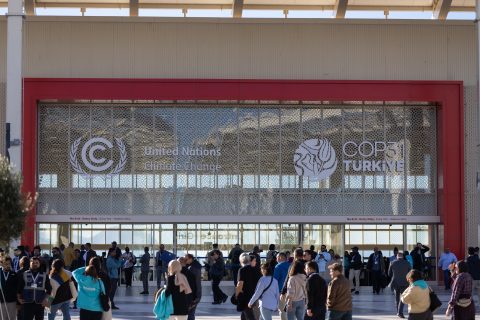
The Brazilian COP30 Presidency delivered its global roadmap on the transition away from fossil fuels – a voluntary toolkit for countries that want to move ahead – just before the COP started in Antalya on Monday. During the coming two weeks, it’s critical that we see more concrete, actionable roadmaps for the fossil fuel phase-out. These documents can be crucial for a strong second Global Stocktake of national climate plans in two years’ time.
Brazil’s fossil fuel roadmap sketches out first global timetable
At COP31, a variety of TAFF-related events will be hosted, focusing on next steps within the Santa Marta workstreams. We welcome any leader and expert from around the world to take part as they work to develop their roadmaps, identify the fossil fuel subsidies they need to phase out, or establish green/clean markets at home.
Only by reducing fossil fuel demand and replacing it with clean electricity to run our economies can we all become more economically resilient and sharply cut the pace of climate change.
The post COP31 outcome needs to prioritise transition away from fossil fuels appeared first on Climate Home News.
COP31 outcome needs to prioritise transition away from fossil fuels
An older teaching about land acknowledgement
As I have come to understand the spirit and intention of land acknowledgement, I often return to fond memories of my grandmother and her words of wisdom. She taught that the health of the places we call home comes first, because the wellbeing of the people depends on it.
In her teaching, land acknowledgement began with the land. Long before it became a paragraph read at the start of a meeting, it was a way of recognizing a homeland: its waters, its species, its seasons, and the spirit that revealed whether the place was well.
Her teaching echoes a practice found across many Indigenous Nations. Haudenosaunee gatherings, for example, have long opened with the Ohén:ton Karihwatéhkwen, the Thanksgiving Address, often translated as “the words that come before all else.” The speaker greets and gives thanks to the people, the earth, the waters, the plants, the animals, the winds, the sun, the moon and the stars. Only after everything that sustains life has been acknowledged does the gathering turn to its own business.
That order changes what an acknowledgement is for. Its purpose was to share the story of a place with neighbours and to draw them into the work of tending it. People entered the story second, as the ones responsible for what had just been named.
Understood this way, an acknowledgement does more than open a meeting. It asks us to reconsider where we stand, and what we owe the ground beneath us.
Nations among nations
In her teaching, people are one nation among many. The salmon are a nation. So are the cedars, the bison, the medicine plants, and the pollinators. Each belongs to a place, carries its own responsibilities, and offers gifts no other nation can give.
This idea of kinship runs through many Indigenous philosophies. The phrase “all my relations,” heard in ceremonies and gatherings across Turtle Island, is a reminder that family extends beyond people to the animals, plants, waters and lands that make life possible. Some Indigenous languages carry the same understanding in their grammar, speaking of many plants, animals and natural forces as living beings rather than objects.
Sovereignty, understood through this relationship, is a kind of standing more than a form of control. Each nation belongs fully to its place and carries its share of that place’s life. No nation thrives alone, and none thrives by taking over the whole.
The land is also the source of instruction. Over generations, people watched how a river valley or a stretch of prairie kept itself well: who arrived when, who fed whom, and how much could be taken before the giving stopped. In my grandmother’s telling, those observations became instructions, and those instructions helped shape law and protocol. They guided when to harvest, where to camp, how to enter a neighbour’s territory, and what was owed in return.
Indigenous legal scholars today often describe this as law that comes from the land itself, learned by watching how living systems sustain one another. A plainer name for it is knowing how to live somewhere.
The host and the guest
One of the clearest teachings in this understanding of the world is the relationship between host and guest. My grandmother invited us to recognize that relationship in the lives of plants and animals.
A host prepares the place before anyone arrives. A beaver family dams a stream, and the pond becomes a home for fish, frogs, birds and plants. A fallen tree becomes a nurse log, feeding the next generation of seedlings as it returns to the soil.
A host offers first. A flowering plant sets out nectar. A berry bush ripens fruit. These provisions come in their own season, not whenever a visitor happens to want them.
A host also makes its presence known. Birdsong, scent and the marks left along a trail tell newcomers that a place is already inhabited. The visitor does not arrive in an empty world.
The guest has responsibilities too. A guest attends to the season and to what the place can offer. A guest does not assume that everything within reach is theirs to take. A guest leaves something that helps sustain the relationship.
A bee takes nectar and carries pollen. Read through this teaching, that exchange offers an image of visiting well: receiving a gift while helping the host continue its life.
Many Indigenous harvesting protocols carry the same ethic into daily practice: ask before taking, take only what is needed, offer thanks, and leave enough for others and for the plant or animal to recover.
None of this suggests that every relationship in nature is peaceful or generous. These are ways of seeing responsibilities that people can learn to carry.
Everyone is both
No being is only a host or only a guest.
A tree makes room for other life while depending on soil, water, sunlight, fungi, and relationships beyond itself. People, too, may welcome others into their homes while remaining dependent on the larger homeland that sustains them.
The distinction between host and guest is therefore about roles, not ranks. Everyone receives. Everyone has something to give.
The question is whether the exchange sustains the place.
A visitor who takes without restraint leaves less for those who come next. A host who neglects the place has less to offer. Both have responsibilities, and neither can fulfil them alone.
This is the heart of reciprocity, a principle found across Indigenous philosophies: relationships stay healthy when gifts move in both directions. The Haudenosaunee teaching of the seventh generation extends that exchange across time, asking that decisions made today leave the place well for those not yet born.
Mutual benefit begins here, with the recognition that different beings carry different gifts and obligations.
What people carry forward
My grandmother’s teaching connects these relationships to the ways people meet their neighbours.
The host prepares a place, offers food and rest, and explains where the visitor has arrived. The guest makes themselves known, explains why they have come, listens to the terms of the visit, and brings something in return. The gift may be material. It may also be labour, knowledge, news, or a commitment to help.
Nations around the Great Lakes carried this ethic into treaty. The Dish with One Spoon, an agreement among the Haudenosaunee, Anishinaabe and allied Nations, describes shared hunting grounds as a single dish. Everyone eats from it with one spoon, takes only what they need, leaves enough for others, and keeps the dish clean. The Two Row Wampum, between the Haudenosaunee and European newcomers, shows two vessels travelling side by side on the same river, each keeping its own ways and neither steering the other.
In this understanding, acknowledgement is more than naming the people associated with a territory. It is learning enough about a homeland to behave responsibly within it.
Whose home is this? What sustains it? What laws and agreements guide our presence? What can we receive, and what must we return?
These questions make acknowledgement a relationship rather than a recital.
They also make it diplomatic. A guest who recognizes the host’s homeland recognizes that they have entered a place with its own relationships and responsibilities. A host who welcomes the guest makes room for an encounter governed by those relationships.
Neither arrives without standing. Neither arrives without obligations.
Beginning with place
I write from the shores of the Bay of Quinte. Here, the teaching asks me to begin with the water, the shoreline, and the life they sustain. Before I describe myself, I must attend to where I am.
That does not make people or history less important. It places them within the homeland that gives them meaning. The people, their laws, their agreements, and their responsibilities all belong to the place.
In a time of longer fire seasons, troubled waters, and uncertainty about what the next season will bring, this teaching asks something difficult and useful of us: pay attention before you speak.
An acknowledgement cannot tell the story of a place if the speaker has stopped noticing it.
The land came first. Beginning there again means learning to name what sustains us, and accepting that what sustains us also asks something of us.
By Rye Karonhiowanen Barberstock
Photo by Andrik Langfield on Unsplash
The post The Land Came First appeared first on Indigenous Climate Hub.