

Billions of dollars of foreign aid have been reclassified as “climate finance”, thereby helping rich countries to meet a long-overdue target, according to new analysis.
Newly released figures suggest that developed nations achieved their goal of raising $100bn in climate aid for developing countries in 2022 – two years after the deadline.
The Organisation for Economic Co-operation and Development (OECD) says these countries raised $115.9bn for climate-related projects, following a record surge in spending.
However, analysis conducted by the Center for Global Development (CGD) and shared with Carbon Brief suggests that around $27bn of the $94.2bn increase in public climate funds over the past two decades came from existing development aid.
Specifically, the CGD identified at least $6.5bn of climate aid within the record 2022 increase that was diverted from other aid programmes. This is despite pledges by wealthy countries to provide climate finance that is “new and additional”.
Such accounting changes could allow some developed countries to reach their climate targets, even while slashing their wider aid budgets.
Meanwhile, wealthy nations are under pressure to rapidly increase climate spending in the global south. At COP29 this year, all parties must agree on a new climate target that will help raise the trillions of dollars these nations say they need to address climate change.
‘Largest increase’
The $100bn target was set in 2009 at COP15 in Copenhagen to help developing countries cut their emissions and protect themselves from climate change.
A group of “developed” countries, including many European nations, the US, Canada, Japan, Australia and New Zealand, agreed to “mobilise” this amount by 2020 and then each year through to 2025.
This money largely comes from countries’ foreign-aid budgets, which finance climate-related development projects. A smaller proportion is also raised from the private sector.
Crucially, countries have determined during UN climate negotiations that climate finance should be “new and additional”. This is generally interpreted as meaning it should be supplied on top of existing aid.
Developed countries failed to hit the $100bn goal by 2020, raising just $83.3bn that year. This was poorly received by developing country governments, who view this money as essential to meet their climate targets under the Paris Agreement.
Last year, the OECD, which tracks international climate finance, announced that developed countries had “likely” met the target in 2022 – two years late. It did not release the data underpinning this estimate at the time.
The OECD has now published a report confirming that the $100bn goal was met. In fact, the organisation says climate finance underwent its “largest year-on-year increase observed to date” in 2022 – reaching $115.9bn. This $26.3bn increase can be seen in the chart below.

This uptick in climate finance was driven by record increases in spending both bilaterally – directly from country-to-country – and via multilateral development banks and funds.
There was also an unprecedented $7.5bn increase in private finance, which was mobilised by developed country investment. This comes after years of private investment remaining essentially unchanged each year.
The OECD notes that the “lion’s share” of public climate finance was provided as loans – around 69% of the total. This has raised concerns, given the number of global south countries that are already struggling with debt.
‘New and additional’
Countries are set to decide on a new climate-finance goal – known as the “new collective quantified goal” – at COP29 in Baku, Azerbaijan, later this year. This target is expected to go beyond the $100bn goal and be based on an assessment of countries’ real-world needs.
Meanwhile, some wealthy countries have announced major cuts to their foreign-aid budgets. Many nations have also decided to channel large amounts of aid to Ukraine, following Russia’s invasion in 2022, while also diverting funds to accommodate refugees on their own soil.
All of this could squeeze the wider development-aid budget and, in theory, make achieving climate finance goals more challenging.
Some countries, including the UK, have opted to meet their climate finance targets by “redirecting” or “relabelling” existing funds as “climate finance”, while failing to commit new money in sufficient volumes.
According to analysis by the CGD – released one week ahead of the OECD’s assessment – this is largely what enabled developed countries to meet the $100bn target in 2022.
It concluded that, when considering public climate finance, the goal was “partly achieved by adding climate objectives to existing development finance flows”. (The CGD analysis did not attempt to estimate the increase in private finance, assuming it would remain stable as it had in previous years.)
Applying the CGD analysis to the public portion of the OECD’s $115.9bn climate finance figure – which amounted to $94.2bn – shows that around $27bn comes from existing development aid.
This is based on overall aid only increasing $67.2bn between 2009 and 2022, meaning the remaining increase in climate aid must have come from existing sources.
Ian Mitchell, the CGD senior policy fellow who led the analysis, tells Carbon Brief:
“The intention was to provide ‘new and additional’ finance and I think the very lowest bar for that is that the face value of [total] finance would have gone up $100bn.”
As the chart below shows, while the overall aid budget grew in 2022, due partly to new aid for Ukraine and more spending on housing refugees, existing bilateral development aid fell in 2022.
Given this, the CGD says the $6.5bn increase in climate finance that year can definitively be attributed to countries’ existing foreign-aid budgets, rather than an increase in spending.

Diverting funds
Mitchell highlights the key issue with hitting climate finance targets without committing enough new resources:
“The problem with meeting that $100bn from existing resources is that it’s either rebadging it, which is not providing climate finance, or it’s diverting it from other development objectives…reducing spend on health or education.”
However, Joe Thwaites, senior international climate finance advocate at the Natural Resources Defense Council (NRDC), tells Carbon Brief that not all diversions are “bad diversions”.
A report by the thinktank ODI last year found that much of the funding being reclassified came from sectors such as energy and transport. Thwaites points out that this could mean cutting back on support for fossil fuels and targeting clean energy instead:
“Given the massive development and climate needs, we need to be growing the overall international public-finance pie. But shifting finance from one area to another isn’t necessarily a bad thing, it all depends what it’s being taken from and going to.”
More broadly, Harjeet Singh, global climate lead at Climate Action Network (CAN) International, tells Carbon Brief that developed countries are taking advantage of “creative accounting” and “fiscal loopholes” to meet their targets.
He warns that, as nations prepare to negotiate a new climate finance target at COP29, there is a need for a clear definition of what counts as “climate finance” to avoid such behaviour:
“The absence of a unified definition of climate finance is not a mere oversight; it mirrors historical patterns of power…Developed countries have aimed to keep their financial responsibilities ambiguous.”
The post Rich countries met $100bn climate-finance goal by ‘relabelling existing aid’ appeared first on Carbon Brief.
Rich countries met $100bn climate-finance goal by ‘relabelling existing aid’

Continue Reading
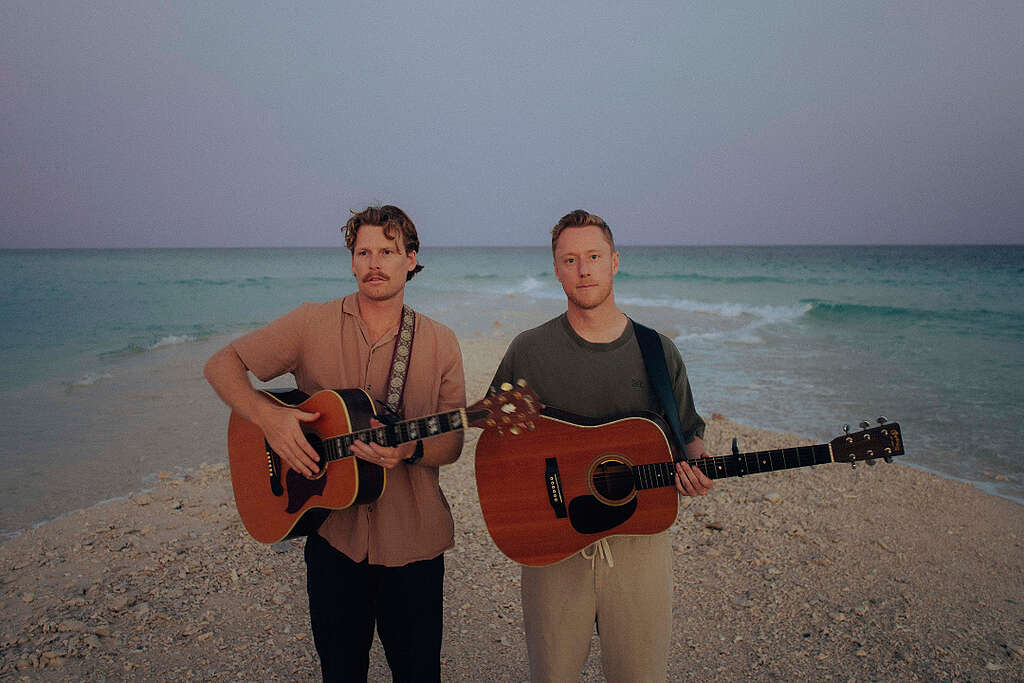
Australian indie-folk duo Hollow Coves have found a special way to combine their love of music and the natural world. They have lent their, very soothing, voices to the Save Scott Reef campaign by recording a music video of their much-loved song Coastline at the reef.
We sat them down on the Rainbow Warrior to talk about their musical inspiration, their experience on the reef, and why they believe it’s so important to protect these incredible places for future generations.
1. Tell us a little about Hollow Coves and the music you make.
Matt: Our music is acoustic indie folk. We like bands like Angus and Julia Stone, Ben Howard, Mumford and Sons – acoustic music like that.
Ryan: Historically, a lot of our music has been inspired by travelling and seeing beautiful places in nature, and just writing about experiences in the world.
We both live on the east coast of Australia, on the Gold Coast, and we’re surrounded by nature. We’ve got beautiful oceans, amazing hinterland spots and some really cool rock pools.
2. Your music is often inspired by nature and the outdoors. What is your personal connection to the ocean?
Matt: I’m in the ocean as much as I can. I surf, and I’ve always loved the ocean. I grew up just outside Brisbane, and we would catch the ferry across to North Stradbroke Island. A lot of our mates would just camp over there on the weekends. It’s been a natural part of my life.
Ryan: I don’t surf, but I have an appreciation of the ocean. When we were writing Coastline, I was actually living in Canada, and being away from the ocean made me realise how much I missed it. There’s something about living near the ocean and being able to go and be by the ocean. It’s just a different feeling.

3. You recently joined Greenpeace aboard the Rainbow Warrior to visit Scott Reef and film a music video for Coastline. What made you want to get involved?
Ryan: We’ve been so fortunate to have the success that we’ve had with our music, and when this opportunity came up, we were like, man, it just feels so fitting to give back in whatever way we can. The music has been so inspired by these places of beauty, and so we just want to do our part to protect and preserve these places so that future generations can appreciate them in the same way that we do.
Matt: Collaborating with Greenpeace has just been so aligned with our mission as well. We love nature, we love singing about it, and I think it’s so important to protect these places that are vulnerable and unique to the world. They really are just a natural wonder.
4. What was it like seeing Scott Reef for the first time?
Matt: The first time was really magical. I didn’t realise there was even this amazing coral shelf out off the Kimberley Coast. Just being able to go snorkelling every day and see the wildlife and what’s actually underneath the water – the whole world around is just something else.
Ryan: The first day we arrived at the reef, the sun was rising and this pod of about 50 dolphins greeted us as we entered. It was like, wow, this place is just so brimming with life. It was really beautiful to see, and the colour of the water – everyone was just like, oh my gosh, this water is insane!
Matt: You just always forget that when you’re sailing, it’s obviously beautiful, and every sunset’s magical, but you forget there’s this whole world underneath the ocean and just how lively and vibrant it is.
5. Tell us about filming the Coastline music video. What was it like performing on that tiny island?
Matt: It was an amazing opportunity to be alongside this project and get on the Rainbow Warrior, see Scott Reef and go play on this amazing little sandbank island in the middle of the ocean. We were losing our minds with the beauty of it.
It was a big team effort. The island only comes out at low tide, and on the day we arrived it was completely submerged. We had to wait for the right opportunity to get onto the island safely.
Ryan: When we first got on there, the waves were still crashing over it from either side. As the tide kept going down, a bit more of the island was revealed.
Matt: There was a whole film crew, with a drone flying around to capture the scale of how small this little island is and how big the ocean is. It was just so magical, like a pinch-me moment. Something we’ll remember for the rest of our lives.

6. What surprised you most about Scott Reef and the marine life you discovered?
Matt: The third day was the highlight for me. I got to see a turtle swim by, a little reef shark and another sea snake which tried to chase me, which was pretty scary! But it was cool.
Ryan: Just the colours, all the coral and so many beautiful, colourful fish. It’s such a crazy experience to be down there.
Matt: I think you just forget there’s this whole world underneath the ocean. It just felt really cool to be down there and a part of it.
7. Before this trip, how much did you know about Scott Reef, and why do you think it’s important to raise awareness about it?
Ryan: Prior to this trip, we knew very little about Scott Reef, and I think that’s part of the problem. It hasn’t been very common for people to know about this place. Part of the trip is to bring awareness to how beautiful Scott Reef is and to show people that it is something worth protecting.
If we don’t stand up and protect these places, then we are at risk of losing them. It just sets a really bad precedent for coral reefs in Australia.
Matt: Scott Reef doesn’t really have the name like a lot of other places. I think that’s the key, to spread the word and tell people about what’s happening out here and how beautiful it is.
8. What is at stake if the proposed drilling project near Scott Reef goes ahead?
Ryan: Currently there’s a proposal for a drilling project that would take place near Scott Reef. If that was to go ahead, it would be a massive risk for the reef, and it would put a lot of the wildlife at risk as well.
Having been out there and seeing the beauty there, it just doesn’t feel right. It doesn’t feel like it’s a risk that we need to take. Particularly with these places that are so beautiful, why would we want to risk losing them?
Matt: I think it’d be an absolute tragedy. Just experiencing it yourself, it’s like, wow, this place is incredible. There are so many endangered sea creatures. I think for anyone that would come out here and experience it, everyone would be aligned with how important it is to keep this place.
9. What was your experience like aboard the Rainbow Warrior and getting to know the Greenpeace crew?
Matt: I didn’t really know what to expect, but everyone was so lovely and passionate. It was cool just being part of the process of running the ship. We had very strict schedules, and we did cleaning at eight o’clock every day! It was really cool to see how the ship operates.
Ryan: We were welcomed like family to the crew on board. Everyone’s been so encouraging and helpful. It was really special to see the amount of effort that goes into trying to protect these places.
I hadn’t really explored Greenpeace too much before this trip, so it’s been cool to learn more about the organisation and the people involved and hear more of their heart towards preserving these beautiful places.
10. What message would you like to share with people who want to help protect Scott Reef?
Matt: I think anyone that loves the ocean or finds nature a big part of their life should get behind this campaign. It’s about raising awareness, sharing the word of what Scott Reef is and how beautiful it is.
Being a father myself, it’s just made me even more passionate about these places that we have, how fragile they are and how important it is to pass them on to the next generation. I just want my kids to see it and future generations, because it really is a spectacular thing.
Ryan: I think it’s important to be on the right side of history with things like this. You can sit back and do nothing and just see these beautiful places be lost. Or you can stand up and fight for what’s right.
We’re at this point in history where we have an opportunity to make a difference. These places are constantly being put at risk, and if we do nothing, then we’ll just see them go. We’ve already lost so much, and so it’s important to stand up and fight for these places that we want to keep.
Matt: Absolutely, we’ve got this. Let’s spread the word. We can absolutely win this campaign!
Climate Change
‘Ode to Scott Reef’: Indie-folk duo Hollow Coves performs at famous Australian reef in call for protection
SCOTT REEF, Tuesday 24 November 2026 — Released today, a new music video with Gold Coast duo Hollow Coves performing onboard the flagship Rainbow Warrior at Scott Reef calls for protection of the ancient ecosystem from oil and gas drilling proposed by multinational Woodside.
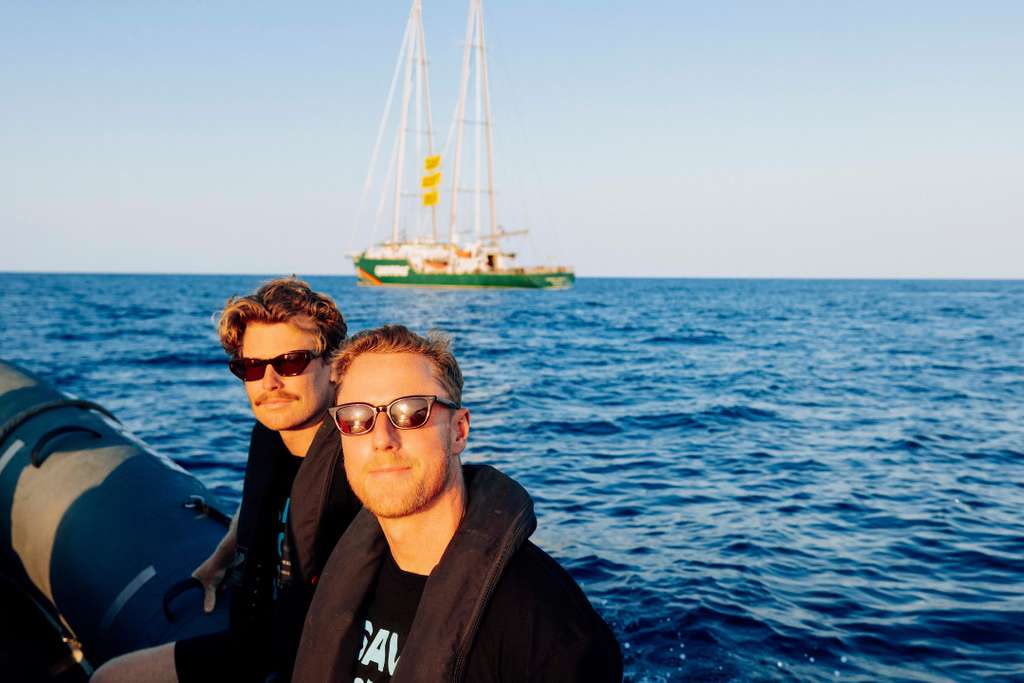
- Watch ‘Coastline’ shot at Scott Reef here and see visuals from the shoot at sea here
The new music video, in collaboration with Greenpeace Australia Pacific, captures a performance of Hollow Coves’ viral single ‘Coastline’, joining a nationwide push by Australian artists to protect heritage-nominated Scott Reef, located 270 kilometres off WA’s Kimberley coast. The video was shot on multiple cameras including a Bolex 16mm vintage movie camera, and boasts original underwater and aerial footage of Scott Reef.
Scott Reef is home to thousands of marine species, genetically unique green sea turtles and endangered pygmy blue whales but is threatened by oil and gas drilling proposed by multinational corporation Woodside, the Browse project.
Matt Carins, Hollow Coves musician, said: “It would be such a tragedy if gas drilling happened at Scott Reef. It’s such an incredible part of the world and is something that we want to pass on to future generations. Being a father myself, I want to share these places with my kids.
“There’s still hope in saving Scott Reef. I think it’s our time now to spread the word of how beautiful this place is. It may not have the same fame as other reef systems, but it’s just as amazing and just as important.”
Ryan Henderson, Hollow Coves musician, said: “Scott Reef is incredible. We were greeted by a pod of dolphins the first day we arrived. The whole place is brimming with wildlife.
“It would be such a shame to allow gas drilling to go ahead at Scott Reef. We wouldn’t allow drilling at the Great Barrier Reef so why should we allow it at Scott Reef which is also so beautiful and so precious. We want to preserve these places.
“There’s still hope. The Australian Government has an opportunity now to save Scott Reef and be on the right side of history.”
Hannah Schuch, Senior Campaigner at Greenpeace Australia Pacific, said: “It was a privilege to witness Hollow Coves playing their iconic single ‘Coastline’ live from Scott Reef, surrounded by wildlife and tranquil blue water.
“The ecological significance of Scott Reef to thousands of species, many of which are threatened, cannot be understated, but its surreal beauty is something that is so easy to capture and makes a perfect setting for a song like Coastline.
“Hollow Coves’ work is a perfect example of the symbiosis between Australian music and nature, and we are so excited to present this musical and cinematic ode to Scott Reef in collaboration with them.
“Drilling at Scott Reef is an unacceptable proposal, and Environment Minister Murray Watt has a generational opportunity to write a legacy of nature protection by putting a stop to Woodside’s plans and saving Scott Reef.”
Minister Watt is expected to decide if Woodside will be allowed to drill at Scott Reef for the Browse gas project in the coming months.
-ENDS-
Media contact
Emma Sangalli on 0431 513 465 or emma.sangalli@greenpeace.org
High res images and footage of Scott Reef can be found here