

A recent US court ruling restricting President Trump’s ability to impose sweeping tariffs has improved the chances of an international deal to cut emissions from shipping, observers of UN maritime talks have said.
Government officials meeting at the International Maritime Organization (IMO) in London this week and next are resuming negotiations on a proposed set of measures known as the Net-Zero Framework (NZF), aimed at tackling the sector’s roughly 3% share of global greenhouse gas emissions.
Last October, Trump and his officials threatened any government voting to adopt provisionally agreed green shipping measures, known as the Net-Zero Framework (NZF), with tariffs that would make it harder for their businesses to export to the USA.
The intervention helped derail talks, with governments narrowly voting to postpone for a year the adoption of the NZF.
The framework, provisionally agreed in April 2025 after years of negotiations, would penalise the owners of particularly polluting ships and use the revenues to fund cleaner fuels, support affected workers and help developing countries manage the transition.
The delay plunged the future of the NZF into doubt. Vanuatu’s climate minister said the delay was “unacceptable” given the urgency of tackling climate change. A final decision on the NZF is not expected until November.
-
IMO head: Shipping decarbonisation “has started” despite green deal delay
Arsenio Dominguez said the shipping industry’s net zero emissions goal is not in dispute although countries have stalled on adopting a framework to reach it -
Pacific nations want higher emissions charges if shipping talks reopen
US President Donald Trump and his allies want to weaken the IMO’s Net-Zero Framework, but Pacific island countries say they have compromised enough -
US-led alliance wins a year’s delay in adoption of green shipping deal
The IMO’s Net-Zero Framework will be up for approval again in October 2026, after the US and Saudi Arabia persuaded countries not to vote on it as planned


Tariff threat neutered
Since the last round of negotiations, the political landscape has shifted. In February 2026, the US Supreme Court ruled that Trump had no legal authority to impose sweeping tariffs without approval from Congress.
Rockford Weitz, professor of maritime studies at Tufts University, said that his officials would have “a more challenging time” using tariffs as threats at this month’s shipping talks than they did in October.
University College London professor Tristan Smith, a close observer of IMO talks, agreed that the tariff threat is “not quite as potent as it was last year”. He noted that the US also no longer benefits from the element of surprise. In October, Washington began lobbying governments only shortly before the talks, leaving little time for countries supporting the NZF to coordinate a response.
This time, Smith said supporters of the framework – which include most European countries, Pacific Islands and some African and Latin American states – are “working very closely together” to resist the US’s pressure.
He added that the US’s attempt to promote liquefied natural gas (LNG) as a transition shipping fuel, rather than renewable-electricity-based solutions like ammonia or methanol, by weakening the NZF has been undermined by the spike in the cost of gas triggered by the Iran war.
Attempts to re-negotiate
But divisions remain in the talks scheduled to run until Friday next week. Ahead of this round of negotiations, some governments have proposed re-negotiating the core tenets of the NZF, while others insist it should be adopted in November largely as provisionally agreed in April 2025.
This debate played out last week on a webinar hosted by the African Futures Policies Hub. Liberian diplomat Grace Nuhn said the emissions-reduction requirements included in the NZF are “over-zealous” and “over-ambitious” and do not reflect the limited availability of clean fuels, while penalising “transitional fuels” such as LNG and biofuels.
In a formal submission, Liberia – alongside US ally Argentina and Panama – has proposed weakening emission targets and ditching any funding mechanism for the framework involving “direct revenue collection and disbursement”.
Liberia and Panama host the world’s two biggest ship registries, meaning their governments earn revenue from allowing shipowners from around the world to register vessels in their countries.
The NZF would penalise owners of ships that emit more than certain agreed amounts and use that revenue to clean up the maritime sector, help workers through the green transition and compensate for any negative impacts of the transition on developing economies.
Shipping’s climate deal sets up battle over pollution calculations for gas and biofuels
Japan has also proposed that, in order to reach a compromise with the NZF’s opponents, emissions reduction targets and requirements to pay into the IMO’s Net-Zero Fund are weakened.
Yuki Inoue, a diplomat from Japan’s transport ministry, told the webinar that this would reduce the perception that the NZF is a “carbon tax”. Japan wants to get all governments “back to the discussion table”, he said.
NZF a “fragile compromise”
But Tuvalu’s IMO negotiator Pierre-Jean Bordahandy said that the NZF itself is a “fragile compromise” reached after lengthy discussions and is the “only viable path forward” to meet the sector’s climate targets agreed in 2023.
Tuvalu and six other Pacific nations have vowed to try to make the NZF more ambitious if it is reopened for negotiation. With rising sea levels threatening their survival, “time is not on our side”, Bordahandy told the webinar.
Brazil has also pushed back against attempts to renegotiate. Diplomat Adriana de Medeiros Gabinio warned that it would be unrealistic to expect countries to rewrite a deal in a matter of months after more than two years of negotiations involving over 100 nations culminated in the April 2025 vote in favour of the NZF.
She added that proposed changes to the NZF would not address climate change and food insecurity and “seem aimed at addressing diplomatic pressure imposed by a small group of countries rather than the issue itself”.

Mexico has defended the framework’s funding mechanism. Raul Zepeda Gil, an advisor to the country’s IMO mission, said the net-zero fund is essential to ensure developing countries can access financing for cleaner ships and infrastructure. Without the fund, “then just a few countries will be available to participate in the transition”, he warned
Some countries that previously supported delaying the NZF now appear more aligned with its backers. Kenya was among 16 African nations that voted for postponement last October.
But this month Michael Mbaru, maritime lead for the Kenyan government’s climate envoy office, told journalists that Kenya supports the NZF and hinted that other African and developing countries would follow.
“From the Global South perspective, as you’ve seen from the submissions from Africa, we are moving forward in terms of the framework as is”, he said, adding “we feel like we have compromised enough and we feel like the framework provides the best package.”
“If we are to reopen these discussions, we need to reopen them to strengthen the revenue, not to weaken the revenue”, he said.
Tacit or explicit approval?
Brazil’s Adriana de Medeiros Gabinio warned that even if the NZF is officially adopted in November, its opponents are trying to change the rules by which it comes into force as a “safety net to block” it.
The US and its allies want to shift away from a system of tacit approval where, after the NZF is approved at the IMO talks, its rules are automatically applied unless a certain number of countries object.
They prefer explicit approval instead, meaning it would not come into force unless enough governments – representing a certain percentage of the world’s shipping fleet – actively indicate support for it.
Critics say this change would give a small number of countries with large shipping registries the power to block implementation. Liberia has the world’s biggest shipping registry, which is run by a US-based company, followed by Panama and the Marshall Islands.
The Marshall Islands has long been one of the most vocal supporters of the NZF but, with its officials and its shipping registry income vulnerable to US retaliation, did not sign on to the recent Pacific proposal vowing to strengthen the NZF if it is re-opened.
Commenting on the chances of the NZF being approved, Smith said “there are lots of things which I think generally are much better and stronger than they were last year.”
“I can’t tell you now that that means we’re not going to have a difficult conversation and I can’t put odds on what the outcome is but I think things have improved on the energy transition question,” he said.
The post Prospects for global green shipping deal boosted by US tariff ruling, analysts say appeared first on Climate Home News.
Prospects for global green shipping deal boosted by US tariff ruling, analysts say

Climate Change
After a week of plenty of activity and drama for Greenpeace at sea, I felt like writing to you on a much quieter theme…
Do you have a favourite book, poem or story about the ocean?
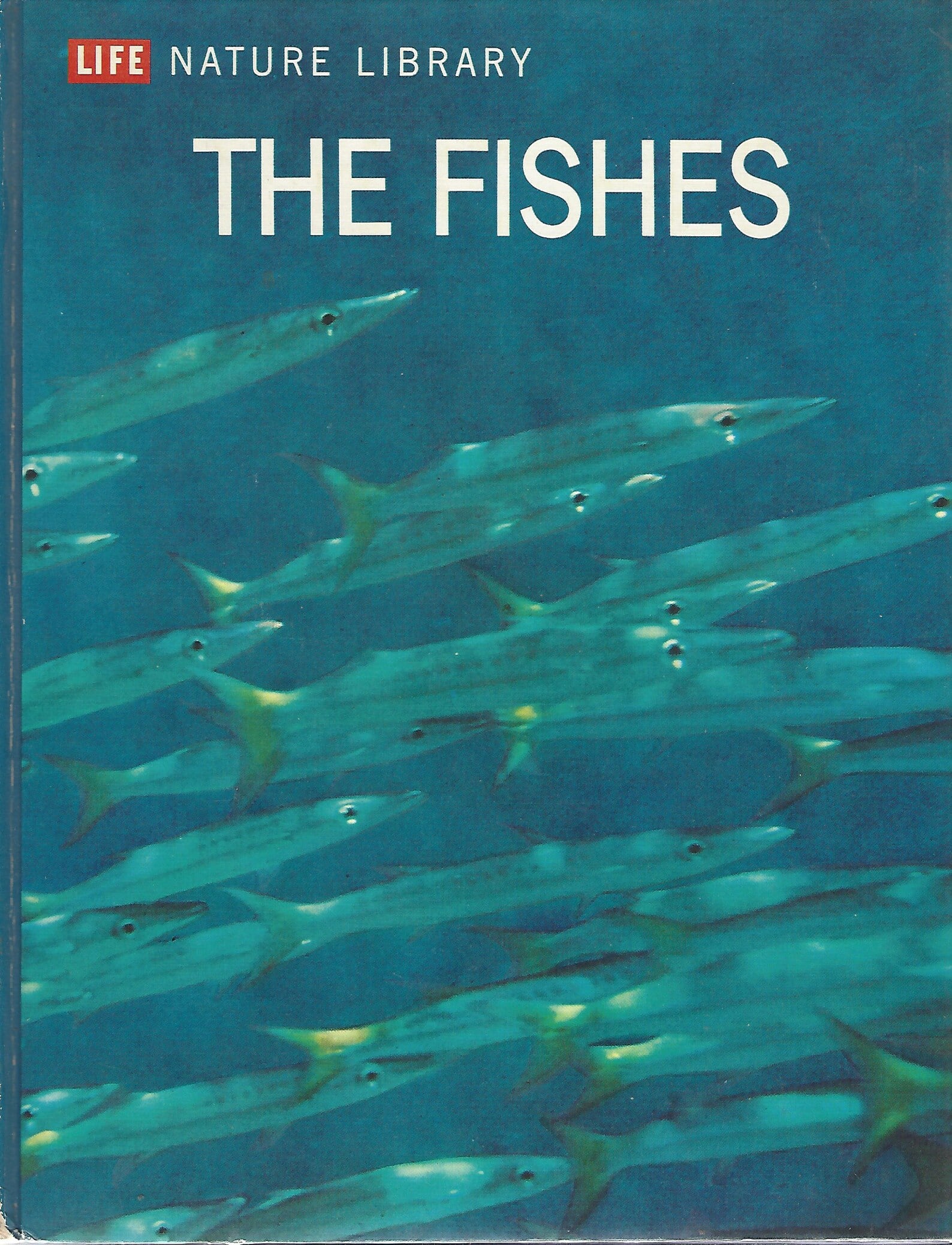
When I was very small, it was the TimeLife book of The Fishes, by F. D. Ommanney, which I remember endlessly poring over, my child’s mind gripped, in total fascination. The cover illustration showed a shoal of barracuda, mid-water and heading upwards, lit up as an iridescent blue by a column of sunlight. Oddly, it is only the cover and the illustrations of the deep sea creatures which I now remember—but I loved that book, as the weakened spine, blunted pages and dog-eared corners attested.
The Fishes has been on my mind recently, because I’ve been working with some dear friends on our own illustrated oceans book, to be published by Upswell Publishing. The book is called Scott Reef: Like Nowhere Else on Earth, and I want to share with you a bit of the story behind its creation.
Scott Reef is absolutely magnificent: Australia’s largest freestanding oceanic reef, brimming with life, including rare and threatened species such as a genetically distinct population of green sea turtles, pygmy blue whales and the wonderfully elegant dusky sea snake. But Scott Reef isn’t near our capital cities; it is way off the north-west coast of WA. And it is threatened with devastation by Woodside, which wants to drill up to 57 toxic wells at the Reef for its vast, dirty Browse gas project.
One of the main challenges in the fight to save Scott Reef from being turned into an industrialised gas zone by Woodside is bringing this incredible location to life for people who haven’t actually experienced it first hand. Because despite its ecological significance and dazzling beauty, ‘Scott Reef’ is also—at least not yet—exactly a household name.
To help get over this barrier, Greenpeace has enabled a number of photographers to travel to Scott Reef by boat (including the Rainbow Warrior) to document its astonishing diversity of colour and life. We then brought these images together in a remarkable photobook, produced by our talented in-house team, which we’ve been putting into the hands of as many leaders as possible—including the MPs whose decisions can determine the Reef’s future.
Back in June this year, I was sharing a copy of our in-house book at a business gathering in Perth when someone pulled me aside. Had we thought about publishing the book commercially? Apart from anything else, he wanted to buy a copy himself! He had a point. We were proud of what we’d created, but a commercially published version could reach a much wider audience and have even greater campaign impact. I immediately turned to my dear friend, Terri-ann White, who runs Upswell Publishing in WA, for advice.
Terri-ann has a huge heart and terrific vision. So many wonderful things in WA owe their existence to her doings, and, true to form, she was immediately encouraging and enthusiastic. “But,” she said, “it would add a whole new dimension if we had some words to accompany the incredible pictures.”
Fair enough, I thought. I could ask a few authors.
“And when would you like it published?” she asked.
“Ideally November,” I answered sheepishly.
Now, in publishing terms, nobody goes from idea to finished work, beautifully produced by a commercial publisher, in just four months. It. Just. Doesn’t. Happen. A book of this scale would ordinarily take nine months, I was told. But Terri-ann was undeterred. “If you can get a rapid turnaround on the writing, I will give it a shot.”
Over the following few days, I sent out 24 emails to prospective writers. To my joy and surprise 23 of them responded almost immediately with an enthusiastic yes!
Terri-ann was somewhat alarmed and perplexed when I told her the good news… we’d discussed a few authors, not more than twenty! “Impossible,” she texted. “Editing is important and you are talking about thousands of words!” But I also know Terri-ann. She does the impossible. And so, here we are… Terri-ann is going to hit that improbable deadline. Scott Reef: Like Nowhere Else on Earth will be on shelves in November.
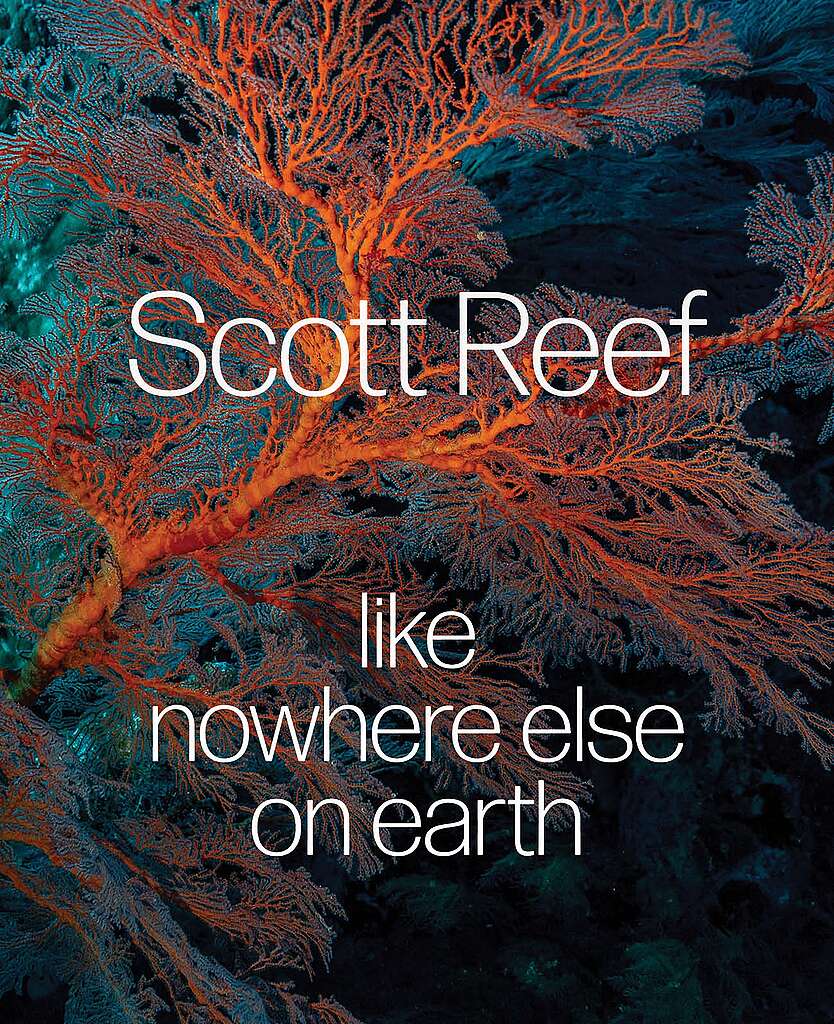
The contributors are a wonderfully diverse bunch, united by their enthusiasm for Scott Reef — and their extraordinary speed!
It’s a brilliant mix. The book brings together national icons like Peter Garrett, Tim Winton, Mick Dodson, Janet Holmes à Court and Fiona Stanley; the intellectual heft of professors Frank Bongiorno, Jessica Meeuwig, Rick Steiner and Samantha Hepburn; the poetic vision of Prema Arasu, Berndt Sellheim and Saadiah Freeman; the field expertise and passionate first hand witnessing of Imogen Zethoven, Tooni Mahto, Ben Fitzpatrick, Geoff Bice, Olaf Meynecke, Paul Gamblin, Sarah Gittoes and Hayley Baillie; and the determination of emerging activist voices Jackson Reid and Emma Sangalli.
Their elegant words wrap themselves around the sheer wonder of the underwater world, brought to life by the work of the photographers — of whom one, Wendy Mitchell, has also contributed a wonderful essay.
Terri-ann showed me the full physical proofs this week and they are breathtaking. This book contains some of my absolute favourite images of wildlife beneath the waves -– and believe me, after almost 20 years at Greenpeace, I’ve been privileged enough to see some remarkable shots! The essays bring a whole new depth and richness to the story of Scott Reef.
If I am being honest, and maybe a bit sentimental, I hope that a four or five-year-old child somewhere in Australia will spend part of their summer holidays turning the pages of this book, wide-eyed with curiosity and awe at the beauty and strangeness of the creatures that call our oceans home.
Our shared commitment is to make sure that, as those children grow up, the wonders of Scott Reef will exist not just in the pages of the book, but out there in the wild waters off north-western Australia—alive, thriving, and every bit as extraordinary as they are today; a living wonder beneath the waves.
Pre-orders of Scott Reef: Like Nowhere Else on Earth are available here.


Q & A
Sometimes you get asked a question so often that you decide to produce a report to answer it!
We know there is strong public opposition to voter opposition to gas drilling at Scott Reef and fracking in the Kimberley in Western Australia. But I am frequently asked whether, even if people don’t want it, more gas drilling is a necessary evil to sustain WA’s prosperity?
The short answer is an unequivocal ‘No’. The longer answer is our new report, From Gas to Green: Building Western Australia’s Future State, which makes the comprehensive case that Asia’s gas market is declining — while WA has an enormous untapped opportunity to become a global leader in green industries and exports, helping drive the region’s shift away from fossil fuels. The faster that WA embarks on a decisive shift away from gas—and that includes no fracking in the Kimberley, or drilling at Scott Reef — so much the better for the state’s people, ecology and economy.