

This blog was co-written by Dan Berkson and Hannah De Frond. Hannah works with Ocean Conservancy and the University of Toronto Trash Team to manage the International Trash Trap Network (ITTN), a global network of local groups using trash traps to increase cleanup efforts, engage communities and inform upstream solutions.
Plastic pollution devastates our ocean, and its impact on marine wildlife—especially seabirds—is severe and far-reaching. Seabirds breed on land but search for food at sea, bringing them into frequent contact with plastic pollution accumulating both along shores and in surface waters worldwide. Unfortunately, ingesting plastics can prove to be deadly for these amazing animals.
Love ocean content?
Enter your email and never miss an update
Eating plastics for seabirds can obstruct their digestive systems, preventing them from eating actual food, and leading to starvation. Sometimes it takes only one piece of plastic to block the passage of food. Plastic ingestion has been found in every family of seabird. Below are details on how some species are uniquely impacted by plastic pollution.
- Northern fulmar: Northern fulmars are surface feeders, diving into the ocean to snag prey. Unfortunately, their foraging habits bring them face to face with floating plastic fragments which they mistake for food. A 2015 study in the Arctic revealed a staggering 90% of northern fulmars studied had plastics in their stomachs. These creatures are so prone to eating plastics that both the Canadian government and OSPAR Commission (the mechanism through which the European Union and 15 other governments cooperate to protect the North East Atlantic marine environment) use this species in their monitoring programs to track long-term trends in ocean plastic pollution.
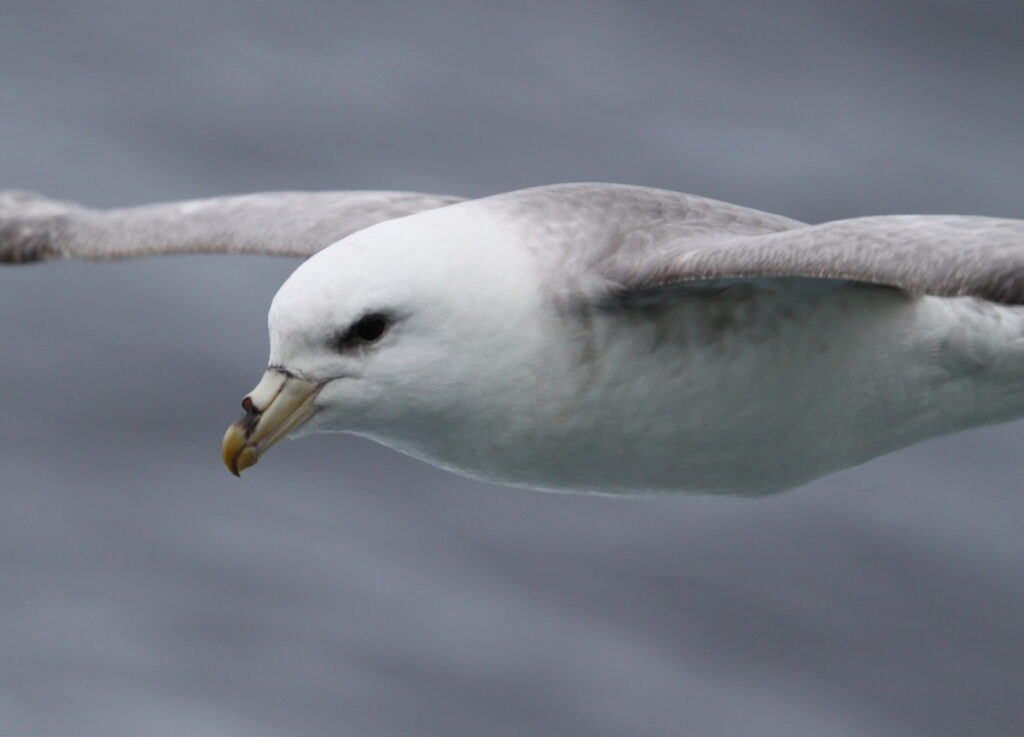
- Short-tailed shearwater: Short-tailed shearwaters are also particularly vulnerable to plastic pollution, frequently consuming both rubber—such as balloons—and hard fragments. A 2014 study in Tasmania found plastic in the stomachs of 96% of short-tailed shearwater chicks studied.
- Laysan albatross: The Laysan albatross skims the ocean surface with its beak to hunt for prey. This hunting behavior makes it likely that the albatross will accidentally consume plastic debris like consumer products (e.g., hard fragments, lighters, buttons) or fishing lines. Adult albatrosses also feed their chicks by regurgitating food, unknowingly passing plastics on to their young. A heartbreaking 1997 study on Midway Atoll, a remote Pacific island, found 97.5% of Laysan albatross chicks had plastic in their stomachs.
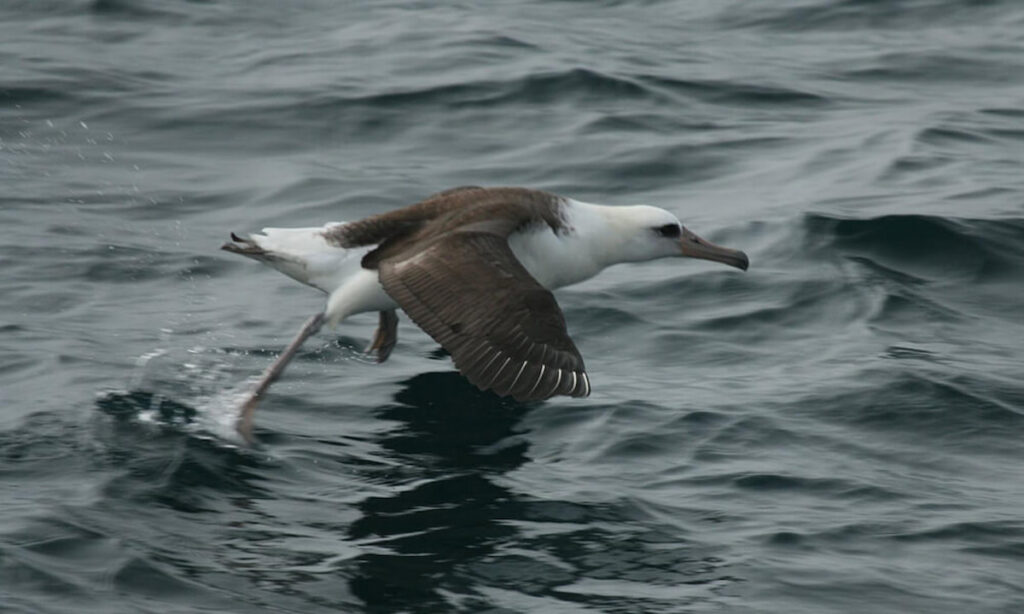
- Petrel: More than 50% of petrel species are listed as “threatened” or “near threatened” by the International Union for Conservation of Nature (IUCN). Petrels often inhabit areas with high concentrations of plastic pollution such as the high seas and mid-ocean gyres. Unlike other seabirds, they struggle to regurgitate plastic. This means the plastics they ingest tend to remain in their bodies for extended periods.

What can you do?
If we fail to take action, studies predict that 99% of seabird species will ingest plastic by 2050, which is devasting given how vulnerable seabirds are to even the smallest amount of plastic. Ocean Conservancy is committed to protecting our ocean, wildlife and communities from plastic pollution. But we can’t do it alone. Here is how you can join the fight:
- Reduce plastic use: To tackle our plastic pollution crisis, we need to use less plastic. We can each do our part by avoiding single-use plastics where possible in our daily lives from carrying a reusable water bottle and bag to skipping a straw. These small actions add up and collectively reduce the amount of plastic waste we create, while sending a clear signal to plastic producers that we are fed up with single-use plastics.
- Clean up plastic pollution before it enters the ocean: Cleaning up plastic waste, whether on the beach, along a river, or in your neighborhood park, helps eliminate the likelihood that it will later be consumed by seabirds or other marine life. One of the best ways to do this is by joining the International Coastal Cleanup® (ICC). Use our map to find a coordinator planning a cleanup in your region. Want something closer to home? Team up with friends and family to clean up your favorite beach or beloved park. If you see plastic on beaches, shores or elsewhere, remember to clean it up—it could save a seabird’s life.
- Push for policy change: Advocate for legislation to address plastic pollution by holding corporations accountable for the waste they create, expanding support for reuse and refill systems and much more. Visit Ocean Conservancy’s Action Center to see how you can get involved.
The post Plastic Pollution’s Toll on Seabirds appeared first on Ocean Conservancy.

This fall, Ocean Conservancy is celebrating its 41st annual International Coastal Cleanup® (ICC), once again bringing together volunteers to protect the beaches and waterways we all love. Ocean Conservancy recently hosted flagship events in Long Beach and Washington, D.C. that celebrated this global movement close to home.
Over the past four decades, nearly 20 million volunteers have rolled up their sleeves to remove more than 405 million pounds of trash from beaches and waterways around the world. And their impact extends far beyond what they collect. ICC volunteers have documented nearly 440 million individual items, creating the world’s largest marine debris database and providing invaluable information that helps Ocean Conservancy and others better understand—and tackle—ocean plastic pollution.
This year’s celebration continued that incredible legacy. At Alamitos Beach in Southern California, more than 150 volunteers gathered on September 19 and removed 1,109 pounds of trash, alongside members of Team USA Artistic Swimming and Olympic and Paralympic athletes. In Washington, D.C., 439 volunteers gathered on September 26 to remove 2,182 pounds of trash from Anacostia Park along the Anacostia River.


“I am so grateful to all of the volunteers who came out today for our ocean—and every volunteer who has made the last 41 years of impact possible,” said Ocean Conservancy’s Senior Director of Conservation Cleanups, Allison Schutes. “Every piece of plastic collected helps protect marine animals and habitats and contributes to research and advocacy.”
And the impact doesn’t stop when the cleanup ends. During International Coastal Cleanup events, volunteers do more than remove trash: They document what they find, helping build a clearer picture of the plastic pollution threatening our waterways and wildlife. Through the Clean Swell® app or paper data sheets, ICC volunteers contribute to Ocean Conservancy’s online, open-access database, the world’s largest repository of marine debris data. These records help scientists, conservation groups and governments understand pollution trends and identify solutions.
That data can also drive meaningful policy change. ICC data were recently used in a peer-reviewed study showing that plastic bag bans lead to reduced plastic bag pollution. The data have also helped advance policies ranging from California’s SB 54 to Florida’s balloon release ban and the federal Farewell to Foam Act. From a neighborhood cleanup to statewide action, every piece of documented trash helps build the evidence needed to tackle plastic pollution at its source.
Get Ocean Updates in Your Inbox
Sign up with your email and never miss an update.
Want to get involved?
Whether you join a local cleanup, record the trash you find using the Clean Swell app, or take action to reduce plastic pollution, you can be part of this incredible collective effort to protect our ocean. Here are a few ways to make an impact:
- Find a cleanup near you.
- Download our Clean Swell app to easily record the trash you collect.
- Take action to reduce plastic pollution.
- Explore our Wildlife Impact Calculator to estimate the potential benefits of your cleanup for marine wildlife.
- Donate today to Ocean Conservancy to help us fight plastic pollution for years to come!
The post Celebrating 41 Years of the International Coastal Cleanup® appeared first on Ocean Conservancy.
For generations, stories of people being swallowed by enormous sea creatures have painted awe-inspiring tales of human survival and perseverance. From the biblical account of Jonah to the legendary battle of Hercules and Cetus to the timeless story of Pinocchio, these legendary tales have captivated people since time immemorial.
But all these stories raise the question: Could someone really be swallowed by a whale? With the premiere of the film Whalefall on October 16, 2026, you may find yourself in conversations about this very situation. Based on the bestselling 2023 thriller authored by Daniel Kraus, the film tells the story of a scuba diver who is accidentally gobbled up by a sperm whale while searching for the remains of his late father. With only an hour of oxygen left in his tank, the diver must fight to escape the whale’s gut before time runs out.
The answer to whether it’s anatomically possible for a whale to swallow a person is actually a bit more complicated than you might think.