Connect with us

Published

on

Are you one of them thinking your solar panels are the star of the show? 

Well, they might take the spotlight, but behind the scenes, your solar inverter is doing all the heavy lifting. It’s the unsung hero of your rooftop solar system, quietly converting sunlight into the power that fuels your home or business. 

In sun-drenched Australia, where solar power is booming with over 3.6 million rooftop installations and counting, inverters play a crucial role in ensuring systems run efficiently.  

However, while inverters work hard, they’re also one of the most common points of failure in any solar setup. 

The good news?  

With regular maintenance, you can dramatically extend your inverter’s lifespan and keep your solar system running efficiently for years. 

In this article, let’s share some nifty maintenance tips for solar inverters to last longer in Australia.

Why Solar Inverter Matters?

Before we delve into the details of maintenance, let’s appreciate why solar inverters are so crucial for your solar panel system.  

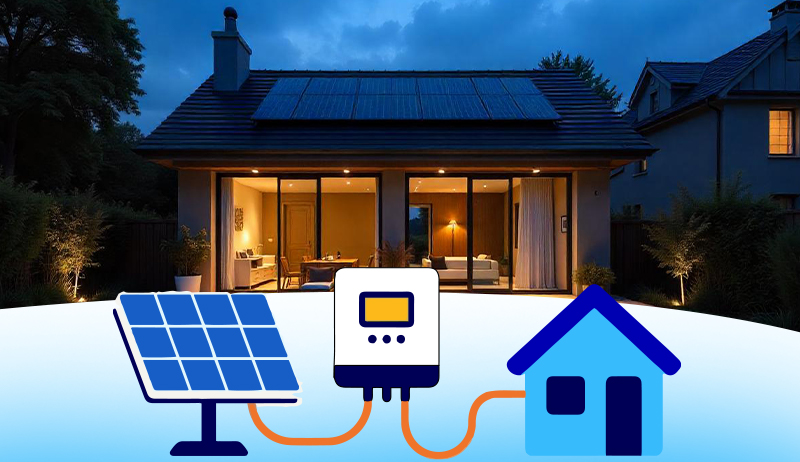
Your solar panels produce Direct Current (DC) electricity, but your household appliances and the national grid operate on Alternating Current (AC).  

Here, the inverter acts as a bridge, seamlessly converting this DC to AC. Bottom line? Without a functioning inverter, your solar panels are just expensive roof decorations. 

A typical string inverter in Australia has an expected lifespan of 5-15 years, with most warranties falling between 5-10 years. High-quality brands, such as Fronius, SolarEdge, and SMA inverters, can often last 10 to 20 years, with some models even extending to 25 years.  

However, when your inverter has issues, it hampers the connection of solar panels in your home. This could lead to unexpectedly high utility bills.

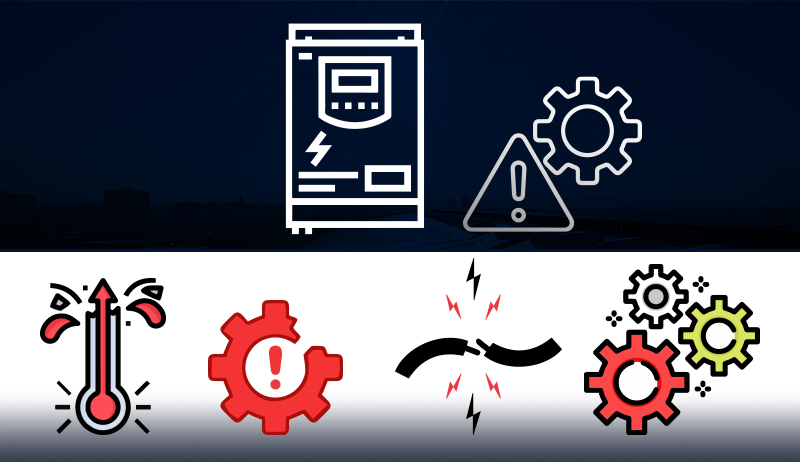
What Damages Inverters? 5 Common Reasons!

Several common issues can cause damage to your inverter in Australia. This includes:

Overheating

Inverters may become excessively hot during operation, especially in Australia’s scorching summer months. It reduces energy production. Proper ventilation and cleaning of dust filters are essential to prevent overheating. 

Faulty Installation

Even professionals can make errors, including physical connections or programming components. Therefore, following the manufacturer’s guidelines during installation is essential.   

Isolation Issue

Isolation issues can occur due to a short circuit in the circuitry. It will trigger an “isolation alarm” and reduce inverter performance. Cable damage, moisture, incorrect installation, and poor DC cable connections may contribute to this issue.

Maximum Power-Point Tracking (MPPT) Problems

Inverters utilizing MPPT may face problems when connected to different PV module strings. These issues can affect the inverter’s performance and require professional repair

Inverter Restarting Issues

If grid-related issues disrupt your solar power system, the inverter should restart automatically. However, you’ll need a service team or installer to restart it manually if it doesn’t. High-quality systems with 24/7 monitoring can help avoid this issue.

What Damages Inverters

Australia’s Diverse Climate: What It Means for Your Solar Inverter?

Australia’s harsh, extreme climate also plays a significant factor in inverter degradation. For this reason, selecting a high-quality, weather-resistant inverter is crucial if you want to achieve long-term solar performance in Australia. 

Here, we’ve listed some environmental conditions that highly influence an inverter’s longevity in Australia: 

  1. Extreme Heat: Prolonged exposure to high temperatures can cause the inverter’s internal components to overheat, reducing efficiency and degrading faster.  
  2. This is more prevalent, particularly in states like Queensland and Western Australia. 

  3. Dust and Debris: Dust storms are a common scenario in arid and semi-arid regions of Australia. These dusts can accumulate on vents, blocking airflow and leading to overheating. 
  4. Humidity and Moisture: High humidity and heavy rains, especially in coastal regions, can lead to corrosion and water ingress, damaging sensitive electronics. 
  5. UV Radiation: Constant exposure to the intense Australian scorching sun can degrade the inverter’s casing and external wiring over time. 

Moreover, a 2024 UNSW study highlighted that PV module degradation rates are higher in regions with hot and humid climates in Australia, leading to increased power loss.  

While this study focused on panels, the principles of environmental stress apply equally, if not more so, to the more sensitive inverter.  

How to Tell If Your Inverter Is Failing?| 8 Key Warning Signs!

Just like the solar panels in the Australian household, inverters also show some early warning signs that you shouldn’t take lightly. 

A failing inverter can cause power issues, battery damage, or even system failure if not addressed early.  

Additionally, regular monitoring and timely maintenance not only prevent bigger issues down the line but also contribute to long-term cost savings. 

Here’s how to tell if your inverter is failing:

1. Frequent Alarms or Error Codes

  • Many inverters display fault codes or emit a beep when an issue occurs. 
  • Some common errors might be overload, short circuit, battery failure, or overheating. 

2. Inconsistent Power Output

  • If your home appliances continuously flicker, shut off, or fail to receive power, this could be due to an issue with the inverter.
  • The inverter may switch off randomly or fail to start automatically when the power goes out. 

3. Overheating Issues

  • If your inverter surface is hot to the touch or shows a high-temperature warning, it may be failing.
  • Overheating usually damages internal components, especially in poorly ventilated areas. 

4. Reduced Battery Performance

  • Are batteries not charging fully or draining quickly? This could mean the inverter isn’t regulating the charge properly. 
  • You may also notice that the lights dim or the inverter turns off early. 

5. Unusual Noises from the System

  • Clicking, buzzing, or beeping sounds can indicate any internal electrical problems.
  • Loud humming may suggest issues with transformers or capacitors inside. 

6. Frequent Restarting or Switching

  • The inverter frequently switches between the battery and the primary grid, even when power is stable. 
  • This could be caused by a faulty relay or a damaged control board. 

7. Visible Damage or Burn Smell

  • Any burn marks, melted wires, or strange smells can be a serious issue to consider.
  • Shut the inverter off immediately and check it if you detect any physical damage or burning smells. 

8. LED Indicators or Screen Not Working

  • If your display screen is blank or the LED lights don’t work, it may be a power supply or internal failure. 

DIY Inverter Maintenance: Your Complete Guide
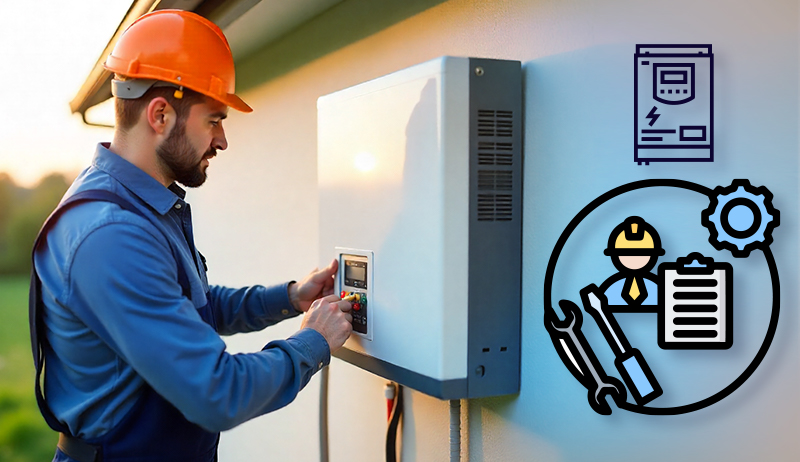
Although any complex repairs should always be left to professionals, there are several simple yet effective DIY checks you can perform yourself to keep your inverter in top condition.  

So, what to do if you suspect your inverter is failing? What DIY maintenance is required to keep your inverter for a long time? Let’s find out! 

  1. Inspect the inverter casing, wires, and connectors for any visible damage. Check connections and cables, as loose or corroded wires can cause inverter failure. 
  2. Ensure the vents are clear and there’s at least 30 cm of clear space on all sides of the inverter to allow for adequate airflow. 
  3. If your solar inverter is installed outdoors, ensure it’s in a shaded area and avoid direct sun exposure. Excessive heat is a significant threat to inverter longevity. 
  4. Never place your inverter near water outlets or on low ground where it could be subject to moisture ingress. Wall mounts are generally better for ventilation. 
  5. For outdoor installations, consider using inverter covers. These covers, made from durable, weather-resistant materials like marine-grade aluminium, shield the inverter from direct sun, rain, and dust. 
  6. Check your daily and weekly kWh output, voltage fluctuations, and error logs. 
  7. Some issues can be resolved by resetting the inverter and allowing it to restart if necessary. 
  8. Look for any error codes or troubleshooting steps in the manual or guidelines provided 
  9. Also, don’t forget to check the warranty. If your unit is under warranty, contact the manufacturer for service or replacement. 

However, if these signs still exist, a professional inspection may be necessary.  

Do you want to know how this professional maintenance process works? Read along!  

Stay Powered with Cyanergy’s Professional Inverter Maintenance Tips

In Australia, the Clean Energy Council (CEC) recommends a thorough solar system service every two years for residential systems, and annual professional maintenance of your inverter is highly advisable. 

While DIY is suitable for routine checks, professional servicing is recommended at least once a year or when you experience issues such as overcharging or frequent shutdowns. 

Here’s how it works: 

  • Expert physical inspection with complete internal and external cleaning 

Technicians can detect subtle signs of wear, degradation, or damage. They will check the heat sink condition, terminal tightening, and grounding resistance, and perform detailed firmware diagnostics.  

Typically, professional maintenance goes beyond what you can safely do yourself.

  • Use Advanced tools 

They’ll inspect all DC and AC connections for wear, damage, or looseness, using meters, software, and diagnostic devices, ensuring safe and efficient power flow. However, loose connections can lead to a fire hazard.

  • Thorough servicing and performance analysis 

Using specialized tools and performance analysis, they can assess the inverter’s efficiency and identify any performance issues that may not be immediately apparent.  

These firmware updates, internal inspections, load testing, and battery health analysis ensure your inverter is operating within optimal parameters.  
Closing Remarks

Solar panel and inverter maintenance are linked. You can only properly care for your solar power system if you care for your solar inverter. That is why solar inverter maintenance, service, and repair are critical.  

Your inverter must be operational for your system to function correctly. If your inverter fails, you must contact a licensed solar professional, Cyanergy, to diagnose the problem and provide a solution.   

Therefore, contact Cyanergy today to discuss renewable solutions and solar packages for a more sustainable future. Get a free solar quote TODAY!  

Your Solution Is Just a Click Away

The post Nifty Maintenance Tips For Solar Inverters To Last Longer appeared first on Cyanergy.

Nifty Maintenance Tips For Solar Inverters To Last Longer

Continue Reading

Renewable Energy

Motordoc Diagnoses Drivetrains From the Ground

Published

on

Weather Guard Lightning Tech

Motordoc Diagnoses Drivetrains From the Ground

Howard Penrose of MotorDoc joins to discuss the circulating currents killing main bearings and drivetrain checks without a climb. Reach out at info@motordoc.com or on LinkedIn.

The Uptime Wind Energy Podcast is brought to you by Weather Guard Lightning Tech, creators of the StrikeTape Ultra LPS retrofit. Subscribe to Uptime’s Substack newsletter. And check out Rosemary’s “Engineering with Rosie” Youtube channel. Have a question we can answer on the show? Email us!

Welcome to Uptime Spotlight, shining light on wind energy’s brightest innovators. This is the progress powering tomorrow.

Allen Hall: Howard, welcome back to the program.

Howard Penrose: Hey, thanks for having me.

Allen Hall: It’s about time everybody realizes what motorDoc can do. There’s so much technology, and I’ve been watching- Yeah … your Chaos and Caffeine podcast on Saturday morning, which are full of really, really good information about the motorDoc as a company, all the things you’re doing out in the field, and how you’re solving real-world problems, not imaginary ones- Yeah

real-world problems. Oh, yeah. Yeah, and

Howard Penrose: whatever annoys me that week. Exactly. And, and whatever great coffee I’m trying out. Yes. Except for a few. We’ve had the ReliaSquatch down our- Yes … um, a couple of times. Uh, yeah, no, I, I enjoy it, and we gotta get you on there sometime. I don’t do- I, it- … a lot of interviews other than an AI character we put in.

Allen Hall: It’s a very interesting show because you’re [00:01:00] getting a little bit of comedy and humor and s- Yeah … and a, and a coffee review, which is very helpful because I’ve tried some of the coffees that you have reviewed, that you’ve given the thumbs up to. But if you’re operating wind turbines and you’re trying to understand what’s happening on the drivetrain side, on the generator, everything out to the blades even, main bearings, gearboxes- Yeah

all those rotating heavy, expensive parts, there’s a lot of ways to diagnose them-

Howard Penrose: Yes …

Allen Hall: that are sort of like we can look at a gear, we can look at a joint, we can look at roller bearings, whatever, but motorDoc has a way to quickly diagnose all of that chain in about- Yeah … 15 seconds.

Howard Penrose: Well, a little longer than 15 sec- more like a minute.

A minute, okay. It feels like paint drying. But- Uh, in any case, yeah. Uh, uh, and, and what’s kind of funny is, um, back in the ’90s, uh, EPRI actually accidentally steered the technology away from its [00:02:00] core purpose, which was in 1985, um, NAVSEA, the US Navy, had done research on using current signature analysis for looking at pumps, fans, and compressors, the bearings, the belts, the components, all the rotating components using the motor as the sensor.

Not too much different than we are now. I mean, mind you, we got better resolution now, we’ve got, uh, more powerful– I mean, I look at my data from the ’90s, and now it’s completely different. Um, and then Oak Ridge National Lab, same thing, bearings and gears in motor-operated valves. So in 2003, we were the first ones to apply electrical and current signature analysis to some wind turbines in the Mojave Desert.

Wow. Yeah. So, um, nobody had tried it before. Everybody said it couldn’t be done. And, uh, that was a bad thing to say to me because- … it meant I was gonna get it [00:03:00] done. Right. At that time, um, we were looking at bearing issues and some blatant conditions with the, um, with the, uh, generator using a technology called Altest, ’cause I was with Altest at the time.

And, uh, I had taken an EMPath software and blended it with a, a power analyzer, and they still have that tool to this day. I was using that technology all the way through 2015. 2016, I should say. And then- And then switched over to the pure EMPath, which was more of an engineering tool. And then more recently, in 2022, uh, made the decision to ha- to take all the work we’d done on over 6,000 turbines, uh, looking at how we were looking at the data and what we were doing on the industrial side, and took a, uh, created a current signature analyzer that would do one phase of current to analyze the entire powertrain.

Allen Hall: So when you tell [00:04:00] operators you can do this magic, I think a lotta times they gotta go, “

Howard Penrose: What?” Oh, yeah, yeah. They don’t understand it because they’re used to vibration- Right … which is a point analysis system. Right.

Allen Hall: Vibration at this- Yeah … particular location. Yeah. One spot- Even if it’s- … or a couple

Howard Penrose: spots

triax, they’re reading through material, up through a transducer. Hopefully, they put it above the bearing and not in the middle of the machine like everybody is now, because everybody’s trying to sell a sensor. Right. True. They’re not selling a- they’re not selling accuracy. They’re just selling sensors.

Right. So, um- Yeah … you know, uh, I, I’ll, I’ll even talk about one of the companies here. We’ve got Onyx here, and they do it right. I mean, they’ve been doing it right pretty well because we’ve been doing some of the same towers they’re on, and we can match the data they’re getting. Oh, good. Right? Yeah. Uh, so but they get it in multiple spots, and there’s areas they can’t quite reach, so we’ll detect those areas as well.

So it’s a good melding of two technologies.

Allen Hall: Oh, sure. Sure,

Howard Penrose: sure. You know what I mean? Yeah, yeah, yeah. So when you have electrical signature and you have vibration, but in [00:05:00] cases if you don’t have vibration, we’re a direct replacement.

Allen Hall: Because the generator- I

Howard Penrose: dare say that.

Allen Hall: Yeah. Whichever–

Howard Penrose: I dare say that, um, with- Well, the

Allen Hall: generator is acting as the sensor.

Howard Penrose: The air gap. The air gap in the generator s- specifically, yes. Yeah. Generator, motor, transformer. Right.

Allen Hall: Yeah. So any of those- Mm-hmm … you can clamp onto, look at the current that’s on there. Everything that’s happening on the drivetrain, in the gearbox, out on the rotor- Yep … main bearings, all of that creates vibration.

Creates a torque. T- a, a torque. Yeah. Yes, more exactly a torque. Yeah. And that’s seen in the generator, in the current coming out of the generator. Yes. So those signals, although minute, are still there. Yes. So if you clamp onto that current coming out of the generator, you’ll see the typical AC sine wave sitting there.

But on top of that- Is all the information about how that drivetrain is doing

Howard Penrose: Absolutely, and everything else. Anything electrical comes through [00:06:00] that. So what you do is just like vibration, you do a spectral analysis. So every component has a frequency associated with it, just like vibration. It’s, as a matter of fact, I, I keep having to try to explain to people electrical and current signature analysis is no different than vibration analysis.

It’s the same concept. We use the same tools. The signature looks just a little different. It’s a little noisier, um, but you need that noise in order to see everything. But we have a time waveform, and instead of, um, inches per second or millimeters per second, whatever, you know, uh, velocity, acceleration, and displacement, uh, what we end up with is decibels is the optimal method.

You can look at straight voltage signatures at those points or, or current signatures, but the values are so small that you have to look at it from a logarithmic standpoint. Right. There are some benefits to it versus vibration, and there’s some things that aren’t as good as vibration. [00:07:00] So, you know, we, we do…

You have to… Any technology is gonna have their strengths and weaknesses. Sure. So we will see everything all at once. Load doesn’t matter. Right. Speed doesn’t matter. It’s… Only reason speed matters is the location of the frequencies. Uh, so the higher the resolution, meaning the longer you take data, the less chance you have on a lightly lo- loaded machine of blending the peaks together.

Right. Um, on the flip side, if I have two bearings turning at the exact same speed, I couldn’t tell you which one it is. Because they’re the same. Right.

Allen Hall: And the mechanical features of that bearing is w- what creates the signal that you’re measuring. Exactly. So if a bearing has five rollers versus 10, just imaginary thing.

Yeah, yeah. Five rollers versus 10 has a different electrical signature, so you can determine, like, that bearing, that 10 roller bearing- Yes … has the problem, the five is fine. Yes. Yeah. That’s the magic, and I think people don’t translate the mechanical world into the electrical world. That that’s what’s [00:08:00]happening.

They,

Howard Penrose: they don’t because, because what’s happening is they named it wrong.

Allen Hall: Yes.

Howard Penrose: A majority of our users are mechanical folks. Sure. Our vibration analysts and stuff like, ’cause they know how to look at the signatures. Right. Everybody tries to force it on their electrical people, and electrical people go, “We don’t know what this is.”

Yeah. And it’s, it’s, it’s a matter of that training and, and, you know, in the electrical world, you’re not taught to look at that. Right. Yeah. It doesn’t matter. Mechanical world, you’re taught to look at that. So our intern, we were trying to bring in electrical engineering interns and found out that just wasn’t working.

So last year, I brought in my first, uh, intern that’s, you know, he’s been with us now since I brought him in. Okay. Uh, and, uh, Amar, and, uh, you know, he’s helped us develop our vi- uh, vibration software to go along with it. Guess what? It’s the same thing. It’s the exact same sy- system Um, but we just take in a vibration signal instead.

But he picked up on it immediately as a [00:09:00] third-year college student. I can take somebody with a decade as an electrical engineer with a PhD and they can’t figure it out.

Allen Hall: Well, because you’re, you’re taking real- Because it’s different. Yeah. It’s r- well, it’s real-world components-

Howard Penrose: Yeah …

Allen Hall: creating electrical signals.

That’s hard- Well, you have- … to process for a lot of people. Yeah,

Howard Penrose: yeah. It’s

Allen Hall: just not

Howard Penrose: something that we do every day. But that’s… If they, i- if we sa- i- i- if you’re looking at vibration and you start looking at the sensor, it gets complicated too, ’cause guess what? It’s an electrical signal. Right. It’s, it is technically electrical signature now.

It’s converting a

Allen Hall: mechanical signal- Right … into an electrical signal, which is what’s happening in the generator anyway. Yeah.

Howard Penrose: Whether it’s a piezoelectric cell that’s generating a small signal- Yeah … on top of a small waveform that you then take out, you demodulate, uh, or it’s, uh… So you take that carrier frequency out, or it’s a MEMS sensor, which is the same thing.

You know, the, it just sees some slower s- It, it does more of a digital output. So you, you, you know, you have those, or you [00:10:00] have this, which just basically uses a component of the machine to, to, as its own sensor. There is one other difference between them, too, and, uh, I find this very useful when I’m going out troubleshooting something that other people can’t figure out, uh, ’cause we use all the technologies.

So in this case, it would be, uh, the structural movement. Okay? So, so say I have a generator and there’s something wrong with the structure, and the whole machine is vibrating. So y- well, if I put a transducer on it, they might think that’s vibration or something else. We don’t see it. Right. We only see directly exactly what’s happening with the machine.

Sure. So a lot of times when we go in to troubleshoot something that people have done vibration on and everything else, it’s been pro- a, a problem for them for years. We walk in, and all of a sudden we’re identifying whether it’s the machine or it’s something else right off the bat. Then we can take a look at the vibration data and [00:11:00] say, “Okay, it wasn’t the bearing or the bearing, um, structure.

It was, you know, the mounting.” Right. It wasn’t

Allen Hall: fastened

Howard Penrose: down properly. Yeah,

Allen Hall: yeah. Right.

Howard Penrose: Go tighten that bolt. Right, exactly.

Allen Hall: Well, I mean, that’s the cheap answer. Yeah. I’d rather tighten a bolt than rip apart a motor or a generator- And, and- … every day …

Howard Penrose: and that’s the whole point. Now, there are other strengths that go with it.

So for instance, on the powertrain of a wind turbine, I can tell you if you’ve lubricated the bearings correctly. Wow. Because part of what we do is we do take those electrical signatures, and we convert those over to watts. Watts is an energy conversion. Sure. So you see that as heat or some type of loss.

So whatever, whatever’s being lost there is not being sent to the customer. To the outside. Right. Making money. So, um, if I’m taking a look at, say, a main bearing, I might see watts or kilowatts of losses. So you’re gonna have some ’cause you have friction, right? But when we see it increase on, say, a roller, [00:12:00] or the rollers, or, or the cage, that’s usually an indicator that I have a lubrication issue.

Or if we only see it on the outer race, that means that they didn’t clear out all the old grease when they were lubricating it, ’cause the rollers then have to ride across it- Right … ’cause it dries up.

Allen Hall: Sure.

Howard Penrose: Uh, and will carry contaminants. So if you see that, you go up, clean it up, you’ll extend the life of the bearing.

Absolutely you will. Without having to do a lot of work. So, uh, we, we look at our technology as more so early in the, in the stage of a condition. I don’t wanna call it failure, ’cause it’s not a failure. It’s something that’s mitigable. And I made that word up. You can mitigate it. Meaning you can go up and correct it and extend the life of that component.

Sure. Uh, in gearboxes we’ll see problems with, um… Well, the, the one we’re talking about here a fair amount is all the circulating currents going on uptower. We did that research. The current signature analyzer we have is a direct result of doing wind turbine [00:13:00] research just on circulating currents uptower, ’cause we conferred everything over to, to sound at 48 kilohertz.

And so that gives me a 24-kilohertz signal. That high-frequency stuff, which we’re researching in CGRE, and IEEE, and IEC, is called supra harmonics, which I– we talked about that before. Yes, we have. Yeah. And, uh, so when you start seeing that in the, in, in the current that’s circulating uptower because the ground that goes from the top of the tower down is for- DC

lightning protection. And lightning protection, yeah. It’s not meant for, um- Not for

Allen Hall: high frequency- Yeah …

Howard Penrose: currents. Yeah. Uh, we, when we measured it, when we mapped out dozens of towers of all different manufacturers, we found that the impedance about halfway down the tower is where it ends. Sure. The, the resistance.

And then the increased, uh, the high-frequency noise turns any of your shaft brushes into resistors. And at about 15 kilohertz, no current is [00:14:00]passing through them. It’s all passing the bearing, which becomes more conductive the higher the frequency. So with 60% of main bearings failing due to electrical currents, it’s actually currents that are circulating uptower.

It’s not static. There is some static up there, but it’s not static. It’s coming from the controls, the, the generator, and everything else. Inverters,

Allen Hall: converters.

Howard Penrose: And we’ve seen up to 150 amps passing through a, through a bearing.

Allen Hall: So I– We run across a lot of operators who have been replacing main bearings, and they don’t know the reason why.

Yeah. And I always say, “Well, call Howard at MotorDoc because I would almost bet you you have the f- high frequency running around uptower in the nacelle- And the next main bearing you put in there is gonna go the same way as the- Yeah … first one you put in there. Until you cut off that circulating current and then the cell, you’re just gonna continue with the problem.

Then you haven’t eliminated the problem, you’re just fixing the result of that problem. Yes. But it takes- Yeah, you’re, you’re- How, [00:15:00] how, well, how long- You’re replacing

Howard Penrose: a fuse.

Allen Hall: Right, you’re replacing a fuse. Yeah. How long does it take you to s- to determine- An expensive fuse. Yeah. Yeah. Oh, yeah, ’cause you’re taking the rotor down.

Yeah. Well, how, how fast can you determine if you have harmonics uptower that are gonna be causing you problems? 120 seconds.

Howard Penrose: Okay.

Allen Hall: So that’s the thing. I think a lot of- I mean,

Howard Penrose: that’s of the actual data collection time. So you clamp on uptower, uh, and then you can… Well, the way we have it set up now, you just tell it you wanna collect data every five s- uh, five minutes, and then you go downtower, let it collect its data, go back up, grab it.

Um, it’s like…

It’s huge. It’s this size. So, um, and then you connect- It plugs into a laptop. Yeah. Plug it into a laptop or any type of tablet. Um, it, it’s Windows now. I’m trying to get away from Windows. We’re gonna have Linux systems, uh, as well. Uh, and then you use that to, um, just collect that data, and then you press another button.

Now it pops up, and it tells you if you’re in danger or not, [00:16:00] the amount of current passing through the bearing, and the frequencies all the way out.

Allen Hall: So the ideal is you’re gonna have this kit with you in the truck. Yeah. And as you see these problems pop up, you’re gonna clamp on uptower. Yep. You’re gonna measure these circulating currents, and you’re gonna know immediately if you have another mechanical issue, a, a lubrication issue- Oh, yeah.

It’ll look at- … some kind of alignment issue, or- You’ll get all

Howard Penrose: of this information at once. So you- Right … if you go on the power side. So certain turbines, like anything that has the transformer downtower, you don’t have to climb. Right. GE. I mean, I don’t climb. So, uh, uh, you know, th- and that was part of the, the concept behind when we started down this path because I’ve been in the wind industry since 1997.

So one of the things I always saw was, and, and we talked about even, you know, here when it was called AWEA, and we were talking always on the health and safety side about wearing out the technicians. Um, so we discovered that, you know, what was it? Almost 60% of the [00:17:00] turbines you didn’t have to climb. Right.

Oh, yeah. And even the ones you do, you go up, you set it up, and it’ll tell you where you need to focus. The other thing in the powertrain, let alone the generator, when we do a sweep of a site– Now, if we do a straight electrical signature analysis, I’d term that one as a technician’s tool. Sure. That’s more of an engineer’s tool.

Uh, a lot more data, a lot harder to set up. But even though I’m saying harder to set up, it’s still pretty easy. It’s still minutes. Right. Yeah. Most technicians will collect data with, like, a couple hours worth of training. Yeah. You g- You basically gather that data, and if you’re getting a site, so we’ll go out– I love going out in the field.

So we’ll go out in the field, especially if it’s a tower we don’t have to climb I’ll knock out, uh, well, let’s just say I’ll, I’ll, I’ll name one. Say a GE 1.6. I’ll knock out one of those every eight to 11 minutes, depending on how you get to the tower.

Allen Hall: So that’s a full diagnosis of drivetrain- Yeah … plus anything odd happening- Yep

with circulating currents and all that [00:18:00] can- Oh, no, no. Circulating- Or just- … current, that’s a- That’s a separate thing at tower … separate study that- Okay … you have to do that uptower. But anything, anything drivetrain-wise, you can be in and out- Yeah … in a couple of minutes. Yep. Okay. So there’s a lot of operators that have end-of-warranties coming up, right?

Yes. There’s been a lot of developments, so they’re kind of running into the end-of-warranty, and they don’t know the health status of their drivetrain. Same thing for a lot of operators that are in- Yep … full service agreements, and they’re questioning whether they’re getting their money’s worth or not.

Yes. I always say, “Call Howard at Motordoc. You guys can have a whole site survey done maybe in a couple of days, and you will know all the problems that are on site for the lowest price ever”. Yeah. It’s crazy how fast you can do it and how accurate it is. I talk to operators that use your system, so I hear you.

Yeah. Your podcast, listen to your podcast, I’m calling your customers to find out what they say, and they love it. Oh, yeah. They can’t believe how accurate it is. Yeah. Well, the thing about that is we as an industry need to make sure that our turbines are operating at [00:19:00] maximum efficiency. Yep. And if a simple tool like the Motordoc EMPath system exists, we need to get customers, operators in line to start doing it worldwide.

Australia- Oh … Europe-

Howard Penrose: Yeah. We- … Canada. Australia, we’re trying to get into, but right now we even have OEMs using it through North- That’s good … and South America, Asia. Good. Uh, Middle East, um, and, uh, and some of Europe. Good. So it’s, it’s, it’s really taking off. Uh, I’d say probably our biggest market right now is Brazil.

Sure. They’re going crazy. Well, the, the turbines are- They’re having a lot of problems. Yeah.

Allen Hall: Right. And the, well, those turbines have a h- high usage, right? So because- Oh, yeah … the winds are so good, they’re operating at, like, capacity factor is above 50%. Yes. It’s insane. Yeah. So there’s a lot of wear and tear.

There’s no downtime for those turbines.

Howard Penrose: Yeah. Well, and, and people think it’s all the starting and stopping. It’s not. No. It’s a grid-related issue. So we have- Sure … we have a low frequency. And you know some of the stuff I volun- I, I’m, I’ve been volunteered for- [00:20:00] Yeah … uh, including the CIGRE thing. Um, so I get to sit in the grid code committees for IEEE and put my, and our input into that, uh, and kind of watch the back of the IBR industry, right?

Mm-hmm. ‘Cause there’s a definitely bias against our industry. Um, and I also, uh, get to hear what’s going on in the grid side of things from CIGRE worldwide, and it’s all very similar, and it has to do with low-frequency oscillating currents- Yes … called subsynchronous currents- Yes … which are low enough not to damage large synchronous machines.

And they thought, and there’s books written on this, by the way, multiple books written on wind turbine impact- Uh, and they’re seeing now, um… Well, we detected it first, along with Timken. Hank, uh, and, and I went out to a site, and we detected for the first time, because of how they wanna do the testing and where the site was located, we saw the oscillating torque [00:21:00] in the air gap, ’cause that’s one of the things the technology does.

It actually measures the torque, air gap torque. Sure. So we were watching the oscillating torque as a tower started up. And so we did, we went through the rest of that site looking at the same stuff in the same way. It increased our time and data collection, and time on site. But then we started looking for it at other sites, and going to pass data because I don’t have to go back and retake data.

Right. And we’re like, “Oh my God. It’s everywhere.” 16 hertz, 21 hertz, and 50 hertz. And we found a paper that specifically identified that as the sub synchronous frequencies for 60 hertz. So we know what they are also for 50 hertz. Once we identified that and we saw how much the torsi- torque was oscillating, we worked with Shermco, who got us some information on Y-rings that were failing.

Yeah. And they were all failing… When the metallurgy was done, they were all failing from fatigue. And you’re like, fatigue how? What’s fatiguing these connections? [00:22:00] Well, the fatigue is that air gap torque- Exactly … because you’re basically causing the, the, everything to oscillate a little bit, and that causes the windings to move slightly.

It’s a living,

Allen Hall: breathing machine-

Howard Penrose: Exactly … this generator

Allen Hall: is.

Howard Penrose: Yeah.

Allen Hall: It’s not

Howard Penrose: static. It’s definitely not sta- no electric machine is static. No. Even a transformer’s not static. Right.

Allen Hall: So- There’s a little

Howard Penrose: bit of wiggle going on there all the time All the time. And it’s minute, so it takes a long time. Right. And what, uh, uh, everybody…

Well, first people thought it was a particular manufacturer, which it wasn’t. Turned out every defig’s failing the same way. Sure. You’re fatiguing it. Yeah. Every bearing is failing the same way, even in the gearbox, main bearings, and everything else. Right. All of these conditions are happening across all the OEMs, but they’re not allowed to talk.

Well, this is, this is the thing that

Allen Hall: I like watching your podcast.

Howard Penrose: Yeah.

Allen Hall: The Chaos and Caffeine. It comes out Saturday mornings. It’s on YouTube. If you haven’t- Yeah … clicked into it, you should click into it

Howard Penrose: because a lot of these issues are discussed there. It’s definitely, um… [00:23:00] Let’s just say I’ll speak Navy quite a bit.

Allen Hall: It’s a great podcast, and I think what you’re doing with the EMPath system- Yes … at motor dock is really a game changer. Yeah. I’m talking to everybody, all the operators I know. I keep telling them to call you and to try the system out because it’s so inexpensive and it does the work quickly and efficiently, and it’s been proven.

There’s no messing- Oh, yeah … around when you’re talking to MotorDoc. I…

Howard Penrose: Somebody dared tell me that there’s no standard for it. There’s ISO standards for it. Yes. There’s IEEE 1415- Yes … which I chair. Uh, and there’s other standards coming out- This is- … associated with it. And there’s a document that I also chair for Sea Gray- Called A178, which is the practical application of the technology.

So it’s well-documented. There are traceable standards for it. I need more

Allen Hall: operators to call you- Yeah … and to talk to you and get systems in the back of the trucks that they can use to check out the health of their gear boxes and their drive trains and their generators. How [00:24:00] do they do that? Where do they go?

Where, where’s, what’s- Well- … the first place they should look for?

Howard Penrose: Uh, info@motordoc.com. Okay. I get all, I get all of those as well, so do my people. Um, or, uh, LinkedIn. LinkedIn’s really good.

Allen Hall: Look up anything. Yeah.

Howard Penrose: Yeah, yeah. So, so either the company at Motordoc, or, uh, I’m, I sh- I’ll show up either searching for my name or, uh, linkedin.com/in/motordoc.

Come straight to me ’cause I’ve been in, on LinkedIn forever, so- Right, just- … I got to do that … look up

Allen Hall: Howard Penrose, P-E-N-R-O-S-E. Yep. Or go to motordoc.com is- Yep, motordoc.com … the website address.

Howard Penrose: Yep. There’s a lot of great information there. And we have partners, and we have people. We’re growing the company.

You know, talk to me. I, I’ll- Yes … I like answering the phone and talking. It’s, it’s a thing. My people go, “Can we answer the phone one?” No. Um, but, but yeah, we, we, y- when you call us, you’re not just dealing with a single person. Right. The Motordoc is far more expansive. Right now, we [00:25:00] just got our partnership with, uh, Hitachi and, and Juliet- Yeah, that’s great

and stuff like that. Uh, we’re helping them with certain things. Uh, we’re partnered with some of the big OEMs, almost all of them, um, you know, helping identify the issues, you know. And, and when users contact us, often they’ll tell us what’s going on, and we’ll, we can, uh, sometimes say, “Yeah, it’s this, and here’s how we prove it.”

Allen Hall: Yeah. That’s the, that’s the beauty- Yeah … of calling Motordoc. So I need my operators that, that watch the show- Yeah … worldwide, go online, go on LinkedIn, get ahold of Howard, get ahold of Motordoc, and get started. Yep. Howard, thank you- And- … so much for being on the podcast. Yeah. This is fantastic. I love talking to you because-

it’s, it’s like talking to, you know… Uh, no, really, it’s talking like someone who’s a real good industry expert, who’s been there a long time, and understands- Yeah … how this

[00:26:00] works.

Motordoc Diagnoses Drivetrains From the Ground

Continue Reading

Renewable Energy

How Would You Feel If . . .

Published

on

Sad that it came to this, but not nearly as sad as I would if he gets away with all this criminality, and the rest of the world writes us of as avid supporters of crime and apathetic to rule of law.

How Would You Feel If . . .

Continue Reading

Renewable Energy

JD Vance and His Certainty Re: God’s Work

Published

on

At left we see illustrated the core problem with the world’s theistic religions, i.e., that adherents are so certain of the rightness of their beliefs that they have no problem destroying the world.

FWIW, I have a friend who takes this even further: he is actively rooting for the apocalypse, and the prospect that all believers in God’s son Jesus will be raptured up to heaven to sit at the right hand of God.

He knows that I don’t believe any of this, but he remains confident that I’ll come around.  As he told me, “God melts even the hardest of hearts.”  He thinks I’m doing the devil’s work with my compassion for others and the effort I put out to achieve a peaceful and sustainable civilization.

We’d be living in tough times even without these fanatics, but religious dogma, especially of this sort, makes it all that much more difficult.

JD Vance and His Certainty Re: God’s Work

Continue Reading

Trending

Copyright © 2022 BreakingClimateChange.com