

In 2025, greenhouse gas emissions produced by human activities turned what should have been a cooler year into one of the hottest ever, fuelling more dangerous and frequent heatwaves, droughts, storms and wildfires, climate scientists said in an annual report.
Planet-heating emissions primarily caused by burning fossil fuels pushed temperatures this year to “extremely high” levels, worsening extreme weather with devastating consequences – especially for the world’s most vulnerable, concluded scientists working with the World Weather Attribution (WWA) group.
Despite the return of La Niña – a climate pattern linked to large-scale cooling of the Pacific Ocean, which can temporarily bring milder global temperatures – the EU monitoring service Copernicus has said 2025 is “virtually certain” to end as the second- or third-warmest year on record.
In its report released on Tuesday, the WWA research group found that climate change made 17 of the 22 extreme weather events it assessed this year more severe or more likely, while its remaining studies were inconclusive, mostly due to a lack of weather data from remote areas.
Ranging from heatwaves in South Sudan and Western Europe to extreme rainfall in Southeast Asia and wildfires in Los Angeles, those disasters killed thousands of people and displaced millions from their homes.
11 extra hot days since Paris Agreement
Theodore Keeping, a researcher at Imperial College London, said the catastrophic wildfires, record-breaking rainfall, unprecedented temperatures and devastating hurricanes seen in the last 12 months provide “undeniable evidence” of a rapidly changing global environment.
“We are living in the climate that scientists warned about a decade ago, when the Paris Agreement was signed,” he added.
Since the landmark accord was adopted in 2015, global average temperatures have risen by about 0.3C, and the world now experiences an average of 11 additional hot days each year, according to WWA’s research.
-
Nine of our best climate stories from 2025
This year, we reported on palm oil being passed off as ‘sustainable aviation fuel’, on creative accounting in climate finance and on African countries’ challenges using transition minerals to develop -
UN accepts overshooting 1.5C warming limit – at least temporarily – is “inevitable”
UN chief António Guterres says the world’s temperature will rise by more than 1.5C over pre-industrial levels but can be brought down


For the first time, global average temperatures over the last three years are on track to exceed 1.5C, the most ambitious goal governments agreed in Paris, according to the EU’s Copernicus service. The UK’s Met Office expects 2026 to be between 1.34C and 1.58C hotter than preindustrial levels.
“The continuous rise in greenhouse gas emissions has pushed our climate into a new, more extreme state, where even small increases in global temperatures now trigger disproportionately severe impacts,” said Sjoukje Philip, a researcher at the Royal Netherlands Meteorological Institute (KNMI). “We are entering a new era of climate extremes, where what was once an anomaly is quickly becoming the norm,” she added.
Silent-killer heatwaves
While heatwaves don’t leave a visible trail of destruction and often go underreported, the research group found they were the deadliest extreme weather event of 2025. One study estimated that climate change more than tripled the number of deaths caused by searing temperatures recorded across Europe this summer.
In South Sudan, extreme heat forced schools to close for two weeks in February 2025 after dozens of children collapsed with heatstroke. Human-made climate change made that heatwave 4C hotter and transformed an exceptionally rare event into a common one, now expected to happen every other year in South Sudan, a WWA assessment found.

Keeping of Imperial said the impacts are disproportionately shouldered by women and girls who predominantly work in sectors with high heat exposure such as agriculture and street-vending.
Flood risks rise as adaptation limits near
Floods were the disasters most studied by the WWA team in 2025, with devastating downpours made worse by climate change hitting Pakistan, Sri Lanka and Indonesia, the Mississippi River Valley in the US and Botswana.
In the Southern African nation, spells of extreme rainfall are becoming more frequent within a single year, while the rapid expansion of urban centres without adequate infrastructure upgrades makes them more susceptible to severe flooding, according to WWA.

The research group said this underscores the urgency of investing in measures to adapt to a warming world which can prevent many deaths and widespread destruction but remain critically underfunded.
However, the scientists also warned that even strong efforts to prepare for disasters cannot prevent all impacts, as climate change is already pushing millions close to the “limits of adaptation”.
“Jamaica was in a state of preparedness for Hurricane Melissa five days before landfall,” noted Keeping, “but when such an intense storm hits a small island nation in the Caribbean, even high levels of preparedness cannot prevent extreme losses and damages”.
Fossil fuel dependency is “costing lives”
Hurricane Melissa caused an estimated $8.8 billion in physical damage in Jamaica, equal to 41% of the country’s 2024 GDP, with only a small share of the losses expected to be covered by innovative insurance schemes.
In their report, WWA researchers said that drastically reducing fossil fuel emissions remains the key policy to prevent the worst climate impacts.
“Decision-makers must face the reality that their continued reliance on fossil fuels is costing lives, billions in economic losses, and causing irreversible damage to communities worldwide,” said Friederike Otto, WWA’s co-founder.
The post “New era of climate extremes” as global warming fuels devastating impacts in 2025 appeared first on Climate Home News.
“New era of climate extremes” as global warming fuels devastating impacts in 2025

SYDNEY, Thursday 30 October 2026 — In response to reports that the Albanese government is set to introduce draft legislation this year that would seek to ban data centres in Australia’s suburbs, Joe Rafalowicz, Head of Climate and Energy at Greenpeace Australia Pacific, said:
“These reports are a testament to the growing community opposition to these completely inappropriate AI factories that have sprung up across our suburbs, and Big Tech corporations should take heed — the data centre build-out must not happen without the endorsement of the Australian people.
“But the government can’t simply ship this problem out to regional Australia without addressing the fundamental issues with this extractive new industry.
“We’re already seeing a trend of AI data centre proposals moving to the regions, in areas that are more water-scarce, more environmentally sensitive, and next to sources of fracked and coal seam gas to support their massive BYO gas-fired power plans — a pattern we’ve seen play out in the United States.
“From the Beetaloo Basin in the NT to the Western Downs in Qld, we’re seeing a wave of AI data centre proposals that would see new gas fast-tracked to support their massive energy demand, and threaten to completely derail Australia’s energy transition.
“Just as suburban Australians are asking, “what for?”, regional communities like Berry Springs and Dalby do not want dirty data centres setting up shop with absolutely no benefit to their communities. Greenpeace is calling for a moratorium on AI data centre developments until strict and enforceable safeguards are in place to protect our climate and our communities.”
-ENDS-
Media contact
Kate O’Callaghan on +61 406 231 892 or kate.ocallaghan@greenpeace.org
AI data centre ban in suburbs would not address fundamental issues: Greenpeace
In the thick of the COP29 climate summit in Azerbaijan in 2024, the UN climate talks were rattled by what can only be described as a major PR disaster. The BBC, Reuters and The Guardian all carried headlines, attributed to leading climate policy experts, that the COPs were “no longer fit for purpose”.
The articles outlined a series of reforms called for in an open letter signed by 22 eminent scientists and politicians, including a former UN secretary-general and previous UN climate chief, with a further 150 lending their support. The headlines shook confidence in the COP process, just as governments were wrestling over a new climate finance goal.
The Club of Rome – which handled the media relations for the letter – hurried to say that its “constructive, supportive ideas” had been “misinterpreted”. Negotiators kept calm(ish) and carried on, in the end landing the finance goal after some high-stakes drama on the final day.
-
Early speakers’ list suggests few powerful leaders will attend COP31
Just 77 heads of state or government are scheduled to address the COP31 climate summit in Antalya, a third less than the COP28 peak -
Africa wants adaptation finance on COP31 agenda, raising risk of a fight
The African Group wants dedicated space on tripling adaptation finance, the Green Climate Fund and trade, setting up a possible clash

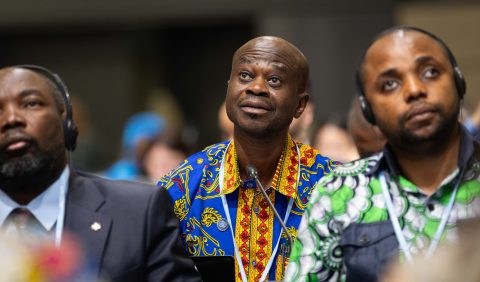
To my surprise, when I went back this week to read the letter again, I could not find the offending line about the COPs not being fit for purpose. The Club of Rome has yet to respond to my query about its disappearance.
Whatever happened to the wording, that sentiment has been widely shared. COPs have ballooned in size while the importance of their outcomes seems to have diminished since the 2015 Paris Agreement (with the exception of the 2023 COP in Dubai where countries agreed to transition away from fossil fuels in energy systems).
The same on the surface
Two years on from those painful headlines in Baku, has anything changed for the better? You might be forgiven for thinking not. Official decisions are still made by consensus rather than the majority voting some have called for to stop blockers.
Tens of thousands of officials, activists and business execs still scurry around the halls to an ever-growing list of side events, roundtables and dialogues, while deals still come down to rows, all-nighters and jargon-filled texts adopted to rounds of applause.
But it would not be true to say that COPs have completely failed to respond to the very real need to translate the words of the Paris Agreement into action in the outside world.
Global warming is projected to be around 1.3C lower this century than it would have been if the world had not committed to tackle the climate crisis under that accord. Developing countries have a valued space at COPs in which their voices have equal weight in decision-making, unlike in many other international fora. And most importantly, perhaps, there has been a subtle shift, tipping the balance away from negotiating towards doing.
Brazil branded last year’s summit in Belém as the “COP of Implementation”, corralling the sprawling Action Agenda into six axes. This was a bid to impose some structure on the mushrooming efforts between governments, UN agencies, cities, businesses and civil society to set targets and spur faster results on their pet issues, from methane emissions to health and adaptation in conflict zones. COP30 alone saw the launch of 120 “plans to accelerate solutions”.
COP30 roadmaps off the cuff
Meanwhile, as the formal negotiations drew to a close, it was clear that consensus decision-making was evolving into something a little more improvised.
With only around half of all countries on board with the idea of a roadmap to transition away from fossil fuels, COP30 President André Corrêa do Lago announced his team would put one together over the coming year, along with another on how to meet a global goal to halt deforestation by 2030. Those roadmaps will be launched next week, presented and discussed at COP31, though it’s still unclear whether or how they’ll be incorporated into the formal negotiating agenda.
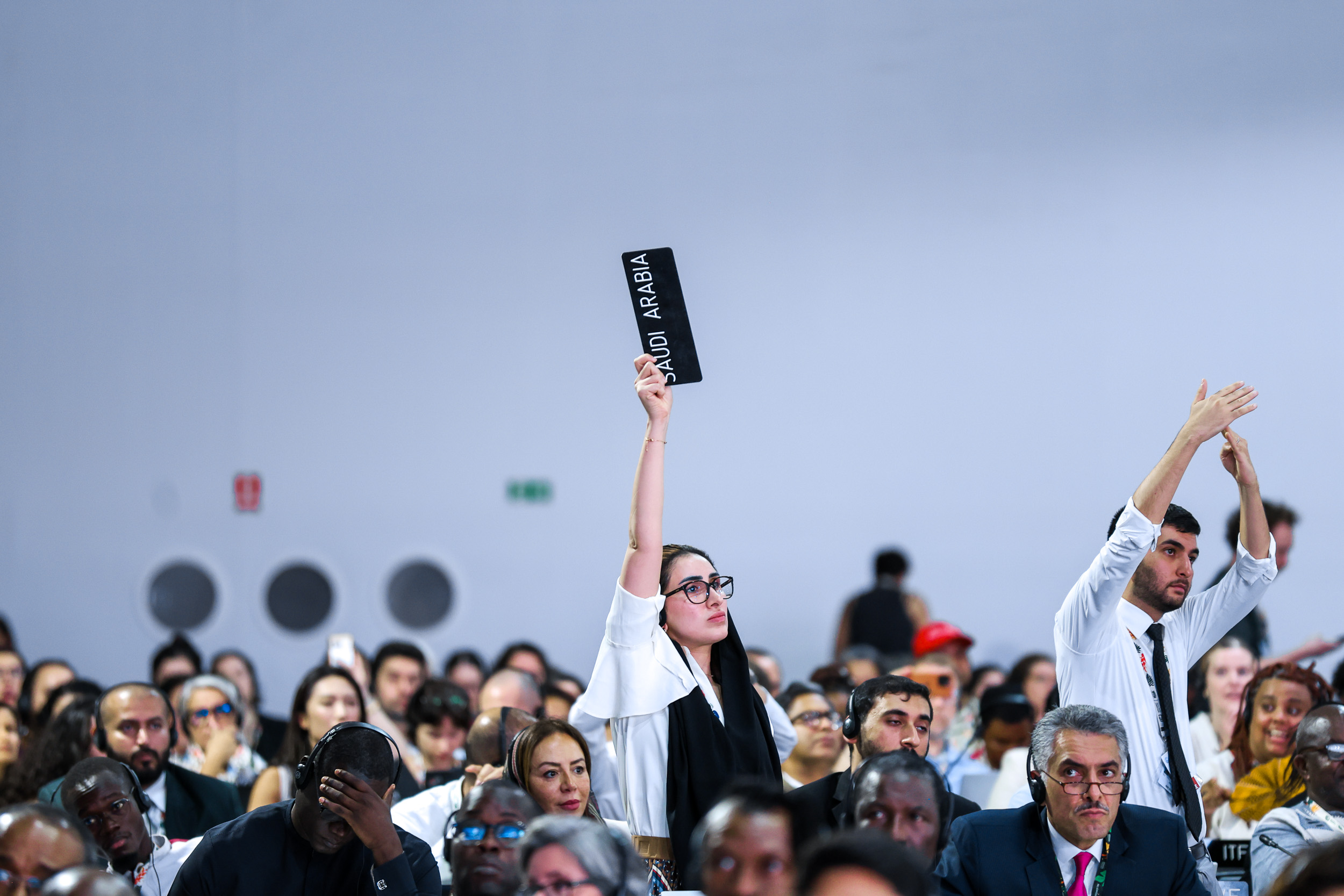
Some leading policy-makers don’t think that matters too much. Speaking to journalists before the Antalya summit, COP30 CEO Ana Toni and Dutch climate minister Stientje van Veldhoven said “coalitions of the willing” can move ahead without needing consensus from the COPs. This, they said, was evident this year at the first global conference on TAFF, co-chaired by van Veldhoven and attended by 60 countries.
“Consensus or no-consensus in the general COP doesn’t make a difference for the choices I have to make in my country to get my country to phase out fossil fuels,” said the Dutch minister. The Netherlands recently became one of the first to publish a national TAFF plan.
COP31 banks on flagship voluntary initiatives
This thinking has permeated the management and expected outcomes of this year’s COP too. Earlier this year, Türkiye, supported by international energy agencies, floated the idea of a voluntary goal to boost electrification to 35% of the world’s final energy consumption by 2035 – and this is now being touted as one of the main results to be expected from Antalya.
Türkiye is also championing a pledge on AI and climate, while co-host Australia is pushing to ease access to climate finance for least developed countries and small island states.
COP31 presidency announces AI pledge as UN climate chief says Big Tech ‘on thin ice’
None of these needs consensus. But with a political cover decision already in the works, as trailed by the COP presidents, they – and perhaps the fossil fuel roadmap – may find a home in the official text if language acceptable to most can be found, giving them them additional weight.
UNFCCC reform process in the shadows
Formal reform is underway too, if quietly. UN climate chief Simon Stiell is leading a review informed by ongoing consultations with a group of 15 well-respected climate policy experts, three of whom signed the open letter in 2024.
Among them is leading Swedish climate and sustainability scientist Johan Rockström who has strong ideas about how to make COPs function better, including a switch to majority voting. He told the same press briefing nothing stands in the way of this, because the rules of procedure for making decisions at COPs have never been formally agreed.
Still, to get away from the default setting of consensus would require agreement on a new system that may be impossible to achieve given the rise in bullying tactics by fossil fuel heavyweights.
Comment: The UN climate process was built for negotiation – now it must support implementation
The deliberations with the high-level policy gurus, as reflected in a summary of June’s session in Bonn, largely echo what’s already happening organically, calling for stronger partnerships and accountability both in and between the Action Agenda and negotiations. It doesn’t mention voting.
A general overview of the reform exercise says that “improving and optimizing the [UN climate] process over the medium to long term… will be critical to fostering trust, enhancing collaboration, and catalyzing increased ambition”.
In the short term, don’t hold your breath for anything concrete on reform at COP31 but watch for signs in what ends up dominating the headlines from Türkiye.
The post Editor’s Desk: COP reform is happening quietly, behind the headlines appeared first on Climate Home News.
Editor’s Desk: COP reform is happening quietly, behind the headlines