

By Olivia Rosane and Cristen Hemingway Jaynes
Quick Key Facts
- Methane is the second most important greenhouse gas after carbon dioxide and is responsible for around one-third of current global heating.
- Atmospheric methane concentrations have increased by 256 percent since pre-industrial times.
- Methane is a more powerful greenhouse gas than carbon dioxide but lasts for far less time in the atmosphere; over a 20-year period, methane traps 86 times more heat per unit of mass than CO2.
- Around 60 percent of methane emissions come from human-caused sources and 40 percent come from natural sources.
- Ninety percent of human-caused emissions come from three sources: fossil fuels, agriculture and waste storage.
- Currently existing strategies, if adopted, would be enough to curb methane emissions from these three sources by 45 percent by 2030.
- It is possible to cut methane emissions from oil and gas operations by 70 percent with existing technologies and methods and by 40 percent at no cost.
- Studies have shown that adding seaweed supplements to the diets of cattle can decrease their methane emissions by 82 percent for feedlot cattle, more than 50 percent for dairy cows and 42 percent for grazing cattle without harming the animals.
- As of 2023, only 13 percent of all methane emissions were covered by any sort of emissions-reduction policy.
- If everyone in the European Union limited their meat and dairy consumption by 34 percent, they would prevent six million metric tons of methane emissions per year.
What Is Methane?
What has no color or smell and is found in wetlands, cow burps and your basement furnace? The answer is methane — a powerful greenhouse gas that is the second most important contributor to the climate crisis after carbon dioxide (CO2). It is the primary component of natural gas, which currently generates around 25 percent of the world’s electricity.

Methane is a hydrocarbon composed of four hydrogen atoms bonded to a carbon atom. It is abundant in nature and can be formed by both geological and biological processes. Geologically, methane is typically created when heat and pressure are applied to decomposing plant and animal matter over millions of years. This is the source of most natural gas. Methane can also form deep underground without any organic matter through other processes. Biologically, methane is generated through something called methanogenesis, when certain underwater microorganisms called archaea produce methane as part of their oxygen-free respiration process. This is how methane is generated above ground, such as in wetlands or in the digestive tracts of termites and cows.
How Is Methane Measured?

Methane is measured via two main methods: bottom up and top down. These methods work almost exactly as they sound. Bottom-up approaches begin on the ground with a localized source of methane and expand outward. These assessments can either be based on direct measurements of a given facility’s methane emissions or by estimations based on general knowledge about the emitting animal or equipment. For example, to estimate the methane produced by a region or country’s beef or dairy sector, a bottom-up approach could multiply the methane emitted per cow by the number of cows being raised. A similar approach could be used to calculate the methane released by a county’s natural gas facilities or a region’s oil drilling operations.
Top down approaches often literally start in the sky with measurements of atmospheric methane, usually via airplane, high-altitude platforms or, increasingly, satellites. This data can then be combined with knowledge of where there are methane sources and sinks and used to create models of methane emissions.

Satellite image of methane emissions from a landfill in Kyrgyzstan on Feb. 4, 2021. GHGSat
As satellite technology improves, it is detecting super-emitting incidents that are not reflected in bottom-up approaches. For example, if a gas company assesses its methane emissions by multiplying the standard leak rate of a piece of equipment by the number of pieces of that equipment it uses, it will miss the five percent of extraordinary leaks that are responsible for more than half of all gas-industry leak emissions. Overall, direct measurements — whether from the ground or the air — are important for accurately measuring fossil fuel methane emissions in particular. One study found that direct measurements of U.S. oil and gas methane emissions were 60% higher than U.S. Environmental Protection Agency estimates. In general, improving methane measurements is essential for understanding and therefore controlling its emissions.
How Does Methane Contribute to the Climate Crisis?
Methane is a greenhouse gas, which means that, when it enters the atmosphere, it absorbs heat energy emitted from the planet and redirects it back toward the ground. There are natural methane sinks — namely soil and the troposphere, where methane is broken down into carbon dioxide and water vapor. These sinks are able to counteract naturally occurring methane emissions so that the gas does not build up in the atmosphere. However, human activities since the start of the industrial revolution — particularly the burning of fossil fuels, more intensive forms of agriculture and waste storage — have raised the concentration of methane in the atmosphere faster than natural sinks can absorb it.
As of 2023, the most recent year for which data is available, atmospheric methane concentration had soared by 265 percent to 1,934 ppb compared with pre-industrial levels. Around 60 percent of that methane was emitted due to human activities. That methane has contributed to around one-third of current global heating, second to CO2 at around two-thirds. If nothing is done to reduce methane emissions, they are projected to rise by 13 percent between 2020 and 2030.
Controlling methane emissions is essential for addressing the climate crisis because methane is both more potent than CO2 and also lasts for a shorter period of time in the atmosphere, approximately 12 years compared with hundreds. Over a 20-year period, methane traps 86 times more heat per unit of mass than CO2, which falls to 28 times more over 100 years. The combination of methane’s potency and relatively short atmospheric lifespan means that reducing methane emissions delivers a powerful bang for one’s buck in terms of rapidly curbing greenhouse gasses and stabilizing global temperatures. In fact, the Global Methane Assessment concluded that curbing methane “is very likely the strategy with the greatest potential to decrease warming over the next 20 years.” The Intergovernmental Panel on Climate Change (IPCC) has calculated that methane emissions must be reduced by around 34 percent by 2030 when compared with 2019 levels in order to limit global heating to 1.5 degrees Celsius above pre-industrial levels.
What Are the Main Sources of Methane?
Methane comes from both human and natural sources, with human-caused emissions responsible for around 60 percent of atmospheric methane and natural sources around 40 percent. More than 90 percent of current human-caused methane emissions come from three sources: agriculture, fossil fuels and waste storage. The burning of biomass and the use of biofuels also emit methane but are less important, as they are responsible for around five percent of emissions. Wetlands and freshwater are the leading source of natural methane emissions, followed by geological sources such as gas-oil seeps and volcanoes, termites, oceans, wild animals and permafrost. In addition, there are natural sources of methane that could play a larger role in the future as the climate crisis triggers various feedback loops.
Agriculture
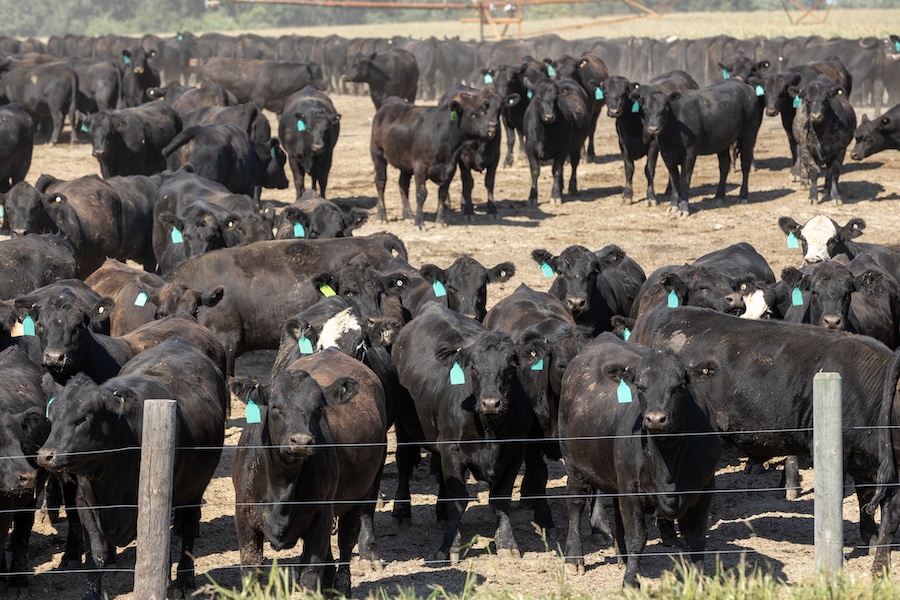
Around 40 percent of human-caused methane emissions come from agriculture. The vast majority of these emissions are from livestock, which alone generate around 32 percent of human-caused methane emissions. This is primarily from enteric fermentation, which is how ruminant animals like cows, sheep and goats digest their food. Microbes in these animals’ digestive systems break down nutrients and produce methane as a byproduct. When it comes to methane emissions, cows raised for meat or milk are the primary contributors. Another way that livestock agriculture can generate methane is through the storage of manure, particularly that of pigs and cows. As meat consumption increases, these emissions are projected to rise by six million metric per year by 2030.
A second important agricultural contribution to human-caused methane emissions is the cultivation of rice at eight percent. Rice is grown in flooded patties, an environment that encourages the growth of methane-producing microbes. Finally, around one percent of human-caused methane emissions are caused by the burning of agricultural waste.
Fossil Fuels
The extraction and burning of fossil fuels contribute around 35 percent of human-caused methane emissions. Primarily, this occurs through the extraction, transport and use of oil and gas, at 23 percent of human-caused emissions. Methane is typically released during venting, when unwanted gas is released into the atmosphere during the extraction process, as well as through accidental leaks from extraction to transport to use. Emissions from oil and gas are expected to increase by 10 million metric tons per year by 2030, in particular because of the use of natural gas.
Around 12 percent of human-caused methane emissions are released during the process of mining coal, or from leaks from abandoned coal mines. Methane naturally occurs along coal seams, and can be released in several ways during the mining process: through seepage when the coal is exposed to the surface, through drainage systems, through ventilation systems to reduce methane buildup in a mine for safety reasons and from the coal itself as it is removed from the mine. Underground mines tend to emit more methane than surface mines, at 70 percent of mine emissions.
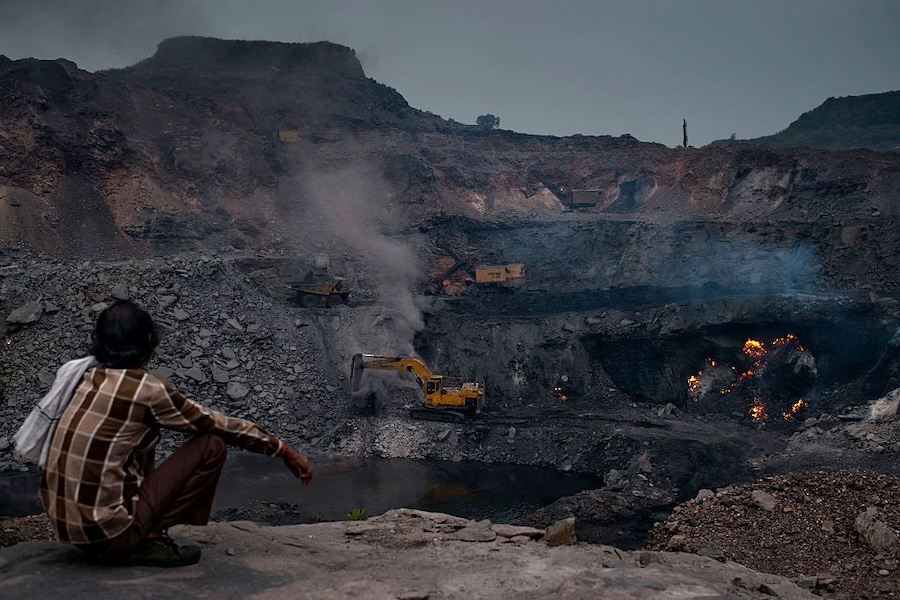
Certain fossil fuel projects emit massive amounts of methane at once, usually due to leaks or venting. These are called “super-emitters” and are detectable through satellite imaging. In 2022, researchers detected more than 1,005 human-caused super-emitter incidents — 559 at oil and gas fields and 105 at coal mines. The worst, in Turkmenistan, spewed 427 metric tons of methane per hour, the equivalent of the hourly emissions of France. As methane emissions increased in the 2010s, experts think that fossil fuel activities contributed as much as agriculture and waste storage combined.
Landfills and Waste
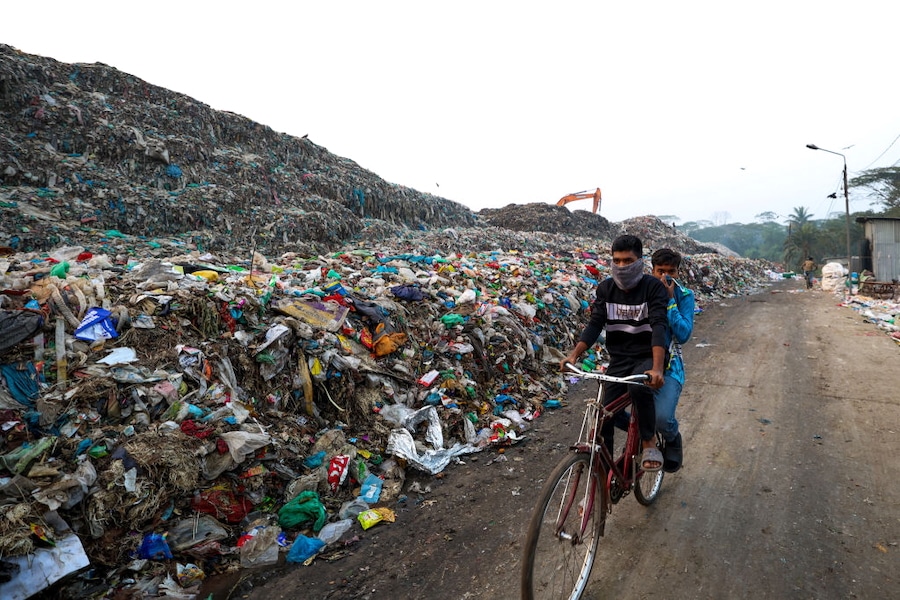
Around 20 percent of human-caused methane emissions come from landfills and waste management systems. This is because microbes present in wastewater treatment facilities and landfills release methane as they decompose the waste. This can generate lots of methane at once: Of the 1,005 super-emitter events identified by researchers in 2022, 340 were from waste sites.
Because of population growth and projected development in poorer countries, emissions from waste are expected to grow faster than from any other human-caused methane source at 13 million metric tons per year by 2030. The amount of human-disposed solid waste overall is expected to rise by 73 percent by 2050.
Wetlands
Wetlands are the predominant source of natural methane emissions, accounting for around one-third of total methane emissions. This is because wetlands — which cover around six percent of the Earth’s land area — are defined by having their soils saturated with water for all or part of the year. This creates a wet, oxygen-poor environment that creates ideal conditions for the archaea responsible for methanogenesis.
While wetlands would produce methane no matter what humans do, the climate crisis has led to an increase in wetland methane emissions in recent years due to temperature increases and changing rainfall patterns. This is known as the “wetland methane feedback.” Between 2000 and 2020, wetland methane emissions increased by 1.2 to 1.4 million metric tons per year, which is a higher rate than anticipated by the most pessimistic emissions scenarios. Scientists noted that these emissions saw “exceptional growth” in 2020 to 2021 in particular. The researchers traced this increase to two sources: tropical wetlands and permafrost wetlands.
Tropical wetlands are expanding their area due to climate-fueled changes in rainfall patterns and were the major driver of increased wetland methane emissions in the early 21st century. Permafrost wetlands are located in the Arctic and, as the name suggests, are partially frozen in addition to being waterlogged. When warmer temperatures cause permafrost to melt, they also unfreeze the microbes that release methane. Arctic wetlands have also expanded by 25 percent during the summer due to a rise in precipitation.
Oceans
The ocean is responsible for one to 13 percent of natural methane emissions through various mechanisms including geological marine seepage; emissions from ocean sediments or melting underwater permafrost; emissions near coastal areas where groundwater enters the sea; and the destabilization of methane hydrates, which are ice-like formations of methane and water on the seafloor. The largest concentration of methane on Earth is stored in these hydrates, and there are concerns that, as the climate crisis causes oceans to warm, these deposits might melt and release massive amounts of methane into the atmosphere. However, there is no evidence that any methane from these hydrates is currently reaching the atmosphere.
Positive Climate Feedback Loops
A positive feedback loop occurs when a change to a given system triggers other changes that amplify that initial change. In the case of the climate emergency, a positive feedback loop occurs when the impacts of global heating interact with Earth’s systems in ways that trigger more warming. When these changes pass a certain threshold, it can alter the system in dramatic and irreversible ways. This is called a climate tipping point.
Methane is involved in several positive feedback loops, of which the wetland methane feedback is just one example. Another related example is the thawing of the Arctic permafrost, frozen soils on land as well as beneath the Arctic Ocean. The material that is frozen beneath the permafrost contains plant and animal matter, as well as microbes that would produce methane if they thawed out. The permafrost beneath the ocean contains methane hydrates. This means that the Arctic currently contains 2.5 times more carbon underground than exists in the atmosphere. Thawing the permafrost would release all or some of that carbon, triggering a major tipping point. This process has already begun, with Arctic and Boreal methane emissions increasing by 9 percent since 2002. Scientists don’t know exactly how much methane the melting permafrost might ultimately release, but the region is currently on pace to release the greenhouse gas emissions of a major industrialized nation if nothing is done to reduce warming.
Another positive climate feedback loop involving methane is the increase in the frequency, severity and size of wildfires. A warmer climate makes the hot, dry conditions that fuel wildfires more likely, and these fires in turn release carbon dioxide and methane into the atmosphere as they burn, fueling more warming. Larger fires also tend to release more methane. One study found that California’s record-breaking 2020 wildfire season contributed almost 14 percent of the state’s total methane emissions for the year.
Methane and the ‘Bridge Fuel’ Myth
Another reason methane emissions might spike in the future is the expansion of gas production, including an increase in exports of liquefied natural gas (LNG). The development and spread of fracking in the U.S., Canada and Australia in particular has made gas much more abundant and set off a construction boom in infrastructure to export and import the fuel. The U.S. has massively increased its LNG exports since it lifted a ban on them in 2016, becoming the No. 1 natural gas exporter in the world by 2022. These exports doubled between 2019 and 2021 and will double again in four years if they continue.
Advocates of natural gas have argued that it is a “bridge fuel” from coal to more renewable sources of energy. This is because when burned for energy, coal emits twice as much carbon dioxide per kilowatt-hour as natural gas. In the U.S., direct power plant emissions decreased by almost 40 percent in the first decades of the 21st century, as gas overtook coal as the country’s leading electricity fuel source. Proponents of exporting U.S. LNG argue that it would similarly displace coal use in Europe and Asia. However, this ignores the methane that leaks during the process of extracting and transporting LNG. If only 0.2 percent of methane leaks, it makes LNG as climate-warming as coal, and new data, including satellite imagery, suggests that the amount of methane leaks have been vastly underestimated. A 2023 study calculated that, when methane leaks are taken into account, LNG has a 33% greater global warming potential over 20 years than coal. Further, the Department of Energy recently concluded that LNG exports are more likely to replace renewable energy sources than coal.
This new understanding comes as more gas fields and LNG export and import terminals are being planned. A 2022 analysis found that there are 55 “methane bomb” gas fields whose future methane leaks would equal 30 years of U.S. greenhouse gas emissions. The current and proposed construction of LNG export terminals in the U.S., meanwhile, would cancel out any climate progress the nation has made, keeping its greenhouse gas emissions frozen at 2005 levels. As U.S. climate campaigner Bill McKibben warned, “If the LNG build-out continues — here and in Canada and Australia — its sheer size will overwhelm our efforts to rein in global warming.”
What Are Other Benefits to Reducing Methane Emissions?
While stopping the acceleration of the climate crisis is a major argument for reducing methane emissions, these emissions don’t just heat the atmosphere. They also contribute to ground-level ozone, which forms as methane reacts to the atmosphere. Ozone at ground level is a major public health and environmental hazard because it damages human lung tissue, triggering respiratory ailments, and harms plants including agricultural crops. Currently, methane-generated ozone causes about half a million extra deaths per year. However, every million metric tons of methane emissions avoided would also prevent 1,430 yearly deaths from respiratory and heart diseases; 4,000 asthma-related emergencies and 90 hospitalizations per year; and annual losses of 145,000 metric tons of wheat, soybeans, maize and rice.
What Can Be Done to Reduce Methane Emissions?
There are many ways to reduce methane emissions that range from large-scale transformations of energy and food systems to smaller technical fixes. Most likely a combination of methods will be necessary to control methane emissions to reduce global heating and ozone pollution. However, currently existing methods, if adopted, would be enough to curb methane emissions from the three main human-caused sources — fossil fuels, agriculture and waste — by 45% by 2030, in line with the IPCC’s pathway to 1.5 degrees.
From Agriculture
There are two main ways to reduce the amount of methane produced by the food system. The first is to transform the food system altogether by reducing meat and dairy production. This can be done in part by reducing food waste, as 30 to 40 percent of all food produced is lost and does not make it to a person’s stomach. According to one calculation, the waste of ruminant and rice products is responsible for around 50 million metric tons of methane per year, and reducing it could cut those emissions by around 20 million metric tons. Another way is to shift toward more healthy, sustainable or plant-based diets, including by reducing overall consumption in wealthier countries. According to the IPCC, doing so would reduce greenhouse gas emissions overall by 5.3 to 20.2 gigatons of carbon-dioxide equivalent by 2050. Potential emissions reductions from dietary shifts run from 0.7 to eight gigatons of carbon dioxide equivalent per year by 2050, under scenarios ranging from half of the planet adopting a “healthy” diet that includes less than six grams of animal protein per day to a global embrace of vegetarianism.
The second main strategy for reducing methane emissions from agriculture is to make changes to existing production so that it releases less methane. One way to do this is to increase the efficiency of animal agriculture so that more meat or milk is produced per animal, especially in poorer countries. This can be done without sacrificing animal welfare by feeding animals better diets, including highly digestible feed; improving animal health overall; and breeding. Another solution is to add enteric methane inhibitors to the diets of ruminants, which prevent methane production in their guts. Promising examples are the chemical 3-NOP and seaweed. Studies have shown that adding seaweed supplements to the diets of cattle can decrease their methane emissions by 82 percent for feedlot cattle, more than 50 percent for dairy cows and 42 percent for grazing cattle without harming the animals in any way. Researchers are also working to breed ruminants who produce less methane and to develop a vaccine that would limit gut methane production.
Another major source of agricultural methane that can be targeted for reduction is manure storage. Solutions include reducing the amount of time manure is stored; covering tanks holding semi-solid waste; separating liquid and solid manure; and adding acid to manure storage facilities, which inhibits the growth of methane-producing microbes. Another solution that has been adopted in recent years is the use of manure digesters, which turn manure into biogas, reducing manure’s methane emissions and providing a non-fossil form of energy. However, there are emerging concerns that methane leaks from these machines may undermine their impact.
Finally, emissions from rice can be curbed by various methods. One strategy is to grow either higher yield or lower-methane varieties of rice, which reduce the amount of methane emitted per kilogram. Planting lower-methane rice could cut emissions by 22 to 51 percent. Another option is to change how rice is grown by using Alternative Wetting and Drying. Instead of keeping rice paddies flooded, this method involves letting them dry out completely before flooding again and can decrease emissions by 40 to 45 percent. Finally, adding phosphogypsum and sulphate to rice fields can decrease microbial methane production.
From Fossil Fuels
The No. 1 way to reduce methane emissions from fossil fuels is to phase out their use entirely as soon as possible while rapidly transitioning to renewable forms of energy that do not emit methane and in particular to halt the buildout of LNG infrastructure. However, there are also ways to reduce the methane emissions from fossil fuel infrastructure still in use, and in fact reducing methane emissions from ongoing oil and gas operations is considered the strategy with the most short-term potential for significant methane cuts.
According to the International Energy Agency (IEA), it is possible to slash the oil and gas sector’s methane emissions by 70% with existing technologies and methods and by 40% at no cost. These methods include leak detection and repair, installing devices to detect methane and phasing out equipment that releases methane when used. For coal, it is more difficult to reduce emissions while still mining and burning coal, but there are strategies such as requiring new mines to use degasification wells and drainage boreholes to capture methane and capturing and reusing methane in existing mines. It is also possible to avoid methane emissions from equipment no longer in use by capping abandoned gas wells and flooding retired mines.
From Landfills and Waste
Ideally, the best way to reduce methane waste from landfills would be to move toward a zero-waste circular economy that reuses all material throughputs. Specific strategies toward this goal include reducing food waste, keeping organic waste out of landfills and diverting it toward composting systems, capturing methane emissions from landfills and covering landfills with soil containing organisms that can break down methane.
Reducing methane emissions from wastewater can mostly be achieved by upgrading treatment facilities. This includes replacing latrines with actual wastewater treatment plants and making sure that facilities that provide primary treatment — removing solid pollution — also provide secondary treatment — removing organic matter and nutrients with the help of bacteria and microorganisms — and tertiary chemical treatment. Wastewater treatment plants can also be built to capture and reuse biogas.
Direct Removal
While it is important to rapidly move to reduce human-caused methane emissions, some scientists are investigating methods of directly removing methane from the atmosphere to augment these efforts. This can be achieved in two main ways: by bolstering the abilities of natural ecosystems to remove and store methane and through direct geoengineering.
On the ecosystem side, scientists have discovered that tree bark has remarkable methane-absorbing abilities, as it contains organisms called methanotrophs that essentially eat methane. Preserving forests, reforesting or intentionally planting tree species that have greater methane-storing ability could all be ways to take advantage of this nature-based solution.
A potential geoengineering method would be to release iron salt into the atmosphere. This would mimic what happens when dust from Sahara sand storms collides with the sea spray of the Atlantic — instigating a chemical process that breaks down methane. However, more research is required to determine if and how this could be done both safely and effectively. Ultimately, it is safest to rely on the methods that we know work to stop methane from reaching the atmosphere in the first place.
What Progress Has Been Made to Reduce Methane Emissions So Far?
At the COP26 United Nations climate change conference in 2021 in Glasgow, Scotland, the UK and United States launched the Global Methane Pledge. As of January 2025, a total of 159 nations had joined the pledge. Pledge members agreed to work toward cutting global methane emissions by 30% of 2020 levels by 2030. Doing so would be consistent with limiting global warming to 1.5 degrees Celsius above pre-industrial levels and could prevent 0.2 degrees Celsius of warming by 2050. While the pledge’s website claims that it has “generated unprecedented for methane mitigation,” this is yet to manifest in real-world reductions.
Methane emissions broke a new record in 2023, the most recent year for which data is available. Even though the oil and gas sector offers the most possibility for rapid methane cuts, and roughly 80% of that sector falls under a methane-reduction pledge, its total emissions have continued to rise since 2020 and remained past 120 million metric tons per year in 2024. All methane pledges made by governments and companies as of 2023 would in theory be enough to reduce fossil fuel methane emissions by 50% by 2030, but to do this the industry must close its implementation gap. Further, there are major gaps in these commitments. As of 2023, only 13 percent of all methane emissions were covered by any sort of emissions-reduction policy.
What Can Individuals Do to Reduce Methane Emissions?
The two simplest, most effective things that people can do to reduce their individual methane emissions are to switch to lower-methane diets and to reduce their daily food waste through measures such as meal planning, buying “ugly” foods and composting. If you feel intimidated at the thought of going entirely vegetarian or vegan, even just reducing your meat and dairy consumption can make a difference. One study found that if everyone in the European Union limited their meat and dairy consumption by 34%, they would prevent six million metric tons of methane emissions per year.
If you are a homeowner who either cooks on a gas stove or receives heat via a gas furnace, you can replace your gas range with an electric or induction option and swap your furnace for an electric heat pump. Renters may not be able to swap out appliances, but they can still reduce their gas use by finding creative ways to save energy — such as air-drying clothes — or supplementing gas heating and cooking appliances with electric devices like space heaters, rice cookers, microwaves or induction burners.
Ultimately, methane emissions — like all climate pollution — are the products of complex energy, food and waste systems that are kept in place partly because they benefit powerful people who are currently profiting from them. Reducing your personal methane emissions will not remake those systems on its own, but you can also join together with like-minded people to campaign for change. This could range from lobbying your city government to create a municipal composting system to joining or supporting groups like 350.org, Third Act, Oil Change International, Louisiana Bucket Brigade and South Texas Environmental Justice Network that are working to stop the LNG buildout globally, nationally and in their communities.
Takeaway
Methane emissions present both a threat and an opportunity. Because methane is so much more potent than carbon dioxide, it can further turbocharge the global heating that is already raising the thermostat and fueling more extreme storms and other weather events. However, its shorter atmospheric lifespan means that acting urgently to cut its emissions would enable us to make important and timely headway on combating the climate crisis overall. That is why it’s important to spread the word about methane — how it’s released and how to reduce it — and to put pressure on political and business leaders to act on that knowledge.
The post Methane 101: Understanding the Second Most Important Greenhouse Gas appeared first on EcoWatch.
https://www.ecowatch.com/methane-facts-ecowatch.html

Last winter, we kept our house at 60 degrees and our electric bill was STILL $280. I’ve been interested in solar for a long time, but on the long list of house projects (especially when you’re restoring a 200 year old house on the historic registry) some are more pressing than others.
But with a few of those major projects wrapping up, and a daunting bill before me, I figured now was the time for a quick google search on solar panels, and let me tell you….. It can be very overwhelming.
Figuring out the rules (cough, cough, historic society), incentives or rebates if applicable, how much it would cost, how much we could save, etc. felt a little like a part-time job. But, one website made it really easy to compare things, and I am happy to be partnering with Aurora Solar to share that site with you.
Because I think you should be able to easily run the numbers on your house without a lot of hassle!

This post is sponsored by Aurora Solar, but all thoughts and opinions are my own.
If you’ve ever gotten a solar quote, there’s a good chance that Aurora Solar was involved. Aurora was founded in 2013 after its co-founders spent seven months trying to design a solar energy system using a patchwork of different tools.
Afterall, designing a solar system shouldn’t be harder than actually installing one. So they built software specifically for solar professionals. Today, more than 7,000 solar organizations use Aurora, and more than 20 million solar projects have been designed using the platform. They are also the largest solar software provider in the world. Their software is used by roughly 80% of the top 75 residential solar companies in the U.S.
All of this tech has been primarily used by professional installers to map your roof and then create a proposal, but now Aurora is offering this tech to us to help compare quotes.
So instead of having to call a bunch of different installers, I could use the Aurora Solar Marketplace to understand my solar potential, compare estimates, understand my possible savings, look into battery storage and other home electrification incentives, and map out different financing options.
1. know how much electricity the system will actually produce
Before you even get into the price, make sure you understand what you’re actually being quoted.
Two solar systems can have very different prices because they may not be the same size or produce the same amount of electricity. A cheaper system might simply have fewer panels and offset less of your electric bill.
With Aurora, you can compare solar estimates and see the system size, energy production, and how much electricity the system should offset.
You can also upload your utility bill to get a solar estimate based more closely on your actual energy usage, to make the quote accurate for you instead of a ‘generic household’.
2. understand the solar payback period
Aurora calculates things like payback period and lifetime savings, which makes it much easier to understand the long-term finances.
The solar payback period is basically how long it takes for your estimated savings to make up for what you spent on the system, and this is the number that surprised me most!
One estimate had a payback period of around 7 years, and another was closer to 11 years! Over 25 years, two of the estimates I looked at had almost a $13,000 difference in projected savings.
Of course, these are still projections as electricity rates can change (HELLO 2026) but when you’re trying to compare two options for the same house, knowing that one is projected to pay for itself four years sooner is pretty useful information.
3. look beyond the monthly payment
Depending on the installer, you may be looking at a cash purchase, solar loan, lease, or power purchase agreement.
But thankfully with Aurora you can compare the different financing options side-by-side which makes it a lot easier to see the trade-offs. One option may have a lower upfront cost, another may have a lower monthly payment, and another m