

On Åland, the seasons change quickly and vividly. In summer, the nights never really grow dark as the sun hovers just below the horizon. Only a few months later, autumn creeps in and softly cloaks the island in darkness again. The rhythm of the seasons is mirrored by the biological station itself; researchers, professors, and students arrive and depart, bringing with them microscopes, incubators, mesocosms, and field gear to study the local flora and fauna peaking in the mid of summer.
This year’s GAME project is the final chapter of a series of studies on light pollution. Together, we, Pauline & Linus, are studying the effects of artificial light at night (ALAN) on epiphytic filamentous algae. Like the GAME site in Japan, Akkeshi, the biological station Husö here on Åland experiences very little light pollution, making it an ideal place to investigate this subject.
We started our journey at the end of April 2025, just as the islands were waking up from winter. The trees were still bare, the mornings frosty, and the streets quiet. Pauline, a Marine Biology Master’s student from the University of Algarve in Portugal, arrived first and was welcomed by Tony Cederberg, the station manager. Spending the first night alone on the station was unique before the bustle of the project began.
Linus, a Marine Biology Master’s student at Åbo Akademi University in Finland, joined the next day. Husö is the university’s field station and therefore Linus has been here for courses already. However, he was excited to spend a longer stretch at the station and to make the place feel like a second home.
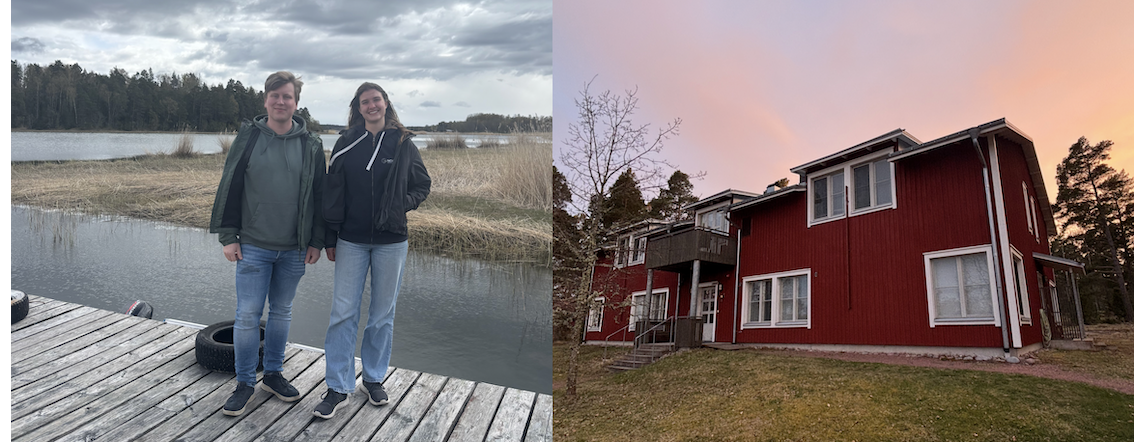
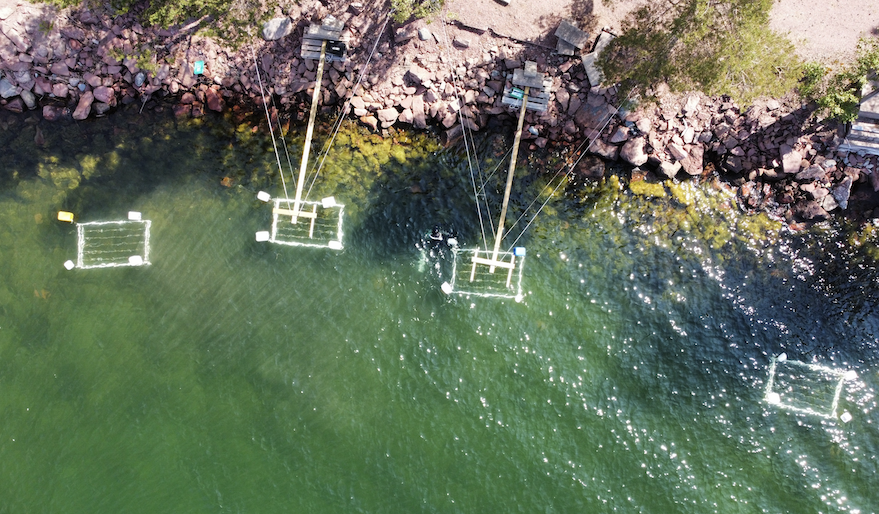
Our first days were spent digging through cupboards and sheds, reusing old materials and tools from previous years, and preparing the frames used by GAME 2023. We chose Hamnsundet as our experimental site, (i.e. the same site that was used for GAME 2023), which is located at the northeast of Åland on the outer archipelago roughly 40 km from Husö. We got permission to deploy the experiments by the local coast guard station, which was perfect. The location is sheltered from strong winds, has electricity access, can be reached by car, and provides the salinity conditions needed for our macroalga, Fucus vesiculosus, to survive.
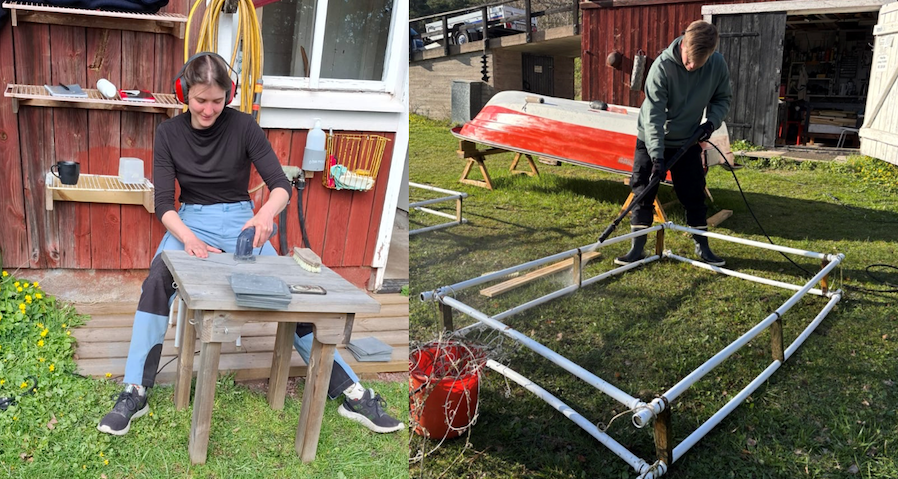
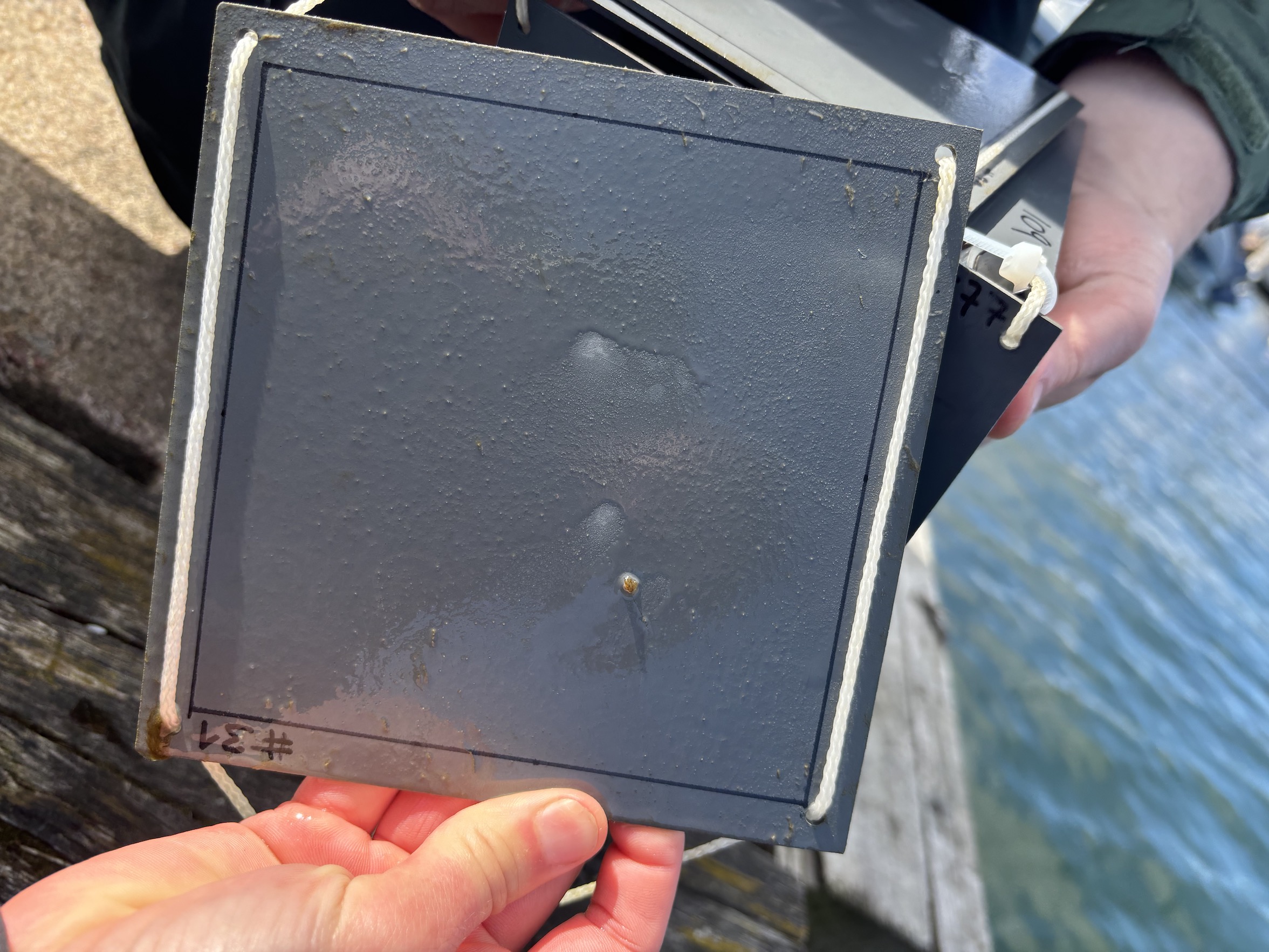
To assess the conditions at the experimental site, we deployed a first set of settlement panels in late April. At first, colonization was slow; only a faint biofilm appeared within two weeks. With the water temperature being still around 7 °C, we decided to give nature more time. Meanwhile, we collected Fucus individuals and practiced the cleaning and the standardizing of the algal thalli for the experiment. Scraping epiphytes off each thallus piece was fiddly, and agreeing on one method was crucial to make sure our results would be comparable to those of other GAME teams.
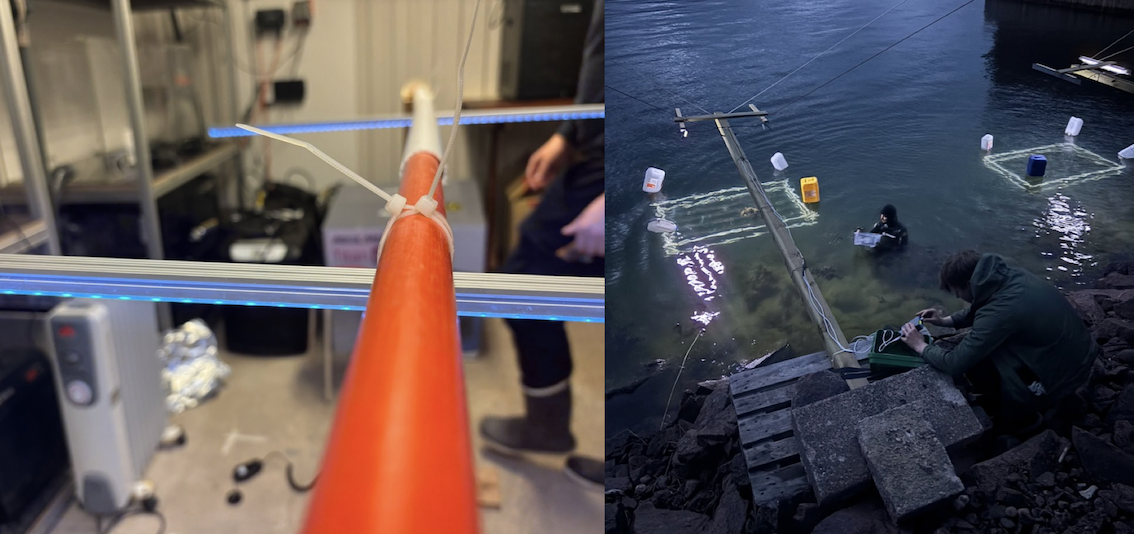
By early May, building the light setup was a project in itself. Sawing, drilling, testing LEDs, and learning how to secure a 5-meter wooden beam over the water. Our first version bent and twisted until the light pointed sideways instead of straight down onto the algae. Only after buying thicker beams and rebuilding the structure, we finally got a stable and functional setup that could withstand heavy rain and wind. The day we deployed our first experiment at Hamnsundet was cold and rainy but also very rewarding!
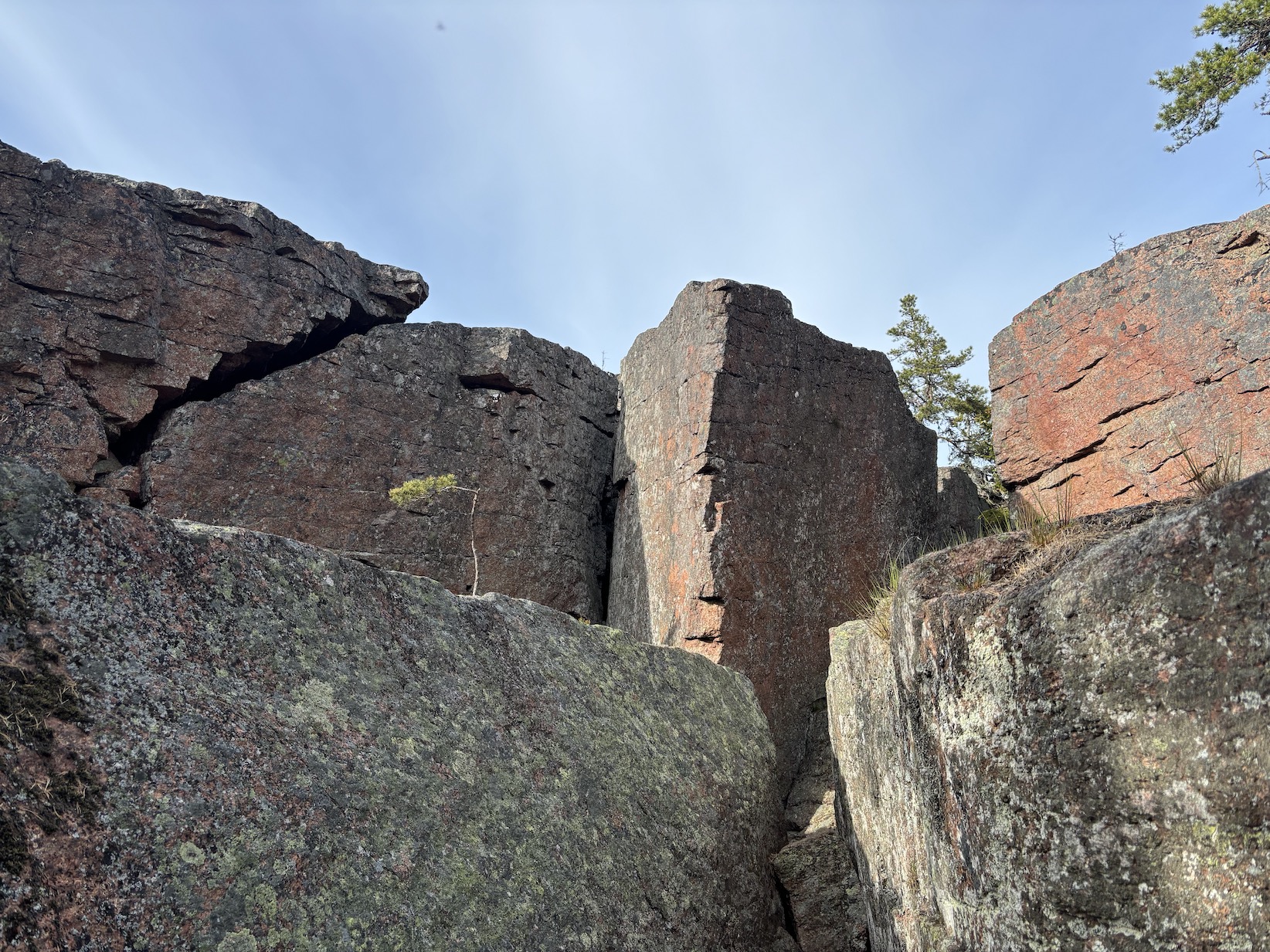
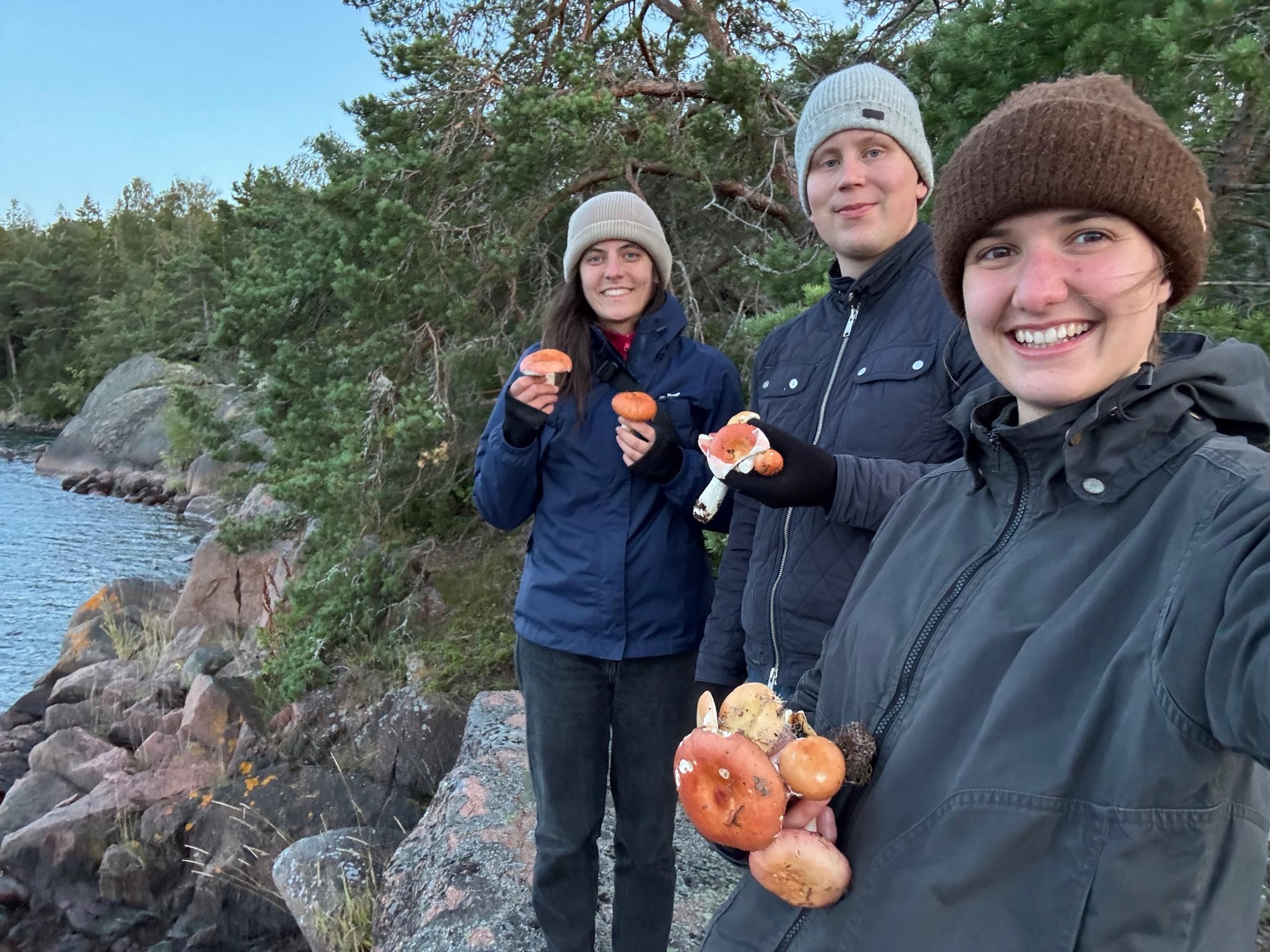
Outside of work, we made the most of the island life. We explored Åland by bike, kayak, rowboat, and hiking, visited Ramsholmen National Park during the ramson/ wild garlic bloom, and hiked in Geta with its impressive rock formations and went out boating and fishing in the archipelago. At the station on Husö, cooking became a social event: baking sourdough bread, turning rhubarb from the garden into pies, grilling and making all kind of mushroom dishes. These breaks, in the kitchen and in nature, helped us recharge for the long lab sessions to come.
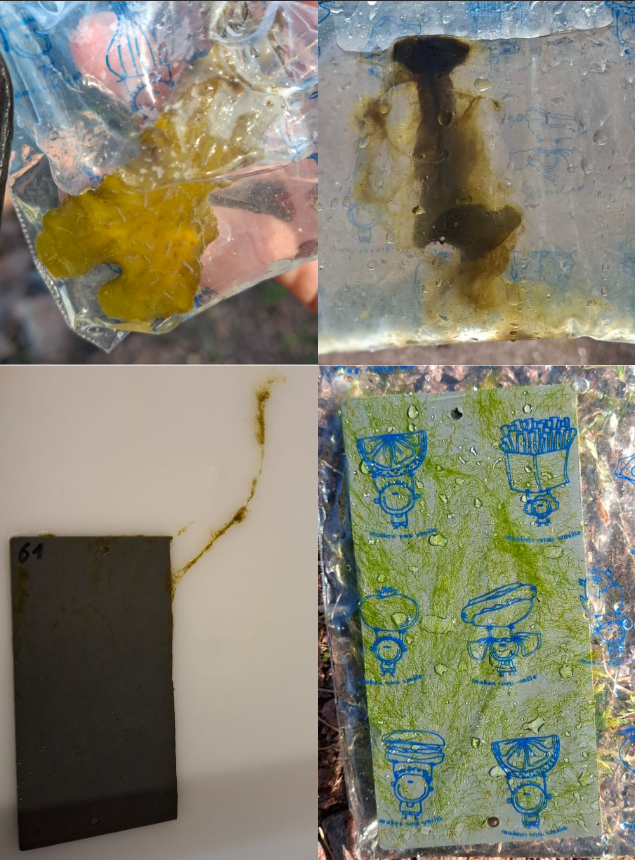
Every two weeks, it was time to collect and process samples. Snorkeling to the frames, cutting the Fucus and the PVC plates from the lines, and transferring each piece into a freezer bag became our routine. Sampling one experiment took us 4 days and processing all the replicates in the lab easily filled an entire week. The filtering and scraping process was even more time-consuming than we had imagined. It turned out that epiphyte soup is quite thick and clogs filters fastly. This was frustrating at times, since it slowed us down massively.
Over the months, the general community in the water changed drastically. In June, water was still at 10 °C, Fucus carried only a thin layer of diatoms and some very persistent and hard too scrape brown algae (Elachista). In July, everything suddenly exploded: green algae, brown algae, diatoms, cyanobacteria, and tiny zooplankton clogged our filters. With a doubled filtering setup and 6 filtering units, we hoped to compensate for the additional growth.
However, what we had planned as “moderate lab days” turned into marathon sessions. In August, at nearly 20 °C, the Fucus was looking surprisingly clean, but on the PVC a clear winner had emerged. The panels were overrun with the green alga Ulva and looked like the lawn at an abandoned house. Here it was not enough to simply filter the solution, but bigger pieces had to be dried separately. In September, we concluded the last experiment with the help of Sarah from the Cape Verde team, as it was not possible for her to continue on São Vicente, the Cape Verdean island that was most affected by a tropical storm. Our final experiment brought yet another change into community now dominated by brown algae and diatoms. Thankfully our new recruit, sunny autumn weather, and mushroom picking on the side made the last push enjoyable.
By the end of summer, we had accomplished four full experiments. The days were sometimes exhausting but also incredibly rewarding. We learned not only about the ecological effects of artificial light at night, but also about the very practical side of marine research; planning, troubleshooting, and the patience it takes when filtering a few samples can occupy half a day.

When I attended the OBIS Data Mobilization Workshop in the Azores (Thanks to the Air Center) this year, one observation immediately caught my attention: compared with countries such as the United States, Europe still appears surprisingly fragmented and underinvested in biodiversity data mobilization. The issue is not necessarily a lack of biodiversity research. European scientists produce enormous amounts of ecological data. The challenge is that publishing biodiversity observations into global infrastructures such as MBON/GBIF often remains an additional task rather than an integral part of funded research. In the United States, biodiversity data publication is frequently embedded in funding mechanisms and institutional mandates. Data management, curation, and dissemination seem to be recognized research activities. In much of Europe, including Denmark, researchers often mobilize data on top of their existing responsibilities, with limited dedicated funding for long-term stewardship.
I asked myself how is Denmark performing compared with its Nordic and neighboring countries?
Denmark is not lagging behind, but neither is it leading
The numbers reveal a mixed picture.
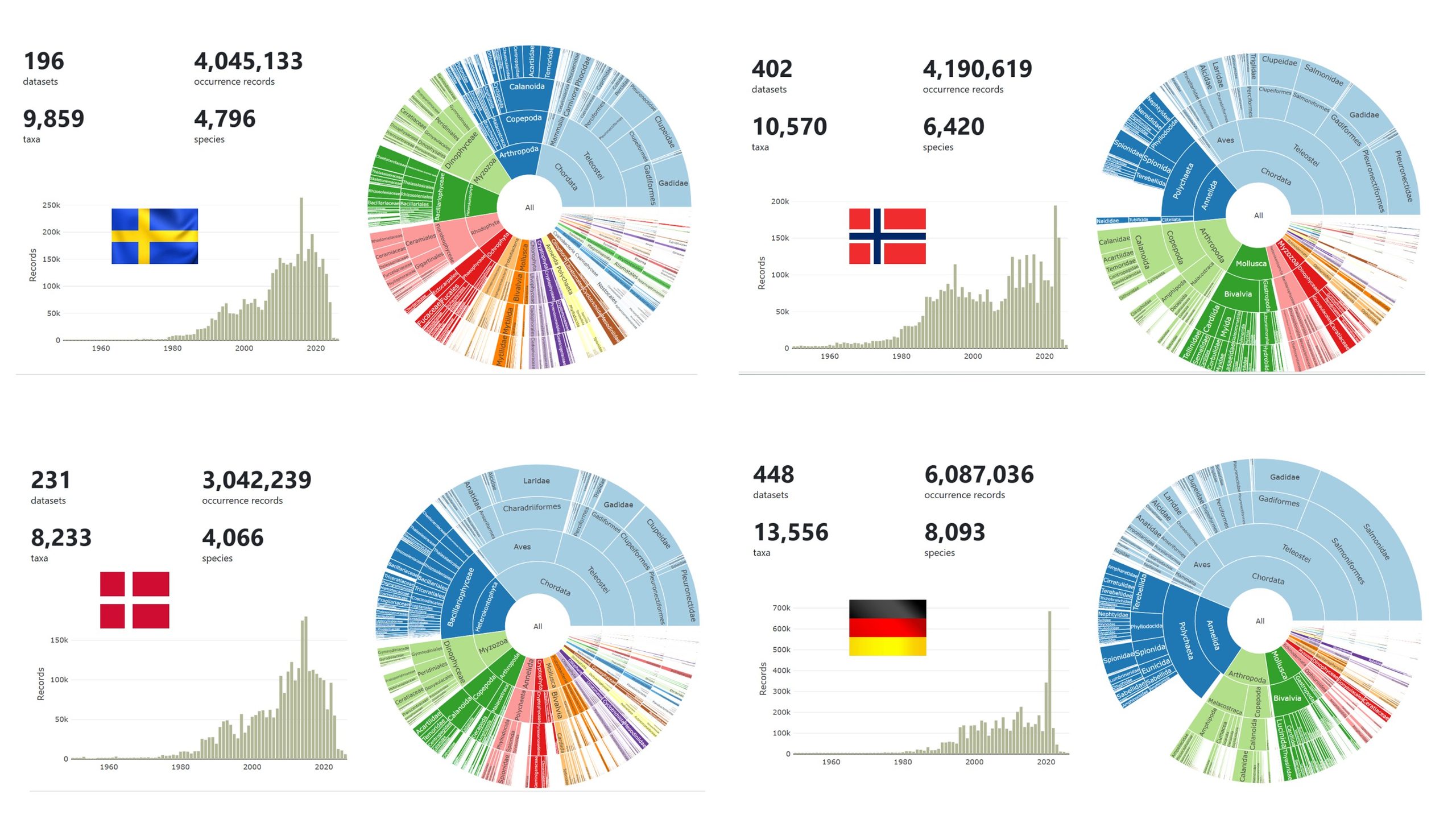
Germany clearly stands out as the regional leader, with both the highest number of datasets and the highest taxonomic coverage. Denmark has the lowest number of occurrence records and species represented among the four countries, despite having a very active biodiversity research community. What is striking is that Denmark does not fall dramatically behind in dataset numbers. Rather, the difference appears in scale and breadth. Danish datasets tend to contain fewer records and cover fewer taxa than those from Germany, Norway, and Sweden.
Different countries tell different biodiversity stories
The taxonomic breakdowns are equally revealing. Denmark should appreciate its fish and birds’ activists. Large portions of the records belong to Gadidae (cod family), Clupeidae (herring family), Laridae (gulls), and other marine vertebrates. This reflects Denmark’s historical strengths in fisheries monitoring, marine ecology, and seabird observations. However, many invertebrate groups, microorganisms, and less visible components of biodiversity remain comparatively underrepresented in global data sets despite active programs like national Program like MONIS.
Norway shows stronger contributions from invertebrate sides such as polychaetes, bivalves, copepods, and marine benthic fauna. The Norwegian data landscape appears heavily influenced by aquaculture sectores, long-term marine monitoring programs and offshore environmental surveys. There is greater representation of marine invertebrates, which are often critical indicators of ecosystem change.
What stood out in Sweden’s data profile is the relatively large contribution from copepods, diatoms, dinoflagellates, and macroalgae. These groups are often overlooked in biodiversity databases because they require specialized expertise and monitoring programs. Sweden’s contribution suggests sustained investment in aquatic ecosystem monitoring beyond commercially important species. Well done Sweden!
Germany’s profile appears the most diverse. While fish and vertebrates remain important, there are strong contributions from polychaete worms, molluscs, arthropods, plankton in general term and benthic organisms. Germany not only contributes more records but also appears to mobilize a wider variety of biodiversity data types. You made me proud Germany 
The real gap may be invisible biodiversity
One lesson from the workshop was that biodiversity databases often reflect what is easiest to observe, identify, and fund. Fish, birds, and mammals are well represented almost everywhere. The groups that drive ecosystem processes, such as jellyfish, zooplankton, benthic invertebrates, phytoplankton, and microbial communities, remain far less visible. This is particularly relevant for marine ecosystems. Some of the most important ecological changes currently occurring in our seas involve gelatinous zooplankton, plankton communities, and benthic assemblages, yet these groups remain underrepresented in many biodiversity repositories. For someone working with jellyfish and marine food webs, this raises an important question:
Are we documenting the biodiversity that is easiest to count, or the biodiversity that is most important for understanding ecosystem change?
This fall, Ocean Conservancy is celebrating its 41st annual International Coastal Cleanup® (ICC), once again bringing together volunteers to protect the beaches and waterways we all love. Ocean Conservancy recently hosted flagship events in Long Beach and Washington, D.C. that celebrated this global movement close to home.
Over the past four decades, nearly 20 million volunteers have rolled up their sleeves to remove more than 405 million pounds of trash from beaches and waterways around the world. And their impact extends far beyond what they collect. ICC volunteers have documented nearly 440 million individual items, creating the world’s largest marine debris database and providing invaluable information that helps Ocean Conservancy and others better understand—and tackle—ocean plastic pollution.
This year’s celebration continued that incredible legacy. At Alamitos Beach in Southern California, more than 150 volunteers gathered on September 19 and removed 1,109 pounds of trash, alongside members of Team USA Artistic Swimming and Olympic and Paralympic athletes. In Washington, D.C., 439 volunteers gathered on September 26 to remove 2,182 pounds of trash from Anacostia Park along the Anacostia River.


“I am so grateful to all of the volunteers who came out today for our ocean—and every volunteer who has made the last 41 years of impact possible,” said Ocean Conservancy’s Senior Director of Conservation Cleanups, Allison Schutes. “Every piece of plastic collected helps protect marine animals and habitats and contributes to research and advocacy.”
And the impact doesn’t stop when the cleanup ends. During International Coastal Cleanup events, volunteers do more than remove trash: They document what they find, helping build a clearer picture of the plastic pollution threatening our waterways and wildlife. Through the Clean Swell® app or paper data sheets, ICC volunteers contribute to Ocean Conservancy’s online, open-access database, the world’s largest repository of marine debris data. These records help scientists, conservation groups and governments understand pollution trends and identify solutions.
That data can also drive meaningful policy change. ICC data were recently used in a peer-reviewed study showing that plastic bag bans lead to reduced plastic bag pollution. The data have also helped advance policies ranging from California’s SB 54 to Florida’s balloon release ban and the federal Farewell to Foam Act. From a neighborhood cleanup to statewide action, every piece of documented trash helps build the evidence needed to tackle plastic pollution at its source.
Get Ocean Updates in Your Inbox
Sign up with your email and never miss an update.