Connect with us

Published

on

When I argue for environmental responsibility and the decarbonization of the grid, I often say:

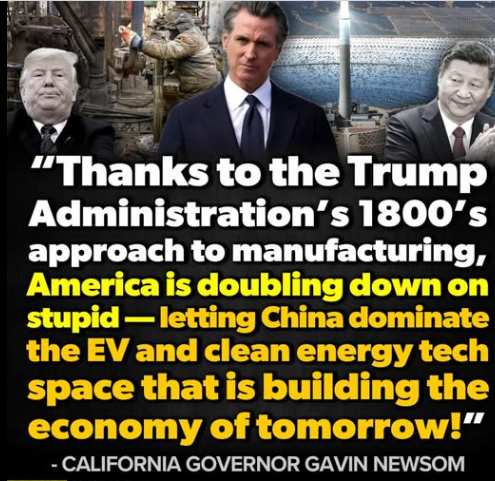
I know there are people who believe, perhaps because this is what they’re told by Donald Trump, that climate change is a hoax. But are there people who don’t believe in cancer? In the importance of our country’s investing in the industry that is destined the dominate the 21st Century?

Trump will be gone soon.  Maybe you and I will be gone (in a different sense) before the effects of this administration’s folly in the EV and cleantech industry are fully felt.

But it’s inevitable, unless we turn this around, and soon.

Handing the Keys to the Kingdom over to the Chinese

Continue Reading

Renewable Energy

Explore Commercial Heat Pump Warranties: What Cyanergy Offers? 

Published

on

Heat pumps are an excellent investment for any Australian Business, whether you run restaurants, hotels, nursing homes, laundries, or manufacturing facilities.

They save money, reduce emissions, and, most importantly, modernise operations by prioritising energy efficiency and environmental sustainability.

But when you’re spending your hard-earned dollars on a commercial heat pump, you are not only purchasing a product, you’re also investing in long-term performance. And one factor that separates smart purchases from regrets is warranty protection.

Besides satisfactory performance, a solid warranty on your heat pump can offer you peace of mind and protect you from unexpected repair costs.

Still, with so many options in the market, how can you understand which companies actually back up their promises with real protection?

Let’s put your concerns to rest! In this blog, we’ll unveil what commercial heat pump warranties usually cover, what to watch out for, and exactly how Cyanergy’s warranty stacks up, doing things differently.

Understanding Warranties for Heat Pumps: Why It Matters?

So, what is a hot water heat pump system warranty?

A commercial hot water heat pump warranty is a
manufacturer’s or supplier’s promise that the product will perform as expected for a specified period.
Warranties typically cover repairs or replacements if something goes wrong due to faulty materials.

Types of Heat Pump Warranties: What’s Typically Covered?

When purchasing a heat pump, understanding the different types of warranties is crucial to protecting your investment
and minimising repair costs. In Australia, warranties may include manufacturer coverage, labour warranties, and
even full system replacement.

So, here’s a breakdown of the most common types of heat pump warranties available throughout
Australia:

1. Manufacturer’s Warranty

This is the most common type of warranty included with most of the new heat pumps installed in Australian commercial
properties.

Warranty Coverage:

  • Major components are covered under this warranty, including the compressor, condenser, air handler, fan,
    heat exchanger, electronic controls, and, sometimes, refrigerant components such as the evaporator.
  • Some units also include a separate warranty for the refrigeration system.

Warranty Duration:

The manufacturer’s warranty is typically 5 to 10 years, but can be extended to 12 years for premium models.

However, remember that to qualify for warranty, installation must be performed by a certified professional, such as
Cyanergy. Also, some manufacturers offer extended parts warranties
if the unit is registered shortly after installation.

2. Labour Warranty

This covers the labour costs for diagnosing, repairing, or replacing defective parts. In most cases, manufacturer
warranties cover parts, but not always labour.

Since labour can be costly, especially for complex systems, it’s worth checking for better financial protection.

Covers:

  • This provides the technician’s labour and service fees.

Duration:

The warranty lasts from 1 to 3 years from the installation date. This entirely depends on your service provider and
the size of the installations.

3. Installation Warranty

An installation warranty is usually offered by the HVAC company that installs
your heat pump system
with professional help.

Covers:

  • Any issues caused by improper installation.
  • Workmanship defects.

Duration:

This is applicable for typically 1 to 2 years, depending on the contractor. Also, always try to get this warranty in
writing, as some contractors may only offer a verbal assurance, which may not hold up if issues arise.

4. Extended Warranty

Some manufacturers offer extended coverage for their models at an additional cost. These provide more extended
coverage periods and broader protection for parts and repairs beyond the standard warranty limits, giving you
added peace of mind.

Covers:

  • It can include both parts and labour.
  • Some manufacturers even offer full system coverage for a long time.

Duration:

Ensure that this extended warranty coverage lasts 10 to 12 years. However, regular servicing may be required to keep
it valid.

Also, check for exclusions, maintenance requirements, and whether the manufacturer or a third party backs it.

5. Unit Replacement Warranty

Offered by some manufacturers as part of their premium product warranties.

Covers:

  • It provides a complete system replacement if a major failure occurs within the warranty period.

Duration:

Replacement warranty lasts for 1 to 5 years, depending on your chosen heat pump brand and model number.

6. Tank Warranty

In Australia, if your heat pump includes a hot water storage tank, this may have a separate warranty.

Covers:

  • This warranty covers any leaks, corrosion, or manufacturing defects in the tank.

Duration:

Even though the warranty claims often last 5 to 10 years, it’s better to check that specifically with the tank
manufacturer.

Why Warranties Matter for Businesses in Australia?

Warranties on heat pumps can be beneficial for businesses. Thinking why?

With warranty coverage, minimum risk of expensive equipment breakdowns, and protection against unexpected repair costs, businesses can operate with greater confidence.

They minimise downtime and maintenance disruptions for your system, keeping your system running for a long time.

Additionally, having a valid warranty may be a requirement for participation in certain government energy programs, such as the Victorian Energy Efficiency Certificates (VEECs) scheme.

Cyanergy’s Warranty Offer: What You Get, What Sets Us Apart!

Hot water heat pumps, like the popular Smart Lifestyle
Australia (SLA) model
, offer significant advantages for your business. For example:

  • They use up to 75% less energy than traditional electric systems.
  • Offer cost savings that are 3.5 times cheaper to run and ideal for high-usage commercial settings like
    office buildings and hospitals.
  • Traditional heating systems use burning fossil fuels, whereas installing heat pumps can reduce your
    dependency on fossil fuels.
  • Heat pumps reduce gas emissions, lowering your carbon
    footprint
    .
  • Perform longer with less regular maintenance over time.

Also, SLA units are available in 200 L and 300 L capacities, making them a versatile choice across
industries. Moreover, our heat pump is 4X more energy efficient than electric systems.

Now, let’s see what Cyanergy’s warranty offers.

Here’s how Cyanergy Australia stacks up. When you buy a commercial hot water heat pump through Cyanergy

Warranty Component Cyanergy Offers
Compressor 5-year warranty support
Cylinder or Tank  7-year warranty support
Whole Unit 5-year warranty support for the whole system

Some Scenarios That Prove Warranties Pay Off

Here we’ve added a few example scenarios so you can see how warranties play out in “real life” with Cyanergy.

Case 1: Compressor failure in year 3

Imagine enjoying years of energy savings, then suddenly, your compressor fails in year three. In such cases with many companies, you’d be stuck paying for costly parts.

But with Cyanergy, your compressor is covered for up to 5 years, offering peace of mind at the same time, ensuring savings. Isn’t it a win-win?

Case 2: Tank develops a leak in year 6

Most standard warranties on hot water system tanks expire around the 5-year mark, leaving you unprotected just when things start to wear down.

However, Cyanergy’s 7-year cylinder warranty, a leaking tank in year six, isn’t a problem. This saves thousands of dollars, and customers do not need to struggle for emergency replacements.

Case 3: Control board fails in year 2

Electronics are unpredictable, and control boards are no exception. They’re essential for system operation, so if one fails, your system could shut down completely.

Many manufacturers offer limited warranties on these parts, often just 1 year. But Cyanergy’s 5-year whole-unit warranty means you’re covered for unexpected component failures like this for a long time.

Case 4: Environmental or any external damage

These are often excluded from many warranties everywhere. You’ll need to check if the damage falls under “defective component” or external factors.

Make sure your C&I properties have ground fault protection, surge protection, and water drainage that are up to spec.

Make the Most of Your Heat Pump Warranty: 5 Expert Tips!

If you’re living in Australia, then getting a heat pump installed is undoubtedly a smart move, but if you’re not careful, you could miss out on the full benefits of your warranty.

Don’t let simple oversights cost you down the track! 

So, here are the five expert tips that help you make the most of your system:

  1. Keep all paperwork, including receipts, installation date, installer name & certificates.
  2. Register the product if required.
  3. Follow installation specs to know about the provided services like correct plumbing, proper electrical setup, clearance & environmental standard compliance.
  4. Maintain regularly clean filters, flush the tank if needed, check valves and sensors, and follow manual guidelines.
  5. Document everything if something seems wrong, as proper documentation helps in claiming a warranty.

Cyanergy’s Service Response and Installer Quality

At Cyanergy, we offer exceptional customer service. For any warranty-related concerns, our team responds within 24 hours to ensure quick and efficient resolution.

As a CEC-approved installer in Australia, we have successfully completed hundreds of commercial solar projects across Victoria (VIC) and New South Wales (NSW). You can count on our expertise and commitment to quality from installation through to after-sales support.

Takeaway Thoughts

In the end, you deserve more than just a shiny product in a box. You deserve lasting value and genuine support with a commitment to reliable hardware, strong service, and support designed for commercial users.

So, if you’re considering a heat pump upgrade or part of a business that depends on reliable hot water, let us walk you through exactly what coverage you’ll get and ensure you get the best match for your needs.

For more information, call us today and talk with our experts without any further delay!

Your Solution Is Just a Click Away

The post Explore Commercial Heat Pump Warranties: What Cyanergy Offers?  appeared first on Cyanergy.

Explore Commercial Heat Pump Warranties: What Cyanergy Offers? 

Continue Reading

Renewable Energy

Small, Vertical-Axis Wind Turbines (VAWTs)

Published

on

In preparation for my first book, “Renewable Energy – Facts and Fantasies,” I interviewed Ray Lane, then managing partner of Kleiner Perkins, one of the world’s great venture capital firms, who told me about his stance with his prospects, “You build the first one. I’ll invest in the next 20. Then we’ll take the thing public and use that cash to build the next 5000.”

I’m 99+% sure that the “first one” of these will never be built, i,e., installing these VAWTs at the base of functioning wind farms. The concept is asinine, as it defies the laws of fluid dynamics.

.

Small, Vertical-Axis Wind Turbines (VAWTs)

Continue Reading

Renewable Energy

WindQuest Advisors on Managing TSA & FSA Negotiations

Published

on

Weather Guard Lightning Tech

WindQuest Advisors on Managing TSA & FSA Negotiations

Allen and Joel sit down with Dan Fesenmeyer of Windquest Advisors to discuss turbine supply agreement fundamentals, negotiation leverage, and how tariff uncertainty is reshaping contract terms. Dan also explains why operators should maximize warranty claims before service agreements take over.

Sign up now for Uptime Tech News, our weekly email update on all things wind technology. This episode is sponsored by Weather Guard Lightning Tech. Learn more about Weather Guard’s StrikeTape Wind Turbine LPS retrofit. Follow the show on Facebook, YouTube, Twitter, Linkedin and visit Weather Guard on the web. And subscribe to Rosemary Barnes’ YouTube channel here. Have a question we can answer on the show? Email us!

Welcome to Uptime Spotlight, shining Light on Wind. Energy’s brightest innovators. This is the Progress Powering tomorrow.

Allen Hall: Dan, welcome to the program. Great to be here. Thanks for having me, guys. Well, we’ve been looking forward to this for several weeks now because. We’re trying to learn some of the ins and outs of turbine supply agreements, FSAs, because everybody’s talking about them now. Uh, and there’s a lot of assets being exchanged.

A lot of turbine farms up for sale. A lot of acquisitions on the other side, on the investment side coming in and. As engineers, we don’t deal a lot with TSAs. It’s just not something that we typically see until, unless there’s a huge problem and then we sort of get involved a little bit. I wanna understand, first off, and you have a a ton of experience doing this, that’s why we [00:01:00] love having you.

What are some of the fundamentals of turbine supply agreements? Like what? What is their function? How do they operate? Because I think a lot of engineers and technicians don’t understand the basic fundamentals of these TSAs.

Dan Fesenmeyer: The TSA is a turbine supply agreement and it’s for the purchase and delivery of the wind turbines for your wind farm.

Um, typically they are negotiated maybe over a 12 ish month period and typically they’re signed at least 12 months before you need, or you want your deliveries for the wind turbines.

Joel Saxum: We talk with people all over the world. Um, you know, GE Americas is different than GE in Spain and GE in Australia and Nordics here, and everybody’s a little bit different.

Um, but what we, we regularly see, and this is always an odd thing to me, is you talked about like negotiating. It starts 12 months ahead of time stuff, but we see that [00:02:00] the agreements a lot of times are very boilerplate. They’re very much like we’re trying to structure this in a certain way, and at the end of the day, well, as from an operator standpoint, from the the person buying them, we would like this and we would like this and we would like this, but at the end of the day, they don’t really seem to get that much negotiation in ’em.

It’s kind of like, this is what the agreement you’re gonna take and this is how we sell them. That’s it. Is, is that your experience? I mean, you’re at GE for a long time, one of the leading OEMs, but is that what you’re seeing now or is there a little bit more flexibility or kind of what’s your take on that?

Dan Fesenmeyer: I think generally it depends, and of course the, the OEMs in the, and I’ll focus more on the us, they’ll start with their standard template and it’s up to the purchaser, uh, to develop what they want as their wishlist and start negotiations and do their, let’s say, markup. So, uh, and then there’s a bit of leverage involved.

If you’re buying two units, it’s hard to get a lot of interest. [00:03:00] If you’re buying 200 units, then you have a lot more leverage, uh, to negotiate terms and conditions in those agreements. I was with GE for 12 years on the sales and commercial side and now doing advisory services for four years. Uh, some of these negotiations can go for a long time and can get very, very red.

Others can go pretty quick. It really depends on what your priorities are. How hard you want to push for what you need.

Allen Hall: So how much detail goes into a TSA then are, are they getting very prescriptive, the operators coming with a, a list of things they would like to see? Or is it more negotiating on the price side and the delivery time and the specifics of the turbine?

Dan Fesenmeyer: Generally speaking, you start kind of with the proposal stage and. First thing I always tell people is, let’s understand what you have in your proposal. Let’s understand, you know, what are the delivery [00:04:00] rates and times and does that fit with your project? Does the price work with respect to your PPA, what does it say about tariffs?

That’s a huge one right now. Where is the risk going to land? What’s in, what’s out? Um. Is the price firm or is there indexation, whether it’s tied to commodities or different currencies. So in my view, there’s some pre-negotiations or at least really understanding what the offer is before you start getting into red lines and, and generally it’s good to sit down with the purchasing team and then ultimately with the OEM and walk through that proposal.

Make sure you have everything you need. Make sure you understand what’s included, what’s not. Scope of supply is also a big one. Um, less in less in terms of the turbine itself, but more about the options, like does it have the control features you need for Ercot, for example. Uh, does it have leading [00:05:00]edge protection on your blades?

Does it have low noise trailing edge? Do we even need lo low noise trailing edges? Uh, you know, those

Joel Saxum: sorts

Dan Fesenmeyer: of things.

Joel Saxum: Do you see the more of the red lining in the commercial phase or like the technical phase? Because, and why I ask this question is when we talk, ’cause we’re regularly in the o and m world, right?

Talking with engineers and asset managers, how do you manage your assets? And they really complain a lot that a lot of their input in that, that feedback loop from operations doesn’t make it to the developers when they’re signing TSAs. Um, so that’s a big complaint of theirs. And so my question is like, kind of like.

All right. Are there wishes being heard or is it more general on the technical side and more focused on the commercial

Dan Fesenmeyer: side? Where do you see that it comes down to making sure that your negotiation team has all the different voices and constituents at the table? Uh, my approach and our, our team’s approach is you have the legal piece, a technical piece, and we’re in between.

We’re [00:06:00] the commercial piece. So when you’re talking TSAs, we’re talking price delivery terms. Determination, warranty, you know, kind of the, the big ticket items, liquidated damages, contract caps, all those big ticket commercial items. When you move over to the operations agreement, which generally gets negotiated at the same time or immediately after, I recommend doing them at the same time because you have more leverage and you wanna make sure terms go from TSA.

They look the same in the. Services agreement. And that’s where it’s really important to have your operations people involved. Right? And, and we all learn by mistakes. So people that have operated assets for a long time, they always have their list of five or 10 things that they want in their o and m agreement.

And, um, from a process standpoint, before we get into red lines, we usually do kind of a high [00:07:00] level walkthrough of here’s what we think is important. Um. For the TSA and for the SMA or the operations and maintenance agreement, let’s get on the same page as a team on what’s important, what’s our priority, and what do we want to see as the outcome.

Allen Hall: And the weird thing right now is the tariffs in the United States that they are a hundred percent, 200%, then they’re 10%. They are bouncing. Like a pinball or a pong ping pong ball at the moment. How are you writing in adjustments for tariffs right now? Because some of the components may enter the country when there’s a tariff or the park the same park enter a week later and not be under that tariff.

How does that even get written into a contract right now?

Dan Fesenmeyer: Well, that’s a fluid, it’s a fluid environment with terrorists obviously, and. It seems, and I’ll speak mostly from the two large OEMs in the US market. Um, [00:08:00] basically what you’re seeing is you have a proposal and tariffs, it includes a tariff adder based on tariffs as in as they were in effect in August.

And each one may have a different date. And this is fairly recent, right? So as of August, here’s what the dates, you know, here’s a tariff table with the different countries and the amounts. Here’s what it translates into a dollar amount. And it’ll also say, well, what we’re going to do is when, uh, these units ship, or they’re delivered X works, that’s when we come back and say, here’s what the tariffs are now.

And that difference is on the developer or the purchaser typically.

Allen Hall: So at the end of the day. The OEM is not going to eat all the tariffs. They’re gonna pass that on. It’s just basically a price increase at the end. So the, are the, are the buyers of turbines then [00:09:00] really conscious of where components are coming from to try to minimize those tariffs?

Dan Fesenmeyer: That’s

Allen Hall: difficult.

Dan Fesenmeyer: I mean, I would say that’s the starting point of the negotiation. Um, I’ve seen things go different ways depending on, you know, if an off, if a developer can pass through their tariffs to the, on their PPA. They can handle more. If they can’t, then they may come back and say, you know what, we can only handle this much tariff risk or amount in our, in our PPA.

The rest we need to figure out a way to share between the OEM or maybe and the developer. Uh, so let’s not assume, you know, not one, one size doesn’t fit all.

Joel Saxum: The scary thing there is it sound, it sounds like you’re, like, as a developer when you’re signing a TSA, you’re almost signing a pro forma invoice.

Right. That that could, that could go up 25% depending on the, the mood on, in Capitol Hill that day, which is, it’s a scary thought and I, I would think in my mind, hard to really get to [00:10:00] FID with that hanging over your head.

Dan Fesenmeyer: Yeah. It it’s a tough situation right now for sure. Yeah. And, and we haven’t really seen what section 2 32, which is another round of potential tariffs out there, and I think that’s what.

At least in the last month or two. People are comfortable with what tariffs are currently, but there’s this risk of section 2 32, uh, and who’s going to take that risk

Allen Hall: moving forward? Because the 2 32 risk is, is not set in stone as when it will apply yet or if it even

Dan Fesenmeyer: will happen and the amount, right. So three ifs, three big ifs there, Alan.

Allen Hall: Yeah. And I, maybe that’s designed on purpose to be that way because it does seem. A little bit of chaos in the system will slow down wind and solar development. That’s one way you do. We just have a, a tariff. It’s sort of a tariff that just hangs out there forever. And you, are there ways to avoid that? Is it just getting the contract in [00:11:00] place ahead of time that you can avoid like the 2 32 thing or is it just luck of the draw right now?

It’s always

Dan Fesenmeyer: up to the situation and what your project delivery. Is looking at what your PPA, what can go in, what can go out. Um, it’s tough to avoid because the OEMs certainly don’t want to take that risk. And, uh, and I don’t blame them. Uh, and separately you were asking about, well, gee, do you start worrying about where your components are sourced from?

Of course you are. However, you’re going to see that in the price and in the tariff table. Uh, typically. I would say from that may impact your, your, uh, sort of which, which OEM or which manufacturer you go with, depending on where their supply chain is. Although frankly, a lot of components come from China.

Plain and simple,

Allen Hall: right?

Dan Fesenmeyer: Same place. If you are [00:12:00] subject to these tariffs, then you want to be more on a, you know, what I would say a fleet wide basis. So, uh, meaning. Blades can come from two places. We don’t want to have, you know, an OEM select place number one because it’s subject to tariff and we have to pay for it.

You want it more on a fleet basis, so you’re not, so the OEM’s not necessarily picking and choosing who gets covered or who has to pay for a tariff or not.

Joel Saxum: And I wonder that, going back to your first statement there, like if you have the power, the leverage, if you can influence that, right? Like.

Immediately. My mind goes to, of course, like one of the big operators that has like 10, 12, 15,000 turbines and deals exclusively with ge. They probably have a lot of, they might have the, the stroke to be able to say, no, we want our components to come from here. We want our blades to come from TPI Mexico, or whatever it may be, because we don’t want to make sure they’re coming from overseas.

And, and, and if that happens in, in [00:13:00] the, let’s take like the market as a whole, the macro environment. If you’re not that big player. You kind of get the shaft, like you, you would get the leftovers basically.

Dan Fesenmeyer: You could, and that makes for a very interesting discussion when you’re negotiating the contract and, and figuring out something that could work for both.

It also gets tricky with, you know, there could be maybe three different gearbox suppliers, right? And some of those. So this is when things really get, you know, peeling back an onion level. It’s difficult and I’ll be nice to the OEMs. It’s very tough for them to say, oh, we’re only a source these gearbox, because they avoid the tariffs.

Right? That’s why I get more to this fleet cost basis, which I think is a fair way for both sides to, to handle the the issue.

Allen Hall: What’s a turbine backlog right now? If I sign a TSA today, what’s the earliest I would see a turbine? Delivered.

Dan Fesenmeyer: You know, I, I really don’t know the answer to that. I would say [00:14:00] generally speaking, it would be 12 months is generally the response you would get.

Uh, in terms of if I sign today, we get delivery in 12 months,

Allen Hall: anywhere less than two years, I think is a really short turnaround period. Because if you’re going for a, uh, gas turbine, you know, something that GE or Siemens would provide, Mitsubishi would provide. You’re talking about. Five or six years out before we ever see that turbine on site.

But wind turbines are a year, maybe two years out. That seems like a no brainer for a lot of operators.

Dan Fesenmeyer: I would say a year to two is safe. Um, my experience has been things, things really get serious 12 months out. It’s hard to get something quicker. Um, that suppliers would like to sign something two years in advance, but somewhere in between the 12 months and 24 months is generally what you can expect.

Now, I haven’t seen and been close to a lot of recent turbine supply [00:15:00]deals and, and with delivery, so I, I, I can’t quote me on any of this. And obviously different safe harbor, PTC, windows are going to be more and more important. 20 eights preferred over 29. 29 will be preferred over 30. Um, and how quick can you act and how quick can you get in line?

Allen Hall: Yeah, it’s gonna make a big difference. There’s gonna be a rush to the end. Wouldn’t you think? There’s must be operators putting in orders just because of the end of the IRA bill to try to get some production tax credits or any tax credits out of it.

Dan Fesenmeyer: Absolutely. And you know. June of 2028 is a hell of a lot better than fall of 2028 if you want a COD in 2 28.

Right. And then you just work backwards from there. Yeah. And that’s, that’s, we’ve seen that in the past as well, uh, with, with the different PTC cliffs that we’ve [00:16:00] seen.

Allen Hall: Let’s talk service agreements for a moment when after you have a TSA signed and. The next thing on the list usually is a service agreement, and there are some OEMs that are really hard pushing their service agreements.

25, 30, 35 years. Joel, I think 35 is the longest one I have seen. That’s a long time.

Joel Saxum: Mostly in the Nordics though. We’ve seen like see like, uh, there are Vestas in the Nordic countries. We’ve seen some 35 year ones, but that’s, to me, that’s. That’s crazy. That’s, that’s a marriage. 35 years. The crazy thing is, is some of them are with mo models that we know have issues.

Right? That’s the one that’s always crazy to me when I watch and, and so then maybe this is a service, maybe this is a com a question is in a service level agreement, like I, I, I know people that are installing specific turbines that we’ve been staring at for five, six years that we know have problems now.

They’ve addressed a lot of the problems and different components, bearings and drive, train and [00:17:00] blades and all these different things. Um, but as an, as an operator, you’d think that you have, okay, I have my turbine supply agreement, so there’s some warranty stuff in there that’s protecting me. There is definitely some serial defect clauses that are protecting me.

Now I have a service level agreement or a service agreement that we’re signing that should protect me for from some more things. So I’m reducing my risk a little more. I also have insurance and stuff in built into this whole thing. But when, when you start crossing that gap between. These three, four different types of contracts, how do people ensure that when they get to that service level contract, that’s kind of in my mind, the last level of protection from the OEM.

How do they make sure they don’t end up in a, uh, a really weird Swiss cheese moment where something fell through the cracks, serial defects, or something like that? You know?

Dan Fesenmeyer: Yeah. It, it comes down to, I, I think it’s good to negotiate both at the same time. Um, it sometimes that’s not practical. It’s good.

And [00:18:00] part of it is the, the simple, once your TSA is signed, you, you don’t have that leverage over that seller to negotiate terms in the services agreement, right? Because you’ve already signed a t to supply agreement. Uh, the other piece I think is really important is making sure the defect language, for example, and the warranty language in the TSA.

Pretty much gets pulled over into the service agreement, so we don’t have different definitions of what a defect is or a failed part, uh, that’s important from an execution standpoint. My view has always been in the TSA, do as much on a warranty claim as you possibly can at that end of the warranty term.

The caps and the coverages. And the warranty is much higher than under the services agreement. Services agreement [00:19:00] will end up, you know, warranty or extended warranty brackets, right? ’cause that’s not what it is. It becomes unscheduled maintenance or unplanned maintenance. So you do have that coverage, but then you’re subject to, potentially subject to CAPS or mews, annual or per event.

Um. Maybe the standard of a defect is different. Again, that’s why it’s important to keep defect in the TSAs the same as an SMA, and do your warranty claim first. Get as much fixed under the warranty before you get into that service contract.

Joel Saxum: So with Windquest, do you go, do you regularly engage at that as farms are coming up to that warranty period?

Do you help people with that process as well? As far as end of warranty claims? Contract review and those things before they get into that next phase, you know, at the end of that two year or three years.

Dan Fesenmeyer: Yeah. We try to be soup to nuts, meaning we’re there from the proposal to helping [00:20:00] negotiate and close the supply agreement and the services agreement.

Then once you move into the services agreement or into the operation period, we can help out with, uh, filing warranty claims. Right. Do we, do you have a serial defect, for example, or. That, that’s usually a big one. Do you have something that gets to that level to at least start that process with an root cause analysis?

Um, that’s, that’s obviously big ones, so we help with warranty claims and then if things aren’t getting fixed on time or if you’re in a service agreement and you’re unhappy, we try to step in and help out with, uh, that process as well.

Joel Saxum: In taking on those projects, what is your most common component that you deal with for seald?

Defects,

Dan Fesenmeyer: gearboxes seem to always be a problem. Um, more recently, blade issues, um, main bearing issues. Uh, those are [00:21:00] some of the bigger ones. And then, yeah, and we can be main bearings. Also. Pitch bearings often an issue as well.

Joel Saxum: Yeah, no, nothing surprising there. I think if you, if you listen to the podcast at all, you’ve heard us talk about all of those components.

Fairly regularly. We’re not, we’re not to lightening the world on firing new information on that one.

Allen Hall: Do a lot of operators and developers miss out on that end of warranty period? It does sound like when we talk to them like they know it’s coming, but they haven’t necessarily prepared to have the data and the information ready to go till they can file anything with the OEM it.

It’s like they haven’t, they know it’s approaching, right? It’s just, it’s just like, um, you know, tax day is coming, you know, April 15th, you’re gonna write a check for to somebody, but you’re not gonna start thinking about it until April 14th. And that’s the wrong approach. And are you getting more because things are getting tighter?

Are you getting more requests to look at that and to help? Operators and developers engage that part of their agreements. I think it’s an

Dan Fesenmeyer: [00:22:00] oppor opportunity area for owner operators. I think in the past, a lot of folks have just thought, oh, well, you know, the, the, the service agreement kicks in and it’ll be covered under unscheduled or unplanned maintenance, which is true.

But, uh, again, response time might be slower. You might be subject to caps, or in the very least, an overall contract level. Cap or limitation, let’s say. Uh, so I, I do think it’s an opportunity area. And then similarly, when you’re negotiating these upfront to put in language that, well, I don’t wanna say too much, but you wanna make sure, Hey, if I, if I file a claim during warranty and you don’t fix it, that doesn’t count against, let’s say your unplanned cap or unplanned maintenance.

Joel Saxum: That’s a good point. I was actually, Alan, this is, I was surprised the other day. You and I were on a call with someone and they had mentioned that they were coming up on end of warranty and they were just kinda like, eh, [00:23:00] we’ve got a service agreement, so like we’re not gonna do anything about it. And I was like, really?

Like that day? Like, yeah, that deadline’s passed, or it’s like too close. It wasn’t even passed. It was like, it’s coming up and a month or two. And they’re like, yeah, it’s too close. We’re not gonna do anything about it. We’ll just kind of deal with it as it comes. And I was thinking, man, that’s a weird way to.

To manage a, you know, a wind farm that’s worth 300 million bucks.

Dan Fesenmeyer: And then the other thing is sometimes, uh, the dates are based on individual turbine CDs. So your farm may have a December 31 COD, but some of the units may have an October, uh, date. Yeah, we heard a weird one the other day that was

Joel Saxum: like the entire wind farm warranty period started when the first turbine in the wind farm was COD.

And so there was some turbines that had only been running for a year and a half and they were at the end of warranty already. Someone didn’t do their due diligence on that contract. They should have called Dan Meyer.

Dan Fesenmeyer: And thing is, I come back is when you know red lines are full of things that people learned [00:24:00] by something going wrong or by something they missed.

And that’s a great example of, oh yeah, we missed that when we signed this contract.

Joel Saxum: That’s one of the reasons why Alan and I, a lot, a lot of people we talk to, it’s like consult the SMEs in the space, right? You’re, you may be at tasked with being a do it all person and you may be really good at that, but someone that deals in these contracts every day and has 20 years of experience in it, that’s the person you talk to.

Just like you may be able to figure out some things, enlight. Call Allen. The guy’s been doing lightning his whole career as a subject matter expert, or call a, you know, a on our team and the podcast team is the blade expert or like some of the people we have on our network. Like if you’re going to dive into this thing, like just consult, even if it’s a, a small part of a contract, give someone a day to look through your contract real quick just to make sure that you’re not missing anything.

’cause the insights from SMEs are. Priceless. Really.

Dan Fesenmeyer: I couldn’t agree more. And that’s kind of how I got the idea of starting Windquest advisors to begin with. [00:25:00] Um, I used to sit across the table with very smart people, but GE would con, you know, we would negotiate a hundred contracts a year. The purchaser made one or two.

And again, this isn’t, you know, to beat up the manufacturers, right? They do a good job. They, they really work with their, their customers to. Find solutions that work for both. So this is not a beat up the OEM, uh, from my perspective, but having another set of eyes and experience can help a lot.

Allen Hall: I think it’s really important that anybody listening to this podcast understand how much risk they’re taking on and that they do need help, and that’s what Windquest Advisors is all about.

And getting ahold of Dan. Dan, how do people get ahold of you? www.win advisors.com. If you need to get it to Dan or reach out to win advisors, check out LinkedIn, go to the website, learn more about it. Give Dan a phone call because I think [00:26:00] you’re missing out probably on millions of dollars of opportunity that probably didn’t even know existed.

Uh, so it’s, it’s a good contact and a good resource. And Dan, thank you so much for being on the podcast. We appreciate having you and. We’d like to have you back again.

Dan Fesenmeyer: Well, I’d love to come back and talk about, maybe we can talk more about Lightning. That’s a

Joel Saxum: couple of episodes.

Dan Fesenmeyer: I like watching your podcast.

I always find them. Informative and also casual. It’s like you can sit and listen to a discussion and, and pick up a few things, so please continue doing what you’re doing well, thanks Dan.

Allen Hall: Thanks Dan.

https://weatherguardwind.com/windquest-advisors-tsa/

Continue Reading

Trending

Copyright © 2022 BreakingClimateChange.com