

From flooding in New Zealand and wildfires in Canada through to drought in the Middle East and extreme heat across the northern hemisphere, last year provided a powerful demonstration of the impacts of climate change.
With global temperatures over the past decade around 1.2C warmer than pre-industrial levels, the impacts already urgently demand adaptation investments to avoid mounting losses.
However, research suggests that existing limits and barriers to adaptation could take decades to overcome, particularly in vulnerable countries. And while adaptation measures are gradually being put in place, how might they be further affected by continued warming?
In our new study, published in One Earth, we investigate how the effectiveness of well-established adaptation options in relation to water changes as the world warms.
Our findings show that the effectiveness of water-related adaptation declines markedly once warming passes 1.5C above pre-industrial levels – from a central estimate (median) of 90% to 69%, 62% and 46% at 2C, 3C and 4C, respectively.
With the implementation of adaptation already lagging behind what is needed, our findings show that warming beyond 1.5C needs to be avoided for effective adaptation to be possible.
Measuring the effectiveness of adaptation
The latest assessment report from the Intergovernmental Panel on Climate Change (IPCC) shows that current adaptation efforts are insufficient to cope with the increasing severity of warming-related impacts across the world.
This “adaptation gap” – the difference between what is needed to reduce impacts and what has been implemented – is growing, despite increasing adaptation efforts across all world regions.
Where adaptation has been documented, many benefits – such as economic gains, better educational outcomes or infrastructure improvements – have been observed. However, we still have very limited evidence and knowledge about how effective adaptation is in reducing climate risks – arguably the key purpose of adaptation.
This is, of course, an inherently difficult thing to measure, as it is not possible to calculate impacts that have been avoided because of adaptation.
Different ideas of how to measure adaptation effectiveness have been put forward. In a very narrow sense, the IPCC defines adaptation effectiveness as the extent to which an adaptation option is anticipated or observed to reduce climate-related risk, an approach we use in our study. More encompassing definitions of effectiveness include the multiple benefits adaptation can have on a broader set of outcomes, such as human well-being and equality.
A better understanding of the risk reduction potential of adaptation is crucial, as climate impacts will become more severe over the next decades. With limited resources to invest, it is essential that informed decisions can be made.
Adaptation as the world warms
In our study, we look at a set of frequently used adaptation interventions in the water and agricultural sectors, which are central in current modelling approaches of future impacts.
We collated a set of published case studies distributed across all world regions. We grouped these options into nine different types of adaptation interventions – shown in the map below.
For example, adaptation measures under “changes in cropping patterns and crop systems” include approaches such as shifting planting dates or substituting different crops. Measures related to “water and soil moisture conservation” include approaches such as reduced tilling (turning of the soil) or introducing mulching (covering topsoil with plant material).

Each case study assesses in detail how a particular option could be implemented according to specific local conditions and provides results on its potential to reduce climate risks.
In many studies, different combinations of measures or different specifications of one measure – for example, shifting planting dates by 10, 20 or 30 days – are tested. Where this leads to different levels of effectiveness, we focus on those specifications that show to be most effective in reducing risk.
Declining effectiveness
To set these case study results into a global context and align them with important levels of warming, as in the IPCC reports, we translate all results into a representation of adaptation effectiveness at 1.5C, 2C, 3C and 4C. To represent effectiveness, we assess the proportion of projected risk that an adaptation option is able to avoid.
Our findings suggest a concerning picture: adaptation options are effective in reducing risks in most assessed settings up to 1.5C of warming, but with increased warming, effectiveness declines across all options and regions.
The central estimate (that is, the median) of adaptation effectiveness across all assessed measures at 1.5C is 90%. However, this declines to a median effectiveness of 69% at 2C and 62% at 3C – a level that current policies could still take warming close to.
At 4C, effectiveness declines even further to a median of 46%, indicating that less than half of projected impacts would be avoided under the adaptation measure.
The decline in effectiveness is most pronounced for adaptation options related to agriculture. For example, changes in cropping patterns and crop systems show high effectiveness at 1.5C, with more than 50% of data points in this category, but the share of highly effective adaptation decreases to 14% at 4C.
At the other end of the scale, we find that energy related adaptation (85%), flood risk reduction measures (78%) and urban water (78%) are the most likely categories to reduce 80% or more of projected risk across all warming levels.
As models do not account for adaptation limits and barriers, effectiveness in practice is likely to be lower than under idealised model conditions we assess in our study.
In many cases, adaptation in a 1.5C world comes with potential co-benefits, where the adaptation option improves conditions more widely, relative to the baseline of current conditions. For example, shifting from rain-fed agriculture to irrigation systems produces co-benefits in multiple cases.
Our findings for adaptation across Africa show that co-benefits could be substantial in closing existing adaptation gaps: 54% of assessed studies indicate potential co-benefits at 1.5C. However, this potential declines to 12% at 4C.

Similarly, in Asia the potential for co-benefits declines from around 56% at 1.5C to 16% at 4C. In Central and South America, our data also shows a shift towards less effective adaptation outcomes. There is no apparent shift in the level of co-benefits that could be achieved, though it must be noted that much fewer studies were available for this region.
In some situations, adaptation becomes not just ineffective in reducing risk, but it actually aggravates the situation, leading to “maladaptation”.
Africa shows the largest share of maladaptive outcomes at all levels of warming. For example, intensifying the cultivation of maize and sorghum in west Africa or earlier planting of maize in Uganda further decreases yields – in addition to climate impacts – rather than reducing projected risk, even at 1.5C warming.
Models often overestimate the potential for adaptation
Currently, adaptation is not well represented in quantitative models. Integrated assessment models provide information on energy system transition pathways to limit warming, but they do not account for climate impacts or costs and potentials for adaptation.
Climate impact models assess the sectoral effects of warming – for example, on agriculture or the water system. Sectoral climate impact models implement selected adaptation measures, such as irrigation in the agricultural sector, for example, but do not account for limitations such as water availability.
But, even more importantly, models do not account for other constraints and limits to adaptation, which have been documented in practice.
Beside financial barriers, which are a fundamental impediment to effective adaptation, there are also constraints and limits related to governance and institutions, availability of information, awareness, human capacity and socio-cultural constraints. Similarly, adaptive capacity plays an important role in the ability to implement effective adaptation.
Consequently, where models include adaptation, they likely overestimate its potential. This is also true for our own assessment: we assess adaptation in a modelled context, where ideal conditions for implementing the respective option are assumed. If additional adaptation constraints and adaptive capacities were considered, the extent to which adaptation can effectively reduce climate risks may be further reduced.
Climate-resilient development requires limiting warming to 1.5C
Our study focuses on a limited set of adaptation options, which are currently frequently used and have direct entry-points into the modelling space. It can be assumed that progress and learning unlock further innovation for adaptation in the future, increasing the options and approaches available to adapt and reduce risk.
However, we also know that additional limits and constraints are likely to affect effectiveness as compared to a modelling environment that does not consider such aspects.
Our findings show that effective adaptation is only truly possible if it occurs alongside ambitious mitigation action that limits warming to 1.5C. Our study also emphasises that adaptation is not an alternative to mitigation, nor can it be seen as a way to allow for a delay in mitigation efforts.


The post Guest post: Climate adaptation becomes less effective as the world warms appeared first on Carbon Brief.
Guest post: Climate adaptation becomes less effective as the world warms

Scientists have vowed to keep working on the next flagship set of reports for the Intergovernmental Panel on Climate Change (IPCC), after a political row over the timeline for their release saw its latest session suspended on Friday evening without agreement.
During the weekend, government officials and scientists alike expressed disappointment over the inability to reach a compromise before some delegates from developing countries and small island states had to leave the week-long meeting in Ethiopia to catch flights home.
The disagreement – which has persisted since early 2024 – turns on whether the three key parts of the AR7 assessment should all be published before the conclusion of the UN’s next Global Stocktake of global climate action, which is due to be completed in late 2028.
The IPCC issued a statement after the close of the session, saying that “key agenda items” – the timelines for the three AR7 reports, as well as the IPCC budget – remain open and under discussion. It said the IPCC’s plenary session and its deliberations on the pending agenda “will resume at the earliest opportunity”, giving no further details of when.
IPCC Chair Jim Skea told delegates in closing remarks that recent months had been some of the most turbulent for the climate science panel and that, if there were stronger words than “profound disappointment” he would use them, according to a summary published by the Earth Negotiators Bulletin (ENB). IPCC discussions happen behind closed doors.
IPCC scientists remained committed
In an open letter, issued on Monday, a group of nearly 120 scientists – from a total of 664 AR7 authors – said they “stand committed to continue working to deliver the AR7 reports in a manner that is rigorous, timely and inclusive, in line with our mandate to be policy-relevant”.
“An assessment that arrives after the decisions it is meant to inform cannot serve its purpose,” they emphasised. “The second Global Stocktake in 2028 is such a decision point, and the world should not have to face it without the IPCCʼs latest assessment.”
Europe, small islands and the least developed countries, plus many Latin American and developed nations, want the IPCC to meet this deadline, arguing that the findings from the UN climate science body are irreplaceable in the UN climate policy-making process.
However, around a dozen developing countries plus Russia have argued that the reports should come later in order to allow for greater research input from the Global South – something that, in their view, would make the findings fairer. They also claim that a shorter timeline would put excessive pressure on experts.
-
Who shapes climate science? The equity question facing the IPCC
Early completion of the next global climate science assessment reports risks excluding research from the Global South, which is key to ensuring the findings are fair -
Governments that support climate science must stand firm against naysayers
The IPCC is meeting to decide the timing of its next major report, as some countries try to delay it and weaken the case for faster emissions cuts


The most vocal of this group at last week’s meeting were India and Saudi Arabia, according to the ENB summary and a developed country diplomat. Critics see this push for a longer timeline as an excuse to deprive government decision-makers of the latest science and ease pressure on emerging economies to raise their ambition, particularly on cutting emissions.
Commenting on last week’s meeting, France’s ambassador for climate negotiations Benoît Faraco said a broad coalition of developed and developing countries from all five continents, “united in their support for science and the timeline proposed by scientists”, had withstood pressure “from a few countries” seeking to slow down the process of adopting the IPCC reports.
He added that France would not back down and would “continue to fight tirelessly for science, protect the integrity of information, and convince our partners that without the best available scientific data, we will be less effective in tackling climate change and protecting our populations”.
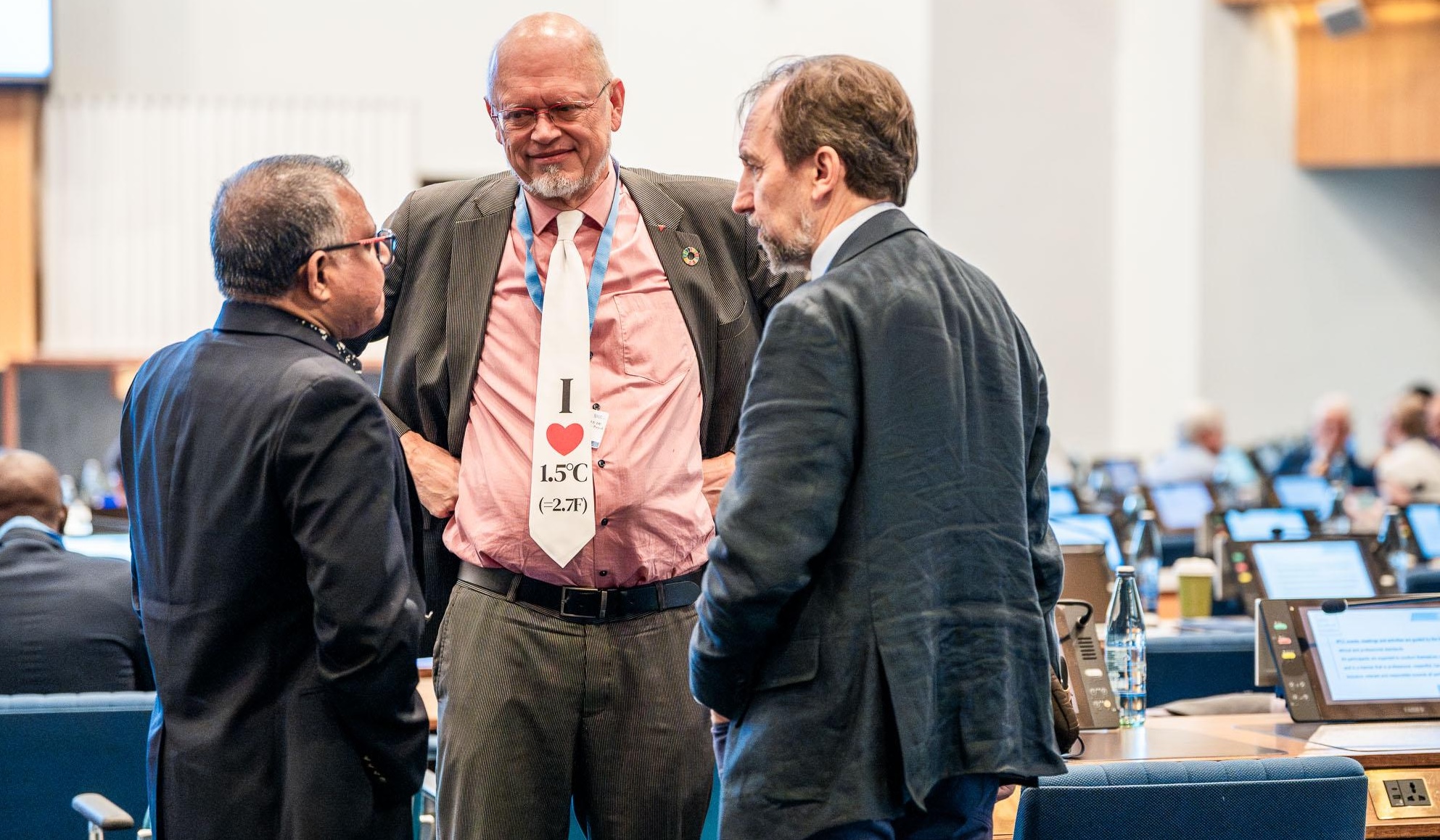
Inclusivity proposal stalled
In a bid to unlock a solution for the AR7 timeline, countries discussed ways to improve the inclusivity of the IPCC’s work. One option put on the table was for the IPCC to expand its funding for delegates from developing countries to attend some or all of its sessions from one to two participants, according to the ENB summary and a delegate speaking to Climate Home News.
That would increase the costs for the IPCC to complete AR7 by up to a quarter, according to an assessment shared by the secretariat. The panel’s budget is under severe strain and its officials have warned that, without additional voluntary contributions, it risks running out of money before it can deliver on this assessment cycle.
Climate Home News understands that some of the IPCC’s traditional donors – which mainly include European countries, Japan and Australia – indicated a willingness to support funding for an additional developing country participant. But without an agreement over the budget or the timeline for the reports, that option was ultimately not adopted.
‘Disappointed and worried’
The three reports are managed by working groups that collate and draw overall findings from the latest scientific studies and data on the physical effects of global warming around the world, how to adapt to it, and pathways for cutting planet-heating emissions in order to meet the temperature goals of the Paris Agreement.
Winston Chow, an urban climate professor at Singapore Management University who co-chairs Working Group II on adaptation, wrote in a LinkedIn post that he was “disappointed and worried” for the IPCC authors who have worked “extraordinarily hard” to assess the relevant climate science over the past two years.
He said he shared their concern that “the rigour, time and goodwill they’ve invested are now being put at risk by the Panel’s stalemate”.
As science comes under attack at UN talks, climate movement splits over how to respond
For Working Group II, a meeting for 250 experts writing that report is scheduled for January 2027, followed by the approval of a special report on cities and climate change in Singapore next March.
But because the IPCC’s budget has not been confirmed due to uncertainty about the AR7 schedule, travel support for those researchers is at risk, wrote Chow. “If they cannot participate, our assessments will lose vital expertise, perspectives and scientific breadth, and the collective effort of our authors will be undermined,” he warned.
Scientific work continues
Despite the political holdups, he – together with French climate scientist Robert Vautard, co-chair of Working Group 1 – agreed with IPCC head Skea who told the IPCC’s closing session on Friday: “The engine room of the IPCC is working, and it’s healthy.”
Vautard commented in a separate post on LinkedIn after it ended: “The boat is at full steam.” Working groups I and II are due to start revising the first drafts of their reports, while Working Group III on reducing emissions is finalising its first draft which will be out soon, he wrote.
“The most exciting two years of the cycle are ahead, for the authors. The momentum in the engine room is here and now. Trust the engine room!” he added.
The IPCC and some scientists report that progress has been made towards achieving an equitable balance of authors from the Global North and the Global South.
The group of researchers who signed the open letter on Monday noted that “inclusivity is at the heart of how we work”, with author teams bringing together experts from developed and developing countries with diverse backgrounds and at different stages of their careers.
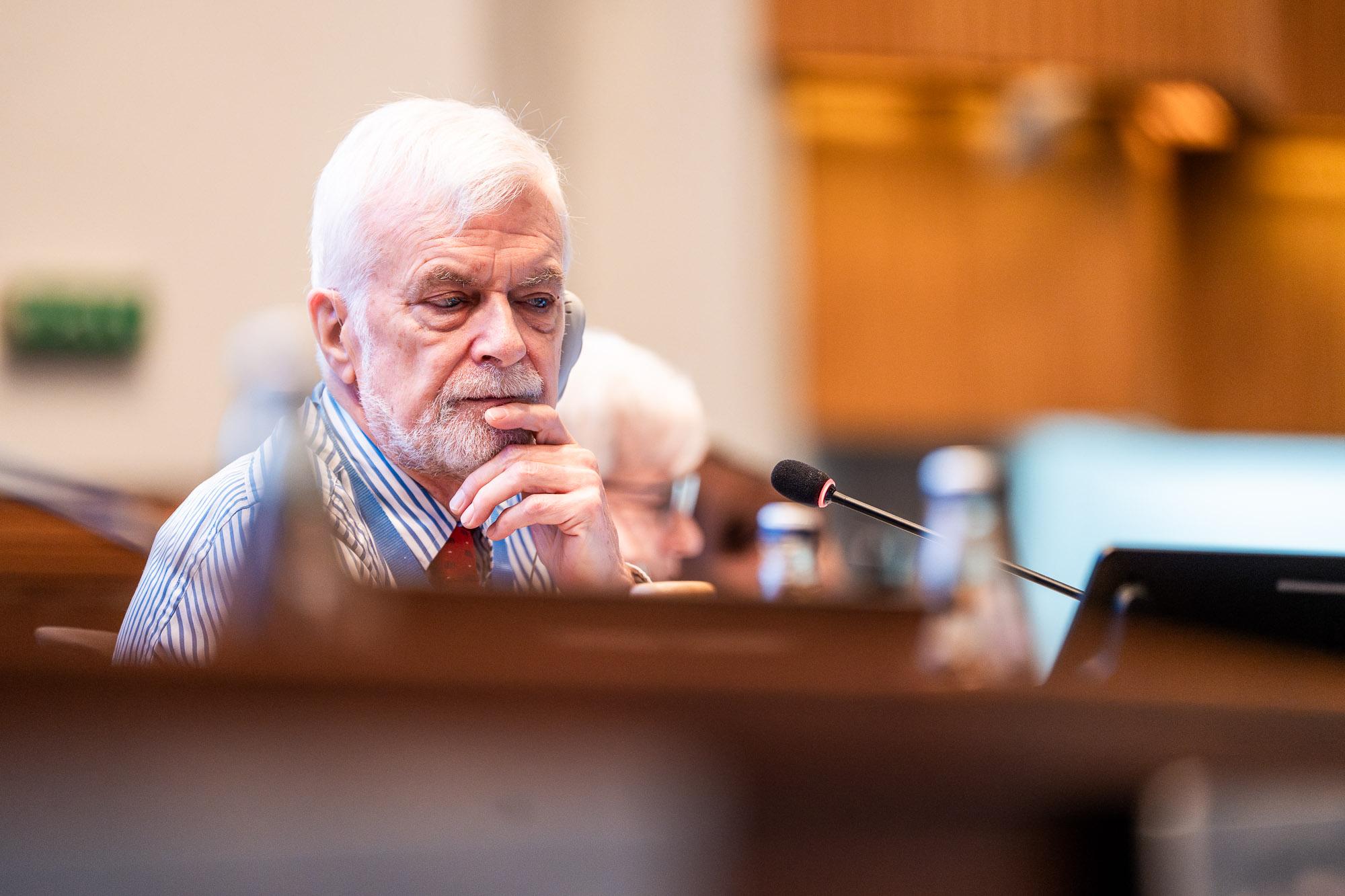
Plea to overcome political differences
The signatories include several scientists from some of the countries opposed to the alignment of all IPCC reports with the Global Stocktake.
“We are committed to an assessment in which the knowledge, experience and priorities of every region are fully reflected, a commitment we share with the leadership of the IPCC.
Equity is built into how our assessment is being drafted,” they added.
They appealed to governments that make up the IPCC “to overcome their political differences and work together as we do as a global scientific community, so that we can deliver the IPCC reports the world needs to hear”.
In a statement published on Monday, IPCC chair Skea said reaching consensus on the schedule for the reports is “vital”. He added that the assessments provide authoritative scientific evidence to inform national climate policies, strengthen adaptation and resilience and support access to climate finance, as well as helping communicate the scale of the climate crisis and the urgency of efforts to tackle it.
The post IPCC scientists vow to press on with climate reports despite political deadlock appeared first on Climate Home News.
IPCC scientists vow to press on with climate reports despite political deadlock
An Lambrechts is a biodiversity politics expert at Greenpeace International with extensive experience in biodiversity-related multilateral negotiations. She is the head of the Greenpeace delegation at the Convention on Biological Diversity (CBD) COP17 happening in Yerevan, Armenia.
In 2022, COP15 delivered the landmark Kunming-Montreal Global Biodiversity Framework to halt and reverse biodiversity loss by 2030. With COP17 starting in Yerevan, we are now halfway to the deadline, and according to the first Global Review of progress, countries are not on track to meet the biodiversity targets, and implementation must accelerate fast.
One of the main findings of the Global Review is that funding falls far short of the scale needed to halt and reverse nature loss. But the crisis facing the world’s biodiversity is not an absolute scarcity of capital – it is a profound public policy distortion.
The global economy currently spends roughly $30 destroying nature for every single dollar invested in its protection. According to a report from the Intergovernmental Science-Policy Platform on Biodiversity and Ecosystem Services, a staggering $2.4 trillion is spent in public subsidies for fossil fuels, agriculture and water use, while global investment in biodiversity conservation and restoration stands at a mere $220 billion.
Countries urged to ramp up “insufficient” nature policies at COP17
Yet, discussions about how to close the biodiversity finance gap continue to claim that salvation lies in mobilising private capital, scaling offsets and “derisking” investments in nature. This is a fundamental misunderstanding of both the nature of ecological stewardship and of the global financial architecture.
Biodiversity conservation is not a speculative investment portfolio – it is the foundation of human survival. The health of our planet is a non-monetisable, non-excludable public good. Expecting profit-seeking private capital to protect nature perpetuates the structural drivers of ecosystem destruction in the first place.
But if private market mechanisms cannot save biodiversity, where will the necessary public resources come from?
Money going to the wrong places
The answer lies in recovering the vast public wealth currently drained by cross-border tax abuse, financial secrecy and corporate impunity. Finance and environment ministers meeting in Yerevan must give a strong political signal that, to avert ecological breakdown, countries need to take swift action to reform global tax rules, eliminate harmful public subsidies and cancel unsustainable sovereign debts for the public revenues to end up where they belong.
Extractive sectors such as industrial agriculture, fishing, timber and mining continue business-as-usual, often heavily subsidised by public treasuries, while voluntary carbon and biodiversity offset markets pose a serious risk to nature conservation. Offset schemes have delivered only a negligible fraction of the funding needed to preserve ecosystems, allowing industries to continue with their destructive business-as-usual practices.
-
Global deforestation slowed in 2025 but Brazil’s election could undo “fragile” gains
Countries remain 70% off track to meet a goal to end deforestation by 2030, as progress in Latin America offset by failures in Africa
