

Editor’s Note: This is a sponsored posting.
Curbside food scrap collection has spread fast. BioCycle’s nationwide survey counted 14.9 million U.S. households with access to food waste collection in 2023, up 49 percent from 10 million two years earlier.
Getting those bins used is the harder part. Reported participation runs from near-universal in a handful of cities to under 30 percent in others. That gap matters. Food waste is about 24 percent of what U.S. municipal landfills take in, and the EPA estimates it accounts for 58 percent of the fugitive methane those landfills release. An unused green bin isn’t a neutral outcome.
Quick definition first, since the name varies. The green bin is the curbside cart for household organics: food scraps, plus yard trimmings and food-soiled paper depending on your program. It’s collected separately from trash and recycling and sent to a composting or anaerobic digestion facility instead of a landfill. It isn’t green everywhere. Toronto runs a Green Bin program, New York City uses brown ones, and elsewhere it’s the organics cart, the compost cart, or the food scraps cart. What matters is where the material ends up, not the color.
Why People Quit the Green Bin
Households opt out for a long list of reasons: confusion about what’s accepted, forgetting collection day, plain inconvenience. I’d add one that gets less attention because it’s unglamorous. The bin gets disgusting, cleaning it turns into a recurring chore, and eventually the chore wins.
I’ll be straight that this is a hypothesis, not a documented finding. I haven’t found a study that isolates bin cleaning as a reason people quit. What I’ve got is the pattern I hear from customers constantly. But there’s evidence that making the job less unpleasant moves the numbers.
In 2023–24, Essex County Council in the UK ran a year-long Food Recycling Project. It delivered a package to more than 375,000 households: a sticker for the general waste bin, an information leaflet, and a free roll of compostable liners. Food recycling tonnage rose an average of 21 percent against a control group in the first three months after delivery, more than double the council’s 10 percent target.
The liners were one piece of that package, running alongside a media campaign, so the case study can’t tell us how much of the gain they drove on their own. What it does show is that handing people a tool to keep the mess contained belongs in the mix alongside better signage. It also shows the limit. Free liner giveaways are a subsidy most households will never get.
So the question isn’t whether a cleaner, contained bin helps people stick with the program. Plainly it does. The question is how you get there when nobody’s handing out free bags. That’s the gap BagEZ fills.
Doing More With Less
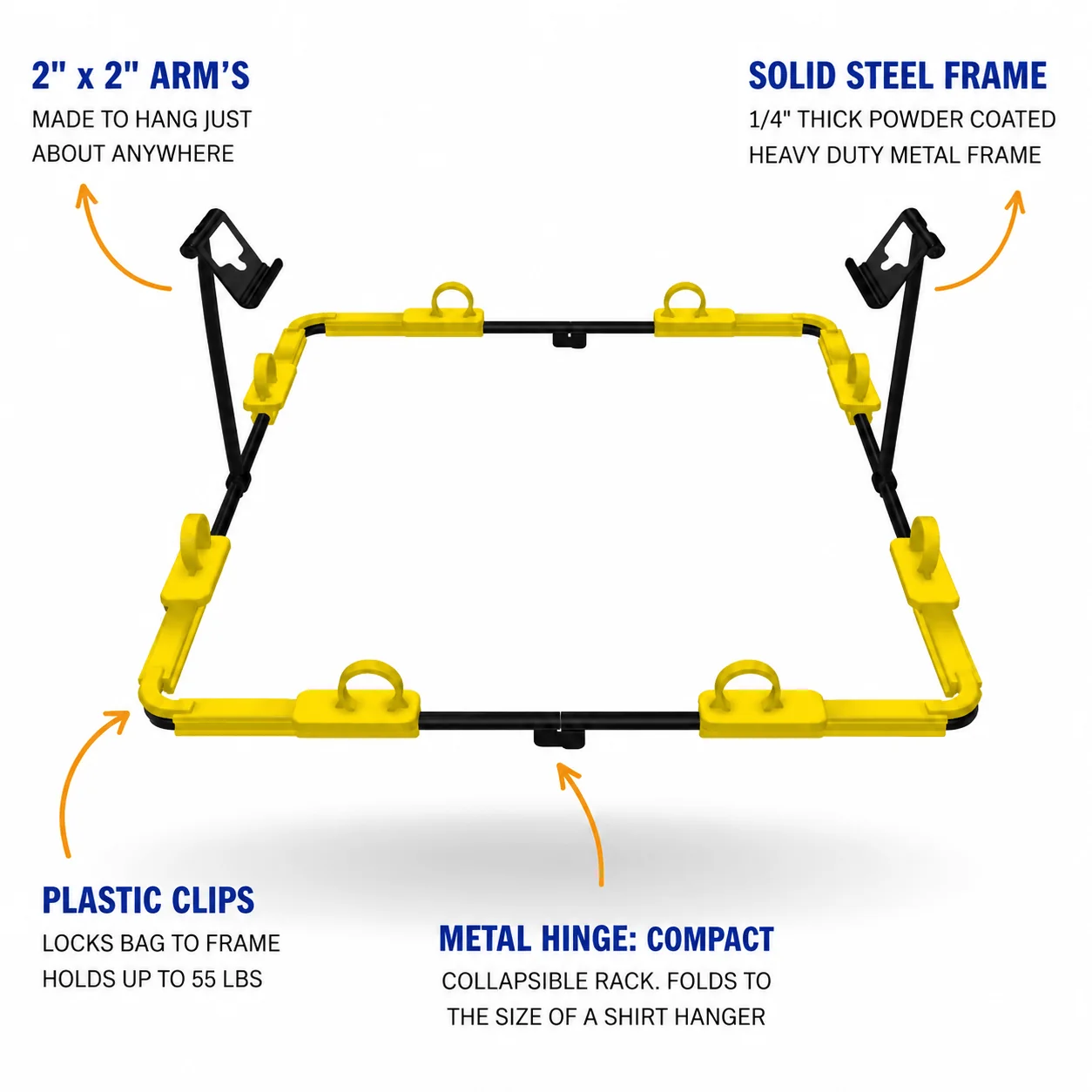
BagEZ holds a standard bag open inside the green bin, 13 gallons (49 liters) and up. Food scraps go into the bag, not against the cart. Everything stays contained, and the bin stays clean and dry. That’s aimed straight at the reason people give up: the cleaning.
It’s a folding steel rack with clips that lock the bag to the frame. The handles grip the bin’s rim and hold the bag open and suspended. On collection day you pull off the clips, seal the bag, and lift out the frame before setting the bin at the curb.
The size is up to you, and the data says most kitchens don’t need much. The MITRE-Gallup survey, the largest U.S. household food-waste study to date, surveyed nearly 10,000 households and put the average household’s food waste at 6.2 cups a week, or about 8.8 cups once you count peels, cores, and bones. That’s a bit over half a gallon. Even a household running well above average isn’t close to filling a big curbside cart with food scraps. So size the bag to your kitchen, not your bin. A 13-gallon bag is plenty for most households, it costs less than lining a full cart, and a right-sized bag is also what makes the odor tricks below work. Size up if your program takes yard trimmings too, or if collection runs every other week.
One caveat before you change anything: check what your program accepts. Liner rules vary a lot across North America. Some programs take certified compostable bags only, some want paper or newspaper, some want food scraps loose in the cart. A bag your hauler doesn’t accept can get your cart skipped and the whole load flagged for contamination. Earth911’s recycling search is a good place to start: earth911.com/recycling-search
After collection, a wipe with vinegar and water handles anything that’s built up. On a bin that’s stayed dry, that’s a seasonal job, not a weekly one, and you never have to drag out the hose.
The Green Bin Yuck Factor
Ever notice the puddle in the bottom of your countertop organics caddy after you pull the bag? That’s mostly moisture coming out of the food itself. Produce is largely water, and as it breaks down that water gets released.
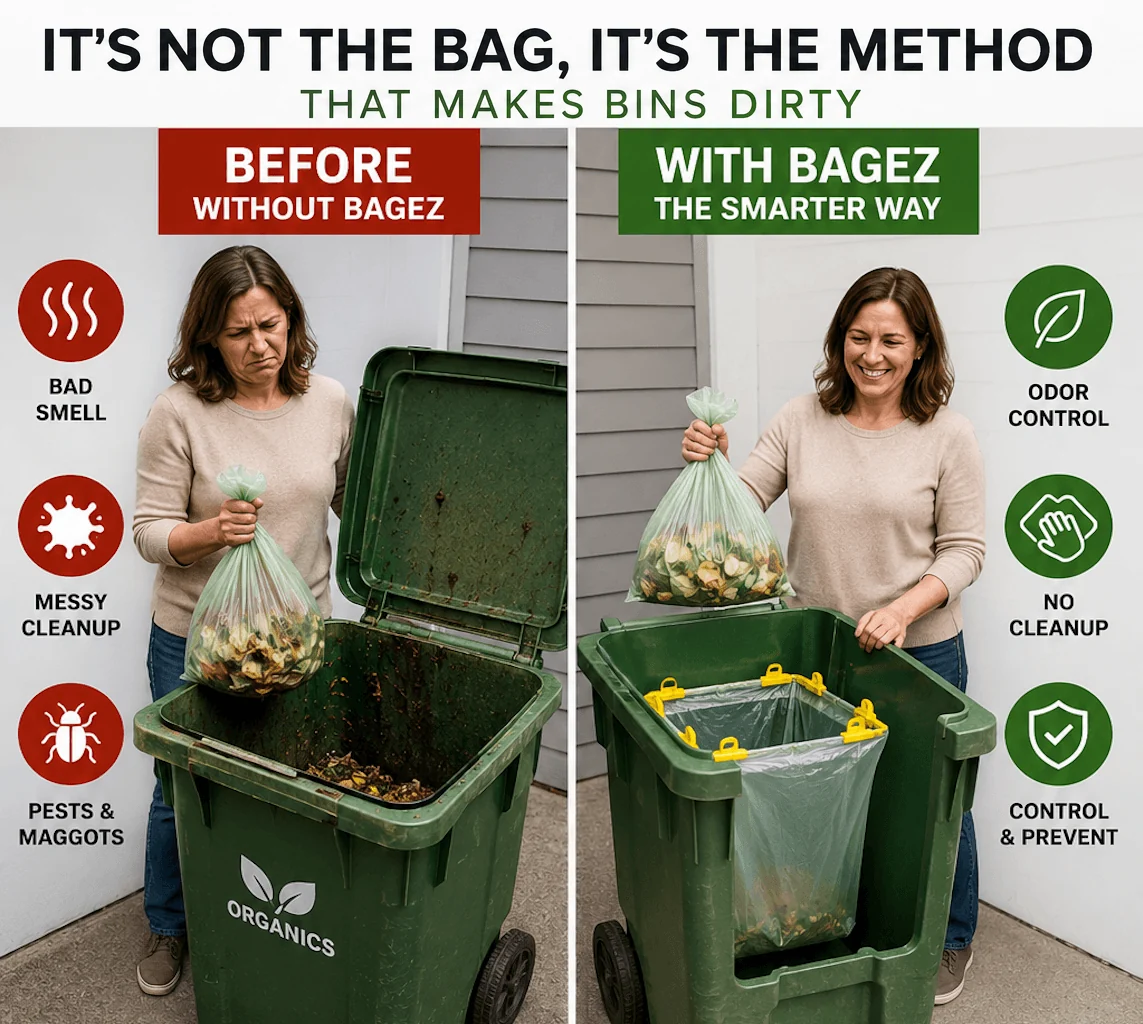
The same thing happens in the curbside bin, at a bigger scale. Bags of scraps keep releasing moisture as they sit, and when a bag rests against the bottom and sides of the bin, that liquid builds up into the sticky residue that smells and makes the bin dirty.
BagEZ works differently because the bag never touches the bin. The frame holds it up and lets air move all the way around: underneath, the sides, everywhere. Condensation on the outside of the bag has nowhere to pool. It evaporates instead of collecting at the bottom, and the walls stay dry.
A right-sized bag makes the odor tricks work better, too. A sprinkle of baking soda in the small contained space around the bag does more than the same sprinkle spread thin across a big empty floor. Less smell, fewer flies. Fewer flies, no maggots.
Some people use food-grade diatomaceous earth against fly larvae. DE works by drying insects out, and it stops working the moment it gets wet, so a dry bin is a precondition for it doing anything at all. Same story as the baking soda: it only earns its keep in a dry, contained gap.
Two more that help, cheap. A few sheets of newspaper under the bag catch drips if a bag ever fails. And a cloth sachet of peppermint and cloves tied to the outside of the bin throws off raccoons and rodents, which hunt almost entirely by smell. A bin that doesn’t smell like food stops being worth their trouble.
Why It Works
The infrastructure is already there. The bins are at the curb, the trucks run, and the environmental case, going by the numbers up top, isn’t in question. What’s been missing is a cheap, fast way to keep the bin clean enough that people don’t quietly give up on it.
A reusable steel frame that holds a bag open sounds too simple to matter. That’s sort of the point. The bin stays clean, the habit stays easy, and food scraps end up where they’re meant to.
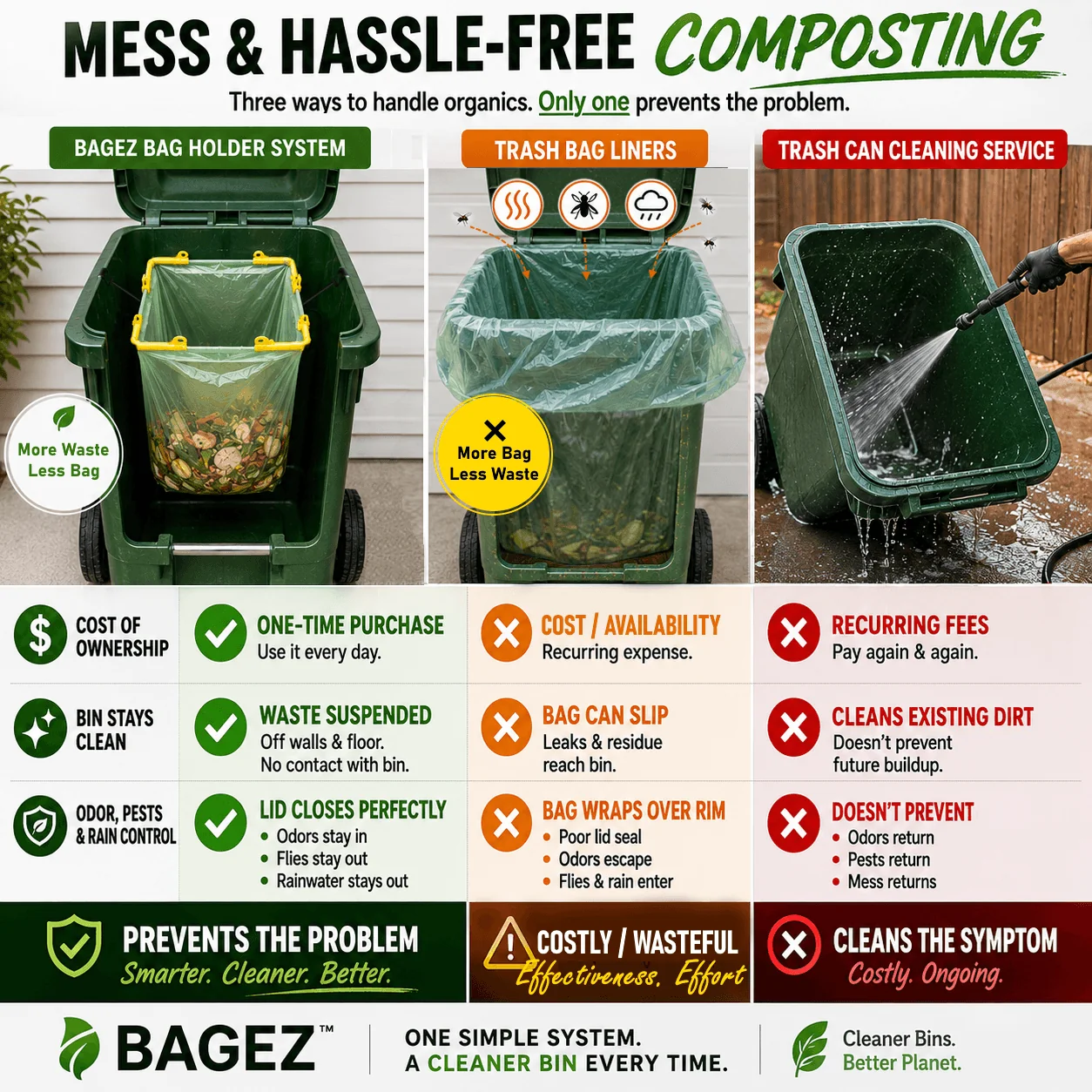
Set it next to the alternatives and the difference is in how each one works. Bin cleaning services deal with the problem after it happens, on a schedule, for a recurring fee. Full-size liners cost money every week and are sized to the bin, not to what you actually throw out. A frame is a one-time buy that works with the bag size your household already uses.
A green bin program only works if people keep using it, and people keep using what doesn’t gross them out. That’s the hinge the whole thing turns on. Take away the wet mess on the walls and most of the reasons to quit go with it: nothing pooling at the bottom, nothing to hose out, no smell pulling animals across the yard. The bin stays clean on its own, week after week, with a bag you were going to buy anyway.
Size it to your kitchen instead of your bin, clip it to the frame, and the green bin stops being the chore you avoid. Find it at bagez.com.
About the Author
This sponsored article was written by Sean Rana, the founder of BagEZ, a Canadian company behind the steel hanging bag frame that keeps garbage and green bins clean without special liners or ongoing costs, and works for waste and storage on the go.
The post Guest Idea: Green Bins Are Spreading Faster Than the Habit of Using Them appeared first on Earth911.
https://earth911.com/how-to-recycle/guest-idea-green-bins-are-spreading-faster-than-the-habit-of-using-them/


There’s something undeniably special about wearing uniquely handcrafted, fair trade jewelry that you can know was made slowly and thoughtfully with care. Equally special is wearing an elevated set of jewelry crafted with recycled materials and sustainable processes.
Whether you’re looking for an investment piece or more affordable pieces, there are options for any budget on this list. The aesthetics of these fair trade and sustainable jewelry brands also vary, so you’ll also be able to discover an ethical brand that matches your unique style.
What is Fair Trade Jewelry?
Fair trade can both be a general term used to describe a brand’s sourcing practices — like direct relationships with artisan cooperatives, wages above local standard rates, and safe working conditions — or a third-party “Fair Trade” verification through an organization like Fair Trade Federation, Fair Trade USA, or World Fair Trade Organization. When a brand doesn’t have a certification, we verify a brand’s practices by their own published information.
In the cases where brands do go the extra mile and get a third-party verification for their fair trade practices, we’ve noted it directly in their entries.
Note that this guide includes affiliate links and partners. As always, we only feature brands that meet high standards for responsibility we love, and that we think you’ll love too!
2. Ana Luisa
Best for: affordable everyday jewelry
Conscious Qualities: Recycled Gold, Lab-Grown Diamonds, Small-Batch Production, Direct-to-Consumer
Ana Luisa creates stunning, elegant jewelry from responsibly-sourced materials including 100% recycled gold and lab-grown diamonds. The sustainable jewelry brand also produces in small batches to minimize waste.
By using a direct-to-consumer model, Ana Luisa is able to provide luxury, high-quality jewelry at accessible prices.

3. Monica Vinader
Best for: recycled demi-fine jewelry
Conscious Qualities: Woman-Founded, Recycled Silver & Gold Vermeil, Traceable Gemstones, Lab-Grown & Conflict-Free Diamonds, Supply Chain Transparency
Price Range: $85 (studs) – $2,495 (diamond ring)
British jewelry brand Monica Vinader was one of the first brands to meet the gap between fashion jewelry and fine jewelry with their “demi fine” jewelry. The women-founded brand has necklaces, earrings, bracelets, and rings crafted from 100% recycled sterling silver and gold vermeil, fully traceable gemstones, and lab-grown or conflict-free diamonds. Monica Vinader also launched Product Passports, taking an active effort towards full supply chain transparency.

4. WorldFinds
Best for: unique statement jewelry with a story
Conscious Qualities: Fair Trade Verified, Upcycled Materials, Artisan-Made
WorldFinds provides sustainable employment and just wages for hundreds of women artisans in India and Bali. These artisans handcraft both sleek metal fair trade jewelry and unique recycled Kantha pieces. WorldFinds is Verified by the Fair Trade Federation, which assesses members against fair trade principles including fair wages, safe conditions, and transparent supply chains.
Plus WorldFinds’ signature Kantha jewelry is made from upcycling materials: wood scraps from a furniture factory and locally sourced Kantha fabric remnants.

5. Astor + Orion
Best for: drop earrings and charm necklaces with symbolism
Conscious Qualities: Certified Ethical Factory, Recycled Materials, Designed for Recyclability, Repair Program
Ethical jewelry brand Astor + Orion sources their jewelry from a factory with multiple certifications ensuring worker safety, fair production practices, and responsible environmental management. Astor + Orion’s stunning jewelry is made from recycled materials and designed in a way to make it easily recyclable! Their pieces also come with a quality assurance — the brand will repair any piece within 6 months of purchase.

6. Laura Elizabeth
Best for: non-toxic jewelry in organic shapes
Conscious Qualities: Locally Sourced Recycled Metals, Woman-Owned, Fair Wages, Safe Working Conditions
Price Range: $45 – $330
Crafted from recycled metals sourced locally in LA, Laura Elizabeth creates stand-out sustainable jewelry. All of the brand’s jewelry is sourced ethically from a small, woman-owned studio in Los Angeles that ensures reasonable working hours (35 hr/week), fair wages, and safe working conditions (such as proper ventilation). Check out more on Laura Elizabeth in this post!
The jewelry is also non-toxic, free of cadmium or lead.

7. Ten Thousand Villages
Best for: giftable fair trade jewelry
Conscious Qualities: Fair Trade Production, Artisan-Made
Price Range: $6 – $175
Founded in 1946, Ten Thousand Villages is one of the fair trade pioneers and a founding member of the World Fair Trade Organization (WFTO), the global network that verifies fair trade practices across its member organizations.
They’ve developed relationships with artisans around the world, providing valuable economic opportunities for thousands of makers in 30 countries around the world. Their marketplace has handmade necklaces, earrings, bracelets, and rings, along with a variety of other fair trade goods.
8. Edge of Ember
Best for: gemstone jewelry
Conscious Qualities: Recycled Gold & Silver, Artisan-Made, Ethical Production
Price Range: $49 (ear cuff) – $2,730 (diamond tennis bracelet)
Edge of Ember’s timeless jewelry is responsibly crafted by makers working in artisan groups and small-scale factories. Their delicate necklaces, bracelets, rings, and other pieces are crafted by skilled artisans in India, Hong Kong, Germany, and Thailand. The brand carries out independent social audits to ensure ethical working conditions and environmental responsibility.
Edge of Ember has a wide selection of recycled gold and silver rings, bracelets, and necklaces adorned with stunning gemstones, including many birthstone jewelry options perfect for gifting.

9. Aurate
Best for: ethical diamond fine jewelry
Conscious Qualities: 100% Recycled Gold, Lab-Grown & Conflict-Free Diamonds, Vintage Collection
Price Range: $18 (stainless steel chain) – $19,000 (diamond tennis necklace)
Responsibly-sourced quality jewelry — that’s Aurate’s promise. The jewelry brand’s sleek, timeless pieces are thoughtfully made by seventh-generation craftspeople using 100% recycled gold and lab-grown or conflict-free diamonds.
Aurate also has a curated collection of vintage fine jewelry from cocktail watches to signet rings up to 50% off.

10. SOKO
Best for: modern, minimalist artisan-made jewelry
Conscious Qualities: Above-Market Artisan Wages, Black-Owned
Price Range: $78 – $298
SOKO is an innovative Black-owned ethical jewelry brand using mobile tools to bridge the barriers for artisan entrepreneurs in Kenya. In partnership with SOKO, independent artisans can operate a “virtual factory”, earning 5x more than an average artisan workshop in their local areas.
The jewelry is made with 24K gold or silver-plated brass — an affordable metal that also happens to consist of 90% recycled content on average. Other materials include reclaimed horn and bone, locally-sourced teak wood offcuts, and ceramic beads made by a fair trade women’s collective in Kenya.

10. Raven + Lily
Best for: affordable artisan jewelry
Conscious Qualities: Fair Trade Verified, Artisan-Made, Women-Led
Price Range: $40 – $240
Raven + Lily is an ethical fashion and jewelry brand verified Fair Trade by the Fair Trade Federation. The women-led brand partners with artisan women around the world who use natural materials to craft both classic, elegant pieces and statement jewelry.

11. NAKIIT
Best for: one-of-a-kind, solo-handcrafted pieces
Conscious Qualities: Made-to-Order, Recycled Silver & Gold, Zero-Waste Scrap Recycling
Price Range: $21 – $485
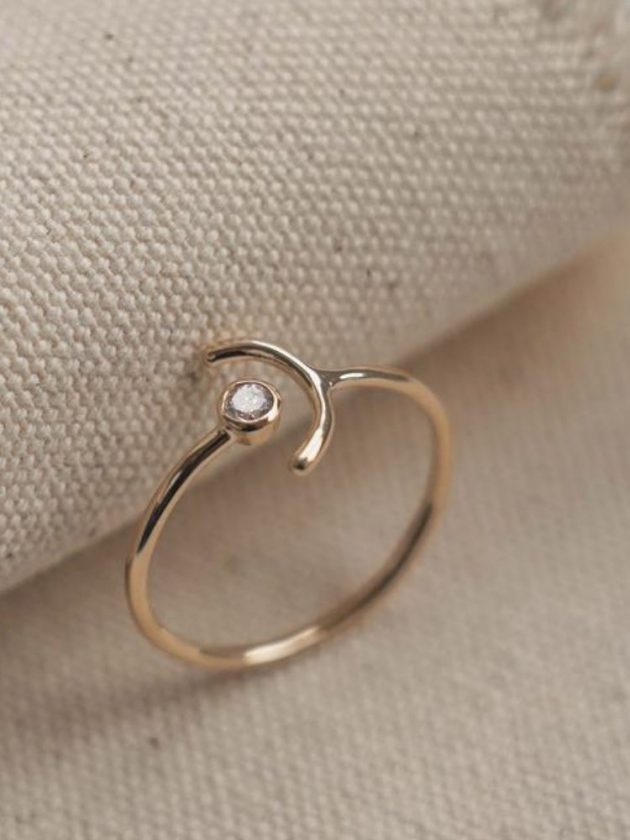
As a small, slow-minded jewelry brand, NAKIIT’s founder + owner handcrafts each piece with intention. In fact, every piece of jewelry the brand sells is made by the founder herself!
Nearly all of NAKIIT’s ethically-made jewelry is either made-to-order or one-of-a-kind, ensuring a minimal ecological impact and the highest attention to quality.
As if we could love this brand even more, NAKIIT also sources recycled sterling silver and gold, plus recycles any remaining metal scraps or dust after production.
You May Also Want to Check Out:
Best Fair Trade Fashion Brands With Style and Heart
Affordable Ethical Fashion Brands
Consciously Curated Marketplaces for One-Stop Ethical Shopping
The post 11 Best Fair Trade and Sustainable Jewelry Brands That Shine appeared first on Conscious Life & Style.
11 Best Fair Trade and Sustainable Jewelry Brands That Shine
It’s time to leave fast fashion in the dust — with one-of-a-kind designs, quality fabrics, and the assurance your dollars are supporting a more responsible fashion industry, these slow fashion brands are sure to win you over.
Before we go any further, though, I think we need to clarify what exactly slow fashion is…
What Do I Mean By “Slow Fashion?”
Slow fashion is about being more mindful and thoughtful about how clothing (and other fashion items) are being produced, how they’re being purchased, and how they’re being used/worn.
Instead of mass-producing trend-driven garments cheaply and quickly, slow fashion production is about creating a piece to last by using high-quality materials, transitional designs (i.e. they migth be contemporary but they’re not super “trendy”), and durable construction.
For individuals, slow fashion purchasing habits means buying less, but better. A slow fashion mindset is all about choosing well — it’s about picking well-made items that are built to last and also selecting pieces that fit your lifestyle and body well, to ensure they’ll not only be durable but will actually be useful for years to come.
Adopting slow fashion in