The post Ghost cars! The scariest pollution loophole you have never heard of appeared first on Greenpeace Australia Pacific.
https://www.greenpeace.org.au/blog/ghost-cars/

Özgür Özel is the leader of Turkey’s main opposition “New Party” and a member of parliament from Manisa.
The world is running out of time to deliver on the Paris Agreement. The UN Environment Programme’s latest Emissions Gap Report concludes that the chance of keeping warming below 1.5C without overshooting it is gone. Even if every country delivers its current national pledges, the planet is heading for about 2.6C of warming this century.
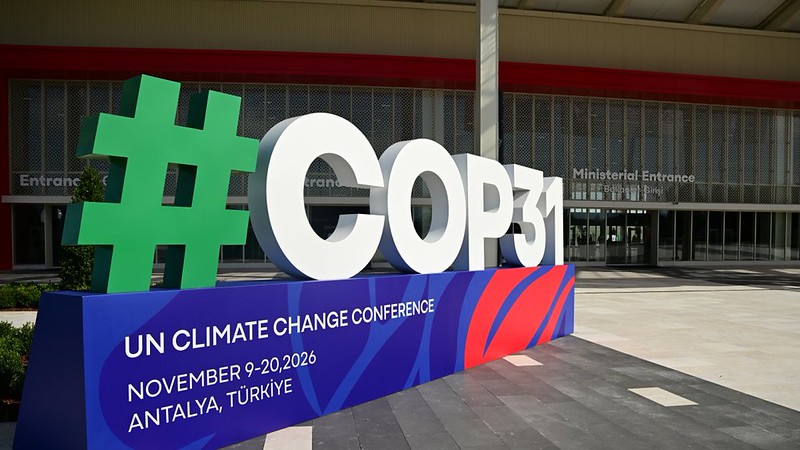
This is the backdrop as governments and their leaders gather in Antalya for COP31, ten years after the Paris Agreement took effect. Turkey lies in the Mediterranean, one of the regions most exposed to climate change, and hosting the summit is a real opportunity.
It is also a responsibility, and that responsibility begins at home. The world does not lack targets. What it has lacked – almost everywhere – is delivery. If Antalya is remembered for anything, it should be for shifting the focus from what countries promise to what they actually do.
For many people in Turkey, the climate crisis is already part of daily life. In 2021, forests in Manavgat, a district of Antalya, burned for more than a week. Last year, wildfires forced more than 50,000 people from their homes around the western coast city of Izmir. This October, Istanbul had its heaviest rainfall in more than 80 years, with the floods killing at least eight people.
COP31 Briefing: What to expect from the Antalya climate summit?
Electrification, the fossil fuel transition, adaptation to rising impacts, climate science and trade are key themes as governments gather for COP31 in TürkiyeBrazil’s fossil fuel roadmap sketches out first global timetable
The COP30 presidency’s voluntary timetable asks countries to plan first, then build up clean energy – only turning to oil and gas supplies from 2031


Measurable outcomes
Two weeks of climate negotiations cannot deliver everything that is needed to resolve the crisis, but COP31 can push for a few things that can be measured. The first is a voluntary fossil-fuel transition roadmap, with national milestones for 2030 and 2035 reported in the same format every year.
The second is a stronger commitment to protecting forests, with progress tracked over time. The third is yearly reporting on progress towards the agreed $1.3 trillion a year in climate finance by 2035, backed by a financial roadmap.
On adaptation, the indicators agreed in Belém should become funded national plans. By COP32, we should be able to see how many countries have an adaptation plan and the financial commitment behind each one.
Regional resilience partnership
The summit also has an unusual shape. Turkey hosts, Australia leads the negotiations, and the Pacific island nations play a central role. Climate diplomacy now sits at the centre of energy security, trade and development, and Turkey, which bridges developed and developing economies, is well placed to help build consensus between them. The lasting value of its presidency will depend on the practical partnerships it leaves behind.
One such partnership could connect two very different regions. On a map, the Mediterranean and the Pacific seem to have little in common, but their problems look similar: eroding coastlines, salt creeping into aquifers, failing harvests, fishing towns with fewer fish.
Turkey and Australia could launch a Mediterranean–Pacific Climate Resilience Partnership, linking coastal cities, scientists, institutions including development banks and island governments. It does not need a new bureaucracy. It can start with a few projects: shared satellite data and early-warning systems, better coastal flood defences, and trials of water-saving farming in the communities most at risk. What matters is visible results on the ground, not a ceremony.
Turkey’s track record
Turkey does have progress to point to. It has committed to net zero by 2053, and its solar and wind capacity has grown fast. The sunshine, the wind and the industrial base are all there. But the long-term direction of the energy mix is still unclear.
Turkey also signed the Glasgow Leaders’ Declaration on Forests and Land Use at COP26, pledging to halt and reverse forest loss by 2030. With four years left, COP31 is a chance to show how that promise will be kept.
COP30 roadmap says faster use of existing tools can halt forest loss by 2030
And while the summit celebrates zero waste, Turkey took in more than half a million tons of European plastic waste last year, much of it bound for Mersin and Adana. On November 21, the day after COP31 closes, an EU ban on plastic-waste exports to non-OECD countries takes effect. Turkey, as an OECD member, is exempt. That should worry us more than it seems to.
None of this will carry much weight unless Turkey’s own record holds up. A leadership at odds with its own environment and its own citizens will struggle to inspire global confidence in its commitment to protecting the planet.
Threat to local climate action
Cities are where adaptation happens. Water, flood protection, waste and urban planning fall largely to municipalities. That is why the imprisonment and removal of more than 50 elected opposition mayors, including the mayor of Istanbul, matter for environment and climate policy, as well as for democracy.
When local leadership is disrupted, investment plans stall and work on flood defences and water supplies loses continuity. As a result, local governments are left paralysed.
Comment: From Australia to Chile, our cities are driving a green investment boom
Inconsistent policymaking when it comes to the environment and climate deepens the problem in Turkey as it does in other countries. A few practical steps would make a real difference.
Set out a gradual, well-planned energy transition. Stop new construction in streambeds and drinking-water basins and put zoning maps online. Inspect every imported plastic shipment and cap total imports. Hold public hearings on environmental impact assessments before permits are issued, not after. And publish an independently audited climate scorecard each year covering emissions, renewables capacity, forest loss and adaptation spending.
This could set an example beyond Turkey. Many emerging economies are trying to cut emissions while protecting jobs and keeping industry competitive. Digital tools and artificial intelligence are already available to help forecast wildfire risk, reduce grid losses and track water use.
With the 1.5C limit now set to be breached, Antalya’s success will be measured by the greenhouse gases avoided, the investments delivered and the forests still standing in the years that follow. It is our responsibility to watch closely and see whether those commitments are delivered, transparently and in line with international standards.
The post Turkey must make COP31 a turning point for global climate action appeared first on Climate Home News.
Turkey must make COP31 a turning point for global climate action
As oil companies pull out of Argentina’s oil heartland in the Patagonian province of Chubut, workers and communities are struggling to secure their future, with little say in the decisions being made about it.
“The impacted are fragmented, the exploiters organised,” said José Glinski, a member of parliament from the province.
In Comodoro Rivadavia, where Argentina’s oil industry began in 1907, those words carry particular weight. For nearly 120 years, oil has shaped the city’s economy and that of Chubut province, which helped power Argentina for decades. Now the companies that built their fortunes there are shifting their investments elsewhere, threatening an economy that has depended on oil for generations.
Argentina’s national oil company, YPF, whose roots lie in Comodoro Rivadavia, is selling off its mature oilfields in the region to concentrate investment in the shale oil and gas reserves of Vaca Muerta, further north. According to Glinski, around 10,000 direct jobs have gone in Chubut, and unemployment has climbed from 2% to 10% in a single year.
“And this while all remaining companies have kept extremely high levels of profit,” he said.
COP31 Briefing: What to expect from the Antalya climate summit?
Glinski blames government policy as much as the companies. “Companies are choosing to leave and the government lets them do so, while weakening tax and environmental regulations, leaving the city without the necessary income to organise the transition.”
Nobody has yet worked out who will clean up the old fields and more than 6,000 wells, look after the workers who remain, or pay for whatever comes next.
Comodoro Rivadavia is not alone. From Mejillones and Tocopilla in Chile to La Guajira in Colombia and Appalachia in the United States, from Scotland to Mpumalanga in South Africa and East Kalimantan in Indonesia, places built around fossil fuels for generations face some version of the same problem. As investment moves elsewhere, plans to protect workers, support communities and repair damaged land often lag far behind, if they exist at all.
Building an economy beyond fossil fuels
In Comodoro, as locals call the city, the community has not been passively waiting for oil to run out.
“We have looked into multiple alternatives for the territory, including building on geothermal capacity, an agricultural programme that could reinforce food security and focus on cultures that are not too water dependent, and exploring also aquaculture built on local species,” explained Ruben Zárate, who heads Comodoro Conocimiento, a public agency created by the municipality to develop economic opportunities. “The only alternative is economic diversification.”
But having ideas is one thing. Finding the money and securing the political support to put them into practice is another. In many countries, decisions that shape a region’s economy are made in the capital or in company boardrooms, and local authorities have little say, and few resources, when a major employer pulls out.
Glinski points to deals struck at the national level that leave communities without a meaningful say in decisions affecting their future.
“Some of the barriers relate to the absence of regulation of private actors which have negotiated conditions at the national level that prevent provinces or territories from capturing benefits that could be useful to fund the transition,” he said. “Comodoro had no voice in these deals.”
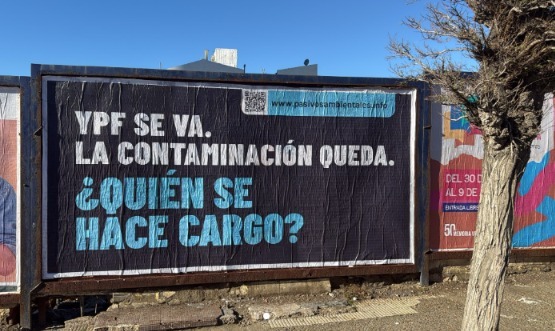
One example is Argentina’s Large Investment Incentive Regime, known as RIGI, which offers substantial tax benefits and regulatory guarantees to major investors. Argentina’s Fundación Ambiente y Recursos Naturales (FARN) has warned that this regime could also give large projects preferential access to water and energy at the expense of local communities and businesses, making it harder for regions to diversify their economies.
At root, it’s a question of power: who controls the money and the decisions, and whether the people who kept these industries running for generations have any control over what comes next.
“Comodoro, like most territories that developed around fossil fuels, is heavily dependent. Everyone knew the oil business would end, but none planned for it,” said Antonella Risso, a climate expert and community member. “Comodoro deserves a bright future. Its people have the capacity to chart a future for its next hundred years – a real Just Transition”.
What COP31 could do
Last year in Belém, governments agreed to develop a Just Transition Mechanism. At COP31 in Antalya they will negotiate how it should work, and civil society is pushing for a strong Belém-Antalya Mechanism (BAM) that can help channel resources for action on the ground.
Camila Mercure, a climate policy officer with FARN and a coordinator of CAN’s Just Transition working group, said, “For a city like Comodoro Rivadavia, the BAM could mean support to develop diversification plans, assess viable alternatives, and access public, grant-based finance to put them into practice.”
“Workers and communities must have a meaningful role in shaping these plans, building on local knowledge and priorities. The aim should be to create decent livelihoods beyond fossil fuels and avoid alternatives that reproduce the same economic dependence, inequalities and environmental harm,” she said.
Why COP31 needs to start talking about just transition finance
The BAM could also put regions in touch with each other. Officials in Patagonia, northern Chile, Mpumalanga or East Kalimantan are wrestling with many of the same questions, and sharing what has worked would spare them from starting from scratch.
Then there are the companies. Fossil fuel producers should not be able to walk away from their workers, their environmental obligations and the towns that depended on them. The BAM could help regions share experiences and develop ways to hold companies accountable, ensuring they plan ahead and pay their fair share of the transition costs.
In Comodoro Rivadavia, the transition has already begun, without the community’s consent and with little support. COP31 is a chance to help places like it plan ahead, before the last company leaves rather than after.
The post When the oil companies leave, who pays? appeared first on Climate Home News.
https://www.climatechangenews.com/2026/11/05/when-the-oil-companies-leave-who-pays/
The centrepiece of every UN climate summit is for countries to negotiate the wording of a large number of legal agreements – and COP31 in the Turkish city of Antalya is no different.
These texts are hashed out behind closed doors in the “blue zone” at the COP, where diplomats from nearly 200 nations – not including the US – will be haggling over each individual verb.
Over the course of the two-week summit, negotiators will be trying to reach consensus on more than 100 separate agreements – but, first, they must agree which issues are on the agenda.
The complexity of this process can make it challenging to keep track of what countries are fighting about and how negotiations are progressing.
Carbon Brief’s real-time text tracker, below, offers a helping hand by decoding the agenda and keeping a searchable record of every document for each part of the negotiations.
The first column of the interactive tracker lists the topic of each agenda item, with further columns including dates, page counts and links to the original PDFs.
The table is searchable via the interactive text box and can be sorted using the arrow icons.
This year’s talks come with a twist: Turkey holds the presidency and is hosting COP31, but Australia is jointly running the show as “president of negotiations”.
The pair have already announced their intention to produce a “cover text” – an overarching political document summarising key negotiated outcomes, along with issues not on the official agenda.
This could include a recognition that warming is set to “overshoot” the 1.5C limit and the impacts this is already causing. It may also include potential solutions, such as the Turkish presidency’s “electrification” target, for 35% of global final energy to come from electricity by 2035.
While the summit is not seen as a banner year for the negotiations, falling half-way between two “global stocktakes” of progress, there are still plenty of major topics up for discussion.
These include efforts to finalise the “global goal on adaptation” and whether to continue a contested process on how to cut emissions, known as the “mitigation work programme”.
Negotiators will also be trying to agree on the details of a new “just transition mechanism”, also referred to as the “Belém-Antalya mechanism for global just transitions” (BAM).
While most of the items on the agenda are agreed in advance, parties can suggest late additions. These must be signed off before negotiations can begin, often resulting in an “agenda fight”.
COP30 agreed to put two new items on the agenda for future summits.
These are the provision of climate finance by developed countries, under Article 9.1 of the Paris Agreement, and making global “finance flows” consistent with the treaty, under Article 2.1c.
Ahead of COP31, the African group of nations filed a request to add climate-related trade tariffs to the agenda. COP30 had agreed to annual “dialogues” on this matter at the Bonn climate talks.
The African group also wants further items added, on tripling adaptation finance and on funding for the Green Climate Fund, a flagship UN body designed to support climate action.
Ahead of the opening of the summit, Carbon Brief’s text tracker counts 104 substantive items on the agenda, not including procedural matters, such as the election of COP officials.
The figure below illustrates the status of the COP31 negotiations overall, in a traffic-light format. Each agenda item is colour-coded according to its current status.
For topics shown in red, negotiators have not yet managed to put anything down on paper, perhaps because parties have fundamentally different views on how they should proceed.
For items in orange, negotiators are working on an “informal text”, which is an early draft setting out the views of different parties, but not yet expressed in formal legal language.
Once a draft legal agreement becomes available, topics will be colour-coded yellow. At this point, areas of remaining disagreement will be denoted in the text with [square brackets] and “options”.
As such, texts with many square brackets or options tend to be an indicator of a high level of disagreement between parties. For this reason, the tracker table above counts and displays the number of outstanding brackets and options in each document.
During the course of the summit, negotiators may work through many iterations of texts on each agenda item. These documents may include “bridging text”, designed to resolve differences of opinion and to find a “landing zone” that all groups can agree on.
Agreement is reached on a given topic once all brackets and options have been resolved, at which point the item will be coloured green in Carbon Brief’s traffic-light chart.
Where agreement cannot be reached, discussions may be subject to “rule 16”, meaning negotiations are postponed until the next session. These topics are colour-coded grey.
The figure below gives an at-a-glance overview of the status of the main topics up for negotiation.
As parties narrow down the options and brackets towards the end of each summit, they start to generate “clean” texts, which contain no areas of disagreement and can be converted into “draft decisions” that are ready for formal adoption at the closing plenary of the meeting.
Finally, at the closing plenary, each draft decision must be gavelled through by the COP president, signifying its formal adoption as a legal agreement and outcome of the summit.
This last step is usually a formality, but dramatic exceptions are possible.
During the closing plenary at COP29, the president of the meeting failed to adopt a deal relating to the “global stocktake” from 2023, which had called for “transitioning away” from fossil fuels.
Carbon Brief also ran text trackers for COP28, COP29 and COP30.
Words by Simon Evans. Tracker maintained by Ho Woo Nam.