In the wake of the recent flash flood that swept down from the Himalayas, Nepal is seeking immediate aid from a UN fund for climate loss and damage to help vulnerable families displaced by the disaster and rebuild destroyed schools and hospitals, the country’s foreign minister told Climate Home News.
“This is exactly the kind of climate-driven catastrophe the Fund was created to address,” Shisir Khanal said in an interview. He added that “stronger global solidarity and meaningful international support” are needed for countries like Nepal, which are facing increasingly severe climate-related disasters.
The floods were caused by a glacier collapsing and triggering a landslide that forced a torrent of water and debris to rush down the Bhote Koshi River valley, causing catastrophic impacts downstream. More than 1,300 people died and over 5,300 are still missing in the area.
Khanal described the disaster as a “Himalayan tsunami”, telling Climate Home News that early assessments suggest the roads, bridges, hydropower stations, highways and settlements it wiped out could require billions of dollars to rebuild. Reconstruction estimates by the government range between $2.5 billion and $5 billion.
The minister of foreign affairs said Nepal would not be asking the UN’s new Fund for Responding to Loss and Damage (FRLD) “to write a single check for this total amount”, explaining that the government is finalising a post-disaster assessment “to guide our broader international donor appeals”.
Nepal disaster seen as test case for fledgling fund
In reality, if Nepal does receive rapid support from the FRLD, it is likely to be a fraction of the total bill because the fund has a cap of $20 million per project and has little more than $350 million available to hand out in its initial phase.
So far its board has not approved any projects as it is still working out how to allocate its scarce resources, nor does it have a process in place to respond to sudden climate disasters such as glacial lake outburst floods or powerful storms.
On August 31, Nepal’s government sent a direct appeal for emergency grant funding to the FRLD, emphasising that “a prompt response would… demonstrate that the fund can translate international solidarity into timely support for vulnerable countries and communities when it is most urgently needed”.
A couple of days later, eight developing-country board members – later joined by those from small island states – signed a letter, seen by Climate Home News, asking the fund’s board to hold an extraordinary meeting to respond to Nepal’s request.
The FRLD said in a statement that the devastating impacts on the ground “underscore both the urgency and scale of need and reaffirm the fundamental purpose for which the FRLD was established”.
It added that it is “committed to approaching Nepal’s request with the urgency, compassion, and careful consideration that these difficult circumstances require, while respecting the Fund’s governing instrument and established decision-making processes”. As of Wednesday, Climate Home News understands that discussions were still ongoing.
Designing infrastructure for extreme shocks
Khanal pointed to “the unprecedented scale” of the huge flood which occurred within a matter of minutes and swept away river gauges meant to provide early warning in Rasuwa and Nuwakot, near the border with Tibet.
“You cannot easily ‘plan’ against a mountain collapsing,” he said. But the lesson, he added in written responses in English, is that “our historical baseline for infrastructure engineering is no longer sufficient”.
Building resilient infrastructure means that “hydropower projects, roads and early warning systems must be designed for extreme, unpredictable climate shocks”, he said. Another key element will be plans to better understand and protect ecosystems, he added.
-
As science comes under attack at UN talks, climate movement splits over how to respond
A rift over how IPCC messages are produced and turned into policy is creating tensions in the world’s most influential coalition of climate NGOs -
At regional summit, Pacific islands ask for COP31 support for clean energy and finance
Pacific nations want the annual climate conference to deliver funding for renewables and ocean protection, as the UN warns of devastating sea level rise


The minister noted that Nepal, India and China share a common, interconnected Himalayan ecosystem and all three countries are affected by the impacts of climate change in the Himalayan mountain chain.
“Therefore, our call is for the three countries to work together to strengthen preparedness, resilience and regional cooperation,” he said.
New research from consultancy Systemiq, released on Wednesday, finds that Himalayan glaciers are losing mass 65% faster than a decade ago, and that only around 20 of the Himalaya’s estimated 40,000 glaciers are currently monitored. India alone has 56 glacial lakes rated very high risk, it warns.

Early cross-border efforts on information-sharing
Since the same region of Nepal was hit by smaller-scale but still highly destructive flooding in 2024 and 2025, China and Nepal have stepped up efforts to cooperate in tackling glacier-related risks in the region.
In August 2025, Climate Home News reported that authorities in both countries had agreed to share cross-border information about the risks of glacial lake outburst floods across the Tibetan region, in a first step that could be expanded to the national level in an effort to reduce deaths and damage.
This May, a delegation from China’s Ministry of Water Resources and the Water Resources Department of the Xinjiang Autonomous Region held talks with Nepalese officials in charge of water and disaster management about establishing a joint disaster information mechanism.
Then in August, a team from the Institute of Mountain Hazards and Environment under the Chinese Academy of Sciences also visited Nepal for scientific research and exchange, sharing China’s experience in monitoring glacial lakes.
Nepal and China agree to cooperate on glacial lake flooding, as warming hikes threat
However, experts told Climate Home News that progress on putting in place concrete measures has been slow. Narendra Khanal, a professor in the department of geography at Tribhuvan University, blamed that partly on Nepal’s traditional administrative system and bureaucratic delays.
“We have to share information with them, and they have to share information with us,” he said. “In my understanding, the Chinese side is also facing difficulties in making this cooperation work.”
Mohan Bahadur Chand, a Himalayan glaciologist and assistant professor at Kathmandu University, said China has the technology and human resources to provide significant information to its neighbour downstream.
But, to make that work, “we have to build trust between the two countries”, which is currently lacking but could be developed, he said. “As scientists, we are already working with them personally. If we create a trusted environment, cooperation should not be difficult.”
Nepal lacks monitoring and warning technology
Experts said Nepal – one of the world’s least-developed countries – does not have the technology or resources to install the sophisticated monitoring and warning systems needed to protect its population from growing threats linked to accelerating glacier melt in the Himalayas.
A senior meteorologist at the Department of Hydrology and Meteorology, who did not want to be named, told Climate Home News that the government had not invested enough in rainfall and weather monitoring stations, especially above 3,500 metres, and therefore lacks reliable data about what is happening at high altitudes.
“The stations we have are operated by different organisations, but many of them are not functioning properly,” the official added.
Comment: The loss and damage fund needs far more finance to deliver climate justice
This year, the UN’s Green Climate Fund released initial funding for a $50-million project to address the risks from four glacial lakes in other parts of Nepal, but has come under criticism for taking seven years to approve the proposal. The fund said this was due to efforts needed to strengthen and consult on the project, as well as administrative, institutional and COVID-related delays.
Foreign minister Khanal said Nepal was calling on the international community for support to tackle global warming impacts into the future.
“This disaster should not be viewed simply as a one-time event requiring one-time assistance,” he emphasised. “We need to recognise the longer-term consequences of rising temperatures and climate change, particularly for vulnerable communities and developing countries.”
The post Foreign minister: Nepal needs “meaningful” international support to face climate threats appeared first on Climate Home News.
Foreign minister: Nepal needs “meaningful” international support to face climate threats

Dozens of countries – from big emerging economies to the world’s poorest nations – are calling for the UN’s new carbon market to reassess climate integrity rules, in a push that campaigners and researchers have blamed on industry lobbying.
At COP31 talks on the Paris Agreement Crediting Mechanism (PACM) this weekend, the Like-Minded Developing Countries – a group that includes Saudi Arabia, India and China – the Least Developed Countries (LDCs) and landlocked developing countries raised concerns about the requirements project developers must meet, according to sources familiar with the closed-door discussions.
They warned about the cumulative weight of those requirements developed under Article 6 of the Paris Agreement as barriers to implementation. Several countries, including Singapore and some Latin American states, said rules must keep projects financially viable, while South Korea asked for proportionate requirements, the sources said.
Their demands closely track arguments from carbon market industry groups, which claim PACM’s conservative approach to counting emission reductions is so strict that few projects will ever come to fruition.
Industry and NGOs lobby to weaken UN carbon credit rules in “coordinated” push
In a letter published ahead of COP31, the lobby groups asked governments to “raise implementation concerns” and to request that the Supervisory Body – the UN body that oversees the market – assess the “combined impact” of its rules on the feasibility of projects.
The letter was signed by the International Emissions Trading Association (IETA), a business group whose members include fossil fuel giants Shell, BP, Saudi Aramco and Chevron, along with the Project Developer Forum and the Wildlife Conservation Society, which develops forest conservation programmes.
Draft text reflects industry demands
Those demands are reflected in the first draft of the COP31 decision on the mechanism, published late on Saturday. To guard against over-crediting, PACM’s rules deliberately err on the side of issuing fewer credits when emissions cuts from projects are uncertain.
The document asks the Supervisory Body to look at how these cautious assumptions add up across its rules and what that means for the number of credits, project costs and prices. The aim, it says, is to avoid “excessive compounding of conservative adjustments”.
Other parts of the draft tell the body not to make its rules too cautious or too rigid. That includes efforts to guard against the risk that carbon captured by a project is later released. Most of these passages add that environmental integrity must be maintained.
Risk of another ‘failure’
“Weakening the rules is not climate ambition – it is a license to pollute,” said Erika Lennon, a senior attorney at the Center for International Environmental Law (CIEL). “As we are on the brink of permanently breaching 1.5C, we cannot afford to turn the carbon market into another loophole for polluters,” she added.
Axel Michaelowa, research director at Perspectives Climate Research, said that if attempts to weaken the rules succeed, it could lead to another failure of an international carbon market. Demand for credits rests on trust, he said, and the slightest doubt over integrity erodes buyers’ willingness to pay.
Calls to revise requirements “must be supported by scientific evidence, not unsupported claims of under-crediting – especially when these assumptions come from private actors whose revenues depend on the volume of transacted credits rather than real mitigation outcomes,” Michaelowa said.
The EU, Switzerland and Senegal are among a handful of countries pushing back against demands to re-assess the market rules, according to the sources, and are opposing requests to weigh up the profitability of projects or to lower standards.

Cookstove credits in focus
At the centre of the fight are new methodologies for projects that aim to cut emissions by distributing cleaner cookstoves – one of the carbon market’s most popular credit types and also one of its most criticised for overstating climate benefits. A 2024 study in Nature Sustainability found cookstove projects had been over-credited roughly tenfold.
Under the rules adopted by the Supervisory Body in October, cookstove project developers are required to set aside part of their credits in a buffer pool, in case the forests they claim to save later burn or are cleared.
The body rejected an exemption from this requirement sought by developers, corporate buyers, some conservation groups and the UN Environment Programme, in what critics called a coordinated lobbying campaign, as reported by Climate Home News.
Industry groups and some countries have seized on the cookstove methodologies to warn against excessively stringent requirements, which they say undercount emission reductions and deter developers. The LDCs told negotiators that developers had found some approved methodologies, including on clean cooking, difficult to apply.
Industry group calls for revisions
Industry representatives attacked the Supervisory Body’s approach in interventions that sources in the room described as very aggressive.
In a subsequent Linkedin post, IETA’s Andrea Bonzanni accused the regulator of following an unscientific approach that would deliver systematic under-crediting. He called on environmental integrity standards to be amended and rulebooks to be revised.
The mechanism “has had a false start”, he said, but countries in Antalya have a chance to agree on clear guidance that puts it back on track. “Unless the mechanism becomes workable across countries and activity types, its impact on the atmosphere risks remaining marginal,” he added.
IETA did not respond to a request for comment.
-
UN carbon market forces cookstove projects to protect against forest loss
Despite lobbying for an exemption, the UN regulator has for the first time made cookstove projects cover the risk that the trees they save are later destroyed -
Most “zombie credits” locked out of new UN carbon market after China and India snub
Fears of a flood of environmentally-dubious carbon credits have faded, with most old projects not able to transition to new UN market
Campaigners and researchers have pushed back on the claims. Arguing there is currently no evidence of under-crediting in the UN market, they stressed that more credits do not necessarily mean more emissions reductions if the rules underpinning them are not grounded on science.
“Having a Paris Agreement carbon crediting mechanism that cheats the atmosphere completely misses the point,” said Isa Mulder, a policy expert at Carbon Market Watch. “Countries should not allow Article 6 to become just another dangerous distraction from real, urgent climate action.”
The draft of the rules is an early version and will be negotiated during the COP31 summit’s final days. Under the Paris Agreement rules, the Supervisory Body must follow guidance that governments give through COP decisions.
The post Countries take up industry push to loosen UN carbon market rules at COP31 appeared first on Climate Home News.
Countries take up industry push to loosen UN carbon market rules at COP31
Mohamed Adow is director of Power Shift Africa.
International Energy Agency chief Fatih Birol celebrates the electricity demands of AI and electric cars, but the revolution must be about more than luxuries for the rich. It must bring clean, affordable power to the hundreds of millions still living without it.
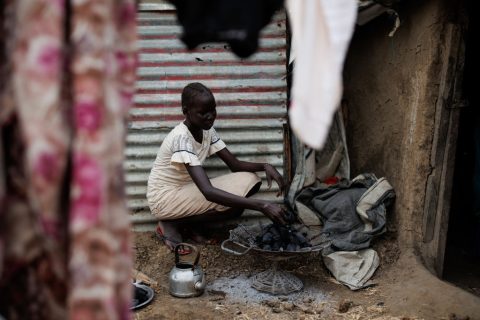
The world is entering the age of electrification. But while wealthy countries focus on powering AI data centres, electric cars and other energy-hungry technologies, hundreds of millions of people across Africa and the developing world still lack access to electricity.
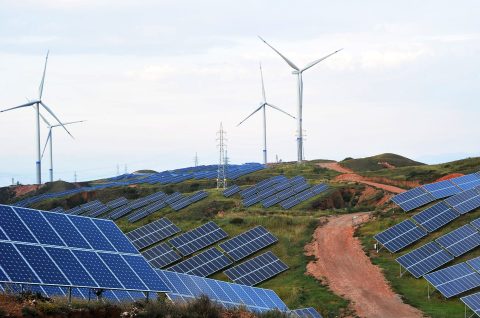
The real promise of the electricity revolution is not simply meeting the growing demands of those who already have plenty, but bringing clean, affordable power to those who have none.
So the decision by Türkiye and Australia to make electrification a flagship initiative at COP31 should be welcomed. Their proposed 35 by 35 goal, increasing electricity’s share of global final energy consumption to 35 per cent by 2035, could accelerate this transformation.
But who is this revolution actually for? Birol has celebrated the arrival of the electricity age, identifying AI data centres, electric transport and air conditioning as three major drivers of growing electricity demand.
-
Can AI data centres help power underserved African communities?
Three African countries join a pledge for sustainable AI at COP31, but the jury is still out on whether the energy-hungry industry can bring benefits for all -
COP31’s electrification pledge wins support, with caveats on clean power and finance
At least 14 countries have endorsed the voluntary pledge so far, but island nations warn it must not distract from the shift away from fossil fuels