

Wildfires currently burning large swathes of land in Indonesia are on track to produce emissions on a par with the country’s most-intense fire season this century, according to experts.
Data from the Global Fire Emissions Database reveals that, as of 7 September, fires in Indonesia produced 76m tonnes of carbon (MtC) in 2026.
This puts 2026 on the same trajectory as 2015, when fires burned 2.6m hectares of land across the country and generated a total of 333MtC.
Dr Guido van der Werf, a researcher at Wageningen University in the Netherlands, tells Carbon Brief that the fires in Indonesia are “more or less on track” to reach levels seen 11 years ago.
Parts of the country – including the eastern province of Papua – are “burning more than they’ve ever burned”, he says.

Indonesia is no stranger to emissions-intensive fires. Research has estimated that the record 1997 fire season generated carbon emissions equivalent to 13-40% of all global fossil-fuel emissions that year.
Meanwhile, a separate study that looked at carbon dioxide (CO2) emissions from the 2015 fires in south-east Asia – which primarily burned Indonesia – found they were greater than the total of the EU’s fossil-fuel emissions that year. The “severe haze” from the fires has been linked to more than 100,000 premature deaths across the region.
El Niño influence
As in 2015 and in 1997, this year’s Indonesian fires come during an El Niño year.
The naturally-occurring climate phenomenon, linked to ocean temperatures in the Pacific, periodically drives up temperatures and dries out land in Indonesia – creating the conditions for fires so immense that they imprint on global emissions.
Scientists are projecting that this year’s El Niño – which started in June and is expected to last into 2027 – will be one of the most intense on record.
Dr Mark Parrington, a senior scientist from the Copernicus Climate Change Service explains:
“From August until the end of October [to] November is the dry season in Indonesia. We do normally see fire around this time of year, but nowhere near the scale that we’ve seen this year, or indeed any of the previous El Niño years”.
Dr Nisa Novita, strategic lead for peatland at Indonesian environmental NGO Yayasan Konservasi Alam Nusantara, tells Carbon Brief that El Niño “does not directly cause most fires”, but acts as a “major amplifier by creating hotter and drier conditions, making fires easier to ignite, spread faster and much harder to control”.
Studies have shown that fires in Indonesia often occur where there has been significant land clearance and peatland drainage for agriculture and palm oil plantations. These practices create a dry landscape that is highly flammable during times of drought.

Van der Werf says the scale of this year’s fires – and whether they will end up being more intense than 2015 – will depend on the length of this year’s El Niño event, as well as the effectiveness of recent peatland conservation efforts.
Novita explains that Indonesia’s fires are heavily emissions-intensive due to its large tropical peatland ecosystem:
“When peatlands are degraded and drained due to canal development for agriculture, the water table drops, making the peat dry and highly flammable especially during dry seasons or El Niño events, like now.
“Unlike fires in dry ecosystems, peat fires can smolder underground, so the soil itself becomes readily available fuel.”
Extensive peatland restoration efforts in Indonesia in recent years have been credited with reducing the number of fires during the 2019 El Niño.
After the catastrophic fires in 1997-98, the Indonesian government introduced a range of measures designed to strengthen peatland protection and restoration through dedicated institutions and regulations. This included the introduction of a moratorium on licenses to convert forests and peatlands into plantations and logging areas.
In the aftermath of the 2015 fires, it established an official peatland restoration agency, which was given an additional mandate for mangrove restoration in 2021. This agency was dissolved last year. Novita says:
“We have learned and improved…But the question is: is it enough? Or are we still underestimating the risk that degraded peatlands pose, especially when we face another El Niño?”
Van der Werf says it remains unclear from the 2026 fire data how great an impact recent efforts to restore peatland in Indonesia have had on reducing the impact and spread of the fires:
“I had hoped that this year Indonesia would be relatively quiet, even though we have a big El Niño…You could argue if those regulations worked, then this wouldn’t be a big fire [season], even though it [has been] very dry.
“This is maybe the case in Sumatra [which has seen a quiet fire season], but definitely not in other regions. Papua [a region of Indonesia] and [neighbouring country of] Papua New Guinea – those are the new frontiers. They are basically going through the same thing that Sumatra went through 20 years ago.”
Related

Revealed: More than 1,000 NHS operations cancelled due to record UK heatwaves

Guest post: How extreme heat is ‘creeping’ from summer into autumn and spring

Q&A: What can – and cannot – be said about global warming’s role in the 2026 Himalayan floods

Guest post: Why tough methane cuts are crucial for keeping warming ‘well-below’ 2C
The post El Niño: Indonesia fire emissions in 2026 ‘on track’ to match record for this century appeared first on Carbon Brief.
El Niño: Indonesia fire emissions in 2026 ‘on track’ to match record for this century

Climate Change
After a week of plenty of activity and drama for Greenpeace at sea, I felt like writing to you on a much quieter theme…
Do you have a favourite book, poem or story about the ocean?
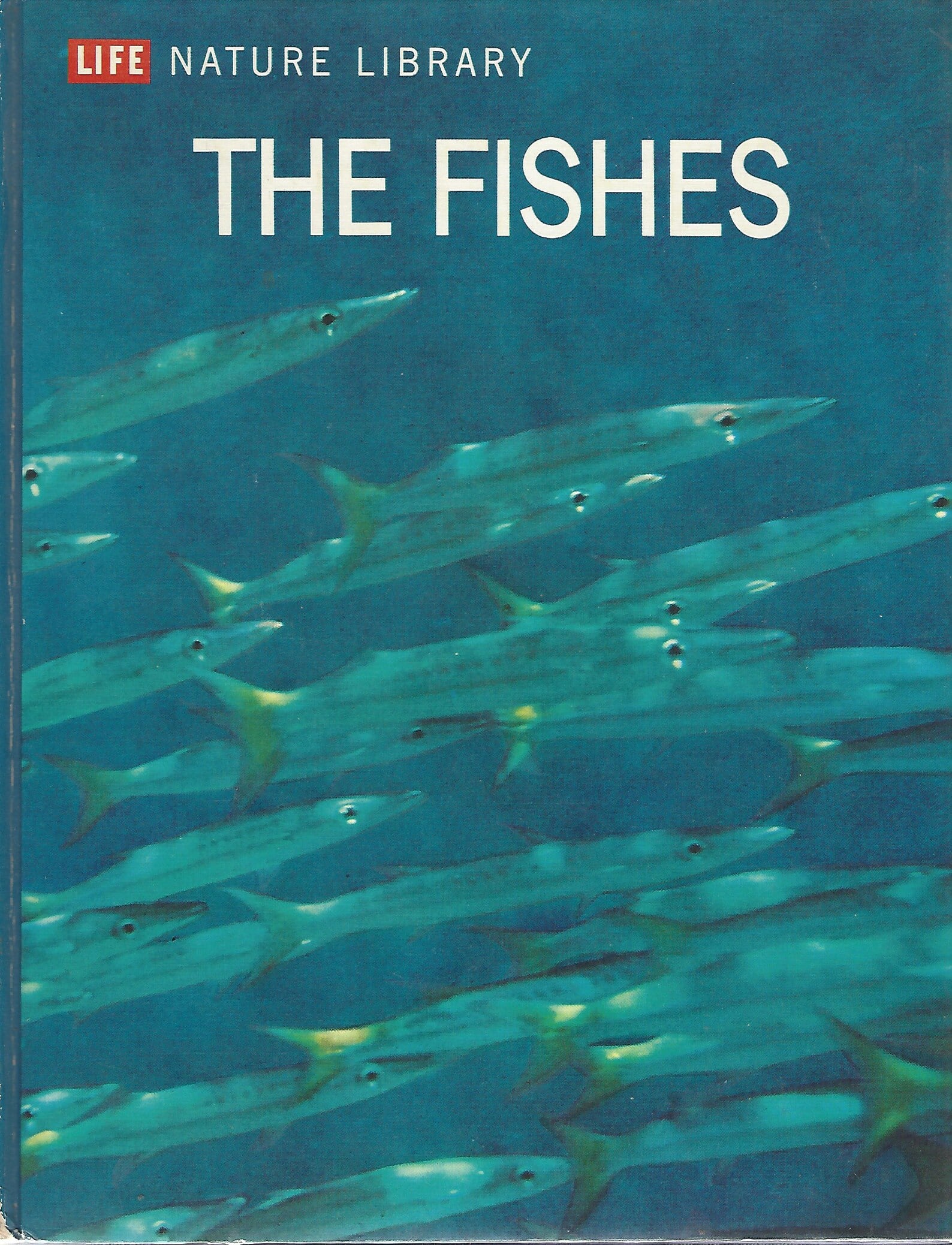
When I was very small, it was the TimeLife book of The Fishes, by F. D. Ommanney, which I remember endlessly poring over, my child’s mind gripped, in total fascination. The cover illustration showed a shoal of barracuda, mid-water and heading upwards, lit up as an iridescent blue by a column of sunlight. Oddly, it is only the cover and the illustrations of the deep sea creatures which I now remember—but I loved that book, as the weakened spine, blunted pages and dog-eared corners attested.
The Fishes has been on my mind recently, because I’ve been working with some dear friends on our own illustrated oceans book, to be published by Upswell Publishing. The book is called Scott Reef: Like Nowhere Else on Earth, and I want to share with you a bit of the story behind its creation.
Scott Reef is absolutely magnificent: Australia’s largest freestanding oceanic reef, brimming with life, including rare and threatened species such as a genetically distinct population of green sea turtles, pygmy blue whales and the wonderfully elegant dusky sea snake. But Scott Reef isn’t near our capital cities; it is way off the north-west coast of WA. And it is threatened with devastation by Woodside, which wants to drill up to 57 toxic wells at the Reef for its vast, dirty Browse gas project.
One of the main challenges in the fight to save Scott Reef from being turned into an industrialised gas zone by Woodside is bringing this incredible location to life for people who haven’t actually experienced it first hand. Because despite its ecological significance and dazzling beauty, ‘Scott Reef’ is also—at least not yet—exactly a household name.
To help get over this barrier, Greenpeace has enabled a number of photographers to travel to Scott Reef by boat (including the Rainbow Warrior) to document its astonishing diversity of colour and life. We then brought these images together in a remarkable photobook, produced by our talented in-house team, which we’ve been putting into the hands of as many leaders as possible—including the MPs whose decisions can determine the Reef’s future.
Back in June this year, I was sharing a copy of our in-house book at a business gathering in Perth when someone pulled me aside. Had we thought about publishing the book commercially? Apart from anything else, he wanted to buy a copy himself! He had a point. We were proud of what we’d created, but a commercially published version could reach a much wider audience and have even greater campaign impact. I immediately turned to my dear friend, Terri-ann White, who runs Upswell Publishing in WA, for advice.
Terri-ann has a huge heart and terrific vision. So many wonderful things in WA owe their existence to her doings, and, true to form, she was immediately encouraging and enthusiastic. “But,” she said, “it would add a whole new dimension if we had some words to accompany the incredible pictures.”
Fair enough, I thought. I could ask a few authors.
“And when would you like it published?” she asked.
“Ideally November,” I answered sheepishly.
Now, in publishing terms, nobody goes from idea to finished work, beautifully produced by a commercial publisher, in just four months. It. Just. Doesn’t. Happen. A book of this scale would ordinarily take nine months, I was told. But Terri-ann was undeterred. “If you can get a rapid turnaround on the writing, I will give it a shot.”
Over the following few days, I sent out 24 emails to prospective writers. To my joy and surprise 23 of them responded almost immediately with an enthusiastic yes!
Terri-ann was somewhat alarmed and perplexed when I told her the good news… we’d discussed a few authors, not more than twenty! “Impossible,” she texted. “Editing is important and you are talking about thousands of words!” But I also know Terri-ann. She does the impossible. And so, here we are… Terri-ann is going to hit that improbable deadline. Scott Reef: Like Nowhere Else on Earth will be on shelves in November.
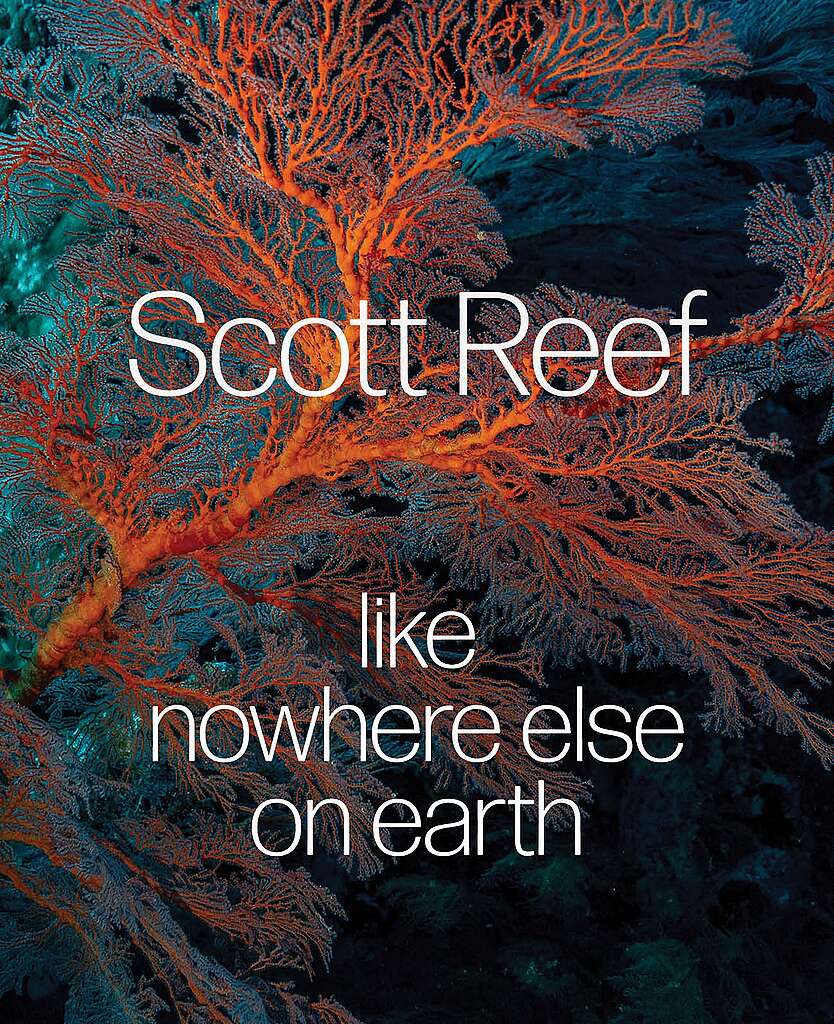
The contributors are a wonderfully diverse bunch, united by their enthusiasm for Scott Reef — and their extraordinary speed!
It’s a brilliant mix. The book brings together national icons like Peter Garrett, Tim Winton, Mick Dodson, Janet Holmes à Court and Fiona Stanley; the intellectual heft of professors Frank Bongiorno, Jessica Meeuwig, Rick Steiner and Samantha Hepburn; the poetic vision of Prema Arasu, Berndt Sellheim and Saadiah Freeman; the field expertise and passionate first hand witnessing of Imogen Zethoven, Tooni Mahto, Ben Fitzpatrick, Geoff Bice, Olaf Meynecke, Paul Gamblin, Sarah Gittoes and Hayley Baillie; and the determination of emerging activist voices Jackson Reid and Emma Sangalli.
Their elegant words wrap themselves around the sheer wonder of the underwater world, brought to life by the work of the photographers — of whom one, Wendy Mitchell, has also contributed a wonderful essay.
Terri-ann showed me the full physical proofs this week and they are breathtaking. This book contains some of my absolute favourite images of wildlife beneath the waves -– and believe me, after almost 20 years at Greenpeace, I’ve been privileged enough to see some remarkable shots! The essays bring a whole new depth and richness to the story of Scott Reef.
If I am being honest, and maybe a bit sentimental, I hope that a four or five-year-old child somewhere in Australia will spend part of their summer holidays turning the pages of this book, wide-eyed with curiosity and awe at the beauty and strangeness of the creatures that call our oceans home.
Our shared commitment is to make sure that, as those children grow up, the wonders of Scott Reef will exist not just in the pages of the book, but out there in the wild waters off north-western Australia—alive, thriving, and every bit as extraordinary as they are today; a living wonder beneath the waves.
Pre-orders of Scott Reef: Like Nowhere Else on Earth are available here.
