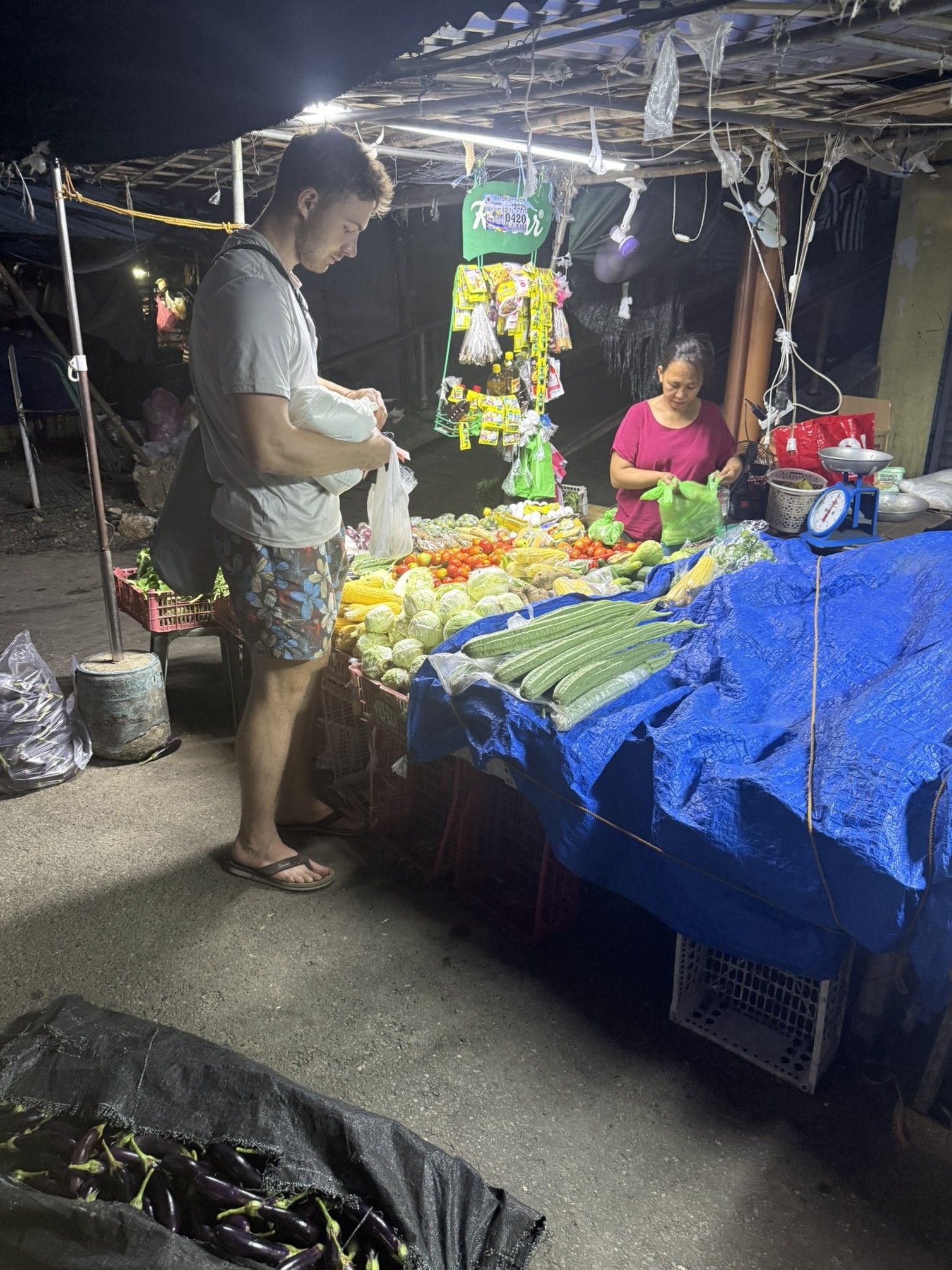
von Albert Firus und Laurenz van Bonn (GEOMAR)

Während die F/S SONNE die ersten Messstationen rund um den Äquator hinter sich lässt und weiter hineinfährt in den Golf der Bengalen, haben Techniker*innen, Wissenschaftler*innen und Crew an Bord alle Hände voll zu tun. Während das für die einen schon fast Alltag ist, wie zum Beispiel für unseren Techniker Mario, der bereits zum 36. Mal bei einer Forschungsfahrt dabei ist, sammeln andere in diesen Tagen ihre allerersten Erfahrungen an Bord eines Forschungsschiffs. Dazu gehören auch die beiden Studenten Albert (26, Geowissenschaften) und Laurenz (21, Umweltwissenschaften). Albert untersucht für das GEOMAR in der Arbeitsgruppe der marinen Biogeochemie oberflächennahe Spurenmetalle und Laurenz, ebenfalls für das Geomar an Bord, beschäftigt sich in der Arbeitsgruppe der chemischen Ozeanographie mit den Spurengasen in der Wassersäule, insbesondere mit den Treibhausgasen N2O und CH4. Die beiden haben nun bald bereits die ersten zwei Wochen an der Bord der SONNE hinter sich und schildern die unterschiedlichen Eindrücke ihrer ersten großen Forschungsfahrt.

Albert: „Als ich an einem normalen Arbeitstag aus heiterem Himmel gefragt wurde, ob ich nicht Lust hätte, bei der nächsten Ausfahrt in den indischen Ozean dabei zu sein, fiel mir die Kinnlade herunter. Seit ich angefangen habe zu studieren, war ein ständiger Gedanke und Traum bei einer Forschungsfahrt dabei zu sein. Bei Beginn meines HiWi-Jobs am GEOMAR schien dieser lang gehegte Traum näher zu rücken, doch es sollte noch ein Jahr dauern, bis es letztendlichso weit war. Ich dachte sofort „Ja!“ und so begannen die Vorbereitungen bis zum April 2024.
Aufgrund verschiedener Verzögerungen hatten die 39 Wissenschaftler*innen Zeit, sich in Colombo kennenzulernen. Schon dort wirkten die Teilnehmenden sehr motiviert und hilfsbereit. Dieser Eindruck verfestigte sich auch nach Abfahrt der SONNE Richtung Südosten bis über den Äquator hinaus. In den ersten Tagen gewähnte ich mich noch an das ständig schaukelnde Schiff. Es ist viel größer, als ich erwartet habe. Mehr als einmal kam es vor, dass ich mich verlaufen habe, doch zum Glück ist auch die Crew des Schiffes sehr hilfsbereit und steht mit Rat und Tat zur Seite. Den Weg, den wohl jeder als erstes auswendig weiß, ist der Weg zur Messe. Das muss man aber auch, denn die Zeiten für die Mahlzeiten sind zeitlich festgelegt. Die Gerichte sind köstlich, variantenreich und kraftspendend für die auch mal körperlich anstrengende Arbeit. Diese steht an, wenn wir an der nächsten Station ankommen. Diese können wir auch mal nachts erreichen, was bedeutet, dass Nachtschichten anstehen. Zum Glück sind unsere Kammern gemütlich und der Schlaf erholsam. Inzwischen schaukelt das Schiff mich in den Schlaf.
Falls einem doch mal schwindelig wird, sucht man sich einen schönen Platz am Fenster oder besser noch an der Reling in die Wellen des Ozeans. Das Blau des Wassers ist jeden Tag aufs Neue atemberaubend schön. Auch die Sonnenuntergänge sorgen für einen immer knapper werdenden Speicher auf dem Handy. Wer lebendigeres sehen will, kann nach Einbruch der Dunkelheit versuchen einen Blick auf pinke und orangene Tintenfische, fliegende Fische oder Quallen zu erhaschen.
Wenn die Wochentrage wegen Nachtschichten und keinem Wochenende verschwimmen, vergisst man oft welcher Wochentag es gerade ist. Einzig der Fisch am Freitag und das Speiseeis am Donnerstag und Sonntag erinnern ein dann daran, welcher Tag es ist.“

Laurenz: „Forschungsschiffe wie die SONNE kannte ich bisher eigentlich nur aus Vorlesungen im Hörsaal. Ich dachte immer, wie großartig es wäre, mal selbst bei einer Forschungsfahrt dabei zu sein und als ich dann die Möglichkeit bekommen habe, mit auf die SO305 zu kommen, war meine Vorfreude natürlich riesig. Als wir dann in Colombo den ersten Schritt auf das Schiff gesetzt haben, war das ein toller Moment, gleichzeitig aber auch sehr aufregend – man weiß ja schließlich nicht, was einen erwartet in den nächsten 6 Wochen. Die Aufregung verflog allerdings fast schneller, als sie kommen konnte, und das liegt vor allem an den großartigen Menschen, die an dieser Fahrt beteiligt sind, an den tollen Kolleginnen und Kollegen und der Crew, die alle unglaublich hilfsbereit sind und super zusammenarbeiten. Die ersten Tage waren gefüllt mit neuen Eindrücken, ich habe bereits sehr viel gelernt und das nicht nur wissenschaftlich, sondern auch über die Wichtigkeit von Organisation und Kommunikation an Bord, darüber gemeinschaftlich Lösungen für jedes Problem finden zu können. Ich freue mich sehr darauf, in den nächsten Wochen noch mehr zu lernen und tiefer in die Welt der Meeresforschung eintauchen zu können. Wann immer die viele Arbeit und der wenige Schlaf mal eine kleine Auszeit verlangen, setze ich mich auf das oberste Deck lasse meinen Blick am Tag über das unglaublich blaue Wasser schweifen oder in der Nacht in den Sternenhimmel, an welchem man in klaren Nächten sogar die Milchstraße sehen kann. Es ist ein sehr besonderes Gefühl, an Deck zu stehen und um sich herum überall nur Wasser zu sehen, nur ahnen zu können, was in den mehr als 4000 Meter unter uns alles passiert. An der Erforschung dieses Wunders beteiligt zu sein, ist ein tolles Gefühl und ich hoffe, dass das nur der Anfang ist und ich irgendwann mal auf eine ähnliche Zahl an Forschungsfahrten komme, wie Mario, im Laufe der Zeit. Der einzige Wunsch, den für die restliche Fahrt jetzt noch habe, ist, dass uns ein paar Wale einen Besuch abstatten – die halten sich bisher nämlich noch ziemlich verdeckt.“


Ocean Acidification
Dr Heidarzadeh’s TV interview with SkyNews on the massive M7.7 Panama earthquake on 9 October 2026
Dr Heidarzadeh’s TV interview with SkyNews on the massive M7.7 Panama earthquake on 9 October 2026. Click here for the full story.
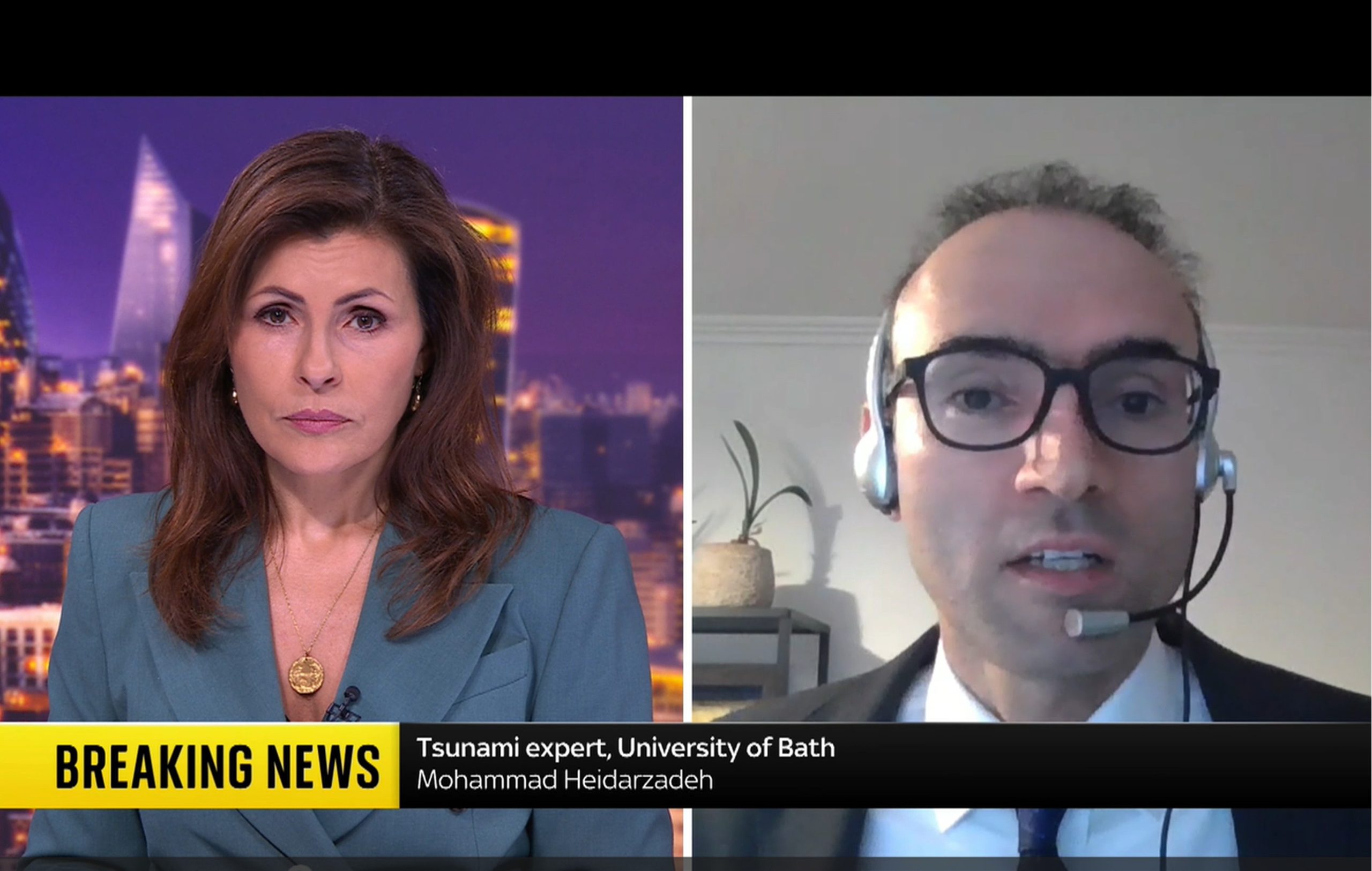
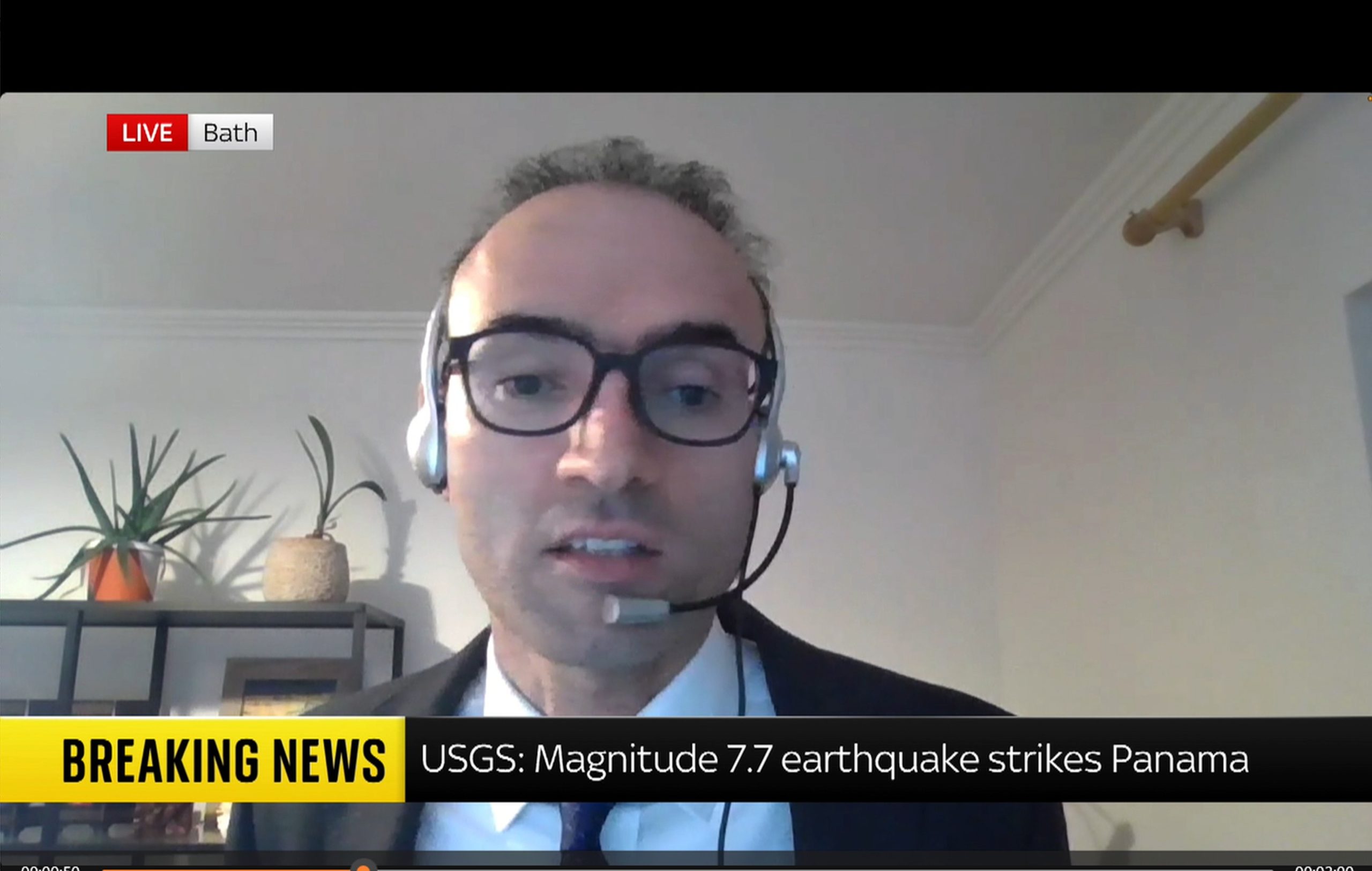
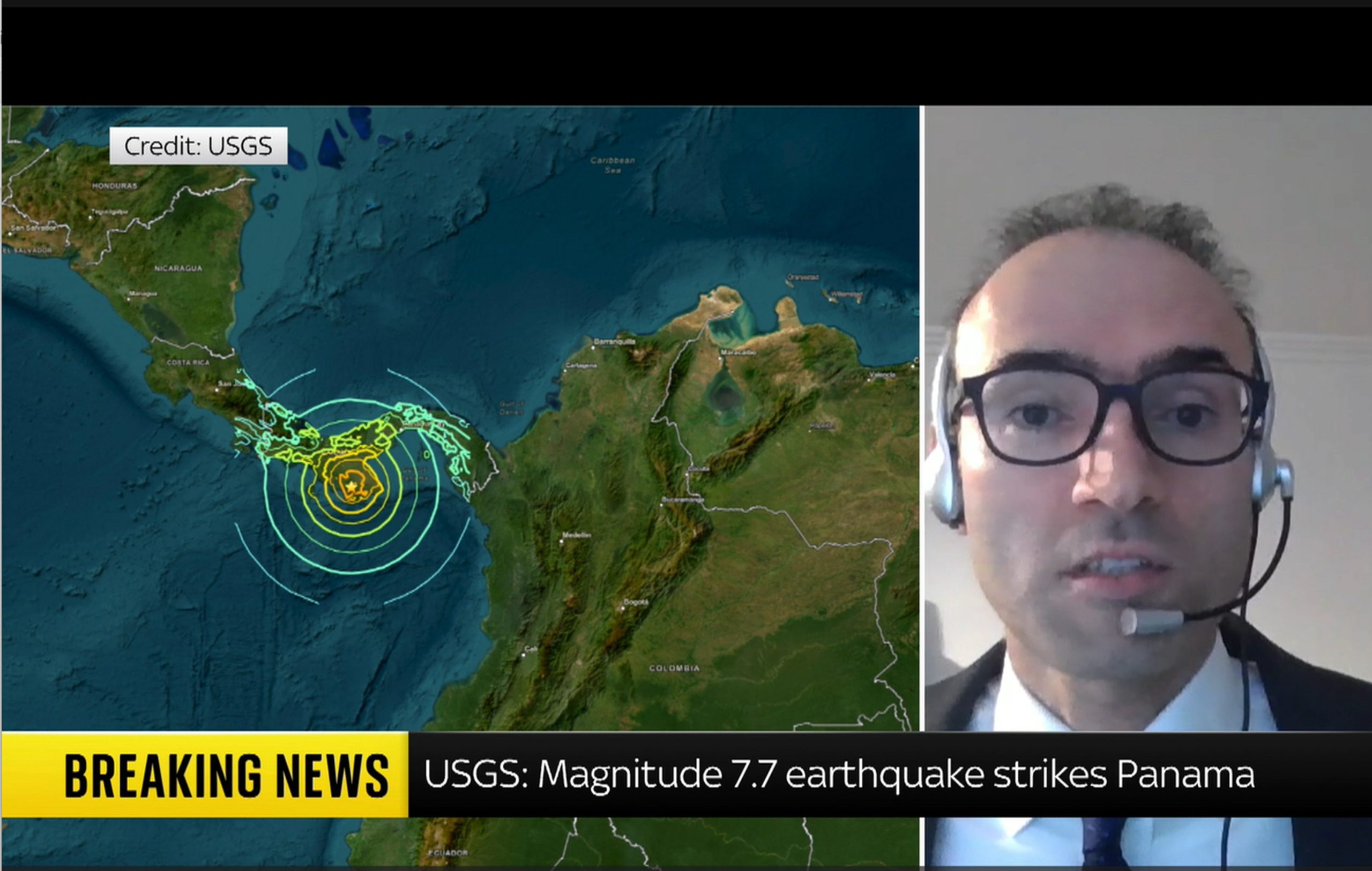
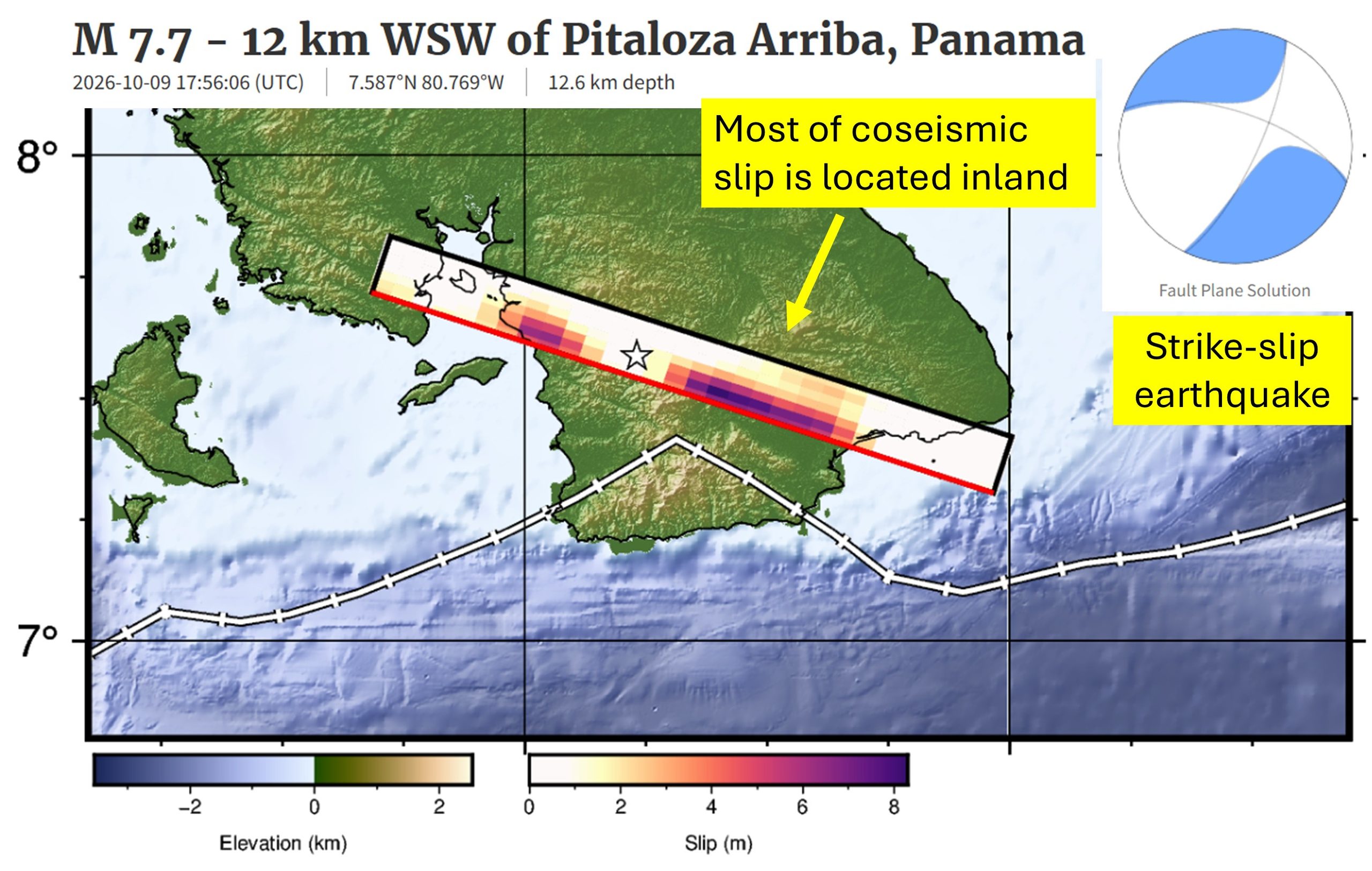
Dr Heidarzadeh’s TV interview with SkyNews on the massive M7.7 Panama earthquake on 9 October 2026
Our ocean is an incredibly vast and mysterious place. And there is no place where that is more evident than the deepest ocean area in the world: the legendary Mariana Trench. Located east of the Philippines, the Mariana Trench lies in the Mariana Archipelago in the western portion of the North Pacific. The greater area of the Mariana Trench Marine National Monument is made up of more than 95,000 square miles of ocean. Beneath these waters lie incredibly complex aggregations of submerged islands and volcanoes … and of course, an astoundingly massive trench.
Dive in with us to have your biggest questions answered about the famed Mariana Trench.
How deep is the Mariana Trench?
The deepest part of the Mariana Trench, known as Challenger Deep, is almost 36,000 feet below the ocean’s surface. For context, Mount Everest is about 29,000 feet above sea level, so the Mariana Trench is about 7,000 feet deeper than Mount Everest is tall. For one more comparison, the RMS Titanic lies at a depth of about 12,500 feet below sea level. The Challenger Deep is in waters nearly three times deeper than this ship’s final resting place.
Due to its enormous size, the Mariana Trench has at times been affectionately nicknamed the Grand Canyon of the ocean. This is certainly a picturesque image, but don’t let the mammoth size of this U.S. national terrestrial park fool you into thinking the Mariana Trench matches its size. The trench’s footprint is estimated to be 120 times larger than the Grand Canyon’s, and to reach the bottom of Challenger Deep, you’d need to descend through almost six Grand Canyons stacked on top of each other before you’d reach the seafloor.
Oh … and did we mention it’s five times wider than it is deep? It’s about 43 miles wide!
What is Challenger Deep, and how long would it take to reach it?
Challenger Deep is the deepest point of the Mariana Trench. Fewer than 30 people have ever journeyed to this area. The trek below the surface is long, dark and time-consuming, and it’s not an expedition considered lightly by scientists and explorers.
The first people to descend into the depths of this area in 1960 were oceanographers Jacques Piccard and Don Walsh, and it took them close to five hours to reach Challenger Deep. Since then, more advanced submersibles have been created, but it still takes two to four hours for modern vessels to reach such depths. For example, explorer and filmmaker James Cameron reached the seafloor in a little more than 2.5 hours in the first documented solo submarine dive to the area, and it took oceanographer Dr. Dawn Wright about four hours in 2022. It is crucial that these submersibles descend slowly and steadily beneath the surface, as the immense water pressure compounds with every mile a submersible descends. Speaking of pressure …
Get Ocean Updates in Your Inbox
Sign up with your email and never miss an update.
What is the water pressure at the bottom of the Mariana Trench?
If you thought the depth of the Mariana Trench was its only jaw-dropping feature, think again. Water pressure is one of the most important factors affecting deep-sea life. In the ocean, pressure increases by one atmosphere for every 33 feet (10 meters) of depth. One atmosphere (a unit of measurement for pressure equivalent to average air pressure at sea level) is equal to about 14.7 pounds per square inch (PSI), which is the approximate standard atmospheric pressure at sea level. If you were to convert atmospheric pressure into weight, one atmosphere is about the weight of a bowling ball. Stay with me, friends.
If a vessel were to dive 2,000 feet below the surface, the pressure would equal that of 60 bowling balls stacked atop every square inch of that submersible. But 60 bowling balls is simply nothing compared to the pressure in the Mariana Trench. The atmospheric pressure at the depths of Challenger Deep is equal to about 16,000 PSI. That pressure is about the same as the weight of an entire full-grown elephant on every square inch of a submersible!
Need a more extreme comparison? If a human were to be placed at the bottom of the Mariana Trench, the pressure would be equal to that of 50 jumbo jets piled on top of a person!
Do any animals live in the Mariana Trench?
The depths of the Mariana Trench come with immense pressure and extreme darkness, but somehow, life finds a way to survive. Organisms that live at an extreme depth, like that of Challenger Deep, have to be highly adapted to low temperatures (typically just above freezing), high pressure and virtually no light at all.
Species found in the depths of the Mariana Trench might look vastly different from animals from other ocean depths because their anatomy has been refined to thrive in harsh conditions. At such great depths, these animals typically depend on chemosynthesis (using nutrient-rich waters being pumped out of hydrothermal vents) or descending detritus (dead matter that has fallen from higher parts of the ocean) for food, such as whale falls. Just a handful of these animals include species of octopuses and squids, sea cucumbers, amphipods, sea jellies, shrimp, sea worms and some wild-looking fish!
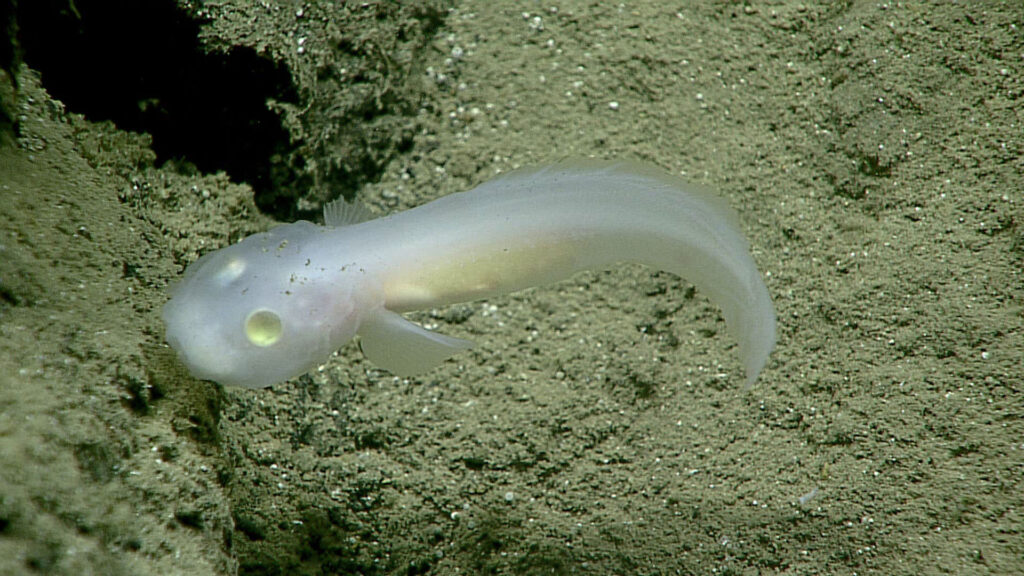
In 2025, more than 7,000 new species were discovered in the Mariana Trench, including the hadal snailfish (Pseudoliparis swirei). This is the deepest-dwelling fish currently known to science. Now, the fish has been dubbed “the Mariana snailfish.”
How was the Mariana Trench formed?
The process by which the Mariana Trench was created is a geologically fascinating one known as subduction. On the Earth’s surface, there are thin plates that cover the planet’s mantle, which is made of molten rock. If two of these plates collide, one pushes down into the Earth’s mantle while the other is pushed over the bottom plate. When this happens, a trench is formed from the drag of the bottom plate. This process can sometimes create incredibly strong earthquakes. The plates that forged the Mariana Trench’s creation are estimated to be up to approximately 180 million years old.
This trench was unknown to scientists until 1875. It was then that a team of explorers on the HMS Challenger measured the depth of the sea by simply lowering a weighted rope into the water. They were baffled when they measured that first portion of the seafloor to be five miles below the surface. And so was born the origin of some of the most daring deep-sea explorations known to mankind to date.
Is the Mariana Trench protected?
The Mariana Trench is in waters off Guam and the Mariana Islands. The region is protected from some human activities under its status as a marine monument. The creation of the Mariana Trench Marine National Monument signified that international, national and local leaders all recognize the importance of protecting this area.
However, just because the region is protected does not mean it’s not vulnerable to modern threats to ocean health. Plastic bags have been spotted in the Mariana Trench during several expeditions, highlighting the far-reaching impact of the marine debris problem. No corner of our ocean is safe from the ever-present threat of plastic pollution. The reality of a changing climate makes the future well-being of wondrous places like the Mariana Trench uncertain. What’s more: More than 70% of the global ocean has yet to be mapped. And what we don’t yet know about, we cannot wisely work to protect.
It’s up to us to work together to defend our ocean, from the sandy shores of our favorite beaches to the deepest, darkest parts of the sea. Together, we can work to protect our ocean as a whole, which ultimately helps protect treasured places like Challenger Deep.
Find out how you can join Ocean Conservancy’s wave of momentum to secure a healthy ocean and a thriving planet, forever and for everyone!
The post The Mysteries of the Mariana Trench appeared first on Ocean Conservancy.
Intro
At the western tip of Luzon, which is the biggest island of the Philippines, lies the small coastal town of Bolinao. Tourists seldom find their way here as it takes around seven hours to get here by bus from Manila. Still, you can spot foreigners walking around every now and then, but they really stand out among the Filipinos. A reason for their presence is often that they study or work at the Bolinao Marine Laboratory (BML), which belongs to the University of the Philippines (UP). It is one of the seven research institutions participating in the GAME project 2026. Every year, GAME brings together Master’s students from all over the world to experience different cultures and conduct globally replicated experiments in marine ecology.