

We handpick and explain the most important stories at the intersection of climate, land, food and nature over the past fortnight.
This is an online version of Carbon Brief’s fortnightly Cropped email newsletter.
Subscribe for free here.
Key developments
Fertiliser disruption in Middle East
FOOD RISKS: The US-Israel war on Iran is “disrupting” the production and export of synthetic fertilisers, reported the Financial Times, which could lead to food price increases. The newspaper noted that the Strait of Hormuz passage, which remains at a near-standstill, is a “crucial shipping route for exports” including urea, sulphur and ammonia – all used in fertilisers. The Guardian noted: “Roughly half of global food production depends on synthetic nitrogen and crop yields would fall without fertiliser.”
-
Sign up to Carbon Brief’s free “Cropped” email newsletter. A fortnightly digest of food, land and nature news and views. Sent to your inbox every other Wednesday.
PLANT FOOD: The fertiliser situation is “especially troubling for farmers in the northern hemisphere” who are beginning to plant their spring crops, said the New York Times. An article in the Conversation said that “even modest reductions in nitrogen use can produce disproportionately large declines in yield”. Elsewhere, a Carbon Brief Q&A looked at the impacts of the war on the energy transition and climate action.
WATER WORRIES: Water – already in short supply in Iran, where long-running droughts have been exacerbated by climate change – has come into renewed focus in the conflict. Bloomberg columnist Javier Blas said water could become the “geopolitical commodity that decides the war”. Desalination plants came “under attack” in Iran and Bahrain, reported the New York Times. These types of plants offer the “only reliable water source for millions across the Arabian Peninsula”, said the Independent.
Negotiations of seabed mining resume
LEGAL BRIEF: The International Seabed Authority (ISA)’s Legal and Technical Commission held a meeting in late February, where they made “progress” in reviewing applications for deep-sea mining exploration and the development of regional environmental management plans, according to an ISA press release. The ISA’s 36-member governing council is currently in Jamaica for a two-week meeting to discuss the future of deep-sea mining in areas beyond national jurisdiction.
NEW RULEBOOK: The New York Times interviewed Leticia Carvalho, head of the ISA, who said the long-awaited deep-sea mining rulebook should be finalised by the end of this year. She said the Trump administration’s push for deep-sea mining is making such an agreement more urgent than ever. However, Grist said that an advocate from French Polynesia said that he does not expect the regulations to be finalised this year, as there are several agreements and discussions pending, including on environmental protections.
INDIGENOUS DEMANDS: Indigenous advocates, who have long worked for their rights to be included in seabed mining regulations, are “bracing for the outcome” of the Jamaica meeting, reported Grist. Some fear that the incorporation of Indigenous rights into those regulations will be dismissed, as has happened previously, said the outlet.
News and views
- LAWS OF NATURE: The EU court of justice fined Portugal €10m (£8.7m) for “failing to comply with environmental laws that require it to protect biodiversity”, according to the Guardian. The newspaper said the country will be penalised until the 55 unprotected sites are protected under EU biodiversity law.
- BURIED REPORT UNCOVERED: Last week, a group of scientists and experts released a draft assessment about the health of nature in the US that had been cancelled by the Trump administration last year, according to the New York Times. The report is “grim, but shot through with bright spots and possibility”, said the outlet.
- ‘BI-OCEANIC’ RAIL: Experts are concerned about the potential social and environmental impacts of a train “mega-project” between Peru and Brazil, reported Mongabay. One researcher told the outlet that the possible rail routes, which cross through the Amazon rainforest, could cause “colossal environmental damage”.
- CLIMATE COOPERATION: India and Nepal signed an agreement to strengthen transboundary cooperation in topics such as climate change, forests and biodiversity conservation, reported the New Indian Express. The collaboration will include the restoration of wildlife corridors and knowledge exchanges, the outlet said.
- REPORT CARD: Carbon Brief analysis showed that half of the world’s countries met a 28 February UN deadline to report on national efforts to tackle nature loss. As of 10 March, 123 countries out of 196 had submitted their national reports, which will inform nature negotiations in Armenia later this year.
- CROP LOSSES: Down To Earth covered a study finding that a “deadly” virus is threatening cassava crops in parts of Africa, partly due to climate change. Meanwhile, Carbon Brief updated an interactive map showing 140 cases of crops being destroyed by heat, drought, floods and other extremes in the past three years.
Spotlight
Women farmers in a warmer and unequal world
International Women’s Day occurs every year on 8 March. Carbon Brief explores the impacts of climate change and gender inequality on women farmers and how they are adapting to a warming planet.
Women farmers play an essential role in global food supply.
According to a report from the UN Food and Agriculture Organization (FAO), around 36% of working women in 2019 were engaged in agri-food systems. On average, they earned 18% less than men in that sector.
The report found that women working in agriculture tend to do so “under highly unfavourable conditions”, including in the face of “climate-induced weather shocks”.
Typically, women farmers are concentrated in the poorest countries, produce less-lucrative crops and are often unpaid family workers or casual workers in agriculture, the report said.

Vulnerabilities
Research has shown that women farmers are more vulnerable to the impacts of climate change than men.
In Africa and Asia, for example, a 2023 study found that “climate hazards and stressors…tend to negatively affect women [in agri-food systems] more than men”. This is because gender inequality – in the form of discriminatory gender roles or unequal access to resources – is most pronounced in those regions, the study said.
A 2025 study focusing specifically on the Sleman region of Indonesia found that 63% of women farmers suffered from food insecurity due to vulnerability to climate change. This arises from both frequent exposure to drought and low ability to respond to climate impacts, the study explained.
Geraldine García Uribe has been a farmer at the U Neek’ Lu’um agroecology school in Yucatán, Mexico, since 2023. She told Carbon Brief:
“When you have fixed [planting and harvesting] cycles and you start to see changes in the climate – longer droughts or changes in rainfall patterns – plants take longer to grow and pests start to arrive, and that affects the farmers’ pockets and the livelihoods of [their] families.”
She added that women farmers also face inequalities when it comes to deciding how to manage agricultural lands:
“When government support comes, they take [women] less into account because, in general, there are more men present at meetings.”
Adaptation needs
Women farmers face constraints that make them less able to adapt to climate change, according to the FAO report. For example, the working hours of women farmers “decline less than men’s during climate shocks such as heat stress”, said the report.
Josselyn Vega has been farming on her own agroecology farm in Cotopaxi, Ecuador, for three decades. In the Andean region comprising Ecuador, Bolivia and Peru, droughts and floods are frequent, but there are also frosts which, although expected to decrease with climate change, cause crop losses and can have a “drastic” impact on the local economy, according to the Adaptation Fund.
Vega told Carbon Brief that her farm has used “living barriers” to help protect from weather extremes:
“Living barriers are a wall of forest and fruit trees [that] block the wind and prevent drought and frost from passing through.”
The 2023 study recommended that transforming agri-food systems into fairer and more sustainable ones requires reducing and preventing gender inequality.
At the international level, countries have an agreement to implement climate solutions that take women into account, including women farmers. At the most recent UN climate negotiations in Belém, Brazil, countries adopted a new gender action plan, which will last nine years and encourages countries to develop climate policies and plans with a gender perspective.
Vega said that public policies are needed to empower women farmers and ensure that they are included in decision-making. She told Carbon Brief:
“We need to benefit from something that encourages us to continue planting and caring for the land.”
Watch, read, listen
CASH CUTS: In a four-part series, BioGraphic explored how US federal funding cuts have impacted biodiversity and conservation.
RIGHT WHALE ROLLBACK: A News Center Maine video looked at how the US National Oceanic and Atmospheric Administration is considering rolling back a rule to protect endangered North Atlantic right whales in the US.
ON THE FARM: “Women farmers are an overlooked force in climate action,” the deputy director of the climate office at the FAO wrote in Reuters.
JUSTICE: Drilled marked the 10-year anniversary of the murder of Indigenous leader Berta Cáceres and looked at why Honduras is “still so dangerous for environmental activists”.
New science
- Large-scale reforestation in different parts of the world could bring “robust net global cooling” of -0.13C to -0.25C | Communications Earth & Environment
- Insects in many parts of the tropics have a “limited capacity” to deal with future projected warming levels | Nature
- The flowering time of tropical plant species has changed by an average of two days per decade since 1794 due to climate change | PLOS One
In the diary
- 9-19 March: Part one of the 31st session of the International Seabed Authority | Kingston, Jamaica
- 15 March: Republic of the Congo presidential election
- 22 March: World Water Day
- 23-29 March: Convention on the Conservation of Migratory Species of Wild Animals COP15 summit | Campo Grande, Brazil
- 23 March-2 April: Third session of the preparatory commission for the High Seas Treaty | New York
Cropped is researched and written by Dr Giuliana Viglione, Aruna Chandrasekhar, Daisy Dunne, Orla Dwyer and Yanine Quiroz.
Please send tips and feedback to cropped@carbonbrief.org

The post Cropped 11 March 2026: Iran water worries | Seabed-mining treaty progress | Women farmers and climate change appeared first on Carbon Brief.

What happens when a love of marine life meets a playful imagination?
Sydney artist, illustrator and children’s author Sha’an d’Anthes, better known as Furry Little Peach, has teamed up with Greenpeace to create Happy Ocean Happy Planet: a joyful celebration of the extraordinary creatures that call our oceans home.
Sha’an felt inspired to create an illustration celebrating the beauty and resilience of marine life. Its hopeful message, A Happy Ocean is a Happy Planet, sparked a special collaboration with Greenpeace and a limited-edition t-shirt designed to help protect the oceans that inspired it.
The exclusive Furry Little Peach tee is available as a gift to new regular Greenpeace donors who give $30 or more and make at least three donations. By becoming a regular giver, you’ll help Greenpeace campaign for ocean protection.

ARTIST INTERVIEW: Sha’an d’Anthes (Furry Little Peach)
Sha’an shares the story behind the artwork, the local marine creatures featured in the design and why hope can be such a powerful force for action.
Hi Sha’an! Can you tell us a little about yourself and what you do?
My name is Sha’an d’Anthes, I also go by the pseudonym Furry Little Peach and I’m an illustrator, artist and children’s author based in Sydney, Australia. I love creating joyful, vibrant and nostalgic art that looks at the world through the lens of childlike wonder.

What do you love about drawing animals and nature?
I love all of the different shapes, colour and narrative you get to explore when drawing animals and nature. I’m also a city-slicker these days, and so I think that my work is a sort of escapism (for myself and hopefully for my audience).
How did the Greenpeace collaboration come about?
I went to the premiere of David Attenborough’s documentary Ocean, and felt compelled to create something to share the message of the film. This t-shirt is actually based off of that illustration including the tagline in I included when I shared it “A Happy Ocean is a Happy Planet”. I’m so grateful Greenpeace approached me for the project – it was a blast.
Where did you start when creating the Happy Ocean Happy Planet design?
The Happy Ocean tee starts the same as all of my work – with a brainstorm/braindump and really loose concept sketches.
How did you choose the animals for the illustration?
I actually asked Greenpeace to help me with the research of local marine life and they were so accommodating. They very quickly delivered me a huge list of local species of fish, mammals and coral and I just went through and looked up each creature and curated a little group of sea life that I thought would look sweet together – a mix of sizes, types, colours, textures and shapes.
What did you use to create the artwork?
So much of my work is traditional, but when it comes to things like t-shirts I always use digital drawing programs because I like to draw each colour in a separate layer which requires me to jump in and out of layers because it allows me to control colour and printing. When working digitally I always sketch in Procreate (an Australian digital art app), and then with this project I created final art in Adobe Fresco because it called for a vector graphic (an image that can be blown up to any size).
Do you have a favourite creature in the design?
I love painting Humpback Whales and always have, but I also have a soft spot for the sweet little Jelly Blubber jellyfish.
What did you want people to feel when they saw the artwork?
I specifically wanted to focus on the outcome that all of us want to see – a happy, thriving ocean where creatures are given the time and space to balance themselves. I feel that even when tackling tough subjects, leaning into hope is my natural inclination. As long as we have hope that things can be better, we will continue to take action.
What was the most fun part of creating it?
I actually documented the entire process of this project in a studio vlog on YouTube – and you can see how much fun I’m having doing final art jumping between layers and building the image. I had just come off completing final art for two books which are multi-year long projects, so being able to do a project that from start to finish in just a few days was really freeing at the time.
What does a “happy ocean” mean to you?
An ocean that given the time and space to repair and balance itself. Something I really took away from David Attenborough’s Ocean is that ocean ecosystems are actually really good at repairing themselves if we just let them do their thing.
How can people get their hands on the t-shirt?
The shirt is a reward for regular givers to Greenpeace – those who commit to at least 3 months of donations will receive the tee as a gift. Read about how at http://act.gp/flp-tee
How is Greenpeace helping to make our oceans happier places?
They have a deep focus on the health and happiness of our oceans through advocating for the set up of marine sanctuaries, holding big ocean polluters to account and calling for a ban on deep sea mining.
What are you working on next?
I will be jumping headfirst into Peachtober – an annual daily art challenge I run each year in October, if there are any artists reading this it’s a great time so please come join! In terms of publications my next picture book The Late Bird will be out in February 2027 (published by Harper Collins US) and then I have an creative activity book for adults coming out next August with Chronicle US and Penguin Australia. Otherwise you can always check out what I’m tinkering away with in my studio on Instagram and YouTube.

Climate Change
AI giant Anthropic’s first Australian data centre deal an “egregious” example of Big Tech double talk
SYDNEY, Thursday 17 September 2026 — Greenpeace Australia Pacific has slammed AI giant Anthropic’s deal for its first Australian site in Queensland’s Western Downs, the heart of coal seam gas country, saying the project will entrench gas and turbocharge climate pollution.
The expected electricity demand from the data centre site, situated in the middle of the Western Downs coal seam gas fields, is comparable to 1.5 million Australian households. Greenpeace’s report Energy Vampires: The AI data centres draining Australia called for a moratorium on frenzied data centre development until appropriate guardrails are in place.
Joe Rafalowicz, Head of Climate and Energy at Greenpeace Australia Pacific, said: “This is an egregious example of Big Tech giants being given carte blanche to drain energy and water, and use polluting gas to fuel their hyperscale data centres.
“AI and Big Tech corporations claim to bring new renewable energy to the grid, while blatantly planning to power their operations with polluting fossil fuels.
“Planning documents show the first stage of this behemoth project could be powered by ‘behind the metre’ gas — the same playbook AI companies have used in the US, leading to a 20% increase in climate pollution from electricity. Now these companies want to bring their cowboy plans to Australia and the Federal Government is allowing it.
“If they plugged into the local grid, the power required would increase Queensland’s electricity grid emissions by around 6.6 million tonnes — an 18% rise. If they build their own gas-fired power plants, this will drive up Queensland’s emissions even more.
“Billions of dollars are now pouring into a massive pipeline of proposed new data centres, of unprecedented size, being built at incredible speed across the country. Australians should be worried about the extreme lack of scrutiny being applied to these projects, and the corporations leading the data centre charge.
“The data centre build-out is happening without the endorsement of the Australian people, yet we are the ones who will pay the price. We can not allow unchecked data centre expansion to derail our renewable energy transition, entrench gas and turbocharge climate pollution — that’s why Greenpeace has called for an urgent moratorium until appropriate guardrails are in place.”
ENDS
Media contact: Kate O’Callaghan on 0406 231 892 or kate.ocallaghan@greenpeace.org
Climate Change
Analysis: India’s power-sector emissions flat for two years due to clean-energy surge
A surge in clean energy has kept carbon dioxide (CO2) emissions in check across India’s power sector, with no growth from the first half of 2024 to the same period in 2026.
This guest post is by:
Lauri Myllyvirta, lead analyst at Centre for Research on Energy and Clean Air (CREA)
Anubha Aggarwal, India analyst at CREA
This is the first time in more than 50 years that there has been no growth in India’s coal power over a two-year period, even as electricity demand grew overall.
At the same time, both oil and gas consumption have fallen across the nation for two years in a row, helping alleviate the shock of the Hormuz crisis.
Nevertheless, the new six-monthly analysis for Carbon Brief shows that India’s emissions grew by 3.7% year-on-year in the first half of 2026, due to increases from steel, cement and other sectors.
Other key findings for the first half of 2026 include:
- India’s power-sector emissions flatlined at 2024 levels, after a 2.2% decline in the first half of 2025 and a 2.3% rise in the same period this year.
- Clean energy met all of the 7% rise in India’s electricity demand over the two years, adding 63 terawatt hours (TWh), equivalent to the total demand of Switzerland.
- India has added 77 gigawatts (GW) of solar in this two-year period, helping meet 60% of the rise in electricity demand overall.
- While fossil-fuel generation stagnated, generators added 8.5GW of new coal capacity, leading to fewer running hours and increased costs to electricity consumers.
- CO2 emissions from oil and gas fell by 7% year-on-year, extending a reduction that began in 2025, despite higher demand for road transport fuels.
- Steel and cement emissions grew by 8% year-on-year, reaching a 23% share of India’s total CO2 in the first half of 2026.
If the pace of India’s clean-energy expansion is to continue, it will need to upgrade its electricity grid, rapidly build out energy storage and boost the flexibility of coal power.
While clean-energy expansion is covering most or all of India’s power-demand growth, the fossil-fuel industry continues to pursue major capital investments.
This includes large amounts of new coal-power capacity, ambitious plans for the conversion of coal-to-chemicals and efforts to boost domestic coking coal production for the steel sector.
While CO2 output from the power sector is flat, with oil and gas in decline, India’s emissions still went up due to the contribution from industry.
India lags behind its competitors – including most large emerging economies – when it comes to electrifying its industrial sector.
Faster progress would enable clean electricity to substitute for fossil fuels in industry, as well as for power, offering the potential for India to cut its emissions overall.
Flatlining fossils
Last year, India’s CO2 emissions from fossil fuels and cement grew at their slowest pace in two decades, according to previous analysis for Carbon Brief.
This sharp slowdown was due to rapid clean-energy growth and flat oil demand, combined with rising emissions from steel and cement.
The first half of 2026 marks a continuation of these trends.
Most strikingly, the ongoing surge in clean-energy generation means that emissions have flatlined in India’s power sector for two years, as shown in the figure below.
Power-sector CO2 was the same in the first half of 2026 as two years earlier, with a small decline in 2025 having been reversed over the same period this year.
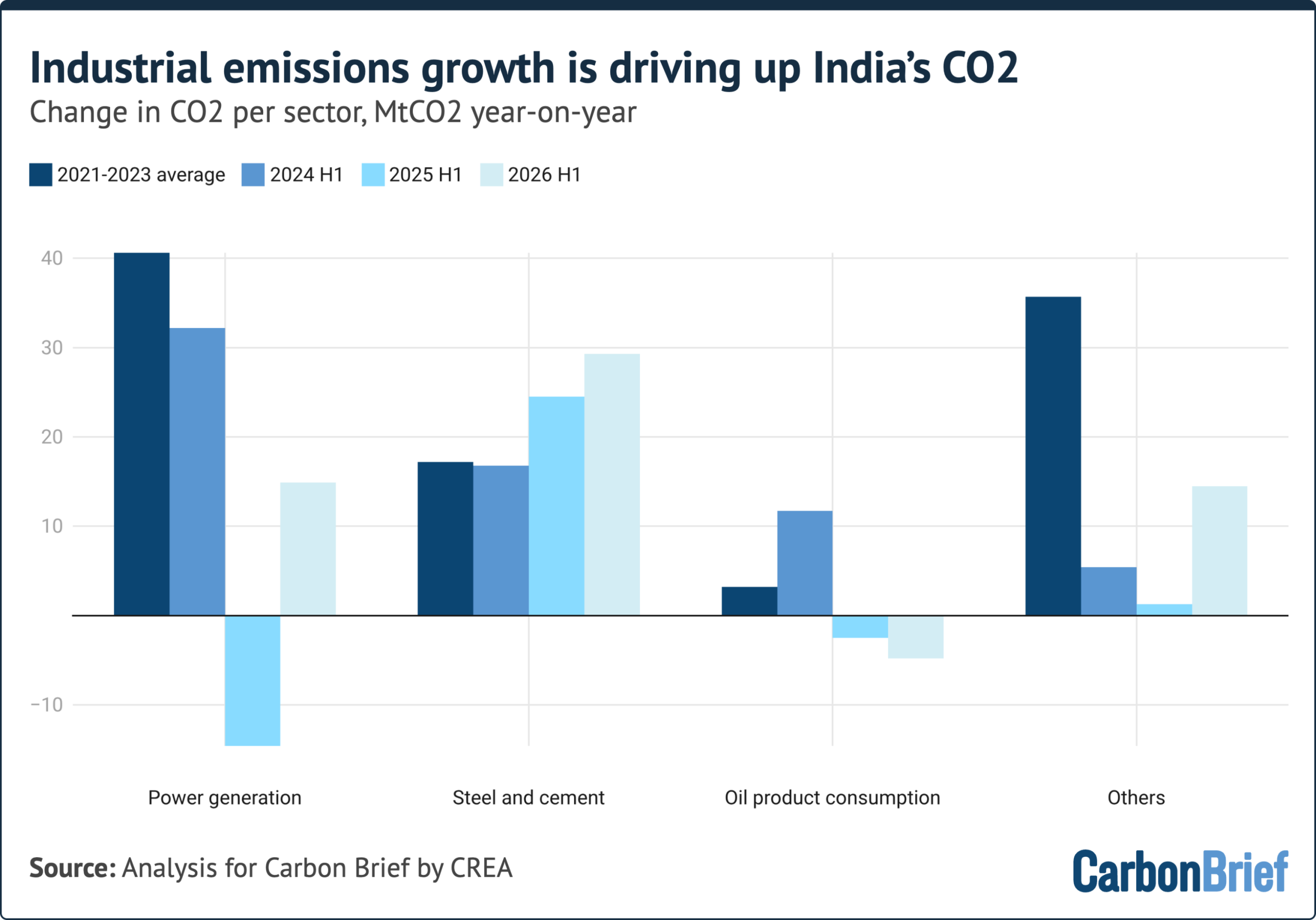
Beyond electricity generation, India’s key emitting sectors continued to see divergent trends in the first half of 2026, as some saw ongoing decline while others reached new heights.
This is shown in the figure below, which compares year-on-year changes in emissions during the first half of 2026 with the same periods in 2025, 2024 and the average for 2021-23.
Specifically, emissions grew by 2.3% in the power sector, reversing last year’s decline, while demand for gas and oil products fell for another year.
The biggest increases were for steel and cement, where emissions growth accelerated to 8% year-on-year in the first half of 2026, well above the recent trend.
Clean-energy growth matches power demand
The period from the first half of 2024 to the first half of 2026 saw the largest increase in non-fossil power generation on record in India.
This enabled fossil-fuel consumption and CO2 emissions from the sector to stay flat, even as electricity consumption increased.
Indeed, this is the first time in more than 50 years that there has been no growth in coal power over a two-year period, even as electricity demand grew overall, as shown below.
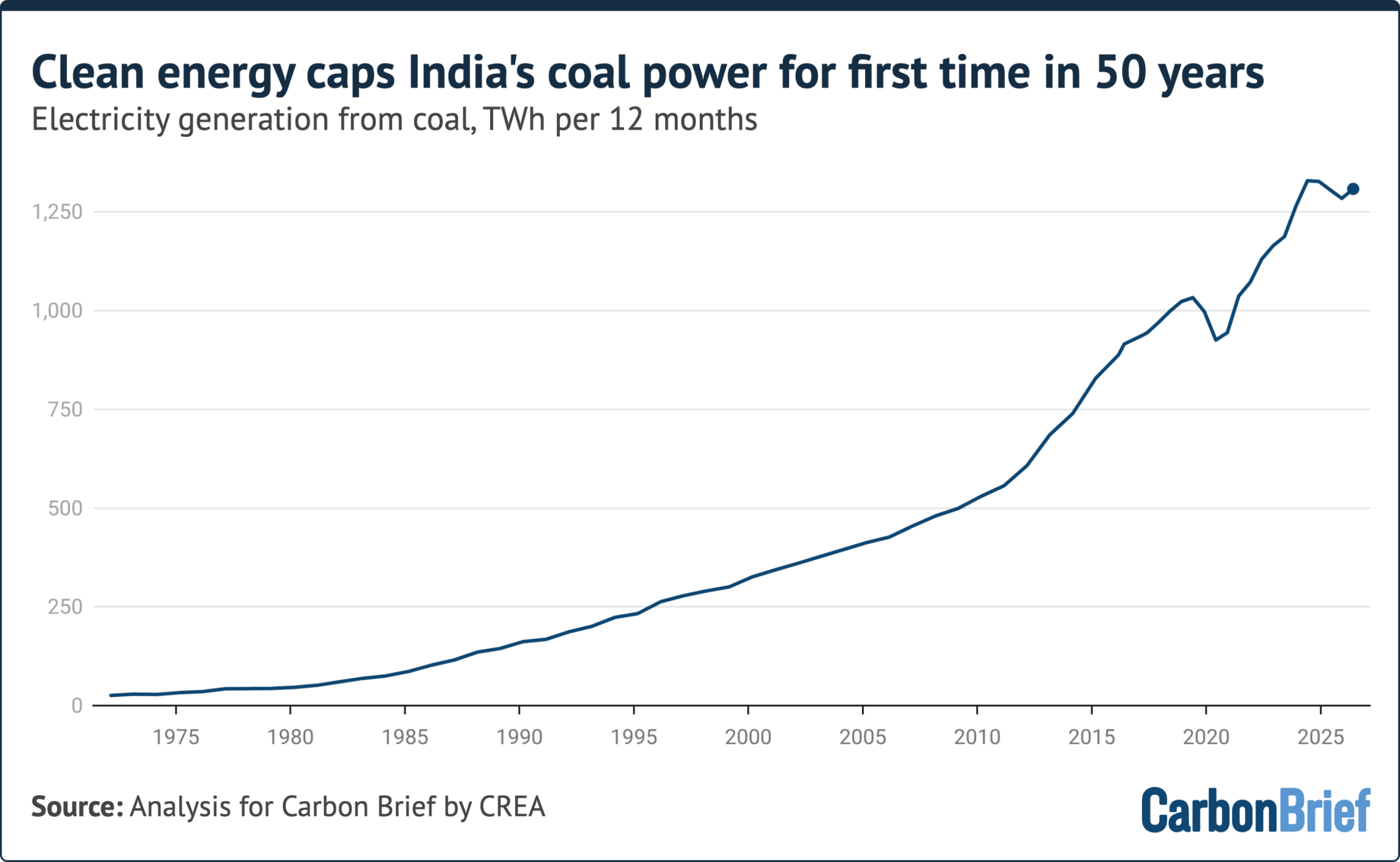
Over this two-year period, India’s total power generation increased by 7%, some 63TWh, equal to the total consumption of Singapore or Switzerland.
The additional power requirement of 63TWh was met entirely by clean energy. Solar grew by 44TWh, alongside growth from wind (13TWh), nuclear (7TWh) and hydro (8TWh).
Together, clean-energy sources added 70TWh over two years, more than the net increase in demand.
(For comparison, China’s nuclear, wind and solar output increased by 485TWh in 2025.)
The figure below shows that new investments are more than sufficient to maintain this trend, as added power generation from new clean power capacity has stayed above average demand growth for the past 18 months.
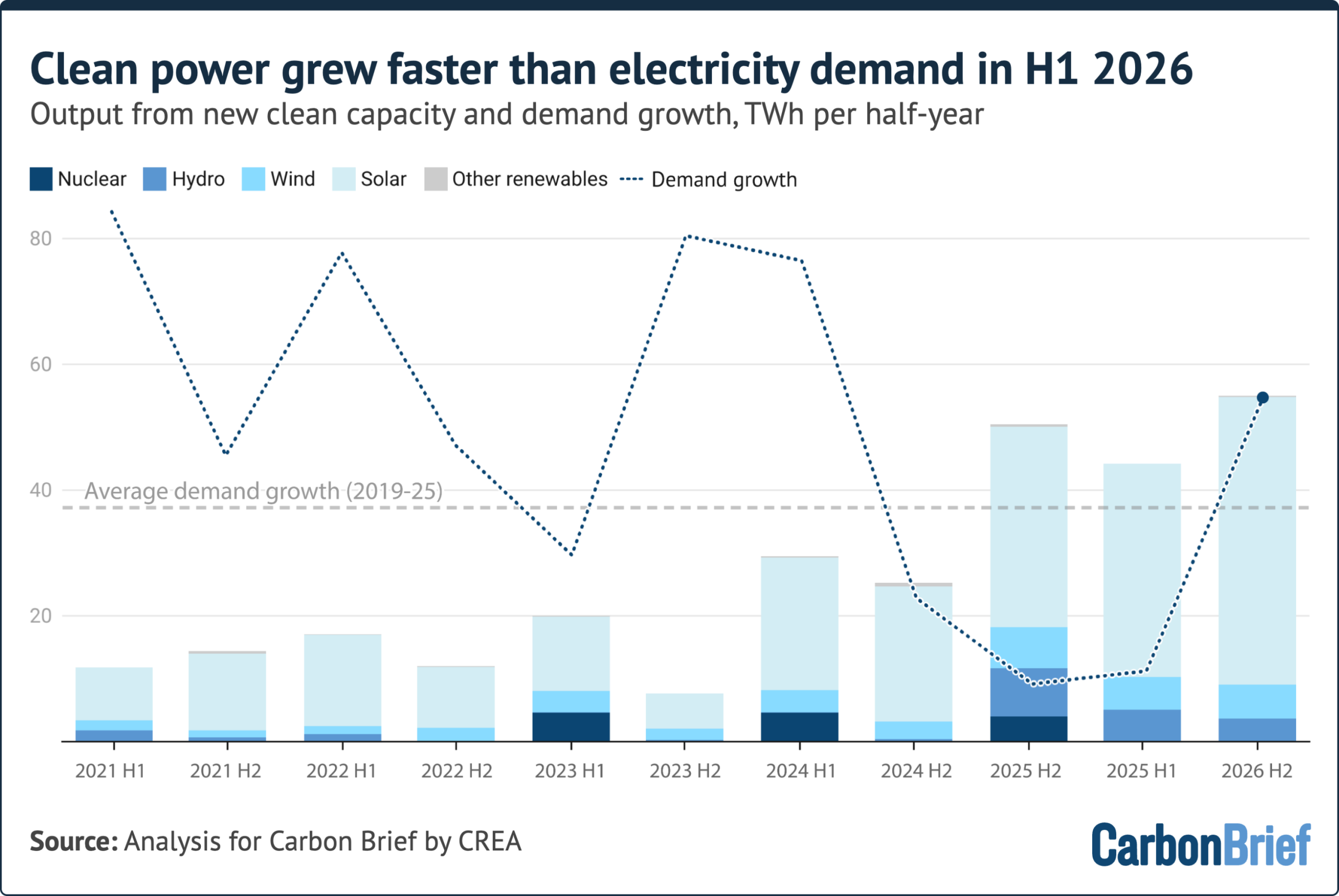
Over the past two years, India added 77GW of new solar capacity, 11GW of wind, 5GW of hydro and 0.6GW of nuclear capacity.
Solar power continues to dominate clean-energy growth, but, collectively, the other non-fossil sources still contributed 40% of the overall increase in generation.
One factor in electricity demand growth in 2026 is the El Niño, which delayed the monsoon and intensified heatwaves, driving up cooling demand.
India is accelerating investment in energy storage, which will support further growth in clean power. The National Electricity Plan projected a requirement of 82 gigawatt-hours (GWh) of energy storage capacity by 2026-27 and 411GWh by 2031-32.
As of May 2026, the government has issued tenders for around 272GWh of energy storage capacity, including 142GWh of pumped hydro and 133GWh of battery storage systems. Current capacity is 7.5GWh of battery storage and around 60GWh of pumped hydro.
Which states led the clean-power shift?
The fall in power generation from fossil fuels from the first half of 2024 to the same period in 2026 was concentrated in a few states.
Gujarat saw both the largest reduction in fossil-fuel generation and the largest expansion in clean power, as shown in the figure below.
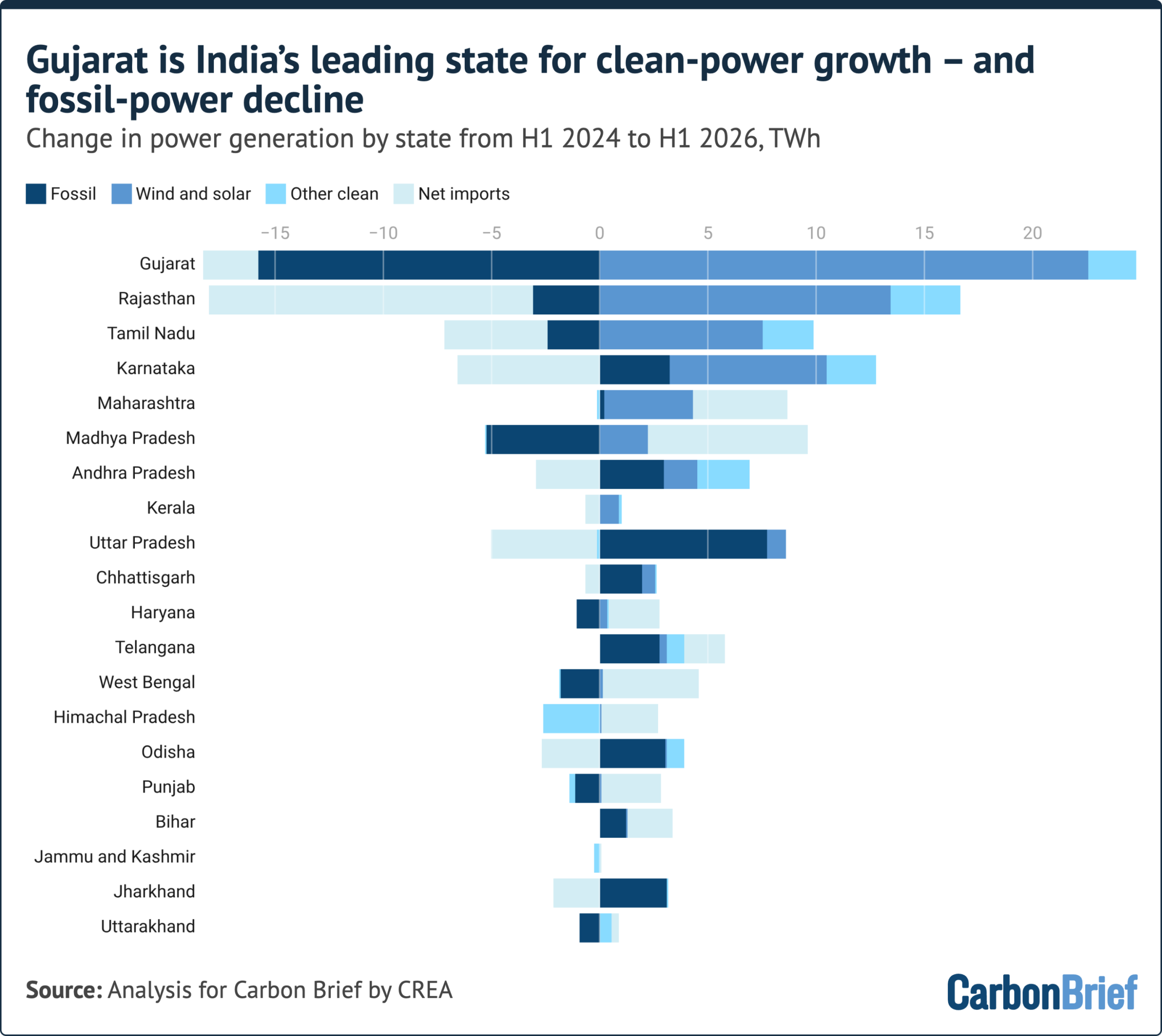
After Gujarat, the largest increases in clean-power generation were seen in Rajasthan and Tamil Nadu, which also saw reductions in power generation from fossil fuels.
Several other states saw declines in fossil-fuel generation due to higher net imports, rather than local clean power. These included Madhya Pradesh, West Bengal and Punjab.
Karnataka and Andhra Pradesh also succeeded in increasing clean-power generation faster than power demand, thereby contributing to keeping fossil fuel-based power generation stable nationwide across the two-year period. However, they exported much of the increase and consequently saw local increases in power generation from fossil fuels.
The two states with the largest increases in power demand, Maharashtra and Telangana, managed to almost match the rise with growth in clean-power generation.
Fall in oil and gas consumption continues
India’s oil consumption continued to fall during the first half of 2026, dropping 1.3% year-on-year, a slight acceleration from the 0.7% reduction in the same period last year.
While diesel and petrol consumption continued to grow, oil consumption was pulled down overall by declines in liquefied petroleum gas (LPG), petcoke (a solid derivative of oil used in the cement industry) and industrial feedstocks. Growth of aviation fuel use eased.
Diesel consumption growth accelerated from 1.8% to 4.1% in the first half of the year, supported by higher freight movement and increased agricultural demand, as the delayed monsoon led to greater use of diesel-powered irrigation.
Petrol consumption returned to growth, increasing 6.9% year-on-year after zero growth in the same period in 2025, reflecting sustained growth in passenger and two-wheeler mobility.
A significant increase in ethanol blending shaved a full percentage point off the growth of petrol consumption. India achieved its 20% ethanol blending target five years ahead of schedule in 2025-26. (Ethanol blending has faced public opposition.)
Electric vehicle (EV) adoption in India is also gaining momentum, with EVs adopted in a widening range of categories.
In Delhi, an EV policy was launched to accelerate electrification of the vehicle fleet, with a particular focus on two-wheelers, three-wheelers (auto rickshaws), commercial vehicles and high-mileage segments, alongside expanded charging infrastructure. Higher EV adoption rates will moderate the growth in emissions from petrol consumption in India.
In contrast, aviation fuel demand growth slowed down from 5% to 2%. The slowdown coincided with the strait of Hormuz and wider crisis, which disrupted international aviation through temporary airspace closures and flight cancellations to several Middle Eastern destinations. Elevated aviation fuel prices also increased airline operating costs, contributing to lower fuel demand.
LPG consumption contracted by 7%, after 5.7% growth in the same period last year, amid disruptions in global LPG markets following the Hormuz crisis.
Petcoke consumption fell 9.9%, more than reversing a 9.3% increase in the same period last year. Rising petcoke prices encouraged cement manufacturers to switch to coal.
Consumption of other petroleum products continued to drop, although the pace of decline moderated from 14% in 2025 to 9% in 2026.
Industrial feedstock use was affected by shortages and price increases.
Naphtha demand contracted as import prices nearly doubled and domestic prices increased by around 60%, prompting petrochemical manufacturers to reduce operating rates and suppress demand for imported naphtha.
Bitumen consumption remained subdued due to slower road construction, driven by persistent land acquisition challenges and higher bitumen costs.
Meanwhile, higher light diesel oil (LDO) prices and shortage of LPG led some industrial consumers to switch back to furnace oil in boilers and heaters, despite the higher air pollutant emissions. Supply of fuel oil to industry increased for the same reason.
Rapid emission growth from heavy industry continues
Steel and cement output in India grew by 8% and 9%, respectively, year-on-year in the first half of 2026, despite rising input prices and weakening profitability.
The growth in steel and cement was supported in part by increased investment in India’s real estate sector, especially in the second quarter. Steel consumption growth outpaced production, implying that inventories built up last year were tapped.
Despite domestic demand growth, profit margins of Indian steel and cement manufacturers remained under pressure for much of the period due to elevated raw material costs – particularly imported coking coal – and higher freight costs stemming from the Hormuz crisis.
The pressure on prices could dampen growth. Cement prices are expected to rise to levels last seen in the 2021-22 financial year, when Russia’s decision to cut back gas exports to Europe drove a sharp increase in fossil-fuel prices.
Outside the steel, cement and power sectors, coal-consumption growth accelerated to 14% in the first half of 2026, up from 3% last year, as the LPG shortage prompted a shift to coal.
Gas shortages resulted in some additional burning of coal for cooking in March and April. The government officially authorised the hospitality industry to use coal, refuse-derived fuel pellets, biomass and kerosene for one month.
The ceramic and tile industry also requested that the government allow the use of coal gasifiers amid the gas shortage. State governments including Delhi NCR, Rajasthan, Tamil Nadu, Gujarat and Maharashtra also allowed industries to temporarily use alternative fuels, including coal.
India’s industrial energy use is dominated by fossil fuels, particularly coal. Indian industry has the second-lowest electrification rate in the G20, as shown in the figure below. The share of electricity in total energy consumption in the sector also lags the world average, in terms of both current levels and the rate of increase.
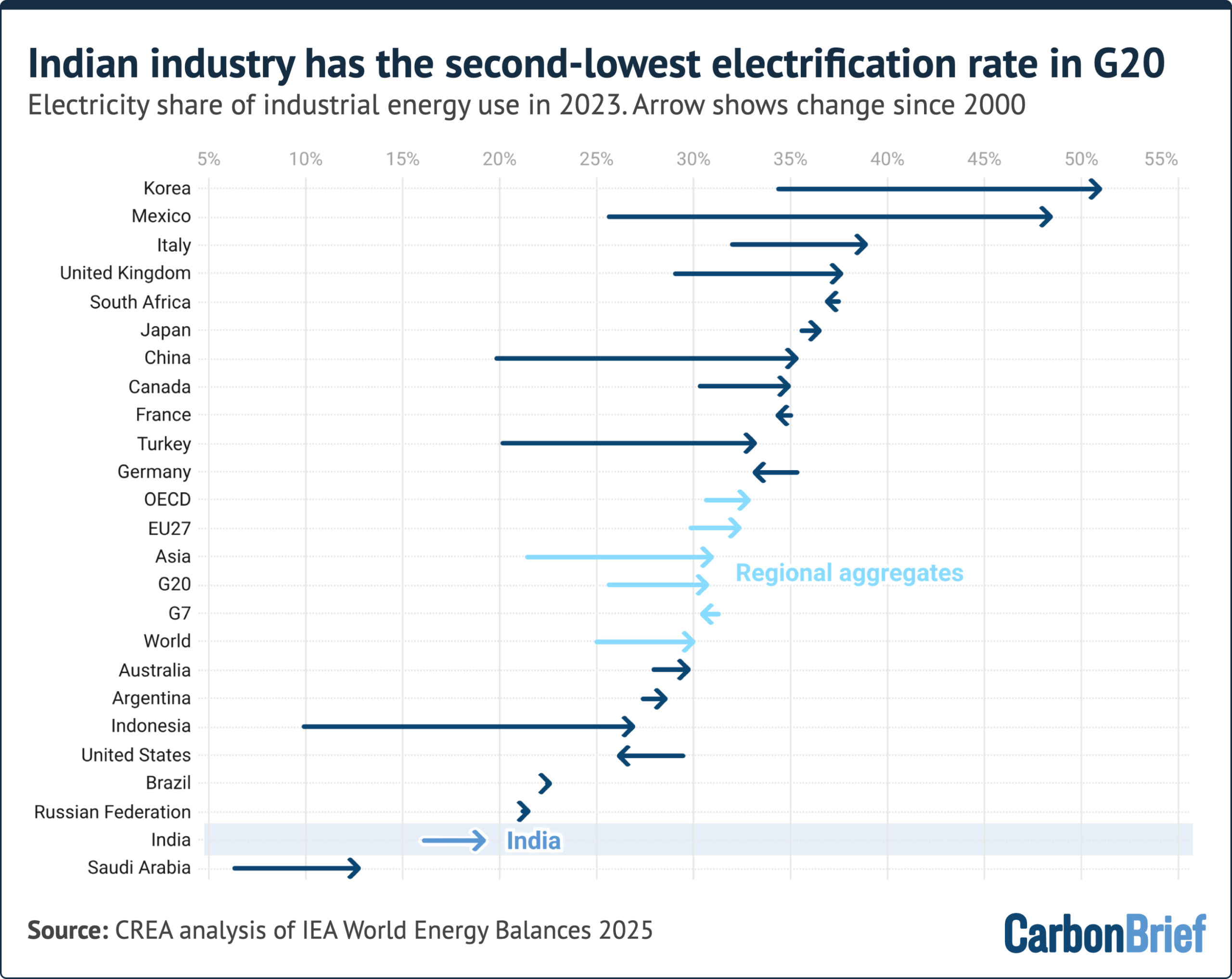
The current low rates of electricity use in Indian industry imply that there is major potential for electrification, using technologies and processes already in place in other countries.
New investments in coal
While the clean-power expansion is starting to meet most or all of India’s electricity demand growth, there are still large investment plans across the coal supply chain.
Some 43GW of coal-power capacity was under construction at the end of June. Additional coal-power capacity is seen as necessary to meet increasing peak loads, even as solar power and energy storage are already playing a role in covering daytime and evening peak demand, respectively. The expansion of energy storage will increase this contribution.
Outside the power sector, India has major ambitions to produce chemical-industry products, such as fertiliser and plastic feedstock, from coal through coal gasification, in pursuit of energy security.
The government is targeting a capacity to process 100m tonnes of coal per year in the next four years, despite the technology for coal gasification still being nascent in India. At present, the only operational use of coal gasification is at Jindal Steel Limited, which is reportedly using syngas in its steel-making process.
Meanwhile, India plans to reduce its average CO2 emissions per tonne of steel by 25% by 2025-26, mainly by reducing the share of coal-based steelmaking.
At the same time, the government is aiming to increase the use of domestic coking coal, which it notified in January this year as a “critical and strategic mineral”. Coal miners and steel companies are reportedly planning to establish additional washeries for coking coal to make it suitable for blending with imported coal for use in steel production.
India is also looking to invest in new coal mines in the near future.
These continued investments in coal gasification, domestic coking coal and new coal mining capacity could lock in coal use across industry for several decades.
Outlook for India’s emissions
Over the two-year period from the first half of 2024 to the same period in 2026, India has achieved its largest clean-energy expansion on record.
As a result, power-demand growth has been met entirely by clean electricity and CO2 emissions in the sector have flatlined.
This expansion of clean energy also allowed a reduction in fossil-fuel imports for power generation, with the use of imported coal falling 38% and the use of gas by 35%, supporting the energy security aims of the government and reducing exposure to the Hormuz shock.
In order to keep the clean-energy growth going, India would need to overcome multiple obstacles, including expansion of the electricity transmission network, improvements in grid flexibility to accommodate variable renewables and the timely completion of new projects.
For example, renewable power projects totalling 5.3GW missed completion deadlines and are having to pay penalties to the grid operator in order to retain network access.
Curtailment has emerged as an issue, particularly for projects relying on interstate power transmission, pointing to the need to upgrade the network. (Curtailment refers to electricity generation that is “wasted” because it cannot be accommodated by the power network.)
Another obstacle to be overcome if clean energy is to keep growing will be making coal-power plants more flexible, so they can ramp down during high renewable output.
A flexibility plan for coal-power plants has been delayed by more than a year due to persistent regulatory bottlenecks, contributing to the curtailment of renewable energy.
Expanding energy storage has the potential to ease grid and flexibility constraints, while reducing or eliminating the need for adding thermal-power capacity to meet peak loads.
The Central Electricity Authority has proposed that, after June 2027, all new government-owned solar and wind projects would have “mandatory” two-hour battery storage. (This mirrors a policy that was in place in China until early 2025 and was subsequently scrapped, in favour of more market-based approaches.)
For oil and gas, India’s consumption has been flatlining for the past two years, after half a century of continuous growth that was only briefly interrupted by Covid-19.
This has reduced the impacts of the Hormuz crisis on the country’s trade balance, helping close the gap between supply and consumption. But it has entailed disruptive shifts in many oil-dependent sectors.
For example, high prices and fuel shortages due to the Hormuz crisis led state governments to reverse their orders banning the use of dirtier fuels such as fuel oil, kerosene and coal in industries and commercial establishments.
Meanwhile, EV adoption has also begun to influence oil consumption.
Despite the progress in the power sector and reductions in oil consumption, India’s total emissions went up over the past two years due to a major increase in industrial emissions.
Low levels of electricity use in industry mean that growing industrial output results in increasing direct fossil-fuel use and emissions.
Unless the rate of industrial electrification picks up, increases in heavy industry output will continue to translate into increases in fossil-fuel consumption and CO2 emissions.
About the data
This analysis is based on official monthly data for fuel consumption, industrial production and power generation from different ministries and government institutes.
Coal-power emissions are estimated by combining plant-level coal consumption from the Central Electricity Authority’s (CEA) monthly coal reports with data on the calorific value and emission factors of coal used at different power plants from the CEA’s CO2 baseline database.
For each station and month, total coal consumption is split into domestic and imported coal using the imported share of coal receipts over a trailing two-month window, found to best reproduce the actual split in data available for 2023.
Consumption is converted to CO2 using each plant’s station-specific gross calorific value from the CEA database and IPCC emission factors for domestic coal, imported coal and lignite. The national-average calorific value is used for recently added plants, for which data is not available in the baseline database.
Coal use at steel and cement plants, as well as process emissions from cement production, are estimated using production indices from the index of eight core industries released monthly by the Office of Economic Adviser, assuming that changes in total fossil-fuel use follow production volumes. These production indices were used to scale fuel use by the sectors in 2022.
To form a basis for using the indices, monthly coal-consumption data for 2022 was constructed for the sectors by combining the annual total coal and petcoke consumption reported in IEA World Energy Balances with monthly production data. This work was set out in a paper by Robbie Andrew, a researcher at Norwegian research institute CICERO, on monthly CO2 emission accounting for India. Monthly petcoke consumption was available from the Petroleum Planning and Analysis Cell, while coal consumption by the cement industry was calculated by subtracting petcoke use from total fossil-fuel use.
Annual cement-process emissions up to 2025 were also taken from Andrew’s work and scaled using the production indices. This approach better approximated changes in energy use and emissions reported in the IEA World Energy Balances, than did the amounts of coal reported to have been dispatched to the sectors, showing that production volumes are the dominant driver of short-term changes in emissions.
For other sectors – including aluminium, auto, chemical and petrochemical, paper and plywood, pharmaceutical, graphite electrode, sugar, textile, mining, traders and others – coal consumption is estimated based on data on despatch of domestic and imported coal to end users from statistical reports and monthly reports by the Ministry of Coal, as consumption data is not available.
Coal consumption by “captive” coal-power plants – those supplying power to industrial sites, not to the public electricity network – was calculated based on capacity changes from Global Energy Monitor, assuming constant utilisation, as utilisation has been very stable year-to-year, as calculated from Central Electricity Authority data.
The difference between coal consumption and dispatch is stock changes, which are estimated by assuming that the changes in the amount of coal stored at end-user facilities mirror those at coal mines, with end-user inventories excluding power, steel and cement assumed to be 70% of those at coal mines, based on comparisons between our data and the IEA World Energy Balances.
Stock changes at mines are estimated as the difference between production at and dispatch from coal mines, as reported by the Ministry of Coal.
Coal consumption is estimated in two ways for sectors beyond power, steel and cement. Consumption of domestic coal in these other sectors is taken from the monthly reports by the Ministry of Coal. Their consumption of imported coal is estimated from the total imports of thermal coal reported by consultancy Kpler, by subtracting demand for imports at coal-power plants. The basis for this assumption is that steel and cement industries use little imported thermal coal, according to Ministry of Coal data.
Product-by-product consumption data for petroleum products, as well as gas use by sector, is from the Petroleum Planning and Analysis Cell of the Ministry of Petroleum and Natural Gas.
As the fuel dispatch and consumption data is reported as physical volumes – such as tonnes or litres – calorific values are taken from IEA’s World Energy Balance and CO2 emission factors from 2006 IPCC Guidelines for National Greenhouse Gas Inventories.
The emissions factor for motor oil or petrol was updated, based on the blending percentage of ethanol each year. The ethanol-blending percentage is as reported by the Ministry of Petroleum and Natural Gas.
Calorific values are assigned separately to different fuel types, including domestic and imported coal, anthracite and coke, as well as to petrol, diesel and several other oil products.
related
Explainer: The CMIP7 emissions scenarios – and how they explore future climate change
UNEP: New country climate plans ‘barely move needle’ on expected warming
Analysis: India’s power-sector CO2 falls for only second time in half a century
World’s electricity supply close to ‘peak emissions’ due to growth of wind and solar
The post Analysis: India’s power-sector emissions flat for two years due to clean-energy surge appeared first on Carbon Brief.
Analysis: India’s power-sector emissions flat for two years due to clean-energy surge



-

 Greenhouse Gases2 years ago
嘉宾来稿:满足中国增长的用电需求 光伏加储能“比新建煤电更实惠”
-
Climate Change1 year ago
Guest post: Why China is still building new coal – and when it might stop
-
Greenhouse Gases1 year ago
Guest post: Why China is still building new coal – and when it might stop
-

 Climate Change2 years ago
嘉宾来稿:满足中国增长的用电需求 光伏加储能“比新建煤电更实惠”
-

 Renewable Energy11 months ago
Sending Progressive Philanthropist George Soros to Prison?
-
Climate Change2 years ago
Bill Discounting Climate Change in Florida’s Energy Policy Awaits DeSantis’ Approval
-
Greenhouse Gases1 year ago
嘉宾来稿:探究火山喷发如何影响气候预测
-

 Carbon Footprint2 years ago
US SEC’s Climate Disclosure Rules Spur Renewed Interest in Carbon Credits