Connect with us

Published

on

The Australian residential solar industry is large and continues to grow. With over three million solar panel systems now installed in Australian homes, you might believe that solar installation is a routine and quality-assured job.   

The increasing popularity of solar panels has led to an increase in complaints about solar companies.  

The Clean Energy Regulator has also conducted inspections of residential solar installations, which revealed that many installations require corrective action or need to be correctly configured.  

So, how do you ensure a proper residential solar panel installation? The installation process for a solar panel system in Australia involves several steps to guarantee an appropriate setup and compliance with regulations.    

Process Of Residential Solar Panel Installation

Here’s a comprehensive overview of the process: 

Assessment and Planning

Determine your energy needs: Understand your household’s electricity consumption patterns to determine the required size of your solar system.  

Roof Assessment: Evaluate the suitability of your roof for solar panel installation. Factors such as roof orientation, shading, and structural integrity are taken into consideration.  

Obtain quotes: Get multiple quotes from solar installation companies. These quotes should include the system size, panel types, inverter technology, warranties, and estimated costs.

Choose a Solar Installer

  • Research and select a reputable solar installer. Look for companies with experience, positive reviews, and proper licensing.  
  • Check if they are accredited: The Clean Energy Council (CEC) provides accreditation to solar installers in Australia. Choosing an accredited installer ensures compliance with industry standards and regulations.   

System Design

The solar installer will design the system based on your energy consumption, roof characteristics, and local regulations. They will recommend the number and type of solar panels, the inverter, and the overall system layout. 

Permits and Approvals

The installer will handle the necessary permits and approvals from local authorities and the electricity network distributor. This may also involve obtaining grid connection approval and ensuring compliance with relevant regulations. 

Book Your Equipment

Once the system design is finalised, the installer will procure the solar panels, inverters, mounting hardware, and other necessary components.

Installation

The solar panels and supporting structures are installed on your roof. It also involves securely mounting the panels, wiring them, and connecting them to the inverter.

Inverter Installation

The inverter, which converts the direct current (DC) electricity produced by the panels into usable alternating current (AC) electricity, is installed on the exterior or interior of your home or business.

Electrical Work

Proper electrical work is crucial to ensure the safety and effectiveness of the system. The installer will connect the inverter to your main electrical panel and install the necessary safety disconnect switches.  

Testing

The installer will conduct thorough tests to ensure the system functions correctly and safely. Also, this includes checking the electrical connections, voltage levels, and system performance.  

Grid Connection

If you’re connecting to the grid, the installer will coordinate with your local network distributor to ensure the proper connection of your solar system to the electricity grid. 

Paperwork and Documentation

The installer will provide all necessary documentation, including warranties, user manuals, and information about the solar system’s performance.  

Final Inspection and Approval

Sometimes, local authorities or your network distributor may perform a final inspection to ensure the system meets safety and compliance standards.  

It’s essential to note that the specific details of the installation process may vary depending on the location, installer, and local regulatory requirements in different parts of Australia.   

Working with a qualified and accredited solar installer is essential to ensure a smooth and compliant installation process for your solar panel system.  

What’s An Ideal Solar Installation Company?
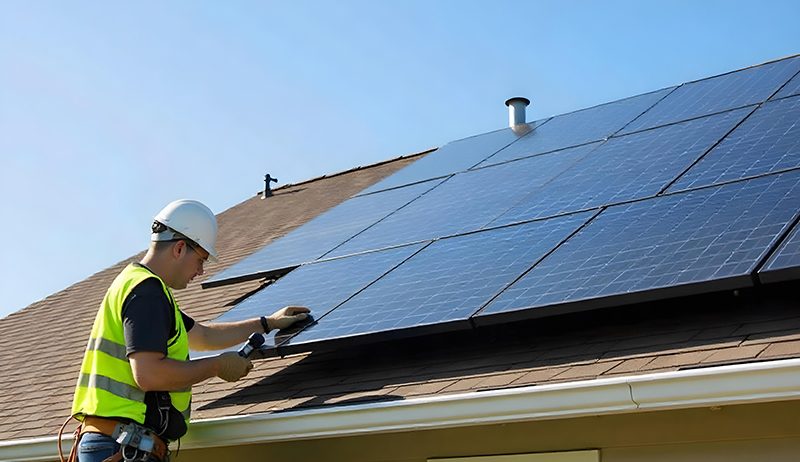
solar installations

Choosing the best installer for residential solar panel installation in Australia is crucial to ensure the success, safety, and long-term performance of your solar system. Here are some steps to help you select the correct installer:

Check Accreditation

Ensure the installer is accredited by the Clean Energy Council (CEC). CEC accreditation signifies that the installer has met industry standards and possesses the necessary skills and knowledge for quality installations.

Research Reputation

Look for reviews and testimonials from previous customers. Online platforms, social media, and local community groups can provide insights into the installer’s reputation and customer satisfaction.  

Experience Matters

Opt for installers with a proven track record and years of experience in the solar industry. Experienced installers are likelier to deliver reliable installations and handle potential challenges effectively. 

Multiple Quotes

Obtain quotes from several installers. It helps you to compare prices, system designs, components, and warranties. Be cautious of quotes that are significantly lower than others, as they may compromise quality.

Quality Products

Inquire about the brands and types of solar panels, inverters, and other components the installer uses. High-quality components offer better performance and more extended warranties.

Warranties and Guarantees

Pay attention to the installer’s warranties on the installation and components. Reputable installers should provide assurances that cover both the quality and performance of the installation.

Site Assessment

A reliable installer should thoroughly assess your property to determine the optimal system size, orientation, and potential shading issues.

Transparency

The installer should be transparent about all aspects of the installation, including costs, timelines, and potential challenges. Only installers who are clear and confident in providing information should be considered for this role.

Insurance Coverage

Confirm that the installer has appropriate insurance coverage, including public liability and workers’ compensation, to protect against any accidents or damage during installation.

Ask for References

Feel free to ask the installer for references from previous customers. Speaking with these references can provide valuable insights into their experiences with the installer.   

Check Licences

Verify that the installer holds the licences and certifications required by local authorities and regulatory bodies.  

Remember that investing in a quality installation with a reliable installer can save you money in the long run and ensure the longevity of your solar system’s performance. Take your time to research and choose an installer that aligns with your needs and priorities. 

Components Of Solar Panel System
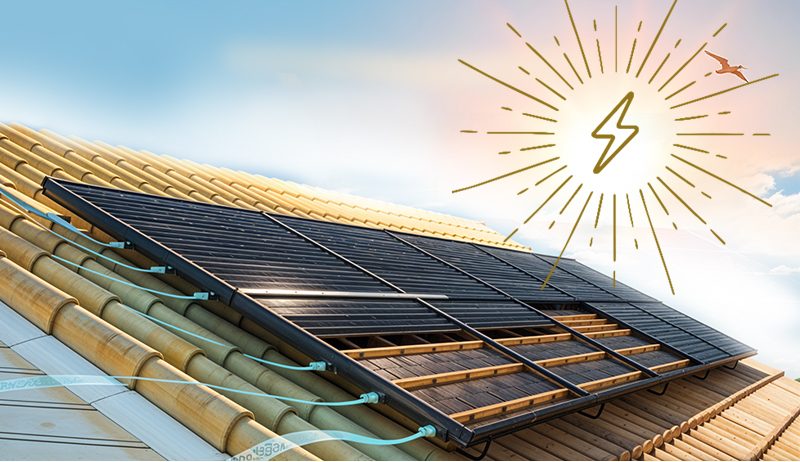
A solar panel system comprises several key components that capture sunlight and convert it into usable electricity. Here’s a brief overview of these components:  

  • Inverter  
  • Mounting System  
  • Racking and Frames   
  • Wiring and Cables  
  • DC Disconnect Switch  
  • AC Disconnect Switch  
  • Net Meter  
  • Grounding Equipment  

Each of these components plays a crucial role in the functionality and safety of a solar panel system.   

When considering a solar installation, it’s essential to understand how these components work together to generate clean, renewable energy for your home or business.

Why Cyanergy As Your Desired Solar Installer?

Choosing Cyanergy as your solar panel installer offers numerous compelling benefits, making it an outstanding choice for your renewable energy journey.  

Proven Expertise: With a wealth of experience in the solar industry, Cyanergy stands as a trusted name in the field. Our team of skilled professionals brings a deep understanding of solar technology and installation practices, ensuring a seamless and efficient process.  

Clean Energy Council Accreditation: Cyanergy proudly holds Clean Energy Council (CEC) accreditation, a testament to its commitment to adhering to industry best practices and delivering top-quality installations. This certification underlines the dedication to excellence and compliance with the highest standards.  

Tailored Solutions: Recognising that every home is unique, Cyanergy specialises in crafting customised solar solutions that perfectly align with your energy needs, budget, and aesthetic preferences. We work closely with you to design a system that maximises energy production and fits seamlessly into your property.  

High-Quality Components: Cyanergy’s dedication to excellence extends to its components. We prioritise sourcing high-quality solar panels, inverters, and other equipment from reputable manufacturers.   

This focus on premium materials ensures the reliability and long-term performance of your system.  

Exceptional Customer Service: Customer satisfaction is at the heart of Cyanergy’s ethos. Our team is dedicated to providing you with a great customer experience, from the initial interest in the installation through to the follow-up. They’re readily available to address your queries and concerns.

Transparent Process: Cyanergy is committed to transparency at every step. We take the time to explain the installation process, pricing details, and any available incentives or rebates. This open approach empowers you to make well-informed decisions with confidence.  

Efficient Installation: The skilled installers at Cyanergy are experts at executing installations efficiently without compromising quality.   

Warranties and Support: Cyanergy takes pride in the durability and reliability of its installations. This commitment to customer satisfaction extends beyond installation day.  

Positive Impact: By choosing Cyanergy, you contribute to a cleaner environment and reduce your carbon footprint. Solar energy helps decrease reliance on fossil fuels and promotes a more sustainable future for future generations.  

Local Focus: As a local business, Cyanergy understands the region’s unique energy landscape. Our insights into local regulations, grid connections, and available incentives ensure a smooth installation process tailored to your location.  

With our expertise, commitment to quality and customer-focused approach, we are determined to guide you towards harnessing the sun’s power and enjoying the benefits of a well-designed solar panel system.  

Cyanergy shines as a trusted partner on the journey towards cleaner and more affordable energy. Get a free solar quote today!

Your Solution Is Just a Click Away

The post Complete Guide To Residential Solar Panel Installation appeared first on Cyanergy.

https://cyanergy.com.au/blog/complete-guide-to-residential-solar-panel-installation/

Continue Reading

Renewable Energy

Danish Data Center Heats a Town, Vestas Breaks UK Record

Published

on

Weather Guard Lightning Tech

Danish Data Center Heats a Town, Vestas Breaks UK Record

A Danish data center will heat a town with its waste heat, Sumitomo buys into Celtic Sea floating wind, and Cadeler orders two more vessels.

The Uptime Wind Energy Podcast is brought to you by Weather Guard Lightning Tech, creators of the StrikeTape Ultra LPS retrofit. Subscribe to Uptime’s Substack newsletter. And check out Rosemary’s “Engineering with Rosie” Youtube channel. Have a question we can answer on the show? Email us!

Good Monday everyone.

A data center broke ground in Denmark this week … and the plan is for it to help heat the town. Not a slogan. But a pipe. Let me explain.

The project is called Dansk Data Center 1. They put shovels in the ground on August thirteenth at the Port of Esbjerg in southern Denmark. The owners are the pension fund PensionDanmark … the real estate firm Thylander … and Copenhagen Infrastructure Partners. That last name should sound familiar. Copenhagen Infrastructure Partners has raised about forty-three billion euros across fifteen funds … and builds energy projects in more than thirty countries. This time it is building a data center.

Eleven and a half megawatts. By the standards of this business … that is small. But watch how they built it. The waste heat will go into the town’s district heating system … in partnership with the local utility … Din Forsyning. The cooling water runs in a closed loop and gets used again. And the plant can raise or lower its power draw to match whatever the Danish grid has to spare that hour.

The chief technology officer put it plainly. The goal is for the data center not to be a burden … but an active part of a balanced energy system. Commissioning is set for October of twenty twenty-seven.

Now … hold that model in your head. Because on the other side of the world … they are still doing it the old way.

Centuria Industrial is a warehouse landlord. Australia’s largest pure-play industrial property trust. This week … in its full-year results … it told investors it is chasing more than two hundred and fifty megawatts of data center capacity.

Some of that is expansion at sites it already owns. A twelve-megawatt building in Melbourne bought from Telstra back in twenty twenty. A small center in Toowoomba, Queensland. Another in Perth … leased to Fujitsu. But the rest of that plan is warehouses. Old industrial yards in Victoria and Western Australia that Centuria wants to turn into data halls.

And here is the tell. For three of those sites … the company has already filed power applications. Not planning applications. Power applications. Because in this business … the grid connection is the product. Centuria’s head of funds management says Australian demand is now outpacing supply. He is not wrong. And he is not alone.

So … two continents. Two data center stories. One built as a part of the power system. The other waiting in line for it. Either way … the load is coming. Which brings us to the people building the supply.

Start in the Celtic Sea … about forty kilometers off the British coast. There is a floating wind project out there called Gwynt Glas. That is Welsh for blue wind. Up to one and a half gigawatts. This week … Japan’s Sumitomo Corporation bought a third of it. The other two thirds are held by EDF … and by Ireland’s Electricity Supply Board. Three equal partners.

Now … Sumitomo has been investing in European offshore wind since twenty fourteen. But this is its first floating project anywhere in the world. And the timeline will test your patience. Consent applications do not even begin until twenty twenty-eight. Commercial operation is targeted for the late twenty thirties. That is a Japanese trading house writing a check today for electricity that shows up in fifteen years.

The deal sits under a memorandum signed with the British government last year. Britain wants the Celtic Sea built. Japan just volunteered to help pay for it.

Now up to Scotland. Vestas has installed the most powerful onshore wind turbine in Britain. It stands at Sanquhar II … between Dumfries and Galloway and East Ayrshire. The machine comes off the EnVentus platform … a bigger rotor married to a higher-rated generator. More energy out of the same wind. That project spent ten years in planning. And Vestas has more than six hundred megawatts of these machines under construction across Britain.

But here is the argument going on inside the industry. Everybody is building bigger turbines. And yet a Vestas executive said this week … quote … we firmly believe bigger does not automatically mean better. Project economics are under pressure. In Germany and the Netherlands … you cannot get a blade that size under a bridge or through a village. Scotland is empty enough to try it.

Britain now has about thirty-three gigawatts of wind … split about evenly between onshore and offshore. Onshore space is running out. So every new turbine has to do more work than the one before it.

And then … there are the ships. Cadeler runs the largest fleet of jack-up wind turbine installation vessels in the world. This week … it ordered two more. The yard is COSCO Shipping Offshore in Qidong, China. The price … about eight hundred and five million euros. Call it nine hundred and thirty million dollars. Delivery … twenty thirty and twenty thirty-one. That will bring the fleet to fourteen vessels.

And understand what these things are. The current class carries a deck of five thousand six hundred square meters … a payload over eighteen thousand tonnes … and a crane that lifts more than three thousand three hundred tonnes. Six extra-large monopile foundations per trip. The new class … they say … will be bigger still.

Meanwhile the newest ship … the Wind Ace … is finishing commissioning right now. Its first job is East Anglia Two for ScottishPower Renewables … starting in twenty twenty-seven.

And here is the number that tells you the most. Cadeler’s order backlog stands above three billion dollars. Eighty-two percent of that work is on projects where the customer has already taken a final investment decision. Nobody orders a nine-hundred-million-dollar ship for twenty thirty-one on a hunch.

So … here is what to watch. For years this industry has fought one bottleneck at a time. Permits. Then supply chain. Then vessels. Now the bottleneck is the grid connection itself. Centuria filed power applications before planning applications. Because in twenty twenty-six … the scarce resource is not land or steel or capital. It is a slot on the transmission network.

That changes the game for wind developers. The projects that win will not be the ones with the biggest turbines or the cheapest blades. They will be the ones that show up with a grid solution already in hand. Denmark just showed what that looks like. A data center that flexes its load … feeds heat back to the community … and makes the grid operator’s job easier.

If you are developing a wind farm today … and you are not thinking about who will consume your electrons and how … you are already behind. The old pitch was … we generate clean power. The new pitch is … we solve a grid problem. That is the difference between a project that gets built and one that sits in a queue for five years.

And that is the state of the wind industry for the 18th of August … twenty twenty-six. Join us for the Uptime Wind Energy Podcast tomorrow.

Danish Data Center Heats a Town, Vestas Breaks UK Record

Continue Reading

Renewable Energy

Preferences for Musical Genre and Political Demographics

Published

on

The following is simply raw speculation on my part.  I’ll be interested in your comments.

There are musical styles that align themselves with left- and right-wing politics, though none of these, with the possible exception of one, has 100% of its audience–more on this below.

Here are a few musical genre, where they seem to be pro- or anti-Trump. and why:

Classical.  Largely but not exclusively anti-Trump.  Classical appeals to the mind and the emotions that surround the perception of beauty.  There are exceptions, in that there are plenty of billionaires and weirdo intellectuals, e.g., the “objectivists” of Ayn Rand fame many of whom adore classical music.

Country.  Pro-Trump.  Most of it appeals to people whose most nuanced thinking is getting drunk and laid.  Preferably at the same time.

HipHop: Pro-Trump.  The opposite of classical, this is music that appeals to the genitalia as opposed to the mind.

Rock.  Mixed bag.  Heavy metal probably favors Trump; prog-rock fans of bands like Yes and Pink Floyd have too much going on in their minds and hearts to be Trump supporters.

Folk: Mostly anti-Trump.  Pete Seeger and Bob Dylan fans aren’t big fans of stupidity and fascism.  I’m sure there are exceptions.

Reggae: Distinctly anti-Trump.  Black folks’ songs of love, peace, weed, and escape from enslavement aren’t going to resonate with the hate of the White supremacists.

The Grateful Dead.  I’ll leave you with this.  If you can find me a single Dead Head Trumper, I’ll be astounded.  Now, I know that essentially no one sits on the fence about the Dead, but there is essentially zero intersection of Dead Heads and those who favor war, corruption, hate, greed, and ignorance.

Preferences for Musical Genre and Political Demographics

Continue Reading

Renewable Energy

Did God Assign Your Gender?

Published

on

Religious statements fly in the teeth of science, but even the most ardent believers in God are going to have trouble with the meme here.

The reason men have nipples is that their gender isn’t assigned until about six weeks after conception, when chromosomes trigger hormonal changes that differentiate male and female anatomy.

Did God Assign Your Gender?

Continue Reading

Trending

Copyright © 2022 BreakingClimateChange.com