

Veteran climate diplomat Laurence Tubiana is in contention to be France’s new prime minister, with three left-wing parties backing her as a compromise candidate following inconclusive legislative elections. But infighting among the leftist political coalition that win the most seats means she has yet to be confirmed as its official choice.
France’s Green Party (EELV), Socialist Party (PS) and Communist Party (PCF) have proposed Tubiana – a key figure in securing the Paris Agreement on climate change – for the leadership role, representing the New Popular Front (NFP) coalition of left-wing parties. She has no formal political affiliation.
The head of the PS, Olivier Faure, said Tubiana “completely corresponds to what we are promoting”, praising her as the “architect of COP21 [where the Paris Agreement was adopted in 2015], commissioner for the climate convention, economist and diplomat engaged in both the environmental and social fields”.
But the biggest member of the NFP alliance, France Unbowed (La France Insoumise, LFI), is opposed to Tubiana getting the job, as they fear she is too close to the current President Emmanuel Macron and his centrist Renaissance party. “If this is the profile our partners are working on, I’ll fall off my chair,” said LFI coordinator Manuel Bompard on Tuesday, adding the suggestion was “not serious”.
In the July 7 elections, which resulted in a surprise defeat for the far right, no block won a majority of seats in the French legislature, known as the National Assembly. Of the 577 seats, the NFP left-wing alliance won 182, President Macron’s centrist party 168 and Marine Le Pen’s far-right National Rally (RN) 143.
On Tuesday, French President Emmanuel Macron accepted the resignation of current Prime Minister Gabriel Attal, although he will lead a caretaker government with a limited mandate until a new government is named.
The choice of the new prime minister is ultimately up to President Macron, but in order to govern, the PM must have the support of a majority of National Assembly deputies.
The left-wing parties have been searching for a joint candidate and, after LFI’s suggestion of Huguette Bello was rejected by the Socialists, Tubiana’s name was put forward. Faure said Tubiana had been consulted before the suggestion was made.
UK court ruling provides ammo for anti-fossil fuel lawyers worldwide
Tubiana, he said, is “someone who has strong convictions, who has never compromised. She has always been on that side [the left], she has never deviated. This is a demonstration of her ability to stand her ground.”
But according to French newspaper Le Monde, the LFI suspects she is too close to Macron. He twice offered her the job of ecological transition minister, which she declined, and she recently co-signed an editorial calling for the the left-wing block to reach out to Macron’s centrist party in order to govern.
Climate pedigree
Tubiana started out at the French National Institute for Agricultural Research before setting up and leading an NGO working on food security and the global environment called Solagral through the 1980s and 1990s.
In 1997, then French President Lionel Jospin of the Socialist Party appointed her as his environmental advisor until he stepped down in 2022.
Tubiana next founded an influential French think-tank called the Institute for Sustainable Development and International Relations (IDDRI) before re-entering government as France’s lead negotiator in the run up to COP21, at which the landmark Paris Agreement was signed.
Since then, she has been an official United Nations champion on climate action, as well as president and CEO of the European Climate Foundation (ECF), which funds green think-tanks and media outlets including Climate Home News.
Where East African oil pipeline meets sea, displaced farmers bemoan “bad deal” on compensation
In these roles, she has pushed for governments at UN climate summits to agree to phase out fossil fuels, and called carbon capture and storage a false solution to the fossil fuel industries’ emissions.
In 2018, Macron appointed her as a member of France’s official climate advisory body, the High Council on Climate Change.
The ECF has recently worked alongside the French and Kenyan governments looking into global green taxes that could fund climate action.

Laurence Tubiana (left) celebrates the signing of the Paris Agreement in 2015 (credit: IISD.ca/Kiara Worth)
Environmental lawyer Arnaud Gossement said Tubiana’s appointment as France’s prime minister would be “a really good idea” as she is “a recognised climate specialist”.
Florence Faucher, professor of political science at French university Sciences Po, told Climate Home that Tubiana’s appointment “would certainly be interesting” but “I really doubt it [will happen]”.
The leftist coalition has said it hopes to find agreement on a candidate soon, with the new National Assembly set to meet for the first time on Thursday. One way the matter could be settled is by holding a vote among the new left-wing deputies.
On Wednesday morning, EELV deputy Sandrine Rousseau told French TV: “The discussions are not over – we will find a solution.”
(Reporting by Joe Lo; editing by Megan Rowling)
The post Climate diplomat Laurence Tubiana backed by some left parties as next French PM appeared first on Climate Home News.
Climate diplomat Laurence Tubiana backed by some left parties as next French PM

SYDNEY, Thursday 30 October 2026 — In response to reports that the Albanese government is set to introduce draft legislation this year that would seek to ban data centres in Australia’s suburbs, Joe Rafalowicz, Head of Climate and Energy at Greenpeace Australia Pacific, said:
“These reports are a testament to the growing community opposition to these completely inappropriate AI factories that have sprung up across our suburbs, and Big Tech corporations should take heed — the data centre build-out must not happen without the endorsement of the Australian people.
“But the government can’t simply ship this problem out to regional Australia without addressing the fundamental issues with this extractive new industry.
“We’re already seeing a trend of AI data centre proposals moving to the regions, in areas that are more water-scarce, more environmentally sensitive, and next to sources of fracked and coal seam gas to support their massive BYO gas-fired power plans — a pattern we’ve seen play out in the United States.
“From the Beetaloo Basin in the NT to the Western Downs in Qld, we’re seeing a wave of AI data centre proposals that would see new gas fast-tracked to support their massive energy demand, and threaten to completely derail Australia’s energy transition.
“Just as suburban Australians are asking, “what for?”, regional communities like Berry Springs and Dalby do not want dirty data centres setting up shop with absolutely no benefit to their communities. Greenpeace is calling for a moratorium on AI data centre developments until strict and enforceable safeguards are in place to protect our climate and our communities.”
-ENDS-
Media contact
Kate O’Callaghan on +61 406 231 892 or kate.ocallaghan@greenpeace.org
AI data centre ban in suburbs would not address fundamental issues: Greenpeace
In the thick of the COP29 climate summit in Azerbaijan in 2024, the UN climate talks were rattled by what can only be described as a major PR disaster. The BBC, Reuters and The Guardian all carried headlines, attributed to leading climate policy experts, that the COPs were “no longer fit for purpose”.
The articles outlined a series of reforms called for in an open letter signed by 22 eminent scientists and politicians, including a former UN secretary-general and previous UN climate chief, with a further 150 lending their support. The headlines shook confidence in the COP process, just as governments were wrestling over a new climate finance goal.
The Club of Rome – which handled the media relations for the letter – hurried to say that its “constructive, supportive ideas” had been “misinterpreted”. Negotiators kept calm(ish) and carried on, in the end landing the finance goal after some high-stakes drama on the final day.
-
Early speakers’ list suggests few powerful leaders will attend COP31
Just 77 heads of state or government are scheduled to address the COP31 climate summit in Antalya, a third less than the COP28 peak -
Africa wants adaptation finance on COP31 agenda, raising risk of a fight
The African Group wants dedicated space on tripling adaptation finance, the Green Climate Fund and trade, setting up a possible clash

To my surprise, when I went back this week to read the letter again, I could not find the offending line about the COPs not being fit for purpose. The Club of Rome has yet to respond to my query about its disappearance.
Whatever happened to the wording, that sentiment has been widely shared. COPs have ballooned in size while the importance of their outcomes seems to have diminished since the 2015 Paris Agreement (with the exception of the 2023 COP in Dubai where countries agreed to transition away from fossil fuels in energy systems).
The same on the surface
Two years on from those painful headlines in Baku, has anything changed for the better? You might be forgiven for thinking not. Official decisions are still made by consensus rather than the majority voting some have called for to stop blockers.
Tens of thousands of officials, activists and business execs still scurry around the halls to an ever-growing list of side events, roundtables and dialogues, while deals still come down to rows, all-nighters and jargon-filled texts adopted to rounds of applause.
But it would not be true to say that COPs have completely failed to respond to the very real need to translate the words of the Paris Agreement into action in the outside world.
Global warming is projected to be around 1.3C lower this century than it would have been if the world had not committed to tackle the climate crisis under that accord. Developing countries have a valued space at COPs in which their voices have equal weight in decision-making, unlike in many other international fora. And most importantly, perhaps, there has been a subtle shift, tipping the balance away from negotiating towards doing.
Brazil branded last year’s summit in Belém as the “COP of Implementation”, corralling the sprawling Action Agenda into six axes. This was a bid to impose some structure on the mushrooming efforts between governments, UN agencies, cities, businesses and civil society to set targets and spur faster results on their pet issues, from methane emissions to health and adaptation in conflict zones. COP30 alone saw the launch of 120 “plans to accelerate solutions”.
COP30 roadmaps off the cuff
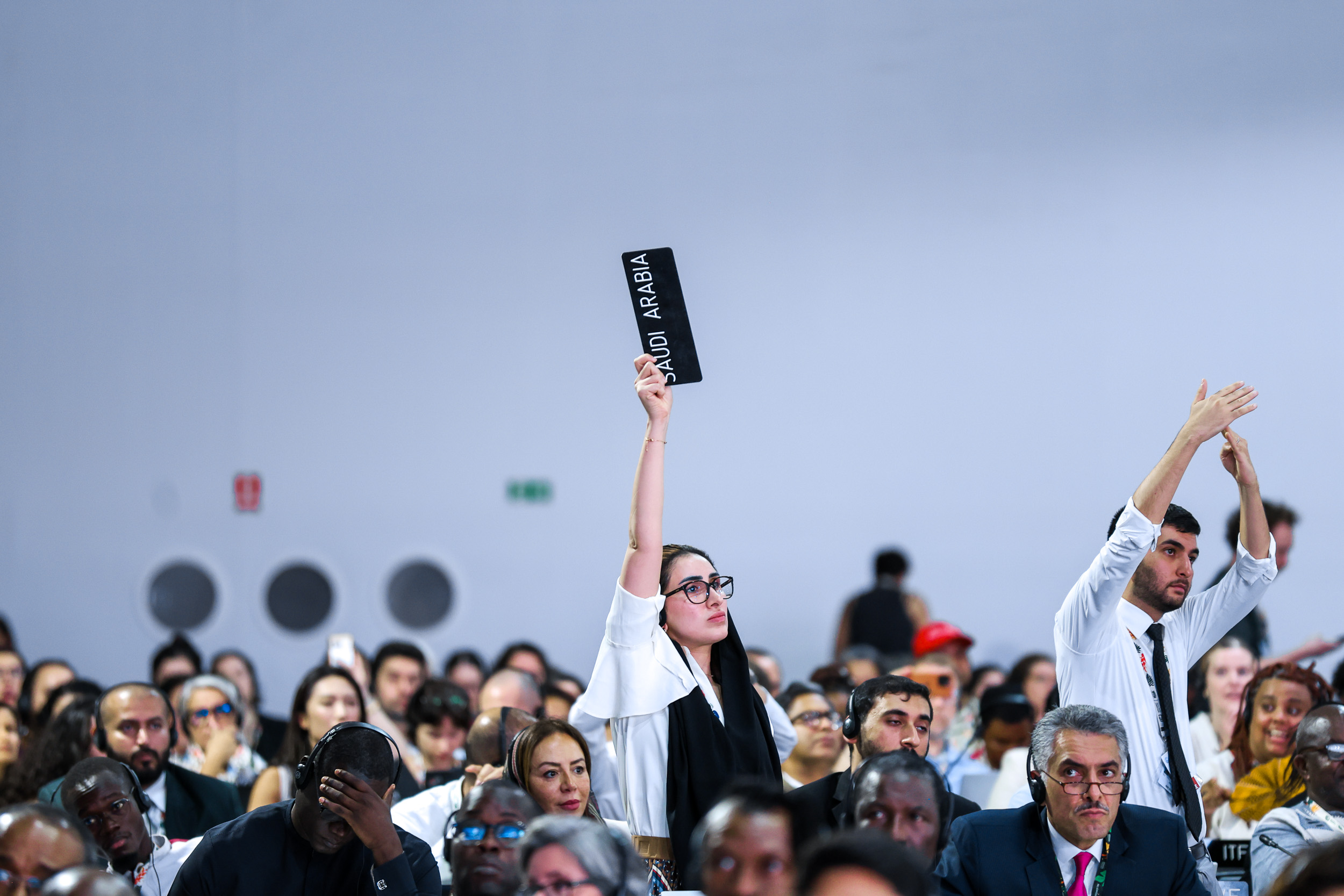
Meanwhile, as the formal negotiations drew to a close, it was clear that consensus decision-making was evolving into something a little more improvised.
With only around half of all countries on board with the idea of a roadmap to transition away from fossil fuels, COP30 President André Corrêa do Lago announced his team would put one together over the coming year, along with another on how to meet a global goal to halt deforestation by 2030. Those roadmaps will be launched next week, presented and discussed at COP31, though it’s still unclear whether or how they’ll be incorporated into the formal negotiating agenda.
Some leading policy-makers don’t think that matters too much. Speaking to journalists before the Antalya summit, COP30 CEO Ana Toni and Dutch climate minister Stientje van Veldhoven said “coalitions of the willing” can move ahead without needing consensus from the COPs. This, they said, was evident this year at the first global conference on TAFF, co-chaired by van Veldhoven and attended by 60 countries.
“Consensus or no-consensus in the general COP doesn’t make a difference for the choices I have to make in my country to get my country to phase out fossil fuels,” said the Dutch minister. The Netherlands recently became one of the first to publish a national TAFF plan.
COP31 banks on flagship voluntary initiatives
This thinking has permeated the management and expected outcomes of this year’s COP too. Earlier this year, Türkiye, supported by international energy agencies, floated the idea of a voluntary goal to boost electrification to 35% of the world’s final energy consumption by 2035 – and this is now being touted as one of the main results to be expected from Antalya.
Türkiye is also championing a pledge on AI and climate, while co-host Australia is pushing to ease access to climate finance for least developed countries and small island states.
COP31 presidency announces AI pledge as UN climate chief says Big Tech ‘on thin ice’
None of these needs consensus. But with a political cover decision already in the works, as trailed by the COP presidents, they – and perhaps the fossil fuel roadmap – may find a home in the official text if language acceptable to most can be found, giving them them additional weight.
UNFCCC reform process in the shadows
Formal reform is underway too, if quietly. UN climate chief Simon Stiell is leading a review informed by ongoing consultations with a group of 15 well-respected climate policy experts, three of whom signed the open letter in 2024.
Among them is leading Swedish climate and sustainability scientist Johan Rockström who has strong ideas about how to make COPs function better, including a switch to majority voting. He told the same press briefing nothing stands in the way of this, because the rules of procedure for making decisions at COPs have never been formally agreed.
Still, to get away from the default setting of consensus would require agreement on a new system that may be impossible to achieve given the rise in bullying tactics by fossil fuel heavyweights.
Comment: The UN climate process was built for negotiation – now it must support implementation
The deliberations with the high-level policy gurus, as reflected in a summary of June’s session in Bonn, largely echo what’s already happening organically, calling for stronger partnerships and accountability both in and between the Action Agenda and negotiations. It doesn’t mention voting.
A general overview of the reform exercise says that “improving and optimizing the [UN climate] process over the medium to long term… will be critical to fostering trust, enhancing collaboration, and catalyzing increased ambition”.
In the short term, don’t hold your breath for anything concrete on reform at COP31 but watch for signs in what ends up dominating the headlines from Türkiye.
The post Editor’s Desk: COP reform is happening quietly, behind the headlines appeared first on Climate Home News.
Editor’s Desk: COP reform is happening quietly, behind the headlines
With the COP31 climate summit in Turkey looming, all eyes are on China to see what the country will push for in the negotiations.
At COP30 last year, China helped to secure a “dialogue” on climate-related “unilateral trade measures”, as well as a two-year “work programme” concerning climate finance.
The nation also championed south-south cooperation throughout the conference and co-led a summit on methane, alongside Brazil and the UK.
In a recent press conference, China’s environment vice-minister Li Gao noted the need to “uphold multilateralism” and send a “clear political signal” that the global community is united around climate action.