

In Australia, researchers are considering how genetic engineering could allow mosquitoes to produce venom proteins, like those produced by spiders and sea anemones, in their sperm to transfer the poison to female mosquitoes when mating.
In a study led by Macquarie University, researchers first used genetically modified fruit flies to test what has been dubbed the “toxic male technique,” which makes it possible for the insects to produce venom in their sperm. After mating, the poison transfers to the female, ultimately reducing the female fruit flies’ lifespans by 60%, researchers found. The females are targeted because they are the mosquitoes that bite humans.
As the Australian Broadcasting Corporation reported, the female fruit flies lived for only about six or seven days after mating with the poisonous males.
“Ideally it’s quite rapid,” Sam Beach, lead author of the study, told the Australian Broadcasting Corporation. “We want that to be much closer to 100 percent, like a much faster acting reaction.”
Additionally, the researchers found that the technique could reduce blood feeding by 40% to 60%, The Guardian reported.
Although the study focused on how this genetic engineering impacts fruit flies, the researchers noted in the paper that this technique could be replicated in mosquitoes to control populations of disease-causing mosquito species, particularly the Aedes aegypti, or yellow fever mosquito. The team published the findings in the journal Nature Communications.

Researchers at Macquarie University are looking to use genetic modification to minimize mosquito-borne illness. Sam Beach / Macquarie University
As The Guardian reported, the toxic male technique could reduce disease outbreaks linked to mosquitoes without using insecticides. Mosquito-borne diseases infect millions of people each year, with dengue alone linked to 390 million human infections annually, the study authors wrote.
Not only do these diseases pose health risks to humans, they can also destroy food crops and threaten native species. Further, using insecticides to target mosquitoes and other pests can lead to pesticide resistance in these pests while threatening the environment with pollution.
“Mosquitoes get resistant to insecticides very rapidly, and they can spread resistance,” Tom Schmidt, an evolutionary biologist at University of Melbourne who was not involved in the study, told The Guardian. “They can evolve it, and they can also spread it by getting on boats and planes and spreading it all over the world.”
As an alternative, the researchers said using the toxic male technique could target invasive, disease-spreading mosquito species with a lower environmental impact than pesticides.
“There are about 3,500 species of mosquito, but there are only about five to 10 or so that spread disease in humans,” Beach explained, as reported by the Australian Broadcasting Corporation. “All [those species] are invasive outside of Sub-Saharan Africa. We’re just trying to push them back out of areas that human have introduced them.”
As for concerns about animals eating the venomous mosquitoes also being harmed, the researchers noted that the venom proteins are harmful when injected directly, such as when mating, but are up to 100 times less toxic if one animal consumes a genetically modified mosquito.
The findings come at a critical time, as previous studies have warned that with warming temperatures and climate change, mosquitoes populations could expand and infect a billion more people by 2100.
This is not the first research into genetically modifying mosquitoes to reduce infection spread. In 2021, Florida officials and biotechnology company Oxitec released millions of genetically modified mosquitoes in Monroe County, which raised concerns from environmentalists over how this could impact the environment. The project involved modifying the mosquitoes to pass along a gene to offspring that would kill off the offspring in the larval stage.
As Smithsonian Magazine reported in 2022, the test was considered a success. Out of 22,000 eggs collected from the experience, only the male eggs hatched. However, the gene was not considered a long-term solution, as it was found to last for only a few months, or a few generations of mosquitoes.
For now, the team is continuing research into how the venom-producing mosquitoes would impact their predators and the environment in the short- and long-term. The researchers also hope to further shorten the lifespan after poisoning, ultimately aiming for the infectious female mosquito to die immediately upon mating.
“This is, you know, the first step in a very, very long process, Beach told the Australian Broadcasting Corporation. “We’re not looking at, you know, releasing these mosquitoes in Australia anytime soon.”
The post Australia Mosquito Population Researchers Could Develop Genetically Modified ‘Toxic Males’ to Kill Females by Mating With Them appeared first on EcoWatch.
https://www.ecowatch.com/australia-mosquitoes-genetic-engineering.html

Most sustainable lingerie is actually just basic undies and bralettes, but we’ve researched high and low to find you a curation of genuinely beautiful, sexy lingerie that’s made from lower impact materials with more responsible practices from small brands.
Why Do We Need Sustainable Lingerie?
It’s no secret that the brand that has dominated the lingerie market is problematic. Between a 2020 Times investigation uncovering Victoria’s Secret “entrenched culture of misogyny, bullying and harassment” to Hulu’s exposing Angels and Demons docuseries to their lack of supply chain environmental impact accountability.
But Victoria’s Secret isn’t alone. Many lingerie brands have their issues when it comes to perpetuating unrealistic beauty standards, relying on synthetic fossil fuel-derived materials like polyester, and lacking supply chain accountability.
While some relatively big name lingerie brands are centering inclusive marketing, we still have to ask questions like: what are their products made from and how are they made? who is making those bras and are they being paid fairly and working in safe conditions?
Because if a lingerie brand is claiming to empower women, they must also consider the women sewing their undergarments.
What Is Sustainable Lingerie?
So enough of the doom and gloom here! Let’s talk about what sustainable lingerie entails and what an ethical alternative to Victoria’s Secret might look like.
Because the fact is that there are a number of incredible eco-minded and ethical lingerie brands out there doing things better! While brands might not meet all of this criteria, these are some general aspects to keep in mind:
Eco-Conscious Materials
Most lingerie is made from polyester and nylon (synthetic plastic fibers). On the other hand, sustainable lingerie materials might include natural fabrics like organic cotton and Tencel or repurposed materials like deadstock fabrics and vintage trims.
Production Size
No matter how eco-conscious the material is, it’s still unsustainable if a brand is overproducing and wasting those garments! An eco-friendly lingerie brand would produce intentionally in small batches, use pre-order or made-to-order models, or have seasonless collections that they won’t toss as soon as the month is over.
Ethical Production
People are part of sustainability too. Look for brands with transparent and socially responsible production practices.
This could include owning their own factory/workshop, developing close relationships with their suppliers, using certified vetted factories, and importantly: paying those supplier factories enough money so that they can pay workers living wages.
Other Sustainability Practices
Some other ways an eco-friendly and ethical lingerie brand might prioritize sustainability include: using renewable energy to power their operations, using zero waste design practices, giving back to their community, and using eco-minded packaging.
Where To Find Sustainable and Ethical Lingerie
From elegant lace bras to bold bodysuits, these ethical and sustainable lingerie labels have it all — and they do it without keeping dirty secrets.
For more basic everyday bras and underwear, check out our Organic Underwear Brands Guide.
For sleepwear, take a look at our Sustainable Loungewear and Pajamas Guide.
This article features affiliates and partners. As always, we only feature brands that meet high standards for sustainability that we love — and that we think you’ll love too!
1. Araks
Araks is a conscious label with a stunning selection of intimates thoughtfully crafted in New York. From pastels to jewel tones, the sustainable lingerie brand has a lovely variety of hues to choose from.
As part of their efforts towards becoming zero waste, Araks selects intentional materials that are evergreen (meaning they can be used in many collections). And their sustainable bralettes, bras, and panties are made from materials like organic cotton, upcycled cotton, plant-dyed organic linen, and RECONYL.
Bralette Sizes: XXS – XL
Underwear Sizes: XXS – XXL

2. Maylyn & Co.
As a slow fashion brand, Maylyn & Co. crafts their timeless sustainable lingerie with intention.
The brand’s romantic slip dresses are made from plant-based Persian Lotus Silk . In other words, the silky fabric is completely vegan and silkworm-free, made instead from Lotus fibers that are sourced from family farms in Persia.
Maylyn & Co.’s vegan lingerie and sleepwear is made in a small factory in Persia (which their team regularly visits) by makers who receive living wages, and have flexible working hours and lunch breaks.
Your eco-friendly lingerie from Maylyn & Co. is also shipped consciously in organic cotton and recycled packaging.
Sizes: M – XL

3. Juliemay
Designed for the ultimate all-day comfort, JulieMay’s feminine bras and briefs are synthetic free. Instead, most pieces are crafted from an all-natural blend of organic pima cotton and fairtrade mulberry peace silk.
The brand is accredited by AllergyUK to be safe for those with allergic reactions and skin sensitivities. (Elastane is a common irritant and is found in most undergarments.) The brand’s organic undergarments even feature a non-itchy soft tag!
Bra Sizes: 30B – 40G/42DD
Underwear Sizes: 8-18 UK
Use code CLS15 for 15% off!

4. Anekdot
Consciously handcrafted in Berlin by artisan sewers, Anekdot’s exquisite lingerie pieces and sets are soft, sophisticated, and come in confidence-boosting fits.
Anekdot uses many upcycled materials for their gorgeous pieces. They source surplus luxury fabrics from production leftovers, deadstock, off-cuts, and vintage materials.
Bra Sizes: XS – XL; AA – D cups
Underwear Sizes: XS – XL

5. Savara Intimates
Savara Intimate’s elegant bras (including a nursing bra!) are made from mindful materials like TENCEL, STANDARD 100 OEKO-TEX® certified cotton, and surplus lace that was leftover from large factories.
All of Savara Intimate’s sustainable lingerie is ethically made in a family atelier in Latvia and a factory in Romania, where women earn fair wages and work in safe conditions.
And for each bra sold, Savara donates €1 to Because We Carry, a nonprofit supporting refugee kids and moms.
Bra Sizes: S – XXL
Underwear (Slip) Sizes: S – XL

6. Aurore Lingerie
Celebrating the strength and independence as well as the femininity and sensuality of women, Aurore Lingerie designs elegant yet comfortable bras, bustiers, and thongs.
The conscious London-based lingerie label primarily uses deadstock lace, silk, and tule fabric (excess leftover stock) from Europe and Japan. Each piece is made by expert ateliers.
Bra Sizes: 32B – 38D (70B – 85D in cm)
Underwear Sizes: S – L

7. Underprotection
This Danish sustainable lingerie brand has bras, bodysuits, and briefs in neutral hues, full-on lace, and fun prints, depending on your preferred aesthetic.
The B-Corp Certified company sources from certified ethical and sustainable factories and uses eco-friendly fabrics like organic cotton, Tencel Lyocell, and Global Recycle Standard (GRS) certified recycled nylon lace.
Additionally, Underprotection works with vetted suppliers within Europe that have Fair Trade, WRAP, BSCI, and/or GOTS certifications.
Bra Sizes: 30A – 40E
Underwear Sizes: XS – XL

8. Torlowei
Torlowei is a Black woman-owned luxury lingerie brand with exceptionally designed bras, briefs, corsets, nightwear and more — most of which are made from natural fibers (they’re working towards finding replacements for the remaining 20%).
The brand sources from responsible suppliers that have sustainability initiatives and follow ethical production standards. And, by using only durable materials and offering repairs, Torlowei’s lingerie is designed to last.
Bra Sizes: 32B – 36E
Underwear Sizes: US2 – US16 / UK6 – UK20

9. Brook There
Proving that beautiful lingerie can still be breathable and comfortable, Brook There has super soft slip dresses, bralettes, and a variety of bottoms ethically made in Massachusetts from GOTS-certified organic cotton.
In their collection you’ll find pieces to suit your aesthetic, from delicate pastels and bold bright colors to a diverse set of neutrals and even undyed options. Brook There’s bralettes are the comfiest I own! And I love that they ship in minimal, recycled packaging too.
Bra Sizes: 32A – 38D
Underwear Sizes: XS-XL
Slip Dress Sizes: XS-XXL

The post 9 Best Ethical Lingerie Brands Not Keeping Any Secrets appeared first on Conscious Life & Style.
Sierra Orchards Craig and Emily McNamara credit Nick Roach, USSA
Sierra Orchards, a family farm located along the Putah Creek in Winters, California, has a long history of producing organic walnuts. However, as we learned when we met Craig McNamara and his daughter Emily on our recent USSA press trip, the farm is currently in transition. Facing market uncertainty and competition, the orchard is expanding into almonds, which it will grow conventionally at first, along with other crops.
History of Walnuts
For 47 years, walnuts have been the backbone of Sierra Orchards’ 450-acre operation, which has been certified organic since the mid-1990s. Over the past three years, however, the farm’s profile has changed: about 215 acres are still dedicated to walnuts, but 80 acres now grow almonds, and the farm is transitioning additional land to row crops and potentially olives.
Case for Change
Several factors prompted the decision to move away from a focus on walnuts. Emily and Craig explain that the main reason is that walnuts cannot be replanted after walnuts without major intervention. A phenomenon called allelopathy, a chemical reaction in the walnut tree’s roots and in the soil, makes it very difficult to plant a new walnut orchard after an old one. Diversification was also top of mind, they say. The rising cost of doing business, unpredictable markets, and a changing climate have made monoculture farming increasingly challenging.
Choosing Almonds
When planning a new direction, the orchard considered several alternatives, including pistachios, hazelnuts, pecans, and olives. Ultimately, almonds proved the best fit. The region’s Mediterranean climate is ideal for almond production; there are processors nearby, and the similarities between walnuts and almonds mean Sierra Orchards can use much of its existing harvest equipment. The almond industry’s excellent marketing support also added to the appeal.
Managing Almonds and Water
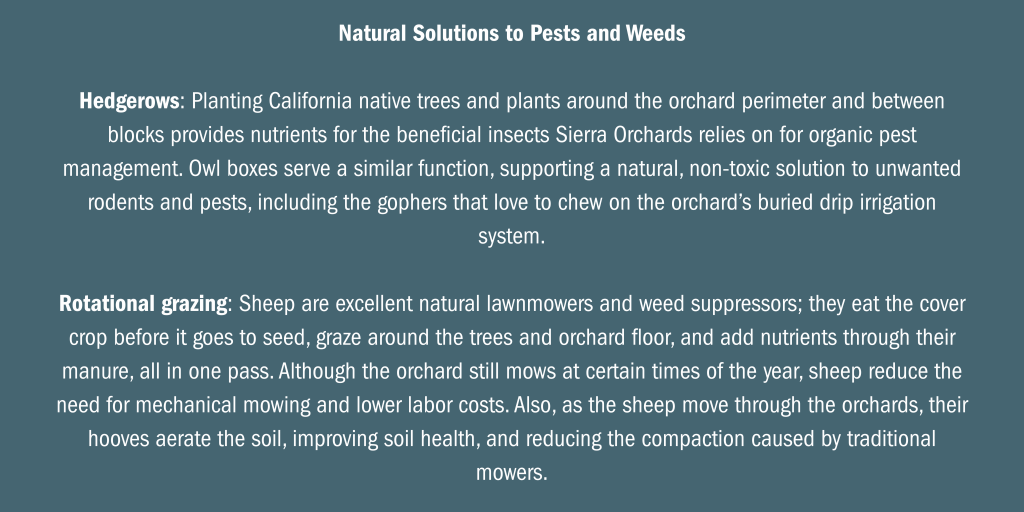
Craig highlighted that, just a few years ago, “almonds were the poster child for bad water consumption.” However, he points out that many crops require applied water during the growing season. Ultimately, what matters is how an orchard manages its water resources. Emily says that at Sierra Orchards, that means figuring out what each tree needs. The farm uses soil moisture sensors and pressure bombs, which measure the ‘blood pressure’ of trees from their leaves, to determine exactly how much water the trees need. A high-tech irrigation system collects field-level data, which the team reviews weekly to guide watering decisions. Sierra Orchards also relies on a buried drip irrigation system, delivering water directly to the roots while minimizing evaporation.
Transitioning the Orchard
Establishing the new 80-acre almond block called for careful planning. The orchard initially chose conventional methods over organic production, as the family was advised that growing almonds organically from day one would make it hard to manage the weeds and disease common in young orchards and the nutrients required.
They did not take this decision lightly. “Organic is our soul, it’s our blood,” concedes Emily. However, she says it reflects the reality of farming. “It’s a million-dollar investment for these 80 acres, and we had to be sure that we were planting the best trees that would take us through the next few decades of their lifespan and carry our farm as we transition other orchards.”
The farm has already started the three-year transition to organic, underscoring its continued commitment to organic practices.
The post Beyond Walnuts: The California Orchard Diversifying for the Future appeared first on USSA.
Beyond Walnuts: The California Orchard Diversifying for the Future