

Antarctic sea ice is “behaving strangely” and might have entered a “new regime”, the director of the US National Snow and Ice Data Centre (NSIDC) tells Carbon Brief.
Following an all-time low maximum in September 2023, Antarctic sea ice has been tracking at near-record-low extent for the past six months. Last month, it hit its 2024 minimum extent, tying with 2022 for the second-lowest Antarctic minimum in the 46-year satellite record.
Dr Mark Serreze, director of the NSIDC tells Carbon Brief that more warm ocean water is reaching the surface to melt ice and keep it from forming. He says that we “must wait and see” whether this is a “temporary effect” or whether the Antarctic has entered a “new regime”.
Meanwhile, Arctic sea ice has reached its maximum extent for the year, peaking at 15.01m square kilometres (km2) on 14 March. The provisional data from the NSIDC shows that this year’s Arctic winter peak, despite favourable winds that encouraged sea ice formation, was 640,000km2 smaller than the 1981-2010 average maximum.
This year’s maximum was the 14th lowest in the satellite record.
“Overall, the road remains downhill for Arctic sea ice, but it is quite bumpy along the way,” another scientist tells Carbon Brief. This relatively high winter peak is “notable and a good reminder that we have to communicate and account for this type of weather variability when we talk about Arctic climate change”, he says.
He adds that although the maximum is high compared to recent years, the ice is still “much thinner” than it was a few decades ago. The “wide coverage of this thinner ice” means total Arctic sea ice volume for the month of February was the third lowest on record.
Arctic winter peak
Arctic sea ice extent changes throughout the year. It grows each winter before reaching its peak for the year in February or March and then melts throughout the spring and summer towards its annual minimum, typically around September.
Using satellite data, scientists can track the growth and melt of sea ice, allowing them to determine the size of the ice sheet’s winter maximum and summer minimum extent. These are key metrics to monitor the “health” of the Arctic sea ice.
The NSIDC’s announcement says that this year’s Arctic winter peak of 15.01m is “below average”. Clocking in at 640,000km2 below the 1981-to-2010 average maximum extent, it ranks as the 14th lowest in the satellite record.
The NSIDC adds that the date of the maximum this year, 14 March, was two days later than the 1981-to-2010 average date of 12 March.
The plot below shows Arctic sea ice extent on 14 March, with the average sea ice extent for 1981-2010 shown by the orange line.

Arctic freeze
“The road remains downhill for Arctic sea ice, but it is quite bumpy along the way,” Dr Zack Labe – a postdoctoral researcher working at NOAA Geophysical Fluid Dynamics Laboratory and the atmospheric and oceanic sciences programme at Princeton University – tells Carbon Brief. He adds:
“While this winter was yet again consistent with the long-term trend toward a warmer Arctic with less ice, regional weather patterns can still contribute to ice expansion and slower net declines, especially if the winds align from a north-to-south direction.”
Arctic sea ice reached its minimum extent for 2023 on 19 September.
With an extent of 4.23m km2, this was the sixth-lowest minimum on record and 1.99m km2 below the average minimum recorded over 1981-2010.
Following its annual minimum, Arctic sea ice growth was “slower than average”, leading to the fifth-lowest September on record, according to the NSIDC.
Labe tells Carbon Brief that the freeze season started with “widespread open water across the Pacific side of the Arctic, with massive areas of ice missing north of Alaska”, which contributed to “well-above-average temperatures” in the region.
Throughout October, however, sea ice extent increased by 119,800km2 per day – faster than the 1981-2010 average of 89,200km2 per day, according to the NSIDC.
The Arctic freeze up was “particularly rapid” in the seas around Siberia. By the end of October, the ice cover had reached the Siberian coast, although open water remained in the Beaufort and Chukchi Seas.
Air temperatures over the Arctic Ocean, around 2,500 feet above surface level, were mostly above average during October – particularly in and around the Canadian Archipelago, which saw temperatures of 4-5C above average.

Labe tells Carbon Brief that, overall, the Arctic winter can be characterised by “unusual warmth in the northern Arctic, but greater total ice extent”. This “counterintuitive” dynamic was caused by atmospheric circulation patterns, which led to “warmer, moist air blowing toward the north pole, while northerly winds contribute to expanding ice in the Greenland Sea and Sea of Okhotsk”, he says.
Throughout November, Arctic sea ice extent continued to increase faster than average. However, the NSIDC says the freeze up “temporarily stalled” for around five days from 22 November, as a series of three tropical cyclones brought warm, moist air into the north Atlantic.
The NSIDC says that a combination of low pressure to the north and west of Svalbard and a high-pressure centre to the south-east “created a strong, persistent flow from the south of relatively warm and moist air from the north Atlantic Ocean toward Svalbard”.
This flow of air can be seen as “an extension of an atmospheric river into the Arctic”, it says. It adds that the strong winds “helped to push the ice edge in the east Greenland and Barents seas northwards, limiting new ice formation”.
The NSIDC notes that pauses in Arctic sea ice freeze up have happened in November before, in 2013 and 2016, making such events “rare, but not unknown”.
Arctic sea ice extent continued to increase “markedly faster” than usual throughout December, the NSIDC says. It adds that “sea ice formation in Hudson Bay was unusually late, but the ice cover expanded quickly from west to east in mid-December”.
For December overall, 2023 saw the third-highest monthly gain on record, with 2.71m km2 of sea ice extent added throughout the month. Average Arctic sea ice extent over December 2023 was the ninth lowest in the satellite record, at 12m km2.
Arctic sea ice extent continued to move down the rankings as the new year rolled in, despite slower-than-average ice growth. In fact, the NSIDC says that Arctic sea ice extent actually declined for a few days at the end of the month, although it notes that this is “not unusual at this time of year” and says it is “caused by weather systems that temporarily halt ice growth or push the ice northwards”.
The average Arctic sea ice extent for January 2024 was 13.92m km2 – the 20th lowest on record.
This comparatively high sea ice extent is “notable and a good reminder that we have to communicate and account for this type of weather variability when we talk about Arctic climate change”, Labe tells Carbon Brief.
Arctic sea ice extent continued to grow throughout February, gaining 15.3m km2 of ice throughout the month. The February 2024 extent of 14.61m km2 was 690,000km2 below the 1981-2010 February average extent, and tied with 2022 as the 15th lowest on record, according to the NSIDC.
Temperatures are usually “well-below freezing” over the Arctic Ocean in February, but the NSIDC notes that in 2024, they were not as low as usual for the time of year. Over the central Arctic ocean, air temperatures at 2,500 feet above sea level were up to 10C warmer than average.
Labe notes that although sea ice extent was high compared to recent years, the ice is still “much thinner” than it was a few decades ago:
“Total Arctic sea-ice volume ended up as the third lowest on record for the month of February due to the wide coverage of this thinner ice.”
Variability and long-term decline of February #Arctic sea-ice thickness and sea-ice volume… (anomalously low for 2024)
+ Data information: https://t.co/PTJWaGkNua pic.twitter.com/a51VTWKFVA
— Zack Labe (@ZLabe) March 10, 2024
Antarctic ‘behaving strangely’
Meanwhile, at the Earth’s other pole, Antarctic sea ice hit its summer minimum sea ice extent on 20 February. With an extent of 1.99m km2, this year’s minimum ties with 2022 as the second-lowest on record, the NSIDC reports.
The plot below shows Antarctic sea ice extent on 20 February 2024, with the median sea ice extent for 1981-2010 shown by the orange line.

The Antarctic minimum was 850,000km2 smaller than the 1981-to-2010 average summer low of 2.84m km2, but 200,000km2 larger than the previous record low set on 21 February 2023.
This year marks the third consecutive minimum Antarctic sea ice extent below 2m km2. The table below shows the five years with the lowest minimum Antarctic sea ice extent on record, which includes 2022, 2023 and 2024 towards the top.
| Rank | Year | Minimum ice extent (m km2) | Date |
|---|---|---|---|
| 1 | 2023 | 1.79 | 21 Feb |
| 2 | 2022 | 1.98 | 25 Feb |
| 2= | 2024 | 1.99 | 20 Feb |
| 4 | 2017 | 2.11 | 3 March |
| 5 | 2018 | 2.22 | 21 Feb |
“The Antarctic has been behaving strangely,” Dr Mark Serreze, director of the NSIDC, tells Carbon Brief. He continues:
“In the past few years, [southern hemisphere] summer extent has dropped to record lows. Before that, we saw record highs! What has changed?
“The answer seems to lie in the ocean – more warm water getting up the the surface to melt ice or keep it from forming. Is this a temporary effect, or, as many have argued, have we entered a ‘new regime’ in which the ocean will continue to strongly affect the sea ice? Again, we must wait and see.”
Record-breaking Antarctic extent
Antarctic sea ice has been tracking at or near record-low levels for months.
The Antarctic set a record-low maximum on 10 September 2023, with an extent of 16.96m km2. This was “the lowest sea ice maximum in the 1979 to 2023 sea ice record by a wide margin”, and one of the earliest, the NSIDC says.
Antarctic conditions over 2023 were “truly exceptional” and “completely outside the bounds of normality”, one expert told Carbon Brief.
As 2023 progressed, Antarctic sea ice melt was “slower than average”, the NSIDC says. The total decline in Antarctic sea ice extent through October was 903,000km2, while the October average was 985,000km2.
Nevertheless, Antarctic sea ice extent continued to track at a record low. On 31 October 2023, Antarctic sea ice extent was still tracking at a record-low of 15.79m km2. This is 750,000km2 below the previous 31 October record low.
The decline in Antarctic sea ice paused for a few days from 9 November, allowing sea ice extent to creep above the November 2016 value, the NSIDC says. This marked the first time that the daily 2023 Antarctic sea ice extent was not the lowest in the record since early May 2023. By the start of December, Antarctic sea ice extent was again at a record low, it notes.
The Antarctic saw in the new year with a sea ice extent of 6.37m km2, marking the sixth-lowest New Year’s Day Antarctic sea ice extent on record, the NSIDC says. Ice melted rapidly throughout the month, and by the end of January, daily Antarctic sea ice extent reached 2.58m km2 – tying with 2017 for second lowest on record.


The post Antarctic sea ice ‘behaving strangely’ as Arctic reaches ‘below-average’ winter peak appeared first on Carbon Brief.
Antarctic sea ice ‘behaving strangely’ as Arctic reaches ‘below-average’ winter peak

Climate Change
FLIP OFF WOODSIDE TO SAVE SCOTT REEF: Greenpeace, Michael Caton, Thinkerbell mobilise Australia to challenge gas project at Scott Reef


6 November 2026
Greenpeace Australia Pacific has joined forces with Thinkerbell and iconic Australian actor Michael Caton on a major public movement and behaviour change initiative to save Scott Reef, calling on Australians to “flip off” gas corporation Woodside. The company plans to drill for gas at Australia’s largest oceanic reef, home to vulnerable green sea turtles, endangered pygmy blue whales, and thousands of marine species, off the coast of Western Australia.
WATCH THE FULL VIDEO HERE
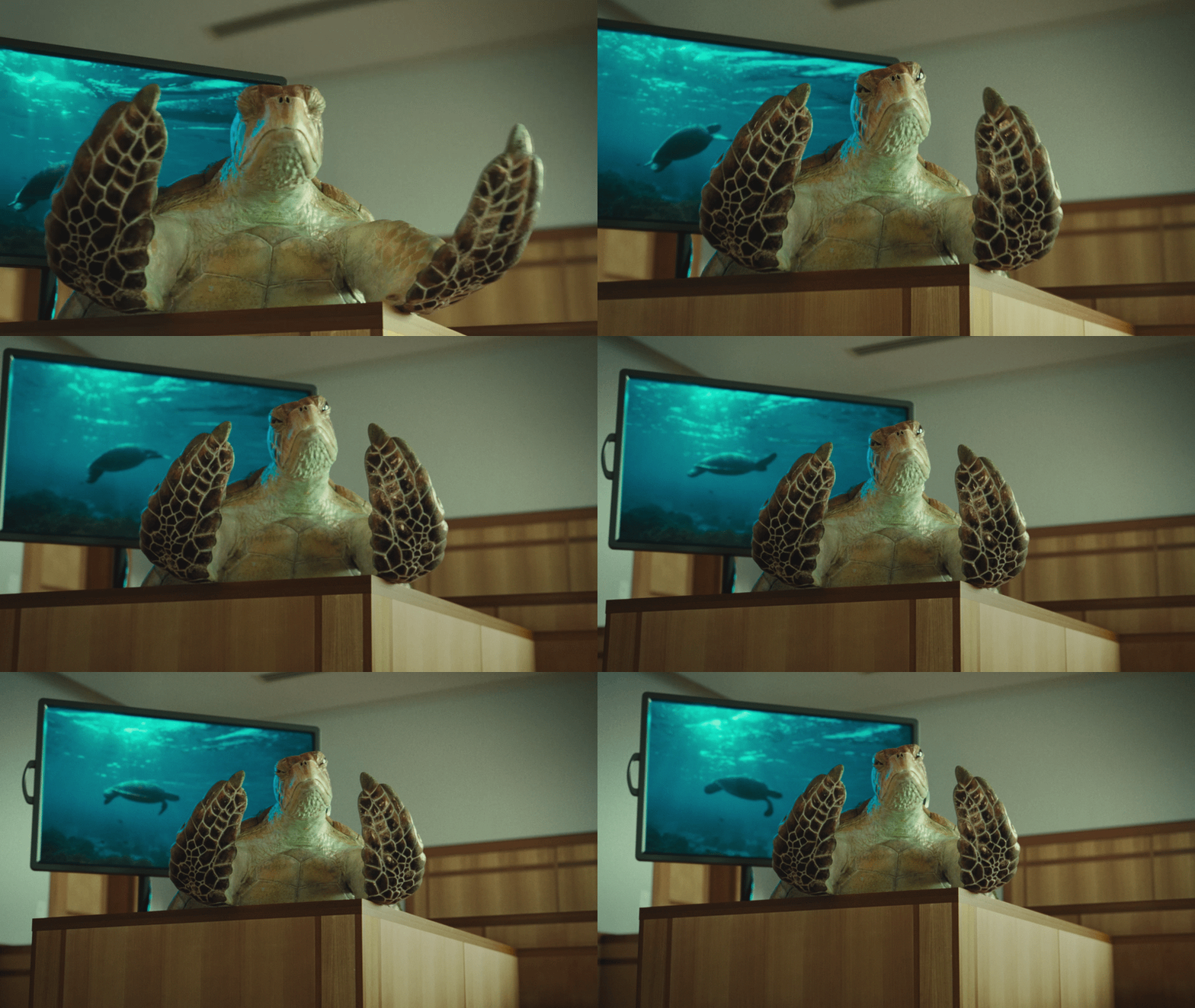
At the heart of the collaboration is somebody who knows a thing or two about fighting off corporations to protect a home: Michael Caton. Set in a courtroom, Caton gives his voice to a voiceless inhabitant, a green sea turtle, and together they invite the public to show their support to save Scott Reef.
Designed to shift public behaviour and drive national debate, the movement asks the public to tag their MPs – applying direct political pressure on Environment Minister Murray Watt and Prime Minister Albanese Albanese to “flip off” Woodside’s dirty gas project, which would see up to 57 toxic wells drilled around Scott Reef off the coast of Western Australia.
Voiced by Michael Caton and set to a soundtrack provided by Radiohead, the narrative centres on our hero turtle defending her home from corporate overreach in a courtroom showdown. As the turtle defiantly flips her flippers at Woodside, Michael Caton calls on everyday Australians to take a stand and help save her home.
Michael Caton said: “I’m proud to lend my voice to Greenpeace to help save Scott Reef. The marine life out there can’t speak up, so we need to. Some things are too precious to risk.”
Glenn Walker, Head of Nature at Greenpeace Australia Pacific, added: “Woodside’s dirty gas project at Scott Reef, Australia’s largest oceanic reef, is an environmental disaster waiting to happen, threatening thousands of species, including the extremely vulnerable green sea turtles that nest there. By literally flipping off Woodside and Big Gas, Aussies are cutting through corporate spin and sending an unignorable message to Environment Minister Murray Watt and the Albanese government: save Scott Reef.”
Adam Ferrier, co-founder of Thinkerbell, said: “You can fight a corporation in the courtroom forever, but the real power to deliver lasting protection rests in parliament. Right now, our MPs hold an extraordinary opportunity to safeguard Scott Reef for generations to come. I’m proudly from WA, and I know how much the natural environment means to the people and economy of Western Australia. I’m also sure Woodside wants to do the right thing, and with enough public support and government action we’ll together save Scott Reef.
Paul Swann, Chief Creative Tinker at Thinkerbell notes: “When the stakes are this high, polite ads don’t work. You need an unignorable provocation that galvanises people and puts the pressure squarely where it belongs, on our leaders in Canberra. This isn’t just about protecting a reef; it’s about holding power to account.”

Greenpeace has been campaigning to stop Woodside’s dirty gas plans for years, increasing pressure on the Australian government to save Scott Reef from becoming an industrialised gas zone. From actions aboard Woodside’s gas platform to cinemas across Australia, Greenpeace isn’t backing off in their advocacy to save Scott Reef.
Rolling out across OOH, digital, social and cinema with an interactive landing page, this project will be amplified by high-profile figures urging Australians to take action, tag their MPs, and defend Scott Reef. The movement combines cinematic storytelling with organic social mobilsation and earned media, planned via Thinkerbell’s Alchemy model to drive real behaviour change and impact.
Marking their first Australian tour in 15 years, English rock band Radiohead will play 16 arena shows across Perth, Melbourne and Sydney in May and June 2027. A $2 donation is included in every ticket price with proceeds going to Greenpeace Australia Pacific and the Australian Marine Conservation Society. Radiohead will match the final amount raised.
ENDS
WATCH NOW:
FOR ASSETS OR MORE INFORMATION, PLEASE CONTACT:
Adam Ferrier | 0413 633 344 | adamferrier@thinkerbell.com
Kimberley Bernard | 0407 581 404 | kbernard@greenpeace.org
ABOUT THINKERBELL
Thinkerbell is a 9-year-old independent creative company. We practise Measured Magic – the coming together of marketing science and hardcore creativity – to help our clients build their brands and change behaviour.
ABOUT GREENPEACE
Greenpeace Australia Pacific is a global independent campaigning organisation that uses peaceful protest and creative confrontation to expose environmental problems and promote solutions that are essential to a green and peaceful future.
Climate Change
Jimmy Barnes, King Gizz lead Aussie music supergroup on new release to save Scott Reef
SYDNEY, Monday 9 November 2026 — Australian music icons Jimmy Barnes AO, King Gizzard & the Lizard Wizard, Fred Leone, Gordi & Montaigne are among the more than 20 Australian artists who have joined forces to release a new song with an urgent message: save Scott Reef.
Released today, “If Not Now” is a reimagining of King Gizzard & the Lizard Wizard’s Environmental Music Prize-winning song “If Not Now, Then When?”, and is a collaboration between Greenpeace Australia Pacific, Green Music Australia, and p(doom) Records.
Scott Reef is a 15-million-year-old ancient coral reef located 270 kilometres off the Kimberley coast of Western Australia. It is Australia’s largest oceanic reef and is home to thousands of marine animals and endangered species, but fossil fuel corporation Woodside plans to drill up to 57 toxic wells under and around the reef, threatening to turn it into an industrial gas zone.
“If Not Now” is the reef’s first and only release, out on all digital platforms and on limited edition 7” vinyl. The song is accompanied by cover art and visualiser from acclaimed Australian artist and ARIA-winning music video director Jonathan Zawada (Flume, The Avalanches).

Speaking about the track, Stu Mackenzie (lead singer, King Gizzard & the Lizard Wizard) said: “Why are we still digging up coal and gas? Why are we allowing this? Why is the Australian government so hell-bent on destroying our beautiful wild and untouched places? I’m proud that a King Gizz song was chosen to represent a growing movement of people who are asking these questions and applying pressure. Let’s shut it down and keep it beautiful.”
Rock legend Jimmy Barnes AO said: “Scott Reef is one of the few pristine reefs left in the world and it happens to be on our doorstep. We’re custodians of it — we’re supposed to be looking after it. It’s ridiculous. We must protect our country and look after what we value most, which is the nature and the beauty of this country.”
Hannah Schuch, Senior Campaigner for Greenpeace Australia Pacific, said: “I’m filled with hope by the incredible musicians and artists who are using their voices and skills to amplify the voices of half a million Australians who are calling on the government to stop Woodside’s nature and climate-wrecking gas plans and save Scott Reef. Australian music has long been a powerful catalyst for change, so saving Scott Reef is a no-brainer for Australian music lovers.”
Contributing artists (in alphabetic order):
- Alex Lahey
- Brinkley Davies (marine biologist/freediver)
- Birdland
- Close Counters
- DOBBY
- Fred Leone (Artist of the Year at the 2026 NIMAs, singing in Butculla)
- Gordi
- John Butler
- Jimmy Barnes
- King Gizzard & the Lizard Wizard
- Leah Senior
- Mahalia Barnes
- Montaigne
- Ngaiire
- NIDALA
- Peppa Lane (Spacey Jane)
- Ruby Rodgers (2026 Environmental Music Prize winner)
- Terry Guyula (Drifting Clouds, singing in Yolgu Matha)
- Tom Mahler (The Moving Stills)
- Urthboy
Production cast:
- Becki Whitton (G Flip, Allday, Stella Donnelly)
- Stu McKenzie (King Gizzard & the Lizard Wizard)
- Tay Blunt (FVNERAL)
- Tim Shiel (Green Music Australia)
Three generations of the Barnes family, Jimmy Barnes, his daughter, Mahalia Barnes and granddaughter Ruby Rodgers, contributed to the track.
The release comes amid growing national pressure on the Federal Government to save Scott Reef from Woodside’s gas drilling plans.
Last week, a leaked letter from WA’s environmental watchdog to Woodside revealed the agency deemed drilling risks to Scott Reef ‘serious, significant and irreversible’, while Greenpeace Australia Pacific activists occupied a major Woodside gas platform, and Perth communities delivered one of the biggest environmental petitions in Australia’s history to Woodside HQ.
The Federal Government is expected to make a decision on Woodside’s Scott Reef drilling plans in the coming months.
-ENDS-
Media contact
To arrange an interview or for more information, contact Emma Sangalli on 0431 513 465 or emma.sangalli@greenpeace.org
High res images and footage of Scott Reef can be found here (NEW) and here.
Jimmy Barnes, King Gizz lead Aussie music supergroup on new release to save Scott Reef
What might a high-school course look like if it helped students understand climate change—and see a place for themselves in responding to it?
Not simply a course about emissions or environmental problems. A course that connects science with the places students know, the decisions their communities face, and the work they might one day do.
Canadian schools already teach climate change and environmental responsibility, including through required curriculum expectations. Ontario’s Grade 9 science course, for example, asks students to assess climate change’s effects on ecosystems and communities, including First Nations, Métis, and Inuit communities. Across Canada, however, the depth and placement of climate learning vary, and opportunities for more specialized study often sit within elective courses.
Part 1 explored how we could build on that foundation th