

Warming waters in the Chesapeake Bay and rising temperatures will make algae events more frequent, experts say.
A severe algae bloom clogged equipment at one of the treatment facilities providing drinking water in the Washington region, forcing officials to declare a boil-water advisory on the night of July 3—as thousands of visitors arrived to celebrate Independence Day.

Climate Change
FLIP OFF WOODSIDE TO SAVE SCOTT REEF: Greenpeace, Michael Caton, Thinkerbell mobilise Australia to challenge gas project at Scott Reef


6 November 2026
Greenpeace Australia Pacific has joined forces with Thinkerbell and iconic Australian actor Michael Caton on a major public movement and behaviour change initiative to save Scott Reef, calling on Australians to “flip off” gas corporation Woodside. The company plans to drill for gas at Australia’s largest oceanic reef, home to vulnerable green sea turtles, endangered pygmy blue whales, and thousands of marine species, off the coast of Western Australia.
WATCH THE FULL VIDEO HERE
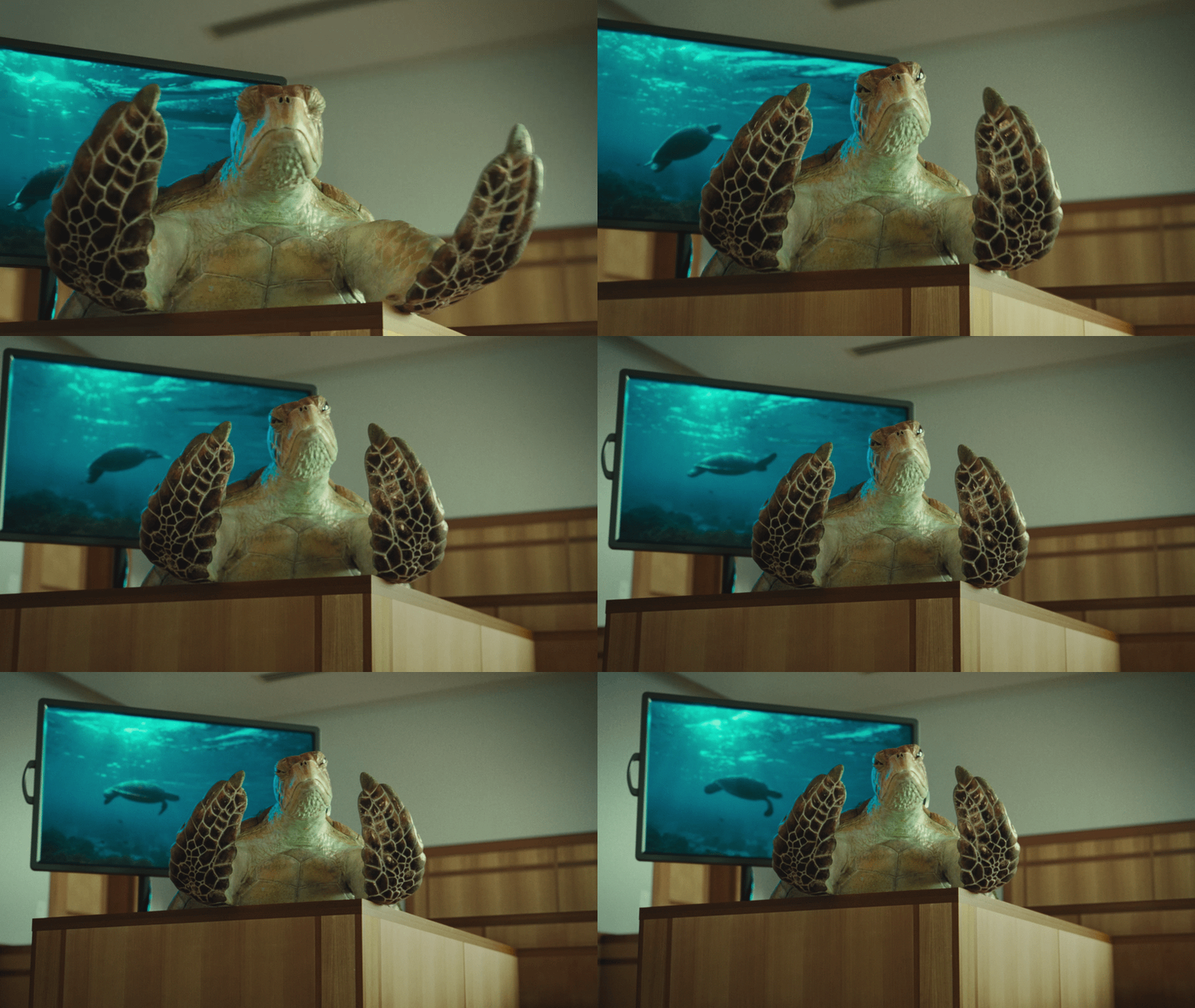
At the heart of the collaboration is somebody who knows a thing or two about fighting off corporations to protect a home: Michael Caton. Set in a courtroom, Caton gives his voice to a voiceless inhabitant, a green sea turtle, and together they invite the public to show their support to save Scott Reef.
Designed to shift public behaviour and drive national debate, the movement asks the public to tag their MPs – applying direct political pressure on Environment Minister Murray Watt and Prime Minister Albanese Albanese to “flip off” Woodside’s dirty gas project, which would see up to 57 toxic wells drilled around Scott Reef off the coast of Western Australia.
Voiced by Michael Caton and set to a soundtrack provided by Radiohead, the narrative centres on our hero turtle defending her home from corporate overreach in a courtroom showdown. As the turtle defiantly flips her flippers at Woodside, Michael Caton calls on everyday Australians to take a stand and help save her home.
Michael Caton said: “I’m proud to lend my voice to Greenpeace to help save Scott Reef. The marine life out there can’t speak up, so we need to. Some things are too precious to risk.”
Glenn Walker, Head of Nature at Greenpeace Australia Pacific, added: “Woodside’s dirty gas project at Scott Reef, Australia’s largest oceanic reef, is an environmental disaster waiting to happen, threatening thousands of species, including the extremely vulnerable green sea turtles that nest there. By literally flipping off Woodside and Big Gas, Aussies are cutting through corporate spin and sending an unignorable message to Environment Minister Murray Watt and the Albanese government: save Scott Reef.”
Adam Ferrier, co-founder of Thinkerbell, said: “You can fight a corporation in the courtroom forever, but the real power to deliver lasting protection rests in parliament. Right now, our MPs hold an extraordinary opportunity to safeguard Scott Reef for generations to come. I’m proudly from WA, and I know how much the natural environment means to the people and economy of Western Australia. I’m also sure Woodside wants to do the right thing, and with enough public support and government action we’ll together save Scott Reef.
Paul Swann, Chief Creative Tinker at Thinkerbell notes: “When the stakes are this high, polite ads don’t work. You need an unignorable provocation that galvanises people and puts the pressure squarely where it belongs, on our leaders in Canberra. This isn’t just about protecting a reef; it’s about holding power to account.”
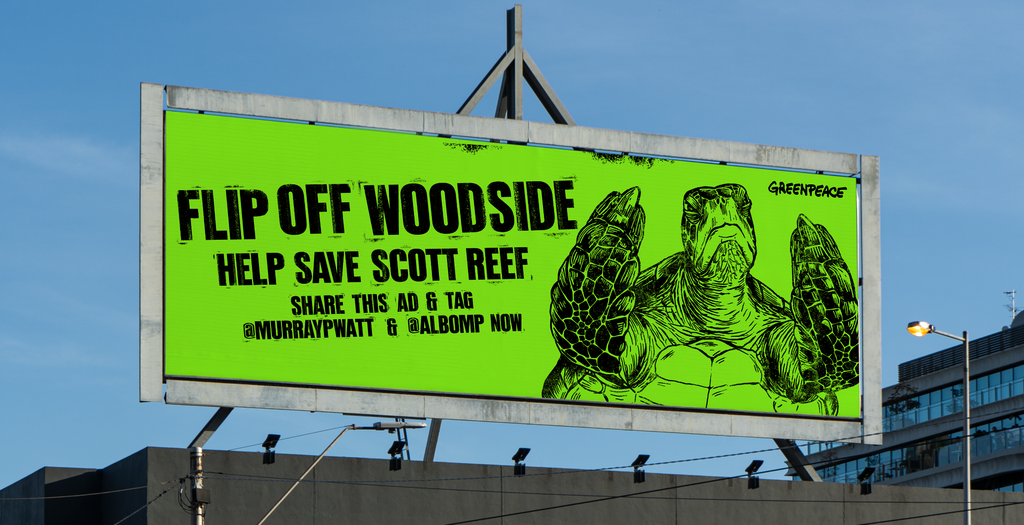
Greenpeace has been campaigning to stop Woodside’s dirty gas plans for years, increasing pressure on the Australian government to save Scott Reef from becoming an industrialised gas zone. From actions aboard Woodside’s gas platform to cinemas across Australia, Greenpeace isn’t backing off in their advocacy to save Scott Reef.
Rolling out across OOH, digital, social and cinema with an interactive landing page, this project will be amplified by high-profile figures urging Australians to take action, tag their MPs, and defend Scott Reef. The movement combines cinematic storytelling with organic social mobilsation and earned media, planned via Thinkerbell’s Alchemy model to drive real behaviour change and impact.
Marking their first Australian tour in 15 years, English rock band Radiohead will play 16 arena shows across Perth, Melbourne and Sydney in May and June 2027. A $2 donation is included in every ticket price with proceeds going to Greenpeace Australia Pacific and the Australian Marine Conservation Society. Radiohead will match the final amount raised.
ENDS
WATCH NOW:
FOR ASSETS OR MORE INFORMATION, PLEASE CONTACT:
Adam Ferrier | 0413 633 344 | adamferrier@thinkerbell.com
Kimberley Bernard | 0407 581 404 | kbernard@greenpeace.org
ABOUT THINKERBELL
Thinkerbell is a 9-year-old independent creative company. We practise Measured Magic – the coming together of marketing science and hardcore creativity – to help our clients build their brands and change behaviour.
ABOUT GREENPEACE
Greenpeace Australia Pacific is a global independent campaigning organisation that uses peaceful protest and creative confrontation to expose environmental problems and promote solutions that are essential to a green and peaceful future.
Climate Change
Jimmy Barnes, King Gizz lead Aussie music supergroup on new release to save Scott Reef
SYDNEY, Monday 9 November 2026 — Australian music icons Jimmy Barnes AO, King Gizzard & the Lizard Wizard, Fred Leone, Gordi & Montaigne are among the more than 20 Australian artists who have joined forces to release a new song with an urgent message: save Scott Reef.
Released today, “If Not Now” is a reimagining of King Gizzard & the Lizard Wizard’s Environmental Music Prize-winning song “If Not Now, Then When?”, and is a collaboration between Greenpeace Australia Pacific, Green Music Australia, and p(doom) Records.
Scott Reef is a 15-million-year-old ancient coral reef located 270 kilometres off the Kimberley coast of Western Australia. It is Australia’s largest oceanic reef and is home to thousands of marine animals and endangered species, but fossil fuel corporation Woodside plans to drill up to 57 toxic wells under and around the reef, threatening to turn it into an industrial gas zone.
“If Not Now” is the reef’s first and only release, out on all digital platforms and on limited edition 7” vinyl. The song is accompanied by cover art and visualiser from acclaimed Australian artist and ARIA-winning music video director Jonathan Zawada (Flume, The Avalanches).

Speaking about the track, Stu Mackenzie (lead singer, King Gizzard & the Lizard Wizard) said: “Why are we still digging up coal and gas? Why are we allowing this? Why is the Australian government so hell-bent on destroying our beautiful wild and untouched places? I’m proud that a King Gizz song was chosen to represent a growing movement of people who are asking these questions and applying pressure. Let’s shut it down and keep it beautiful.”
Rock legend Jimmy Barnes AO said: “Scott Reef is one of the few pristine reefs left in the world and it happens to be on our doorstep. We’re custodians of it — we’re supposed to be looking after it. It’s ridiculous. We must protect our country and look after what we value most, which is the nature and the beauty of this country.”
Hannah Schuch, Senior Campaigner for Greenpeace Australia Pacific, said: “I’m filled with hope by the incredible musicians and artists who are using their voices and skills to amplify the voices of half a million Australians who are calling on the government to stop Woodside’s nature and climate-wrecking gas plans and save Scott Reef. Australian music has long been a powerful catalyst for change, so saving Scott Reef is a no-brainer for Australian music lovers.”
Contributing artists (in alphabetic order):
- Alex Lahey
- Brinkley Davies (marine biologist/freediver)
- Birdland
- Close Counters
- DOBBY
- Fred Leone (Artist of the Year at the 2026 NIMAs, singing in Butculla)
- Gordi
- John Butler
- Jimmy Barnes
- King Gizzard & the Lizard Wizard
- Leah Senior
- Mahalia Barnes
- Montaigne
- Ngaiire
- NIDALA
- Peppa Lane (Spacey Jane)
- Ruby Rodgers (2026 Environmental Music Prize winner)
- Terry Guyula (Drifting Clouds, singing in Yolgu Matha)
- Tom Mahler (The Moving Stills)
- Urthboy
Production cast:
- Becki Whitton (G Flip, Allday, Stella Donnelly)
- Stu McKenzie (King Gizzard & the Lizard Wizard)
- Tay Blunt (FVNERAL)
- Tim Shiel (Green Music Australia)
Three generations of the Barnes family, Jimmy Barnes, his daughter, Mahalia Barnes and granddaughter Ruby Rodgers, contributed to the track.
The release comes amid growing national pressure on the Federal Government to save Scott Reef from Woodside’s gas drilling plans.
Last week, a leaked letter from WA’s environmental watchdog to Woodside revealed the agency deemed drilling risks to Scott Reef ‘serious, significant and irreversible’, while Greenpeace Australia Pacific activists occupied a major Woodside gas platform, and Perth communities delivered one of the biggest environmental petitions in Australia’s history to Woodside HQ.
The Federal Government is expected to make a decision on Woodside’s Scott Reef drilling plans in the coming months.
-ENDS-
Media contact
To arrange an interview or for more information, contact Emma Sangalli on 0431 513 465 or emma.sangalli@greenpeace.org
High res images and footage of Scott Reef can be found here (NEW) and here.
Jimmy Barnes, King Gizz lead Aussie music supergroup on new release to save Scott Reef
What might a high-school course look like if it helped students understand climate change—and see a place for themselves in responding to it?
Not simply a course about emissions or environmental problems. A course that connects science with the places students know, the decisions their communities face, and the work they might one day do.
Canadian schools already teach climate change and environmental responsibility, including through required curriculum expectations. Ontario’s Grade 9 science course, for example, asks students to assess climate change’s effects on ecosystems and communities, including First Nations, Métis, and Inuit communities. Across Canada, however, the depth and placement of climate learning vary, and opportunities for more specialized study often sit within elective courses.
Part 1 explored how we could build on that foundation through sustained learning from elementary school onward, shaped with First Nations, Inuit, and Métis governments, educators, and education authorities.
One next step worth considering is a required senior-secondary course that brings these threads together. Imagine a course called Climate, Land, and Future Economies: a place to explore climate evidence, community resilience, Indigenous governance, practical solutions, and the possibilities of a changing world.
The idea is not to turn every student into a climate scientist. It is to give every student a stronger foundation for the choices ahead—whether their path leads to university, college, an apprenticeship, employment, entrepreneurship, public service, or work within their own Nation or community.
Start with the science—and make room for questions
A meaningful course would begin with sound science: how the greenhouse effect works, how carbon moves through living systems, how energy choices affect emissions, and how scientists study a changing climate.
But the learning could become more engaging when students have an opportunity to investigate questions close to home.
What can local weather records tell us? How do we distinguish a single unusual season from a longer-term trend? What does a climate projection mean for a community planning its roads, housing, or water systems? What can a dataset tell us—and what remains outside its scope?
These questions invite students into the process of understanding evidence rather than asking them simply to memorize conclusions.
They also create space to discuss uncertainty honestly. Students could explore how researchers reach conclusions, why findings sometimes change, and how to distinguish a legitimate scientific question from a misleading claim.
The aim would be informed curiosity: the confidence to ask good questions, find credible information, and explain what the evidence supports.
Look at climate through the life of a community
Climate learning becomes more meaningful when it moves beyond global averages and into the places people live.
A class might explore a neighbourhood with little shade, a community concerned about flooding, or the choices involved in preparing a school for extreme heat. Students could examine a local emergency plan, speak with community planners, or investigate how housing and transportation decisions affect environmental risk.
The questions soon become as much about people as about climate.
Who has access to a cool, safe place during a heat wave? Who can leave when an evacuation is ordered? What happens when roads, water systems, or food supplies are disrupted? What resources does a community need to prepare?
A course could help students explore how housing, health, income, disability, infrastructure, and access to services shape people’s experiences of environmental change. It could also introduce environmental racism and historic dispossession through carefully researched cases, giving students a way to understand why risks and resources are not always distributed fairly.
That approach would connect climate learning with civic life. Students would begin to see that resilience is not only about stronger buildings or better technology. It is also about relationships, public services, and the ability of communities to care for their members.
Recognize that climate decisions are governance decisions
Consider the questions surrounding a new transmission line, wind project, mine, protected area, or housing development.
Where should it go? Who decides? Whose knowledge informs the decision? Who benefits, and who carries the costs?
These are environmental questions, but they are also questions about governance.
A climate course offers an opportunity to introduce Treaty relationships, Indigenous rights and title, consent, and jurisdiction through specific places and decisions. Rather than presenting these concepts as a single checklist, students could explore the Nations, agreements, histories, and legal frameworks relevant to the case they are studying.
Indigenous governments and communities would enter the discussion as decision-makers with their own laws, responsibilities, and priorities—not only as people affected by projects proposed elsewhere.
Learning of this kind would be strongest when developed through relationships with the relevant Nations and Indigenous education authorities. Their participation could help determine which local examples are appropriate, who should guide the learning, and what knowledge can be shared.
The purpose would not be to simplify difficult issues. It would be to help students understand why responsible decisions require attention to authority, relationships, evidence, and rights.
Explore solutions without pretending they are simple
Students deserve to encounter possibilities as well as problems.
Home retrofits, renewable energy, public transit, ecological restoration, local food systems, repair businesses, flood planning, and community emergency preparedness all offer starting points for investigation.
A class could compare options for improving the school building. Another might study a community-owned energy proposal or explore what would make a neighbourhood safer during extreme heat.
The interesting learning lies in looking beneath the label. Calling something “green” tells us little on its own. What does it accomplish? What materials and energy does it require? Who owns it? What effects might it have on land, water, workers, or neighbouring communities?
Students could learn to ask:
- Does this reduce emissions, strengthen resilience, or both?
- What environmental benefits and harms need to be considered?
- How are Indigenous rights and jurisdiction addressed?
- Who participates in decisions, and who receives the benefits?
- What alternatives or trade-offs deserve a closer look?
These questions do not require students to become cynical about solutions. They invite them to become more thoughtful about what makes a solution worthwhile.
A good course would make room for the possibility that different approaches suit different places—and that a useful idea can still need improvement.
Help students see a future for themselves
One of the most inviting parts of this course could be the chance to explore work and livelihoods.
What might climate responsibility look like in a skilled trade, a small business, a municipal office, a farm, a financial institution, or an Indigenous government?
Students could meet people working in building retrofits, water protection, food production, environmental monitoring, emergency management, energy systems, planning, and ecological restoration. They could learn what the work involves, how people enter it, and what opportunities exist close to home.
They might also try developing an idea of their own.
A tool-sharing service. A repair-and-reuse business. A native-plant nursery. A community greenhouse. A food-waste recovery initiative. A proposal for community-owned clean energy.
The exercise would be more than a business pitch. Students could ask whether the idea meets a genuine need, whether it could support itself financially, who would need to be involved, and how its benefits might be shared.
It would introduce a different way of thinking about enterprise: not only “Can this make money?” but “Can this create lasting value without passing its costs on to someone else?”
For Indigenous youth, this exploration could include pathways into enterprises, institutions, and land-based work that their own Nations lead, own, and govern. The conversation would be about helping shape their Nations’ futures, not simply finding a place in someone else’s plans.
Give the learning room to come alive
A course like this would need more than an appealing title and a curriculum document.
Teachers would need time, resources, and opportunities to deepen their own learning. Community partners would need compensation for their contributions. Schools would need support to make practical activities accessible to students with different abilities, circumstances, and learning needs.
There would also need to be room for local choices. A course in a northern community would not have to look exactly like one in downtown Toronto or coastal British Columbia to offer equally valuable learning.
Students could demonstrate their understanding through investigations, written analysis, presentations, creative work, or community-informed projects. The shared foundation would be careful evidence, clear reasoning, sound scientific understanding, and respectful engagement with different perspectives and authorities.
The classroom should be a place where students can ask difficult questions and examine competing proposals. They would not need to agree on every policy or project. They would need to learn how to explain their reasoning and consider the consequences of a decision.
From concern to capability
No school course can carry the responsibility for resolving climate change.
That responsibility cannot be shifted away from governments, corporations, and other institutions with the authority and resources to act. Nor should young people be asked to repair a damaged world as though it were their personal assignment.
What education can offer is capability: a stronger understanding of the world, practical ways to participate, and a clearer sense of where decisions are made.
A student might leave this course able to interpret climate evidence, understand a local watershed, assess a business proposal, or ask informed questions about a development project. Another might discover an apprenticeship, a community initiative, or a field of study they had never considered.
Those are meaningful outcomes.
Canadian schools already provide foundations for climate learning. A connected senior-secondary course could build on that work, giving students time to bring the pieces together—and to imagine how their own interests and abilities might contribute to the communities they call home.
That is the possibility worth exploring: climate education that helps young people understand what is changing while opening a window onto what they can help create.
By Rye Karonhiowanen Barberstock
Photo by Fabrício Severo on Unsplash
The post Climate Education as Stewardship, Part 2: A High-School Course for the World Ahead appeared first on Indigenous Climate Hub.
Climate Education as Stewardship, Part 2: A High-School Course for the World Ahead


