Given the constant flow of bad news around climate change – smashed heat records, shrinking polar ice, rampant wildfires, apocalyptic floods – you’d be forgiven for thinking there’s no cause for hope. But a new book by the head of the World Resources Institute (WRI) argues passionately for a more positive view.
Dasgupta, president and CEO of the US-based WRI, is far from evangelical about the global mission of green transition. His assessment of the state of play is rooted in realism – and, like many advocates for a sustainable world, he is disappointed with the pace of change so far.
But, he insists, that is no reason to give up. The book explains elegantly – drawing on some 60 real-world stories of success and more than 100 interviews with experts, leaders and change-makers – not just what’s holding things back but, most importantly, how to overcome those obstacles.
In an interview with Climate Home News before the book’s publication this week, the softly-spoken former head of infrastructure at the World Bank pointed to leaps forward in technology – from solar and wind power to greener cement and satellites that can monitor rainforest loss remotely – as the underlying enabler of climate progress. But he emphasised that technology alone will not be enough.
“We need to use technology as a starting point to orchestrate the change,” he explained. “We need to get the outcome we want that is not only good for climate, but good for people and nature at the same time.”
The top crude exporter is using its oil riches to position itself as a major player in clean energy supply chains. Investors are interested, but hurdles remain
Ethiopia’s logistics, infrastructure and climate diplomacy make it seem better placed to host the 2027 UN climate talks than its West African rival – for now
The Asian nation’s energy transition is entering a new phase, with soaring renewables reducing demand for fossil fuels, analysis shows
Focus on people – not carbon
A major failure of the climate movement so far, in Dasgupta’s view, is that it has focused too heavily on carbon – the damage it’s doing and how to reduce CO2 emissions – and not enough on people.
Unless voters understand that measures to tackle climate change will bring them benefits now rather than in a far distant future, they are unlikely to make green choices a priority, he argues – especially when those decisions come with an upfront cost such as replacing a gas boiler with a heat pump.
That’s why some governments, including in Europe, have run into trouble when trying to force low-carbon behaviour shifts. Dasgupta believes politicians have done a pretty bad job at telling citizens why it makes personal sense for them to switch to greener ways of living, working and doing business.
He noted that in 2024 – a historic year for elections, with about 70 countries holding polls – only one, the UK, saw strong campaigning on climate policies, with the centre-left Labour Party winning partly on a green ticket.
India-born Dasgupta, a trained architect who has many years’ experience of working on ways to make cities more sustainable, argues that climate policy experts need to offer politicians more help to demonstrate why it’s in the public interest to get behind climate action.
“I think for too long, the transition has been painted as about the sacrifices we need to do; don’t drive cars, take buses and [buy] heat pumps – but not the outcome that is there. That is clean air for our kids, abundant, affordable energy, food that doesn’t destroy nature, clean water,” he said.
Ani Dasgupta, president and CEO of the World Resources Institute and author of “The New Global Possible – Rebuilding Optimism in the Age of Climate Crisis” (Photo: Beverlié Lord)
Ani Dasgupta, president and CEO of the World Resources Institute and author of “The New Global Possible – Rebuilding Optimism in the Age of Climate Crisis” (Photo: Beverlié Lord)
Hydrocarbons “everywhere”
Yet the question still begs itself: why – if the advantages seem obvious – has it been so hard to make these changes at the scale and pace required? The answer, according to Dasgupta, is that their proponents are running up against a model rooted in 200 years of prosperity fuelled by coal, oil and gas.
As a result, hydrocarbons “are everywhere in the economy”, even in many daily essentials like shampoo – and the incumbents who got rich from extracting and selling fossil fuels are fighting to preserve the status quo.
“We have to find a path for them to change. They’re not just going to go away. They’re very economically powerful, politically connected,” Dasgupta said.
Renewed business and political support for the prevailing high-carbon economic model has led to a pushback against climate action in some parts of the West, not least in the United States where the administration of climate change-sceptic Donald Trump wants to “drill, baby drill” and is pulling the country out of the 2015 Paris climate agreement. Dasgupta doesn’t find this too surprising.
“I think this backlash was inevitable because when we signed the Paris Agreement, we thought we were signing a climate agreement. We didn’t realise we were signing onto a vast economic transition that we’re in the beginning of,” he said.
COP: “Imperfect but necessary”
The book does an efficient job at defending the UN climate process that yielded the Paris pact and its emblematic annual COP summits, which have come under attack in recent years for falling short of promises, getting bogged down in arcane arguments and turning into a travelling climate circus.
Dasgupta points to how – patchy as its implementation may be – action spurred by the Paris Agreement has brought down global warming predictions from around 4 degrees Celsius this century to 2.6C – and if all pledges made so far were to become a reality, even to 1.7C, within the promised range.
At the same time, he argues for making COPs more effective by changing decision-making from the current consensus-based model to one that that “gives every country a voice but not a veto”.
Cop21 president Laurent Fabius holds up the text of the Paris Agreement. (Photo: IISD/ENB/ Kiara Worth)
Cop21 president Laurent Fabius holds up the text of the Paris Agreement. (Photo: IISD/ENB/ Kiara Worth)
In addition, to give the Paris process more teeth, he recommends greater transparency on individual countries’ progress, which would help civil society and citizens hold governments to account, along with the ability for the five-year stocktake to offer “remedies and rigorous regimes for improvement”.
In the end, making the Paris Agreement – and the national climate plans (NDCs) that underpin it – work as intended will require “a systemwide economic transition” that can only be achieved by uniting all government ministries, businesses and financial institutions behind that mission, the book notes.
“COP is an imperfect but necessary instrument for mobilising global climate action, but the harsh reality is that our success currently depends on voluntary contributions to be implemented beyond it,” Dasgupta writes.
Win-win-win?
Making this happen means convincing the world outside of COPs it’s an endeavour worth signing up for. The sixth chapter of the book is dedicated to how a loose consortium of researchers, top-level officials and organisation such as WRI and the World Economic Forum embarked on a monumental mission to do that by shaping a positive narrative around the economics of a low-carbon transition.
One piece of number-crunching in particular captured imaginations in the climate community and beyond: if done right, investing in climate action could result in $26 trillion of economic benefits by 2030 compared with business as usual, the New Climate Economy (NCE) research programme calculated.
Has hard data like this worked to win hearts and minds? It depends on who you ask. According to the book, in a statement released ahead of COP27 in 2022, NCE commissioners Sharan Burrow, Nicolas Stern and Paul Polman described this figure and the work supporting it as “a breakthrough”, showing “once and for all that ambitious climate action is a win-win-win for the climate, people, and the economy”.
Sadly, that victory may not have been as decisive as they had hoped, as evidenced in today’s culture wars over the costs of net zero in the UK, the conspicuous absence of climate and nature from election campaigns, and the dash by many fossil-fuel and financial behemoths to row back on their emissions-cutting pledges.
Despite recent setbacks, Dasgupta puts his hope in two ways forward: a push to translate global climate goals into national-level transitions in sectors like energy and food; and a combination of government regulation and voluntary business action to keep the private sector moving in the right direction.
“I don’t think we have the luxury to be disappointed,” he said. “I think we know what [has] to be done, what needs to happen. We just have to get to work.”
June Rubis is a steering group committee member for the Cali Fund, from Sarawak in Malaysian Borneo.
At COP16 in Cali, governments made a significant commitment: at least half of the funding from the new Cali Fund should support the self-identified needs of Indigenous Peoples and local communities, including women and youth. It was a watershed moment for multilateral benefit-sharing.
The challenge now is to translate that commitment into access arrangements that recognise the different institutions, priorities and decision-making processes of Indigenous Peoples and local communities.
For generations, biodiversity and traditional Indigenous knowledge have provided significant value to companies who depend on nature’s genetic diversity to discover new drugs that fight diseases, create products that improve health, and grow crops resilient to extreme heat and flooding events. While some compounds are sampled directly from the source country, increasingly the digital blueprints are held in online public databases which are freely accessible to use for innovation and research.
The Cali Fund was established at COP16 to encourage commercial users of Digital Sequence Information, or DSI, to share benefits arising from its use. Estimates suggest it could generate over $3.5 billion a year – a stark contrast to the modest $10,656 currently committed to the fund from just five SMEs, underlining how much progress must be made at COP17 over the next two weeks.
The COP16 decision that set up the fund offers two routes for money to reach Indigenous Peoples and local communities: through government authorities, and through direct payments to institutions identified by Indigenous Peoples and local communities themselves.
Varied ways of organising
Indigenous Peoples and local communities organise through a wide range of institutions. Some have national or regional organisations experienced in managing international grants. Others work through territorial organisations, customary institutions, community associations, cooperatives or networks. Some have professional finance teams and audited accounts; others have extensive experience governing territories, collective resources or conservation work without having been organised around international funding requirements.
For direct access, some questions are already apparent. Which institutions should be able to receive funds? How should they be identified? What fiduciary standards should apply? How should safeguards and accountability work where institutional capacities differ? What support may be needed where institutions have strong community mandates but less experience with international finance?
If access is designed mainly around institutions that already meet the expectations of large international finance mechanisms, early funding will tend to favour those already familiar to funders. They will gain further experience and become better positioned for future funding, while institutions with less administrative capacity may remain outside the system despite strong community mandates and long histories of stewardship.
These first decisions matter most, because they set the terms for everyone who follows.
The role of intermediaries requires care. Some Indigenous organisations may want a fiscal host to hold and manage funds on their behalf. Communities may choose to work through an NGO they trust. Government-facilitated arrangements may work well in particular national contexts.
What matters is the function an intermediary performs and the authority that comes with it. Providing administrative support is different from deciding which Indigenous organisations qualify, which priorities can receive support, or how success will be assessed. Direct access means communities keep that decision-making authority.
Decision-making power
The COP16 decision refers to institutions that Indigenous Peoples and local communities identify. But authority among Indigenous Peoples does not sit in one kind of body. It may sit with territorial organisations, customary institutions, community associations or combinations of these. Legal recognition and customary authority do not always align neatly.
An important feature of the Cali Fund’s governance is that Indigenous Peoples and local communities participate as full members of the Steering Committee, rather than as observers. Seven Indigenous Peoples and local community representatives, one from each of the seven socio-cultural regions, participate in consensus-based decision-making alongside representatives of governments and UN entities. Six additional representatives from civil society, scientific institutions and the private sector participate as observers.
That representation carries responsibility. Institutional legitimacy, access and representation take different forms across the seven socio-cultural regions. Indigenous Peoples and local communities members therefore have an important role in bringing those differences into the Fund’s governance and in ensuring that arrangements developed for one context do not become the assumed model for everyone else.
Safeguards and clear responsibilities
COP17 can establish the core principles and direction, while allowing operational pathways to develop in ways that respond to different regional contexts. The decisions countries take in Yerevan will shape how that flexibility is realised in practice.
The choices made around access will influence which institutions are able to participate, which routes become established and which forms of authority are recognised within the funding architecture. The aim should be an architecture with enough structure to maintain confidence while allowing for different forms of Indigenous and community governance.
A credible direct-access pathway will need safeguards, financial oversight and clear responsibilities. This would give the 50% commitment a stronger institutional foundation.
The Cali Fund’s importance will ultimately depend not only on how much funding reaches Indigenous Peoples and local communities, but on whether they are able to determine how the money is accessed, governed and used. This requires access pathways that recognise their institutions, priorities and decision-making processes, rather than requiring them to conform to a single predetermined model.
The UK government has approved extraction at the Jackdaw gas field in the North Sea, despite acknowledging that this decision could make it harder for Britain to convince other countries to move away from fossil fuel production.
UK energy secretary Miatta Fahnbulleh approved the drilling on Wednesday after months of high-profile debate, fuelled in part by interventions from US President Donald Trump. She argued that the project would boost energy security in the wake of the Middle East fossil fuel crisis, protect hundreds of jobs and add £2.9 billion ($3.88bn) to the UK economy.
She said Jackdaw’s gas would be cleaner than imported gas and would not prevent the UK from meeting its legally-binding carbon targets and its goal of net zero by 2050. As the field is already licensed, she said extraction was consistent with the Labour Party’s 2024 manifesto promise not to issue any new oil and gas licenses.
The same morning, the government announced a new Energy Wealth Fund to reinvest oil and gas revenues in the climate transition. It will start with £2 billion ($2.67bn) from the government and be topped up over time with tax revenues from offshore oil and gas production.
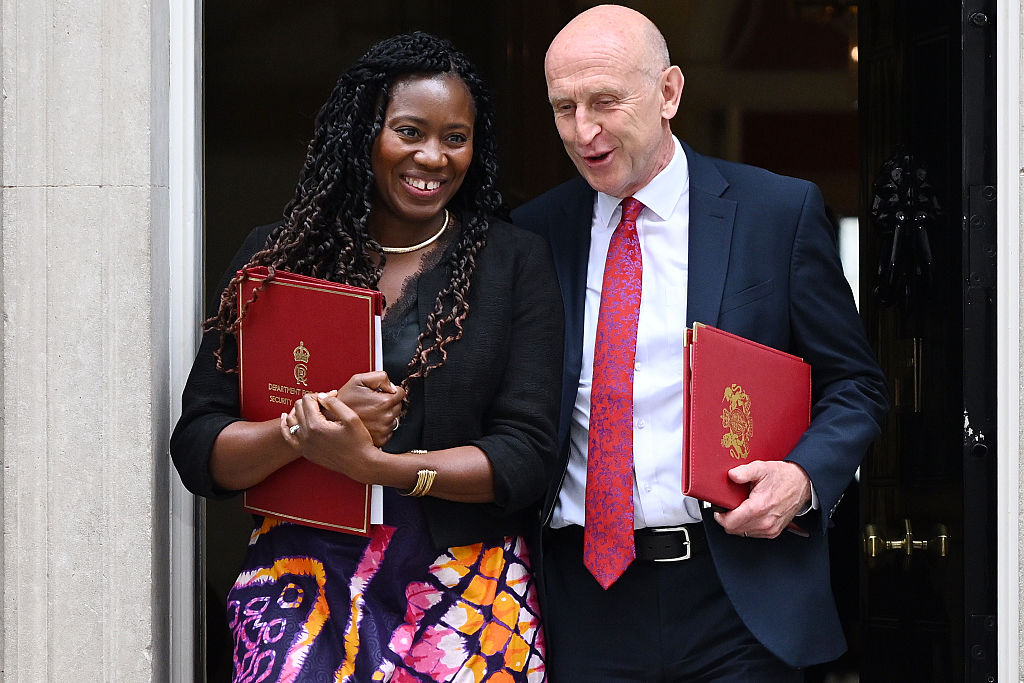
Energy Secretary Miatta Fahnbulleh and Chancellor of the Exchequer John Healey leave 10 Downing Street following Prime Minister Andy Burnham’s first cabinet meeting, on July 21, 2026 in London, England. (Photo by Ben Montgomery/Getty Images)
Climate campaigners in the UK and abroad were quick to condemn the decision, while a leading legal expert told Climate Home News it goes against the advice of the International Court of Justice. Meanwhile, the government’s own documents reveal that it recognises the drilling could damage the UK’s reputation and its ability to push forward the global transition away from fossil fuels.
“Climate leadership” blow
The 92-page decision document says Fahnbulleh “acknowledges that international standing on climate is important and accepts that a decision to grant consent may not further the UK’s international climate leadership.”
It adds: “She acknowledges concerns about the potential implications for the UK’s credibility and influence – including the difficulty inherent in encouraging other states to move away from fossil fuel production while the UK continues, in a limited and transitional way, to draw on its own domestic resources.”
While noting that Jackdaw has not been issued with a new license – just permission to extract gas – the document says Fahnbulleh “accepts this does not fully resolve the underlying tension in the UK’s position” but “considers this alongside the substance of the UK’s wider record [on emissions reduction], which remains significant”.
It continues that she accepts these concerns are “legitimate” and weigh against approving gas extraction, but only gives this argument a “moderate negative weight” set against the benefits of gas production.
“Huge” wrong signal
In international climate talks, the UK has long supported the transition away from fossil fuels and is one of very few major oil and gas producers to ban new licenses. Across the North Sea, the Norwegian government continues to make offshore areas available for oil and gas exploration through annual licensing rounds.
Climate experts and campaigners shared the concern, acknowledged in the decision document, that approving Jackdaw could set a precedent for fossil fuel production elsewhere. Sam Fankhauser, professor of climate change economics at Oxford University, said the direct climate impact of Jackdaw is “much smaller than the debate around it would suggest” but the “wrong signal it sends, however, is huge”.